 Français (France)
 English (UK)
 English (US)
 Deutsch (Deutschland)

Contents
What Cold Water Does in the First Minutes
Why does cold water catch out even strong swimmers? Because the first danger arrives within seconds, and it is not the one most people expect. The RNLI, the UK’s lifeboat charity, defines anything below 59 °F (15 °C) as cold water, and puts UK sea temperatures in December at around 43 to 50 °F (6 to 10 °C) [1]. Across the UK, even high summer water is cold enough to trigger cold shock [2].
Cold shock is a gasp for breath followed by rapid breathing, with a surge in blood pressure and heart rate [2] [3]. The National Weather Service puts it in the first two to three minutes or more, and says the gasping alone raises the risk of drowning, even for confident swimmers in calm water [3]. The RNLI says the initial effects pass in less than a minute [1]. The sources count the minutes differently, which is the reason to wait until your breathing is under control rather than watch a clock.
The water does not need to be near freezing. The Weather Service states that cold shock can be as severe at 50 to 60 °F (10 to 15 °C) as at 35 °F (2 °C), and that gasping can be triggered by water as warm as 77 °F (25 °C) [3]. The Red Cross makes the same point for the Pacific Northwest: in mid-June, Puget Sound, lakes and rivers ran from the mid-40s to the low 50s °F [4].
After the shock comes The point at which cooled muscles lose the strength and control needed to keep swimming.. The UK’s Royal Life Saving Society says that without a buoyancy aid, drowning follows at that point, before hypothermia, which takes at least 30 minutes even in very cold water [2]. Hypothermia then remains a risk after you leave the water; the Weather Service puts its onset at a core body temperature of 95 °F (35 °C) [3].
| Phase | What happens | What the sources say |
|---|---|---|
| Cold shock | Gasp, rapid breathing, surge in blood pressure and heart rate | First 2 to 3 minutes or more (National Weather Service); effects pass in under a minute (RNLI) |
| Swim failure | Cooling muscles lose strength and control | Without a buoyancy aid, drowning can follow (RLSS UK) |
| Hypothermia | Core temperature falls to 95 °F (35 °C) and below | Onset at 95 °F (35 °C) core temperature (National Weather Service); at least 30 minutes even in very cold water (RLSS UK) |
Sources: RLSS UK, National Weather Service, RNLI. Timings are indicative: they depend on water temperature, sea state, body and clothing.
You may have met the 1-10-1 rule of thumb: one minute to control your breathing, ten minutes of useful movement, one hour before you lose consciousness. The National Center for Cold Water Safety, a US nonprofit, calls it a myth: in its reading, your ability to help yourself declines from the first minute, and survival charts built on hypothermia alone understate the danger [5] [6]. Treat any such numbers as a reason to get out early, not as a budget to spend.
Starting: Who Should Ask First, and Where
Nobody should start alone, and some people should not start before seeing a doctor. The RNLI recommends that first-timers speak to their doctor, particularly with heart or other underlying health conditions [1]. The UK’s Royal Life Saving Society adds that a sudden rise in blood pressure can be fatal for people with a pre-existing heart condition, and that some suspected drownings turn out to be heart attacks [2].
As for where, the UK rescue charities advise a lifeguarded venue, beach or accredited open water site, especially for inexperienced swimmers [7]. Swim England’s general advice is that open water swimming should take place at 52 °F (11 °C) or above unless you are an experienced and competent cold water swimmer [8]. Sea temperatures drop below that for much of the winter in the UK [1]. We found no US equivalent of an accreditation scheme for cold dips, so a lifeguarded beach, or an organized event where safety crews are on the water, is the sensible starting point. The Red Cross also teaches swim lessons and water safety courses [4]. The colder it gets, the less any article can stand in for supervised experience.
On kit, the RNLI suggests a brightly colored swim cap, a tow float for emergencies, and a wetsuit, which keeps you warmer, adds buoyancy and can reduce the chance of cold water shock [1]. We cover how to choose one in our guide to wetsuit thickness and water temperature. Take warm clothes for before and after, a hot drink, and a phone in a waterproof pouch [1].
How Long Can You Stay In? There Is No Safe Number
This is the question every beginner asks, and the honest answer is that no source we read publishes a duration that is safe for everyone. The RNLI tells swimmers to know their limits, including how long to stay in the water [1]. The National Center for Cold Water Safety explains why a table cannot do it for you: survival estimates ignore cold shock, sea state and how quickly dexterity is lost [6]. What the sources do give is rules of behavior. Let your body get used to the water for a minute before you swim [1], plan more than one exit [7], and check the water temperature and the forecast before you set out [9].
When you come out, get into a warm, dry, sheltered place as soon as you can: a person’s core temperature can keep falling after they leave the water [3].
What the Research Says About the Benefits
Reported benefits are many; proof is thinner. A 2022 review of 104 studies found that cold water immersion seems to reduce or transform body fat and to improve insulin sensitivity, which may protect against cardiovascular and metabolic disease. But the studies were small, often in one sex, with different water temperatures, and many involved people with no winter swimming habit or cold water used after exercise [10]. The authors say it is unclear whether winter swimmers are naturally healthier, and that without further studies the topic stays a subject of debate [10].
An earlier review by Mike Tipton’s team at the University of Portsmouth reached a similar verdict: the evidence behind the various claims is uneven, and some of it remains anecdotal speculation [11]. Swimmers themselves report better mood, circulation and a sense of community [7]. Those are reports, not trial results, and none of them is a reason to take a risk with the first minute.
If You Get Into Trouble, or See Someone Who Has
The RNLI’s advice is to lean back in the water, extend your arms and legs, and resist the urge to thrash around so that you gain control of your breathing [1]. In the US, the Weather Service’s steps for treating someone who has been in cold water begin with calling 911, moving the person gently to a warm place and warming them slowly, core first, never in a hot bath [3]. If your phone may have no service, read our guide to getting help when your phone has no signal before you go.
Before you leave home, then, check four things: the water temperature and the forecast, your exit, who knows where you are, and whether the beach or event is supervised. Then ask yourself the RNLI’s last question: is there any doubt? If so, there is always another day to swim.
Gear related to this article
No affiliation: no commission, no sponsored products.
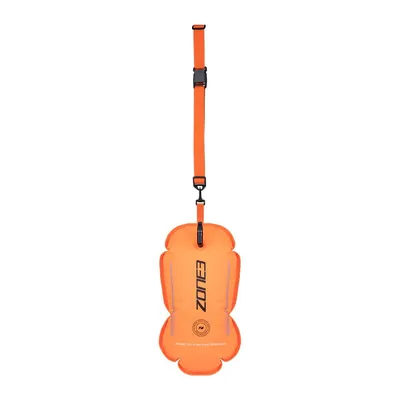
Zone3 Recycled Swim Safety Buoy / Tow Float, orange
An inflatable tow float in 100% recycled polyester, clipped to the waist by a leash: it makes the swimmer visible from afar, with reflective strips. 19 × 12 in deflated.
View on Amazon (opens in a new tab)
Worth watching
Seven tips for getting started with cold-water open swimming and staying safe, from a British channel devoted to outdoor swimming.
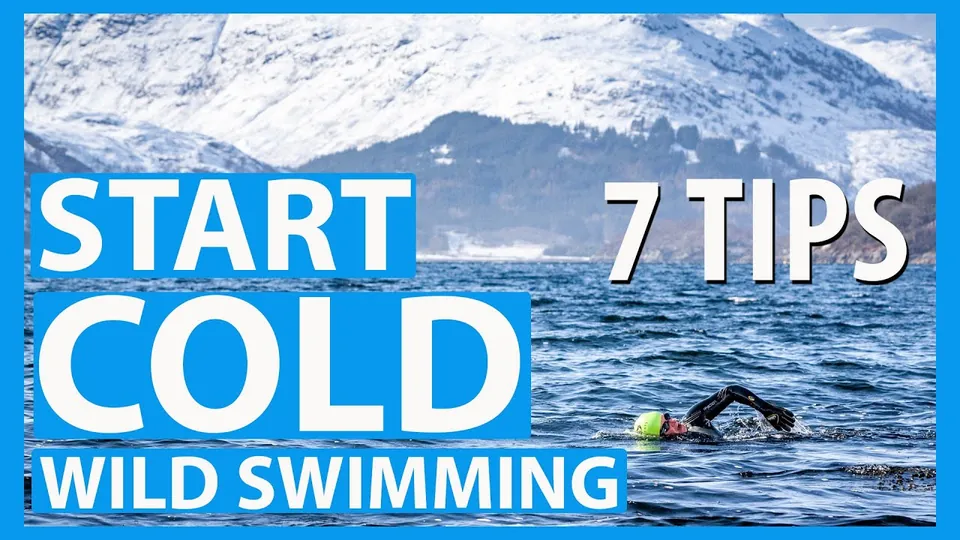
The video is hosted by YouTube (Google): nothing loads until you play it, and Google may then set cookies.
FAQ
Is cold water swimming safe for beginners?
It carries real risks, and no source we read calls it risk-free. The first danger is cold water shock, not hypothermia. The RNLI advises first-timers to speak to their doctor, especially with heart or other health conditions, to go with others and to avoid swimming alone. A lifeguarded beach or organized event is the sensible starting point.
What temperature counts as cold water?
The RNLI defines anything below 59 °F (15 °C) as cold water. Swim England advises open water swimming only at 52 °F (11 °C) or above unless you are an experienced, competent cold water swimmer. The National Weather Service says cold shock can be as severe at 50 to 60 °F (10 to 15 °C) as at 35 °F (2 °C), and gasping can start in water as warm as 77 °F (25 °C).
How long can you stay in cold water?
No source we read gives a duration that is safe for everyone. The RNLI says to know your limits, including how long to stay in. Survival charts mislead because they ignore cold shock, sea state and loss of dexterity, so treat any time you read as a ceiling to stay well below, and leave early.
Can cold water swimming cause a heart attack?
The UK’s Royal Life Saving Society says a sudden rise in blood pressure can be fatal for people with a pre-existing heart condition, and that some suspected drownings turn out to be heart attacks. The National Weather Service says the spike in heart rate and blood pressure can cause heart failure and stroke in vulnerable people. See your doctor first.
What should you do after a cold swim?
Get into a warm, dry, sheltered place as soon as you can, because core temperature can keep falling after you leave the water. The RNLI suggests taking warm clothes for before and after, plus a hot drink. If anyone shows signs of trouble in the US, call 911.
Sources
- RNLI, “RNLI offers essential safety advice for cold water dippers this festive period”, December 15, 2025. rnli.org https://rnli.org/news-and-media/2025/december/15/rnli-offers-essential-safety-advice-for-cold-water-dippers-this-festive-period ↩
- Royal Life Saving Society UK, “Cold Water Shock: the Facts”, accessed October 29, 2026. rlss.org.uk https://www.rlss.org.uk/cold-water-shock-the-facts ↩
- US National Weather Service, “Cold Water Hazards and Safety”, accessed October 29, 2026. weather.gov https://www.weather.gov/safety/coldwater ↩
- American Red Cross, Northwest Region, “Safe Fun on Waterways”, June 12, 2026. redcross.org https://www.redcross.org/local/washington/about-us/news-and-events/news/safe-fun-on-waterways.html ↩
- National Center for Cold Water Safety, “The 1-10-1 Myth”, accessed October 29, 2026. coldwatersafety.org https://www.coldwatersafety.org/1-10-1-myth ↩
- National Center for Cold Water Safety, “Cold Water Survival Charts Are Misleading”, accessed October 29, 2026. coldwatersafety.org https://www.coldwatersafety.org/survival-estimates ↩
- Royal Life Saving Society UK, “Top Recommendations for Safer Open Water Swimming”, accessed October 29, 2026. rlss.org.uk https://www.rlss.org.uk/blog/top-recommendations-for-safer-open-water-swimming ↩
- Swim England, “Safety advice for open water swimming in hot weather”, July 19, 2022 (accessed October 29, 2026). swimming.org https://www.swimming.org/openwater/open-water-safety-advice-hot-weather/ ↩
- Met Office, “Top tips for safe open water swimming” (with RLSS UK), accessed October 29, 2026. metoffice.gov.uk https://www.metoffice.gov.uk/weather/warnings-and-advice/seasonal-advice/travel/out-and-about/open-water-swimming ↩
- D. Espeland, L. de Weerd and J. B. Mercer, “Health effects of voluntary exposure to cold water: a continuing subject of debate”, International Journal of Circumpolar Health 81(1), 2022. pmc.ncbi.nlm.nih.gov https://pmc.ncbi.nlm.nih.gov/articles/PMC9518606/ ↩
- M. J. Tipton, N. Collier, H. Massey, J. Corbett and M. Harper, “Cold water immersion: kill or cure?”, Experimental Physiology 102(11), 2017, University of Portsmouth research portal. researchportal.port.ac.uk https://researchportal.port.ac.uk/en/publications/cold-water-immersion-kill-or-cure/ ↩

Fact-checking, regulations, and safety
Arnaud Couderc reviews our contributors’ articles and writes for Outfarer about regulations, safety, fishing, the ocean, and outdoor activities. He traces every rule back to its official text and every number to its source, so you head out with solid benchmarks.

 Nolwenn Bastide

 Guillaume Hoarau
