 Français (France)
 English (UK)
 English (US)
 Deutsch (Deutschland)

Contents
The sun doesn’t set earliest on December 21. In Lake Placid, in New York’s Adirondacks, it goes down at 4:17 p.m. every evening from December 4 to 15, three minutes earlier than on the solstice. The evenings are already stretching out while the mornings keep getting darker until early January [1]. Winter outdoors is full of little surprises like that, and nearly all of them come down to three things: light, cold, and snow. Good news: none of them requires you to be a mountaineer. You just take them in order, from choosing your outing to getting back before dark, and that’s what this guide does.
Its benchmarks come from official sources, the National Park Service, the National Weather Service, New York’s Department of Environmental Conservation, avalanche centers, and state transportation departments, from manufacturers’ instructions for the gear, and from our own guides, each sourced on its own. They apply to day hikes on marked, maintained trails, rolled or packed winter trails, snowshoe loops, and cross-country ski trails, in the United States. Off-trail travel in avalanche terrain, backcountry skiing, and winter mountaineering fall outside that frame: you learn them in a course or with a guide.
| When | What to do |
|---|---|
| The week before | Pick a marked trail that suits everyone in the group; check your boots, microspikes, headlamp, and spare mittens; for the car, chains or traction devices and a winter emergency kit |
| The night before | Read the forecast for your destination and, near avalanche terrain, the avalanche forecast; note the sunset time and set your turnaround time; charge your phone and backup battery |
| That morning | Check the forecast and trail closures again; leave a trip plan with a trusted contact; fill the thermos; start early |
| On the trail | Stay on the marked trail, shed a layer before you sweat, add one as soon as you stop, and turn around at the time you set |
1Choosing your outing: on foot, on snowshoes, on skis, or by sled
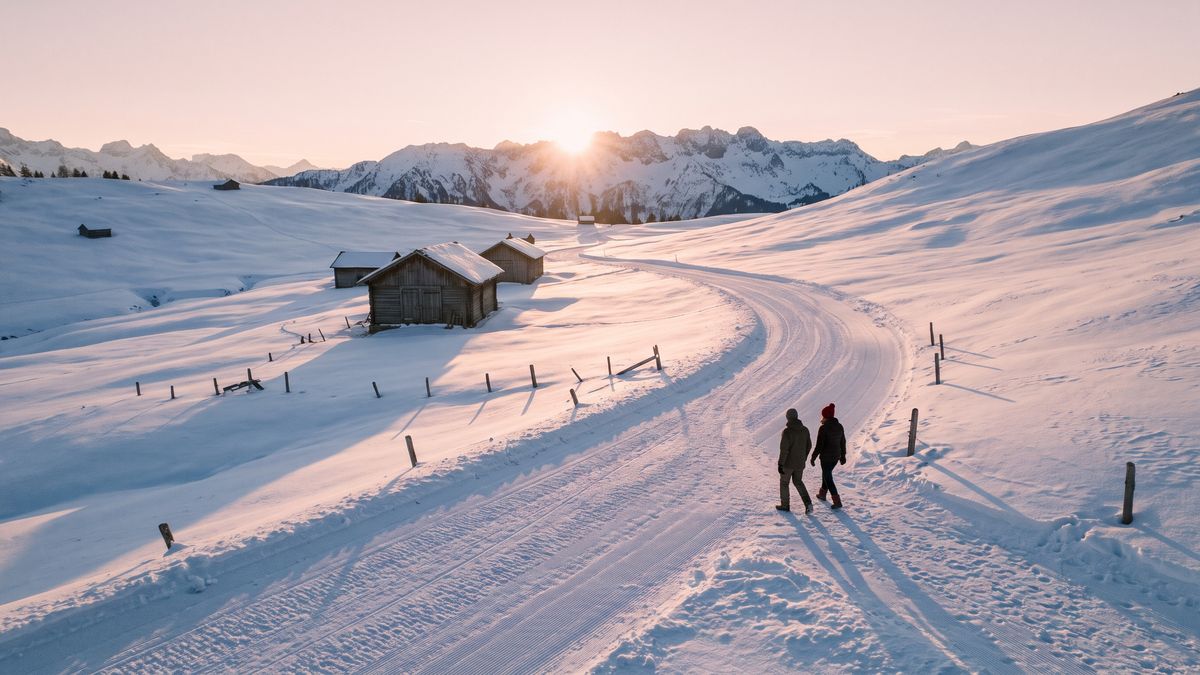
For a first winter outing, the simplest is often the most beautiful: a packed trail. Some state parks roll trails just for that: Governor Thompson State Park, in Wisconsin, offers more than 5 miles (8 km) of rolled, multi-use trails for winter hiking, snowshoeing, and skiing, packed flat [2]. Don’t count on it everywhere, though: many trails aren’t maintained in winter, and hiking on icy or snow-covered trails is much more difficult than in summer, the National Park Service warns, so check the park’s website or call ahead for closures and conditions [3]. Then pick an activity that matches everyone’s skills, experience, and fitness, so that no one gets left behind, as the Park Service’s emergency plan puts it [4].
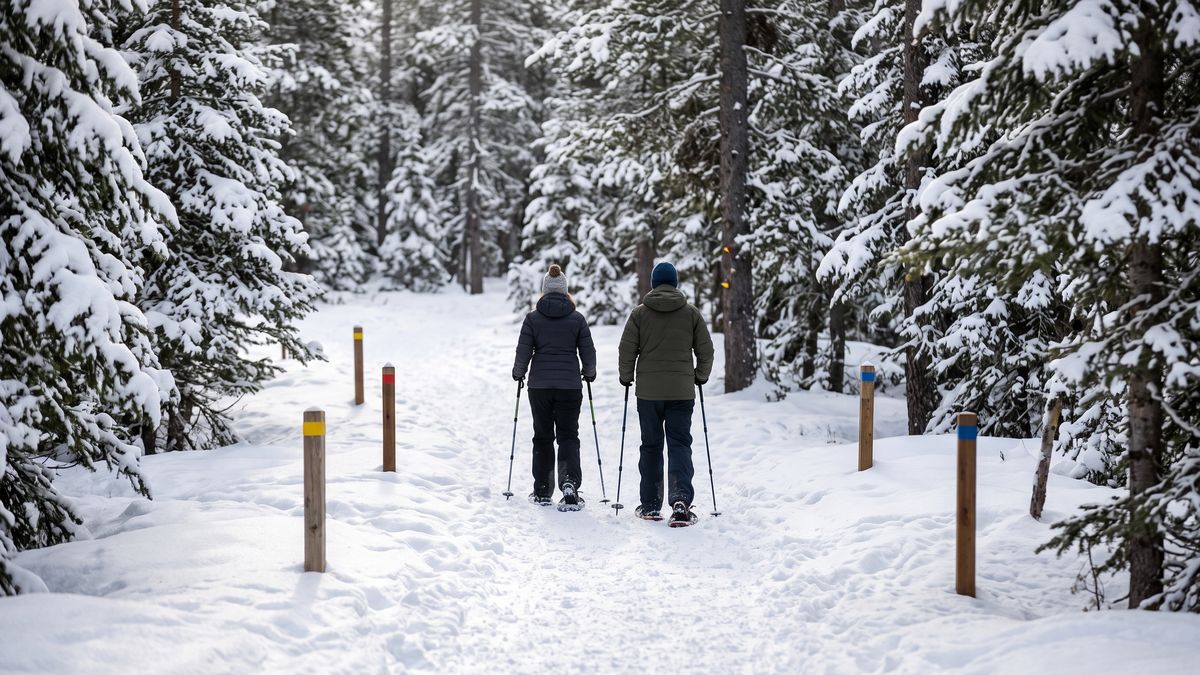
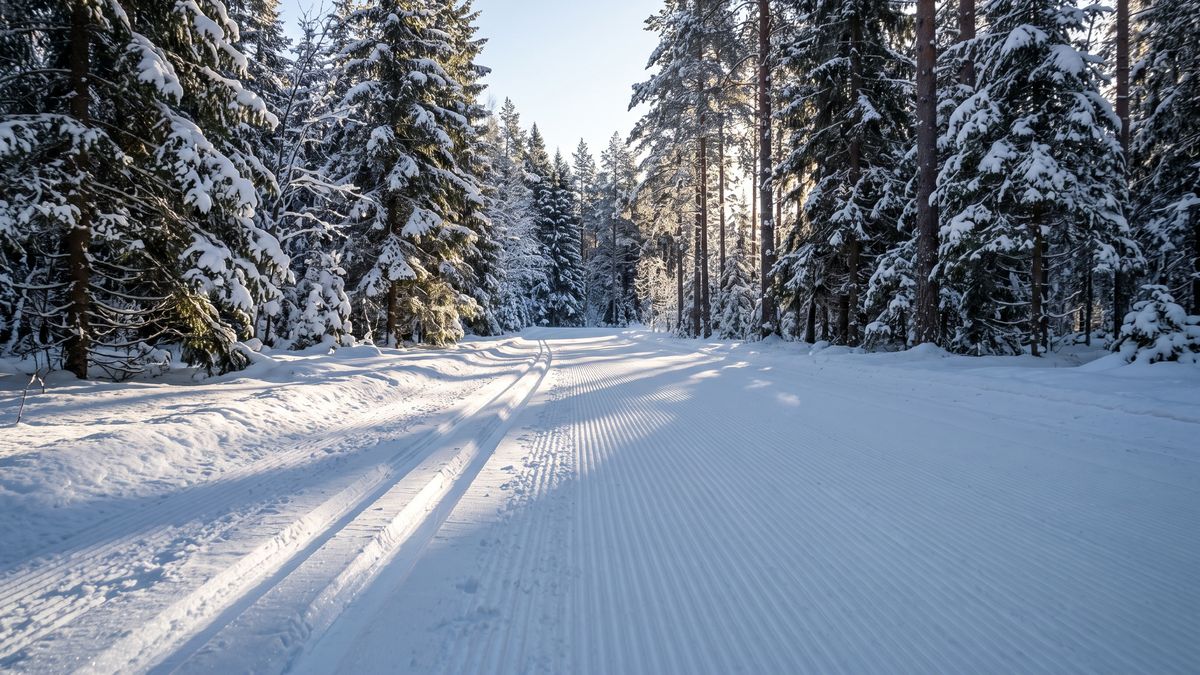
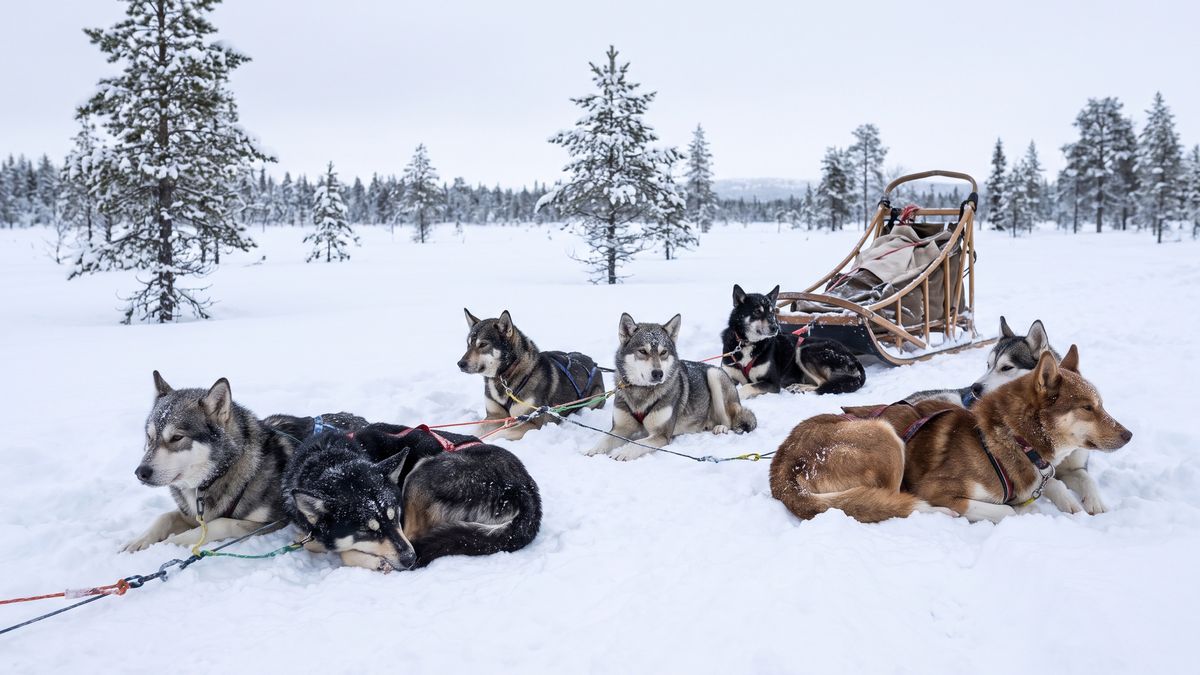
Snowshoes take over in fresh, deep snow, off packed trails: on a firm, well-trodden track, walking in boots is often more pleasant, the German Alpine Club notes [5]. For a first time out, a groomed, marked loop is ideal: the track is broken, the route maintained, and the way back certain. Cross-country skiing has two techniques: classic, skis parallel in the tracks, is close to walking and more accessible to beginners, while skating takes good balance and more power, according to Nordic France, the federation of French Nordic ski areas [6]. At Governor Thompson, the 7 miles of ski-only trails are tracked for the classic diagonal stride and groomed for skate skiing, and a state trail pass is required for all skiers 16 and older [2]. And if you’d rather be carried along, a dog sled ride is booked with a musher: our guide lists the questions to ask before you choose one.
One rule holds for all these outings: a ski trail isn’t a footpath. At Governor Thompson, hiking, snowshoeing, pets, and bikes aren’t allowed on the cross-country ski trails when they’re snow-covered, except on one loop, the Otter Trail, where non-skiers use an area alongside the groomed track [2]. Wherever you go, the rules posted at the trailhead come first.


2The mountain forecast and the avalanche forecast
The forecast for town says nothing about the summit. Temperature drops by an average of 0.65 °C every 100 meters, according to MeteoSwiss [7], or about 3.6 °F every 1,000 feet: 3,300 feet (1,000 m) higher, it’s about 12 °F (6.5 °C) colder on average. New York’s DEC adds that on mountain summits, temperatures are lower, winds stronger, and snow deeper [8]. Wind takes its own share. Using the National Weather Service’s formula, we calculated that at 23 °F (-5 °C), a 19 mph (30 km/h) wind feels like about 9 °F (-13 °C); in the Weather Service’s own example, 0 °F with a 15 mph wind makes a wind chill of -19 °F (-28 °C), cold enough for exposed skin to freeze in 30 minutes [9].
So read the forecast for where you’ll actually be. On weather.gov, click the map on your destination: you get a forecast for that spot, technically for a 5-kilometer (3-mile) grid square around it [10]. Then check the alerts, whose thresholds are set locally: near Rochester, New York, an Extreme Cold Warning goes out when the temperature, with or without wind, is expected to fall to -25 °F (-32 °C) or below [9]. The Park Service’s rule of thumb: if a winter advisory is issued, be aware; if a Winter Storm or Blizzard Warning is issued, take action [3].
One number deserves a closer look: the The altitude at which the air temperature first drops below freezing, as the National Weather Service defines it. [11]. The rain-snow line usually sits 660 to 1,300 feet (200 to 400 m) below it, according to Météo-France, France’s national weather service [12]. And when snow thaws and refreezes often, trails can turn icy and slick, the German Alpine Club warns [13]: a thaw in the forecast isn’t always a gift to your soles.
In avalanche country, a second forecast matters: the one from your local avalanche center. The Park Service says to check in with local avalanche centers [3], and Avalanche.org, a partnership of the American Avalanche Association and the Forest Service’s National Avalanche Center, brings together data from the professional forecast centers [14]. Their forecasts use the North American Public Avalanche Danger Scale: five levels, 1 Low, 2 Moderate, 3 Considerable, 4 High, and 5 Extreme, usually rated for three elevation bands, with the danger rising exponentially from one level to the next [15]. Over the last 10 winters, an average of 23 people died in avalanches each winter in the United States, according to the Colorado Avalanche Information Center [16].

3Timing: start early, get back before dark
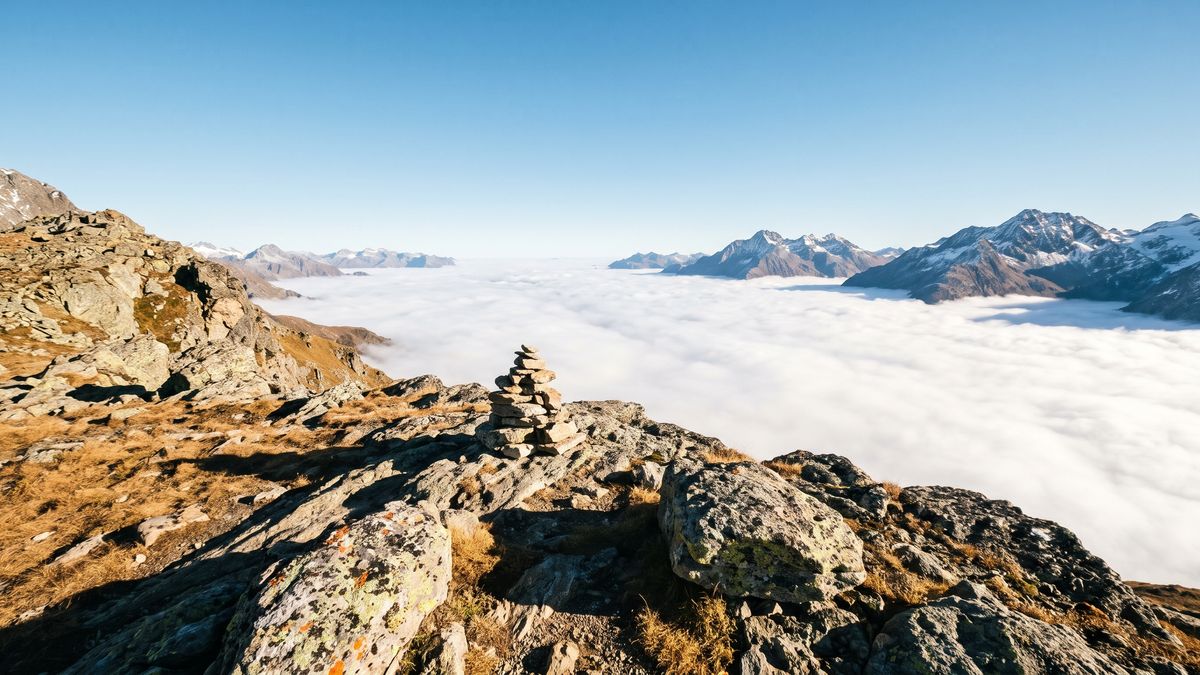
In winter, daylight sets the length of the outing. On December 21, 2026, the sun sets at 4:20 p.m. in Lake Placid; on February 1, it will be 5:05 p.m. [1]. After sunset, you get about half an hour of The period when the center of the sun is up to 6° below the horizon. After it ends, you normally need artificial light for ordinary outdoor activities. [20]: in Lake Placid, it ends at 4:53 p.m. on December 21 [1]. But those times assume a flat horizon. Mountains on the horizon can change them, and routine computations don’t include such effects, the Naval Observatory notes [20]: on a valley floor or under a ridge, the sun is gone sooner.
Hence New York DEC’s advice: days are short, so know what time the sun sets and plan your hike so you can return before dark, remembering that moving through snow takes more effort and energy [8]. In snow, the German Alpine Club counts on no more than 650 to 1,000 feet (200 to 300 m) of climbing per hour [5]. Here’s the detail that changes everything: set your turnaround time the night before, counting back from sunset with a buffer, not on the summit, when everything urges you on. DEC supplies the arithmetic: getting back to your starting point takes as long as hiking out did [8].
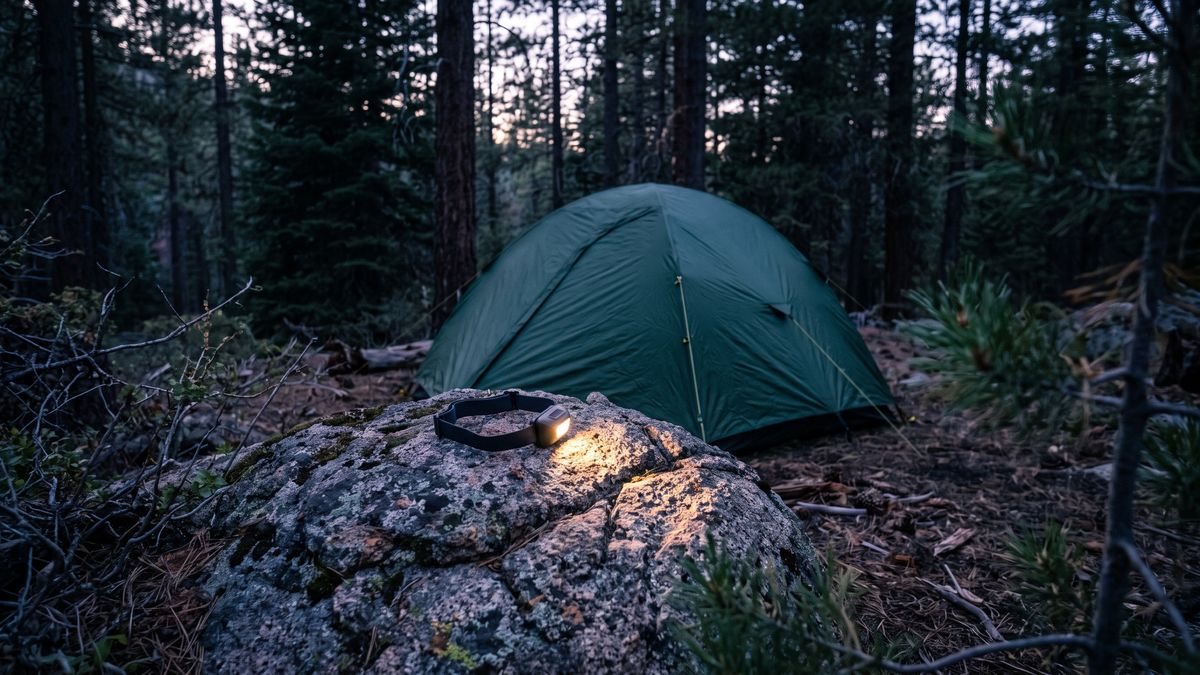
Pack a headlamp and extra batteries, even for a few hours, and don’t use your phone as a light, which drains its battery, DEC advises [8]. In deep cold, lithium batteries perform better than alkalines and work from -4 to 122 °F (-20 to +50 °C), according to Petzl [21]; check your lamp’s manual to make sure it takes them. And read its runtime with suspicion: under the FL1 standard, the clock runs until the lamp drops to 10% of its maximum output, not until it goes dark [22].


4What to wear: three layers and warm hands and feet
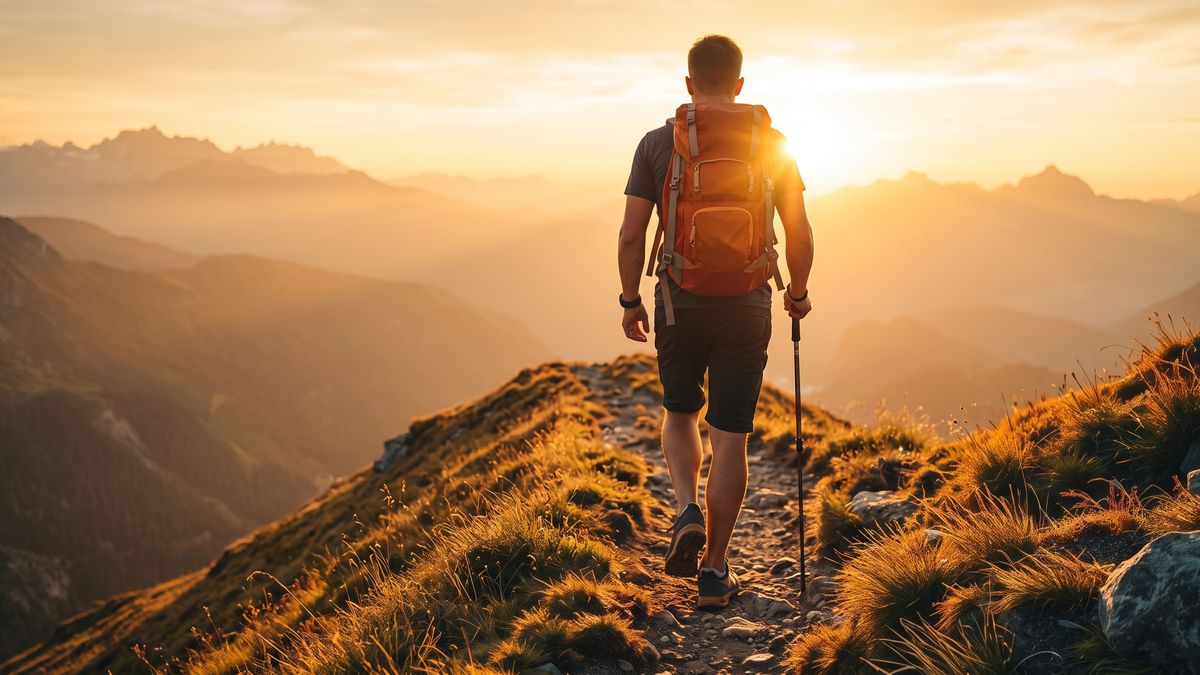
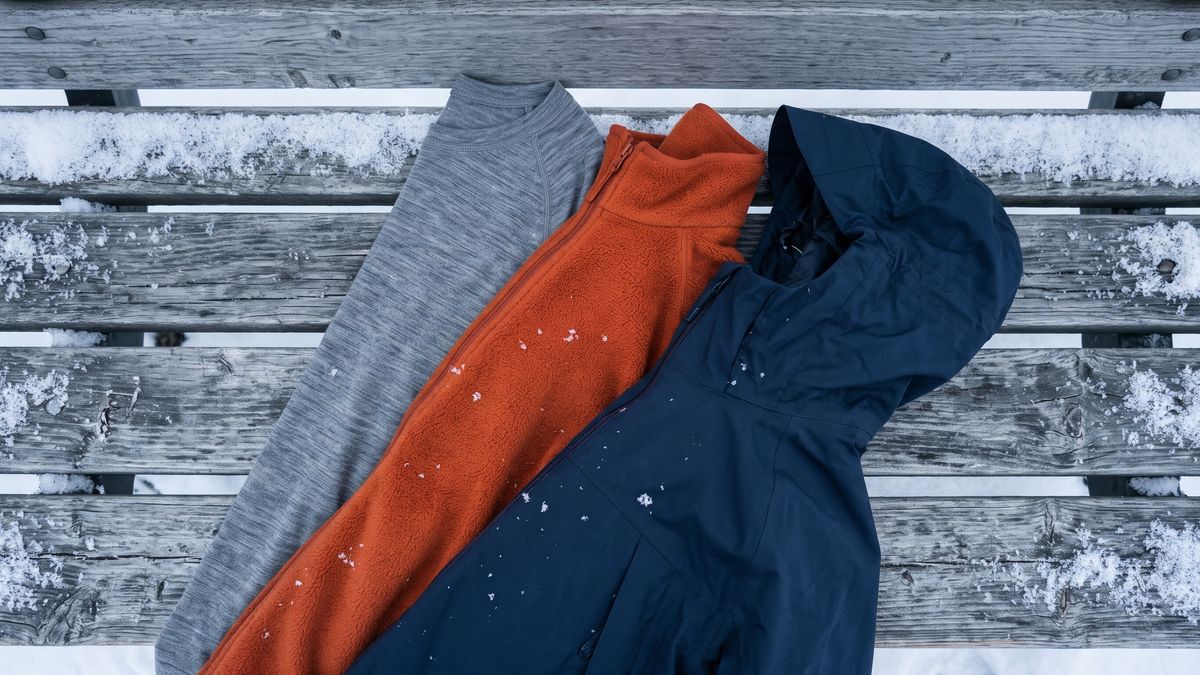
75%: that’s how much of the energy of exertion your body turns into heat, according to the French Hiking Federation [23]. On the climb, you overheat; at the first stop, the cold comes back all at once. Hence layering, from the skin out: base layers of moisture-wicking fabric to keep your skin dry, insulating layers such as wool or fleece, and waterproof or water-resistant outer layers, in New York DEC’s words [8]. Remove a layer to keep from overheating and add one as soon as you get cold, the Park Service advises [3]: overheating and sweating can lead to significant cooling and hypothermia, DEC warns [8].
Cotton stays home. It absorbs moisture easily and won’t keep you warm if it gets wet, the National Park Service points out [3], and DEC tells hikers to avoid it because it holds moisture [8]. Merino or synthetic next to your skin, then fleece, down, or synthetic insulation, and a jacket that stops the wind: our guide to layering for the cold goes through the fabrics.
Your extremities get cold first. A winter hat, thick socks, and mittens: snug at the wrist, they’re better than gloves, says the National Weather Service [24]. DEC’s list adds waterproof, insulated boots and an extra hat, socks, and mittens [8], and the French Hiking Federation suggests not lacing your boots tighter than necessary [23]. Finally, pack an extra set of dry clothing in a sealed bag, in case you get wet, as the Park Service recommends [3].

5Gear: boots, traction, poles, and sunglasses
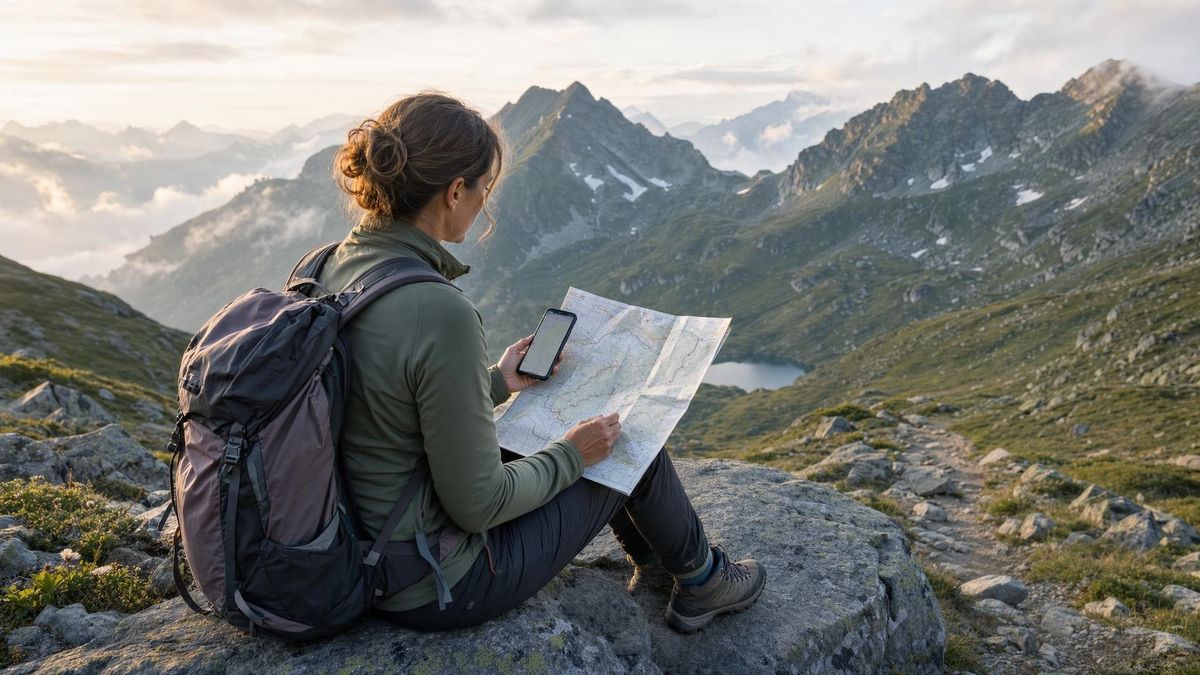
On a packed trail, the gear stays simple: waterproof, insulated boots, and skis or snowshoes once the snow is deeper than 8 inches (20 cm), according to New York DEC’s list. In the High Peaks Wilderness, near Lake Placid, that isn’t advice but a rule: snowshoes or skis are required when snow depths exceed 8 inches [8]. Add gaiters: once snow gets into a boot, the boot won’t dry out anytime soon, the German Alpine Club warns [5]. And bring a map and compass or a GPS: trails look different in winter, and visibility can be poor when it’s windy or snowing, the Park Service points out [3].
Then come the Small metal spikes or studs, often on short chains, that you stretch over your boot sole with a rubber harness; many hikers call them microspikes.: the Park Service suggests over-the-shoe traction devices to keep from slipping [3], and DEC lists microspikes or crampons for icy conditions [8]. Steep, icy ground that calls for an ice axe, mountaineering crampons, and a rope is another activity altogether, one you learn in a course or with a guide.
On snowshoes, size depends on your weight, gear included, and on the snow: MSR, for example, suggests 22 inches (56 cm) for an adult weighing 125 to 175 lb (57 to 79 kg) on packed snow [25]. Poles aren’t optional: the maker calls them a mandatory addition for stability and safety, and wants them adjustable, shorter for steep climbs and longer for steep descents, with an adjustment that’s freeze-resistant and glove-friendly [26].
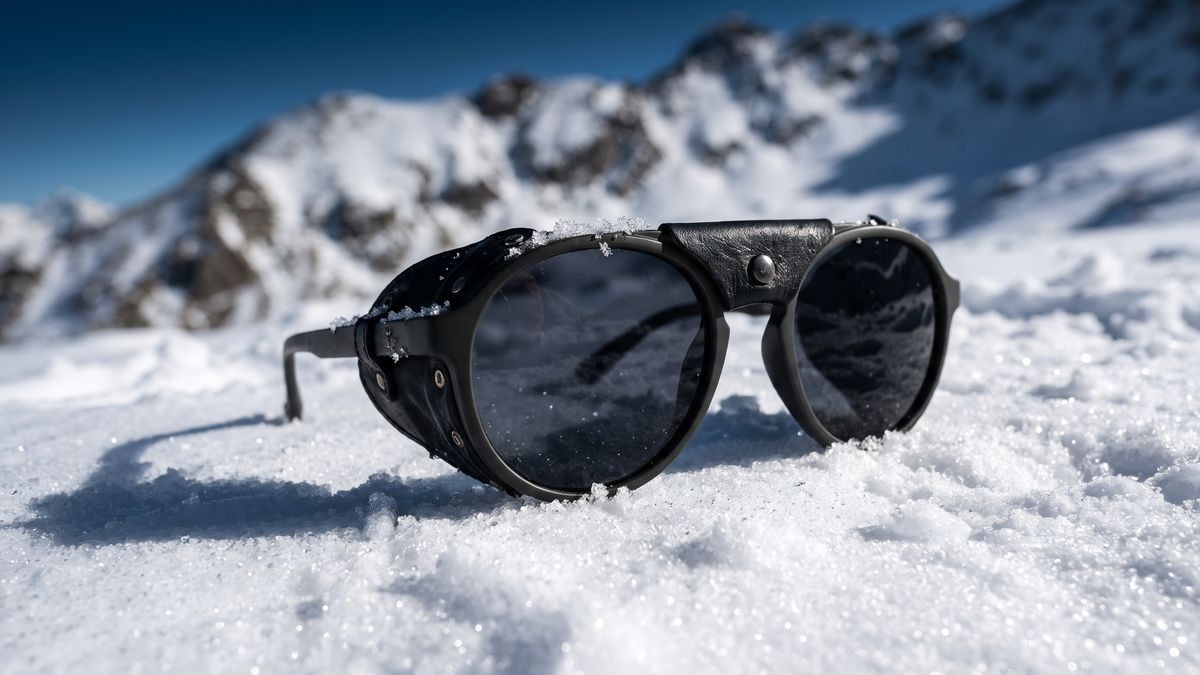
Then there’s the light coming up from below: snow reflects 80% of UV light, according to the UIAA, the international mountaineering federation. To prevent snow blindness, it recommends good-quality sunglasses that block all UV, category 3 or 4 with side protection, or goggles, worn at all times on snow, especially at high altitude [27]. Category 4, though, stays out of the car: under the ISO 12312-1 standard, the lenses suitable for driving are categories 0 to 3, as the UK’s College of Optometrists sums it up [28]. Keep a second pair for the road, as our guide to sunglasses explains.


6Drink hot, eat often
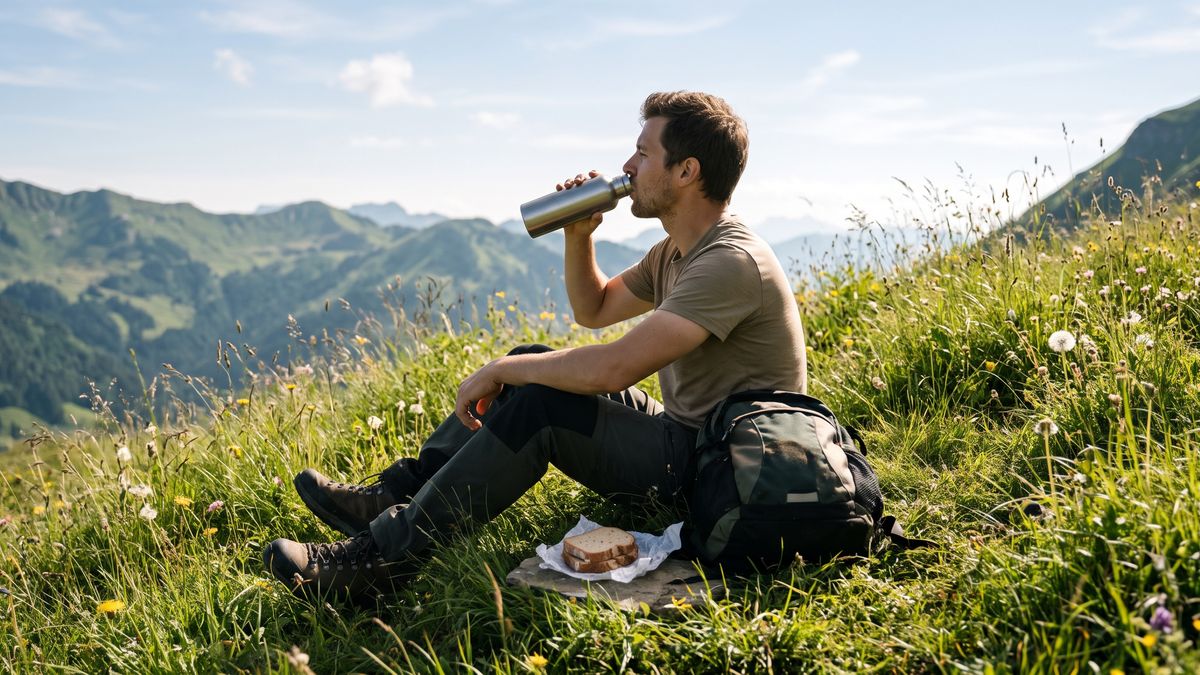
The cold doesn’t erase your body’s needs. Physical activity dehydrates you, even when it’s cold, and dehydration and hunger wear you out and reduce your body’s ability to heat itself, the National Park Service warns; it suggests insulated containers to keep food and water from freezing [3]. DEC’s advice: drink water regularly, and eat and rest often [8]. A few bites at every stop beat one big meal sitting in the wind. For a day’s amounts, see our guide to water and food on a day hike.
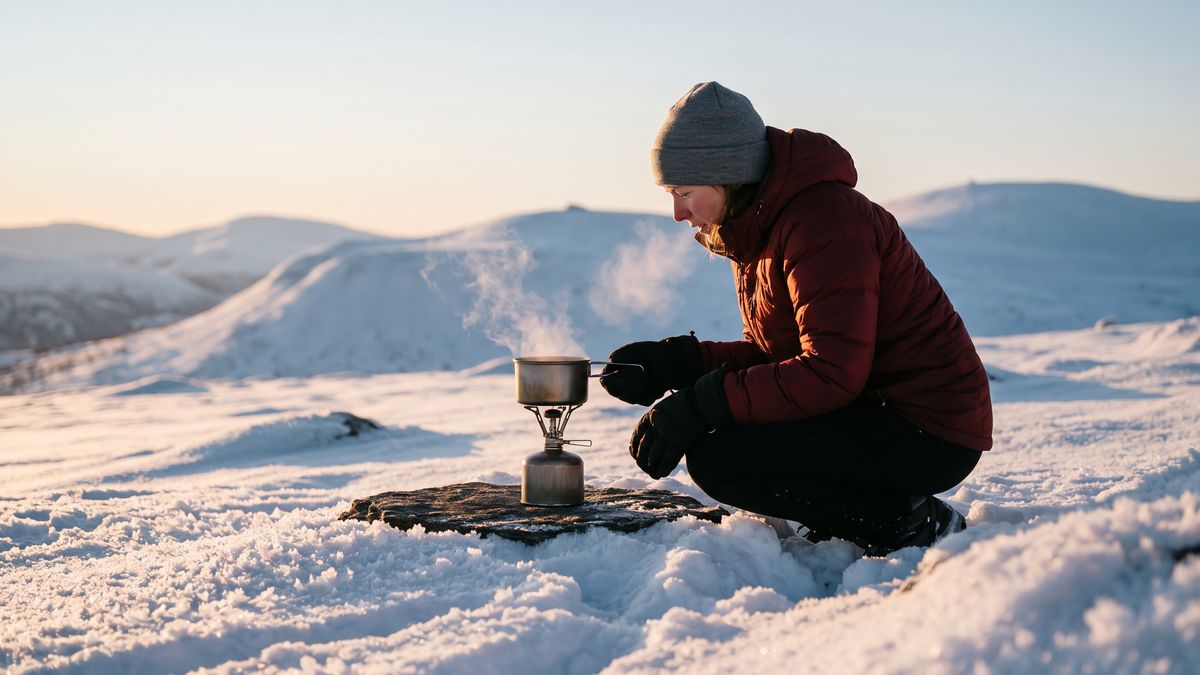
The cold plays tricks on gear, too. There’s no definitive way to tell whether one of its 0.1-micron filters has been damaged by freezing once it has been wet, Sawyer warns: the maker suggests keeping it in a pocket, close to your body, and in your sleeping bag at night, and replacing it if you suspect it has frozen [29]. A canister stove weakens in freezing weather: butane boils around 32 °F (0 °C) and isobutane around 12 °F (-11 °C), according to NIST data [30, 31]. Propane handles the cold far better but would need a much heavier canister on its own, which is why lightweight canisters blend it with butane or isobutane, MSR explains [32]. MSR also suggests keeping the canister warm, in your jacket or sleeping bag, before you cook [33].


7Tell someone, call for help, get rescued
Before you leave, tell someone where you’re going. New York’s DEC asks you to share where you’re going, your planned route, when you plan to return, and the emergency numbers to call if you don’t return on time [8]. The Park Service’s version is a trip plan, left with a trusted contact who isn’t on the trip, never with the park, which won’t accept it; if you’re not back when expected, your contact calls the authorities [37]. Better still, don’t go alone: traveling in a group is safer, especially if you’re inexperienced, the Park Service adds [3].
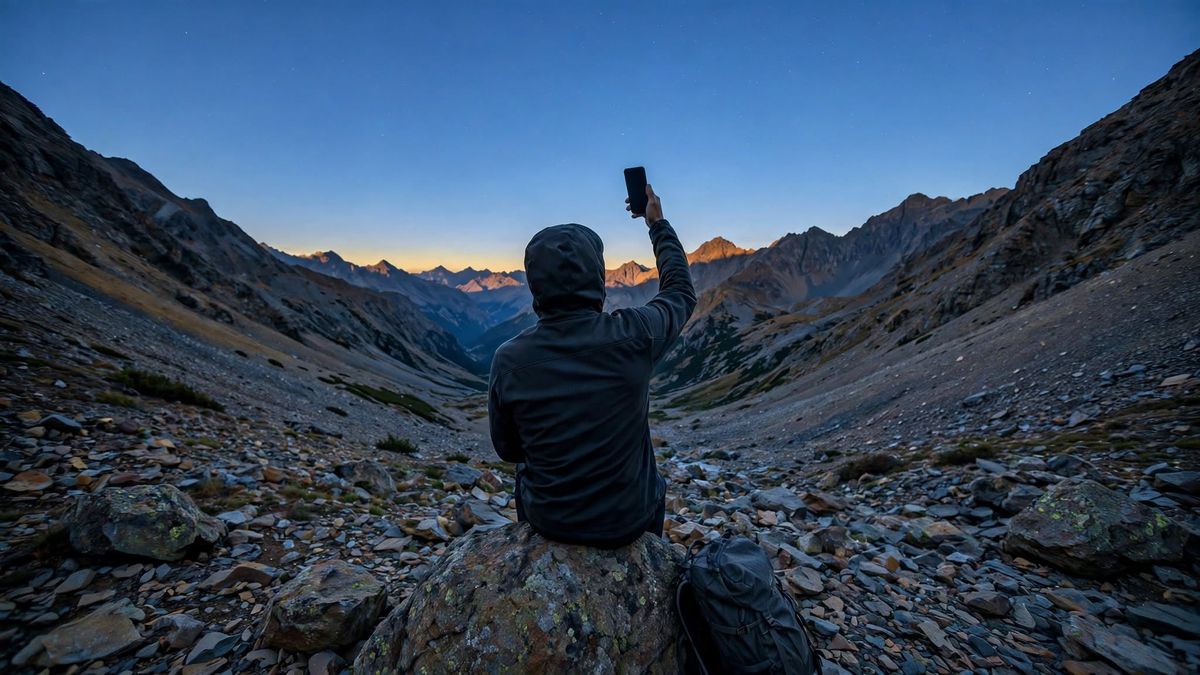
Your phone is your first rescue tool, and it doesn’t like the cold. Apple designs its iPhones for ambient temperatures of 32 to 95 °F (0 to 35 °C) [38]: keep yours in an inside pocket, with a backup battery. Don’t count on cell service everywhere, and switch to airplane mode to save the battery, DEC advises [8]. In an emergency, call 911; then stay put unless your life is in immediate danger, since moving makes it harder for searchers to find you, and blow your whistle often, which saves the energy you’d spend yelling, the Park Service says [4]. With no service at all, our guide to calling for help without cell service covers text-to-911, satellite SOS, and beacons.
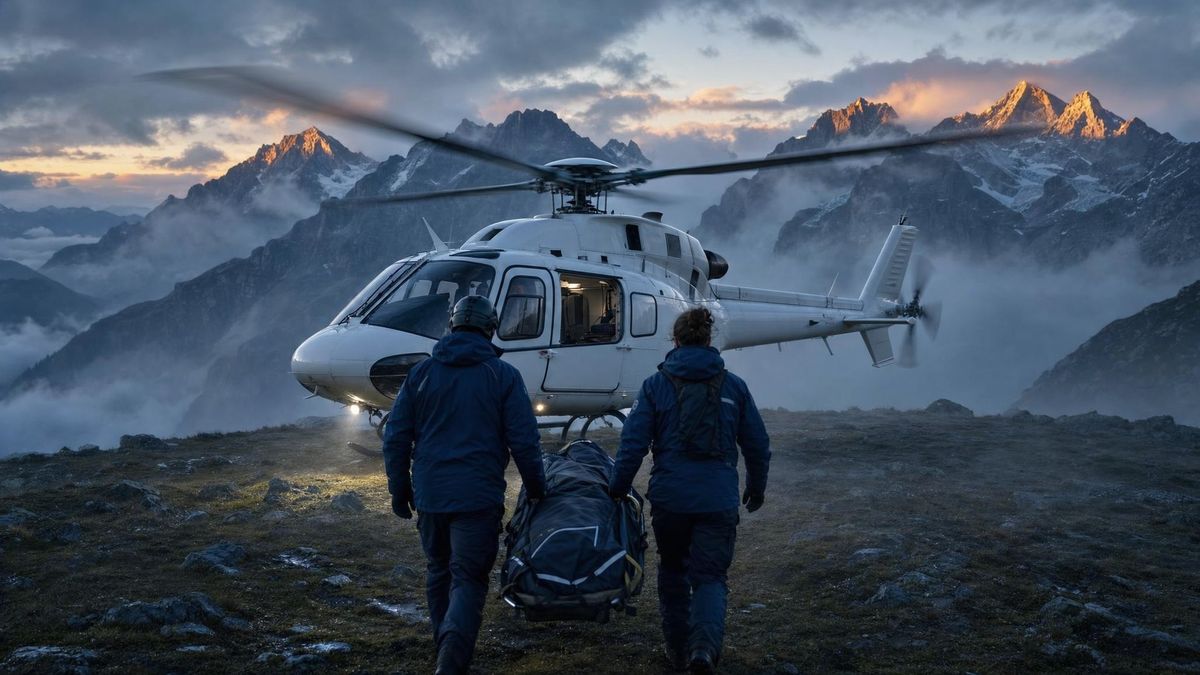
Will you get a bill? Not from the National Park Service, whose management policies state that it will not charge visitors for search-and-rescue operations [40]. In Colorado, backcountry search and rescue comes at no cost to the person in need, though the state’s CORSAR card, which helps fund the teams, doesn’t pay for medical transport [41]. In New Hampshire, on the other hand, you can be held liable for rescue costs, and the voluntary hikeSafe card lets you avoid that, except in cases the law sets out [42]. The ambulance is a separate matter, as our guide to search and rescue costs explains. If you’re heading for the Alps, 112 is free everywhere in the EU [43], and in Switzerland, as a rule, the person rescued or their insurer pays, Rega explains [44]: check your travel insurance before you go.


8The drive: chains, traction, and winter tires
The first tricky stretch of the day is often the drive. The Park Service suggests checking the park’s website to find out whether you may need chains or snow tires, and keeping an emergency kit in the car: a snow shovel, an ice scraper, sand or kitty litter, jumper cables, tow chains or ropes, extra water, and snacks [3]. Then come the state rules, posted on signs when they’re in effect. In California, Caltrans uses three levels of chain controls, summed up below; with chains on, the speed limit is 25 or 30 mph, and if you don’t stop to put them on when the signs say so, the California Highway Patrol can cite and fine you [45]. Snow-tread tires, Caltrans adds, can be identified by the letters MS, M/S, or M+S, or the words Mud and Snow, on the sidewall [45].
| Level | What’s required |
|---|---|
| R-1 | Chains on all vehicles, except passenger vehicles and light-duty trucks under 6,000 lb gross weight with snow tires on at least two drive wheels; vehicles on snow tires must carry chains |
| R-2 | Chains or traction devices on all vehicles, except four-wheel or all-wheel drive vehicles with snow-tread tires on all four wheels, which must carry traction devices |
| R-3 | Chains or traction devices on all vehicles, no exceptions |
Summary of Caltrans’s definitions; posted signs and instructions from Caltrans or the CHP at checkpoints take precedence. [45]
Colorado goes by tread depth. The Colorado Department of Transportation can put its traction and chain laws in effect on any state highway, and on I-70 between Morrison and Dotsero, they can be enforced with fines from September 1 to May 31, or whenever conditions require. Under the traction law, passenger vehicles need tires with 3/16 inch (4.8 mm) of tread, rated all-weather or winter, which means the mountain-snowflake icon or an M+S or M/S marking, or else chains or an approved alternative traction device on board; under the chain law, the last step before a closure, every vehicle needs chains or an approved device. Not complying costs a $100 fine plus a $33 surcharge, and $500 plus $157 if it leads to the closure of a travel lane [46].

9Going further: a lean-to, a night out, cold water
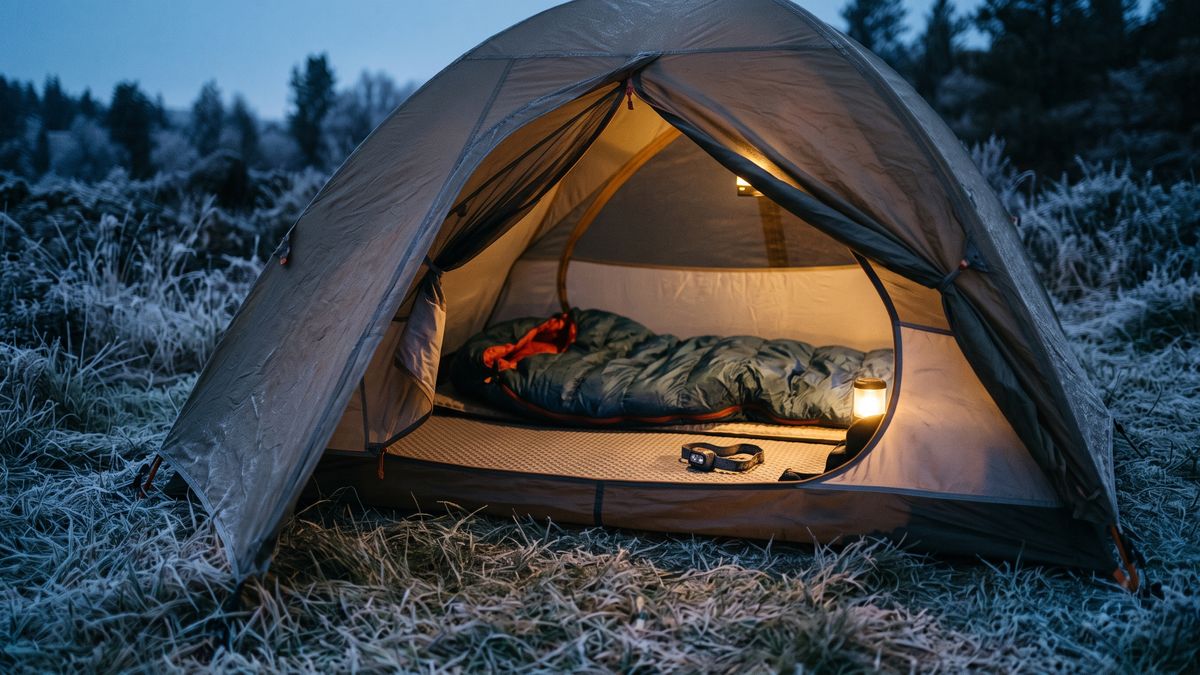
A winter night out asks a lot more than a day hike. In New York’s Forest Preserve, primitive camping means few or no amenities, and you carry all your gear, sleeping bag included; primitive tent sites and lean-tos are first-come, first-served and can’t be reserved, tents aren’t allowed inside lean-tos, and in the Adirondacks, camping is prohibited above 4,000 feet (1,220 m), except in an emergency [47].
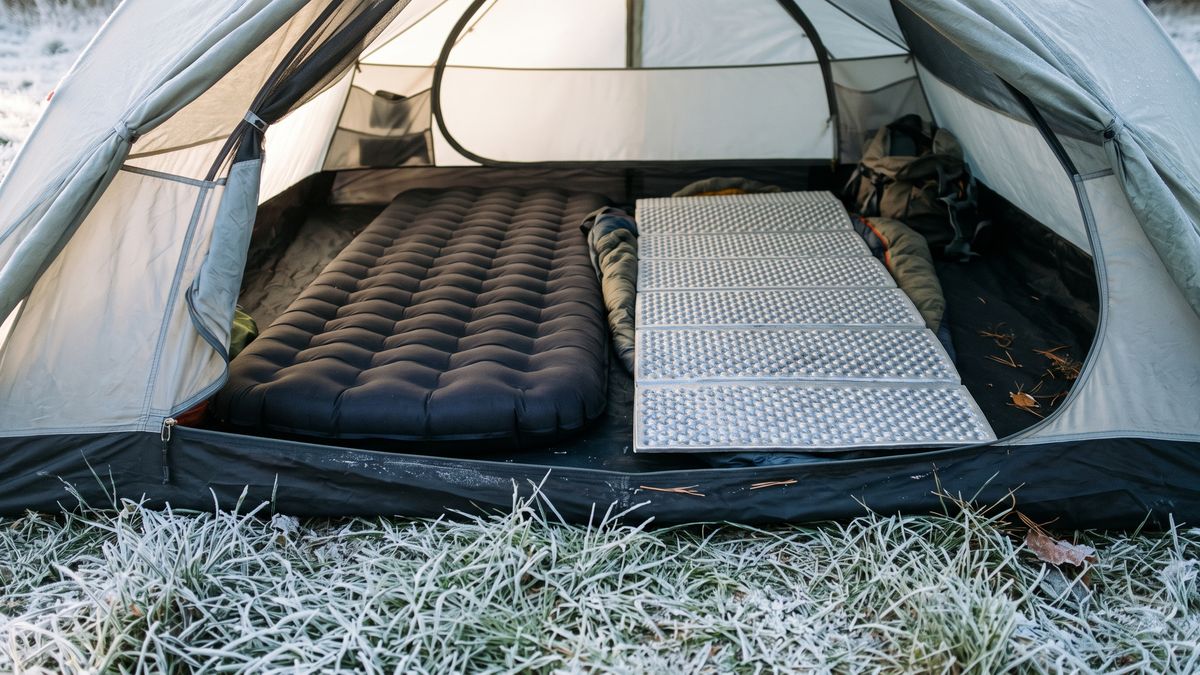
To sleep outside, everything happens underneath you. Exped recommends a sleeping pad with an R-value of at least 6.5 so your sleeping bag delivers the warmth it’s rated for [48], and two stacked pads add up their R-values. Choose the bag by its comfort rating, the lowest temperature at which you can sleep well in a relaxed position; its extreme rating, Rab explains, is for emergencies, the lowest temperature at which a person can stay in the bag for up to six hours, curled up and really fighting the cold [49]. If you’ve never slept outside in winter, do it first near a shelter or a vehicle, with a backup plan, as our guide to sleeping pads advises.
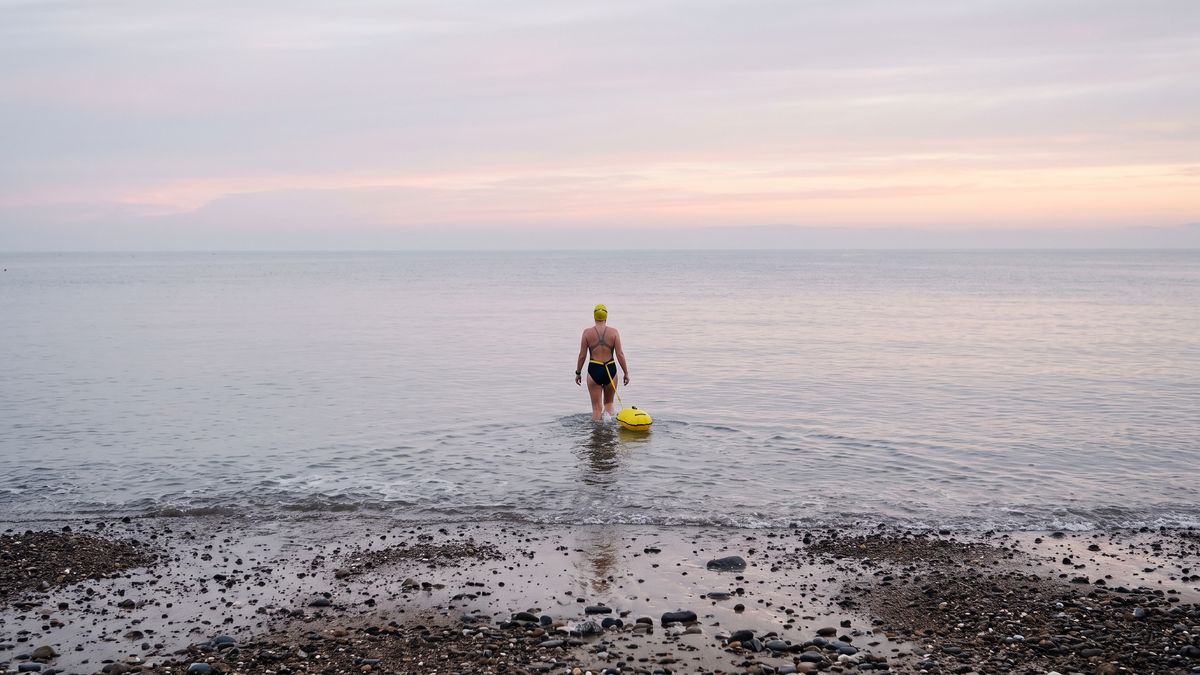
And for the boldest, there’s cold water. The gasp and rapid breathing of cold shock alone raise the risk of drowning, even for confident swimmers in calm water, the National Weather Service warns [50]. Our guide to cold water swimming explains why you start with your doctor’s go-ahead, with company, and with someone on shore who knows when you’ll be back.
Snow has a knack for turning a trail you know by heart into a brand-new one. A marked loop, a sunset time scribbled on the back of your hand, a thermos waiting in the car: that’s all a first winter outing asks. And from here on, every week, the light hands you a few more minutes to go a little farther.


The checklist before you head out
Check it off the night before, then read it again the morning you leave. It follows the steps of this guide and New York DEC’s winter list; adjust it to the activity, the elevation, and the length of your outing.
- Marked, maintained trail, matched to the least experienced person in the group
- Forecast read for your destination: wind, temperature at elevation, wind chill, freezing level
- Local avalanche forecast checked if your route comes near avalanche terrain
- Sunset time noted, turnaround time set
- Trip plan left with a trusted contact who isn’t coming
- Three layers, no cotton; winter hat, mittens, and spares
- Dry change of clothes in a sealed bag
- Waterproof, insulated boots, gaiters, poles, microspikes; snowshoes or skis if the snow is deeper than 8 inches
- Category 3 or 4 sunglasses on snow, sunscreen
- Map and compass or GPS, headlamp (lithium batteries in deep cold), charged phone and backup battery
- First aid kit, space blanket, plastic whistle
- Water in an insulated container, high-energy snacks for every stop
- Chain and traction laws checked for your route; chains or traction devices and a winter emergency kit in the car
- Health insurance checked for an ambulance ride, and travel insurance for a rescue abroad
Gear related to this article
No affiliation: no commission, no sponsored products.
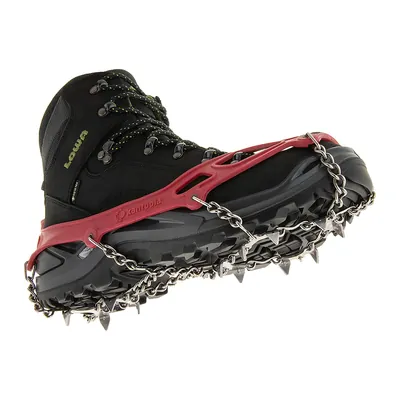
Kahtoola MICROspikes
Traction devices that stretch over your boots: 12 stainless steel spikes of 0.41 in per foot on chains, with a harness that stays supple down to -22 °F. For icy stretches of winter trails.
View on Amazon (opens in a new tab)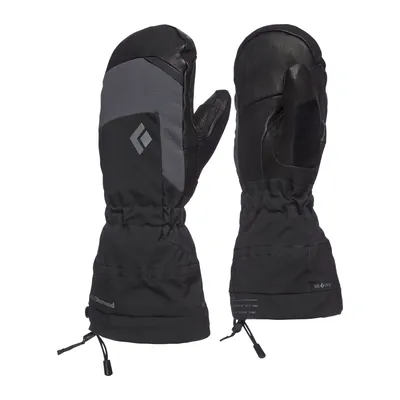
Black Diamond Mercury Mitts
Long-cuffed mitts with a removable, quick-drying PrimaLoft liner and a BD.dry waterproof insert: warm hands when you sit still in the cold. 9.45 oz.
View on Amazon (opens in a new tab)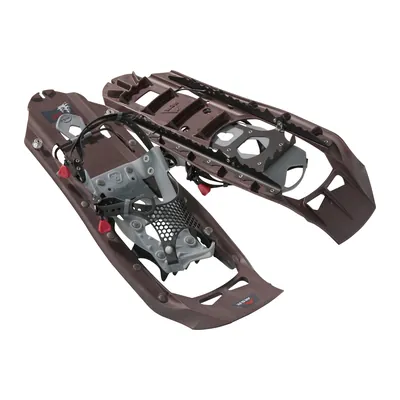
MSR Evo Trail
22-inch snowshoes for flat and rolling trails, rated up to 180 lb with your gear, or 250 lb with the 6-inch tails sold separately. Steel crampons.
View on Amazon (opens in a new tab)
Worth watching
A ranger at Zion National Park walks through the conditions to expect in winter and the precautions to take before heading out on the trails.
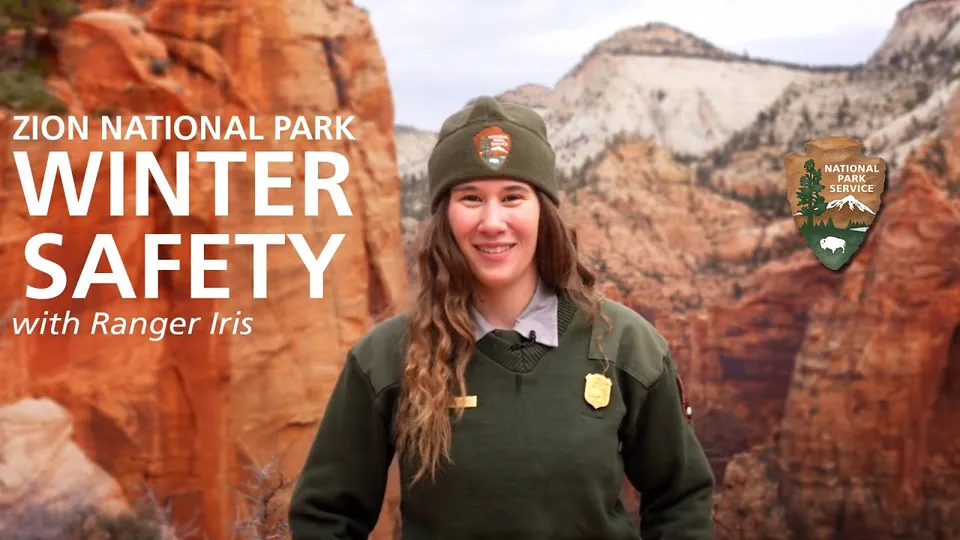
The video is hosted by YouTube (Google): nothing loads until you play it, and Google may then set cookies.
FAQ
What should I bring on a winter hike?
Waterproof, insulated boots, gaiters, trekking poles, and microspikes for ice, plus snowshoes or skis if the snow is deeper than 8 inches; the three layers, a winter hat, mittens, and spares; a dry change of clothes in a sealed bag; sunglasses and sunscreen; a map and compass or a GPS, a headlamp with extra batteries, a charged phone, a first aid kit, a space blanket, and a plastic whistle; water in an insulated container and high-energy snacks.
What should I wear for winter hiking?
Three layers: a moisture-wicking base layer, in merino or synthetic, an insulating layer such as wool or fleece, and a waterproof or water-resistant outer layer. Skip cotton, which won’t keep you warm once it’s wet. Take a layer off before you sweat and put it back on at every stop. Add a winter hat, thick socks, and mittens, which are warmer than gloves, plus a dry spare pair.
Can I hike in snow without snowshoes?
Yes, on a packed or rolled trail: waterproof boots, gaiters, and poles are enough, with microspikes in your pack for icy stretches. Snowshoes earn their keep in fresh, deep snow, and New York’s DEC lists them, or skis, once the snow is deeper than 8 inches; in the High Peaks Wilderness, near Lake Placid, they’re required when snow depths exceed 8 inches. Stay on marked, maintained trails.
What time should I get back from a winter hike?
Well before sunset. On December 21, 2026, the sun sets at 4:20 p.m. in Lake Placid, New York, followed by about half an hour of civil twilight. Those times assume a flat horizon: on a valley floor or under a ridge, the sun disappears sooner. Set your turnaround time the night before, with a buffer, knowing that the way back takes as long as the way out.
How do I know if there’s avalanche danger?
Read the forecast from your local avalanche center, which Avalanche.org brings together. It uses the North American Public Avalanche Danger Scale, from 1, Low, to 5, Extreme. At High danger, level 4, travel in avalanche terrain is not recommended, and historically, the most avalanche deaths have come at Considerable, level 3. Off marked, open trails, judging avalanche terrain takes an avalanche course or a professional.
Will I get a bill if I’m rescued in winter?
Usually not for the rescue itself, but it depends on where you are. The National Park Service doesn’t charge visitors for search and rescue, and in Colorado, backcountry search and rescue comes at no cost to the person in need. In New Hampshire, you can be held liable for rescue costs, and a voluntary hikeSafe card helps you avoid that. An ambulance is a separate bill: check what your health insurance covers.
Sources
- U.S. Naval Observatory, Astronomical Applications Department, “Complete Sun and Moon Data for One Day,” data for Lake Placid, New York, December 4 to 21, 2026, and February 1, 2027, accessed November 8, 2026. aa.usno.navy.mil https://aa.usno.navy.mil/data/RS_OneDay ↩
- Wisconsin Department of Natural Resources, “Winter Recreation, Governor Thompson State Park,” accessed October 23, 2026. dnr.wisconsin.gov https://dnr.wisconsin.gov/topic/parks/govthompson/recreation/winter ↩
- National Park Service, “Be Winter Ready For Your Adventure,” last updated February 23, 2020, accessed October 23, 2026. nps.gov https://www.nps.gov/articles/winterweather.htm ↩
- National Park Service, “Outdoor Emergency Plan,” updated June 21, 2023, accessed October 29, 2026. nps.gov https://www.nps.gov/articles/gtgemergencyplan.htm ↩
- German Alpine Club (Deutscher Alpenverein), “Sicher wandern im Schnee” (in German), DAV Panorama, last updated March 20, 2023. alpenverein.de https://www.alpenverein.de/artikel/sicher-wandern-im-schnee_19158f10-be75-4fbc-a65e-3254fad90796 ↩
- Nordic France, Ski de fond, Nordic activities page (in French), accessed October 22, 2026. nordicfrance.fr https://www.nordicfrance.fr/activites-nordiques/mode-sport/ski-de-fond/ ↩
- MeteoSwiss, “Diminution de la température avec l’altitude” (in French), accessed October 29, 2026. meteosuisse.admin.ch https://www.meteosuisse.admin.ch/meteo/meteo-et-climat-de-a-a-z/temperatures/diminution-de-la-temperature-avec-laltitude.html ↩
- New York State Department of Environmental Conservation (DEC), “Winter Hiking Safety,” accessed November 8, 2026. dec.ny.gov https://dec.ny.gov/things-to-do/hiking/winter-safety ↩
- National Weather Service, “Understanding Wind Chill,” wind chill formula, chart, and alert criteria, accessed November 8, 2026; calculation by Outfarer with the formula. weather.gov https://www.weather.gov/safety/cold-wind-chill-chart ↩
- National Weather Service, Louisville office, “What Does Probability of Precipitation Mean?” accessed October 29, 2026. weather.gov https://www.weather.gov/lmk/pops ↩
- National Weather Service, glossary, “Freezing Level,” accessed October 24, 2026. forecast.weather.gov https://forecast.weather.gov/glossary.php?word=freezing+level ↩
- Météo-France, La limite pluie-neige (in French), December 9, 2024, accessed October 24, 2026. meteofrance.com https://meteofrance.com/meteo-a-z/la-limite-pluie-neige ↩
- German Alpine Club (Deutscher Alpenverein), “Winterwandern” (in German), October 28, 2024, last updated March 3, 2025. alpenverein.de https://www.alpenverein.de/artikel/winterwandern_72ac514c-e21a-4d51-a708-89baffe5581e ↩
- Avalanche.org, a partnership of the American Avalanche Association and the US Forest Service National Avalanche Center, home page, accessed November 8, 2026. avalanche.org https://avalanche.org/ ↩
- Avalanche.org, “North American Public Avalanche Danger Scale,” Avalanche Encyclopedia, accessed November 8, 2026. avalanche.org https://avalanche.org/avalanche-encyclopedia/human/resources/north-american-public-avalanche-danger-scale/ ↩
- Colorado Avalanche Information Center (CAIC), “Accident Statistics and Reporting,” US avalanche fatalities, accessed November 8, 2026. avalanche.state.co.us https://avalanche.state.co.us/accidents/statistics-and-reporting/ ↩
- Avalanche.org, “High Danger (Level 4),” Avalanche Encyclopedia, accessed November 8, 2026. avalanche.org https://avalanche.org/avalanche-encyclopedia/human/resources/north-american-public-avalanche-danger-scale/high-danger-level-4/ ↩
- Avalanche.org, “Extreme Danger (Level 5),” Avalanche Encyclopedia, accessed November 8, 2026. avalanche.org https://avalanche.org/avalanche-encyclopedia/human/resources/north-american-public-avalanche-danger-scale/extreme-danger-level-5/ ↩
- Avalanche.org, “Considerable Danger (Level 3),” Avalanche Encyclopedia, accessed November 8, 2026. avalanche.org https://avalanche.org/avalanche-encyclopedia/human/resources/north-american-public-avalanche-danger-scale/considerable-danger-level-3/ ↩
- U.S. Naval Observatory, “Rise, Set, and Twilight Definitions,” accessed October 23, 2026. aa.usno.navy.mil https://aa.usno.navy.mil/faq/RST_defs ↩
- Petzl, Non-rechargeable energy sources, Tech Tips, accessed October 20, 2026. petzl.com https://www.petzl.com/us/en/sport/tech-tips/product-information-and-specifications/non-rechargeable-energy-sources/LightingSPORT-Les-sources-d-energie-non-rechargeab_SPO_a77w0000000PAz4AAG.html ↩
- Petzl, How is lighting performance measured with the ANSI/PLATO FL1 protocol?, Tech Tips, accessed October 20, 2026. petzl.com https://www.petzl.com/us/en/sport/tech-tips/basic-techniques/how-is-lighting-performance-measured-with-the-ansi-plato-fl1-protocol-/Lighting-ANSI-protocole_SPO_a771r000000PFpHAAW.html ↩
- French Hiking Federation (FFRandonnée), “Randonner en hiver” (in French), March 15, 2021, accessed October 23, 2026. ffrandonnee.fr https://www.ffrandonnee.fr/randonner/securite/randonner-en-hiver ↩
- National Weather Service, Binghamton office, “Extreme Cold Safety,” accessed October 23, 2026. weather.gov https://www.weather.gov/bgm/outreachextremecoldsafety ↩
- MSR (Cascade Designs), Snowshoe Sizing: How to Pick Your Perfect Length, accessed October 22, 2026. cascadedesigns.com https://cascadedesigns.com/blogs/msr-gear-guides/snowshoe-sizing-how-to-pick-snowshoe-length ↩
- MSR (Cascade Designs), The Ultimate Guide to MSR Snowshoes, accessed October 22, 2026. cascadedesigns.com https://cascadedesigns.com/blogs/msr-gear-guides/ultimate-guide-msr-snowshoes ↩
- UIAA, “Dealing with eye problems in expeditions,” accessed October 30, 2026. theuiaa.org https://www.theuiaa.org/dealing-with-eye-problems-in-expeditions/ ↩
- College of Optometrists, “Tints and driving” (standard BS EN ISO 12312-1:2013), accessed October 30, 2026. college-optometrists.org https://www.college-optometrists.org/clinical-guidance/guidance/knowledge,-skills-and-performance/examining-patients-who-drive/tints-and-driving ↩
- Sawyer Products, FAQs (filters and freezing), accessed October 21, 2026. sawyer.com https://www.sawyer.com/faqs ↩
- National Institute of Standards and Technology (NIST), Chemistry WebBook, SRD 69, “Butane,” phase change data, accessed October 29, 2026. webbook.nist.gov https://webbook.nist.gov/cgi/cbook.cgi?ID=C106978&Mask=4 ↩
- National Institute of Standards and Technology (NIST), Chemistry WebBook, SRD 69, “Isobutane,” phase change data, accessed October 29, 2026. webbook.nist.gov https://webbook.nist.gov/cgi/cbook.cgi?ID=C75285&Mask=4 ↩
- MSR (Cascade Designs), “The Ins and Outs of Canister Fuels,” Summit Register, June 26, 2023 (first published March 11, 2015), accessed October 29, 2026. cascadedesigns.com https://cascadedesigns.com/blogs/msr-gear-guides/ins-outs-canister-fuels ↩
- MSR (Cascade Designs), “FAQ: In freezing temperatures, should I put my fuel canister in water?,” Summit Register, February 28, 2019, accessed October 29, 2026. cascadedesigns.com https://cascadedesigns.com/blogs/msr-gear-guides/faq-how-does-putting-your-fuel-canister-in-water-help-it-work-better-in-freezing-temperatures ↩
- MSR (Cascade Designs), DragonFly stove instruction manual, manufacturer’s leaflet, accessed October 29, 2026. cascadedesigns.com https://cascadedesigns.com/cdn/shop/files/11774Dragonfly_Instructions_33-950_ENG.pdf ↩
- Centers for Disease Control and Prevention (CDC), “Carbon Monoxide (CO) Poisoning Basics,” updated October 26, 2026, accessed October 29, 2026. cdc.gov https://www.cdc.gov/carbon-monoxide/about/index.html ↩
- National Institute for Occupational Safety and Health (NIOSH), CDC, “Carbon Monoxide Hazards at Work,” updated October 28, 2026, accessed November 8, 2026. cdc.gov https://www.cdc.gov/niosh/carbon-monoxide/about/index.html ↩
- National Park Service, “Trip Plan,” updated July 10, 2023, accessed October 29, 2026. nps.gov https://www.nps.gov/articles/gtgtripplan.htm ↩
- Apple, “If your iPhone or iPad gets too hot or too cold,” Apple Support, accessed November 8, 2026. support.apple.com https://support.apple.com/en-us/118431 ↩
- National Weather Service, “Cold Weather Safety,” accessed October 23, 2026. weather.gov https://www.weather.gov/safety/cold ↩
- National Park Service, Management Policies 2006, section 8.2.5.3, “Search and Rescue” (PDF), accessed October 28, 2026. nps.gov https://www.nps.gov/subjects/policy/upload/MP_2006_amended.pdf ↩
- Colorado Parks and Wildlife, “Backcountry Search and Rescue Program,” accessed October 28, 2026. cpw.state.co.us https://cpw.state.co.us/backcountry-search-and-rescue-program ↩
- New Hampshire Fish and Game Department, hikeSafe, “NH hikeSafe Card,” accessed October 28, 2026. hikesafe.com https://www.hikesafe.com/ ↩
- European Commission, “112 - the EU’s emergency phone number,” accessed October 29, 2026. digital-strategy.ec.europa.eu https://digital-strategy.ec.europa.eu/en/policies/112 ↩
- Rega, “Rega Patronage: Your Advantages in the Event of a Rescue Mission,” June 2, 2025, accessed October 28, 2026. rega.ch https://www.rega.ch/en/news/news-from-the-world-of-rega/detail/rega-patronage-your-advantages-in-the-event-of-a-rescue-mission ↩
- California Department of Transportation (Caltrans), “Chain Controls / Chain Installation,” accessed November 8, 2026. dot.ca.gov https://dot.ca.gov/travel/winter-driving-tips/chain-controls ↩
- Colorado Department of Transportation, “Passenger Vehicle Traction and Chain Laws,” accessed November 8, 2026. codot.gov https://www.codot.gov/travel/winter-driving/tractionlaw ↩
- New York State Department of Environmental Conservation (DEC), “Primitive Camping,” accessed November 8, 2026. dec.ny.gov https://dec.ny.gov/things-to-do/camping/primitive ↩
- Exped, “FAQs,” answer to “What is R-Value,” accessed October 29, 2026. exped.com https://www.exped.com/en/faqs ↩
- Rab, “Sleeping Bag Temperature Ratings Explained,” Rab Lab, accessed October 29, 2026. rab.equipment https://rab.equipment/us/rab-lab/sleeping-bag-temperature-ratings-explained ↩
- US National Weather Service, “Cold Water Hazards and Safety”, accessed October 29, 2026. weather.gov https://www.weather.gov/safety/coldwater ↩

Trail running, snow, water, nature and destinations
Nolwenn covers trail running, snow, water, nature and destinations for Outfarer. Curious about everything, from meteor showers to night-train schedules, she has a knack for digging up the one detail that changes everything, and nailing it in a single sentence.
 Arnaud Couderc
 Julien de Jurquet

 Guillaume Hoarau