 Français (France)
 English (UK)
 English (US)
 Deutsch (Deutschland)

Contents
The sun doesn’t set earliest on 21 December. In Aviemore, it goes down at 3.32pm every day from 11 to 18 December, and by the solstice it is already lingering a minute longer. From then on the evenings draw out, while sunrise keeps slipping later, to 8.55am from Boxing Day to New Year’s Day [1]. Winter outdoors is full of these small surprises, and almost all of them come down to three things: light, cold and snow. Good news: none of them requires you to be a mountaineer, as long as you choose the right outing. You simply take them in order, from deciding where to go to getting back before dark, which is what this guide does.
Its benchmarks come from official services and federations: at home, Mountaineering Scotland, the Met Office, the Scottish Avalanche Information Service, Mountain Rescue England and Wales and the NHS; for the Alps, the French Hiking Federation, Météo-France, MeteoSwiss, the Swiss hiking trails association, the German Alpine Club and Nordic France. Manufacturers’ instructions cover the kit, and our guides, each sourced in its own right, fill in the detail. They apply to day outings at low level or on waymarked, maintained routes, in Britain first, then in the Alps of France, Switzerland and Austria for those who head there. Winter hillwalking on the snowy Scottish tops, ski touring and winter mountaineering are outside this scope: they are learnt on a course or with a club.
| When | What to do |
|---|---|
| The week before | Choose a route that suits the least experienced of the group; check your boots, slip-on spikes, head torch and spare gloves; for a drive to the Alps, winter tyres or chains |
| The night before | Read the mountain forecast and the avalanche report; note the sunset time and set your turnaround time; charge your phone and power bank |
| The morning | Check the forecast and any route closures again; tell someone where you’re going and when you’ll be back; fill the flask; set off early |
| On the walk | Stay on your route, take a layer off before you sweat, put it back on at every stop, and turn back at the agreed time |
1Choosing your outing: on foot, on snowshoes, on skis or by sled
For a first winter outing, the simplest is often the finest. Here in Britain, as far as we know, there is no network of groomed winter paths like those in the Alps, and the snowy hills are a step up: getting out on them in winter takes equipment and skills beyond those needed for summer hillwalking, Mountaineering Scotland points out [2], starting with an ice axe and crampons [3]. Its advice is to build skills and experience gradually, in stages, and to plan for the whole group, not just the fittest [4]. A low-level walk you already know in summer makes a fine first winter outing: snow can wipe out all trace of the path [2], but at least you’ll know where it went.
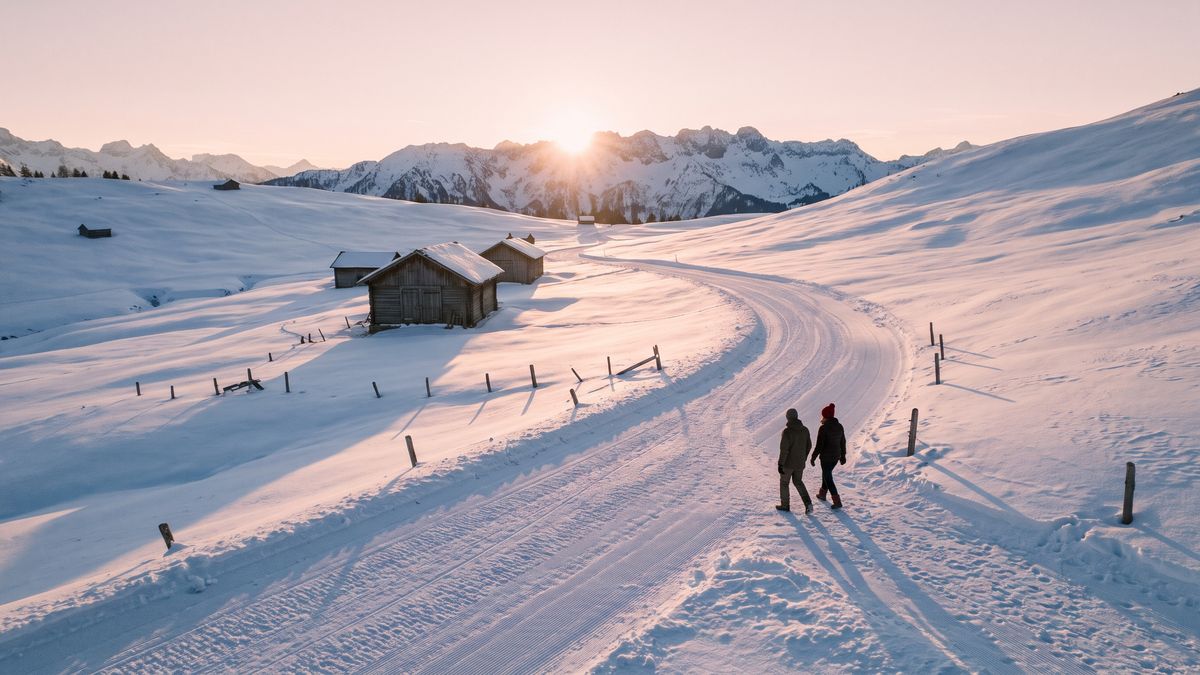
In the Alps, the groomed path does the hard work for you. In Switzerland, winter walking paths are signposted in pink, with a walker symbol, and the country offers around 6,000 km (about 3,700 miles) of waymarked winter routes, snowshoe trails included [5]. In France, ski resorts and Nordic areas lay out routes for people on foot: Nordic France, which brings together more than 160 sites, describes trails designed so that people on snowshoes, or on foot, can explore without getting in the skiers’ way [6].
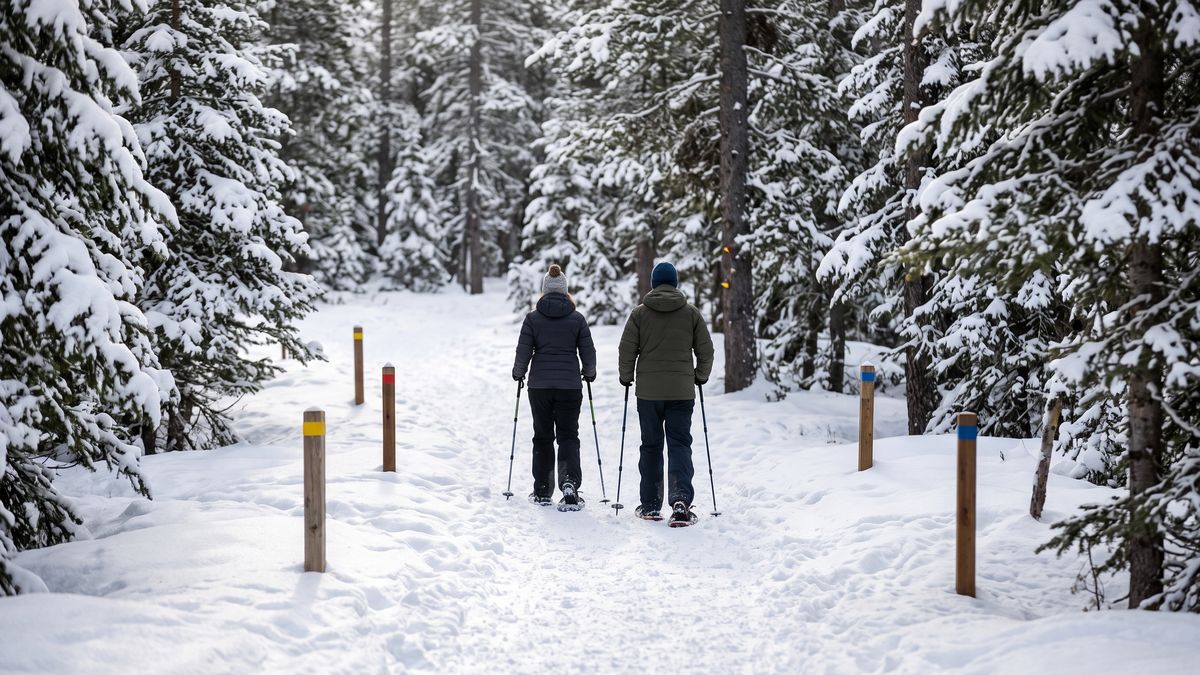
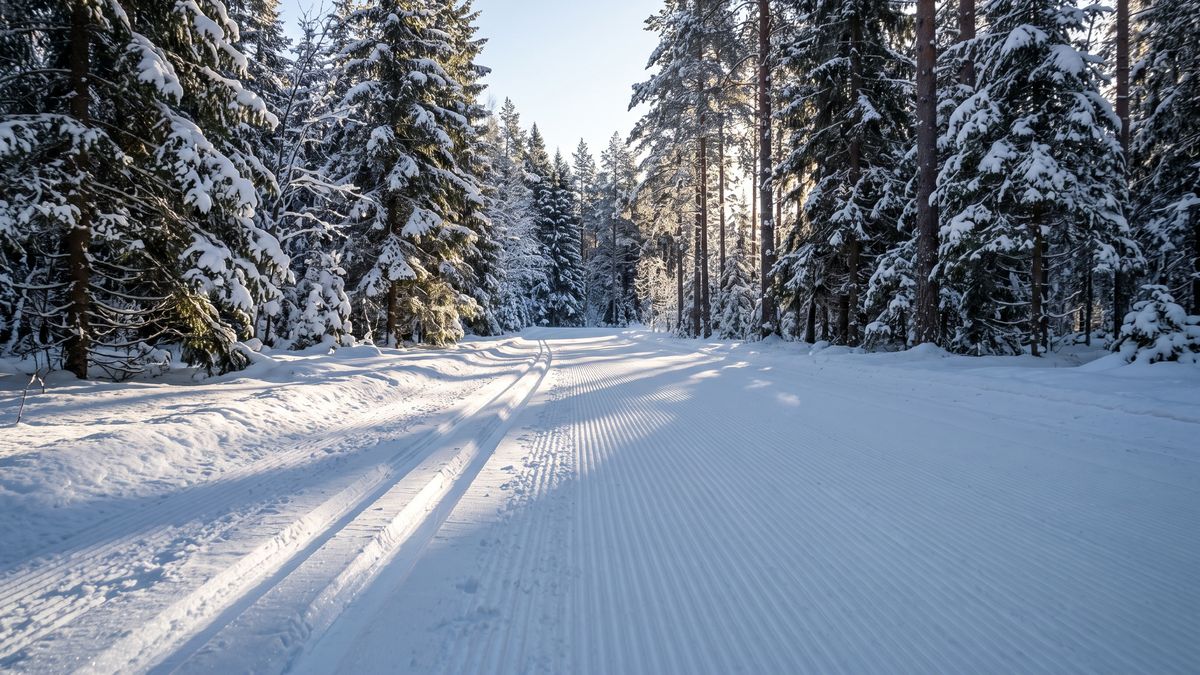
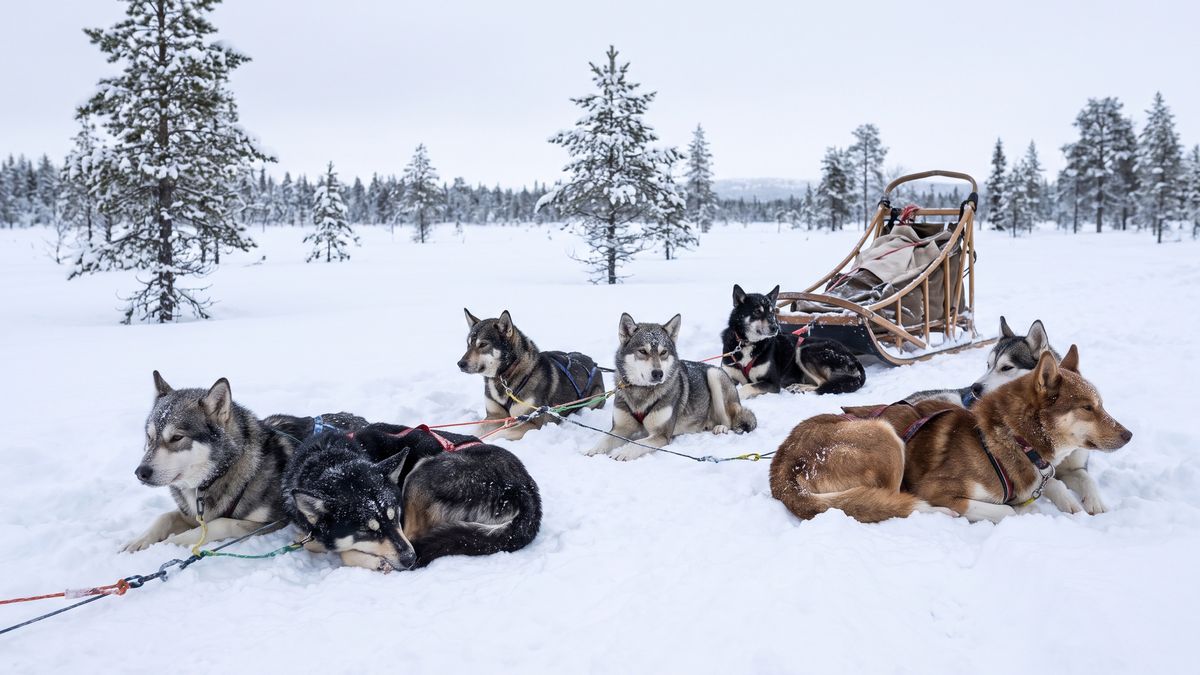
Snowshoes take over in soft, deep snow, off the groomed paths: on firm, well-trodden tracks, walking in boots is often more comfortable, the German Alpine Club notes [7]. For a first go, a groomed, waymarked loop at a Nordic area is ideal: the track is made, the route maintained, and the way back assured. Cross-country skiing has two techniques: classic, skis parallel in the tracks, is close to walking and the more accessible for beginners, while skating takes good balance and more power, according to Nordic France [8]. In France, the national Nordic pass for 2026-2027 costs €214 until 15 November, then €255 [9]. And for those who would rather be carried, a seated dog sled ride is booked with a musher, whom our guide helps you choose.
One rule holds for all these outings: a ski piste is not a footpath. In France, off-piste areas are neither marked out, waymarked, protected nor patrolled, the sports ministry points out [10]. And walkers aren’t always welcome on the pistes themselves: in Montgenèvre, for the 2025/26 season, the municipal order tolerates them on just three easy runs [11].


2The mountain forecast and the avalanche report
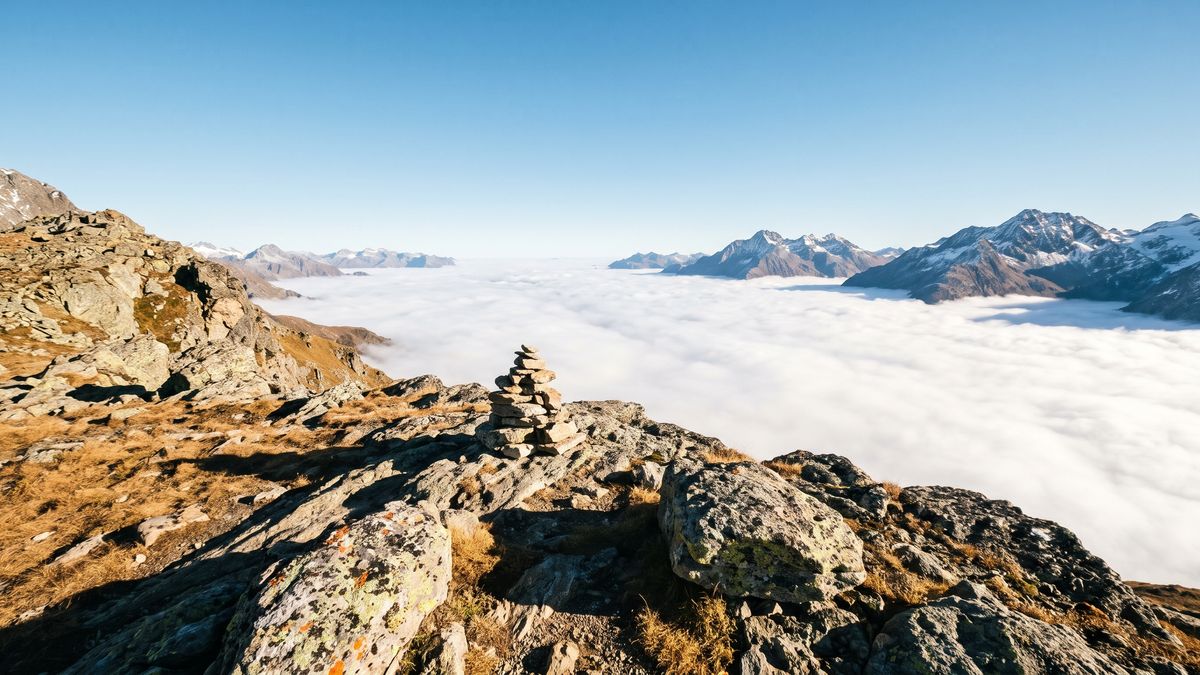
The village forecast says nothing about the tops. Temperature drops by an average of 0.65 °C every 100 m, according to MeteoSwiss [12]: 1,000 m up, it is 6.5 °C colder on average. The wind adds its share. Using the formula published by Belgium’s Royal Meteorological Institute, we worked out that at -5 °C, a 30 km/h wind (about 19 mph) gives a feels-like temperature of around -13 °C [13]. So read a mountain forecast: the Met Office issues one before 6pm and updates it before 6am [14], and Mountaineering Scotland also points to MWIS, the Mountain Weather Information Service [4]. The Met Office’s mountain hazards apply at or above 300 m, and can be in force when no severe weather warning covers the area [14]: on the hill, warnings alone won’t do.
One figure deserves attention: the The height at which the air temperature reaches 0 °C: below it, the temperature is positive; above it, negative.. Snow is often expected 200 to 400 m below it, according to Météo-France [15]. Beware a false friend: in Met Office mountain forecasts, the freezing level is not the air isotherm but the level above which snow is expected to settle, or the ground to be frozen [14]. When snow keeps thawing and refreezing, paths turn icy and slippery, the German Alpine Club warns [16]: a forecast thaw is no gift to your soles.
In Scotland, the Scottish Avalanche Information Service covers six areas, Creag Meagaidh, Glencoe, Lochaber, the Northern and Southern Cairngorms, and Torridon [17], and grades the hazard on five levels, from Low to Very High [18]. In France, Météo-France publishes the Bulletin d’estimation du risque d’avalanche: Météo-France’s avalanche report for each massif. for 35 massifs in the Alps, the Pyrenees and Corsica, on the five-level European scale adopted in 1993 [19]. On a secured winter path that is officially open, avalanche danger is practically ruled out, says the German Alpine Club [7], which still advises reading the report first, and notes that in Germany’s lower ranges the risk is often underestimated [16].

3Timing: set off early, get back before dark
In winter, the light sets the length of the outing. On 21 December 2026, the sun sets at 3.33pm in Aviemore and 4.50pm in Chamonix; on 1 February, it will be 4.43pm and 5.38pm [1]. Then comes The period when the centre of the sun is up to 6° below the horizon. After it ends, artificial light is normally needed for ordinary outdoor activities.: about 35 minutes in Chamonix and 50 in Aviemore [1] [21], a longer dusk that is small consolation for a shorter day. These times assume a flat horizon, though: in Grimentz, in the Swiss canton of Valais, the sun disappears behind the mountains by 2pm on the shortest days [5].
Hence the French Hiking Federation’s advice, written for winter walking away from the mountains and all the more true higher up: plan your route so that you are back before dark, and walk at your own pace, more slowly than in summer [22]. Mountaineering Scotland makes the same point: in winter you have fewer hours of daylight, and everything is likely to take longer [2]; it suggests working out timings to key points on the route, which is invaluable if you need a cut-off time [4]. In snow, the German Alpine Club allows 200 to 300 m of ascent an hour at most [7]. The detail that changes everything: the turnaround time is set the night before, counting back from sunset, with a margin, and not on the summit, when everything tempts you to carry on.
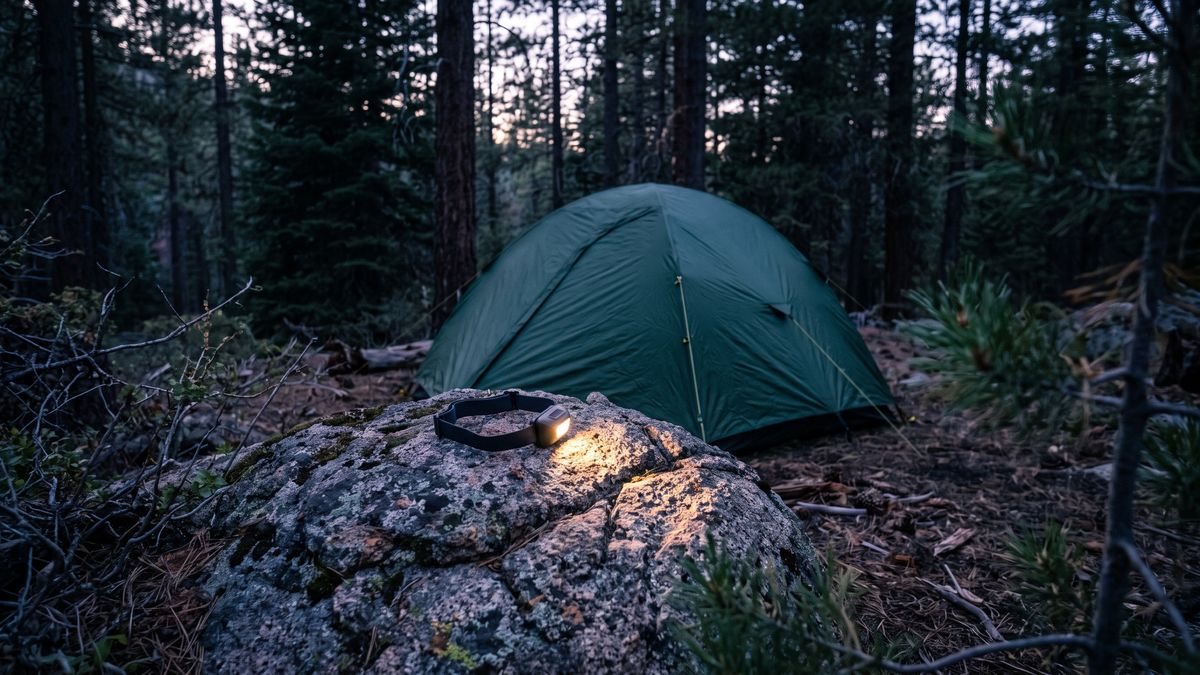
Slip a head torch into your rucksack, even for a few hours: once night falls, finding your way gets harder, and the temperature drops just as your body tires, the French Hiking Federation explains [22]. Mountaineering Scotland’s winter list adds spare batteries, or better still a spare head torch [3]. In serious cold, lithium batteries perform better than alkaline ones and work from -20 to +50 °C, according to Petzl [23]; check your torch’s instructions to make sure it takes them. And read its run time with suspicion: the standard measures it until the light falls to 10% of its maximum output, not until it goes out [24].


4What to wear: three layers and warm extremities
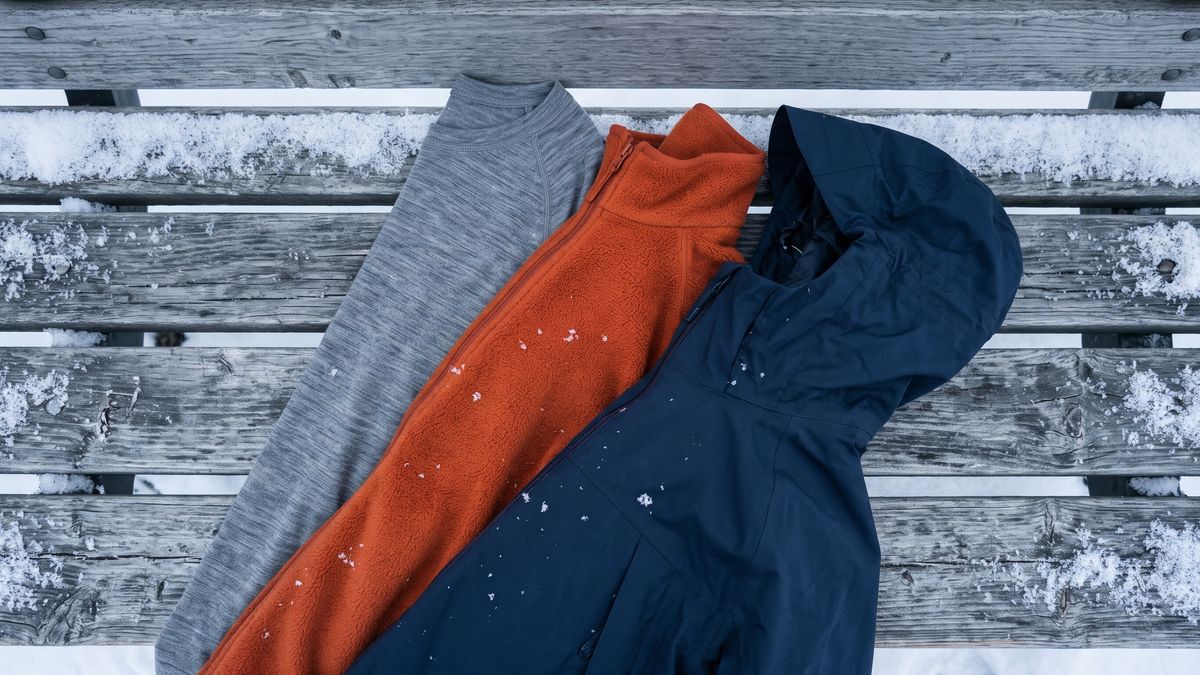
75%: that is the share of the energy you put into walking that your body turns into heat, the French Hiking Federation points out [22]. On the climb you overheat; at the stop, the cold comes straight back. Hence the three-layer system, from the skin outwards: a layer that wicks away sweat, an insulating layer, then a windproof and, if possible, waterproof layer. Take a layer off as soon as you’re warm, and put it back on whenever you stop [22].
Cotton stays at home. It absorbs moisture easily and won’t keep you warm once wet, as the US National Park Service points out [25], and Switzerland’s Federal Office of Sport rules it out for both the first and the second layer [26]. Merino or synthetic next to the skin, then fleece, down or synthetic insulation, and a jacket that keeps out the wind: our guide to the three-layer system goes through the fabrics.
Hands and feet feel the cold first. A hat, a scarf, and warm, waterproof gloves, ‘or better still, mittens’, writes the French Hiking Federation [22]; the US National Weather Service agrees that mittens snug at the wrist are better than gloves [27]. Wet gloves lose their insulating power and chill your hands, so carry a dry pair [22]: Mountaineering Scotland’s winter list asks for at least two spare pairs of gloves or mitts [3]. Add waterproof boots that you don’t lace tighter than necessary, and a dry change of warm clothes in a plastic bag, because your rucksack isn’t waterproof [22].

5Kit: boots, spikes, poles and sunglasses
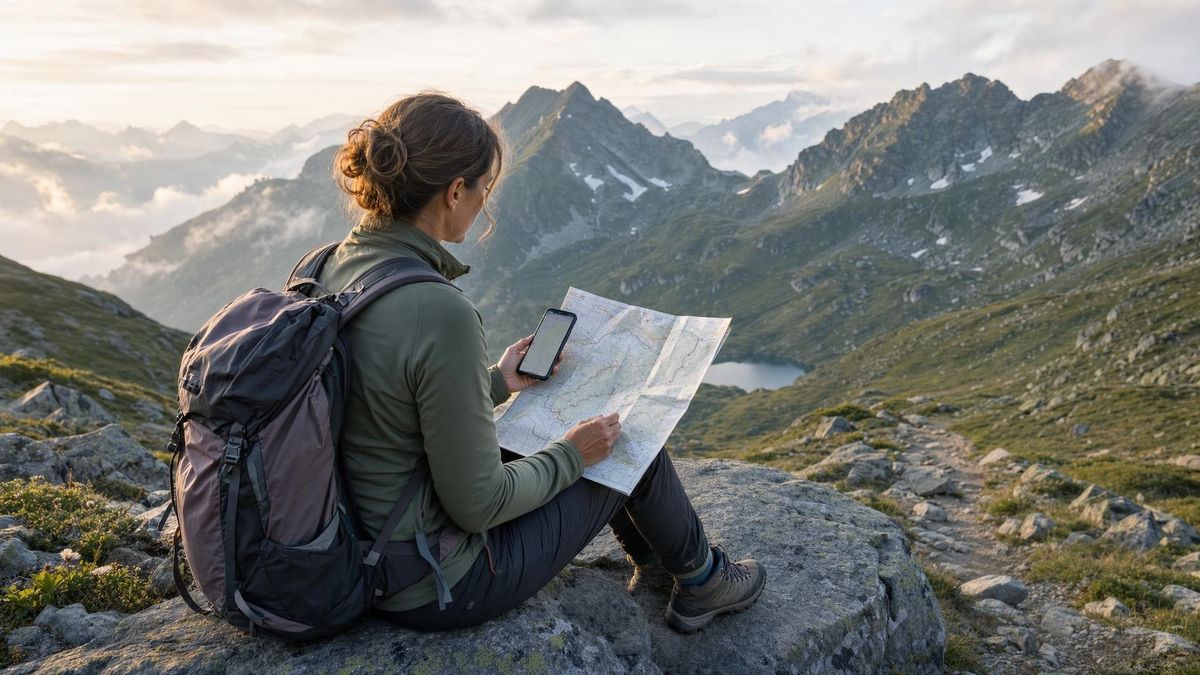
On a groomed path, the kit stays simple. On Swiss winter paths, footwear with a lugged sole or spikes is required, and topographic maps are recommended [28]. Add gaiters: once snow gets into your boot, it won’t dry out in a hurry, warns the German Alpine Club [7]. Its pages also point out that when signposts are covered in snow and the landscape looks different, finding your way gets hard: a map or a GPS has its place in the rucksack [16]. In Scotland, where snow erases the paths altogether, your navigation needs to be up to scratch [2].
Then come Small metal points, often on short chains, stretched over the sole with a rubber harness and often called microspikes. The German Alpine Club describes them as the simplest form of crampon., whose points grip on hard old snow, crust and icy snow [16]. Mountaineering Scotland sets out where they belong: on icy paths and tracks with low-angle inclines, typically 15 to 20°, and not on steep or technical ground where a slip could lead to a serious fall. There, crampons are essential, and so are the skills taught on a winter skills course [29]: that is another activity, learnt with a club or a professional.
On snowshoes, size depends on your weight, gear included, and on the snow: MSR suggests, for example, 56 cm for an adult of 57 to 79 kg on packed snow [30]. Poles are not optional: the manufacturer calls them a mandatory part of any snowshoeing kit, for stability and safety, and wants them adjustable, with a locking system that is freeze-resistant and glove-friendly [31].
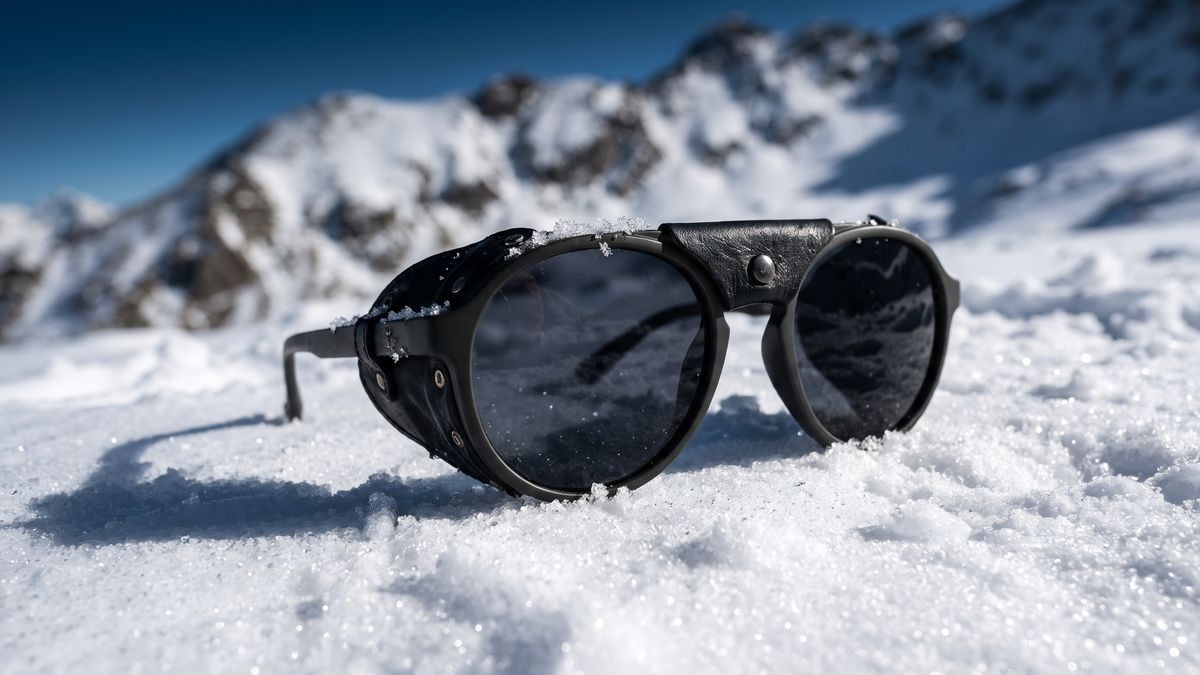
That leaves the light, which also comes from below: snow reflects 80% of UV, according to the International Climbing and Mountaineering Federation (UIAA). To avoid snow blindness, a sunburn of the eye, it recommends sunglasses of protection class 3 or 4 with side shields, or goggles, worn at all times on snow, especially at altitude [32]. The standard excludes category 4 from driving, as the College of Optometrists’ guidance sums up [33]: keep another pair for the road, as our guide to sunglasses explains.


6Drink hot, eat often
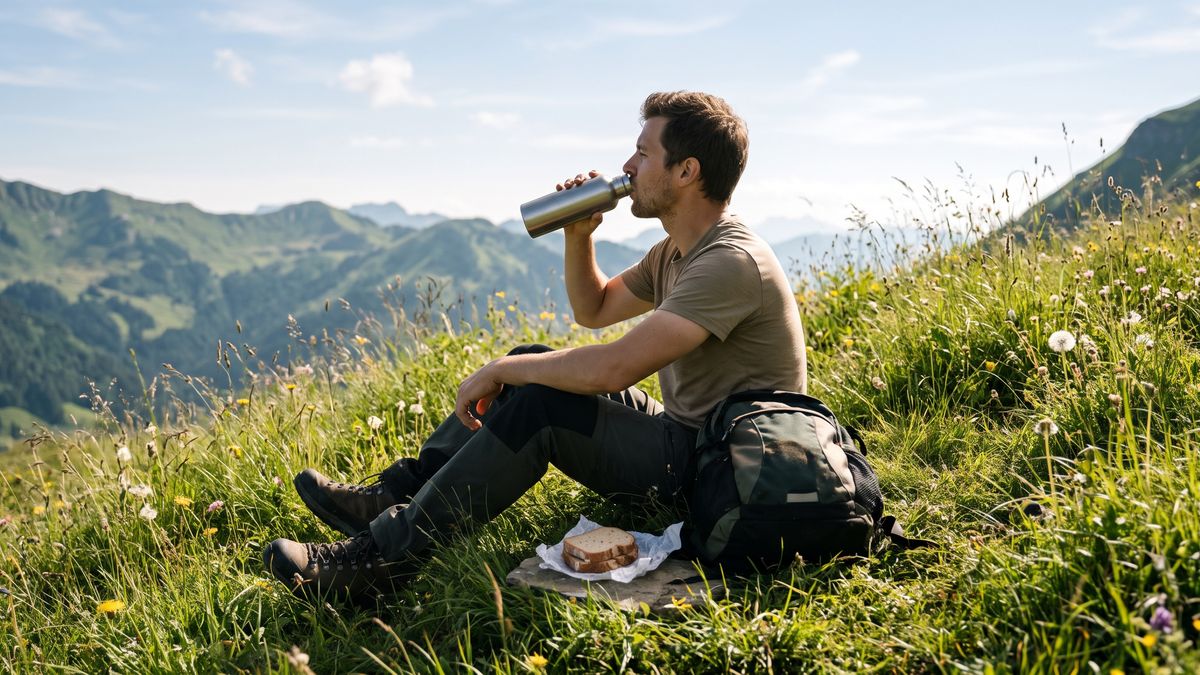
The cold doesn’t cancel your body’s needs. Physical activity dehydrates you, even when it is cold, the US National Park Service points out, and dehydration and hunger both exhaust you and reduce your body’s ability to heat itself; it also suggests insulated containers, so that your food and water don’t freeze [25]. The French Hiking Federation adds that you burn more on a winter walk and tire faster, and advises nibbling often and carrying a flask of hot drink [22]. A few mouthfuls at every stop beat a long lunch sitting in the wind. For a day’s quantities, see our guide to water and food on a walk.
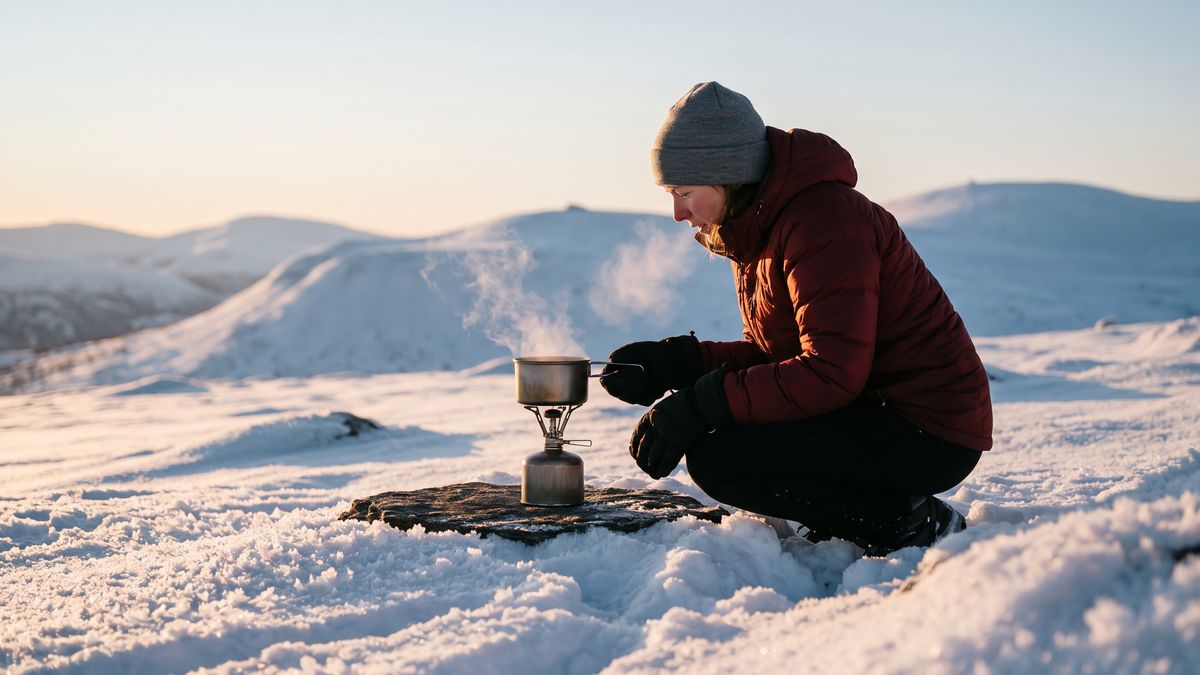
The cold plays tricks on your kit too. There is no definitive way to tell whether one of its filters has been damaged by freezing, Sawyer warns: the manufacturer advises keeping it in a pocket, close to your body, and in your sleeping bag at night, and replacing it if you suspect it has frozen [34]. A canister stove flags in a frost: butane boils at around 0 °C [35] and isobutane at around -11 °C [36]. Hence the blends: propane copes best with the cold, but on its own it needs a much heavier canister, MSR explains [37]. MSR advises keeping the canister warm in your jacket or sleeping bag before you cook [38].


7Telling someone, calling for help, being rescued
Before you set off, tell someone where you’re going. Mountaineering Scotland asks you to let someone know where you are going, what you intend to do and what time you will be back [2]. And if you go out alone, Mountain Rescue England and Wales asks you to be aware of the extra risk, to leave your route and finishing time, and to stick to them as far as you can [40].
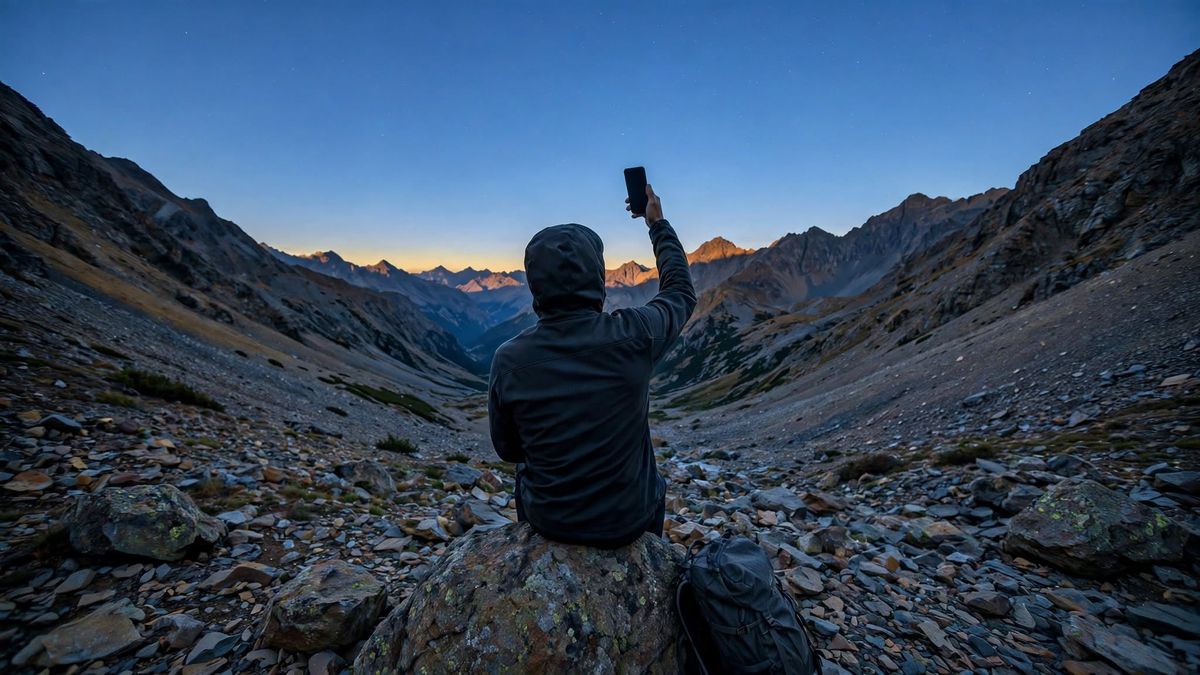
Your phone is your first rescue tool, and it doesn’t like the cold. Apple designs its iPhones for use at ambient temperatures between 0 and 35 °C [41]: keep yours in an inside pocket, with a power bank. ‘Many accidents occur towards the end of the day when both you and your phone are low on energy’, warns Mountain Rescue England and Wales, which asks you to charge it first [40]. In an emergency, dial 999 or 112 and ask for the police, then Mountain Rescue; if you have hearing or speech difficulties, register with emergencySMS before you need it. Once you have called, stay where you are until the rescue team contacts you [42]. Across the Channel, 112 is free and works everywhere in the EU [43]. A whistle and a survival bag complete the rucksack [3].
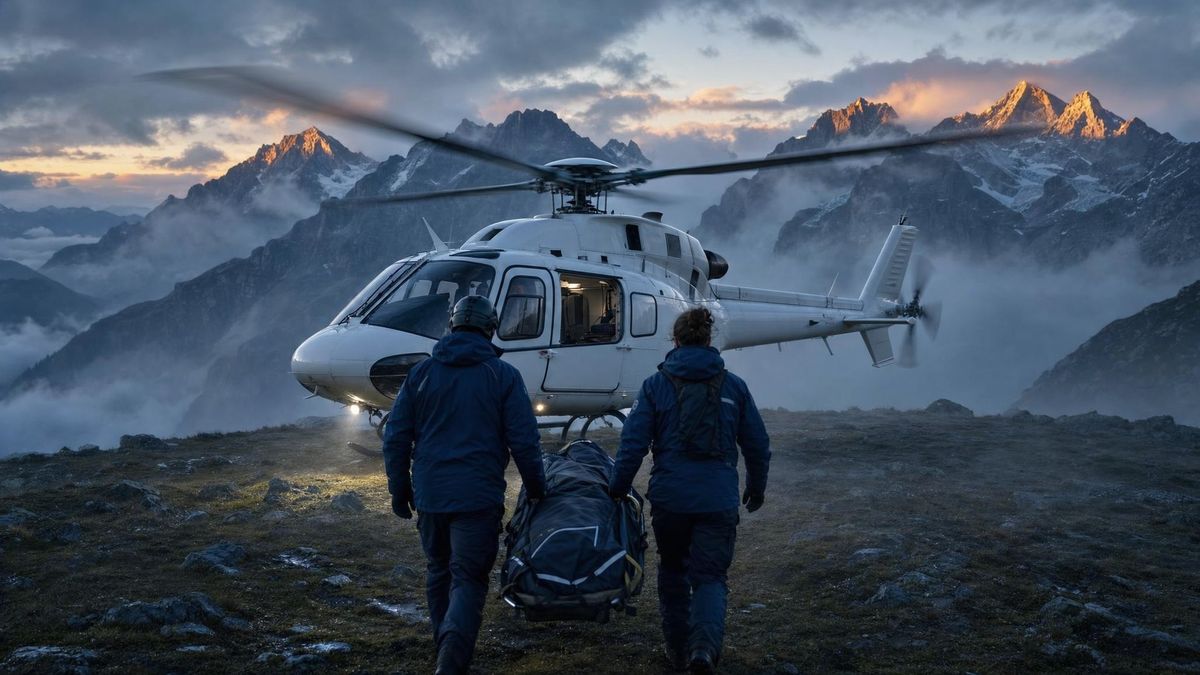
Who pays? In England and Wales, Mountain Rescue raises its funds so that the service remains ‘voluntary and free to the casualty’ [44]; in Scotland, the 26 teams are all volunteers, and supporters and donors provide most of the money [45]. In France, mountain rescue is free too, except within ski areas: on the pistes, at Nordic sites and off-piste reached by the lifts, the commune can charge for it [46], provided it has told users its rates [47]. Elsewhere in the Alps, you often pay: in Switzerland, as a rule, the person rescued or their insurer pays, Rega explains [48]. And your UK GHIC won’t help: the NHS lists ‘ski or mountain rescue’ among the services it doesn’t cover [49]. In France’s mountain areas, the FCDO asks you to check that your insurance covers mountain rescue and helicopter evacuation [50]: do it before you cross the Channel.


8The drive: icy roads, winter tyres or chains
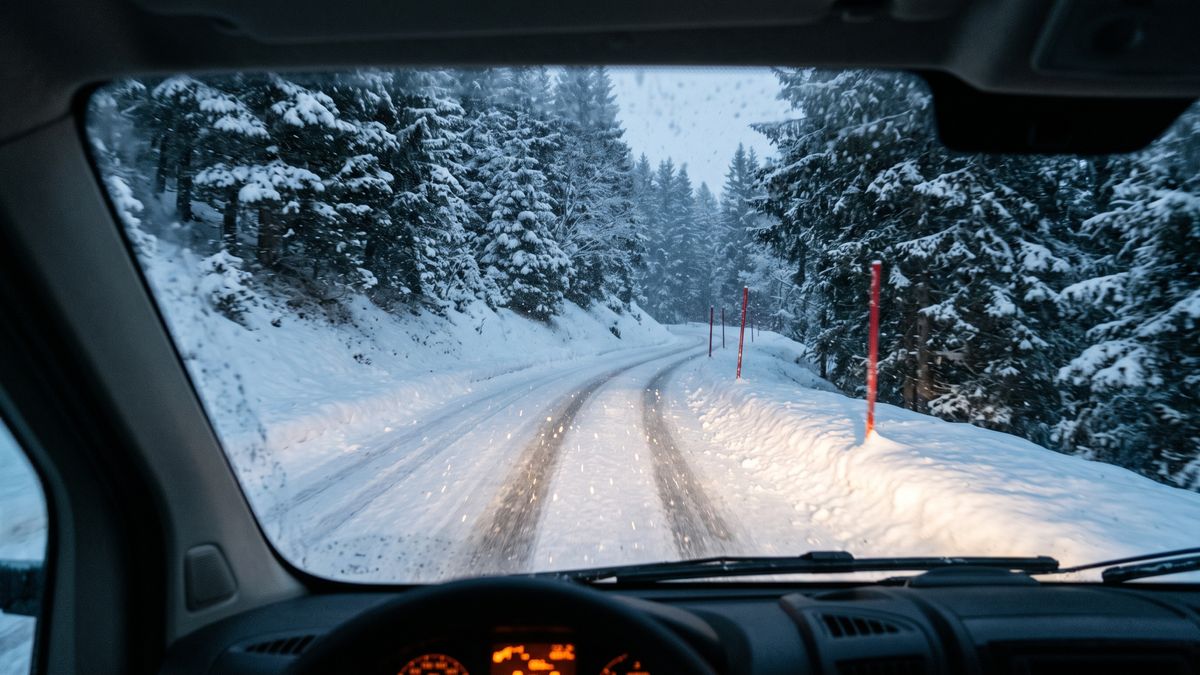
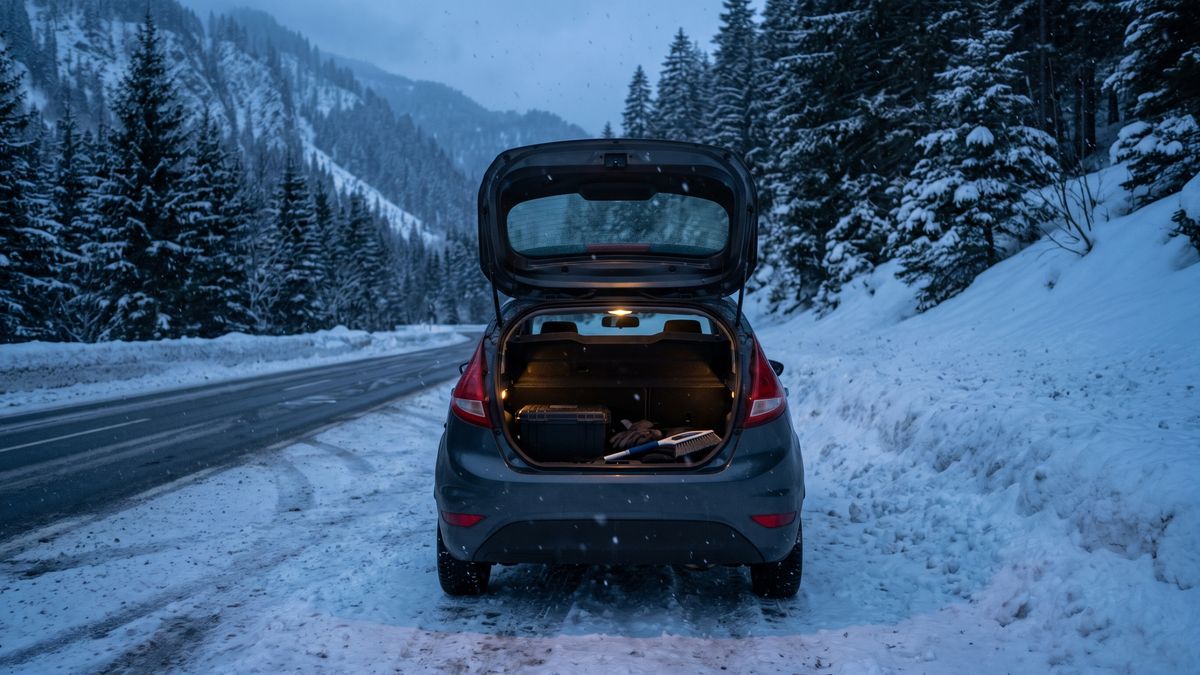
The first tricky stretch of the day is often the road. In Great Britain, the Highway Code’s rules for icy and snowy weather make no mention of winter tyres. They ask you to check the forecast, not to drive in these conditions unless your journey is essential, and, if it is, to take an emergency kit: de-icer and ice scraper, torch, warm clothing and boots, first aid kit, jump leads and a shovel, with a warm drink and emergency food. On ice and snow, keep well back, as stopping distances can be 10 times greater than on dry roads [52].
In the French mountains, the rule goes by the calendar. From 1 November to 31 March, in the mountain areas set by the prefects of 34 départements, cars, vans and motorhomes must have four winter tyres, or carry chains or snow socks for at least two driven wheels. Only tyres marked 3PMSF, the three-peak mountain with a snowflake, count as an alternative to chains [53]. We found no fine in force for this rule alone, though the UK government’s travel advice warns that you could receive one [50]; either way, the requirement is in the French Highway Code, as our guide to winter tyres and chains in France explains.
Beyond France, there is no single European rule. Some countries require winter tyres over a set period, others only in snow, ice or slush, others still on certain roads or in certain regions, sums up the ADAC, the German motoring club [54]. Austria requires them when roads are wintry, from 1 November to 15 April, and in Italy the rules vary by region and by route [54].


9Going further: huts, nights out, cold water
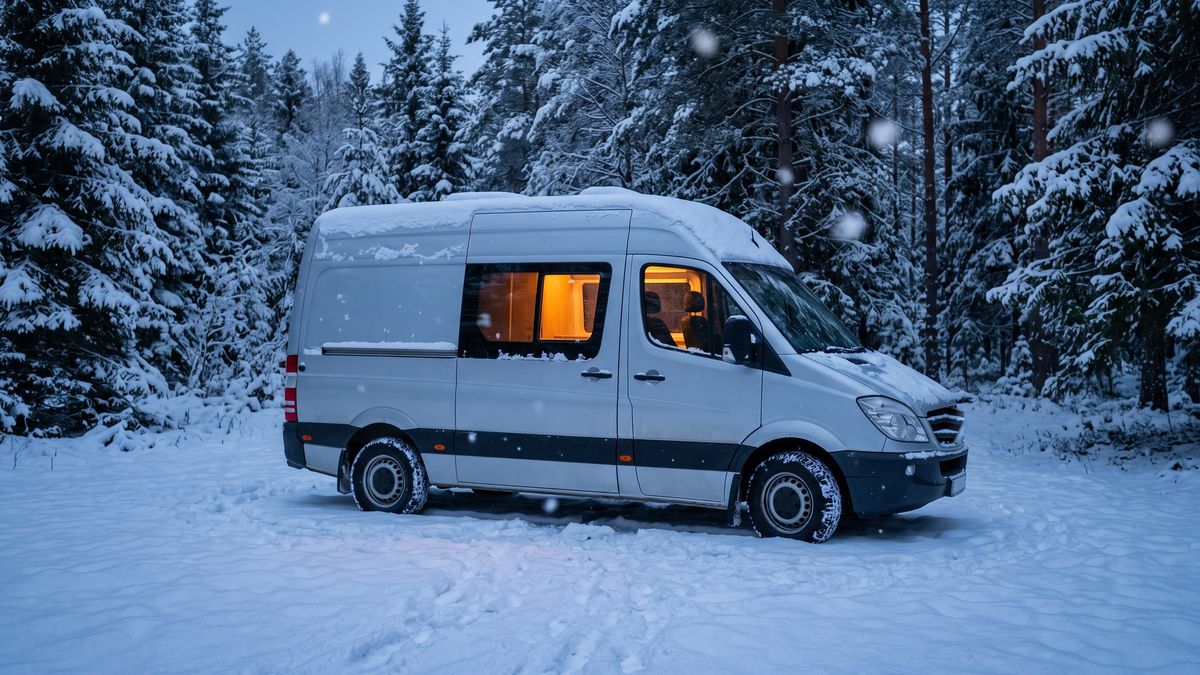
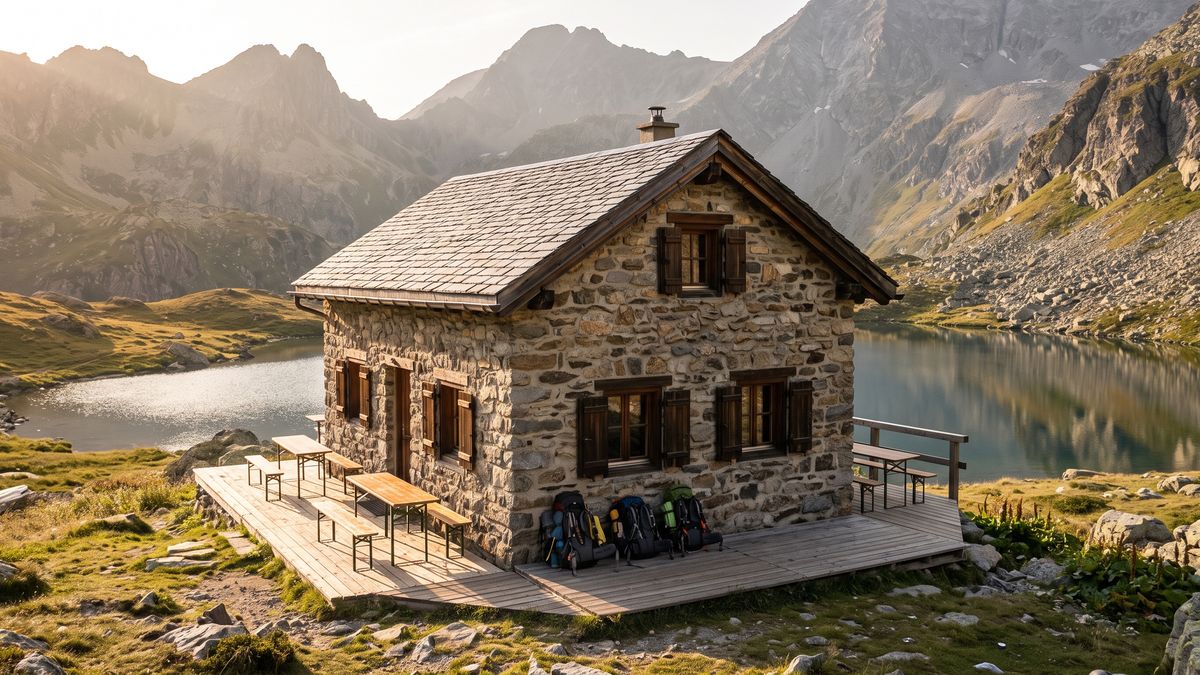
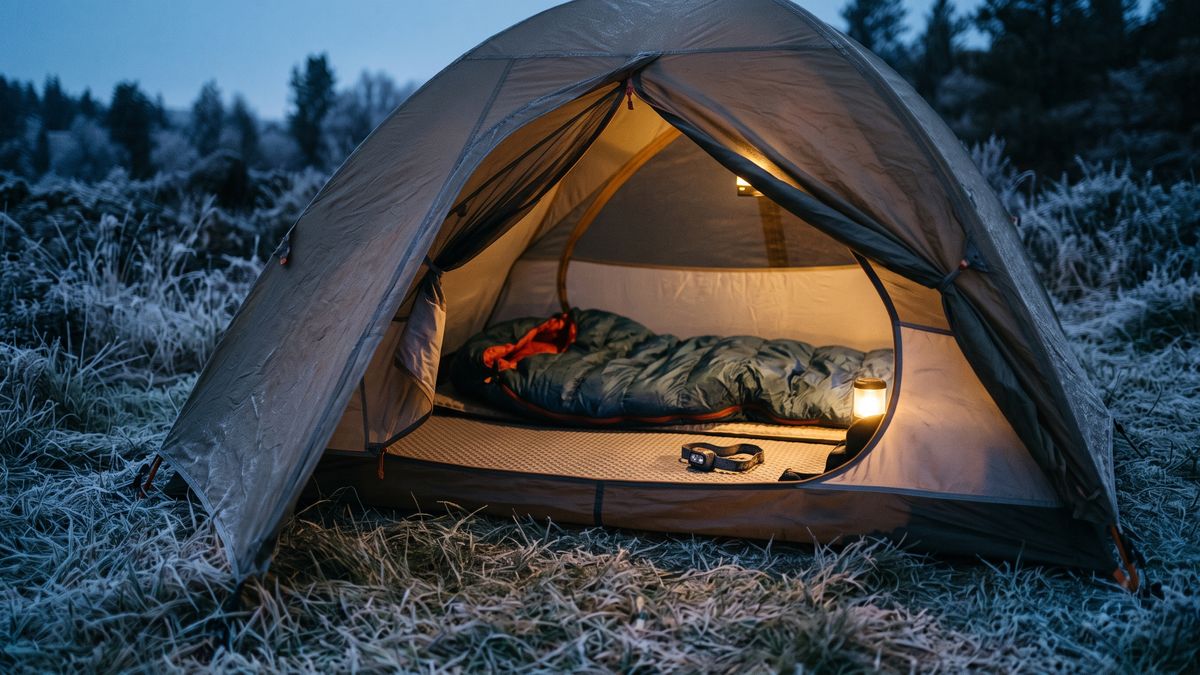
A night in the mountains in winter is another matter. In France, from late September to early June, mountain huts are not staffed, except sometimes in March and April for the spring skiing season; some leave a winter room open, more basic, usually with a wood stove, something to cook with and somewhere to sleep, for a modest fee [55]. You then need your own sleeping bag and self-sufficiency, and the way in often crosses snowy slopes: that is another activity, which our guide to mountain huts covers.
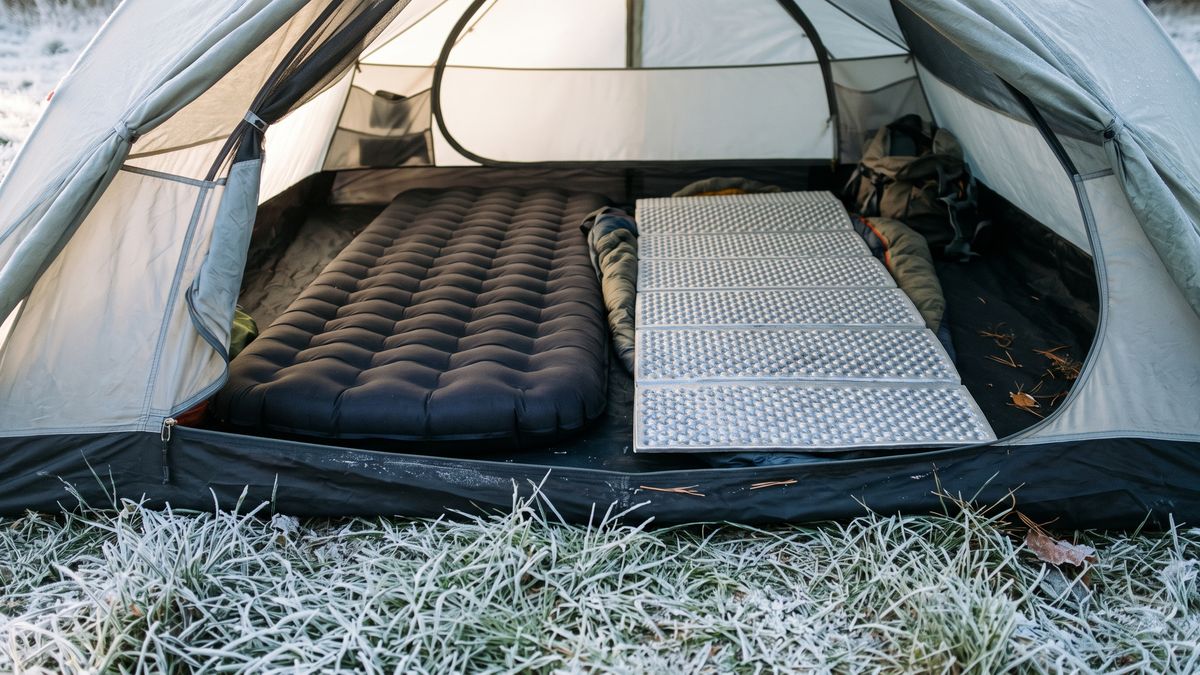
To sleep out, everything happens beneath you. Exped recommends a mat with an R-value of at least 6.5 for a sleeping bag to give the warmth it is rated for [56], and two stacked mats add up their R-values. Choose the bag by its comfort rating: at its limit rating you can still sleep, but curled up against the cold, and its extreme rating is for emergencies only, Rab explains [57]. Mountaineering Scotland puts it plainly: on cold ground or snow, what you sleep on becomes as important as what you sleep in [58]. If you have never slept out in winter, try it first near a shelter or a vehicle, with a fallback, as our guide to sleeping mats advises.
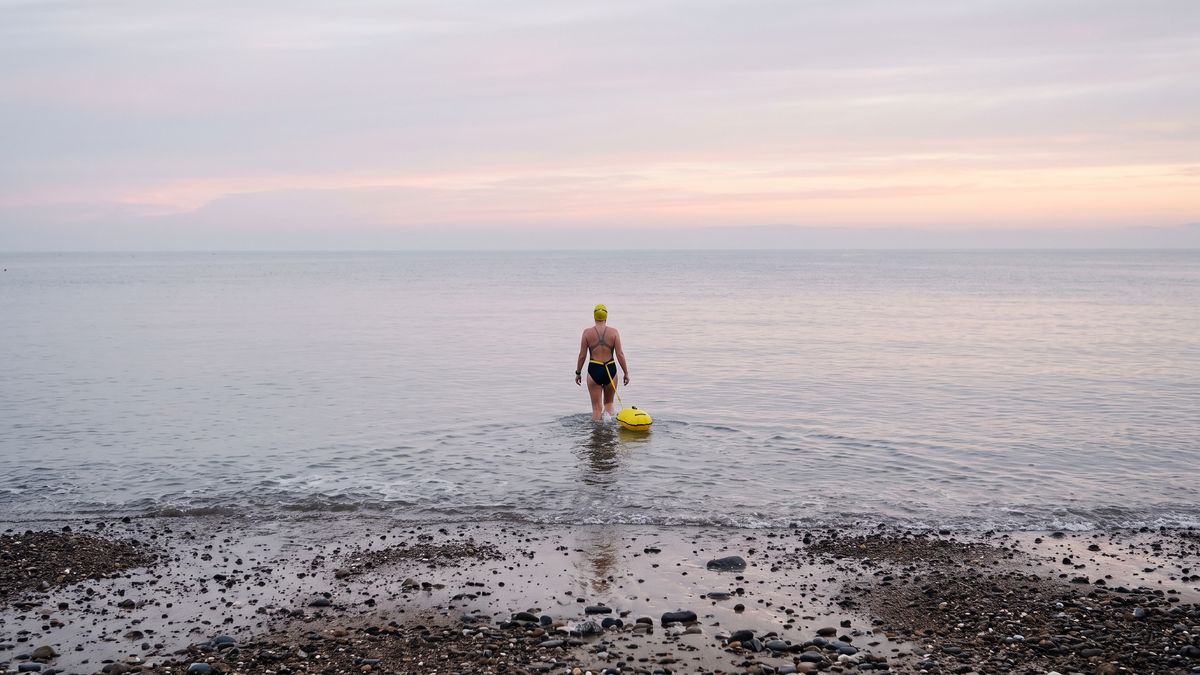
And for the boldest, there is cold water. RLSS UK warns that a sudden rise in blood pressure can be fatal for people with a pre-existing heart condition [59], so seek a health professional’s advice first, as France’s sea rescue service, the SNSM, recommends [60]. Don’t swim alone, and let friends and family know your plans beforehand, RLSS UK adds [61], as our guide to cold water swimming explains.
Snow has a knack the rest of the year lacks: it turns the most familiar walk into somewhere new. Frost on the car park at nine, a familiar glen gone white and strange, a flask of tea that tastes better than it has any right to, and a turnaround time you actually keep: that is a first winter outing. The evenings are already drawing out. Go and meet them.


The checklist before you set off
Tick it off the night before, then run through it again on the morning you leave. It follows the steps of this guide; adapt it to the activity, the height and the length of your outing.
- Route suited to the least experienced of the group, at low level or waymarked and open
- Mountain forecast read (Met Office or MWIS): wind, temperature on the tops, freezing level
- Avalanche report read (SAIS in Scotland, BERA in France); in France, no avalanche warning in force
- Sunset time noted, turnaround time set
- Someone knows where you’re going and when you’ll be back
- Three layers, no cotton; hat, mittens and spare gloves
- Dry change of clothes in a waterproof bag
- Boots with a good grip, gaiters, poles, slip-on spikes; snowshoes if the snow is deep
- Category 3 or 4 sunglasses on snow, sun cream
- Map, head torch (lithium batteries in serious cold, or a spare torch), charged phone and power bank
- First aid kit, survival bag, whistle
- Flask of hot drink and snacks for every stop
- Driving in snow: emergency kit in the car; French mountains, 1 November to 31 March: four winter tyres, or chains or snow socks on board
- Travel insurance checked for mountain rescue abroad: a GHIC doesn’t cover it
Kit related to this article
No affiliation: no commission, no sponsored products.
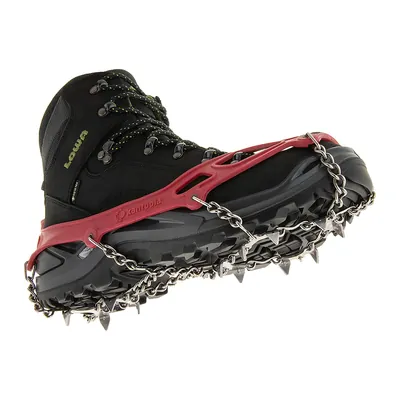
Kahtoola MICROspikes
Traction devices that stretch over your boots: 12 stainless steel spikes of 10.4 mm per foot on chains, with a harness that stays supple down to -30 °C. For icy stretches of winter paths.
View on Amazon (opens in a new tab)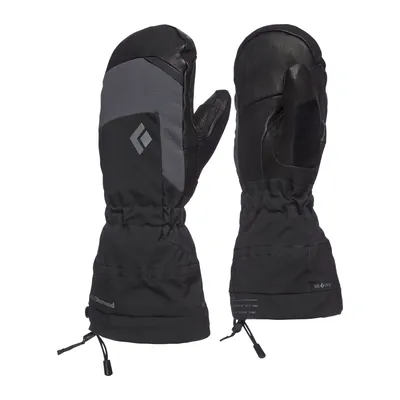
Black Diamond Mercury Mitts
Long-cuffed mitts with a removable, quick-drying PrimaLoft liner and a BD.dry waterproof insert: warm hands when you sit still in the cold. 268 g.
View on Amazon (opens in a new tab)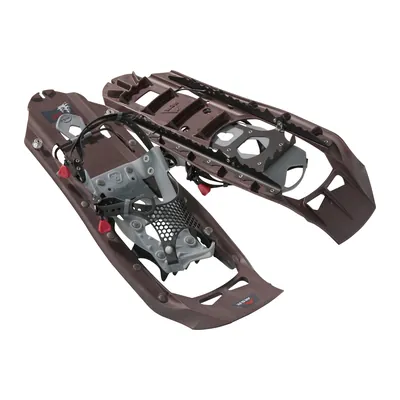
MSR Evo Trail
56 cm snowshoes for flat and rolling trails, rated up to 80 kg with your kit, or 114 kg with the 15 cm tails sold separately. Steel crampons.
View on Amazon (opens in a new tab)
Worth watching
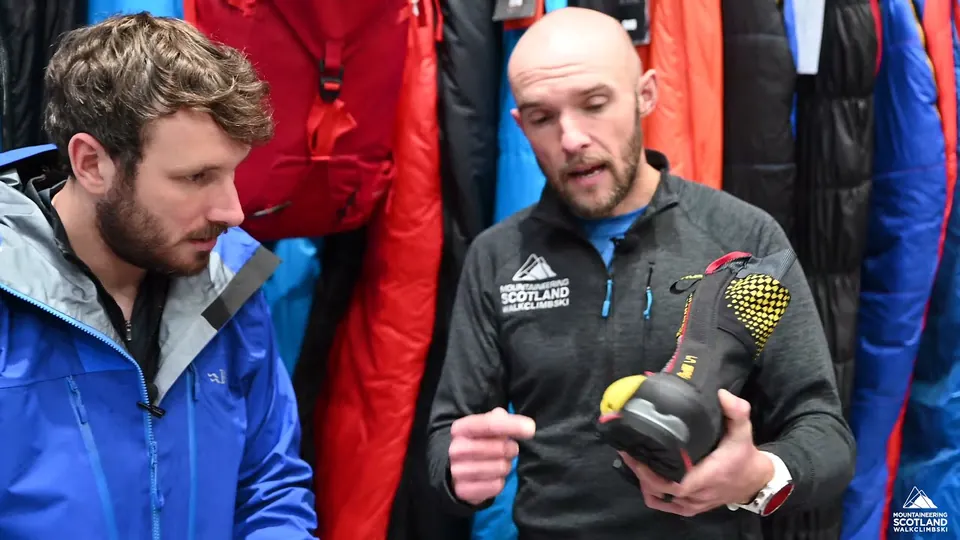
Mountaineering Scotland shows how to prepare for a winter day in the Scottish hills: layering to stay warm and dry, keeping hands and feet warm, and which boots, crampons and ice axe suit which outing.
The video is hosted by YouTube (Google): nothing loads until you play it, and Google may then set cookies.
FAQs
What should I take on a winter walk?
Sturdy boots with a lugged sole, gaiters, poles and slip-on spikes; the three layers, a hat, mittens and spare gloves; a dry change of clothes in a waterproof bag; sunglasses and sun cream; a map, a head torch, a charged phone and power bank, a first aid kit, a survival bag and a whistle; a flask of hot drink and snacks. For the snowy Scottish hills, add an ice axe, crampons and the skills to use them.
What should I wear for winter walking?
Three layers: a base layer that wicks away sweat, in merino or synthetic, an insulating layer, then a windproof and, if possible, waterproof jacket. No cotton, which stops keeping you warm once wet. Take a layer off as soon as you’re warm and put it back on at every stop. Add a hat, a scarf and mittens, which are better than gloves, plus spare pairs kept dry.
Can I walk in the snow without snowshoes?
Yes, on a groomed winter path or a firm, well-trodden track: boots with a good grip, gaiters and poles are enough, with slip-on spikes for icy stretches. Snowshoes are for soft, deep snow off the groomed paths; on firm tracks, walking in boots is often more comfortable, says the German Alpine Club. On steep, icy ground in the Scottish hills, spikes aren’t enough: that is crampon terrain.
What time should I be back from a winter walk?
Well before sunset. On 21 December 2026, the sun sets at 3.33pm in Aviemore and 4.50pm in Chamonix, followed by about 50 and 35 minutes of civil twilight. On an Alpine valley floor, it often vanishes much earlier behind the mountains: by 2pm in Grimentz, in Valais. Set your turnaround time the night before, with a margin.
How do I know if there is an avalanche risk?
Read the avalanche report. In Scotland, the Scottish Avalanche Information Service covers six areas and grades the hazard from Low to Very High. In France, Météo-France publishes the BERA for 35 massifs, on the five-level European scale, and asks people not to go out in the mountains when an avalanche warning is in force. Off waymarked, open routes, judging the terrain takes training.
Is mountain rescue free in winter?
In England and Wales, yes: Mountain Rescue England and Wales keeps the service voluntary and free to the casualty, and Scotland’s teams are volunteers funded mostly by donors. In France, it is free too, except within ski areas, where the commune can charge if it has told users its rates. In Switzerland, the person rescued or their insurer pays, and a UK GHIC doesn’t cover mountain rescue: check your travel insurance.
Sources
- U.S. Naval Observatory, Astronomical Applications Department, ‘Complete Sun and Moon Data for One Day’, data for Aviemore, Chamonix and Oberstdorf, December 2026 to February 2027, accessed 8 November 2026. aa.usno.navy.mil https://aa.usno.navy.mil/data/RS_OneDay ↩
- Mountaineering Scotland, ‘ThinkWINTER’, accessed 23 October 2026. mountaineering.scot https://www.mountaineering.scot/safety-and-skills/thinkwinter ↩
- Mountaineering Scotland, ‘ThinkWINTER: Clothing and equipment’, winter kit list, accessed 8 November 2026. mountaineering.scot https://www.mountaineering.scot/safety-and-skills/thinkwinter/clothes-and-kit ↩
- Mountaineering Scotland, ‘ThinkWINTER: Planning’, accessed 8 November 2026. mountaineering.scot https://www.mountaineering.scot/safety-and-skills/thinkwinter/winter-planning ↩
- Suisse Rando (Swiss hiking trails association), ‘Randonnée en hiver’ (in French), accessed 8 November 2026. suisse-rando.ch https://www.suisse-rando.ch/fr/savoir/randonnee-en-hiver ↩
- Nordic France (federation of French Nordic ski areas), Raquettes, Nordic activities page (in French), accessed 22 October 2026. nordicfrance.fr https://www.nordicfrance.fr/activites-nordiques/mode-detente/raquettes/ ↩
- German Alpine Club (Deutscher Alpenverein), ‘Sicher wandern im Schnee’ (in German), DAV Panorama, last updated 20 March 2023. alpenverein.de https://www.alpenverein.de/artikel/sicher-wandern-im-schnee_19158f10-be75-4fbc-a65e-3254fad90796 ↩
- Nordic France, Ski de fond, Nordic activities page (in French), accessed 22 October 2026. nordicfrance.fr https://www.nordicfrance.fr/activites-nordiques/mode-sport/ski-de-fond/ ↩
- Nordic France, Pass National, 2026-2027 season prices (in French), accessed 22 October 2026. nordicfrance.fr https://www.nordicfrance.fr/qui-sommes-nous/pass-national ↩
- French Ministry of Sport, ‘Pratiquer l’hiver - Balisage et signalisation’ (in French), accessed 8 November 2026. sports.gouv.fr https://www.sports.gouv.fr/pratiquer-l-hiver-balisage-et-signalisation-697 ↩
- Commune of Montgenèvre, Arrêté relatif à la pratique du ski alpin sur la Commune de Montgenèvre, saison 2025/2026 (in French), order no. 05085202586, received by the prefecture on 28 November 2025. skipass.montgenevre.com https://skipass.montgenevre.com/media/download/montgenevreb2c/cms/media/refont-2022/pdf/2.%20ARRETE%20GENERAL%20PRATIQUE%20DU%20SKI%20ALPIN%20MTG.pdf ↩
- MeteoSwiss, Diminution de la température avec l’altitude (in French), Weather and climate from A to Z, accessed 24 October 2026. meteosuisse.admin.ch https://www.meteosuisse.admin.ch/meteo/meteo-et-climat-de-a-a-z/temperatures/diminution-de-la-temperature-avec-laltitude.html ↩
- Royal Meteorological Institute of Belgium, ‘Température sensible’ (in French), weather glossary, accessed 23 October 2026; calculation by Outfarer using the JAG/TI formula. meteo.be https://www.meteo.be/fr/infos/dico-meteo/temperature-sensible ↩
- Met Office, ‘Mountain forecast explained’, accessed 24 October 2026. weather.metoffice.gov.uk https://weather.metoffice.gov.uk/guides/mountain/forecast ↩
- Météo-France, La limite pluie-neige (in French), 9 December 2024, accessed 24 October 2026. meteofrance.com https://meteofrance.com/meteo-a-z/la-limite-pluie-neige ↩
- German Alpine Club (Deutscher Alpenverein), ‘Winterwandern’ (in German), 28 October 2024, last updated 3 March 2025. alpenverein.de https://www.alpenverein.de/artikel/winterwandern_72ac514c-e21a-4d51-a708-89baffe5581e ↩
- Scottish Avalanche Information Service, home page with avalanche reports for six mountain areas, accessed 23 October 2026. sais.gov.uk https://www.sais.gov.uk/ ↩
- Scottish Avalanche Information Service, ‘Interpreting Avalanche Reports’, guide to the reports and their hazard levels (PDF), 2020, accessed 8 November 2026. sais.gov.uk https://www.sais.gov.uk/wp-content/uploads/2020/12/Interpreting-Avalanche-Reports.pdf ↩
- Météo-France (French national weather service), Avalanche : quels dangers, comment réagir et s’informer ? (in French), accessed 22 October 2026. meteofrance.com https://meteofrance.com/vigilance-et-securite/avalanche-quels-dangers-comment-reagir-et-sinformer ↩
- Mountaineering Scotland, ‘ThinkWINTER: Avalanche’, accessed 8 November 2026. mountaineering.scot https://www.mountaineering.scot/safety-and-skills/thinkwinter/avalanche ↩
- U.S. Naval Observatory, ‘Rise, Set, and Twilight Definitions’, accessed 23 October 2026. aa.usno.navy.mil https://aa.usno.navy.mil/faq/RST_defs ↩
- French Hiking Federation (FFRandonnée), ‘Randonner en hiver’ (in French), 15 March 2021, accessed 23 October 2026. ffrandonnee.fr https://www.ffrandonnee.fr/randonner/securite/randonner-en-hiver ↩
- Petzl, Non-rechargeable energy sources, Tech Tips, accessed 20 October 2026. petzl.com https://www.petzl.com/int/en/sport/tech-tips/product-information-and-specifications/non-rechargeable-energy-sources/LightingSPORT-Les-sources-d-energie-non-rechargeab_SPO_a77w0000000PAz4AAG.html ↩
- Petzl, How is lighting performance measured with the ANSI/PLATO FL1 protocol?, Tech Tips, accessed 20 October 2026. petzl.com https://www.petzl.com/int/en/sport/tech-tips/basic-techniques/how-is-lighting-performance-measured-with-the-ansi-plato-fl1-protocol-/Lighting-ANSI-protocole_SPO_a771r000000PFpHAAW.html ↩
- US National Park Service, ‘Be Winter Ready For Your Adventure’, last updated 23 February 2020, accessed 23 October 2026. nps.gov https://www.nps.gov/articles/winterweather.htm ↩
- Swiss Federal Office of Sport (FOSPO), mobilesport.ch, ‘Camps d’hiver : organisation, matériel’ (in French; also in German and Italian), 7 October 2019, accessed 23 October 2026. mobilesport.ch https://www.mobilesport.ch/ski/camps-dhiver-organisation-materiel/ ↩
- US National Weather Service, Binghamton office, ‘Extreme Cold Safety’, accessed 23 October 2026. weather.gov https://www.weather.gov/bgm/outreachextremecoldsafety ↩
- Suisse Rando, ‘Catégories de chemins de randonnée’ (in French), accessed 8 November 2026. suisse-rando.ch https://www.suisse-rando.ch/fr/savoir/signalisation/categories-de-chemins-de-randonnee ↩
- Mountaineering Scotland, ‘ThinkWINTER: Micro spikes or crampons?’, accessed 8 November 2026. mountaineering.scot https://www.mountaineering.scot/safety-and-skills/thinkwinter/crampons-microspikes ↩
- MSR (Cascade Designs), Snowshoe Sizing: How to Pick Your Perfect Length, accessed 22 October 2026. cascadedesigns.com https://cascadedesigns.com/blogs/msr-gear-guides/snowshoe-sizing-how-to-pick-snowshoe-length ↩
- MSR (Cascade Designs), The Ultimate Guide to MSR Snowshoes, accessed 22 October 2026. cascadedesigns.com https://cascadedesigns.com/blogs/msr-gear-guides/ultimate-guide-msr-snowshoes ↩
- UIAA, ‘Dealing with eye problems in expeditions’, accessed 30 October 2026. theuiaa.org https://www.theuiaa.org/dealing-with-eye-problems-in-expeditions/ ↩
- College of Optometrists, ‘Tints and driving’ (standard BS EN ISO 12312-1:2013), accessed 30 October 2026. college-optometrists.org https://www.college-optometrists.org/clinical-guidance/guidance/knowledge,-skills-and-performance/examining-patients-who-drive/tints-and-driving ↩
- Sawyer Products, FAQs (filters and freezing), accessed 21 October 2026. sawyer.com https://www.sawyer.com/faqs ↩
- National Institute of Standards and Technology (NIST), Chemistry WebBook, SRD 69, ‘Butane’, phase change data, accessed 29 October 2026. webbook.nist.gov https://webbook.nist.gov/cgi/cbook.cgi?ID=C106978&Mask=4 ↩
- National Institute of Standards and Technology (NIST), Chemistry WebBook, SRD 69, ‘Isobutane’, phase change data, accessed 29 October 2026. webbook.nist.gov https://webbook.nist.gov/cgi/cbook.cgi?ID=C75285&Mask=4 ↩
- MSR (Cascade Designs), ‘The Ins and Outs of Canister Fuels’, Summit Register, 26 June 2023 (first published 11 March 2015), accessed 29 October 2026. cascadedesigns.com https://cascadedesigns.com/en-eu/blogs/msr-gear-guides/ins-outs-canister-fuels ↩
- MSR (Cascade Designs), ‘FAQ: In freezing temperatures, should I put my fuel canister in water?’, Summit Register, 28 February 2019, accessed 29 October 2026. cascadedesigns.com https://cascadedesigns.com/en-eu/blogs/msr-gear-guides/faq-how-does-putting-your-fuel-canister-in-water-help-it-work-better-in-freezing-temperatures ↩
- NHS, ‘Carbon monoxide poisoning’, page last reviewed 16 December 2025, accessed 29 October 2026. nhs.uk https://www.nhs.uk/conditions/carbon-monoxide-poisoning/ ↩
- Ordnance Survey, ‘Advice from Mountain Rescue’, advice from Mountain Rescue England and Wales, accessed 23 October 2026. osmaps.com https://osmaps.com/discover/guides/mountain-safety/ ↩
- Apple, ‘If your iPhone or iPad gets too hot or too cold’, Apple Support, accessed 8 November 2026. support.apple.com https://support.apple.com/en-gb/118431 ↩
- Mountain Rescue England and Wales, ‘In case of emergency’, accessed 29 October 2026. mountain.rescue.org.uk https://www.mountain.rescue.org.uk/how-to-call-out-mr/ ↩
- European Commission, ‘112 - the EU’s emergency phone number’, accessed 23 October 2026. digital-strategy.ec.europa.eu https://digital-strategy.ec.europa.eu/en/policies/112 ↩
- Mountain Rescue England and Wales, home page, updated 21 May 2026, accessed 28 October 2026. mountain.rescue.org.uk https://www.mountain.rescue.org.uk/ ↩
- Scottish Mountain Rescue, ‘How we are funded’, updated 25 June 2025, accessed 28 October 2026. scottishmountainrescue.org https://www.scottishmountainrescue.org/how-we-are-funded/ ↩
- French Senate, written question no. 03383 on charging for mountain rescue, and the answer of the Ministry for Regional Planning and Decentralisation published in the Senate’s Official Journal on 5 June 2025, page 2983 (in French), accessed 28 October 2026. senat.fr https://www.senat.fr/questions/base/2025/qSEQ250203383.html ↩
- French National Assembly, written question no. 28659 on rescue services, and the answer of the Ministry of the Interior published in the Official Journal on 15 October 2013 (in French, PDF), accessed 28 October 2026. questions.assemblee-nationale.fr https://questions.assemblee-nationale.fr/dyn/14/questions/QANR5L14QE28659.pdf ↩
- Rega, ‘Rega patronage: your advantages in the event of a rescue mission’, 2 June 2025, accessed 28 October 2026. rega.ch https://www.rega.ch/en/news/news-from-the-world-of-rega/detail/rega-patronage-your-advantages-in-the-event-of-a-rescue-mission ↩
- NHS, ‘Get healthcare cover abroad with a UK GHIC or UK EHIC’, page last reviewed 12 December 2023, accessed 28 October 2026. nhs.uk https://www.nhs.uk/using-the-nhs/healthcare-abroad/apply-for-a-free-uk-global-health-insurance-card-ghic/ ↩
- Foreign, Commonwealth & Development Office, ‘France travel advice: safety and security’, GOV.UK, updated 22 October 2026, accessed 28 October 2026. gov.uk https://www.gov.uk/foreign-travel-advice/france/safety-and-security ↩
- US National Weather Service, ‘Cold Weather Safety’, accessed 23 October 2026. weather.gov https://www.weather.gov/safety/cold ↩
- GOV.UK, The Highway Code, ‘Driving in adverse weather conditions’, rules 228 to 231 on icy and snowy weather, updated 22 October 2025, accessed 8 November 2026. gov.uk https://www.gov.uk/guidance/the-highway-code/driving-in-adverse-weather-conditions-226-to-237 ↩
- Service-Public.fr (French government information service), ‘Pneus hiver, chaînes : quelles sont vos obligations jusqu’au 31 mars 2027 ?’ (in French), published 20 October 2026, accessed 23 October 2026. service-public.gouv.fr https://www.service-public.gouv.fr/particuliers/actualites/A14389 ↩
- ADAC (German motoring club), Winterreifen- und Schneekettenpflicht: Regeln in 21 Ländern (in German), 30 October 2026, accessed 8 November 2026. adac.de https://www.adac.de/verkehr/recht/verkehrsvorschriften-ausland/winterreifen-schneekette/ ↩
- MonGR (French Hiking Federation), Les clés pour une bonne nuit en refuge (in French), accessed 22 October 2026. mongr.fr https://www.mongr.fr/conseils/sinformer/les-cles-pour-une-bonne-nuit-en-refuge ↩
- Exped, ‘FAQs’, ‘What is R-Value’ section, accessed 22 October 2026. exped.com https://www.exped.com/en/faqs ↩
- Rab, Sleeping Bag Temperature Ratings Explained, Rab Lab, accessed 22 October 2026. rab.equipment https://rab.equipment/uk/rab-lab/sleeping-bag-temperature-ratings-explained ↩
- Mountaineering Scotland, ‘ThinkWINTER: Winter camping’, accessed 8 November 2026. mountaineering.scot https://www.mountaineering.scot/safety-and-skills/thinkwinter/winter-camping ↩
- Royal Life Saving Society UK, ‘Cold Water Shock: the Facts’, accessed 29 October 2026. rlss.org.uk https://www.rlss.org.uk/cold-water-shock-the-facts ↩
- SNSM (French sea rescue service), ‘L’hydrocution ou choc thermique : ce qu’il faut savoir’ (in French), 10 June 2025, accessed 8 November 2026. snsm.org https://www.snsm.org/conseil/plage-et-baignade/lhydrocution-ou-choc-thermique-ce-quil-faut-savoir/ ↩
- Royal Life Saving Society UK, ‘Top Recommendations for Safer Open Water Swimming’, accessed 29 October 2026. rlss.org.uk https://www.rlss.org.uk/blog/top-recommendations-for-safer-open-water-swimming ↩

Trail running, snow, water, nature and destinations
Nolwenn covers trail running, snow, water, nature and destinations for Outfarer. Curious about everything, from meteor showers to night-train timetables, she has a knack for unearthing the one detail that changes everything, and putting it in a single sentence.
 Arnaud Couderc