 Français (France)
 English (UK)
 English (US)
 Deutsch (Deutschland)

Will a mountain rescue team send you a bill? In England and Wales, no: Mountain Rescue England and Wales raises its funds so that the service remains ‘voluntary and free to the casualty’ [1]. In France, no again, as long as you stay off the ski slopes: rescue costs are governed by a principle of free rescue, the French government restated in the Senate’s Official Journal on 5 June 2025, and there are very few situations where it is set aside [2]. But cross into Switzerland or Austria and the answer changes. And in France itself, the debate reopened in 2026.
This guide complements our guide to planning a walk. For what alpine club subscriptions cover, our comparison of alpine club memberships has the figures.
In Britain and Ireland: volunteer teams
What the rescue organisations say, first. England and Wales have 48 volunteer mountain rescue teams, across eight areas from the Lake District to South Wales; in 2025, they received 3,968 calls for assistance, which led to 3,175 deployments [1]. What it means for you: you don’t ring a team directly. Dial 999 or 112, ask for the police, then mountain rescue, and stay where you are until the team contacts you [3]. Scotland and Ireland organise things a little differently.
In France: free, with one exception
What the texts say, first. The principle goes back to a royal ordinance of 11 March 1733, confirmed by a law of 1798: it aims at equal access to rescue for all citizens, through national solidarity, France’s Interior Ministry recalled in 2013 [8]. Today, Article L. 742-11 of France’s Internal Security Code puts the costs directly attributable to rescue operations on the departmental fire and rescue service (SDIS), and the cost of resources from outside the département, called in by the prefect, the State’s representative, on the State [2].
The exception is skiing. France’s local government code (Article L. 2331-4) allows communes, the smallest tier of local government, to recover all or part of the cost of rescues following any sport or leisure activity; but in the mountains, its Article R. 2321-6 covers only two activities, alpine skiing and cross-country skiing [2]. The mayor can also hand rescue over to the operator of the ski lifts or Nordic site, including off-piste areas reached by the lifts that lead back down into the ski area [2]. Charging therefore applies only to the pistes, Nordic sites and the ski area served by the lifts, the 2025 answer specifies [2], and the commune must first have informed users of its rates [8].
What it means for you: on a path, summer or winter, away from the resorts, a rescue will not be billed to you. On the pistes, it’s another matter: where the commune has delegated rescue, the ski patrollers’ call-out is charged to the casualty; in 2018, France’s hiking federation (FFRandonnée), citing the mountain news site Actumontagne, put the average at €470 per incident, and warned that 30% of injured skiers were not properly insured [9]. In mountainous areas, the Foreign, Commonwealth & Development Office (FCDO) asks British travellers to make sure their insurance covers mountain rescue and helicopter evacuation, and notes that in Savoie and Haute-Savoie, you may need to be transferred to Switzerland for treatment [10].
A principle questioned since 2026
In February 2026, France’s Court of Audit (Cour des comptes) published a report on mountain rescue, requested by the French Senate’s finance committee [11]. Its figures: 8,565 call-outs in 2024, up 44% since 2015, 85% of them by helicopter, at a cost of nearly €110 million, or at least €10,780 per call-out [11]. Walking accounts for more than half of them, 51%, and a third of the people rescued were unhurt [11].
For the Court, action on charging for mountain rescue is legitimate and necessary. It sets out scenarios for charging in full or in part, in targeted situations, such as competition organisers or people rescued who come from abroad, especially from outside Europe, who make up 17% of those rescued; it adds, though, that this last option would be fragile for European nationals, given the principle of equality before the law. Any change, it warns, would first need a scale of charges, insurance arrangements and simple, effective ways of collecting the money [11]. On 26 May 2026, in the Senate, the minister delegate to the Interior Minister replied that the government did not intend to call the general principle of free rescue into question, while agreeing to discuss openly charging for major recklessness, for instance through an excess charged after the event [12].
Across the border: often charged
Beyond France’s borders, the logic is often reversed. Austria, Germany and Switzerland systematically require foreign casualties to pay for their rescue, the Court of Audit notes; its report compares the practice of five neighbouring countries in an annex [11]:
| Country | The principle | In practice |
|---|---|---|
| France | Free | Charges possible within ski areas only |
| Switzerland | Charged | The person rescued or their insurer; Swiss basic health insurance pays half, up to 5,000 francs a year |
| Austria | Charged | Flat rates, ground and helicopter rescue billed separately; after a sport accident, social insurance does not reimburse recovery |
| Germany (Bavaria) | Charged, except medical emergencies | Medical emergencies covered by health insurance, the rest billed |
| Italy | Charged under conditions, by region | Call-outs judged not medically justified are billed; a systematic contribution in Trentino and South Tyrol |
| Spain | Free | Seven regions can charge for serious negligence, rarely in practice |
After France’s Court of Audit (February 2026) [11], the French government’s answer of June 2025 [2], Switzerland’s Federal Office of Public Health [13] and Austria’s General Social Insurance Act. [14]
What to check before you go
Three questions, in this order. Where are you going: in France, away from the pistes, rescue is free; elsewhere, look up that country’s rule. Who would pay: does your travel insurance cover search and rescue abroad, and up to what amount? For skiing, mountaineering and sports such as climbing, paragliding or mountain biking, the FCDO’s advice for Switzerland, Austria and Italy says your insurance should include mountain rescue services and helicopter costs, and for Italy it adds hiking to the activities your policy should cover [23, 24, 25]; Ireland’s Department of Foreign Affairs asks for travel insurance that covers all your planned activities [26]. And on French pistes, the commune’s rates are posted: that’s the condition for it to charge you [8].
France’s free rescue is a privilege most of its Alpine neighbours don’t share, and one worth not abusing. What doesn’t change from one country to the next: you call first, and the question of who pays comes afterwards.
Kit related to this article
No affiliation: no commission, no sponsored products.
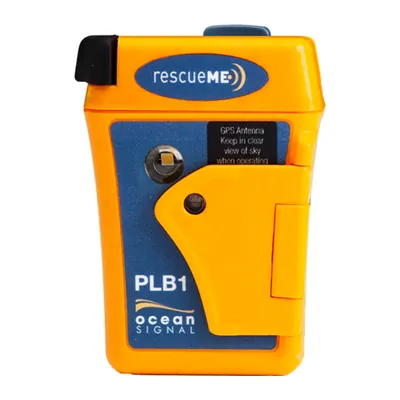
Ocean Signal rescueME PLB1
A 406 MHz personal locator beacon: the alert and GPS position go out through the Cospas-Sarsat system, with no signal or subscription needed. It must be coded and registered for your country.
View on Amazon (opens in a new tab)
FAQs
Is mountain rescue free in the UK?
In England and Wales, yes: Mountain Rescue England and Wales raises funds so that its 48 volunteer teams stay voluntary and free to the casualty. In Scotland, the 26 volunteer teams are funded mostly by public donations, and also by the Scottish Government and the volunteers themselves. In an emergency, dial 999 or 112 and ask for the police, then mountain rescue.
Is mountain rescue free in France?
Yes, outside ski areas. Rescue costs are governed by a principle of free rescue, restated by the French government in June 2025: they are paid by the departmental fire and rescue service, the State or the commune. Only rescues on the pistes, at Nordic sites and within the ski area served by the lifts can be billed, provided the rates are posted.
Does a GHIC or EHIC cover mountain rescue abroad?
No. The NHS lists ski or mountain rescue among the services a UK GHIC or UK EHIC does not cover, and the European Commission gives Irish and other EU cardholders the same warning: search and rescue costs are not covered. Before walking abroad, check that your travel insurance covers mountain rescue and helicopter costs, and up to what amount.
How much does a mountain rescue cost in Switzerland?
A Rega helicopter mission costs around 4,500 Swiss francs on average, Rega says, and complex search or avalanche missions can run to several tens of thousands. As a rule, the person rescued or their insurer pays. Rega’s patrons, from 40 francs a year, can have uncovered costs waived, at Rega’s discretion: legally, the patronage is a donation, not insurance.
Will mountain rescue become chargeable in France?
Nothing has been decided as of 28 October 2026. In February 2026, the Court of Audit called action on charging legitimate and necessary, and proposed targeted scenarios, such as charging people rescued who come from outside Europe. On 26 May 2026, in the Senate, the government upheld the principle of free rescue, while agreeing to consider charging for major recklessness. Check the rule before you go.
Sources
- Mountain Rescue England and Wales, home page, updated 21 May 2026, accessed 28 October 2026. mountain.rescue.org.uk https://www.mountain.rescue.org.uk/ ↩
- French Senate, written question no. 03383 on charging for mountain rescue, and the answer of the Ministry for Regional Planning and Decentralisation published in the Senate’s Official Journal on 5 June 2025, page 2983 (in French), accessed 28 October 2026. senat.fr https://www.senat.fr/questions/base/2025/qSEQ250203383.html ↩
- Mountain Rescue England and Wales, ‘In case of emergency’, accessed 28 October 2026. mountain.rescue.org.uk https://www.mountain.rescue.org.uk/how-to-call-out-mr/ ↩
- Scottish Mountain Rescue, ‘How we are funded’, updated 25 June 2025, accessed 28 October 2026. scottishmountainrescue.org https://www.scottishmountainrescue.org/how-we-are-funded/ ↩
- Scottish Mountain Rescue, ‘What happens on a call out?’, accessed 28 October 2026. scottishmountainrescue.org https://www.scottishmountainrescue.org/what-happens-on-a-callout/ ↩
- Department of Transport (Ireland), ‘National Co-ordinating Committee for Mountain & Cave Rescue (NCCMCR)’, gov.ie, published 31 July 2019, accessed 28 October 2026. gov.ie https://www.gov.ie/en/department-of-transport/organisation-information/national-co-ordinating-committee-for-mountain-cave-rescue-nccmcr/ ↩
- Department of the Taoiseach, ‘How to contact emergency services in Ireland’, gov.ie, updated 11 April 2025, accessed 28 October 2026. gov.ie https://www.gov.ie/en/department-of-the-taoiseach/services/how-to-contact-emergency-services-in-ireland/ ↩
- French National Assembly, written question no. 28659 on rescue services, and the answer of the Ministry of the Interior published in the Official Journal on 15 October 2013 (in French, PDF), accessed 28 October 2026. questions.assemblee-nationale.fr https://questions.assemblee-nationale.fr/dyn/14/questions/QANR5L14QE28659.pdf ↩
- French Hiking Federation (FFRandonnée), ‘Sécurité : les secours sur le domaine skiable sont payants’ (in French), 18 February 2018, accessed 28 October 2026. ffrandonnee.fr https://www.ffrandonnee.fr/s-informer/actualites/securite-les-secours-sur-le-domaine-skiable-sont-payants ↩
- Foreign, Commonwealth & Development Office, ‘France travel advice: safety and security’, GOV.UK, updated 22 October 2026, accessed 28 October 2026. gov.uk https://www.gov.uk/foreign-travel-advice/france/safety-and-security ↩
- France’s Court of Audit (Cour des comptes), ‘Les secours en montagne’, report to the French Senate’s finance committee, February 2026 (in French, PDF), accessed 28 October 2026. ccomptes.fr https://www.ccomptes.fr/sites/default/files/2026-02/20260211-Secours-en-montagne.pdf ↩
- French Senate, full record of the sitting of 26 May 2026, debate on mountain rescue (in French, PDF), accessed 28 October 2026. senat.fr https://www.senat.fr/seances/s202605/s20260526/s20260526.pdf ↩
- Federal Office of Public Health (FOPH, Switzerland), ‘Frais de transport et de sauvetage’ (in French), accessed 28 October 2026. bag.admin.ch https://www.bag.admin.ch/fr/frais-de-transport-et-de-sauvetage ↩
- Austria, General Social Insurance Act (Allgemeines Sozialversicherungsgesetz, ASVG), § 131, paragraph 4, version in force since 1 January 2020, legal information system RIS (in German), accessed 28 October 2026. ris.bka.gv.at https://www.ris.bka.gv.at/NormDokument.wxe?Abfrage=Bundesnormen&Gesetzesnummer=10008147&Paragraf=131 ↩
- Rega, ‘Rega patronage: your advantages in the event of a rescue mission’, 2 June 2025, accessed 28 October 2026. rega.ch https://www.rega.ch/en/news/news-from-the-world-of-rega/detail/rega-patronage-your-advantages-in-the-event-of-a-rescue-mission ↩
- Rega, ‘Dispositions relatives aux donateurs de la Rega’ (patronage conditions, in French, PDF), updated 1 July 2022, accessed 28 October 2026. rega.ch https://www.rega.ch/fileadmin/seiteninhalt/3_Rega-Goenner/1_Goenner_werden/Rega_Goennerbestimmungen_2022_FR.pdf ↩
- Supreme Court of Austria (Oberster Gerichtshof), ‘Kein Ersatz der Bergungskosten nach einem Unfall beim Bergwandern’, 10 ObS 67/11t, decision of 14 October 2011 (in German), accessed 28 October 2026. ogh.gv.at https://www.ogh.gv.at/entscheidungen/entscheidungen-ogh/kein-ersatz-der-bergungskosten-nach-einem-unfall-beim-bergwandern/ ↩
- Bergrettung Tirol (Austria), ‘Förderer’ (in German), accessed 28 October 2026. bergrettung.tirol https://bergrettung.tirol/foerderer/ ↩
- Austria, Security Police Act (Sicherheitspolizeigesetz), § 92a, version in force since 23 July 2024, legal information system RIS (in German), accessed 28 October 2026. ris.bka.gv.at https://www.ris.bka.gv.at/Dokumente/Bundesnormen/NOR40263028/NOR40263028.html ↩
- NHS, ‘Get healthcare cover abroad with a UK GHIC or UK EHIC’, page last reviewed 12 December 2023, accessed 28 October 2026. nhs.uk https://www.nhs.uk/using-the-nhs/healthcare-abroad/apply-for-a-free-uk-global-health-insurance-card-ghic/ ↩
- Foreign, Commonwealth & Development Office, ‘Foreign travel insurance’, GOV.UK, updated 2 August 2024, accessed 28 October 2026. gov.uk https://www.gov.uk/guidance/foreign-travel-insurance ↩
- European Commission, Your Europe, ‘Health cover for temporary stays in another EU country’, last checked 16 September 2026, accessed 28 October 2026. europa.eu https://europa.eu/youreurope/citizens/health/unplanned-healthcare/temporary-stays/index_en.htm ↩
- Foreign, Commonwealth & Development Office, ‘Switzerland travel advice: safety and security’, GOV.UK, updated 11 August 2026, accessed 28 October 2026. gov.uk https://www.gov.uk/foreign-travel-advice/switzerland/safety-and-security ↩
- Foreign, Commonwealth & Development Office, ‘Austria travel advice: safety and security’, GOV.UK, updated 11 August 2026, accessed 28 October 2026. gov.uk https://www.gov.uk/foreign-travel-advice/austria/safety-and-security ↩
- Foreign, Commonwealth & Development Office, ‘Italy travel advice: safety and security’, GOV.UK, updated 21 October 2026, accessed 28 October 2026. gov.uk https://www.gov.uk/foreign-travel-advice/italy/safety-and-security ↩
- Department of Foreign Affairs (Ireland), ‘Switzerland’ travel advice, ireland.ie, updated 1 May 2026, accessed 28 October 2026. ireland.ie https://www.ireland.ie/en/dfa/overseas-travel/advice/switzerland/ ↩
- Department of Foreign Affairs (Ireland), ‘France’ travel advice, ireland.ie, updated 21 October 2026, accessed 28 October 2026. ireland.ie https://www.ireland.ie/en/dfa/overseas-travel/advice/france/ ↩

Fact-checking, regulations and safety
Arnaud Couderc reviews our contributors’ articles and writes for Outfarer about regulations, safety, fishing, the sea and outdoor pursuits. He traces every rule back to its official text and every figure to its source, so that you set off with sound benchmarks.

 Guillaume Hoarau


 Nolwenn Bastide