 Français (France)
 English (UK)
 English (US)
 Deutsch (Deutschland)

Contents
Between 720 kg and 1.4 tonnes of poo a year, plus some 3,650 litres of urine. That, by a calculation from France’s hiking federation, the FFRandonnée, is what walkers might leave behind on a 12-mile (20 km) path used by an average of 20 people a day [1]. An estimate rather than a measurement, but the order of magnitude is enough to put anyone off their sandwiches. The good news: most of the traces a walk leaves can be avoided with a few simple, almost free habits.
This guide expands on our guide to planning a walk, filling in its ‘on the way’ step.
The seven principles of Leave No Trace
In the wording used by the US National Park Service, the seven principles read as follows [2]. The comment after each one is ours.
- Plan Ahead and Prepare: know your walk and the rules of the place, and slip a bag for your rubbish into your rucksack.
- Travel and Camp on Durable Surfaces: walk on the path, and camp only where it is allowed.
- Dispose of Waste Properly: everything goes home, including what you think is biodegradable.
- Leave What You Find: flowers, stones, fossils and ruins stay where they are.
- Minimize Campfire Impacts: in England and Wales, the Countryside Code simply asks you not to light fires; our guide to campfires in France covers the rules across the Channel.
- Respect Wildlife: watch from a distance, and never feed.
- Be Considerate of Other Visitors: leave them the peace and quiet you came for yourself.
Leave No Trace Ireland, as presented by Sport Ireland, orders the same ideas a little differently and widens the third: ‘Respect Farm Animals and Wildlife’, because farming, it notes, is a big part of Ireland’s culture and economy [5]. On a day walk, it’s mostly litter, toilet stops, the path, plants and animals that count. Here they are in practice.
Litter: everything goes home, peel included
The principle fits into an American formula, ‘pack it in, pack it out’: what you carry up, you carry back down. Joshua Tree National Park, in California, spells out what many forget: orange peel, apple cores and pistachio shells are all rubbish [6]. England’s official guidance on litter enforcement agrees, listing apple cores among its examples of litter, next to drinks cans, chewing gum and cigarette ends [7]. And the German Alpine Club (DAV) answers a question it hears a lot, ‘even the banana skin?’: yes, because at altitude, organic waste breaks down much more slowly [8].
How long does peel take to disappear? The figures vary so much that it’s best not to count on them: 3 to 5 weeks for a banana skin, according to a quiz from the National Park Service at Golden Gate, in California [9], and far longer at altitude; up to 18 years for a cigarette end in the desert, according to Joshua Tree [6]. Scotland’s Access Code asks you not to leave any food scraps, which animals might eat and which can help spread disease [10], and to take cigarette ends away: they seem to cool down quickly, but can still set dry grass alight [11].
The detail that changes everything: a bag kept just for rubbish, emptied only once you’re home. It saves the wrapper tucked under a stone ‘for now’, and forgotten there.
Forgetting can also cost you. In England and Wales, dropping litter is a criminal offence, the Countryside Code reminds walkers [4]. In England, councils and national park authorities can issue a fixed penalty for it: £100 by default, set locally between £65 and £500, while a court can impose a fine of up to £2,500 [7].
Going to the loo outdoors: a hole, away from water, and the paper in your pack
It’s a subject that raises a smile, right up to the day you settle down for lunch behind the boulder someone else mistook for a toilet. Use toilets wherever they exist. Otherwise, Leave No Trace, in the version published by the US National Park Service, gives clear markers: a ‘cathole’ 15 to 20 cm (6 to 8 inches) deep, at least 200 feet, about 60 m, from water, camps and paths; the hole covered and disguised when you’ve finished; and toilet paper and hygiene products packed out [2]. France’s hiking federation gives the same depth, and wants the paper ‘neither left behind nor burnt’, but carried home in a sealed bag [16].
Why all this fuss about paper? Because it takes its time: a paper tissue can last up to 5 years or more above the treeline, says the German Alpine Club, which goes as far as suggesting that, ideally, everything comes home with you, poo included [18].
Stay on the path, even when it’s muddy
It’s the least spectacular principle, and the most often bent. The Countryside Code is clear: ‘Stay on marked paths, even if they’re muddy, unless wider access is available, such as on open access land’ [4]. Leave No Trace asks you to walk single file in the middle of the path, even when it’s wet or muddy [2]: the step aside to dodge a puddle, multiplied by thousands of boots, ends up widening the path.
Cutting corners does the same damage. France’s Écrins National Park asks walkers not to short-cut the zigzags of its paths, to avoid damage and soil erosion [19], and the German Alpine Club explains the mechanism: whoever leaves the path disturbs the animals living there and helps new paths form, which the next downpour or the spring snowmelt erodes [8].
Flowers, stones and bilberries: look rather than take
‘Leave rocks, stone, plants and trees as you find them’, asks the Countryside Code [4]. For plants, the law backs it up. In Great Britain, the Wildlife and Countryside Act 1981 makes it an offence to intentionally pick, uproot or destroy any wild plant on its list of protected species, Schedule 8, and, unless you are an ‘authorised person’ in the Act’s sense, to intentionally uproot any wild plant at all; in Scotland, doing so recklessly is an offence too [23]. For common plants, the line the Act draws is uprooting, not picking.
Abroad, national parks can be stricter. ‘Here, we look with our eyes, we don’t touch, we don’t pick and we collect nothing but photos’, sums up France’s Mercantour National Park [24]. In the core of the Écrins National Park, picking plants and taking fossils and minerals are banned in principle, with exceptions for family use: 1 kg of berries and 5 litres of mushrooms per person per day, and 100 flowering stems for three of the four species of génépi, a small alpine plant [25]. In 2011, people who had dug out nearly 20 kg of rock crystals there were found guilty by the court in Gap [25]. Our guide to France’s national parks sums up each park’s rules.
Animals: watch from afar, never feed
Sharing your sandwich with a sheep or a pony comes from a kind place, and it’s a bad idea. ‘Do not feed livestock, horses or wild animals as it can cause them harm’, says the Countryside Code [4]. In the Alps, the Écrins National Park explains that feeding marmots changes their behaviour and their sense of danger, leaving them more exposed to eagles and foxes [26]; in the Mercantour, it’s simply banned [24]. Scotland’s Access Code adds a habit worth learning: watch wildlife from a respectful distance, and be ready to move away at the first signs of disturbance, such as raised heads, alarm calls or sudden movements [21].
In the United States, Yellowstone puts figures on the distance: at least 100 yards (91 m) from bears, wolves and cougars, and 25 yards (23 m) from all other animals [27]. In Europe, parks talk about binoculars rather than metres [26]. Spring counts double: on open access land in England and Wales, your dog must be on a lead from 1 March to 31 July, even with no livestock about [4], and in Scotland the Access Code asks you to keep it close while ground-nesting birds are breeding, usually from April to July [21]. Our guide to walking with your dog covers the rules in detail.
Noise, fire and wild camping: the other traces
Not every trace can be seen. The Countryside Code asks you to ‘be nice, say hello, share the space’ [4], and Leave No Trace to let nature’s sounds prevail and avoid loud voices and noises [2]. France’s Mercantour park puts it with a smile: sound systems and trumpets are for other occasions [24].
And then there’s fire. In England and Wales, the Countryside Code asks you not to light fires, and to have barbecues only where signs say you can [4]. In Scotland, the Access Code rules out any open fire, fire bowls and barbecues included, during long dry spells or near forests, farmland, peaty ground or buildings [11]. As for a night out, Scotland’s access rights cover lightweight camping in small numbers, for no more than two or three nights in one place [11], and our guide to wild camping in the UK covers the rest.
Leaving no trace is mostly about finding everything as you left it next time: a tarn without tissues on its shore, sheep that don’t beg, a path that hasn’t doubled in width. These habits are best learned young, and our guide to walking with children is there for the next outing. The rubbish bag fits in a side pocket; the rest is simply getting out there.
Kit related to this article
No affiliation: no commission, no sponsored products.
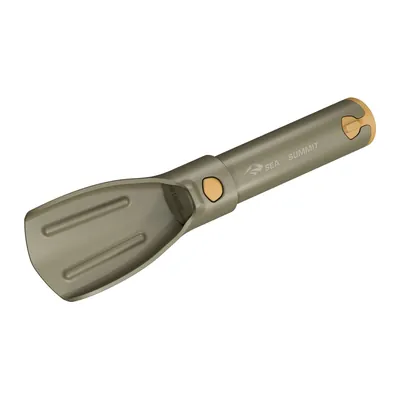
Sea to Summit Pocket Trowel
A 68 g trowel in glass-reinforced nylon, with a hollow retractable handle for loo roll and depth markings for digging the 15 to 20 cm hole the guidance asks for.
View on Amazon (opens in a new tab)
Zeiss Terra ED 8x42
8x42 binoculars: 5.3 mm exit pupil, 125 m field of view at 1,000 m, close focus from 1.6 m and 18 mm of eye relief for glasses wearers. 725 g, waterproof.
View on Amazon (opens in a new tab)
Worth watching
Leave No Trace explains why human waste is a problem outdoors, the four aims of disposing of it properly and how to dig a cathole, in about a minute and a half.
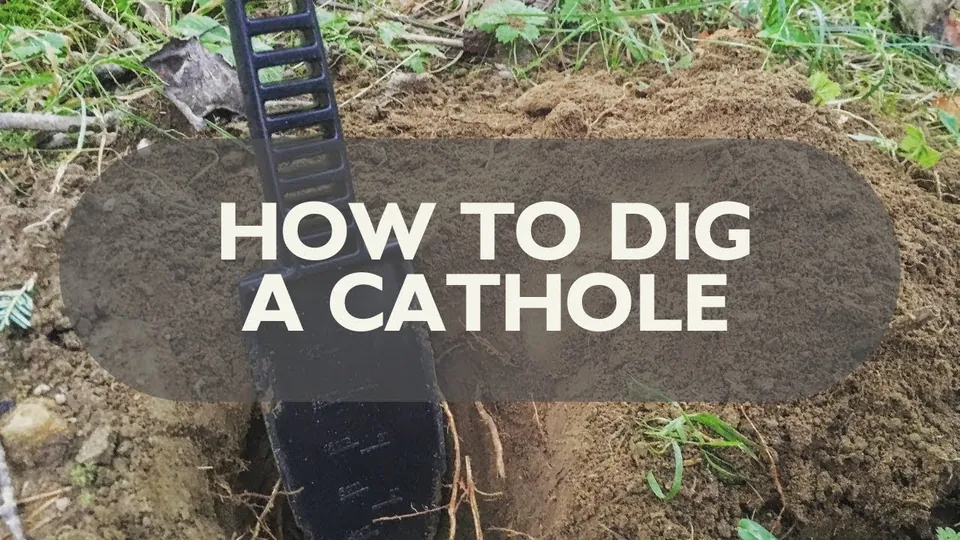
The video is hosted by YouTube (Google): nothing loads until you play it, and Google may then set cookies.
FAQs
Can I throw a banana skin or an apple core into the bushes?
No. Leave No Trace and American national parks count peel and cores as rubbish, England’s litter guidance lists apple cores as litter, and the German Alpine Club points out that at altitude, organic waste breaks down much more slowly. Published decay times range from a few weeks to far longer depending on the setting, and leftovers attract animals. The peel goes home in your rubbish bag, with everything else.
How do you go to the toilet when walking in the countryside?
Use toilets where they exist. Otherwise, move well away from the path, dig a hole 15 to 20 cm deep at least 60 m from water, as Leave No Trace advises, then fill it in. In Scotland, the Access Code asks for at least 30 m from lochs, rivers and burns. Toilet paper goes home with you in a sealed bag, as do wipes and other hygiene products.
What is the fine for dropping litter on a walk?
In England, councils and national park authorities can issue a fixed penalty of £100 by default, set locally between £65 and £500, and a court can fine up to £2,500. As of June 2026, the fixed penalty in Scotland is £80. In Ireland, a litter notice asks for €150 within 21 days, and the maximum fine in court is €3,000.
Is it illegal to pick wild flowers in Britain?
Picking a protected plant listed in Schedule 8 of the Wildlife and Countryside Act 1981 is an offence in Great Britain, and so is uprooting any wild plant unless you are an authorised person. For common flowers, the Act draws the line at uprooting, but the Countryside Code asks you to leave plants as you find them. And a photo makes a lovely souvenir too.
What are the 7 Leave No Trace principles?
Plan Ahead and Prepare, Travel and Camp on Durable Surfaces, Dispose of Waste Properly, Leave What You Find, Minimize Campfire Impacts, Respect Wildlife, and Be Considerate of Other Visitors, in the wording of the US National Park Service. They were set out by the Leave No Trace Center for Outdoor Ethics in the United States, and Leave No Trace Ireland is the organisation’s official branch in Europe.
Sources
- FFRandonnée (French Hiking Federation), ‘Besoin pressant en randonnée : les bons réflexes pour ne pas laisser de traces’ (in French), accessed 28 October 2026. ffrandonnee.fr https://www.ffrandonnee.fr/besoin-pressant-en-randonnee-les-bons-reflexes-pour-ne-pas-laisser-de-traces ↩
- National Park Service (United States), ‘Leave No Trace Seven Principles’, 16 June 2022 (principles © 1999 Leave No Trace Center for Outdoor Ethics), accessed 28 October 2026. nps.gov https://www.nps.gov/articles/leave-no-trace-seven-principles.htm ↩
- Leave No Trace Center for Outdoor Ethics, ‘International Work’, accessed 28 October 2026. lnt.org https://lnt.org/our-work/international/ ↩
- Natural England and Natural Resources Wales, ‘The Countryside Code: advice for countryside visitors’, GOV.UK, updated 26 May 2023, accessed 28 October 2026. gov.uk https://www.gov.uk/government/publications/the-countryside-code/the-countryside-code-advice-for-countryside-visitors ↩
- Sport Ireland, ‘Leave No Trace Ireland’, accessed 28 October 2026. sportireland.ie https://www.sportireland.ie/ga/node/7351 ↩
- National Park Service, Joshua Tree National Park (California), ‘Human Waste & Trash’, updated 2 April 2026, accessed 28 October 2026. nps.gov https://www.nps.gov/jotr/planyourvisit/trash.htm ↩
- Department for Environment, Food & Rural Affairs (Defra), ‘Litter enforcement powers - when and how to use them’, GOV.UK, 3 March 2026, updated 10 March 2026, accessed 28 October 2026. gov.uk https://www.gov.uk/government/publications/litter-enforcement-powers-when-and-how-to-use-them/litter-enforcement-powers-when-and-how-to-use-them ↩
- Deutscher Alpenverein (German Alpine Club, DAV), ‘8 Tipps für eine naturverträgliche Bergtour’ (in German), 23 June 2020, updated 21 April 2026, accessed 28 October 2026. alpenverein.de https://www.alpenverein.de/artikel/tipps-naturvertraegliche-bergtour_1b05d0cf-e480-47ab-ad8b-6900fbda561b ↩
- National Park Service, Golden Gate National Recreation Area (California), ‘Answers - Living With Trash’, 14 October 2020, accessed 28 October 2026. nps.gov https://www.nps.gov/goga/learn/nature/answers-living-with-trash.htm ↩
- NatureScot, Scottish Outdoor Access Code, ‘Litter’, last updated 14 August 2023, accessed 28 October 2026. outdooraccess-scotland.scot https://www.outdooraccess-scotland.scot/practical-guide-all/out-and-about/litter ↩
- NatureScot, Scottish Outdoor Access Code, ‘Camping’, accessed 28 October 2026. outdooraccess-scotland.scot https://www.outdooraccess-scotland.scot/practical-guide-all/camping ↩
- Scottish Government, ‘Litter and flytipping’, gov.scot, updated 16 June 2026, accessed 28 October 2026. gov.scot https://www.gov.scot/policies/managing-waste/litter-and-flytipping/ ↩
- Law Reform Commission (Ireland), Litter Pollution Act 1997, revised act updated to 8 May 2026, accessed 28 October 2026. revisedacts.lawreform.ie https://revisedacts.lawreform.ie/eli/1997/act/12/revised/en/html ↩
- Service-Public.fr (French government), ‘Existe-il une amende pour abandon de déchets dans la rue ?’ (in French), checked 5 June 2026, accessed 28 October 2026. service-public.gouv.fr https://www.service-public.gouv.fr/particuliers/vosdroits/F36492/0?idFicheParent=F31963 ↩
- Federal Office for the Environment (FOEN, Switzerland), ‘Faktenblatt: Schweizweit einheitliche Littering-Busse’ (in German), August 2026, published by the canton of Schwyz, accessed 28 October 2026. sz.ch https://www.sz.ch/public/upload/assets/93393/Schweizweit_einheitliche_Littering-Busse.pdf?fp=2 ↩
- FFRandonnée (French Hiking Federation), ‘Les bons gestes pour gérer les besoins naturels en randonnée’ (in French), 7 October 2026, accessed 28 October 2026. ffrandonnee.fr https://www.ffrandonnee.fr/s-informer/actualites/les-bons-gestes-pour-gerer-les-besoins-naturels-en-randonnee ↩
- Scottish Natural Heritage (now NatureScot), ‘Camping in Scotland’, Scottish Outdoor Access Code leaflet, 2017, accessed 28 October 2026. outdooraccess-scotland.scot https://www.outdooraccess-scotland.scot/sites/default/files/2017-08/SOAC%20-%20Publication%202017%20-%20Camping%20in%20Scotland.pdf ↩
- Deutscher Alpenverein (DAV), ‘Wenn’s pressiert am Berg’ (in German), 4 July 2025, accessed 28 October 2026. alpenverein.de https://www.alpenverein.de/artikel/wenns-pressiert-am-berg_11bbe196-032e-4bfd-a07c-dfc986381318 ↩
- Parc national des Écrins (France), ‘Règlementation’ (in French), 20 August 2024, accessed 28 October 2026. ecrins-parcnational.fr https://www.ecrins-parcnational.fr/reglementation ↩
- NatureScot, Scottish Outdoor Access Code, ‘Paths and tracks’, last updated 14 August 2023, accessed 28 October 2026. outdooraccess-scotland.scot https://www.outdooraccess-scotland.scot/practical-guide-all/out-and-about/paths-and-tracks ↩
- NatureScot, Scottish Outdoor Access Code, ‘Wildlife’, 2025, accessed 28 October 2026. outdooraccess-scotland.scot https://www.outdooraccess-scotland.scot/exploring-without-disturbing-wildlife ↩
- Fix the Fells, ‘1000 hours spent restoring popular Grasmere walking route’, November 2025, accessed 28 October 2026. fixthefells.co.uk https://www.fixthefells.co.uk/1000-hours-spent-restoring-popular-grasmere-walking-route/ ↩
- Wildlife and Countryside Act 1981, section 13, legislation.gov.uk, up to date with changes in force on or before 25 October 2026, accessed 28 October 2026. legislation.gov.uk https://www.legislation.gov.uk/ukpga/1981/69/section/13 ↩
- Parc national du Mercantour (France), ‘La réglementation, c’est pas si compliqué !’ (in French), leaflet, October 2023, accessed 28 October 2026. mercantour-parcnational.fr https://www.mercantour-parcnational.fr/sites/mercantour-parcnational.fr/files/2023-10/Depliant-Reglementation-pas-complique.pdf ↩
- Parc national des Écrins (France), ‘Cueillettes et prélèvements’ (in French), 20 August 2024, accessed 28 October 2026. ecrins-parcnational.fr https://www.ecrins-parcnational.fr/cueillettes-et-prelevements ↩
- Parc national des Écrins (France), ‘Conseils aux randonneurs et réglementation’ (in French), accessed 28 October 2026. ecrins-parcnational.fr https://www.ecrins-parcnational.fr/conseils-aux-randonneurs-et-reglementation ↩
- National Park Service, Yellowstone National Park, ‘Safety’, updated 28 July 2026, accessed 28 October 2026. nps.gov https://www.nps.gov/yell/planyourvisit/safety.htm ↩

Trail running, snow, water, nature and destinations
Nolwenn covers trail running, snow, water, nature and destinations for Outfarer. Curious about everything, from meteor showers to night-train timetables, she has a knack for unearthing the one detail that changes everything, and putting it in a single sentence.

 Guillaume Hoarau

