 Français (France)
 English (UK)
 English (US)
 Deutsch (Deutschland)

Contents
Between 1,600 and 3,100 pounds (720 kg to 1.4 metric tons) of poop a year, plus some 960 gallons (3,650 liters) of urine. That’s what hikers on a 12-mile trail used by an average of 20 people a day could leave behind, according to a calculation by France’s national hiking federation, the FFRandonnée [1]. It’s an estimate, not a measurement, but the scale is enough to make your head spin. The good news: most of the traces a hike leaves behind can be avoided with a few simple, nearly free habits.
This guide expands on our guide to planning a hike, filling in its “on the trail” step.
The seven principles of Leave No Trace
Here are the seven principles as the National Park Service publishes them [2]. The comment after each one is ours.
- Plan Ahead and Prepare: know the route and the rules of the place, and toss a trash bag in your pack.
- Travel and Camp on Durable Surfaces: stick to the trail, and camp only where it’s allowed.
- Dispose of Waste Properly: pack it all out, including what you think is biodegradable.
- Leave What You Find: flowers, rocks, fossils, and artifacts stay put.
- Minimize Campfire Impacts: cook on a stove, and build a fire only where it’s allowed; heading to Europe? Our guide to campfires in France explains why the answer there is mostly no.
- Respect Wildlife: watch from a distance, and never feed.
- Be Considerate of Other Visitors: give them the peace and quiet you came for yourself.
On a day hike, it’s mostly trash, bathroom breaks, the trail, plants, and wildlife that matter. Here’s how each one plays out.
Trash: pack it all out, peels included
The rule is as American as it gets: “pack it in, pack it out.” Whatever you carry in, you carry back out, trash, leftover food, and litter alike [2]. Joshua Tree National Park, in California, spells out what a lot of people forget: “Orange peels, apple cores, pistachio shells, tape, fruit stickers, and the sock you sacrificed are all trash.” [4] In national park areas, federal regulations make it a rule, not a courtesy: disposing of refuse anywhere other than in a refuse receptacle is prohibited [5]. And in the Alps, the German Alpine Club (DAV) answers a question it hears a lot, “even the banana peel?”: yes, because at altitude, organic waste breaks down much more slowly [6].
How long does a peel take to disappear? The numbers vary so much that you shouldn’t count on them: 3 to 5 weeks for a banana peel, according to a quiz from Golden Gate National Recreation Area, which asks you not to leave peels on the ground in national parks because they draw animals to places people frequent [7]; up to 18 years for a cigarette butt in the desert, according to Joshua Tree [4]. Butts are a fire risk, too: in national parks, throwing away lighted or smoldering material in a way that threatens park resources is prohibited [8].
The detail that changes everything: a bag just for trash, emptied only back at the trailhead. It saves you from the wrapper tucked under a rock “for now,” and forgotten there.
In a national park, breaking these regulations is more than bad manners: a conviction brings the criminal penalties of federal law [9], which provide for up to 6 months in jail, a fine, or both [10].
Bathroom breaks: a cathole, away from water, and your TP packed out
It’s a topic that gets a laugh, right up until you sit down for lunch behind the boulder someone else used as a toilet. Use restrooms or outhouses wherever they exist. Otherwise, Leave No Trace, as the National Park Service presents it, sets three markers: a cathole dug 6 to 8 inches (15 to 20 cm) deep, at least 200 feet (about 60 m) from water, camp, and trails; the hole covered and disguised when you’re done; and toilet paper and hygiene products packed out [2]. Joshua Tree asks you to use a wag bag, a sealable bag for packing out waste, or else to bury it at least 6 inches deep, and never to leave it under a rock or just kick sand over it [4].
Why all the fuss about toilet paper? Because it sticks around: animals may dig it up, and it breaks down very slowly in the desert, Joshua Tree warns [4]. In the Alps, a paper tissue can last up to 5 years or more above tree line, according to the German Alpine Club, which suggests that ideally, everything goes home with you, poop included [13].
Stay on the trail, even when it’s muddy
It’s the least glamorous principle, and the one most often bent. Leave No Trace asks you to walk single file in the middle of the trail, even when it’s wet or muddy [2]: one step around a puddle, multiplied by thousands of boots, ends up widening the trail. The German Alpine Club explains what happens next: leave the trail and you disturb the animals living there and help new paths form, which the next downpour or the spring snowmelt erodes [6].
In national parks, the superintendent can restrict hikers to designated trails, and where that’s the case, leaving the trail to shortcut between two parts of it, a switchback for instance, or to cut over to another trail, is prohibited [14]. France’s Écrins National Park asks hikers not to cut its switchbacks either, “to avoid damage and soil erosion.” [15]
Flowers, rocks, and berries: look, don’t take
“Leave rocks, plants and other natural objects as you find them,” says Leave No Trace [2]. In national park areas, it’s the law: federal regulations prohibit possessing, removing, digging, or disturbing plants or their parts, as well as minerals, fossils, and cultural artifacts [14]. Berry picking isn’t automatically off-limits, though: the superintendent may designate certain fruits, berries, nuts, or unoccupied seashells that can be gathered by hand for personal use, and can limit how much and where [14]. Check the park’s rules before you fill your hat with huckleberries.
European parks have their own versions. “Here, we look with our eyes, we don’t touch, we don’t pick, and we collect nothing but photos,” sums up France’s Mercantour National Park [17]. In the core of the Écrins National Park, picking plants and collecting fossils and minerals are banned in principle, with exceptions for family use: 2.2 pounds (1 kg) of berries and 1.3 gallons (5 liters) of mushrooms per person per day, and 100 flowering stems for three of the four species of génépi, a small alpine plant [18]. In 2011, people who had dug out nearly 44 pounds (20 kg) of rock crystals there were found guilty by the court in Gap [18]. Our guide to France’s national parks sums up each park’s rules.
Wildlife: watch from afar, never feed
Sharing your trail mix with a chipmunk comes from a good place, and it’s a bad idea. Feeding wildlife damages their health, alters natural behaviors, and exposes them to predators and other dangers, Leave No Trace explains [2]. In national parks, feeding, touching, teasing, or frightening wildlife is prohibited outright [19], and Yellowstone spells out the stakes: animals that become dependent on human food may become aggressive toward people and have to be killed [20]. In the Alps, France’s Écrins National Park makes the same point about marmots: feeding them changes their behavior and their sense of danger, leaving them more exposed to eagles and foxes [21].
How close is too close? Yellowstone puts numbers on it: at least 100 yards from bears, wolves, and cougars, and 25 yards from all other animals, bison and elk included [20]. European parks tend to talk binoculars rather than yards [21]. Bringing your dog? In national parks, it has to be on a leash no longer than 6 feet (1.8 m), or otherwise confined, at all times [22]; in France, from April 15 to June 30, it must be leashed whenever you’re off a forest road, path, or trail [23]. Our guide to hiking with your dog has the details.
Noise, fire, and camping: the other traces
Not every trace is visible. Leave No Trace asks you to let nature’s sounds prevail and avoid loud voices and noises [2]. National parks put a number on it: running an audio device louder than 60 decibels (A-weighted) at 50 feet (15 m) is prohibited [24]. France’s Mercantour park says it with a wink: save the sound systems and trumpets for another occasion [17].
Then there’s fire. In national parks, a fire is allowed only in designated areas or receptacles, never left unattended, and banned in all or part of a park when fire danger is high [8]. In France, lighting or carrying fire within 656 feet (200 m) of woods and forests is banned year-round, except for owners and occupants at certain times of year, the prefecture of the Loire department points out [25]. Spending the night? In the core of the Écrins, backcountry camping is allowed from 7 p.m. to 9 a.m., more than an hour’s walk from road access and the park’s boundaries [21], and our guide to backcountry camping in France covers the rest.
Leaving no trace is about finding everything as you left it next time: the lake without tissues on its shore, the chipmunks that don’t beg, the trail that hasn’t doubled in width. These habits stick best when they’re learned young, and our guide to hiking with kids is ready when you are. So toss a trash bag in your pack, lace up, and go.
Gear related to this article
No affiliation: no commission, no sponsored products.
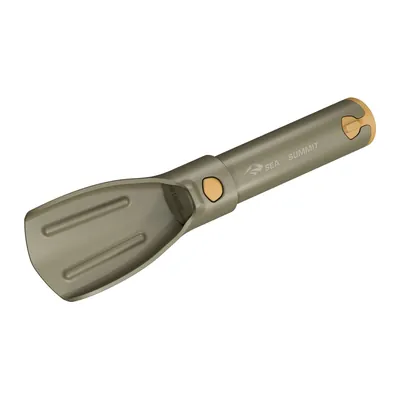
Sea to Summit Pocket Trowel
A 2.4 oz trowel in glass-reinforced nylon, with a hollow retractable handle for TP and depth markings for digging a cathole the 6 to 8 inches Leave No Trace recommends.
View on Amazon (opens in a new tab)
Zeiss Terra ED 8x42
8x42 binoculars: 5.3 mm exit pupil, a 375 ft field of view at 1,000 yd, close focus from 5.3 ft, and 18 mm of eye relief for eyeglass wearers. 25.6 oz, waterproof.
View on Amazon (opens in a new tab)
Worth watching
Leave No Trace walks you through why human waste is a problem outdoors, the four objectives of proper disposal, and how to dig a cathole, in about a minute and a half.
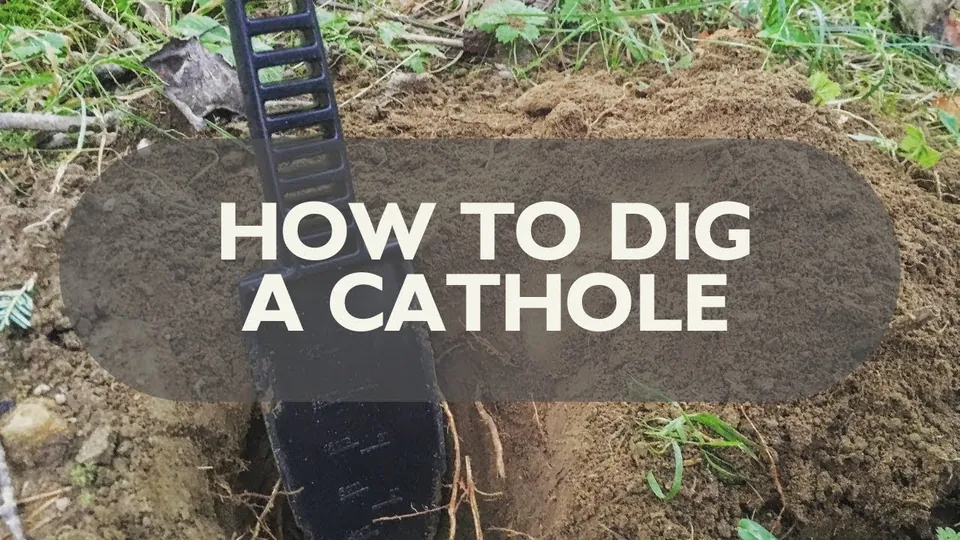
The video is hosted by YouTube (Google): nothing loads until you play it, and Google may then set cookies.
FAQ
Can you throw a banana peel or apple core into the woods?
No. Leave No Trace and national parks such as Joshua Tree count peels and cores as trash, and the German Alpine Club points out that at altitude, organic waste breaks down much more slowly. Published decomposition times run from a few weeks to much longer depending on the setting, and food scraps draw animals to places people use. The peel goes in your trash bag with everything else.
How do you poop in the woods without leaving a trace?
Use a restroom or outhouse if there is one. Otherwise, walk at least 200 feet (about 60 m) from water, camp, and trails, dig a cathole 6 to 8 inches (15 to 20 cm) deep, then cover and disguise it, as Leave No Trace advises. Pack out your toilet paper in a sealed bag. Some parks, such as Joshua Tree, ask you to use a wag bag instead.
Is it illegal to pick flowers in a national park?
In national park areas, yes: federal regulations prohibit removing or disturbing plants or their parts, along with rocks, minerals, and fossils. The superintendent may designate certain fruits, berries, or nuts that can be gathered by hand for personal use, sometimes with limits on quantity and location. Elsewhere, the rules depend on who manages the land, so check before you pick.
How close can you get to wildlife?
Not very. Yellowstone asks you to stay at least 100 yards from bears, wolves, and cougars, and at least 25 yards from all other animals, bison and elk included, and it’s illegal there to willfully approach wildlife within any distance that disturbs it. Never feed animals: in national parks, it’s prohibited, and animals that get used to human food can turn aggressive.
What are the 7 Leave No Trace principles?
Plan Ahead and Prepare, Travel and Camp on Durable Surfaces, Dispose of Waste Properly, Leave What You Find, Minimize Campfire Impacts, Respect Wildlife, and Be Considerate of Other Visitors, as the National Park Service publishes them. They were set out by the Leave No Trace Center for Outdoor Ethics, building on work by federal land agencies in the mid-1980s.
Sources
- FFRandonnée (French Hiking Federation), “Besoin pressant en randonnée : les bons réflexes pour ne pas laisser de traces” (in French), accessed October 28, 2026. ffrandonnee.fr https://www.ffrandonnee.fr/besoin-pressant-en-randonnee-les-bons-reflexes-pour-ne-pas-laisser-de-traces ↩
- National Park Service, “Leave No Trace Seven Principles,” June 16, 2022 (principles © 1999 Leave No Trace Center for Outdoor Ethics), accessed October 28, 2026. nps.gov https://www.nps.gov/articles/leave-no-trace-seven-principles.htm ↩
- Leave No Trace Center for Outdoor Ethics, “International Work,” accessed October 28, 2026. lnt.org https://lnt.org/our-work/international/ ↩
- National Park Service, Joshua Tree National Park, “Human Waste & Trash,” updated April 2, 2026, accessed October 28, 2026. nps.gov https://www.nps.gov/jotr/planyourvisit/trash.htm ↩
- Code of Federal Regulations, title 36, § 2.14, “Sanitation and refuse”, edition of July 1, 2025, govinfo (U.S. Government Publishing Office), accessed October 28, 2026. govinfo.gov https://www.govinfo.gov/content/pkg/CFR-2025-title36-vol1/xml/CFR-2025-title36-vol1-sec2-14.xml ↩
- Deutscher Alpenverein (German Alpine Club, DAV), “8 Tipps für eine naturverträgliche Bergtour” (in German), June 23, 2020, updated April 21, 2026, accessed October 28, 2026. alpenverein.de https://www.alpenverein.de/artikel/tipps-naturvertraegliche-bergtour_1b05d0cf-e480-47ab-ad8b-6900fbda561b ↩
- National Park Service, Golden Gate National Recreation Area, “Answers - Living With Trash,” October 14, 2020, accessed October 28, 2026. nps.gov https://www.nps.gov/goga/learn/nature/answers-living-with-trash.htm ↩
- Code of Federal Regulations, title 36, § 2.13, “Fires”, edition of July 1, 2025, govinfo (U.S. Government Publishing Office), accessed October 28, 2026. govinfo.gov https://www.govinfo.gov/content/pkg/CFR-2025-title36-vol1/xml/CFR-2025-title36-vol1-sec2-13.xml ↩
- Code of Federal Regulations, title 36, § 1.3, “Penalties”, edition of July 1, 2025, govinfo (U.S. Government Publishing Office), accessed October 28, 2026. govinfo.gov https://www.govinfo.gov/content/pkg/CFR-2025-title36-vol1/xml/CFR-2025-title36-vol1-sec1-3.xml ↩
- United States Code, title 18, § 1865, “National Park Service,” 2024 edition, govinfo (U.S. Government Publishing Office), accessed October 28, 2026. govinfo.gov https://www.govinfo.gov/content/pkg/USCODE-2024-title18/html/USCODE-2024-title18-partI-chap91-sec1865.htm ↩
- Service-Public.fr (French government), “Existe-il une amende pour abandon de déchets dans la rue ?” (in French), checked June 5, 2026, accessed October 28, 2026. service-public.gouv.fr https://www.service-public.gouv.fr/particuliers/vosdroits/F36492/0?idFicheParent=F31963 ↩
- Federal Office for the Environment (FOEN, Switzerland), “Faktenblatt: Schweizweit einheitliche Littering-Busse” (in German), August 2026, published by the canton of Schwyz, accessed October 28, 2026. sz.ch https://www.sz.ch/public/upload/assets/93393/Schweizweit_einheitliche_Littering-Busse.pdf?fp=2 ↩
- Deutscher Alpenverein (DAV), “Wenn’s pressiert am Berg” (in German), July 4, 2025, accessed October 28, 2026. alpenverein.de https://www.alpenverein.de/artikel/wenns-pressiert-am-berg_11bbe196-032e-4bfd-a07c-dfc986381318 ↩
- Code of Federal Regulations, title 36, § 2.1, “Preservation of natural, cultural and archeological resources”, edition of July 1, 2025, govinfo (U.S. Government Publishing Office), accessed October 28, 2026. govinfo.gov https://www.govinfo.gov/content/pkg/CFR-2025-title36-vol1/xml/CFR-2025-title36-vol1-sec2-1.xml ↩
- Parc national des Écrins (France), “Règlementation” (in French), August 20, 2024, accessed October 28, 2026. ecrins-parcnational.fr https://www.ecrins-parcnational.fr/reglementation ↩
- Fix the Fells (England), “1000 hours spent restoring popular Grasmere walking route,” November 2025, accessed October 28, 2026. fixthefells.co.uk https://www.fixthefells.co.uk/1000-hours-spent-restoring-popular-grasmere-walking-route/ ↩
- Parc national du Mercantour (France), “La réglementation, c’est pas si compliqué !” (in French), leaflet, October 2023, accessed October 28, 2026. mercantour-parcnational.fr https://www.mercantour-parcnational.fr/sites/mercantour-parcnational.fr/files/2023-10/Depliant-Reglementation-pas-complique.pdf ↩
- Parc national des Écrins (France), “Cueillettes et prélèvements” (in French), August 20, 2024, accessed October 28, 2026. ecrins-parcnational.fr https://www.ecrins-parcnational.fr/cueillettes-et-prelevements ↩
- Code of Federal Regulations, title 36, § 2.2, “Wildlife protection”, edition of July 1, 2025, govinfo (U.S. Government Publishing Office), accessed October 28, 2026. govinfo.gov https://www.govinfo.gov/content/pkg/CFR-2025-title36-vol1/xml/CFR-2025-title36-vol1-sec2-2.xml ↩
- National Park Service, Yellowstone National Park, “Safety,” updated July 28, 2026, accessed October 28, 2026. nps.gov https://www.nps.gov/yell/planyourvisit/safety.htm ↩
- Parc national des Écrins (France), “Conseils aux randonneurs et réglementation” (in French), accessed October 28, 2026. ecrins-parcnational.fr https://www.ecrins-parcnational.fr/conseils-aux-randonneurs-et-reglementation ↩
- Code of Federal Regulations, title 36, § 2.15, “Pets”, edition of July 1, 2025, govinfo (U.S. Government Publishing Office), accessed October 28, 2026. govinfo.gov https://www.govinfo.gov/content/pkg/CFR-2025-title36-vol1/xml/CFR-2025-title36-vol1-sec2-15.xml ↩
- Service-Public.fr (French government), “Promenades en forêt : vous êtes obligé de tenir votre chien en laisse jusqu’au 30 juin” (in French), April 11, 2026, accessed October 28, 2026. service-public.gouv.fr https://www.service-public.gouv.fr/particuliers/actualites/A17343?lang=fr ↩
- Code of Federal Regulations, title 36, § 2.12, “Audio disturbances”, edition of July 1, 2025, govinfo (U.S. Government Publishing Office), accessed October 28, 2026. govinfo.gov https://www.govinfo.gov/content/pkg/CFR-2025-title36-vol1/xml/CFR-2025-title36-vol1-sec2-12.xml ↩
- Préfecture de la Loire (France), “Usage du feu” (in French), leaflet, April 4, 2024, accessed October 28, 2026. loire.gouv.fr https://www.loire.gouv.fr/contenu/telechargement/14815/110347/file/20240404_Plaquette_usage_du_feu.pdf ↩

Trail running, snow, water, nature and destinations
Nolwenn covers trail running, snow, water, nature and destinations for Outfarer. Curious about everything, from meteor showers to night-train schedules, she has a knack for digging up the one detail that changes everything, and nailing it in a single sentence.

 Guillaume Hoarau

