 Français (France)
 English (UK)
 English (US)
 Deutsch (Deutschland)

Contents
A big dog, white or tan, comes barreling toward you from a band of sheep, barking: should you worry? Usually, no. It’s most likely a livestock guardian dog, and the Bureau of Land Management’s first piece of advice is simply to remain calm [1]. To the dog, you’re a possible threat to its flock. Show it you aren’t, and in most cases it will soon get bored with you and let you move along, notes the Blaine County Recreation District, in Idaho [2].
This guide complements our guide to planning a hike. It pulls together the advice of the BLM and of Western state and local agencies, the rules hikers follow in the Alps, where guardian dogs are part of summer on the high pastures, and what to do around cattle, the other big animals you’ll share the range with.
Livestock guardian dogs: on guard, not on the attack
They’re large dogs, usually white or tan, that stay near the sheep [1]. Breeds such as Great Pyrenees and Akbash are raised with the lambs, so the pups come to see themselves as part of the flock, the Blaine County district explains. Don’t confuse them with herding dogs, often collie types, which help move the sheep: the big white dogs are there to protect the flock from predators [2].
Why are they out there? Guard dogs are an economical, non-lethal way to control predators, widely used in the western US since the late 1970s, and they were selected for aggression against predators, mostly coyotes, and non-aggression toward people, Montana State University researchers explain [3]. They work big country: the BLM manages livestock grazing, mostly cattle and sheep, on 155 million acres of public lands [4].
Their weapon is deterrence: as you approach a band, some dogs won’t make a fuss, others will charge toward you, barking [2]. And they roam. In a GPS study of 13 guard dogs on Montana ranches, 75% of locations were within 0.1 mile (160 m) of the sheep, but each dog’s farthest recorded distance ranged from 0.3 mile to 1.2 miles (about 0.5 to 1.9 km) [3].
Meeting a guardian dog: what to do, step by step
First move: avoid the encounter. If you come across a band of sheep on public land, the BLM advises changing your route to minimize contact, or else choosing the least disruptive route around the sheep [1]; in France, the Luberon Regional Nature Park’s first rule is never to walk through a flock [5]. Idaho’s tips for mountain bikers, shared by the BLM in 2021, differ when sheep are on the trail: dismount and walk through the sheep, so as not to antagonize the guardian dogs [6]. Where there’s room to go around, the BLM’s Colorado advice and the French rule both point around the band.
If a dog comes at you anyway, the BLM’s do’s and don’ts for the Colorado Trail boil down to this [1]:
- Remain calm, and avoid quick, threatening movements toward the sheep or the dog.
- Don’t try to outrun it, and don’t chase or harass the sheep or the dogs.
- Tell the dog to “go back to the sheep,” or say “no” in a firm voice.
- Don’t try to befriend, pet, or feed it.
- Let it check you out: France’s Luberon park advises standing still, facing the dog, without staring it in the eye; the “check” lasts a few minutes [5].
On a bike, stopping matters even more. Dismount, put the bike between you and the dog, and walk it until you’re well past the sheep, the BLM advises [1]; in France, the Luberon park explains that speed and the noise of the chain wind the dogs up [5]. And if a dog stays too aggressive, or the terrain won’t let you get around the flock, turn back: the park’s advice is to always let the dog have the last word [5].
Hiking with your own dog: the tricky case
To a guardian dog, your dog is one more intruder. Guard dogs can be especially antagonistic toward trail users traveling with dogs, possibly because they treat any canine (dogs, coyotes, wolves) as a predator to be driven off, the Blaine County district explains: leash your pet as soon as you notice sheep nearby [2]. The BLM says the same: keep your dog leashed, and never let it run toward or harass the sheep [1].
If the guardian dogs come to check your dog, France’s Luberon park has precise advice: don’t pick your dog up, don’t let it run through the grazing area or approach the flock, let the dogs communicate without stepping in, even if you’re scared for your dog, and drop the leash if needed while they sort it out. Better still, it suggests, leave your dog at home when you hike where flocks graze [5]. Our guide to hiking with your dog covers the rest, from leash rules to the places closed to dogs.
Cattle on the range: give cows with calves room
Out West, cattle may graze unfenced. In Washington, for example, state law makes all county land not designated a “stock restricted area” range area, where cattle, horses, mules, or donkeys may lawfully run at large [8]. Cattle aren’t aggressive by nature, but they’re protective of their young, and when they feel pressured they may react aggressively, warns California’s Midpeninsula Regional Open Space District [9]. And Swiss hiking association Suisse Rando notes that suckler cows often weigh more than 1,300 lb (600 kg) and can run up to 25 mph (40 km/h) [10].
Idaho’s Rangeland Resources Commission sums up trail etiquette in a few words, shared by the BLM: slow down, leash pets, proceed slowly, and let the cattle move off the trail. Don’t chase livestock down the trail, or you might separate calves from their mothers [6]. Keep your distance and walk around groups of cows with plenty of space, adds the Midpeninsula district; never get between a calf and its mother, and if you see a stray calf, leave it alone, since its mother is probably nearby [9].
Hiking in the Alps? Austria’s agriculture ministry sums up its advice in ten rules for a safe holiday around cattle; here’s the heart of them [11]:
- avoid contact with grazing animals, don’t feed them, and keep a safe distance at all times;
- try not to be loud, and don’t startle the cattle;
- avoid cows with calves, especially if you have a dog with you;
- keep your dog under control on a short leash, and let it off immediately if it becomes clear that a cow is going to attack;
- stay on the trail; if grazing animals block it, go around them, on foot or by bike, at the greatest possible distance, pushing your bike if necessary;
- if a cow approaches you, stay calm, don’t turn your back on it, and give it a wide berth; at the first sign the animals seem unsettled, stay calm and leave the area quickly.
| Guardian dog | Cow with a calf | |
|---|---|---|
| The signal | It comes at you barking, to check you out | She lowers her head, paws the ground, or froths at the mouth |
| The distance | Change your route, or go around the band at a distance | Keep your distance, never between a cow and her calf |
| Your reaction | Remain calm, don’t run or try to outrun the dog | Stay calm, don’t turn your back, give her a wide berth |
| Your dog | Leashed as soon as you spot sheep | On a short leash; let it go if a cow attacks |
Based on the BLM [1], the Blaine County Recreation District [2], Suisse Rando [10], and Austria’s agriculture ministry. [11]
What changes from one place to another
The moves are the same everywhere; what changes is who manages the land, and whether anyone can tell you where the sheep are this week.
If something goes wrong
Let the land manager know. If you have a concern about animals you’ve seen, the Blaine County district suggests getting in touch with the agency or land manager responsible for the allotment the band is on [2], and the Midpeninsula district asks visitors to report sick, injured, or potentially aggressive animals to its staff, without trying to help the animal themselves [9].
Abroad, the procedure changes. In France, the Luberon park says an incident with a guardian dog, such as a nip, a bite, or an injury to your dog, can be reported to the departmental directorate of territories (DDT), a French government office, on an incident form [5].
It all comes down to one rule: whenever you can, go around a flock or a herd, not through it. The dog barking at you is doing its job, and so is the cow lowering her head; yours is to give them room and move along without hurrying. And if you meet the herder, a friendly word costs nothing: in France, the Luberon park reminds hikers that shepherds have a huge amount of work and can’t look after every passing visitor [5].
Gear related to this article
No affiliation: no commission, no sponsored products.
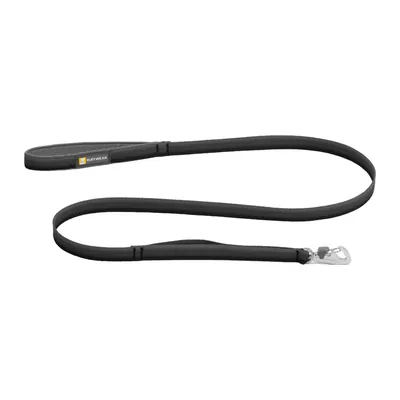
Ruffwear Front Range Leash
A fixed 5 ft leash with a padded handle and a locking clip: it keeps your dog close on trails where leashes are required and whenever you pass livestock.
View on Amazon (opens in a new tab)
Worth watching
Idaho’s Rangeland Resources Commission, one of the agencies this guide draws on, gives hikers, bikers and dog walkers its tips for meeting domestic sheep and their guard dogs on the range.
The video is hosted by YouTube (Google): nothing loads until you play it, and Google may then set cookies.
FAQ
What should I do if a livestock guardian dog runs at me?
Remain calm. Don’t run or try to outrun it, and don’t make quick, threatening moves. Tell it to “go back to the sheep,” or say “no” in a firm voice, as the BLM suggests, and don’t pet or feed it. Then keep your distance and take the least disruptive route around the sheep. On a bike, dismount, keep the bike between you and the dog, and walk it well past the flock.
Will a guardian dog bite?
Western guard dogs were selected for aggression against predators, mostly coyotes, and non-aggression toward people, Montana State University researchers note. But a dog that sees you, or your dog, as a threat to its flock can charge, and the same researchers cite a widely publicized Colorado case where two guard dogs attacked a mountain biker on a public land grazing allotment. That’s why the BLM advises avoiding the band and staying calm.
I found a big white dog alone near the trail. Should I take it in?
No. It’s probably a working guardian dog, not a lost pet. The BLM asks the public not to mistake a guardian dog for a lost one and take it with them, and ranchers say a dog that wanders off will eventually return to the herd. If an animal looks injured or separated from its band, contact the BLM field office or ranger district that manages the allotment.
What should I do if cows block the trail?
Slow down, leash your pets, proceed slowly, and let the cattle move off the trail, as Idaho’s Rangeland Resources Commission advises. Don’t chase them down the trail: you might separate calves from their mothers. Keep your distance, never get between a cow and her calf, and if a cow approaches, stay calm, don’t turn your back on it, and give it a wide berth.
Should I drop my dog’s leash if a cow charges?
Yes. Austria’s agriculture ministry says to let your dog off the leash immediately if it becomes clear that a cow is going to attack. The rest of the time, keep it under control on a short leash, and steer clear of cows with calves, especially with a dog. Around guardian dogs, France’s Luberon park also suggests dropping the leash if needed while the dogs sort things out.
Sources
- Bureau of Land Management, “BLM develops plans to inform the public about livestock protection dogs’ whereabouts,” press release, Silverton, Colorado, September 2, 2014 (archived content), accessed October 28, 2026. blm.gov https://www.blm.gov/press-release/blm-develops-plans-inform-public-about-livestock-protection-dogs-whereabouts ↩
- Blaine County Recreation District (Idaho), trails blog, “Sheep and dog days of summer,” August 31, 2022, accessed October 28, 2026. trailsblog.bcrd.org https://trailsblog.bcrd.org/2022/08/dog-and-sheep-days-of-summer/ ↩
- Montana State University, College of Agriculture and Extension Research Report, “How Far Do Guard Dogs Roam from their Sheep?,” 2018, accessed October 28, 2026. montana.edu https://www.montana.edu/extension/coa/documents/2018reports/Mosley.pdf ↩
- Bureau of Land Management, “Livestock Grazing,” accessed October 28, 2026. blm.gov https://www.blm.gov/programs/natural-resources/rangelands-and-grazing/livestock-grazing ↩
- Luberon Regional Nature Park (France), “Troupeaux et chiens de protection : quelques réflexes à adopter” (in French), “Luberon attitude” leaflet, updated March 2024, accessed October 28, 2026. parcduluberon.fr https://www.parcduluberon.fr/en/pnrl_jadoptelaluberonattitude_chiens_de_protection_2024-2 ↩
- Bureau of Land Management, “What to do if you encounter sheep or cattle on Idaho’s public lands,” blog, June 15, 2021 (archived content), tips from the Idaho Rangeland Resources Commission, accessed October 28, 2026. blm.gov https://www.blm.gov/blog/2021-06-15/what-do-if-you-encounter-sheep-or-cattle-idahos-public-lands ↩
- French Hiking Federation (FFRandonnée), “Comment se comporter face au patou, le chien de protection des troupeaux” (in French), June 18, 2022, accessed October 28, 2026. ffrandonnee.fr https://www.ffrandonnee.fr/s-informer/actualites/comment-se-comporter-face-au-patou-le-chien-de-protection-des-troupeaux ↩
- Revised Code of Washington, RCW 16.24.010, “Restricted areas, range areas,” Washington State Legislature, accessed October 28, 2026. app.leg.wa.gov https://app.leg.wa.gov/RCW/default.aspx?cite=16.24.010 ↩
- Midpeninsula Regional Open Space District (California), “Recreating Among Grazing Animals,” accessed October 28, 2026. openspace.org https://www.openspace.org/recreating-among-grazing-animals ↩
- Suisse Rando, “Pour des rencontres paisibles entre vaches et randonneurs” (in French), press release, Bern, May 19, 2021, accessed October 28, 2026. swisshiking.ch https://www.swisshiking.ch/fr/media/download/1aff805c5f0ed76ed57722a123b92a9a76224f47 ↩
- Austrian Federal Ministry of Agriculture and Forestry, Climate and Environmental Protection, Regions and Water Management (BMLUK), “Mind the Cows: Ten Rules for a Safe and Enjoyable Holiday Around Cattle,” Sichere Almen campaign leaflet, Vienna, May 2025, accessed October 28, 2026. bmluk.gv.at https://www.bmluk.gv.at/dam/jcr:4f9b10c0-5d2d-46c9-b9dc-6f679c404dae/Folder_Sichere%20Almen_EN_2026_BF_.pdf ↩
- National Park Service, “Outdoor Emergency Plan,” updated June 21, 2023, accessed October 28, 2026. nps.gov https://www.nps.gov/articles/gtgemergencyplan.htm ↩
- Department of the Taoiseach (Ireland), “How to contact emergency services in Ireland,” gov.ie, updated April 11, 2025, accessed October 28, 2026. gov.ie https://www.gov.ie/en/department-of-the-taoiseach/services/how-to-contact-emergency-services-in-ireland/ ↩

Fact-checking, regulations, and safety
Arnaud Couderc reviews our contributors’ articles and writes for Outfarer about regulations, safety, fishing, the ocean, and outdoor activities. He traces every rule back to its official text and every number to its source, so you head out with solid benchmarks.

 Guillaume Hoarau

