 Français (France)
 English (UK)
 English (US)
 Deutsch (Deutschland)

Contents
It’s 10 a.m., the trailhead is still in sight, and a small voice is already asking, “Are we there yet?” Nothing to worry about: it’s the most common question on any family hike, and it has an answer. It comes down to the trail you pick, the pace, and a few precautions adults forget because they no longer need them. The American Academy of Pediatrics (AAP) gives one reason to stay alert: children are more at risk from the cold than adults, because their smaller bodies lose heat more quickly, and when they’re having fun, they may not want to stop even as they get too cold [1].
This guide builds on our guide to planning a hike. It covers day hikes, from the baby carrier to the teen years.
How far and how long at each age?
There’s no official scale, but European hiking federations and alpine clubs publish benchmarks that line up fairly well. France’s hiking federation, the Fédération française de la randonnée pédestre (FFRandonnée), breaks them down by age [2]: under 3, kids are carried by their parents; from 4 to 7, they cover about 0.6 to 1.2 miles (1 to 2 km) an hour, tire quickly, and can’t yet say clearly that they’re hungry or thirsty; from 8 to 12, hikes of 6 to 9 miles (10 to 15 km) become possible if they have some training.
The German Alpine Club (Deutscher Alpenverein, or DAV) thinks in hours: 3 to 4 hours of hiking at most from ages 3 to 6 [3], up to 5 hours from 6 to 10 with breaks to recover, and no more than 6 to 7 hours from 10 to 14 [4]. To adapt a time written for adults, it suggests a simple rule: multiply it by 1.5 [3]. So you estimate hiking time the usual way, then apply that factor.
| Age | Guideline | Source |
|---|---|---|
| Under 3 | Carried by their parents | FFRandonnée |
| 3 to 6 | 3 to 4 hours of hiking at most | German Alpine Club (DAV) |
| 4 to 7 | 0.6 to 1.2 mph (1 to 2 km/h) on average | FFRandonnée |
| 6 to 10 | Up to 5 hours of hiking, with breaks | DAV |
| 8 to 12 | 6 to 9 miles (10 to 15 km), with some training | FFRandonnée |
| 10 to 14 | 6 to 7 hours of hiking at most | DAV |
| All ages | The adult hiking time multiplied by 1.5 | DAV |
What about the popular rule of “1 km per year of age”? It gets shared a lot, but we found it at no hiking federation, only on a French tourist office’s page [5]. The only rule of this kind published by a federation comes from the Deutscher Wanderverband, the German Hiking Association, which offers it as a rough guide: age times 1.5, in kilometers, so 9 km (about 5.6 miles) for a 6-year-old, counting each 100 m (330 ft) of climbing or descent as an extra kilometer [6]. I’d treat all these numbers as ceilings, not goals: the best guide is still the kid in front of you.
On the trail, the slowest hiker sets the pace. That’s the National Park Service’s rule: let the slowest hiker set the pace, put them near the front, and always stay together [7]. The American Hiking Society says the same for families: let the kids set the pace [8]. And in a family, the slowest is almost never the tallest.
Child carriers: when to start, and when to stop
For the littlest hikers, FFRandonnée describes two stages: in the first months, a front carrier for a short walk; then, once the child sits up well on their own, a back carrier that properly supports the head [2]. The DAV puts that milestone at around 8 to 10 months: a frame carrier only suits babies who can already sit unassisted and have good head control [4].
In the US, every frame child carrier must comply with a federal safety standard that incorporates ASTM F2549-22, the Standard Consumer Safety Specification for Frame Child Carriers [9]. The European standard, EN 13209-1 of 2022, covers children from 6 months up to 40 lb (18 kg), carried in a seated position [10]. Owner’s manuals point the same way: the one for a popular series rules out use under 6 months, under 16 lb (7.25 kg), or over 40 lb (18 kg), and caps the total load, child, gear, and pack combined, at 48.5 lb (22 kg) [11]. Check the limits in your carrier’s manual: they vary from model to model.
A destination, breaks, and games: what keeps kids moving
A summit doesn’t necessarily thrill a 5-year-old. The American Hiking Society suggests a trail with a destination, such as an overlook, a waterfall, a historic site, a stream, or a lake [8]; the DAV adds that a lake or a hut is often a far more interesting goal for a child than a peak, and that a loop beats an out-and-back on the same trail [4]. Nature trails with interpretive signs and puzzles do the same job.
Then there are breaks: about 10 to 15 minutes every hour, with a drink each time, recommends FFRandonnée [2]. Don’t be surprised when a child who was exhausted a minute ago takes off running after a butterfly: kids don’t recover by sitting still, but by playing freely, notes the DAV [4]. Along the way, FFRandonnée suggests telling stories, talking about the scenery, or singing, and points out that kids hike much better in a group [2]: a buddy can do more than a whole bag of trail mix.
A child who says they’re tired is often bored or fed up rather than tired, FFRandonnée observes, and it warns that forcing them to finish the trail at all costs is probably the best way to turn them off hiking for good [2]. That’s why a route with a shortcut or a turnaround point pays off.
Finally, give them a job. The American Hiking Society suggests giving kids some control, like deciding which trail to take or where to stop for lunch [8]; FFRandonnée suggests having them look for trail markers and, from about 8 to 12, follow the route on the map [2]. And when trail markers stop being fun, geocaching turns the hike into a treasure hunt.
Drinking, and protecting kids from sun and cold
A child dehydrates faster than an adult, and tells you later. The AAP advises encouraging children to drink water frequently and having water readily available, even before they ask for it [15]. The hourly break is a good time to think of it. For how much the adults need, our guide to water and food on a hike has the numbers.
Then there’s the sun. UV levels rise about 10% with every 3,280 feet (1,000 m) of elevation, and fresh snow almost doubles your exposure, according to the World Health Organization [16]. The AAP keeps babies younger than 6 months out of direct sunlight; for everyone else, it advises limiting sun exposure between 10 a.m. and 4 p.m., a hat with an all-around 3-inch brim, sunglasses with at least 99% UV protection, and a broad-spectrum sunscreen of at least SPF 15 [17]. At altitude, the UIAA medical commission calls for at least SPF 30 [12].
And the cold. Babies and young children are especially sensitive to it because they have a large surface area relative to their volume, the UIAA notes [12]. The AAP recommends several thin layers to keep kids warm and dry [1], and an extra one in your pack weighs next to nothing.
Altitude with a little one
A day hike at moderate elevation doesn’t raise the same questions as a night in a European mountain hut at 8,200 feet (2,500 m). For sleeping at altitude, the UIAA medical commission, in the absence of conclusive scientific data, sets cautious guidelines: for a preschooler, prefer a sleeping altitude below 8,200 feet (2,500 m), and don’t sleep higher than 9,840 to 13,100 feet (3,000 to 4,000 m); for a baby under 1 who normally lives at sea level, about 5,250 feet (1,600 m) is the sleeping altitude usually recommended as a limit [12]. Above 8,200 feet, it advises raising your sleeping altitude by no more than 984 feet (300 m) a day [12].
For a single day, the guidelines are thinner. A 2023 survey of 104 general practitioners and pediatricians working in the French Alps gives a ballpark, not a recommendation: for a day at altitude, they advised median elevations of 3,940 feet (1,200 m) under 1 month, 4,920 feet (1,500 m) under 3 months, 5,250 feet (1,600 m) under 1 year, and 6,560 feet (2,000 m) under 2 years, and 9 out of 10 advised against altitude for a baby with a cold [18]. The UIAA also advises against riding cable cars (aerial tramways) with a sick child, because the pressure changes too quickly [19].
Under age 3, any change of environment can affect a child’s sleep, appetite, activity, or mood, and they’re poor at describing how they feel [12]. If symptoms appear, the UIAA’s preferred option is to go back down, especially with young children [12]. Talk to your pediatrician before taking a little one to altitude.
If they get lost: stay put and blow the whistle
A kid who runs ahead will someday take the wrong fork. Through its Junior Ranger program, the National Park Service teaches kids three rules: stay put and listen for people calling your name; “hug a tree,” meaning a tree, a park bench, or a big rock you don’t leave; and make yourself big, by waving your arms and blowing your whistle if you have one [20]. It adds a key message: your family isn’t mad, they’re worried and looking for you [20]. Rocky Mountain National Park’s search and rescue team knows why that matters: children who fear they may be in trouble for getting lost don’t always answer searchers [21].
Ticks, livestock, and huts: the details that matter
Back at the trailhead, the tick check is for the whole family: after time outdoors in deer tick areas, the AAP advises checking for ticks, removing any that are attached, and taking a shower soon after coming inside [23]; our guide to ticks on the trail covers the rest. Hiking in the Alps? Herds graze the high pastures there, watched over by guardian dogs, and France’s sports ministry asks hikers to stay away from both and to remain calm and passive around them [24]: a kid running up to pet a guardian dog is exactly what to avoid, as our guide to guardian dogs and cattle explains.
If your family heads to the French Alps, the French Alpine Club’s huts are easy on families: in its staffed huts, mountain lodges with a warden on site, children under 8 stay free, and non-member minors traveling with an adult get 45% off [25]. Our guide to French mountain huts explains how to book. Closer to home, US fourth graders can get a free pass through the Every Kid Outdoors program, which gives them and their family free access to hundreds of parks, lands, and waters for an entire year [26, 27].
The smart move, in the end, fits in one sentence: plan a shorter hike than you think, and head back before anyone asks to. A kid who gets back to the car asking about the next hike is the real win, and it starts with choosing the trail. To pass on good habits, our guide to Leave No Trace hiking works just as well for kids.
Gear related to this article
No affiliation: no commission, no sponsored products.
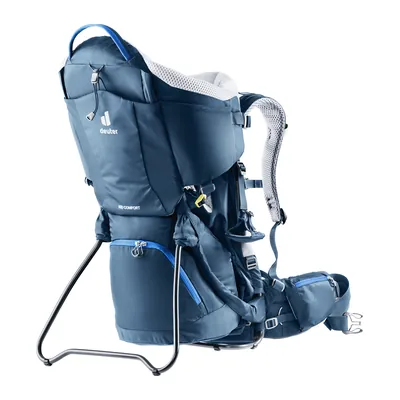
Deuter Kid Comfort child carrier
A frame child carrier for a child who can sit up unassisted, from about 9 months up to 40 lb (18 kg), with a removable sunshade; Deuter states it meets Europe’s EN 13209-1:2022 (TÜV/GS seal).
View on Amazon (opens in a new tab)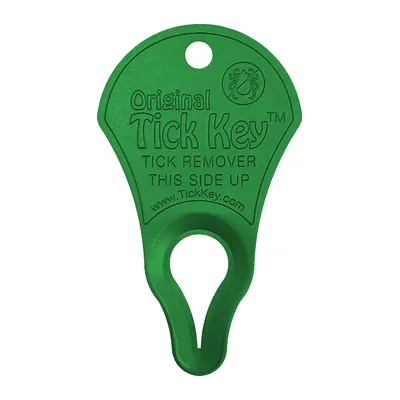
Original Tick Key (3-pack)
An anodized aluminum key with a teardrop slot: set it over the tick, then slide it flat along the skin to lift the tick out, head and all. Flat enough for any first aid kit.
View on Amazon (opens in a new tab)
FAQ
How far can a 5-year-old hike?
No federation sets a firm distance by age. France’s FFRandonnée figures 0.6 to 1.2 miles (1 to 2 km) an hour from ages 4 to 7, and the German Alpine Club advises 3 to 4 hours of hiking at most from 3 to 6. The German Hiking Association’s rule of thumb, age times 1.5, counted in kilometers, gives about 4.7 miles (7.5 km) at age 5, on flat ground. These are ceilings: start shorter, with a destination they care about.
When can a baby ride in a frame carrier?
Once your child sits up well on their own, says FFRandonnée, which the German Alpine Club puts at around 8 to 10 months. The European standard EN 13209-1 covers frame carriers from 6 months up to 40 lb (18 kg), and carriers sold in the US must meet ASTM F2549. Before that, a front carrier works for a short walk. Check the age and weight limits in your carrier’s manual.
Can you take a baby to high altitude?
For sleeping at altitude, the UIAA medical commission gives about 5,250 feet (1,600 m) as the limit usually recommended for a baby under 1 who normally lives at sea level, and suggests a preschooler sleep below 8,200 feet (2,500 m). For a single day, the guidelines are thinner. Avoid altitude and cable cars with a sick baby, and talk to your pediatrician before you go.
What should a child do if lost on a hike?
Before you go, teach them to stay put, hug a tree or a big rock, and blow their whistle, as the National Park Service advises; the American Hiking Society suggests three sharp blasts. Tell them nobody will be mad, because a child afraid of being in trouble may not answer searchers. If you can’t find them, call 911 if you have service, or head to the nearest ranger station.
How heavy should a kid’s backpack be?
The German Alpine Club caps it at 10% of body weight, pack included: about 4.4 lb for a 44-lb child (2 kg for 20 kg). For school backpacks, the AAP’s limit is 15%. That’s plenty for a water bottle and a snack, as the American Hiking Society suggests; everything else goes in the adults’ packs.
Sources
- American Academy of Pediatrics (HealthyChildren.org), “Playing Outside in Winter: Tips to Keep Kids Warm & Safe,” last updated January 27, 2026, accessed October 28, 2026. healthychildren.org https://www.healthychildren.org/English/safety-prevention/at-play/Pages/Winter-Safety.aspx ↩
- Fédération française de la randonnée pédestre (FFRandonnée, the French hiking federation), “Marcher avec des enfants” (in French), October 16, 2020, accessed October 28, 2026. ffrandonnee.fr https://www.ffrandonnee.fr/randonner/conseils/marcher-avec-des-enfants ↩
- Deutscher Alpenverein (DAV, German Alpine Club), “Wandern & Bergsteigen mit Kindern” (in German), updated August 26, 2025, accessed October 28, 2026. alpenverein.de https://www.alpenverein.de/artikel/bergsteigen-mit-kindern_b04a2d51-af45-4de0-9f47-815bbf660b73 ↩
- Deutscher Alpenverein (DAV), “Wandern und Bergsteigen mit Kindern,” booklet (in German), 2023, accessed October 28, 2026. alpenverein.de https://www.alpenverein.de/files/2601-wub-mit-kindern_ol.pdf ↩
- Hautes Vallées tourist office, “Balades en famille” (La Grave, in French), February 20, 2025, accessed October 28, 2026. hautesvallees.com https://www.hautesvallees.com/la-grave/en/que-faire/en-ete/randonnees/balades-en-famille/ ↩
- Deutscher Wanderverband (German Hiking Association), Wanderbares Deutschland portal, “Tipps fürs Wandern mit Kindern” (in German), accessed October 28, 2026. wanderbares-deutschland.de https://www.wanderbares-deutschland.de/Wanderwissen/praxiswissen/familienwandern/tipps-fuers-wandern-mit-kindern ↩
- National Park Service, “Hike Smart,” last updated June 13, 2024, accessed October 28, 2026. nps.gov https://www.nps.gov/articles/hiking-safety.htm ↩
- American Hiking Society, “Hiking with Kids,” updated August 6, 2021, accessed October 28, 2026. americanhiking.org https://americanhiking.org/hiking-with-kids/ ↩
- Code of Federal Regulations, Title 16, Part 1230, “Safety Standard for Frame Child Carriers,” 2024 edition, GovInfo, accessed October 28, 2026. govinfo.gov https://www.govinfo.gov/content/pkg/CFR-2024-title16-vol2/pdf/CFR-2024-title16-vol2-part1230.pdf ↩
- Swedish Institute for Standards (SIS), “SS-EN 13209-1:2022, Child use and care articles, Child carriers, Part 1: Framed back carriers,” scope of the European standard, accessed October 28, 2026. sis.se https://www.sis.se/en/produkter/domestic-and-commercial-equipment-entertainment-sports/equipment-for-children/ss-en-13209-12022/ ↩
- Osprey, owner’s manual for the Poco series of child carriers, accessed October 28, 2026. osprey.com https://www.osprey.com/gb/media/user_manuals/OM_Poco_S20_ENG.pdf ↩
- UIAA Medical Commission, “Consensus Statement No 9: Children at Altitude,” H. J. Meijer and D. Jean, 2008, accessed October 28, 2026. theuiaa.org https://www.theuiaa.org/documents/mountainmedicine/UIAA_MedCom_Rec_No_9_Children_at_Altitude_2008_V1-1.pdf ↩
- National Park Service, Grand Canyon National Park, “Hike Smart Podcast 05: Infants, Toddlers,” last updated May 10, 2021, accessed October 28, 2026. home.nps.gov https://home.nps.gov/grca/learn/photosmultimedia/hike_smart-05.htm ↩
- American Academy of Pediatrics (HealthyChildren.org), “School Backpack Safety: Proper Fit, Smart Packing & Preventing Back Pain,” last updated August 27, 2026, accessed October 28, 2026. healthychildren.org https://www.healthychildren.org/English/safety-prevention/at-play/Pages/Backpack-Safety.aspx ↩
- American Academy of Pediatrics (HealthyChildren.org), “Extreme Heat: Tips to Keep Kids Safe,” last updated June 30, 2026, accessed October 28, 2026. healthychildren.org https://www.healthychildren.org/English/safety-prevention/at-home/Pages/Protecting-Children-from-Extreme-Heat-Information-for-Parents.aspx ↩
- World Health Organization, “Radiation: Ultraviolet (UV) radiation,” questions and answers, March 9, 2016, accessed October 28, 2026. who.int https://www.who.int/news-room/questions-and-answers/item/radiation-ultraviolet-(uv) ↩
- American Academy of Pediatrics (HealthyChildren.org), “Sun Safety: Information for Parents About Sunburn & Sunscreen,” last updated August 9, 2024, accessed October 28, 2026. healthychildren.org https://www.healthychildren.org/English/safety-prevention/at-play/Pages/Sun-Safety.aspx ↩
- C. Tanné et al., “What altitude is safe for infants? An expert panel survey,” Archives de pédiatrie, 2023, pp. 483-485, abstract on EM-Consulte, accessed October 28, 2026. em-consulte.com https://www.em-consulte.com/article/1618211 ↩
- UIAA, “Children at Altitude: Essential Advice,” May 18, 2017, accessed October 28, 2026. theuiaa.org https://www.theuiaa.org/children-at-altitude/ ↩
- National Park Service, “Junior Ranger Park Explorer: Health & Safety,” last updated August 21, 2026, accessed October 28, 2026. nps.gov https://www.nps.gov/subjects/healthandsafety/junior-ranger-park-explorer.htm ↩
- National Park Service, Rocky Mountain National Park, “Search and Rescue,” last updated March 31, 2012, accessed October 28, 2026. nps.gov https://www.nps.gov/romo/search_and_rescue.htm ↩
- National Park Service, “Outdoor Emergency Plan,” last updated June 21, 2023, accessed October 28, 2026. nps.gov https://www.nps.gov/articles/gtgemergencyplan.htm ↩
- American Academy of Pediatrics (HealthyChildren.org), “Tick Bite,” symptom checker, accessed October 28, 2026. healthychildren.org https://www.healthychildren.org/English/tips-tools/symptom-checker/Pages/symptomviewer.aspx?symptom=Tick+Bite ↩
- French Ministry of Sports, “Summer preventive guide: so that mountain sports remain a pleasure,” English edition of the summer mountain safety leaflet, 2026, accessed October 28, 2026. sports.gouv.fr https://www.sports.gouv.fr/sites/default/files/2026-07/t-l-charger-le-m-mento-pr-vention-montagne-t-en-6935.pdf ↩
- Fédération française des clubs alpins et de montagne (FFCAM, the French Alpine Club), “Jeunes en refuge” (in French), accessed October 28, 2026. ffcam.fr https://www.ffcam.fr/les-refuges-pour-les-moins-de-18-ans.html ↩
- Every Kid Outdoors (federal program), accessed October 28, 2026. everykidoutdoors.gov https://everykidoutdoors.gov/ ↩
- National Park Service, “Entrance Passes,” last updated October 9, 2026, accessed October 28, 2026. nps.gov https://www.nps.gov/planyourvisit/passes.htm ↩

Camping, backpacking, bushcraft and hiking
Guillaume Hoarau writes for Outfarer about camping, backpacking, bushcraft, and hiking. A survival-skills buff and a collector of vintage field manuals, he loves clear explanations, lists that actually help and other people’s stories, which he tells well.


 Nolwenn Bastide
