 Français (France)
 English (UK)
 English (US)
 Deutsch (Deutschland)

Contents
Renting a pack donkey: how it works
Do you need to know about donkeys to hike with one? No: the donkey handler, or ânier, does. A breeder who rents out donkeys, the handler hands you an animal that’s used to the trail, with its A carrying saddle set on the donkey’s back, where the saddlebags hang; in French, the bât. and all its gear. Before you leave, you learn how to brush it, clean its hooves, load the saddle, and lead it [1].
France’s donkey trekking federation, the FNAR, lists two formats. On a self-guided, or “liberté,” trek, you head out with the donkey on your own, as a family or with friends, on a route the handler has planned: for a day, on day hikes from a single base, or as a trek of two days or more [3]. On a guided trek, a mountain leader or local guide hikes with you and handles the logistics [4]. Loops bring the donkey back home; on a point-to-point route, the handler picks it up at the end, and that transport shows up in the price [5].
In France, some donkey handlers belong to the Fédération nationale Ânes et Randonnées (FNAR): more than 60 handlers and 1,200 donkeys, by its own count. Each member commits to its quality charter, and every newcomer is mentored by a sponsor before being admitted at the annual general meeting [6]. It’s a nonprofit network, not an official certification, but members have made a written commitment. Only one thing is asked of you: some hiking experience and a sense of direction, because the donkey, the federation warns, “is not a GPS” [1].
What a donkey carries: 66 to 88 lb, kids included
How much weight can a donkey carry? The published numbers change depending on who gives them, which is a good reason to compare. The FNAR says up to 30 kg (66 lb), gear and kids included, enough for 2 to 4 people’s belongings [1, 2]. A donkey farm in the upper Ariège valley, listed by the local tourism agency, caps it at 35 kg (77 lb) [7]. The Stevenson Trail association goes up to 40 kg (88 lb) “in total,” picnic, luggage, and tired little hikers included [8].
What this means for you: the number that counts is your handler’s, for that donkey, and it includes the child who climbs on at the end of the day. With a 33 lb (15 kg) child, that leaves 33 to 55 lb for gear, depending on the limit. Loading then follows a few rules the FNAR spells out: two saddlebags of equal weight, or everything slides toward the heavier side; soft bags rather than suitcases; heavy items at the bottom, and nothing hard or pointy against the animal’s sides [1].
The pace of a day: 1.9 to 2.5 mph, and a first morning to learn
A donkey walks at a steady 3 to 4 km/h, or 1.9 to 2.5 mph: the FNAR and the Stevenson Trail association give the same range [2, 8]. At that pace, a 9.3-mile (15 km) stage takes 3 hr 45 min to 5 hr of walking, and a 12-mile (20 km) stage, 5 hr to 6 hr 40 min, not counting breaks. The usual rules of thumb for estimating hiking time don’t apply as is: the donkey sets the pace.
The first morning counts double. The Stevenson Trail association plans 1 hr 30 min to 2 hr for a lesson in loading and leading before you set off, or arriving the night before [8]; for a single day out, a farm in the Ariège counts 30 to 45 minutes between your arrival and the first steps [7]. A handler in the Velay area also recommends a short first stage, so you can get to know each other [9].
On the trail, you walk in front, with the donkey on its lead rope [1]. During breaks, it grazes [8]; while you’re moving, it’s better not to let it snack on every clump of grass, or “the hike could take longer than planned,” the FNAR notes [1]. A donkey gets pushed, not pulled: instead of tugging nonstop on the rope, the association suggests waving a branch behind it [8].
In the evening, the donkey needs a pen, water, and hay. On the GR 70, lodging owners who sign the association’s charter for hosting donkeys commit to a fenced pen of at least 540 sq ft (50 m²) within about 0.6 mi (1 km), hay, barley and a salt block, clean water, and a shelter for the pack saddle [10]. The donkey’s board may be extra: €2 to €8 a night, according to one handler in the Velay [9].
Where to go: the Stevenson Trail, the Pyrenees, the Vosges
The great classic has an author. In 1878, the Scottish writer Robert Louis Stevenson set out from Le Monastier-sur-Gazeille with a female donkey, Modestine, whom he first described as “an appurtenance of my mattress, or self-acting bedstead on four castors”; twelve days later, parting with her was hard [11, 26]. His journey gave its name to the Chemin de Stevenson, the GR 70: 170 miles (272 km) from Le Puy-en-Velay to Alès, across the Velay, the Gévaudan, Mont Lozère, and the Cévennes [12], blazed in white and red in both directions [13]. According to the French hiking federation, many hikers follow it with pack donkeys, and donkey rentals and suitable lodging line the route [14].
You don’t have to hike the whole thing. The association splits it into 12 stages of about 12 miles (20 km), or 12 to 14 days, and suggests three-day sections of 37 to 48 miles (60 to 77 km), from Le Puy-en-Velay to Langogne, for example; every village along the way has lodging, so stages can be shortened [12]. With a donkey, 12 to 16 miles (20 to 26 km) a day means 5 to nearly 9 hours of walking: you may well prefer to split them. The longest stage, from Le Pont-de-Montvert to Florac, is 18 miles (28.5 km), but it splits into two days of about 9 miles (15 km) via Mijavols; for the last one, from Saint-Jean-du-Gard to Alès, the association recommends the alternate route set up for hikers with donkeys [13].
The best season runs from May to October, since the trail climbs to 5,600 ft (1,700 m) [15]. Most lodging, from gîtes d’étape (hiker hostels) to B&Bs, is open from Easter to All Saints’ Day in early November, some stages have only one or two places to stay, and booking ahead is strongly advised [16]. Outfitters generally run trips from north to south [13], and both ends of the trail have a station on the French national railroad, SNCF [17].
In the Pyrenees, the FNAR’s map shows donkey handlers in four départements, France’s equivalent of counties: Ariège, Haute-Garonne, Pyrénées-Atlantiques, and Pyrénées-Orientales [18]. One example, listed by the Ariège tourism agency: in July and August, a day with a donkey in the Orlu valley and, over 2 or 3 days, the climb to the Étang d’En Beys lake to camp or sleep at the mountain hut. The donkey goes no farther than the hut, and dogs are banned in the nature reserve [7].
In the Vosges, the offer is thinner: on October 24, 2026, no handler in the range showed up on the FNAR’s map [18]. You’ll find trips sold by tour operators, like a base-camp stay in the Northern Vosges regional nature park, with loops of 6.2 to 8.1 miles (10 to 13 km) a day, or 3 to 5 hours of walking [19]. To rent a donkey and go on your own, the tourist office where you start is still your best contact.
With kids: what outfitters and federations say
Kids are often the reason for the trip, and the donkey is what keeps them walking. The FNAR says the donkey can carry tired young children, under their parents’ responsibility, within its 66 lb (30 kg) limit [2, 1]. The Stevenson Trail association wants an adult to be the first to lead the donkey on day one, before the kids lead it with an adult’s help [11]; for the littlest ones, it notes that some handlers can rig the pack saddle into a little bed [13]. The rules vary from one outfitter to the next:
| Source | Riding the donkey | Age or weight | Supervision |
|---|---|---|---|
| FNAR (national network) | Yes, when they’re tired | Within the 66 lb (30 kg) limit, gear included | Under the parents’ responsibility |
| Stevenson Trail association (GR 70) | Yes, within 88 lb (40 kg) total; pack saddle can be adapted for the littlest | Not specified | An adult leads the donkey first, on day one |
| Donkey farm, upper Ariège | Yes | About 3 to 8 years old, within 77 lb (35 kg) total | Under your responsibility |
| Base-camp stay, Northern Vosges | Strongly discouraged, rough terrain | Ages 3 and up | At least 2 adults for young kids and a donkey |
Sources: FNAR, Sur le chemin de R. L. Stevenson association, Ariège Pyrénées Tourisme, a tour operator’s trip page. Your outfitter’s rule applies.
In other words, there’s no single rule, only your outfitter’s, for its terrain and its donkeys [19]. The Stevenson Trail association puts it plainly: it’s up to parents to judge their kids’ stamina and to match each day’s distance to their age and the elevation gain [13].
The donkey’s welfare: what the charters and the law say
Who looks after the donkey when the handler isn’t around? You do, for a few days. The FNAR’s charter divides up the roles. Handlers commit to matching each donkey to its temperament and abilities, giving their old donkeys a proper retirement, offering suitable routes, scouted ahead if needed, and gear in good condition. Customers, in turn, commit to following their advice and routes and taking proper care of the donkeys entrusted to them [20].
We commit to keeping animals that are healthy, well fed, trained, and used to hiking and carrying loads.
In practice, the handler trains you in feeding and watering the donkey, leading it, the pack saddle, and the safety instructions [3], then stays available if you need help [1]. The handler’s instructions come before anything you read elsewhere, this article included: at the slightest doubt about the donkey’s condition, the handler is the one you call.
Since a French law of November 30, 2021, anyone keeping an equine also has to attest that they know the species’ needs, and the owner has to check this before any change of keeper [22]. The text doesn’t specifically mention a rental of a few days: that’s a question for the handler, who knows their obligations, or, if in doubt, for the local animal-protection office (direction départementale de la protection des populations).
How much a donkey trek costs
The FNAR quotes €60 to €80 per donkey per day for a self-guided trek [3], and from €200 a day for a guide [4]. Prices posted by handlers, checked on October 24, 2026, land in the same range, with two caveats: the daily price drops a little as the trip gets longer, and it goes up as soon as the donkey has to be brought back [23, 24].
| Option, for 1 donkey | Velay outfitter (2026 prices) | Cévennes outfitter (undated page) | Upper Ariège farm (2024 price) |
|---|---|---|---|
| 1 day | €60 | Not listed | €65 |
| 2-day loop | €115 | €133 | Not listed |
| 3-day loop | €174 | €205 | Not listed |
| GR 70, point to point | €208 for 3 days, €830 for 13 days, donkey’s return included | Donkey transport extra: €104.50 to €471 depending on the starting point | Not applicable |
| Donkey’s board at each stop | €2 to €8 a night, extra | Not specified | Not specified |
Prices shown on the outfitters’ websites, before lodging and meals. Two donkeys cost €227 for 2 days in the Velay and €239 in the Cévennes.
In practice, one donkey carries the belongings of 2 to 4 people [2], so its cost gets split. For two or three days on a loop, budget €115 to €205 to rent one donkey, plus lodging, meals, and its board. On a point-to-point route, ask what the price covers: the Velay outfitter includes the donkey’s return and two seats for you in its GR 70 package [9], while the Cévennes outfitter charges for transport separately [24].
Gear related to this article
No affiliation: no commission, no sponsored products.
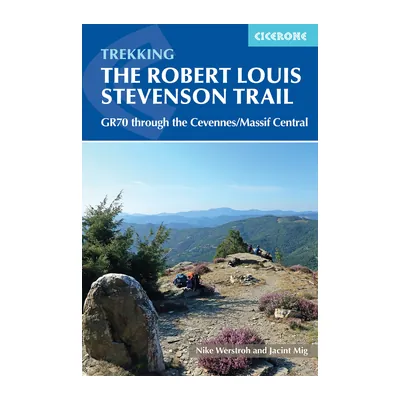
Trekking the Robert Louis Stevenson Trail (Cicerone)
Cicerone’s guide to the GR70, third edition reprinted in 2025: the 169 mi from Le Puy to Alès, with route descriptions, lodging listings and maps, in Stevenson’s footsteps.
View on Amazon (opens in a new tab)
FAQ
How much weight can a donkey carry on a hike?
Published limits run from 66 to 88 lb (30 to 40 kg) in total, kids included: 30 kg for the FNAR, France’s donkey trekking federation, 35 kg at a donkey farm in the upper Ariège, 40 kg for the Stevenson Trail association. That covers the gear of 2 to 4 people. The number that counts is your handler’s, for that donkey, and both saddlebags should weigh the same.
How much does a donkey trek in France cost?
The FNAR quotes €60 to €80 per donkey per day. On October 24, 2026, two outfitters listed €115 and €133 for two days, and €174 and €205 for three. On top of that come lodging, meals, the donkey’s board at each stop (€2 to €8 a night with one of them), and, on a point-to-point route, getting the donkey back.
Can you hike the Stevenson Trail with a donkey in two or three days?
Yes. The GR 70 is 170 miles (272 km) long in 12 stages, but the trail association suggests three-day sections of 37 to 48 miles, and the villages make shorter stages possible. At a donkey’s pace of 1.9 to 2.5 mph, a 12-mile (20 km) stage takes 5 hr to 6 hr 40 min of walking. One handler recommends a short first day.
Can a child ride the donkey?
Often, but each outfitter sets its own rule. The FNAR accepts tired young kids under their parents’ responsibility, within 66 lb (30 kg) in total; a farm in the Ariège takes kids about 3 to 8 years old; a stay in the Northern Vosges strongly discourages it on rough terrain. Within that framework, the decision belongs to the parents.
Do you need to know how to care for a donkey before you go?
No. The handler trains you at the start: grooming, hoof care, loading, leading, feeding, and safety instructions, according to the FNAR, which does ask for some hiking experience and a sense of direction. The Stevenson Trail association plans 1 hr 30 min to 2 hr for the lesson, or arriving the night before. The handler gives you a handbook and stays reachable.
Sources
- Fédération nationale Ânes et Randonnées (FNAR, France’s donkey trekking federation), “Conseils pour randonner avec un âne,” accessed October 24, 2026. ane-et-rando.com https://www.ane-et-rando.com/conseils-randos-anes/ ↩
- Fédération nationale Ânes et Randonnées (FNAR, France’s donkey trekking federation), “Fédération de Randonnées avec un âne en France,” home page, accessed October 24, 2026. ane-et-rando.com https://www.ane-et-rando.com/ ↩
- Fédération nationale Ânes et Randonnées (FNAR, France’s donkey trekking federation), “Location d’un âne de randonnée,” self-guided treks, prices undated, accessed October 24, 2026. ane-et-rando.com https://www.ane-et-rando.com/conseils-randos-anes/rando-liberte/ ↩
- Fédération nationale Ânes et Randonnées (FNAR, France’s donkey trekking federation), “Partir avec un guide et un ou plusieurs ânes,” accessed October 24, 2026. ane-et-rando.com https://www.ane-et-rando.com/conseils-randos-anes/rando-accompagnee/ ↩
- Fédération nationale Ânes et Randonnées (FNAR, France’s donkey trekking federation), “Randonnée itinérante,” long-distance routes, accessed October 24, 2026. ane-et-rando.com https://www.ane-et-rando.com/conseils-randos-anes/itineraires/ ↩
- Fédération nationale Ânes et Randonnées (FNAR, France’s donkey trekking federation), “Une association pour promouvoir l’âne,” accessed October 24, 2026. ane-et-rando.com https://www.ane-et-rando.com/la-fnar/ ↩
- Ariège Pyrénées Tourisme (Ariège tourism agency), “La Ferme aux Anes,” listing for a donkey farm in Unac, 2024 price, accessed October 24, 2026. ariegepyrenees.com https://www.ariegepyrenees.com/commerces-et-services/la-ferme-aux-anes/ ↩
- Association Sur le chemin de R. L. Stevenson (the GR 70 trail association), “Conseils pour randonner avec un âne,” accessed October 24, 2026. chemin-stevenson.org https://www.chemin-stevenson.org/randonner-avec-un-ane/conseils-pour-randonner-avec-un-ane/ ↩
- Âne Azimut (donkey rental, Le Monastier-sur-Gazeille), “Chemin de Stevenson,” 2026 prices including return transport, accessed October 24, 2026. aneazimut.com https://aneazimut.com/les-randos/chemin-de-stevenson/ ↩
- Association Sur le chemin de R. L. Stevenson (the GR 70 trail association), “Charte 2011 pour l’accueil des ânes en randonnée,” PDF, accessed October 24, 2026. chemin-stevenson.org https://www.chemin-stevenson.org/wp-content/uploads/2020/02/charte-pour-l-accueil-des-anes.pdf ↩
- Association Sur le chemin de R. L. Stevenson (the GR 70 trail association), “Modestine et informations sur les ânes,” accessed October 24, 2026. chemin-stevenson.org https://www.chemin-stevenson.org/randonner-avec-un-ane/modestine-et-informations-sur-les-anes/ ↩
- Association Sur le chemin de R. L. Stevenson (the GR 70 trail association), “Choisir ses étapes,” accessed October 24, 2026. chemin-stevenson.org https://www.chemin-stevenson.org/choisir-ses-etapes/ ↩
- Association Sur le chemin de R. L. Stevenson (the GR 70 trail association), “Foire aux questions,” accessed October 24, 2026. chemin-stevenson.org https://www.chemin-stevenson.org/foire-aux-questions/ ↩
- Fédération française de la randonnée pédestre (French hiking federation), “Parcourir le chemin de Stevenson avec un âne ?”, accessed October 24, 2026. ffrandonnee.fr https://www.ffrandonnee.fr/s-informer/actualites/parcourir-le-chemin-de-stevenson-avec-un-ane ↩
- Association Sur le chemin de R. L. Stevenson (the GR 70 trail association), “Quand partir,” accessed October 24, 2026. chemin-stevenson.org https://www.chemin-stevenson.org/quand-partir/ ↩
- Association Sur le chemin de R. L. Stevenson (the GR 70 trail association), “Réserver ses hébergements,” accessed October 24, 2026. chemin-stevenson.org https://www.chemin-stevenson.org/reserver-ses-hebergements/ ↩
- Association Sur le chemin de R. L. Stevenson (the GR 70 trail association), “Accès / Transport,” accessed October 24, 2026. chemin-stevenson.org https://www.chemin-stevenson.org/acces-transport/ ↩
- Fédération nationale Ânes et Randonnées (FNAR, France’s donkey trekking federation), “Trouver une randonnée avec un âne,” map of member donkey outfitters, accessed October 24, 2026. ane-et-rando.com https://www.ane-et-rando.com/trouver-anes-randos/ ↩
- Terres d’Aventure (tour operator), “Escapade vosgienne au pas de l’âne,” trip page (Obersteinbach, Northern Vosges), accessed October 24, 2026. terdav.com https://www.terdav.com/ps-france/rn-autres-regions-france/tp-voyage-liberte/at-randonnee-ane/fralf47--escapade-vosgienne-ane ↩
- Fédération nationale Ânes et Randonnées (FNAR, France’s donkey trekking federation), “La participation à la FNAR, c’est un engagement,” quality charter, undated PDF, accessed October 24, 2026. ane-et-rando.com https://www.ane-et-rando.com/document/charte-fnar.pdf ↩
- French Ministry of Agriculture, Direction générale de l’alimentation, technical instruction DGAL/SDSSA/2025/761, November 20, 2025, Annex II on equine identification, accessed October 24, 2026. info.agriculture.gouv.fr https://info.agriculture.gouv.fr/boagri/instruction-2025-761/telechargement ↩
- French Law No. 2021-1539 of November 30, 2021, on animal cruelty, Article 1 (Article L. 211-10-1 of the Rural Code), text reproduced by Ineris (AIDA), accessed October 24, 2026. aida.ineris.fr https://aida.ineris.fr/reglementation/loi-ndeg-2021-1539-301121-visant-a-lutter-contre-maltraitance-animale-conforter-lien ↩
- Âne Azimut (donkey rental, Le Monastier-sur-Gazeille), “Les tarifs,” 2026 loop prices, accessed October 24, 2026. aneazimut.com https://aneazimut.com/les-tarifs/ ↩
- Gentiâne (donkey rental, Vialas), “Tarifs,” undated page, accessed October 24, 2026. ane-et-randonnee.fr https://www.ane-et-randonnee.fr/fr/tarifs-reservations.html ↩
- Association Sur le chemin de R. L. Stevenson (the GR 70 trail association), “Le chemin de R.L. Stevenson : conseils pratiques,” undated PDF, accessed October 24, 2026. chemin-stevenson.org https://www.chemin-stevenson.org/wp-content/uploads/2020/02/conseils-pratiques-chemin-stevenson.pdf ↩
- Robert Louis Stevenson, Travels with a Donkey in the Cevennes, chapter “Velay,” 1879, Wikisource, accessed October 24, 2026. en.wikisource.org https://en.wikisource.org/wiki/Travels_with_a_Donkey_in_the_Cevennes/Velay ↩

Fact-checking, regulations, and safety
Arnaud Couderc reviews our contributors’ articles and writes for Outfarer about regulations, safety, fishing, the ocean, and outdoor activities. He traces every rule back to its official text and every number to its source, so you head out with solid benchmarks.


 Joséphine Garand

 Guillaume Hoarau