 Français (France)
 English (UK)
 English (US)
 Deutsch (Deutschland)

Contents
Hiring a pack donkey: how it works
Do you need to know about donkeys to walk with one? No: the donkey handler, or ânier, does. A breeder who hires out donkeys, the handler lends you an animal used to walking, with its A carrying saddle placed on the donkey’s back, to which the saddlebags are attached; in French, the bât. and all its kit. Before you set off, you are shown how to brush it, pick out its hooves, load the saddle and lead it [1].
The French donkey-trekking federation, FNAR, distinguishes two formats. On a self-guided, or ‘liberté’, trek, you set off with the donkey on your own, as a family or with friends, on a route prepared by the handler: for a day, on day walks from one base, or as a trek of two days or more [3]. On a guided trek, a mountain leader or local guide walks with you and handles the organisation [4]. Loops bring the donkey back home; on a one-way route, the handler collects it at the end, and that transport weighs on the price [5].
In France, some donkey handlers belong to the Fédération nationale Ânes et Randonnées (FNAR): over 60 handlers and 1,200 donkeys, by its own count. Each member undertakes to follow its quality charter, and every newcomer is mentored by a sponsor before being admitted at the annual general meeting [6]. It is a network of associations, not an official label, but members have committed themselves in writing. Only one thing is asked of you: some walking experience and a sense of direction, because the donkey, the federation warns, ‘is not a GPS’ [1].
What a donkey carries: 30 to 40 kg, children included
How much weight can a donkey carry? The published figures vary with whoever gives them, which is a good reason to compare them. The FNAR gives up to 30 kg, luggage and children included, enough for the belongings of 2 to 4 people [1, 2]. A donkey farm in the upper Ariège valley, listed by the département’s tourist board, sets its limit at 35 kg [7]. The Stevenson Trail association goes up to 40 kg ‘in total’, picnic, luggage and tired little walkers included [8].
What this means for you: the figure that counts is your handler’s, for that donkey, and it includes the child who climbs on at the end of the day. With a 15 kg child, that leaves 15 to 25 kg for luggage, depending on the limit. Loading then follows a few rules set out by the FNAR: two saddlebags of equal weight, or everything slides towards the heavier side; soft bags rather than suitcases; heavy items at the bottom, and nothing hard or pointed against the animal’s flanks [1].
The pace of a day: 3 to 4 km/h, and a first morning to learn
A donkey walks at a steady 3 or 4 km/h: the FNAR and the Stevenson Trail association give the same range [2, 8]. At that pace, a 15 km stage takes 3 h 45 to 5 h of walking, and a 20 km stage 5 h to 6 h 40, not counting breaks. The usual rules of thumb for estimating walking time do not apply as they stand: the donkey sets the pace.
The first morning counts double. The Stevenson Trail association allows 1 h 30 to 2 h for a lesson in loading and leading before departure, or arriving the evening before [8]; for a single day out, a farm in the Ariège reckons on 30 to 45 minutes between your arrival and the first steps [7]. A handler in the Velay also recommends a short first stage, to get to know each other [9].
On the way, you walk in front, the donkey on its lead rope [1]. At breaks, it grazes [8]; while walking, it is better not to let it stop at every tuft, or ‘the walk could take longer than planned’, the FNAR notes [1]. A donkey is pushed, not pulled: rather than tugging endlessly on the rope, the association suggests waving a branch behind it [8].
In the evening, the donkey needs a paddock, water and fodder. On the GR 70, accommodation owners who sign the association’s charter for welcoming donkeys undertake to provide a fenced paddock of at least 50 m² less than 1 km away, fodder, barley and a salt lick, clean water and a shelter for the pack saddle [10]. The donkey’s board may be charged separately: €2 to €8 a night, according to one handler in the Velay [9].
Where to go: the Stevenson Trail, the Pyrenees, the Vosges
The great classic has an author. In 1878, the Scottish writer Robert Louis Stevenson set off from Le Monastier-sur-Gazeille with a she-donkey, Modestine, whom he first described as ‘an appurtenance of my mattress, or self-acting bedstead on four castors’; twelve days later, parting from her was a wrench [11, 26]. His journey gave its name to the Chemin de Stevenson, the GR 70: 272 km from Le Puy-en-Velay to Alès, through the Velay, the Gévaudan, Mont Lozère and the Cévennes [12], waymarked in white and red in both directions [13]. According to the French walking federation, FFRandonnée, many walkers follow it with pack donkeys, and donkey hire and suitable gîtes line the route [14].
There is no need to walk it all. The association divides it into 12 stages of around 20 km, or 12 to 14 days, and suggests sections of 60 to 77 km for three days, from Le Puy-en-Velay to Langogne for instance; every village on the way has accommodation, so stages can be shortened [12]. With a donkey, 20 to 26 km a day means 5 h to nearly 9 h of walking: you may well prefer to split them. The longest stage, from Le Pont-de-Montvert to Florac, is 28.5 km, but it can be split into two days of about 15 km via Mijavols; for the last one, from Saint-Jean-du-Gard to Alès, the association recommends the alternative route laid out for walkers with donkeys [13].
The best season runs from May to October, as the trail climbs to 1,700 m [15]. Most accommodation, from gîtes d’étape (walkers’ hostels) to B&Bs, opens from Easter to All Saints’ Day in early November, some stages have only one or two, and booking is strongly advised [16]. Professionals generally work from north to south [13], and each end of the trail has a railway station on the French national network, SNCF [17].
In the Pyrenees, the FNAR’s map shows donkey handlers in the Ariège, Haute-Garonne, Pyrénées-Atlantiques and Pyrénées-Orientales départements [18]. One example, listed by the Ariège tourist board: in July and August, a day with a donkey in the Orlu valley and, over 2 or 3 days, the climb to the Étang d’En Beys lake to sleep in a bivvy or at the mountain hut. The donkey goes no further than the hut, and dogs are banned in the nature reserve [7].
In the Vosges, the offer is thinner on the ground: on 24 October 2026, no handler in the range appeared on the FNAR’s map [18]. You will find trips sold by tour operators, such as a base-camp stay in the Northern Vosges regional nature park, with loops of 10 to 13 km a day, or 3 to 5 h of walking [19]. To hire a donkey and go it alone, the tourist office where you start remains the best contact.
With children: what operators and federations say
Children are often the reason for the trip, and the donkey the reason they keep walking. The FNAR says the donkey can carry tired young children, under their parents’ responsibility, within its 30 kg limit [2, 1]. The Stevenson Trail association wants an adult to be the first to lead the donkey on day one, before the children lead it with an adult’s help [11]; for the very young, it notes that some handlers can adapt the pack saddle into a cot [13]. The rules vary from one operator to the next:
| Source | Riding the donkey | Age or weight | Supervision |
|---|---|---|---|
| FNAR (national network) | Yes, when they are tired | Within the 30 kg limit, luggage included | Under the parents’ responsibility |
| Stevenson Trail association (GR 70) | Yes, within 40 kg in total; pack saddle can be adapted for the very young | Not specified | An adult leads the donkey first, on day one |
| Donkey farm, upper Ariège | Yes | Roughly 3 to 8 years old, within 35 kg in total | Under your responsibility |
| Base-camp stay, Northern Vosges | Strongly discouraged, rough terrain | From age 3 | At least 2 adults for young children and a donkey |
Sources: FNAR, Sur le chemin de R. L. Stevenson association, Ariège Pyrénées Tourisme, a tour operator’s trip page. Your operator’s rule applies.
In other words, there is no single rule, only your operator’s, for its terrain and its donkeys [19]. The Stevenson Trail association puts it simply: it is for parents to judge their children’s stamina and to match each day’s distance to their age and the climbing involved [13].
The donkey’s welfare: what the charters and the law say
Who looks after the donkey when the handler is not there? You do, for a few days. The FNAR’s charter shares out the roles. Handlers undertake to match each donkey to its temperament and abilities, to give their old donkeys a decent retirement, to offer suitable routes, scouted beforehand if need be, and kit in good condition. Customers, for their part, undertake to follow their advice and routes and to look after the donkeys entrusted to them properly [20].
We undertake to keep animals that are healthy, well fed, trained and used to walking and carrying loads.
In practice, the handler trains you in feeding and watering the donkey, leading it, the pack saddle and the safety instructions [3], then remains available if needed [1]. The handler’s instructions come before anything you read elsewhere, this article included: at the slightest doubt about the donkey’s condition, the handler is the one to call.
Since the French law of 30 November 2021, anyone keeping an equine must also attest that they know the needs of the species, and the owner must check this before any change of keeper [22]. The text does not mention a few days’ hire in so many words: the question is one for the handler, who knows their obligations, or, if in doubt, for the local animal-protection office (direction départementale de la protection des populations).
How much a donkey trek costs
The FNAR quotes a range of €60 to €80 per donkey per day on a self-guided trek [3], and from €200 a day for a guide [4]. Prices published by handlers, checked on 24 October 2026, are in the same region, with two qualifications: the daily price falls slightly as the trip gets longer, and it rises as soon as the donkey has to be brought back [23, 24].
| Option, for 1 donkey | Velay operator (2026 prices) | Cévennes operator (undated page) | Upper Ariège farm (2024 price) |
|---|---|---|---|
| 1 day | €60 | Not shown | €65 |
| 2-day loop | €115 | €133 | Not shown |
| 3-day loop | €174 | €205 | Not shown |
| GR 70, one way | €208 for 3 days, €830 for 13 days, donkey’s return included | Donkey transport extra: €104.50 to €471 depending on the starting point | Not applicable |
| Donkey’s board at each stop | €2 to €8 a night, extra | Not specified | Not specified |
Prices shown on the operators’ websites, excluding accommodation and meals. Two donkeys cost €227 for 2 days in the Velay and €239 in the Cévennes.
In practice, one donkey carries the belongings of 2 to 4 people [2], so its cost is shared. For two or three days on a loop, allow €115 to €205 to hire one donkey, plus accommodation, meals and its board. On a one-way route, ask what the price includes: the Velay operator includes the donkey’s return and two seats for you in its GR 70 package [9], whereas the Cévennes operator charges for transport separately [24].
Kit related to this article
No affiliation: no commission, no sponsored products.
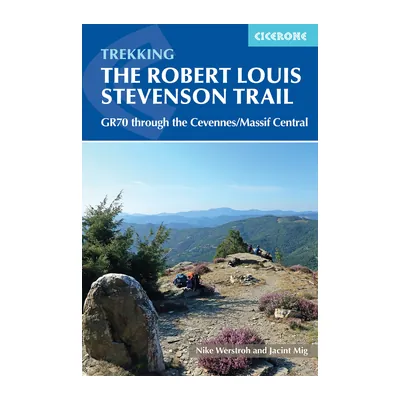
Trekking the Robert Louis Stevenson Trail (Cicerone)
Cicerone’s guide to the GR70, third edition reprinted in 2025: the 272 km from Le Puy to Alès, with route descriptions, accommodation listings and maps, in Stevenson’s footsteps.
View on Amazon (opens in a new tab)
FAQs
How much weight can a donkey carry on a trek?
Published limits range from 30 to 40 kg in total, children included: 30 kg for the FNAR, the French donkey-trekking federation, 35 kg at a donkey farm in the upper Ariège, 40 kg for the Stevenson Trail association. That is enough for the luggage of 2 to 4 people. The figure that counts is your handler’s, for that donkey, and both saddlebags should weigh the same.
How much does donkey trekking in France cost?
The FNAR quotes €60 to €80 per donkey per day. On 24 October 2026, two operators listed €115 and €133 for two days, and €174 and €205 for three. On top come accommodation, meals, the donkey’s board at each stop (€2 to €8 a night with one of them) and, on a one-way route, bringing the donkey back.
Can you walk the Stevenson Trail with a donkey in two or three days?
Yes. The GR 70 is 272 km long in 12 stages, but the trail association suggests three-day sections of 60 to 77 km, and the villages make shorter stages possible. At a donkey’s pace of 3 to 4 km/h, a 20 km stage takes 5 h to 6 h 40 of walking. One handler recommends a short first day.
Can a child ride the donkey?
Often, but each operator sets its own rule. The FNAR accepts tired young children under their parents’ responsibility, within 30 kg in total; a farm in the Ariège takes children aged roughly 3 to 8; a stay in the Northern Vosges strongly discourages it on rough terrain. Within that framework, the decision is the parents’.
Do you need to know how to look after a donkey before you go?
No. The handler trains you at the start: grooming, hoof care, loading, leading, feeding and safety instructions, according to the FNAR, which does ask for some walking experience and a sense of direction. The Stevenson Trail association allows 1 h 30 to 2 h for the lesson, or arriving the evening before. The handler gives you a handbook and stays reachable.
Sources
- Fédération nationale Ânes et Randonnées (FNAR, the French donkey-trekking federation), ‘Conseils pour randonner avec un âne’, accessed 24 October 2026. ane-et-rando.com https://www.ane-et-rando.com/conseils-randos-anes/ ↩
- Fédération nationale Ânes et Randonnées (FNAR, the French donkey-trekking federation), ‘Fédération de Randonnées avec un âne en France’, home page, accessed 24 October 2026. ane-et-rando.com https://www.ane-et-rando.com/ ↩
- Fédération nationale Ânes et Randonnées (FNAR, the French donkey-trekking federation), ‘Location d’un âne de randonnée’, self-guided treks, prices undated, accessed 24 October 2026. ane-et-rando.com https://www.ane-et-rando.com/conseils-randos-anes/rando-liberte/ ↩
- Fédération nationale Ânes et Randonnées (FNAR, the French donkey-trekking federation), ‘Partir avec un guide et un ou plusieurs ânes’, accessed 24 October 2026. ane-et-rando.com https://www.ane-et-rando.com/conseils-randos-anes/rando-accompagnee/ ↩
- Fédération nationale Ânes et Randonnées (FNAR, the French donkey-trekking federation), ‘Randonnée itinérante’, long-distance routes, accessed 24 October 2026. ane-et-rando.com https://www.ane-et-rando.com/conseils-randos-anes/itineraires/ ↩
- Fédération nationale Ânes et Randonnées (FNAR, the French donkey-trekking federation), ‘Une association pour promouvoir l’âne’, accessed 24 October 2026. ane-et-rando.com https://www.ane-et-rando.com/la-fnar/ ↩
- Ariège Pyrénées Tourisme (Ariège tourist board), ‘La Ferme aux Anes’, listing for a donkey farm in Unac, 2024 price, accessed 24 October 2026. ariegepyrenees.com https://www.ariegepyrenees.com/commerces-et-services/la-ferme-aux-anes/ ↩
- Association Sur le chemin de R. L. Stevenson (the GR 70 trail association), ‘Conseils pour randonner avec un âne’, accessed 24 October 2026. chemin-stevenson.org https://www.chemin-stevenson.org/randonner-avec-un-ane/conseils-pour-randonner-avec-un-ane/ ↩
- Âne Azimut (donkey hire, Le Monastier-sur-Gazeille), ‘Chemin de Stevenson’, 2026 prices including return transport, accessed 24 October 2026. aneazimut.com https://aneazimut.com/les-randos/chemin-de-stevenson/ ↩
- Association Sur le chemin de R. L. Stevenson (the GR 70 trail association), ‘Charte 2011 pour l’accueil des ânes en randonnée’, PDF, accessed 24 October 2026. chemin-stevenson.org https://www.chemin-stevenson.org/wp-content/uploads/2020/02/charte-pour-l-accueil-des-anes.pdf ↩
- Association Sur le chemin de R. L. Stevenson (the GR 70 trail association), ‘Modestine et informations sur les ânes’, accessed 24 October 2026. chemin-stevenson.org https://www.chemin-stevenson.org/randonner-avec-un-ane/modestine-et-informations-sur-les-anes/ ↩
- Association Sur le chemin de R. L. Stevenson (the GR 70 trail association), ‘Choisir ses étapes’, accessed 24 October 2026. chemin-stevenson.org https://www.chemin-stevenson.org/choisir-ses-etapes/ ↩
- Association Sur le chemin de R. L. Stevenson (the GR 70 trail association), ‘Foire aux questions’, accessed 24 October 2026. chemin-stevenson.org https://www.chemin-stevenson.org/foire-aux-questions/ ↩
- Fédération française de la randonnée pédestre (French walking federation), ‘Parcourir le chemin de Stevenson avec un âne ?’, accessed 24 October 2026. ffrandonnee.fr https://www.ffrandonnee.fr/s-informer/actualites/parcourir-le-chemin-de-stevenson-avec-un-ane ↩
- Association Sur le chemin de R. L. Stevenson (the GR 70 trail association), ‘Quand partir’, accessed 24 October 2026. chemin-stevenson.org https://www.chemin-stevenson.org/quand-partir/ ↩
- Association Sur le chemin de R. L. Stevenson (the GR 70 trail association), ‘Réserver ses hébergements’, accessed 24 October 2026. chemin-stevenson.org https://www.chemin-stevenson.org/reserver-ses-hebergements/ ↩
- Association Sur le chemin de R. L. Stevenson (the GR 70 trail association), ‘Accès / Transport’, accessed 24 October 2026. chemin-stevenson.org https://www.chemin-stevenson.org/acces-transport/ ↩
- Fédération nationale Ânes et Randonnées (FNAR, the French donkey-trekking federation), ‘Trouver une randonnée avec un âne’, map of member donkey handlers, accessed 24 October 2026. ane-et-rando.com https://www.ane-et-rando.com/trouver-anes-randos/ ↩
- Terres d’Aventure (tour operator), ‘Escapade vosgienne au pas de l’âne’, trip page (Obersteinbach, Northern Vosges), accessed 24 October 2026. terdav.com https://www.terdav.com/ps-france/rn-autres-regions-france/tp-voyage-liberte/at-randonnee-ane/fralf47--escapade-vosgienne-ane ↩
- Fédération nationale Ânes et Randonnées (FNAR, the French donkey-trekking federation), ‘La participation à la FNAR, c’est un engagement’, quality charter, undated PDF, accessed 24 October 2026. ane-et-rando.com https://www.ane-et-rando.com/document/charte-fnar.pdf ↩
- French Ministry of Agriculture, Direction générale de l’alimentation, technical instruction DGAL/SDSSA/2025/761 of 20 November 2025, Annex II on equine identification, accessed 24 October 2026. info.agriculture.gouv.fr https://info.agriculture.gouv.fr/boagri/instruction-2025-761/telechargement ↩
- French Law No. 2021-1539 of 30 November 2021 on animal cruelty, Article 1 (Article L. 211-10-1 of the Rural Code), text reproduced by Ineris (AIDA), accessed 24 October 2026. aida.ineris.fr https://aida.ineris.fr/reglementation/loi-ndeg-2021-1539-301121-visant-a-lutter-contre-maltraitance-animale-conforter-lien ↩
- Âne Azimut (donkey hire, Le Monastier-sur-Gazeille), ‘Les tarifs’, 2026 loop prices, accessed 24 October 2026. aneazimut.com https://aneazimut.com/les-tarifs/ ↩
- Gentiâne (donkey hire, Vialas), ‘Tarifs’, undated page, accessed 24 October 2026. ane-et-randonnee.fr https://www.ane-et-randonnee.fr/fr/tarifs-reservations.html ↩
- Association Sur le chemin de R. L. Stevenson (the GR 70 trail association), ‘Le chemin de R.L. Stevenson : conseils pratiques’, undated PDF, accessed 24 October 2026. chemin-stevenson.org https://www.chemin-stevenson.org/wp-content/uploads/2020/02/conseils-pratiques-chemin-stevenson.pdf ↩
- Robert Louis Stevenson, Travels with a Donkey in the Cevennes, chapter ‘Velay’, 1879, Wikisource, accessed 24 October 2026. en.wikisource.org https://en.wikisource.org/wiki/Travels_with_a_Donkey_in_the_Cevennes/Velay ↩

Fact-checking, regulations and safety
Arnaud Couderc reviews our contributors’ articles and writes for Outfarer about regulations, safety, fishing, the sea and outdoor pursuits. He traces every rule back to its official text and every figure to its source, so that you set off with sound benchmarks.


 Joséphine Garand

 Guillaume Hoarau