 Français (France)
 English (UK)
 English (US)
 Deutsch (Deutschland)

A dog on a lead is allowed in the core of the Parc national des Cévennes [1], but banned from the core of the Parc national des Écrins, even on a lead [2]. The rules change from one national park to the next, and that is by design: each park has its own regulations, set by decree and tailored to its habitats [3]. So it pays to know them before you set off, park by park.
The core, where the rules apply
A French national park has two zones. In the core (cœur), on land or at sea, each park’s own regulations govern human activities, and everyone has to follow them: landowners, professionals and passing visitors alike. In the surrounding area (aire d’adhésion), unless a local decision says otherwise, no special environmental regulations apply: the communes (municipalities) there simply commit, through the park’s charter, to sustainable development [3].
In practice, you can tell where the core begins. In the Cévennes, for example, road signs reading ‘Parc national des Cévennes, zone de protection’ (protected zone) mark it on the roads, signs or waymarks mark it on the paths, and IGN maps, France’s official topographic maps, show it as a broad, continuous green band [4]. The parks’ rangers have the power to record offences [5].
Why do the rules differ? Each park adapts them to its local constraints. The Vanoise massif has a mountain hut roughly every three hours’ walk; the parks on the Mediterranean coast, by contrast, are very busy, rarely remote and surrounded by places to stay [5]. Hence bivouacking restricted to the surroundings of the huts in the first case, and banned in the second.
Dogs: banned from the mountain cores
This is the rule that surprises visitors most. In the four high-mountain national parks, the dog stays at home, however small, friendly and well trained it may be: its presence risks disturbing the ecosystem, from destroyed clutches of eggs to transmitted germs, explains the Parc national de la Vanoise [6]. Elsewhere, dogs are allowed, with conditions.
| National park | Dogs | Exceptions and details |
|---|---|---|
| Vanoise | Banned, even on a lead | Livestock guarding dogs and dogs accompanying disabled people [6] |
| Écrins | Banned, even on a lead | Working dogs on duty: avalanche dogs, herding and livestock guarding dogs, guide dogs for the blind [2] |
| Mercantour | Banned, even on a lead or carried | Herding dogs, guide or assistance dogs, and dogs belonging to hamlet residents, if tied up or penned close to the buildings [7] |
| Pyrenees | Not allowed, even on a lead | The park advises having someone look after your dog while you walk [8] |
| Cévennes | Allowed on a lead | No roaming free, except sheepdogs at work and hunting dogs during an authorised hunt [1] |
| Forêts | Allowed | No roaming free; a lead is recommended in woodland and near pastures [9] |
| Calanques | Depends on the area | No landing or walking dogs on the Riou archipelago [10] |
| Port-Cros | Banned outside the village | Allowed on a lead in the village, between Fort du Moulin and the statue of Saint Joseph [13] |
| Porquerolles | On a lead on paths and trails | Banned on the beaches [13] |
Sources: national park websites, accessed 22 October 2026. The three overseas parks do not set out this rule on their public pages: check with the park before bringing a dog.
Bivouacking: set hours and distances
Camping proper (camping sauvage) is strictly banned in national park cores, by day and by night. Bivouacking, on the other hand, is possible almost everywhere, but only in certain places and at certain times. To the parks, a bivouac means one night under the stars or in a compact tent too low to stand up in, pitched in the evening and taken down in the morning, with no vehicle, no table or awning, and no staying several nights in the same spot [5].
| National park | Hours | Where |
|---|---|---|
| Vanoise | Summer only, 7pm to 8am | Only near certain staffed mountain huts, booking required |
| Écrins | 7pm to 9am | More than an hour’s walk from road access and from the core boundary; special rules at the Lauvitel and Muzelle lakes |
| Mercantour | 7pm to 9am | More than an hour’s walk from the core boundary or road access; at the Merveilles and Fontanalba sites, only in the areas near the huts |
| Pyrenees | 7pm to 9am | More than an hour’s walk from the core boundary or road access, or in the areas at certain huts; in the Néouvielle nature reserve, only in the Orédon and Aubert areas |
| Cévennes | 7pm to 9am | No more than 50 m either side of the GR and GRP waymarked long-distance paths, except on closed sections |
| Forêts | From an hour before sunset to an hour after sunrise | Near tracks and paths |
| Guadeloupe | From nightfall to daybreak | More than an hour’s walk from the core boundary or road access |
| La Réunion | From sunset to 8am | Everywhere except the Mare-Longue forest, the cliffs of the Rivière des Remparts and those below the Piton des Neiges and the Grand Bénare |
| Port-Cros and Porquerolles | Banned | Throughout the core, beaches included |
| Calanques | Banned | Throughout the core, including beaches and roadsides |
Source: French national parks portal, Le bivouac, accessed 22 October 2026. Parc amazonien de Guyane, in French Guiana: the park recommends avoiding any intrusion into the areas where Indigenous communities live.
Outside the core, in the surrounding area, bivouacking is allowed, except in communes that have banned it [5]. For the rules that apply everywhere in France, from the coast to protected sites, see our article on what French law says about wild camping.

Fire: banned, stoves sometimes tolerated
On this point, the national parks portal is clear: fires are banned in national parks, and it advises bringing a stove [5]. Each park repeats the message in its own way. No fires in the Écrins, to prevent wildfires and damage to the soil [2]; in the Mercantour, fires are banned as a general rule [7]; in the Parc national de Port-Cros, no fires and no cigarettes in natural areas [11].
Stoves come under finer rules. In the Cévennes, the park’s decree bans lighting fires anywhere other than in dwellings, but people who bivouac may still use portable stoves, except in certain places and at certain times of year, because of the fire risk [1]. The Parc national de forêts, France’s newest national park, tolerates self-contained portable stoves when bivouacking, within the limits of prefectoral orders, the local fire rules issued by the prefect of each département [9], and the Parc national de La Réunion, on the French island in the Indian Ocean, only allows fire on permanent masonry hearths and on portable gas stoves [12].
Drones and overflights: generally, no
The Mercantour is the most explicit: flying drones is banned throughout its core, and only the park’s director can grant an exemption, exceptionally, for an authorised professional activity. Motorised aircraft are also banned from flying lower than 1,000 m above the ground there, rescue services excepted [7]. Same rule in the Écrins, where all motorised overflights below 1,000 m above the ground are banned [2].
In the Vanoise, the rules ban the use of any object, device or craft in the airspace for sport or leisure, leisure drones included; even unpowered flight, paragliding for instance, is only allowed below 1,000 m in set zones and periods [6]. Elsewhere, overflights need permission. In the Calanques, motorised overflights are among the activities that cannot take place without the park’s prior approval [10]. In the Pyrenees, permits for motorised overflights and for photography and filming are applied for online, but drones are excluded from this procedure: a drone pilot cannot use it [8].
Picking: flowers, mushrooms, minerals
- Vanoise: no picking or collecting of flowers, fruit, insects or minerals [6].
- Écrins: no picking or collecting of animals, plants, minerals or fossils; traditional activities, such as picking a few plants and fruits for family use, carry on [2].
- Mercantour: capturing, picking and gathering are banned, except for a limited list of plants for medicinal or culinary use, with set seasons and quantities [7].
- Pyrenees: no picking and no collecting [8].
- Cévennes: a list of sensitive species may not be picked, and the park’s board regulates the rest [1].
- Forêts: picking is allowed for household use; mushrooms up to 5 litres per day per person, for the listed species, such as ceps, chanterelles or morels [9].
- Calanques: taking anything from the natural environment requires the park’s permission [10].
These rules do not close the parks; they shape how we enjoy them: you come on foot, by day, and leave the flowers where they grow. A well-packed rucksack, the dog left with friends if need be, and some of the finest paths in France are all yours.
Gallery: the eight parks of mainland France
One real photo for each of the eight national parks in mainland France, with the rule that stands out most there, published under free licences on Wikimedia Commons by their authors, who are credited under each image. Tap or click a photo to enlarge it.
Kit related to this article
No affiliation: no commission, no sponsored products.
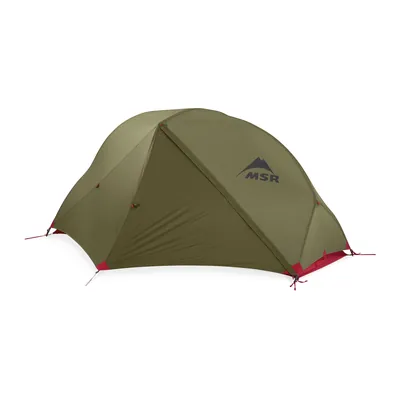
MSR Hubba NX Solo
A freestanding one-person tent, 1.12 kg minimum, with a 216 × 76 cm floor: a small tent to pitch in the evening and strike in the morning, wooden platforms included.
View on Amazon (opens in a new tab)
FAQs
Can you take a dog into a French national park?
It depends on the park. In the cores of the Vanoise, Écrins, Mercantour and Pyrenees national parks, dogs are banned, even on a lead, apart from herding and assistance dogs. In the Cévennes, they are allowed on a lead; in the Parc national de forêts, they are allowed, but may not roam free.
Can you wild camp in a French national park?
Yes, as a bivouac, almost everywhere, but only at certain times and in certain places: usually from 7pm to 9am, more than an hour’s walk from roads and from the core boundary, with rules specific to each park. Bivouacking is, however, completely banned on Port-Cros and Porquerolles and in the Calanques, and camping proper, with a bigger set-up or several nights in one spot, is banned in every core.
Can you fly a drone in a French national park?
As a rule, no. The Mercantour bans drones throughout its core, barring an exceptional exemption for an authorised professional activity; the Vanoise bans all leisure flying craft, and the Écrins all motorised overflights below 1,000 m above the ground. In the Calanques, motorised overflights require the park’s permission; in the Pyrenees, the online permit procedure excludes drones.
Can you light a campfire in a French national park?
No: fires are banned in national parks, as their portal points out, and it advises bringing a stove. Stoves themselves follow each park’s own rules: tolerated when bivouacking in the Parc national de forêts, allowed under conditions in the Cévennes, and limited to gas stoves in the Parc national de La Réunion.
Can you pick mushrooms in a French national park?
Rarely. Picking is banned in the cores of the Vanoise, the Écrins, the Mercantour, apart from a short list of plants, and the Pyrenees. The Parc national de forêts is the exception: you can pick certain mushrooms there, such as ceps or chanterelles, up to 5 litres per day per person.
Sources
- Parc national des Cévennes, Modalités d’application de la réglementation du cœur (detailed rules for the core), park charter, December 2024 update, accessed 22 October 2026. cevennes-parcnational.fr https://www.cevennes-parcnational.fr/sites/cevennes-parcnational.fr/files/2024-12/marcoeurs_pnc_maj_2024_12.pdf ↩
- Parc national des Écrins, Règlementation, accessed 22 October 2026. ecrins-parcnational.fr https://www.ecrins-parcnational.fr/reglementation ↩
- Portail des parcs nationaux de France (French national parks portal), Règlementation dans les parcs nationaux de France, accessed 22 October 2026. parcsnationaux.fr https://www.parcsnationaux.fr/fr/des-decouvertes/les-parcs-nationaux-de-france/reglementation-dans-les-parcs-nationaux-de-france ↩
- Parc national des Cévennes, La réglementation du cœur, accessed 22 October 2026. cevennes-parcnational.fr https://www.cevennes-parcnational.fr/fr/le-parc-national-des-cevennes/la-reglementation-du-coeur ↩
- Portail des parcs nationaux de France (French national parks portal), Le bivouac, accessed 22 October 2026. parcsnationaux.fr https://www.parcsnationaux.fr/fr/des-decouvertes/visiter-et-semerveiller/la-reglementation-et-les-conseils/le-bivouac ↩
- Parc national de la Vanoise, La réglementation du cœur, accessed 22 October 2026. vanoise-parcnational.fr https://www.vanoise-parcnational.fr/fr/parc-national-de-la-vanoise/la-reglementation-du-coeur ↩
- Parc national du Mercantour, La réglementation, accessed 22 October 2026. mercantour-parcnational.fr https://www.mercantour-parcnational.fr/fr/le-parc-national-du-mercantour/la-reglementation ↩
- Parc national des Pyrénées, La réglementation du Parc national des Pyrénées, accessed 22 October 2026. pyrenees-parcnational.fr https://www.pyrenees-parcnational.fr/fr/le-parc-national-des-pyrenees/la-reglementation-du-parc-national-des-pyrenees ↩
- Parc national de forêts, La réglementation du Cœur, accessed 22 October 2026. forets-parcnational.fr https://www.forets-parcnational.fr/fr/parc-national-de-forets/la-reglementation-du-coeur ↩
- Parc national des Calanques, Réglementations à terre (rules on land), accessed 22 October 2026. calanques-parcnational.fr https://www.calanques-parcnational.fr/fr/reglementations-terre-calanques-de-marseille-cassis-la-ciotat-iles-frioul ↩
- Parc national de Port-Cros, Réglementation à terre dans le parc national de Port-Cros, accessed 22 October 2026. portcros-parcnational.fr https://www.portcros-parcnational.fr/fr/le-parc-national-de-port-cros/la-reglementation/reglementation-terre ↩
- Parc national de La Réunion, Réglementation, accessed 22 October 2026. reunion-parcnational.fr https://www.reunion-parcnational.fr/fr/le-parc-national-de-la-reunion/reglementation ↩
- Parc national de Port-Cros, Réglementation en cœurs de parc (îles de Port-Cros et de Porquerolles), accessed 22 October 2026. portcros-parcnational.fr https://www.portcros-parcnational.fr/fr/le-parc-national-de-port-cros/la-reglementation/reglementation-terre-dans-le-parc-national-de-0 ↩

Trail running, snow, water, nature and destinations
Nolwenn covers trail running, snow, water, nature and destinations for Outfarer. Curious about everything, from meteor showers to night-train timetables, she has a knack for unearthing the one detail that changes everything, and putting it in a single sentence.

 Arnaud Couderc


 Joséphine Garand