 Français (France)
 English (UK)
 English (US)
 Deutsch (Deutschland)

Contents
The basic rule: allowed, if whoever uses the land agrees
A meadow above a lake, the sun going down, a 2.2-pound (1 kg) tent in your backpack: it’s the kind of scene that makes you want to book a flight, and it always comes with the same question. The answer starts out pretty well. The principle, set out in France’s planning code (Code de l’urbanisme), fits in one sentence [1]:
Camping is freely practiced, outside the right-of-way of roads and public thoroughfares, under the conditions set out in this subsection, with the consent of the person who has the use of the land, subject, where applicable, to the owner’s objection.
In other words: on private land, you need the consent of the owner, or of whoever works the land, like a farmer who rents the meadow. On public land, such as a state-owned forest (forêt domaniale) or land owned by a town, consent comes from whoever manages it, and its rules apply. And never on a road or any other public thoroughfare.
The word “bivouac” doesn’t appear anywhere in this code, which only talks about camping. A bivouac has an official definition only where a set of rules gives it one, as in the national parks: a single night, a minimal setup, a small tent you can’t stand up in, pitched in the evening and taken down in the morning [2]. As for bivouacking without asking anyone, on land whose owner you don’t know: plenty of people do it, but that doesn’t make it a right. The law itself makes the consent of whoever has the use of the land a condition, and the owner can object and ask you to leave [1].
Where camping is banned across France
The same code lists the places where camping “practiced in isolation” (camping pratiqué isolément), meaning outside a campground, is banned unless the authorities grant an exemption [1]:
- the seashore: all the ground the sea covers and uncovers, as far as the highest tides can reach [3];
- registered and classified sites (sites inscrits and sites classés), plus sites in the process of being classified: landscapes protected under the Code de l’environnement, France’s environmental code;
- classified outstanding heritage sites (sites patrimoniaux remarquables) and the surroundings of historic monuments: where no boundary has been drawn, anything visible from the monument, or visible together with it, within 1,640 feet (500 m) [4];
- the area around drinking water sources: 656 feet (200 m) around the points where water is drawn for public supply.
Then there are Woods and forests classified by the national government to protect slopes and soil, for their role around big cities, or for ecological reasons. (forêts de protection), where camping outside the tracks and areas set aside for it is a Class 5 petty offense, with a fine of up to €1,500 [5]. France sorts its petty offenses (contraventions) into five classes, each with its own maximum fine.
A classified site isn’t always easy to spot. The Géoportail de l’urbanisme, a government mapping site in French, shows the local zoning plans published there (plan local d’urbanisme, or PLU) and the land-use restrictions that come with them, including registered and classified sites, which trigger this camping ban [6].
Local rules: towns and public forests
A town’s zoning plan can ban camping outside campgrounds in certain zones. The mayor can also ban it by order (arrêté) when camping threatens public health, safety, or peace and quiet, the landscape, natural habitats, or farming and forestry [1].
These local bans only apply if they’re posted at the town hall (mairie) and signposted at the usual access points to the areas involved [1]. So that sign at the trailhead or the parking lot entrance isn’t decoration: it’s the local rule. The nationwide bans above apply with or without a sign. Violating a police order (arrêté de police) is a Class 2 petty offense under the Code pénal, France’s criminal code, with a fine of up to €150 [7, 8].
In a state-owned forest, managed by the Office national des forêts (ONF), France’s national forest service, no nationwide regulation covers bivouacking. According to the ONF’s code of conduct for forest visitors, a bivouac “may be authorized” depending on the site, but camping, which lasts several days, may not [9]. So the rules are local. In the forest of Fontainebleau, southeast of Paris, for example, three bivouac areas set up in the state forest, with room for no more than 20 tents, welcome campers, and camping in any other form is still banned everywhere else in the forest [10].
National parks, park by park
A French national park has two zones. The The most protected zone of a national park, subject to its own regulations. (cœur), where the park’s regulations apply. And the The towns around the core that have signed on to the park’s charter; the core’s regulations don’t apply there. (aire d’adhésion), where bivouacking is still allowed unless a town has ruled otherwise, within the general rules above [2]. In the core, camping is banned and bivouacking is regulated, with hours and places specific to each park [2].
| National park | Hours | Where |
|---|---|---|
| Vanoise | 7 p.m. to 8 a.m., summer only | Near certain staffed huts, reservation required |
| Écrins | Set up after 7 p.m., take down before 9 a.m. | More than an hour’s walk from the core boundary (except at the Pré de la Chaumette and near the Olan hut) and from roads and parking lots in the core; more than 1,640 feet (500 m) from Lauvitel and Muzelle lakes, except in signposted areas [11] |
| Mercantour | 7 p.m. to 9 a.m. | More than an hour’s walk from road access or the core boundary; at the Merveilles and Fontanalba sites, only in the bivouac areas near the huts |
| Pyrenees | 7 p.m. to 9 a.m. | More than an hour’s walk from road access or the core boundary, or in the bivouac areas marked out around certain huts; in the Néouvielle nature reserve, only in the bivouac areas at Orédon and Aubert |
| Cévennes | 7 p.m. to 9 a.m. | Hikers without a motor vehicle, within 164 feet (50 m) on either side of the GR and GRP marked long-distance trails, except on closed sections [12] |
| Forêts | From an hour before sunset to an hour after sunrise | Near roads and trails, with the landowner’s consent [13] |
| Port-Cros and Calanques | Banned | Throughout the core, including beaches and roadsides |
Based on the national parks portal [2] and, for the Écrins, the Cévennes, and the Forêts national park, their own texts. The overseas parks have their own rules. Always check the park’s regulations page before you go.
In the Écrins, a park order dated June 16, 2026, tightened the rules: a portable gas stove is allowed, but no other burner of any kind and no open fire; no bivouacking within 1,640 feet (500 m) of Lauvitel and Muzelle lakes outside the signposted areas; and no nights in parking lots or on roads or tracks in the core, even in a vehicle [11]. The national parks portal page, last updated in February 2025, doesn’t reflect this yet: when in doubt, the park’s own text is what counts.
The hour’s walk is measured from the nearest road access or from the edge of the core. To estimate it before you head out, our guide to estimating hiking time walks you through the method.
Bivouacking outside the core rules is a Class 3 petty offense, with a fine of up to €450 [14]. Fire is banned there: carrying or lighting a fire, lit cigarettes included, is a Class 5 petty offense, with a fine of up to €1,500 [14]. Park rangers (gardes-moniteurs) have the authority to cite these offenses [2]. Regional nature parks and nature reserves have their own rules too, so check case by case [2].
Fire, the real red line
If you remember just one rule, make it this one. France’s forestry code (Code forestier) bars anyone other than the owner, or an occupant with the owner’s consent, from carrying or lighting a fire in woods and forests, or on any land, wooded or not, within 656 feet (200 m) of them [15]. That’s a Class 4 petty offense, with a fine of up to €750 [16]. Since 2023, smoking has also been banned in woods and forests, and within 656 feet (200 m) of them, during the fire-risk period set by the prefect (préfet), the national government’s representative in each département, an administrative area much like a county [15].

In summer, access to the forests themselves can be restricted. In the Bouches-du-Rhône, the département around Marseille, for example, from June 1 to September 30, access to forested areas is set each day based on weather and drought conditions, and posted around 6 p.m. for the next day [17]. Other wildfire-prone départements publish their own access maps.
Fines, in plain English
| Situation | Text | Maximum fine |
|---|---|---|
| Camping despite a posted municipal ban | Code pénal, article R610-5 | €150 |
| Bivouacking outside the core rules of a national park | Code de l’environnement, article R331-64 | €450 |
| Carrying or lighting a fire within 656 feet (200 m) of woods without being the landowner | Code forestier, articles L131-1 and R163-2 | €750 |
| Camping in a protection forest outside the designated tracks and areas | Code forestier, article R163-11 | €1,500 |
| Lighting a fire or smoking in the core of a national park | Code de l’environnement, article R331-67 | €1,500 |
Caps for Class 2 to Class 5 petty offenses set by article 131-13 of the Code pénal [8]. Texts read in the version in force on October 20, 2026.
Checking your spot before you go
- Pin down the spot: seashore, classified site, national park core, nature reserve, public forest? The Géoportail de l’urbanisme shows the local zoning plans and the protected sites published there.
- Read the land manager’s rules: the regulations page for the park, reserve, or forest, and check when it was last updated.
- Contact the town hall or the tourist office about local orders, especially in summer and on the coast.
- In summer, in wildfire-prone départements, check the forest access map the evening before.
- On site, read the signs at access points (interdit means prohibited, feu means fire), and ask the landowner or farmer for permission when you can.

French law is friendlier than you might think if you pack light and leave early. If you light a fire, not so much.
Gear related to this article
No affiliation: no commission, no sponsored products.
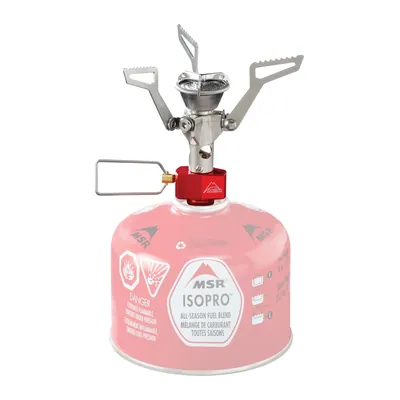
MSR PocketRocket 2
A 2.6 oz canister stove that boils a liter of water in 3.5 minutes: where stoves are allowed, it saves building a fire, which is often banned.
View on Amazon (opens in a new tab)
FAQ
What time can you set up camp for the night?
There’s no national rule: the Code de l’urbanisme doesn’t set any hours. National parks do: 7 p.m. to 9 a.m. in the core of the Écrins, Mercantour, Pyrenees, and Cévennes, and 7 p.m. to 8 a.m. in the Vanoise, in summer only. A town or another protected area may have its own rules, so check before you go.
Where can you go backcountry camping in France?
Anywhere camping isn’t banned, as long as whoever has the use of the land agrees. It’s banned, unless an exemption is granted, on the seashore, in registered or classified sites, around historic monuments, near drinking water sources, and in protection forests. A town, a park, or a reserve can add its own rules on top.
What’s the fine for camping where it’s banned?
It depends on which rule you break. Camping despite a posted municipal ban can cost up to €150, bivouacking outside the core rules of a national park up to €450, and camping in a protection forest outside the designated areas up to €1,500. Fire costs more: up to €750 near woods, and €1,500 in the core of a national park.
What’s the difference between a bivouac and camping?
General French law only knows camping. National parks define the bivouac: a single night, a small tent you can’t stand up in, pitched in the evening and taken down in the morning, with no vehicle and no sprawling setup. Anything beyond that counts as camping, which is banned in their core. Elsewhere, the distinction depends on local rules.
Can you have a campfire when backcountry camping?
Rarely. France’s forestry code bars anyone but the landowner, or an occupant with their consent, from carrying or lighting a fire within 656 feet (200 m) of woods and forests, with a fine of up to €750, and fire is banned in national park core zones. In summer, forest access may be restricted too. For cooking, a stove set on bare ground, away from dry grass, is the usual solution.
Can you camp on a beach in France?
As a rule, no. Camping is banned, unless an exemption is granted, on the seashore, meaning all the ground the sea covers and uncovers up to the highest tides. In the core of Port-Cros and Calanques national parks, the bivouac ban covers the beaches too. Beyond the seashore, a town or a protected site may have its own rules.
Sources
- Code de l’urbanisme (planning code), articles R111-32 to R111-35 (camping), current version, Légifrance, accessed October 20, 2026. legifrance.gouv.fr https://www.legifrance.gouv.fr/codes/section_lc/LEGITEXT000006074075/LEGISCTA000031719402/ ↩
- Parcs nationaux de France (French national parks portal), Le bivouac, updated February 17, 2025, accessed October 20, 2026. parcsnationaux.fr https://www.parcsnationaux.fr/fr/des-decouvertes/visiter-et-semerveiller/la-reglementation-et-les-conseils/le-bivouac ↩
- Code général de la propriété des personnes publiques (public property code), article L2111-4 (seashore), Légifrance, accessed October 20, 2026. legifrance.gouv.fr https://www.legifrance.gouv.fr/codes/article_lc/LEGIARTI000006361181 ↩
- Code du patrimoine (heritage code), article L621-30 (surroundings of historic monuments), Légifrance, accessed October 20, 2026. legifrance.gouv.fr https://www.legifrance.gouv.fr/codes/article_lc/LEGIARTI000032860394 ↩
- Code forestier (forestry code), article R163-11 (protection forests), Légifrance, accessed October 20, 2026. legifrance.gouv.fr https://www.legifrance.gouv.fr/codes/article_lc/LEGIARTI000026128007 ↩
- Géoportail de l’urbanisme, Servitudes de type AC2 : sites inscrits et classés, technical fact sheet, accessed October 20, 2026. geoportail-urbanisme.gouv.fr https://www.geoportail-urbanisme.gouv.fr/image/fiche_SUP_AC2.pdf ↩
- Code pénal (criminal code), article R610-5, version in force since February 17, 2022 (Decree No. 2022-185), Légifrance, accessed October 20, 2026. legifrance.gouv.fr https://www.legifrance.gouv.fr/codes/article_lc/LEGIARTI000045176320 ↩
- Code pénal, article 131-13 (fines for petty offenses), Légifrance, accessed October 20, 2026. legifrance.gouv.fr https://www.legifrance.gouv.fr/codes/article_lc/LEGIARTI000006417259 ↩
- Office national des forêts, Charte du promeneur « J’agis pour la forêt », code of conduct for forest visitors, March 2025, accessed October 20, 2026. onf.fr https://www.onf.fr/vivre-la-foret/+/19c::charte-du-promeneur-jagis-pour-la-foret.html ↩
- Office national des forêts, Forêt de Fontainebleau : fin du stationnement nocturne sur les parkings, April 10, 2024, accessed October 20, 2026. onf.fr https://www.onf.fr/vivre-la-foret/+/20d5::foret-de-fontainebleau-fin-du-stationnement-nocturne-sur-les-parkings.html ↩
- Parc national des Écrins, order No. 148/2026 of June 16, 2026, regulating bivouacking in the core of the park, consolidated version including corrective order No. 185/2026 of July 6, 2026, accessed October 20, 2026. ecrins-parcnational.fr https://www.ecrins-parcnational.fr/sites/ecrins-parcnational.com/files/fiche_doc/27327/2606148arretebivouacvf-rectificatif.pdf ↩
- Parc national des Cévennes, order No. 20140007 of January 20, 2014, on bivouacking in the core of the park, accessed October 20, 2026. cevennes-parcnational.fr https://www.cevennes-parcnational.fr/sites/cevennes-parcnational.fr/files/atoms/files/2014_arrete_n_20140007_du_20_janvier_2014_bivouac.pdf ↩
- Parc national de forêts, park charter (booklet 3), provision 35, annexed to Decree No. 2019-1132 of November 6, 2019, accessed October 20, 2026. forets-parcnational.fr https://www.forets-parcnational.fr/sites/forets-parcnational.fr/files/documents/downloads/charte_pnforets-l3_0.pdf ↩
- Code de l’environnement (environmental code), articles R331-62 to R331-76 (criminal penalties in national parks), including article R331-64 in its version of June 5, 2026, Légifrance, accessed October 20, 2026. legifrance.gouv.fr https://www.legifrance.gouv.fr/codes/section_lc/LEGITEXT000006074220/LEGISCTA000006188756/ ↩
- Code forestier, articles L131-1 to L131-5 (protecting forests from fire), including article L131-1-1, created by Law No. 2023-580 of July 10, 2023, Légifrance, accessed October 20, 2026. legifrance.gouv.fr https://www.legifrance.gouv.fr/codes/section_lc/LEGITEXT000025244092/LEGISCTA000025245865/ ↩
- Code forestier, article R163-2, Légifrance, accessed October 20, 2026. legifrance.gouv.fr https://www.legifrance.gouv.fr/codes/article_lc/LEGIARTI000026127985 ↩
- Préfecture des Bouches-du-Rhône (the national government’s office in the département), Accès aux massifs forestiers des Bouches-du-Rhône, accessed October 20, 2026. bouches-du-rhone.gouv.fr https://www.bouches-du-rhone.gouv.fr/Actions-de-l-Etat/Agriculture-foret-et-developpement-rural/Foret/Acces-aux-massifs/Acces-aux-massifs-forestiers-des-Bouches-du-Rhone2 ↩
- Service-public.fr (official French government information site), Quels sont les numéros en cas d’urgence (Samu, pompiers...) et les numéros d’écoute ?, checked by Service-public.fr on August 25, 2026, accessed October 20, 2026. service-public.gouv.fr https://www.service-public.gouv.fr/particuliers/vosdroits/F33954 ↩

Camping, backpacking, bushcraft and hiking
Guillaume Hoarau writes for Outfarer about camping, backpacking, bushcraft, and hiking. A survival-skills buff and a collector of vintage field manuals, he loves clear explanations, lists that actually help and other people’s stories, which he tells well.

 Nolwenn Bastide

