 Français (France)
 English (UK)
 English (US)
 Deutsch (Deutschland)

Contents
Three ways to head out on horseback for several days
Do you need your own horse for a three-day trail ride? No: that’s the whole point of a guided trip. The French equestrian federation (FFE) certifies “equestrian tourism centers” that specialize in trail rides, including trips of several days, as a loop or from a single base, with qualified staff [1]. The center then provides the horse and the guide.
Two styles of riding share the programs. A point-to-point trip moves to a new lodging every night; a stay from one base, which the FFE also calls “en marguerite” (daisy-shaped), heads out each morning from the same place on a different loop [2]. The first one covers ground; the second lets you take a day off if the horse is tired or the weather turns [3]. Three formats then take shape around the horse itself:
- The guided trip, horse provided: a qualified guide leads a small group, 5 to 10 riders at most in the offers we checked [4, 5, 6]. With one Corsican outfitter, a vehicle meets the group at lunch and in the evening with personal belongings [7].
- With your own horse, in a group: that’s the spirit of the Equirando, the FFE’s equestrian tourism gathering. Since 1961, it has brought riders and carriage drivers together every two years, all arriving on horseback, some after several weeks on the road [8].
- On your own, with your own horse: you plan the route, book the stops, and care for your horse yourself. The FFE’s Gold trail-riding certificate recognizes exactly the skills “sufficient to travel on horseback with respect for one’s mount and in complete safety” [9].
That leaves renting a horse to ride off alone, without a guide. Every offer we checked paired the horse with a guide, so if that’s your plan, ask the organizer about conditions, the level required, and what its insurance covers. And if you’d rather walk beside the animal, trekking with a pack donkey is a whole different trip, covered in our guide to hiking with a donkey.
What riding level do you need for a multi-day trail ride?
The offers we checked all say it the same way: you need to be comfortable at all three gaits, walk, trot, and canter, and outdoors, not just in an arena. A center in Normandy asks for riders “independent on horseback for riding out”; a Corsican trip also asks for good physical fitness and takes riders aged 12 to 80 [4, 5, 6, 7].
To put a name on that level, the FFE created the The French equestrian federation’s outdoor-riding levels, from Galop 1 to Galop 7, in effect since September 2012.. At Galop 2, riders move on their own at all three gaits on a course; at Galop 4, they ride varied terrain with their speed under control; at Galop 6, they navigate on horseback and choose the speed of each gait [10]. On top of that come three trail-riding certificates, Bronze, Silver, and Gold, which also count the days spent on the trail [9].
The Gold certificate exam requires candidates to be at least 12, and the rules make protective headgear meeting current standards mandatory at all three certificate exams, under standard NF EN 1384 for Silver and Gold [9]. Your FFE membership license keeps a record of your Galops and, according to the federation, it “proves the rider’s level to the club where they spend their vacation” [11].
A typical day: 16 to 22 miles and 4 to 6 hours in the saddle
How far do you ride in a day? The route-planning guide published by the FFE and its equestrian tourism committee gives the ballpark: two overnight stops are about 16 to 22 miles (25 to 35 km) apart, or 4 to 6 hours on horseback [13]. To judge the quality of a route, the federation even uses 25 km (about 16 miles) a day as its benchmark [14].
The shape of the day, though, changes little from one program to the next:
- In the morning, meet at the barn, around 9 a.m. in one Corsican program, to get your horse ready and get to know the tack [7].
- You head out at a walk, and trot or canter only in moderation, on soft ground with good visibility, as France’s Ministry of Sports recommends [12].
- At midday, a picnic; the federation plans dedicated facilities at lunch stops, such as hitching rails for the horses [13].
- In the afternoon, you finish the stage and ride in at a walk; horse and tack get checked at the start, at the break, and on arrival [12].
- In the evening, caring for the horses and putting the tack away come before dinner [7, 12].
In summer, the schedule shifts: the Corsican outfitter warns that it adjusts riding times to the temperature [7]. Year-round, the ministry asks riders to plan to arrive before dark [12].
Where to sleep: equestrian lodging and the Cheval Étape label
Finding, every evening, a place that also takes horses is one of the main headaches for trail riders, the FFE admits [16]. Its Cheval Étape label is the answer: the establishment guarantees to board horses in a pasture, a paddock, or a stall, with water and hay, an area to groom and care for them, a tack room, and trail maps to look at on site [2].
Riders, for their part, find a gîte (a rural guesthouse), a campground, a hotel, or a B&B and somewhere to eat within 2 miles (3 km) of where the horses stay. The federation counts more than 500 certified establishments, and a “Cheval Étape membership” also flags non-equestrian lodging able to host a rider and a horse [2].

Riding on your own, it’s up to you to check what the pasture is worth. The FFE’s fact sheet on boarding horses overnight calls for a securely fenced field, free of scrap metal and trash, rules out barbed wire and sheep fencing, and allows at least 0.75 to 1.2 acres (3,000 to 5,000 m²) for 10 horses for one night [16].
Where to ride in France: trails marked in orange
Trails open to riders carry an official orange marker, owned by the FFE, in four forms: keep going, turn, wrong way, and carriage route [17]. It comes on top of the codes used for hikers, explained in our article on trail markings.
To find these trails, the federation publishes GéoCheval, an interactive map of equestrian trails in France, built on an inventory under way since 2014, which also shows Cheval Étape establishments and equestrian tourism centers. It lists only trails that are marked and registered in a Plan départemental des itinéraires de promenade et de randonnée: the plan through which each French département, a county-level district, records and protects its hiking and riding trails, under a 1983 law. [18, 19]. Two examples give the scale of the long-distance rides:
- The Grande Traversée du Jura on horseback: nearly 310 miles (500 km) across the Doubs, Jura, and Ain départements, from the vineyards to the high Jura, in 19 days [15].
- The Route Napoléon on horseback: about 220 miles (360 km) from Grasse to Vizille, through four départements, certified as a “Grand Itinéraire Équestre” by the FFE and its equestrian tourism committee in March 2016 [20].
Riding on your own, a map and compass still earn their keep, and Galop 6 Pleine Nature actually requires riders to navigate on horseback [10]: our guide to navigating with a map and compass works just as well in the saddle.
When is the best season for a trail-riding trip?
The organizers whose offers we read open mostly from spring to fall: from April 1 to October 31 in Aveyron, from June 1 to November 30 in the Cévennes, and from May 15 to October 1 around Mont Blanc [22, 23, 24]. In the Massif des Maures, near the Mediterranean, a trip with a night in a tent runs year-round [4]. In these examples, the mountains open later than the lowlands or the coast.
Two constraints weigh on the calendar. In summer, the heat means shifting riding times, as the Corsican outfitter quoted above explains. In fall, it’s hunting season: one Normandy center runs its weekends only from March to the end of October, “outside the hunting season” [5], and the French outdoor rider’s charter asks riders to stay well away from driven hunts [25].
How much does a multi-day trail ride cost?
On October 24, 2026, we noted the prices published by six organizers in different French regions, on tourist board websites and on the FFE’s booking portal. Prices are in euros, as published. They vary with the length of the trip, but above all with what they include:
| Region | Format | Price | What’s included |
|---|---|---|---|
| Var (Massif des Maures) | 2 days, night in a tent | €270 | Meals included |
| Lozère (Cévennes) | 2 or 3 days, nights in gîtes | €350 or €520 | Nights in gîtes; ask about the rest |
| Haute-Savoie (Mont Blanc area) | Weekend | €440 | “All inclusive” |
| Seine-Maritime (Lyons forest) | 3 days from one base | €395 to €425 | Rides, lodging, and meals |
| Aveyron | 3 to 10 days | €150 a day | Ask the organizer |
| Corsica | 7 days | €1,444 | Horse, lodging, all meals |
Prices published for 2026, not including travel to the starting point. Seine-Maritime: price in a double, triple, or quadruple room. Sources: tourist board websites and the FFE’s “À cheval en France” portal.
Worked out per day, these packages come to roughly €130 to €220, horse and guide included [4, 5, 6, 22, 23, 24]. Compare apples to apples: a night in a tent doesn’t cost the same as a night in a room, and an “all-inclusive” weekend doesn’t include the same things everywhere. Finally, think about insurance: the FFE membership license insures its holder “for any riding activity, from preparing the horse until its return to where it is kept” [11]; ask the organizer whether it requires one, or what its own policy covers.
The UK, Germany, Austria, and the US: what changes
In the UK, the question is less your level than your trail. In England and Wales, away from roads, riders have rights only on Public paths open to hikers, horseback riders, and cyclists in England and Wales. and Public paths also open to horse-drawn carriages, and some to motor vehicles., never on footpaths, which are for people on foot, and there’s no “right to roam” on horseback except on Dartmoor, in the New Forest, and on a few commons. In Scotland, by contrast, there’s a general right of access to most land, as long as you act responsibly [26], as our article on wild camping in the UK explains. According to the British Horse Society, only 22% of England’s 117,250 miles of public trails are open to riders [27].
Of the seventeen National Trails in England and Wales, only the Pennine Bridleway is open to riders along its whole length, with a few others open only in sections [26]: 205 miles (330 km) from Derbyshire to Cumbria, designed for horseback riders and mountain bikers [28]. On helmets, the law is explicit: in England, Wales, and Scotland, it’s an offense to let a child under 14 ride a horse on a road without protective headgear [29].
In Germany, what the law says is brief: the federal forest act allows riding only on roads and trails and leaves the details to the Länder, the German states [30]. Some go further: in North Rhine-Westphalia, every horse ridden in the countryside or in the woods must carry a plate, the Reitkennzeichen, on both sides [31]. The German federation, the FN, awards a trail-riding badge, the Wanderreitabzeichen; its second level is open from age 14, after a ride of at least two days with a night out [32]. In Austria, the forestry act allows riding in the woods only with the landowner’s consent, which signs may show [33].
Back home, each national park sets its own rules, within a federal framework that allows horses only on trails, routes, and areas designated for them, and requires a slow walk when passing hikers and cyclists [34]. In Grand Teton, a party may have no more than 12 people or 10 head of stock on an overnight trip, camping with stock is limited to five designated sites with a permit, and some high-country trails stay blocked by snow until late July [35]. For entry fees and passes, see what national park entry costs since 2026.
| Country | Where you can ride | Benchmarks and requirements |
|---|---|---|
| France | Trails open to the public; public forests unless signed otherwise; private forests with the owner’s permission | Galops Pleine Nature and trail-riding certificates (FFE); helmet mandatory for minors at certified centers |
| England and Wales | Roads except motorways, bridleways, and byways, never footpaths; open access on horseback only on Dartmoor, in the New Forest, and on a few commons | Helmet mandatory on roads for kids under 14 |
| Scotland | General right of access to most land, used responsibly | Helmet mandatory on roads for kids under 14 |
| Germany | In the woods, roads and trails only; each state has its own rules | FN trail-riding badge; plate mandatory in North Rhine-Westphalia |
| Austria | In the woods, only with the owner’s consent, deemed given where signed on site | Consent of the forest owner, or of whoever maintains a forest road |
| United States (national parks) | Trails, routes, and areas designated for horses | Each park’s rules: group size, campsites, permits |
Summary of the texts and sources cited above, with their scope: a rule from one German state or one park doesn’t apply nationwide.
Gear related to this article
No affiliation: no commission, no sponsored products.
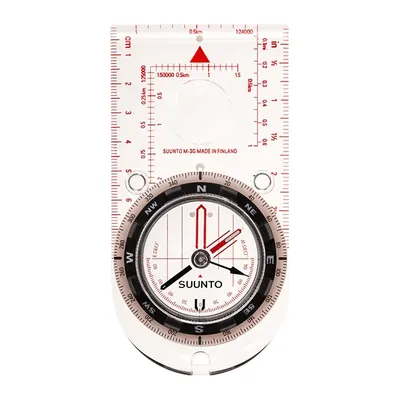
Suunto M-3 G
A baseplate compass with adjustable declination, useful where it tops 14°: set the offset once and skip the math on every bearing. Globally balanced needle, magnifier, 1.69 oz.
View on Amazon (opens in a new tab)
FAQ
Do you need to know how to canter for a trail-riding vacation?
Yes, for the offers we checked: they ask riders to be comfortable at a walk, trot, and canter, outdoors and not just in an arena. The French federation’s first trail-riding certificate, which recognizes the ability to join guided rides, is in fact awarded with Galop 2 Pleine Nature, where riders move on their own at all three gaits, plus four days on the trail.
How many miles a day do you ride on a horseback trip?
According to the French equestrian federation, overnight stops are about 16 to 22 miles (25 to 35 km) apart, or 4 to 6 hours on horseback, and the federation uses 25 km (about 16 miles) a day as its benchmark when judging a route. The Grande Traversée du Jura on horseback plans stages of that length on average. On hilly terrain, the same distance takes noticeably longer.
How much does a two-day horseback riding trip cost?
As of October 24, 2026, the weekends we checked in France ran from €270 with a night in a tent to €440 “all inclusive,” per person. A week in Corsica was listed at €1,444 including the horse, lodging, and all meals. Worked out per day, figure roughly €130 to €220, but always compare what each price includes.
Can you go on a multi-day trail ride without a guide?
With your own horse, yes: you plan the route, the stops, and the horse care yourself, and the French federation’s Gold trail-riding certificate recognizes the skills needed to travel on horseback. Cheval Étape stops and the GéoCheval map help with planning. Every rental offer we checked paired the horse with a guide, so ask about conditions before booking.
Is a helmet mandatory on a horseback riding trip?
For minors at equestrian tourism centers certified by the French federation, yes; adults must be informed, and helmets lent there meet standard EN 1384. The federation’s trail-riding certificate exams require one for everyone. In England, Wales, and Scotland, the law requires kids under 14 to wear one on roads. Otherwise, each organizer sets its own rule: ask when you book.
Sources
- French equestrian federation (FFE), Centre de Tourisme Équestre, FFE quality label, accessed October 24, 2026. ffe.com https://www.ffe.com/pratiquer/labels/centre-de-tourisme-equestre ↩
- French equestrian federation (FFE), “Cheval Étape”, FFE quality label, accessed October 24, 2026. ffe.com https://www.ffe.com/pratiquer/labels/cheval-etape ↩
- Wirtschaftskammer Oberösterreich, “Wanderreiten”, fact sheet from Upper Austria’s economic chamber, accessed October 24, 2026. wko.at https://www.wko.at/ooe/tourismus-freizeitwirtschaft/freizeit-sportbetriebe/wanderreiten.pdf ↩
- Côte d’Azur France, “Randonnée équestre. Bivouac 2 jours”, La Môle, 2026 price, accessed October 24, 2026. cotedazurfrance.fr https://cotedazurfrance.fr/offres/randonnee-equestre-bivouac-2-jours-la-mole-fr-6554226/ ↩
- Normandie Tourisme, “Séjour équestre, Écurie de la Forêt de Lyons”, 2026 prices, accessed October 24, 2026. normandie-tourisme.fr https://www.normandie-tourisme.fr/experience/week-end-cheval-ecurie-foret-de-lyons/ ↩
- French equestrian federation (FFE), “À cheval en France” booking portal, “Randonnée Mer et Montagne en Corse”, accessed October 24, 2026. achevalenfrance.com https://achevalenfrance.com/offres/randonnee-mer-et-montagne-en-corse-copie/detail ↩
- Corsicatours, “An adventure on horseback between lakes and peaks”, accessed October 24, 2026. corsicatours.com https://www.corsicatours.com/en/our-offers/an-adventure-on-horseback-between-lakes-and-peaks ↩
- French equestrian federation (FFE), “Equirando”, accessed October 24, 2026. ffe.com https://www.ffe.com/tourisme/equirando ↩
- French equestrian federation (FFE), Brevets de tourisme équestre, règlement, in force since February 25, 2011, accessed October 24, 2026. ffe.com https://www.ffe.com/system/files/tourisme/documents/pdf/REGLEMENT_BREVET_TOURISME_EQUESTRE_RANDONNEUR.pdf ↩
- French equestrian federation (FFE), Programme officiel des Galops Pleine Nature 1 à 7, in force since September 1, 2012, accessed October 24, 2026. ffe.com https://www.ffe.com/system/files/cavalier/documents/pdf/PROGRAMME_OFFICIEL_GALOPS_PLEINE_NATURE_1a7.pdf ↩
- French equestrian federation (FFE), “Souscrire une licence FFE”, accessed October 24, 2026. ffe.com https://www.ffe.com/pratiquer/souscrire-une-licence-ffe ↩
- French Ministry of Sports, “Equitation”, safety tips for trail riding, accessed October 24, 2026. sports.gouv.fr https://www.sports.gouv.fr/equitation-9824 ↩
- FFE, national equestrian tourism committee (CNTE), Guide méthodologique : créer et aménager, January 2023 edition, accessed October 24, 2026. ffe.com https://www.ffe.com/system/files/tourisme/documents/pdf/guide_methodologique_creer-et-amenager_2023.pdf ↩
- FFE, national equestrian tourism committee (CNTE), “Critères qualité d’un itinéraire équestre”, equestrian tourism fact sheet, accessed October 24, 2026. ffe.com https://www.ffe.com/system/files/tourisme/documents/pdf/CHEMINS-CRITERES_QUALITE_D_UN_ITINERAIRE_EQUESTRE.pdf ↩
- Jura Tourisme, “La Grande traversée du Jura à cheval, GTJ équestre”, accessed October 24, 2026. jura-tourism.com https://www.jura-tourism.com/circuit/la-grande-traversee-du-jura-a-cheval-gtj-equestre/ ↩
- FFE, national equestrian tourism committee (CNTE), “L’accueil des chevaux à l’étape”, equestrian tourism fact sheet, accessed October 24, 2026. ffe.com https://www.ffe.com/system/files/tourisme/documents/pdf/HEBERGEMENTS_L_accueil_des_chevaux_a_l_etape.pdf ↩
- FFE, national equestrian tourism committee (CNTE), “Le balisage équestre : les marques officielles de la FFE-CNTE”, equestrian tourism fact sheet, accessed October 24, 2026. ffe.com https://www.ffe.com/system/files/tourisme/documents/pdf/balisage-le-balisage-equestre-les-marques-officielles-de-la-ffe-cnte.pdf ↩
- French equestrian federation (FFE), “Geocheval, un outil précieux pour vos randonnées”, accessed October 24, 2026. ffe.com https://www.ffe.com/tourisme/geocheval ↩
- FFE, national equestrian tourism committee (CNTE), “Plan départemental des itinéraires de promenade et de randonnée (PDIPR) & plan départemental des espaces sites et itinéraires (PDESI)”, equestrian tourism fact sheet, accessed October 24, 2026. ffe.com https://www.ffe.com/system/files/tourisme/documents/pdf/CHEMINS_PDIPR_PDESI.pdf ↩
- Côte d’Azur France, “La Route Napoléon à cheval, de Grasse à Séranon”, accessed October 24, 2026. cotedazurfrance.fr https://cotedazurfrance.fr/offres/la-route-napoleon-a-cheval-de-grasse-a-seranon-grasse-fr-3271545/ ↩
- FFE, national equestrian tourism committee (CNTE), “L’accès des chevaux aux zones forestières”, equestrian tourism fact sheet, accessed October 24, 2026. ffe.com https://www.ffe.com/system/files/tourisme/documents/pdf/CHEMINS_Acces_aux_zones_forestieres.pdf ↩
- Tourisme Aveyron, “Randonnée équestre itinérante au Batut, Murols”, 2026 prices, accessed October 24, 2026. tourisme-aveyron.com https://www.tourisme-aveyron.com/fr/diffusio/activites/randonnee-equestre-itinerante-au-batut-murols_TFO022217292449 ↩
- Tourisme Occitanie, “Natur’en Cel”, Molezon (Lozère), 2026 prices, accessed October 24, 2026. tourisme-occitanie.com https://www.tourisme-occitanie.com/fr/fiche/activite/natur-en-cel-molezon_TFOASCLAR048V50K3ZU/ ↩
- Haute-Savoie Mont-Blanc Tourisme, “Randonnées évasion équestre”, Demi-Quartier, 2026 prices, accessed October 24, 2026. hautesavoiemontblanc-tourisme.com https://hautesavoiemontblanc-tourisme.com/offres/randonnees-evasion-equestre-demi-quartier-fr-5829756/ ↩
- FFE, national equestrian tourism committee (CNTE), Charte du cavalier et du meneur de pleine nature, 2008, accessed October 24, 2026. ffe.com https://www.ffe.com/system/files/tourisme/documents/pdf/CHARTE_DU_CAVALIER_ET_DU_MENEUR_DE_PLEINE_NATURE_0.pdf ↩
- The British Horse Society, Finding places to ride or drive a horse, June 2026, accessed October 24, 2026. bhs.org.uk https://www.bhs.org.uk/media/x2bfhqxw/places-to-ride-0626.pdf ↩
- The British Horse Society, Key information and statistics, March 2026, accessed October 24, 2026. bhs.org.uk https://www.bhs.org.uk/media/1etf3zyj/statistics-0326.pdf ↩
- National Trails, “Pennine Bridleway Map and Information”, accessed October 24, 2026. nationaltrail.co.uk https://www.nationaltrail.co.uk/en_GB/trails/pennine-bridleway/trail-information/ ↩
- Horses (Protective Headgear for Young Riders) Act 1990, section 1, legislation.gov.uk, accessed October 24, 2026. legislation.gov.uk https://www.legislation.gov.uk/ukpga/1990/25/section/1 ↩
- Bundeswaldgesetz, § 14, gesetze-im-internet.de, accessed October 24, 2026. gesetze-im-internet.de https://www.gesetze-im-internet.de/bwaldg/__14.html ↩
- City of Dortmund, “Reitkennzeichen und Reitplaketten”, accessed October 24, 2026. dortmund.de https://www.dortmund.de/services/reitkennzeichen-und-reitplaketten.html ↩
- Deutsche Reiterliche Vereinigung (FN), APO 2026, March 2026 pages, Wanderreitabzeichen, accessed October 24, 2026. fnverlag.de https://www.fnverlag.de/misc/filePush.php?id=3662 ↩
- Forstgesetz 1975, § 33, RIS (Austria), current version, accessed October 24, 2026. ris.bka.gv.at https://www.ris.bka.gv.at/GeltendeFassung.wxe?Abfrage=Bundesnormen&Gesetzesnummer=10010371 ↩
- Code of Federal Regulations, Title 36, § 2.16, “Horses and pack animals”, accessed October 24, 2026. ecfr.gov https://www.ecfr.gov/current/title-36/chapter-I/part-2/section-2.16 ↩
- National Park Service, Grand Teton, “Horseback Riding and Stock Use”, accessed October 24, 2026. nps.gov https://www.nps.gov/grte/planyourvisit/horserides-stock.htm ↩
- French equestrian federation (FFE), Cahier qualité, label Centre de tourisme équestre, version 5, accessed October 24, 2026. ffe.com https://www.ffe.com/system/files/cavalier/documents/pdf/cahier-qualite-centre-de-tourisme-equestre.pdf ↩
Fact-checking, regulations, and safety
Arnaud Couderc reviews our contributors’ articles and writes for Outfarer about regulations, safety, fishing, the ocean, and outdoor activities. He traces every rule back to its official text and every number to its source, so you head out with solid benchmarks.


 Guillaume Hoarau
