 Français (France)
 English (UK)
 English (US)
 Deutsch (Deutschland)

1.5 liters, or about 1.6 quarts. That’s the minimum the French Hiking Federation (FFRandonnée) tells each hiker to carry on a summer mountain hike [1]. In the desert heat of Death Valley, the national park tells visitors to drink at least a gallon (about 3.8 liters) a day [2]. On paper, 1.5 liters doesn’t sound like much; in your pack, it’s 3.3 lb, a load that lightens as the day goes on. Let’s run the numbers, water first, then food.
Water: how much to carry, and how to drink it
The baseline is simple: the federation asks for enough water and food, at least 1.5 liters of water per person, and for eating and drinking regularly on the trail [1]. The Swiss Council for Accident Prevention (BFU) puts it its own way: drinks are heavy, but you can’t do without them, and they get lighter as you go [3]. So don’t skimp on water to save a couple of pounds: it’s the most useful weight in your pack.
1.5 liters is a floor, not a goal: a long day, a big climb or a blazing sun pushes it up. The Park Service’s Ten Essentials list includes water treatment supplies, and asks you to check before you go for water at your destination that you could collect and treat [4]; more on treating it below. When in doubt, an extra bottle weighs less than an afternoon with an empty one.
Timing matters as much as quantity, and here official advice doesn’t quite agree with itself. The BFU says to drink plenty even when you’re not thirsty [5]; the Ten Essentials page, to drink water often and before you feel thirsty, especially in hot weather [4]. Grand Canyon and Joshua Tree say don’t force fluids, drink when you’re thirsty [6, 7]: drinking too much water while losing salt through sweat can cause hyponatremia, low sodium in the blood, Grand Canyon explains, so it pairs regular sips with salty snacks [6]. The common ground: a few sips at every break, not half a bottle at the summit.
| Situation | The advice | Source |
|---|---|---|
| Summer hike in the mountains | At least 1.5 liters (about 1.6 quarts) per person | French Hiking Federation |
| On the trail | Drink plenty, even when you’re not thirsty | BFU (Switzerland) |
| Active in hot weather | Drink water often, before you feel thirsty | National Park Service, Ten Essentials |
| Desert heat, Death Valley | Drink at least 1 gallon (about 3.8 liters) a day | Death Valley National Park |
| Summer heat, Grand Canyon | Plain water plus electrolyte replacement, salty snacks; don’t force fluids | Grand Canyon National Park |
In hot weather
Heat changes the math. Grand Canyon National Park tells summer hikers to stay off the trail between 10 a.m. and 4 p.m., with a predawn start and a late-afternoon finish; most of the people who need emergency medical help in the canyon for heat illness are hiking during those hours [6]. Joshua Tree says to avoid hiking between 10 a.m. and 5 p.m. in summer [7]. Both parks call for plain water plus some electrolyte replacement, and for salty food, twice as much as you’d normally eat [6, 7]. Grand Canyon adds that hikers can lose 1 or 2 quarts (liters) of water an hour through heavy sweating, the road to heat exhaustion [6].
Refilling on the trail: filters, filter bottles, and tablets
A dry spring, a detour, a hot day that doubles your thirst: your bottle can run dry before the hike’s over. That’s why it pays to carry a way to make creek water safe to drink, because clear water isn’t necessarily safe: the CDC warns that drinking straight from a sparkling mountain stream is generally not safe [10].
A hiking filter, whether pump, squeeze, or built into a filter bottle, stops whatever is bigger than its pores: at 0.3 micron absolute or less, parasites and bacteria, but not viruses [10]. Purification tablets work almost the other way around: they kill bacteria and viruses, but not always parasites, and chlorine dioxide needs several hours of contact time to deal with Cryptosporidium [11]. When you can’t boil the water, the CDC recommends filtering it, then disinfecting it [10].
Two more precautions: the instructions for your bottle or filter should list an absolute pore size, not just a “nominal” one [10], and a hollow-fiber filter that has frozen can let germs through with no visible sign [12]. Our guide to finding and treating backcountry water walks you through every method, from boiling to UV light.
Food: the energy cost of a day on the trail
On the energy side, the Compendium of Physical Activities, a database published by researchers, measures effort in MET (metabolic equivalents): 1 MET is defined as 1 kilocalorie (what a food label calls a calorie) per kilogram of body weight per hour, roughly what you burn sitting quietly [13]. Hiking at a normal pace through fields and hillsides, with no load, rates 5.3 MET; cross-country hiking, 6 MET; ambling, 3.8 MET [14]. For someone who weighs 154 lb (70 kg), that works out to 266 to 420 calories an hour, or about 370 to 420 for an hour of real hiking.
These numbers count everything, including what your body burns at rest, and they’re for hiking without a load: the Compendium rates hiking with a daypack higher still [14]. Treat them as a ballpark, not a ration to weigh out. Mostly, they explain why the French Hiking Federation says walking calls for more food than resting, matched to how long and how hard you go: nothing excessive, but enough energy, taken in regularly, so you don’t run out of gas [15].
Eat a little, often
The federation’s golden rule: light, small, nutritious food, eaten regularly on the move to keep your blood sugar steady [15]. The BFU recommends a break every 1 to 1.5 hours to rest and refuel [5]: the right rhythm for a few bites and a few sips.
On an easygoing hike, lunch is one of the best parts of the day: the federation suggests a balanced meal with complex carbs such as bread or starchy food, protein such as a hard-boiled egg, lean ham or cheese, fresh vegetables, and fruit that travels well [15]. For the in-between, the Park Service’s Ten Essentials list favors salty, easy-to-digest snacks such as trail mix, nuts and granola bars, plus an extra day’s worth of food in case your plans change [4].
- When your blood sugar drops: an energy bar, dried fruit or chocolate brings it back up fast; nuts, whole-grain bread, cheese, meat or eggs give longer-lasting energy, according to the BFU [5].
- What to avoid: food that spoils quickly (eat it first if you bring it), heavy, bulky cans, anything that gets crushed in your pack, food with too little energy in it, and alcohol, which the French Hiking Federation bans from your pack outright [15].
- Packing it: light and compact, with snacks within easy reach, as our day hike packing list explains.
It’s no accident that the National Park Service’s Ten Essentials give two of their ten slots to food and water: extra food, and water with a way to treat it [4]. Without them, the best planning won’t get you far. For the rest of your prep, our guide to planning a hike walks through the steps one by one.
Gear related to this article
No affiliation: no commission, no sponsored products.
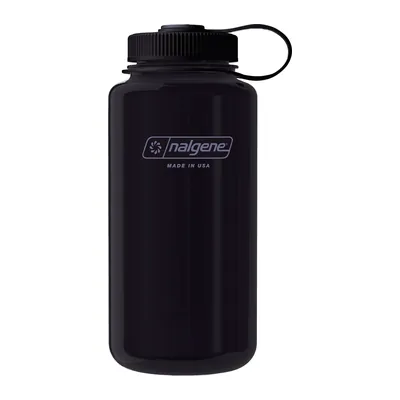
Nalgene Wide Mouth 32 oz
A 32 oz wide-mouth bottle in Tritan Renew, BPA- and BPS-free, leakproof and dishwasher-safe, 6.25 oz empty: the wide opening fills fast at a spigot and takes ice cubes.
View on Amazon (opens in a new tab)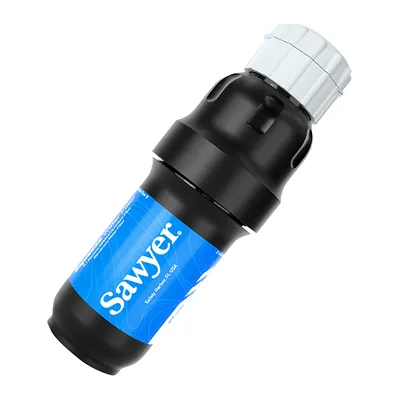
Sawyer Squeeze
A hollow-fiber filter rated at 0.1 micron absolute that removes bacteria and protozoa, but not viruses: follow up with a disinfectant, as the CDC advises. Keep it from freezing.
View on Amazon (opens in a new tab)
Worth watching
The Grand Canyon’s official nonprofit partner on drinking and eating enough, and timing a hike around the heat, in five minutes: the same advice this guide cites from the park.
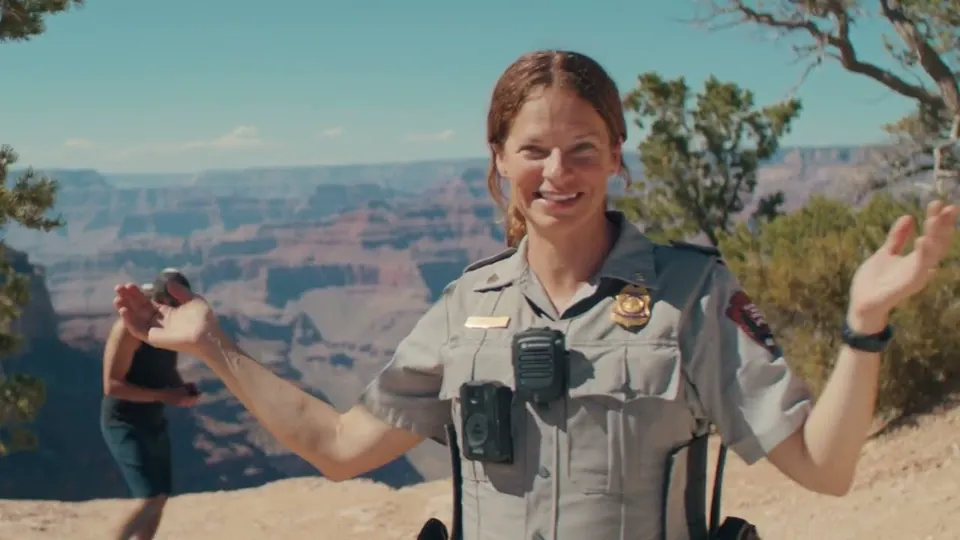
The video is hosted by YouTube (Google): nothing loads until you play it, and Google may then set cookies.
FAQ
How much water should I bring on a day hike?
At least 1.5 liters (about 1.6 quarts) per person on a summer mountain hike, according to the French Hiking Federation, and more in the heat, on a long day or on a big climb. In the desert, Death Valley National Park says to drink at least a gallon (about 3.8 liters) a day. Check your map for water sources, and bring a way to treat the water.
Should I drink before I get thirsty?
Official advice varies. The National Park Service’s Ten Essentials page says to drink often and before you feel thirsty, especially in hot weather, and the Swiss Council for Accident Prevention agrees. Grand Canyon and Joshua Tree say don’t force fluids: drinking too much water while losing salt through sweat can cause hyponatremia, Grand Canyon explains. The middle ground: a few sips at every break, with salty snacks.
What should I eat on a hike?
Light, small, nutritious food, eaten regularly, recommends the French Hiking Federation, with a balanced lunch of bread or starchy food, protein, vegetables and fruit. Between breaks, the National Park Service suggests salty, easy-to-digest snacks such as trail mix, nuts and granola bars, plus an extra day’s worth of food. In summer heat, Grand Canyon and Joshua Tree say to eat twice as much as usual.
How many calories does hiking burn?
According to the Compendium of Physical Activities, an hour of hiking at a normal pace through fields and hillsides, with no load, rates 5.3 MET, and cross-country hiking 6 MET. For someone who weighs 154 lb (70 kg), that’s about 370 to 420 calories an hour, counting what the body burns at rest: a ballpark figure, not a ration to weigh out.
How do I hike safely in the heat?
Avoid the hottest hours: Grand Canyon National Park says not to hike between 10 a.m. and 4 p.m. in summer. Carry plain water plus electrolyte replacement, and eat salty food often. Heavy sweating, cramps, nausea or a headache can signal heat exhaustion: get somewhere cooler and sip water. Confusion or a body temperature above 103 °F (39.4 °C) can mean heat stroke: call 911.
Sources
- French Hiking Federation (FFRandonnée), “Recommandations pour la randonnée en montagne l’été” (in French), October 19, 2023, accessed October 28, 2026. ffrandonnee.fr https://www.ffrandonnee.fr/randonner/securite/recommandations-pour-la-randonnee-en-montagne-l-ete ↩
- National Park Service, Death Valley National Park, “Safety,” updated November 14, 2024, accessed October 28, 2026. nps.gov https://www.nps.gov/deva/planyourvisit/safety.htm ↩
- Swiss Council for Accident Prevention (BFU), “Rando en montagne” campaign, “Bien s’équiper” (in French), accessed October 28, 2026. rando-en-montagne.ch https://www.rando-en-montagne.ch/fr/bien-s-equiper ↩
- National Park Service, “Ten Essentials,” updated May 28, 2026, accessed October 28, 2026. nps.gov https://www.nps.gov/articles/10essentials.htm ↩
- Swiss Council for Accident Prevention (BFU), “Rando en montagne” campaign, “Bien gérer la randonnée” (in French), accessed October 28, 2026. rando-en-montagne.ch https://www.rando-en-montagne.ch/fr/bien-gerer-la-randonnee ↩
- National Park Service, Grand Canyon National Park, “Hike Smart,” summer hiking advice, updated June 26, 2026, accessed October 28, 2026. nps.gov https://www.nps.gov/grca/planyourvisit/hike-smart.htm ↩
- National Park Service, Joshua Tree National Park, “Hiking,” updated December 15, 2025, accessed October 28, 2026. nps.gov https://www.nps.gov/jotr/planyourvisit/hiking.htm ↩
- MedlinePlus, National Library of Medicine, “Dehydration,” updated December 29, 2023, accessed October 28, 2026. medlineplus.gov https://medlineplus.gov/dehydration.html ↩
- National Weather Service, “Heat Cramps, Exhaustion, Stroke,” accessed October 28, 2026. weather.gov https://www.weather.gov/safety/heat-illness ↩
- Centers for Disease Control and Prevention (CDC), About Water Treatment Options When Hiking, Camping, or Traveling, page dated January 30, 2025, accessed October 20, 2026. cdc.gov https://www.cdc.gov/drinking-water/prevention/water-treatment-hiking-camping-traveling.html ↩
- Centers for Disease Control and Prevention (CDC), Water Disinfection for Travelers, CDC Yellow Book, accessed October 21, 2026. cdc.gov https://www.cdc.gov/yellow-book/hcp/preparing-international-travelers/water-disinfection-for-travelers.html ↩
- Sawyer Products, FAQs (filters and freezing), accessed October 21, 2026. sawyer.com https://www.sawyer.com/faqs ↩
- Adult Compendium of Physical Activities, “Definition of Terms,” accessed October 28, 2026. pacompendium.com https://pacompendium.com/ ↩
- Adult Compendium of Physical Activities, 2024 edition, “Walking,” codes 17012 and 17080 to 17082, accessed October 28, 2026. pacompendium.com https://pacompendium.com/walking/ ↩
- French Hiking Federation (FFRandonnée), “Bien s’alimenter en randonnée” (in French), January 26, 2021, accessed October 28, 2026. ffrandonnee.fr https://www.ffrandonnee.fr/randonner/conseils/bien-s-alimenter-en-randonnee ↩
Vans, RVs, biking and calculators
Julien de Jurquet writes for Outfarer about camper vans, RVs, biking, and calculators. He reads manuals cover to cover and never lets a number slide without its unit, so your choices rest on math, not promises.


 Guillaume Hoarau
