 Français (France)
 English (UK)
 English (US)
 Deutsch (Deutschland)

1.5 litres. That is the minimum amount of water the French Hiking Federation (FFRandonnée) asks each walker to carry on a summer walk in the mountains [1]. The kit lists of AdventureSmart UK, Mountaineering Scotland and Mountaineering Ireland put water and food on the list without committing to a number [2, 3, 4]. On paper, 1.5 litres sounds modest; in the rucksack, it is 1.5 kg, a weight that shrinks as the day goes on. Let’s do the sums, water first, then food.
Water: how much, and how to drink it
The baseline is simple: the French Hiking Federation asks walkers to bring enough water and food, at least 1.5 litres of water per person, and to eat and drink regularly as they go [1]. The Swiss Council for Accident Prevention (BFU) makes the same point in its own way: drinks are heavy to carry, but they are indispensable, and they have the advantage of getting lighter as the walk goes on [5]. So there is little sense in skimping on water to save a kilo: it is the most useful weight in the rucksack.
1.5 litres is a floor, not a target. A long day, a big climb or a hot sun pushes it up: look on the map for streams and springs where you can refill, and carry a way to treat the water (more on that below). If in doubt, an extra bottle weighs less than an afternoon with an empty one.
Timing matters as much as quantity. The BFU advises drinking plenty, even when you are not thirsty [6], and the NHS suggests drinking enough through the day for your pee to stay a pale colour, and more when you sweat in hot weather or during exercise [7]. In practice: a few mouthfuls at every stop, rather than half a bottle in one go at the summit.
| Situation | The advice | Source |
|---|---|---|
| Summer walk in the mountains | At least 1.5 litres of water per person | French Hiking Federation |
| While walking | Drink plenty, even when you’re not thirsty | BFU (Switzerland) |
| Every day | Drink enough for your pee to stay pale, and more when you sweat | NHS |
| Heatwave | Extra fluids but no alcohol; keep to the shade between 11am and 3pm | NHS |
| Extreme heat, at the Grand Canyon | Water, something to replace electrolytes, salty food | US National Park Service |
In hot weather
Heat changes the sums. The NHS counts walkers, along with runners and cyclists, among the people more vulnerable in a heatwave; it advises staying in the shade, especially between 11am and 3pm, avoiding activity that makes you hotter, and drinking extra fluids, but no alcohol, caffeine or hot drinks [8]. For a walk, that means an early start and the middle of the day spent in the shade. At the Grand Canyon, where summers are extreme, the US National Park Service asks hikers to carry water and something to replace electrolytes, to eat salty food often, twice as much as usual, and to sip water regularly all the way, even without feeling thirsty. It also warns against forcing fluids: drinking too much water while losing salt through sweat can lead to hyponatraemia, low sodium in the blood [9].
Refilling on the way: filters, filter bottles and tablets
A dry spring, a detour, a hot day that doubles your thirst: the bottle can run dry before the walk is over. Hence the case for carrying a way to make stream water drinkable, because clear water is not necessarily safe: drinking straight from a sparkling mountain stream is generally not safe, warn the CDC, the US public health agency [12].
A walking filter, whether pump, squeeze or built into a filter bottle, stops whatever is bigger than its pores: at 0.3 micron absolute or less, parasites and bacteria, but not viruses [12]. Purification tablets work almost the other way round: they kill bacteria and viruses, but not always parasites, and chlorine dioxide needs several hours of contact to deal with Cryptosporidium [13]. When you can’t boil the water, the CDC therefore advise filtering it, then disinfecting it [12].
Two more precautions: the instructions for the bottle or filter should give an absolute pore size, not just a ‘nominal’ one [12], and a hollow-fibre filter that has frozen can let germs through with no visible sign [14]. Choosing a method, from boiling to UV light, is covered in our guide to finding and treating water.
Food: the energy cost of a day’s walking
For energy, the Compendium of Physical Activities, a reference database published by researchers, measures effort in MET (metabolic equivalents): 1 MET is defined as 1 kcal per kilogram of body weight per hour, roughly what you burn sitting quietly [15]. Hiking at a normal pace through fields and hillsides, with no load, rates 5.3 MET; cross-country hiking, 6 MET; ambling, 3.8 MET [16]. For someone weighing 70 kg, that gives 266 to 420 kcal an hour, or around 370 to 420 kcal for an hour of proper walking.
These figures count everything, including what your body burns at rest, and they are for walking without a load: the Compendium rates hiking with a day rucksack higher still [16]. They give an order of magnitude, not a ration to weigh out. Above all, they explain why the French Hiking Federation points out that walking calls for a richer diet than resting, adjusted to how long and how hard you go: no needless excess, but enough energy, taken regularly, to avoid running out of steam [17].
Eat little and often
The French Hiking Federation’s golden rule fits in three words: light, small and nutritious, with food eaten regularly as you walk to keep your blood sugar steady [17]. The BFU advises a break every hour to an hour and a half, to rest and get your strength back [6]: the right rhythm for a few mouthfuls and a few sips.
On a leisurely walk, lunch is one of the best moments of the day: the federation suggests a balanced meal with complex carbohydrates such as bread or starchy food, protein such as a hard-boiled egg, lean ham or cheese, salad vegetables, and a few pieces of fruit that travel well [17]. In between come the snacks: dried fruit, cereal bars (avoiding chocolate ones when the sun is strong) and biscuits that aren’t too sweet [17]. AdventureSmart UK puts it more briefly: high-energy snacks, for a boost when you tire, and a flask of hot drink [2].
- When your blood sugar drops: an energy bar, dried fruit or chocolate brings it back up quickly; nuts, wholemeal bread, cheese, meat or eggs give longer-lasting energy, says the BFU [6].
- What to avoid: food that spoils quickly (eat it first if you take it), heavy and bulky tins, anything that gets squashed in the rucksack, food with too little energy in it, and alcohol, which the French Hiking Federation bans from the rucksack altogether [17].
- Packing it: light and compact, with the snacks within reach, as our day walk kit list explains, plus a bag for the leftovers: Mountaineering Ireland asks walkers to take all their litter home, fruit peel and tea bags included [4].
Mountain Rescue England and Wales points out that many accidents happen towards the end of the day, when both you and your phone are low on energy, and its safety advice is to eat well before you start and all through the day [11]. Water and food keep the rest of the plan working. For everything else, our guide to planning a walk takes the steps one at a time.
Kit related to this article
No affiliation: no commission, no sponsored products.
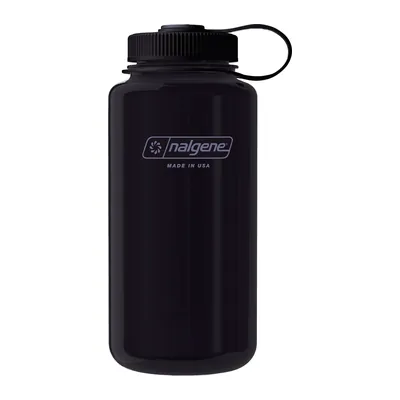
Nalgene Wide Mouth 1 litre
A 1 litre wide-mouth bottle in Tritan Renew, BPA- and BPS-free, leakproof and dishwasher-safe, 177 g empty: the wide opening fills quickly at a tap and takes ice cubes.
View on Amazon (opens in a new tab)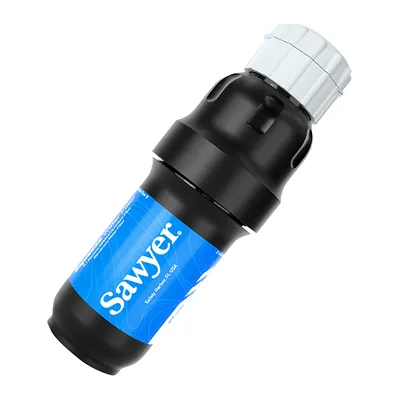
Sawyer Squeeze
A hollow-fibre filter rated at 0.1 micron absolute that removes bacteria and protozoa, but not viruses: follow it with a disinfectant, as the CDC advises. Keep it from freezing.
View on Amazon (opens in a new tab)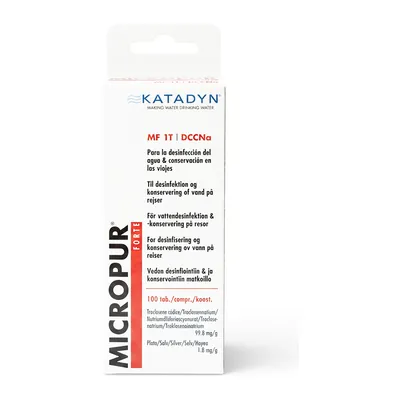
Katadyn Micropur Forte
Chlorine and silver tablets, one per litre of clear water, which Katadyn says act on bacteria and viruses within 30 minutes: the partner to a filter, which viruses pass through.
View on Amazon (opens in a new tab)
FAQs
How much water should I take on a day walk?
At least 1.5 litres per person for a summer walk in the mountains, according to the French Hiking Federation, and more in hot weather, on a long day or with a big climb. Look on the map for streams where you can refill, and carry a way to treat the water. The NHS offers a simple check: drink enough for your pee to stay pale.
Should I drink before I feel thirsty?
Yes, within reason. The Swiss Council for Accident Prevention advises drinking plenty even when you are not thirsty, and the NHS says to drink more when you sweat in hot weather or during exercise. At the Grand Canyon, the US National Park Service adds a caution: don’t force fluids, because too much water while losing salt through sweat can cause hyponatraemia. A few mouthfuls at every stop is the simplest rule.
What should I eat on a walk?
Light, small and nutritious food, eaten regularly, recommends the French Hiking Federation: dried fruit, cereal bars and biscuits that aren’t too sweet between stops, and a balanced lunch with bread or starchy food, protein, salad and fruit. AdventureSmart UK adds high-energy snacks for when you tire and a flask of hot drink. Alcohol stays at home.
How many calories does walking burn?
According to the Compendium of Physical Activities, an hour’s hiking at a normal pace through fields and hillsides, with no load, rates 5.3 MET, and cross-country hiking 6 MET. For someone weighing 70 kg, that is about 370 to 420 kcal an hour, including what the body burns at rest: an order of magnitude, not a ration to weigh out.
What should I do in a heatwave?
Keep to the shade, especially between 11am and 3pm, avoid activity that makes you hotter, and drink extra fluids but no alcohol, the NHS advises: on a walk, that means an early start. Tiredness, dizziness, a headache, cramps or nausea can mean heat exhaustion: stop, get somewhere cool, drink and cool your skin. If you are still unwell after 30 minutes, or confused, call 999 or 112.
Sources
- French Hiking Federation (FFRandonnée), ‘Recommandations pour la randonnée en montagne l’été’ (in French), 19 October 2023, accessed 28 October 2026. ffrandonnee.fr https://www.ffrandonnee.fr/randonner/securite/recommandations-pour-la-randonnee-en-montagne-l-ete ↩
- AdventureSmart UK, ‘Hill Walking Kit List’, updated 19 February 2025, accessed 28 October 2026. adventuresmart.co.uk https://www.adventuresmart.co.uk/hill-walking-kit-list/ ↩
- Mountaineering Scotland, ‘Essential kit’, summer hill-walking kit list, accessed 28 October 2026. mountaineering.scot https://www.mountaineering.scot/activities/hillwalking/getting-started/essential-kit ↩
- Mountaineering Ireland, ‘Happy Hiking - How To Start’, accessed 28 October 2026. mountaineering.ie https://www.mountaineering.ie/content/HowToStart/139 ↩
- Swiss Council for Accident Prevention (BFU), ‘Rando en montagne’ campaign, ‘Bien s’équiper’ (in French), accessed 28 October 2026. rando-en-montagne.ch https://www.rando-en-montagne.ch/fr/bien-s-equiper ↩
- Swiss Council for Accident Prevention (BFU), ‘Rando en montagne’ campaign, ‘Bien gérer la randonnée’ (in French), accessed 28 October 2026. rando-en-montagne.ch https://www.rando-en-montagne.ch/fr/bien-gerer-la-randonnee ↩
- NHS, ‘Dehydration’, page last reviewed 1 May 2026, accessed 28 October 2026. nhs.uk https://www.nhs.uk/conditions/dehydration/ ↩
- NHS, ‘Heatwave: how to cope in hot weather’, page last reviewed 12 June 2026, accessed 28 October 2026. nhs.uk https://www.nhs.uk/live-well/seasonal-health/heatwave-how-to-cope-in-hot-weather/ ↩
- US National Park Service, Grand Canyon National Park, ‘Hike Smart’, summer hiking advice, updated 26 June 2026, accessed 28 October 2026. nps.gov https://www.nps.gov/grca/planyourvisit/hike-smart.htm ↩
- NHS, ‘Heat exhaustion and heatstroke’, page last reviewed 28 May 2026, accessed 28 October 2026. nhs.uk https://www.nhs.uk/conditions/heat-exhaustion-heatstroke/ ↩
- Mountain Rescue England and Wales, ‘Stay safe’, accessed 28 October 2026. mountain.rescue.org.uk https://www.mountain.rescue.org.uk/safety/ ↩
- Centers for Disease Control and Prevention (CDC), About Water Treatment Options When Hiking, Camping, or Traveling, page dated 30 January 2025, accessed 20 October 2026. cdc.gov https://www.cdc.gov/drinking-water/prevention/water-treatment-hiking-camping-traveling.html ↩
- Centers for Disease Control and Prevention (CDC), Water Disinfection for Travelers, CDC Yellow Book, accessed 21 October 2026. cdc.gov https://www.cdc.gov/yellow-book/hcp/preparing-international-travelers/water-disinfection-for-travelers.html ↩
- Sawyer Products, FAQs (filters and freezing), accessed 21 October 2026. sawyer.com https://www.sawyer.com/faqs ↩
- Adult Compendium of Physical Activities, ‘Definition of Terms’, accessed 28 October 2026. pacompendium.com https://pacompendium.com/ ↩
- Adult Compendium of Physical Activities, 2024 edition, ‘Walking’, codes 17012 and 17080 to 17082, accessed 28 October 2026. pacompendium.com https://pacompendium.com/walking/ ↩
- French Hiking Federation (FFRandonnée), ‘Bien s’alimenter en randonnée’ (in French), 26 January 2021, accessed 28 October 2026. ffrandonnee.fr https://www.ffrandonnee.fr/randonner/conseils/bien-s-alimenter-en-randonnee ↩
Campervans, motorhomes, cycling and calculators
Julien de Jurquet writes for Outfarer about campervans, motorhomes, cycling and calculators. He reads instruction manuals to the very end and never lets a figure through without its unit, so that your choices rest on sums rather than promises.


 Guillaume Hoarau
