 Français (France)
 English (UK)
 English (US)
 Deutsch (Deutschland)

The rule: no fires in woodland, or within 200 m of it
The day’s walk is over, the clearing is perfect, and someone is already fishing out a lighter and talking about toasting marshmallows. That is exactly the moment to slow down. In France, the basic rule is simple, and it applies all year round: the Code forestier, France’s forestry code, bars anyone other than the landowner, or those holding their rights, from carrying or lighting a fire in woods and forests, or within 200 m of them [1].
Prefects, who represent the State in each département (an administrative area roughly the size of a county), spell out and tighten this rule by order (arrêté). The joint order for the Pays de la Loire region, in western France, for example, applies it ‘at all times’ to barbecues, spit roasts, braziers, campfires and ‘any other form of fire’, and to smoking too, including on roads that run alongside or through the woods [2]. In Corsica, the island’s two prefects ban all use of fire every year from 15 June to 30 September, for everyone, landowners included: campfires, but also stoves and barbecues, except within 5 metres of a building with cleared surroundings, running water and electricity [3].
So where can you have a campfire?
The list is short, and deliberately so:
- On private land, with the landowner’s agreement, provided no prefectoral order bans it that day, and well away from any vegetation.
- At a designated, authorised fire site, provided it has not itself been closed by order during a period of fire danger [1].
- At a campsite, only if its rules allow it, and only where they say.
Wild camping in the forest and campfires rarely go together, then, even where wild camping itself is tolerated. A stove takes care of the hot meal and a head torch takes care of the light: a fire is a pleasure, not a necessity.
Check the fire danger before you set off
Nine out of ten fires in France are started by people, most of them through carelessness [4]. Since 2023, Météo-France, the national weather service, has published the Météo des forêts (‘forest weather’) every day in the fire season: a map of the fire danger level in each département for the next day and the day after, online and in its mobile app [4]. When the danger is high, prefectures can restrict or even ban access to exposed areas, and ban barbecues and any use of fire [4].
Where it is allowed: a fire that leaves no trace
The Leave No Trace principles, which the US National Park Service has adopted for its visitors, apply anywhere [5]:
- Opt for a lightweight stove for cooking and a lantern for light.
- Where fires are allowed, use an existing fire ring rather than making a new one.
- Keep the fire small.
- Burn only dead wood that has fallen to the ground, thin enough to snap by hand.
- Let the wood burn down to ash, put the fire out completely, then scatter the cold ashes.
Add two safety rules: never leave a fire unattended, and keep water within reach. To put it out, the method is the same as for a barbecue: drown the embers, stir them, drown them again [1], until the ashes are cold.

Fire is one of the core bushcraft skills, just like finding and treating water or carrying a knife within the rules: an age-old skill, practised today within clear limits.
Kit related to this article
No affiliation: no commission, no sponsored products.
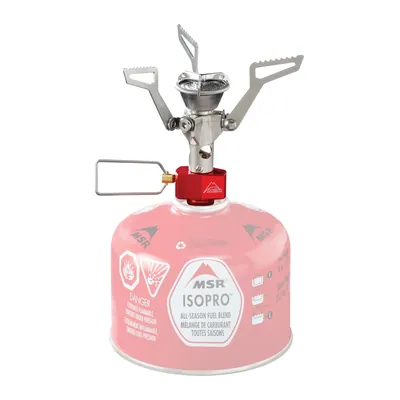
MSR PocketRocket 2
A 73 g gas canister stove that boils a litre of water in 3.5 minutes: where stoves are allowed, it saves lighting a fire, which is often banned.
View on Amazon (opens in a new tab)
FAQs
Is it legal to light a campfire in a French forest?
No, unless you are the landowner or someone holding their rights: France’s forestry code bars anyone else from carrying or lighting a fire in woods and forests, or within 200 m of them. Prefectoral orders can ban fires for everyone during periods of fire danger, landowners included.
Can you use a stove in a French forest?
A stove still has a naked flame, and some orders ban stoves too: in Corsica, stoves and barbecues are banned for everyone from 15 June to 30 September, with an exception near houses. Check the order for the département you are in, and the day’s fire danger, before you light it.
How can you tell whether the fire danger is high today?
Check Météo-France’s Météo des forêts, on its website or in its app: every day in the fire season, it gives the fire danger level for each département for the next day and the day after. The orders issued by the local prefecture set out what is banned at each level.
What should you do if a campfire gets out of control?
Only try to put it out if it has just started, is less than 1 m across and you can get away safely; otherwise, move away. Call 112 or 18, the emergency numbers in France, or 114 for deaf or hard-of-hearing people, giving the location as precisely as you can, then shelter in a house with cleared surroundings: a car is not a safe shelter.
Sources
- Feux de forêt (French non-profit association), Barbecue, cigarette, travaux d’été : les règles anti-incendie, content checked in July 2026, accessed 22 October 2026. feuxdeforet.fr https://www.feuxdeforet.fr/prevention/avant/barbecue-cigarette-travaux/ ↩
- Prefects of the Pays de la Loire region, arrêté cadre interdépartemental n° 2023-DRAAF-39 modifié (interdepartmental framework order on preventing forest fires, as amended), consolidated 2026 version, DRAAF Pays de la Loire (regional directorate for food, agriculture and forestry), accessed 22 October 2026. draaf.pays-de-la-loire.agriculture.gouv.fr https://draaf.pays-de-la-loire.agriculture.gouv.fr/IMG/pdf/2026_compilation_avec_modifications_arr_cadre_interdepartemental_avec-anx.pdf ↩
- DRAAF Corse (regional directorate for food, agriculture and forestry, Corsica), Interdiction d’emploi du feu en Corse, accessed 22 October 2026. draaf.corse.agriculture.gouv.fr https://draaf.corse.agriculture.gouv.fr/interdiction-d-emploi-du-feu-en-corse-a3.html ↩
- Service-Public.fr (official French government information site), Prévention : s’informer sur le danger d’incendies avec la Météo des forêts, 28 July 2025, updated in 2026, accessed 22 October 2026. service-public.gouv.fr https://www.service-public.gouv.fr/particuliers/actualites/A16541 ↩
- U.S. National Park Service, Leave No Trace Seven Principles, accessed 22 October 2026. nps.gov https://www.nps.gov/articles/leave-no-trace-seven-principles.htm ↩

Camping, wild camping, bushcraft and hiking
Guillaume Hoarau writes for Outfarer about camping, wild camping, bushcraft and hiking. A survival-skills enthusiast and a collector of old field manuals, he likes clear explanations, lists that earn their place and other people’s stories, which he tells well.


 Nolwenn Bastide