 Français (France)
 English (UK)
 English (US)
 Deutsch (Deutschland)

Contents
Why clear water is not enough
A stream chattering between granite boulders, water so clear you could count the pebbles on the bottom: the urge to dip your bottle straight in is hard to resist. It deserves a moment’s thought. Germs from human and animal faeces find their way into lakes, rivers and streams, and water that carries them can look perfectly clean. The CDC, the public health agency of the United States, puts it plainly: drinking straight from a clear mountain stream is generally not safe [1].
Three families of germs are involved: bacteria, viruses and microscopic parasites such as A microscopic intestinal parasite, passed on through water contaminated with faeces. and Another microscopic intestinal parasite, and one that chlorine kills poorly.. They differ in size and resilience, which is what makes the choice of method matter: only some treatments deal with all three, boiling first among them [1]. Children, pregnant women, people aged 65 and over and anyone with a weakened immune system are most at risk [1].
Finding the right water source
Treatment starts before you fill your bottle, with the choice of water source. A few simple principles will spare you most nasty surprises:
- Mark the water sources on your map before you set off: springs, streams, tarns and lakes. By late summer, a stream shown on the map may have run dry.
- Look at what lies upstream: grazing sheep or cattle, a mountain hut, houses, a road, farmland. Germs come from human and animal faeces [1].
- Go for clear water: let cloudy water settle, then strain it through a clean cloth before any treatment, as particles get in the way of disinfection and UV light [1, 2].
- Steer clear of water that may be chemically polluted: an odd smell, an oily sheen, foam, old mine workings, an industrial outfall. Neither boiling nor disinfection makes water contaminated with chemicals, toxins or radioactive material safe: find another source [1].
- Beware of algal blooms: discoloured or foul-smelling water, foam, scum, mats of algae or paint-like streaks on the surface point to an algal bloom, often of cyanobacteria (blue-green algae), which can produce toxins [3]. No filter or other treatment device designed for hiking and camping removes or destroys these toxins, and boiling does not get rid of them either: it can even concentrate them [3, 4]. As they are sometimes present with no visible sign at all, also follow any notices posted by the water; if you see a bloom, find another source [3, 4].
- Read the sign by the tap in a mountain hut: the water may be labelled ‘not drinking water’.
Boiling: the benchmark method
Boiling kills every type of germ, including viruses, bacteria and parasites [1]. On how long to boil, two health authorities do not quite agree. The World Health Organization considers it enough to bring water to a Large bubbles rising constantly, even when you stir the water.: bacteria, viruses and parasites are inactivated below 100 °C, and Cryptosporidium in under a minute above 70 °C [2]. The CDC asks for the rolling boil to be kept up for 1 minute, and for 3 minutes above about 2,000 m (its threshold is 6,500 feet) [1].

I stick to the more cautious advice, the CDC’s: it costs a little extra gas and leaves no room for doubt. According to the WHO, boiling still works at altitude and even in cloudy water; its drawbacks are the fuel it uses and the lack of any residual protection once the water has cooled [2]. Let it cool naturally, without adding ice, and protect it from being contaminated again [2], for instance in a clean, covered container.
Filtering: what a filter stops, and what gets through
A filter stops anything larger than its pores. So everything hinges on the stated pore size, provided it is The maximum pore size, guaranteed by the manufacturer: nothing larger gets through. A ‘nominal’ size only holds back some of the particles of that size. [1]:
- 1 micron or less, or certification to the US standards NSF 53 or 58 for cyst reduction: the filter stops parasites, but not viruses, nor all bacteria;
- 0.3 micron or less: it stops parasites and bacteria, but not viruses;
- reverse osmosis stops parasites, bacteria and viruses, and even salt [1].
When choosing a filter, aim for 0.2 micron absolute or less: the CDC’s guide for travellers puts the pore size needed to stop gut bacteria at 0.2 to 0.4 micron [5], and the Minnesota Department of Health rates filters of 0.3 micron absolute or less as only moderately effective against bacteria [4]. Some hollow-fibre filters go down to 0.1 micron, such as those made by Sawyer [6]. Only ultrafilters, with 0.01 micron pores, also stop viruses; portable versions exist, but they cost more and filter more slowly [5].
Viruses are too small for most portable water filters. That is why, when boiling is not an option, the CDC advises filtering the water and then disinfecting it [1]. When filling up and when filtering, keep the clean side well away from untreated water: not a drop should reach the bottle of treated water, its neck, its thread or its cap, or the filter outlet, or the water may be contaminated again [2, 8].
Disinfecting: tablets and drops
Chemical disinfectants kill bacteria and viruses, but not always parasites [1]. Chlorine and iodine work poorly against them. Chlorine dioxide kills Giardia and can also deal with Cryptosporidium, but slowly: it needs a contact time of several hours, according to the CDC’s guide for travellers [5], and the US label for Micropur MP1 tablets requires a 4-hour wait [11]. Water drunk after half an hour is therefore not protected against this parasite. Filtering the water first remains the safest course [1], and the product’s instructions set the dose and the contact time [1]: if they give different times for different germs, go with the longest.
Iodine calls for one more precaution: the CDC advises against it for pregnant women, for people with thyroid problems or a sensitivity to iodine, and for anyone using it for more than a few weeks at a time [1]. The UK’s National Travel Health Network and Centre (NaTHNaC) also notes that, following an EU directive, iodine is no longer sold or supplied for disinfecting drinking water [12].
UV light: effective, on one condition
A portable UV light kills parasites, bacteria and viruses in small quantities of clear water [1]. That is the condition: in cloudy water, particles shield germs from the light. So the water needs filtering before UV treatment [1]. And you will need a way to recharge the device.
| Method | Parasites | Bacteria | Viruses |
|---|---|---|---|
| Boiling | Yes | Yes | Yes |
| 1 micron absolute filter | Yes | Partly | No |
| 0.3 micron absolute filter or finer | Yes | Yes | No |
| Reverse osmosis | Yes | Yes | Yes |
| Chlorine, iodine | Poorly | Yes | Yes |
| Chlorine dioxide | Giardia yes; Cryptosporidium after several hours | Yes | Yes |
| UV light (clear water) | Yes | Yes | Yes |
Summary of the CDC pages on water treatment for hiking, camping and travel [1, 5]. For a specific product, its instructions take precedence.
Which method for which wild camp?
- A stove in your rucksack and time to spare: boiling, which kills all types of germs [1, 2].
- Travelling light, with clear water: a filter of 0.2 micron absolute or less, then disinfection, since viruses get through the filter [1, 5].
- Cloudy water: let it settle, strain it through a cloth, then treat it [1, 2].
- Water you suspect of chemical pollution, or with an algal bloom: neither boiling nor disinfection is enough, so find another source [1, 4].
A cold swig from a hill stream is one of the quiet pleasures of wild camping. Treated, it is every bit as refreshing, and you will feel all the fresher for it the next morning.
Kit related to this article
No affiliation: no commission, no sponsored products.
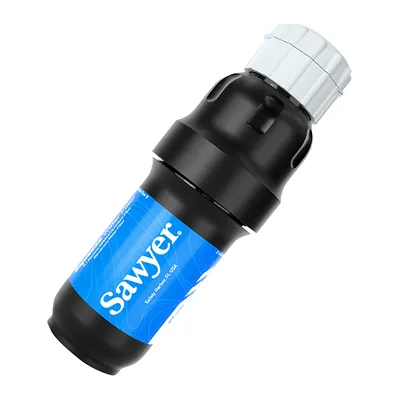
Sawyer Squeeze
A hollow-fibre filter rated at 0.1 micron absolute that removes bacteria and protozoa, but not viruses: follow it with a disinfectant, as the CDC advises. Keep it from freezing.
View on Amazon (opens in a new tab)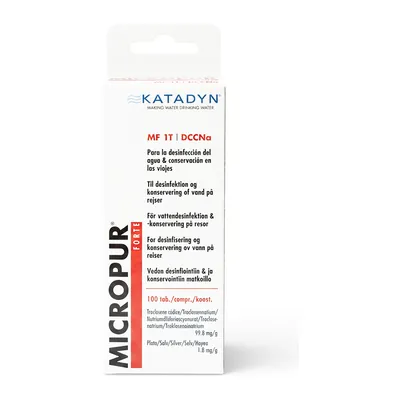
Katadyn Micropur Forte
Chlorine and silver tablets, one per litre of clear water, which Katadyn says act on bacteria and viruses within 30 minutes: the partner to a filter, which viruses pass through.
View on Amazon (opens in a new tab)
Worth watching
REI shows what to look for in a water source and the right way to collect water before filtering it, the hands-on side of the article’s advice on choosing a source.
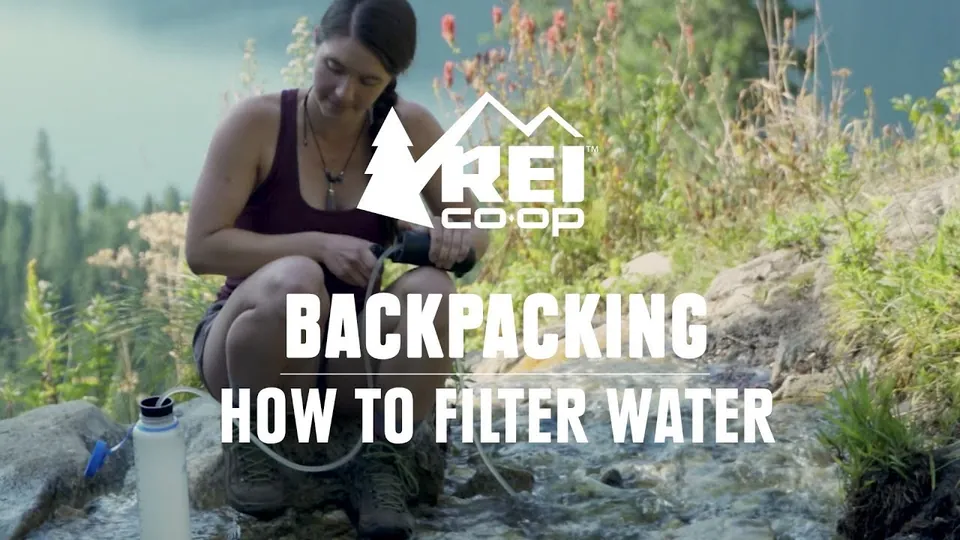
The video is hosted by YouTube (Google): nothing loads until you play it, and Google may then set cookies.
FAQs
How long should you boil water in the mountains?
The CDC asks for 1 minute at a rolling boil, and 3 minutes above about 2,000 m (6,500 feet in its guidance). The WHO considers bringing the water to a rolling boil enough, and points out that the method still works at altitude. The CDC’s advice is the more cautious of the two. Then let the water cool naturally, in a clean, covered container.
Is a water filter enough to make water safe to drink?
Not always. A 1 micron absolute filter stops parasites, and a filter of 0.2 micron absolute or less stops bacteria too, but viruses get through most portable filters. When you cannot boil the water, the CDC advises filtering it, then disinfecting the filtered water with a suitable product, following its instructions. And a hollow-fibre filter that has frozen can no longer be trusted.
Is water from a mountain stream safe to drink?
Nothing guarantees it. Germs from human and animal faeces end up in streams and rivers, and water that carries them can look perfectly clear. The CDC considers that drinking straight from a mountain stream is generally not safe. When wild camping, treat all natural water before you drink it, unless you know it comes from a monitored supply.
Are chlorine tablets enough?
They kill bacteria and viruses, but work poorly against parasites such as Giardia and Cryptosporidium. Chlorine dioxide does better: it kills Giardia and can deal with Cryptosporidium, but only after several hours of contact, up to 4 hours depending on the product. Filtering the water before disinfecting it remains the safest course, and the product’s instructions set the dose and the waiting time.
Can you drink treated water from near an old mine or farmland?
Better not. Boiling and disinfection get rid of germs, but not chemicals, toxins or radioactive material. If you suspect water of chemical pollution, the only safe answer according to the CDC is to find another source or to use bottled water. The same goes for an algal bloom: neither boiling nor portable filters remove the toxins cyanobacteria produce.
Sources
- Centers for Disease Control and Prevention (CDC), About Water Treatment Options When Hiking, Camping, or Traveling, page dated 30 January 2025, accessed 20 October 2026. cdc.gov https://www.cdc.gov/drinking-water/prevention/water-treatment-hiking-camping-traveling.html ↩
- World Health Organization, Technical brief: Boil water, WHO/FWC/WSH/15.02, January 2015, accessed 20 October 2026. who.int https://www.who.int/publications/i/item/WHO-FWC-WSH-15.02 ↩
- Centers for Disease Control and Prevention (CDC), Preventing Illnesses Caused by Harmful Algal Blooms, accessed 21 October 2026. cdc.gov https://www.cdc.gov/harmful-algal-blooms/prevention/index.html ↩
- Minnesota Department of Health, Preventing Illness while Camping, Hiking, and Traveling, updated 24 December 2025, accessed 21 October 2026. health.mn.gov https://www.health.mn.gov/diseases/waterborne/prevention/backcountry.html ↩
- Centers for Disease Control and Prevention (CDC), Water Disinfection for Travelers, CDC Yellow Book, accessed 21 October 2026. cdc.gov https://www.cdc.gov/yellow-book/hcp/preparing-international-travelers/water-disinfection-for-travelers.html ↩
- Sawyer Products, FAQs (filters and freezing), accessed 21 October 2026. sawyer.com https://www.sawyer.com/faqs ↩
- Cascade Designs (Platypus), FAQ - Platypus (hollow-fibre filters and freezing), accessed 21 October 2026. cascadedesigns.com https://cascadedesigns.com/pages/faq-platypus ↩
- Cascade Designs (MSR), Safe Water Anywhere: A Guide to the MSR Guardian Gravity Purifier, accessed 21 October 2026. cascadedesigns.com https://cascadedesigns.com/blogs/msr-gear-guides/guardian-gravity-purifier-guide ↩
- Bailey E. S., Beetsch N., Wait D. A., Oza H. H., Ronnie N., Sobsey M. D., Methods, Protocols, Guidance and Standards for Performance Evaluation for Point-of-Use Water Treatment Technologies: History, Current Status, Future Needs and Directions, Water, 2021, vol. 13, no. 8, 1094. mdpi.com https://www.mdpi.com/2073-4441/13/8/1094 ↩
- NSF, NSF Standards for Water Treatment Systems, accessed 20 October 2026. nsf.org https://www.nsf.org/consumer-resources/articles/standards-water-treatment-systems ↩
- Katadyn Products, US label for Micropur MP1 water purifier tablets (EPA Reg. No. 70060-22-39444), copy in Washington State University’s PICOL label database, accessed 21 October 2026. picol.cahnrs.wsu.edu https://picol.cahnrs.wsu.edu/DownloadLabel/41723/WA ↩
- National Travel Health Network and Centre (NaTHNaC), Food and water hygiene, TravelHealthPro factsheet, updated 23 October 2025, accessed 20 October 2026. travelhealthpro.org.uk https://travelhealthpro.org.uk/factsheets/food-and-water-hygiene ↩

Camping, wild camping, bushcraft and hiking
Guillaume Hoarau writes for Outfarer about camping, wild camping, bushcraft and hiking. A survival-skills enthusiast and a collector of old field manuals, he likes clear explanations, lists that earn their place and other people’s stories, which he tells well.


