 Français (France)
 English (UK)
 English (US)
 Deutsch (Deutschland)

Contents
Why three layers beat one big coat
75%. That is the share of the energy you put into walking that your body turns into heat, according to the French Hiking Federation (FFRandonnée) [1]. On the climb, you become a radiator; at the first stop, the radiator switches off and the cold starts nipping at the back of your neck. No coat, however warm, can keep up with swings like that. Three layers can.
The French Hiking Federation sums up the system from the skin outwards: ‘a layer that wicks away sweat, an insulating layer, a windproof and, if possible, waterproof layer’ [1]. In Switzerland, the Federal Office of Sport calls it the ‘onion principle’ [2], Germans speak of the Zwiebelprinzip, and in Britain it is simply layering. The same idea everywhere, and only the British have left the onion out of it.
Why does it work? It is not the fabric that insulates but the still air trapped between its fibres [1, 3]. Several thin layers each hold their share of air, and above all they come off one at a time: you adjust your heating as the day goes on, instead of choosing between stifling and shivering. Each layer has one job [3]:
- The base layer, next to the skin, moves sweat away from the body.
- The mid layer holds warm air around you: this is the layer that insulates.
- The outer layer keeps out wind, rain and snow, while letting water vapour escape.
Staying dry: half the battle
The detail that changes everything is not thickness, it is water. The French Hiking Federation puts it precisely: damp air does not make the cold worse, but damp clothing, whether from sweat or rain, causes ‘a very significant loss of heat’ [1]. In wet clothing, water takes the place of the still air, and your warmth slips away.
Water gets in through two doors. The outside one, rain and wet snow, which your outer layer has to stop. And the inside one, sweat, which everyone forgets. When water vapour has no way out, it condenses back into water inside your clothing, explains SATRA, the British testing laboratory [4]: hence the jacket that seems to leak although it is waterproof, or the base layer soaked under a down jacket.
Hence a piece of advice from the French Hiking Federation and the US National Park Service alike: carry a dry change of clothes in a waterproof bag, since a rucksack is almost never waterproof itself [1, 5]. It comes in handy at the lunch stop as well as in the evening, before you slide into your sleeping bag.
The base layer: merino or synthetic
Its job: drawing sweat away from your skin. It should be close-fitting rather than baggy, so that it stays in contact with what it has to move [3]. Two families of fabric compete for the role.
Synthetic fibres such as polyester have great wicking abilities, notes the British Mountaineering Council (BMC) [3]. They dry quickly and are generally cheaper.
Merino wool plays a different tune. Its fibre is Able to absorb water vapour from the air or from sweat and hold it inside the fibre.: it can hold water vapour without feeling wet to the touch, and its natural crimp traps a thin layer of air against the skin [6]. It is also naturally odour resistant [6]. These claims come from The Woolmark Company, the body behind the Australian wool industry: hardly a neutral source, but one that documents its fibre well.
Then there is the question everyone asks: does merino itch? Good news: rarely. The prickly feeling comes from fibres thicker than 30 microns, which are too stiff to bend against the skin, according to the wool laboratory at Montana State University [7]. Merino for base layers is generally finer than 19.5 microns [6], or about 0.02 mm.
The mid layer: fleece, down or synthetic
This is the layer that insulates, by trapping warm air around the body; it also needs to let through the moisture rising from the base layer [3]. Three materials dominate.
Fleece
A synthetic fabric with a soft, plush feel, fleece is the great all-rounder: it breathes well and keeps much of its insulating power even when damp [3]. Its weak point is the wind, which it does little to stop: wear it under a jacket as soon as the breeze picks up.
Down
Few materials insulate as well for their weight: beneath the feathers of geese and ducks grows a very light down, and a jacket filled with it packs away into a rucksack without weighing you down [3]. Its quality comes down to two figures.
The first is The volume a given weight of down occupies once uncompressed. The higher it is, the more air the down traps for the same weight.: the higher it is, the better the down insulates [8]. It is usually given in cubic inches per ounce: ‘800 fill power’ down fills 800 cubic inches per ounce, or per 28 g [9]. In other words, 28 g of this down, barely more than a letter, lofts up to about 13 litres, a well-filled bucket.
Be wary of comparing one label with another, though, because the test method matters: a British maker that tests every batch itself explains that its test machine, approved by the International Down and Feather Bureau, gives a figure about 4% lower than the US federal method for the same down [9]. The second figure is the mix of down to small feathers, given as a percentage or a ratio such as 90/10: the purer the down, the warmer it is [3].
Its Achilles heel is water: once wet, down loses its insulating qualities, and sometimes never fully recovers [3]. So it shines at the lunch stop and on the summit, in cold, dry weather, far more than in the rain or under a jacket on a steep climb. And if the geese matter to you, the Responsible Down Standard independently certifies down against animal welfare requirements, from the farm to the finished product [3].
Synthetic insulation
Its polyester fibres mimic down. Down keeps the edge on weight and packed size, but synthetic insulation still works when wet and dries quickly [3]. In a damp climate, it is often the right choice for the stop jacket, the one Mountaineering Scotland, the national body for hillwalkers and climbers in Scotland, recommends carrying in addition to your waterproof [10].
| Fabric | Layer | Strength | Once damp |
|---|---|---|---|
| Cotton | Avoid | Soft and cheap | Holds water and stops keeping you warm |
| Synthetic (polyester) | Base | Wicks sweat well, usually cheaper | Dries quickly |
| Merino wool | Base | Fine fibre, odour resistant | Holds vapour without feeling wet |
| Fleece | Mid | Breathes well | Keeps much of its insulation |
| Down | Mid, at stops | Excellent warmth for its weight | Loses its insulating qualities |
| Synthetic insulation | Mid, at stops | Copes with damp | Still works |
| Softshell | Mid or outer | Breathes, some wind and water resistance | Less protection than a waterproof |
| Membrane jacket | Outer | Keeps out wind, rain and snow | Waterproof, but sweat can condense inside |
Based on the BMC, the US National Park Service, The Woolmark Company, Switzerland’s Federal Office of Sport and SATRA. These are general trends: every garment depends on how it is made.
The outer layer: stopping wind and rain
The wind is a quiet thief: the harder it blows, the colder the air feels, and meteorologists turn this into a ‘feels like’ temperature. Using the formula published by Belgium’s Royal Meteorological Institute, we worked out that at -5 °C, a 30 km/h wind (about 19 mph) gives a feels-like temperature of around -13 °C [11]. A windproof jacket warms nothing up, but it stops the wind carrying off the warm air held by your other layers.
Two families share the job. The waterproof membrane jacket, or hardshell, keeps out wind, rain and snow and ideally lets moisture escape: the key is finding the balance between weatherproofing and A fabric’s ability to let water vapour from sweat pass through to the outside. [3]. The softshell, softer and more supple, breathes well and offers some wind and water resistance: on a cold, dry day it may be enough, and the waterproof can stay in the rucksack until conditions really deteriorate [3].
And your legs? They are easily forgotten. Mountaineering Scotland points out that standard walking trousers have very little insulation once wet, and that no jacket, however good, keeps the rain out indefinitely [10]. Base-layer leggings under your trousers and waterproof over-trousers in your rucksack make a wet day far more bearable.
Head, hands and feet: looking after your extremities
When it gets cold, the body cuts the flow of warm blood to the hands and feet to limit heat loss [1]: so they are the first to get cold, and the ones that spoil a day.
- Your head: a hat that covers your ears, plus a scarf or neck warmer [1].
- Your hands: mittens snug at the wrist are warmer than gloves [12]. Thin liner gloves, in silk for example, keep your fingers covered for fiddly tasks [1]. Carry a dry spare pair: wet gloves lose their insulating power and chill your hands [1].
- Your feet: wool socks, or socks in another insulating fabric, kept dry by waterproof boots that you do not lace tighter than necessary [1, 5]. Gaiters stop snow getting in over the top of your boots and melting into your socks [10].
Adjusting your layers on the move and at stops
Three layers are only as good as the way you use them. The French Hiking Federation keeps it simple: take clothes off as soon as you feel warm, and put them back on when you stop [1]. The US National Park Service gives the reason: removing a layer prevents overheating [5], and with it the sweat that would soak everything else. Here is how a day might run, layer by layer.
- At the start, it is cold, and the temptation is to set off bundled up. The French Hiking Federation advises setting off well covered, then taking a layer off as soon as the heat becomes uncomfortable [1]. I prefer to take the insulating layer off before the first climb, even if it means feeling a little chilly for the first few minutes.
- On the climb, the base layer is often enough, with a thin fleece or a softshell if it is really cold, zips open. The hat goes into a pocket before your forehead starts to bead.
- At a stop or on the summit, the warm layer goes back on straight away [1], over everything else: this is Mountaineering Scotland’s ‘second coat’ [10].
- When you sit down, never sit directly on snow or the ground, that ‘heat thief’ [10]: a square of foam or your rucksack will do, for the same reason you choose a sleeping mat by its R-value.
- On the descent, you are working less hard: put a layer back on before you get cold, especially if the wind picks up.

The mistakes that leave you cold
- Cotton, whether as a base layer or as trousers: it soaks up sweat and holds on to it [2, 5].
- Setting off overdressed: you sweat on the first climb, then get cold at the first stop.
- Keeping your down jacket on while climbing, under your shell: sweat dampens it, and damp down insulates poorly [3].
- Waiting until you are cold to cover up at a stop, instead of putting the warm layer back on straight away [1].
- Forgetting the dry change of clothes and spare gloves, or packing them without a waterproof bag [1, 5].
- Lacing your boots tighter than necessary, which the French Hiking Federation advises against [1].
Once these habits become second nature, the cold changes status: it is no longer the day’s opponent, just a setting you adjust one zip at a time. And winter opens up, with its frosty mornings crunching underfoot and its silent forests: snowshoeing, cross-country skiing or a simple winter walk are just waiting for you.
Kit related to this article
No affiliation: no commission, no sponsored products.
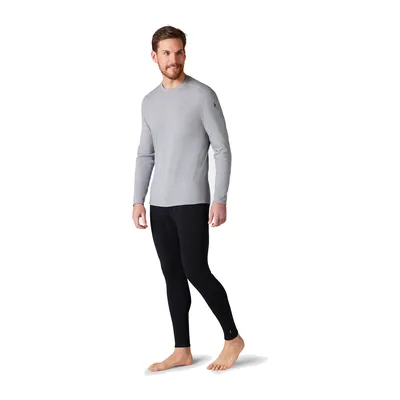
Smartwool Classic Thermal Merino
A 100% merino wool long-sleeve base layer, 250 g/m²: worn close to the skin, it moves sweat away and resists odours. Men’s cut, also made for women.
View on Amazon (opens in a new tab)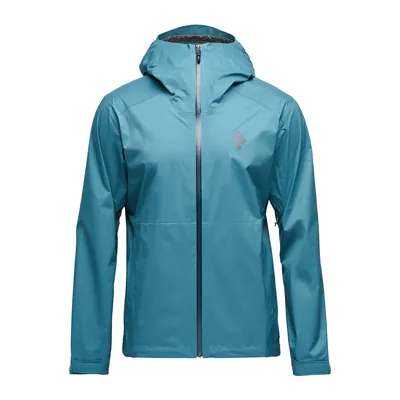
Black Diamond Fineline Stretch Shell
A waterproof shell with a BD.dry membrane: 10,000 mm waterproof rating, zipped underarm vents to dump heat and an adjustable hood. 320 g. Men’s cut, also made for women.
View on Amazon (opens in a new tab)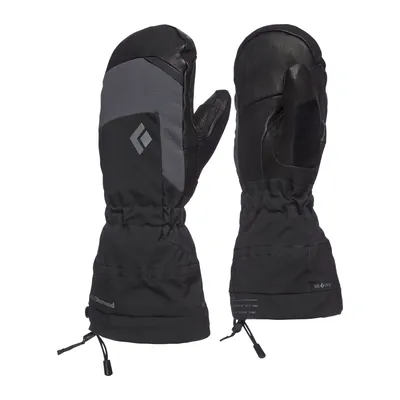
Black Diamond Mercury Mitts
Long-cuffed mitts with a removable, quick-drying PrimaLoft liner and a BD.dry waterproof insert: warm hands when you sit still in the cold. 268 g.
View on Amazon (opens in a new tab)
Worth watching
Ellis Brigham Mountain Sports runs through the three jobs of a layering system: wicking sweat away from the skin, trapping body heat and keeping out the weather, so you can adjust on the move.
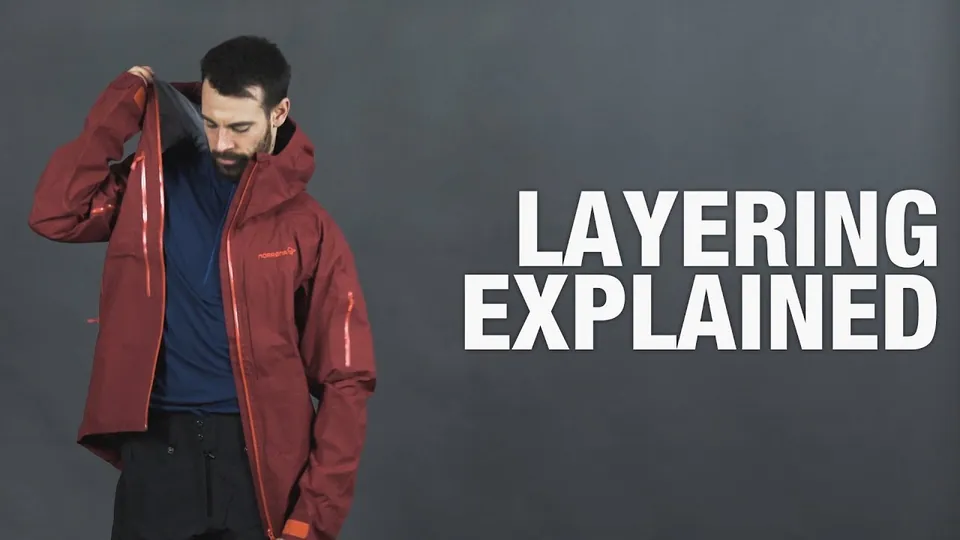
The video is hosted by YouTube (Google): nothing loads until you play it, and Google may then set cookies.
FAQs
Merino or synthetic: which is better for a base layer?
Both wick sweat away, and both are far better than cotton. Synthetic dries quickly and is generally cheaper. Merino holds water vapour without feeling wet and resists odours, which is useful on trips of several days. Whichever you choose, go for a close-fitting base layer, so that it stays in contact with the sweat it has to move.
Fleece or down for a mid layer?
Fleece breathes well and keeps much of its insulation when damp, so it works while you are moving, under a windproof jacket. A down jacket gives the most warmth for its weight, but loses its insulating qualities once wet: it is mainly for stops and summits in dry weather. In a damp climate, a synthetic insulated jacket is a good substitute.
What does 800 fill power mean on a down jacket?
It is the down’s fill power, in cubic inches per ounce: 1 oz (28 g) of this down fills 800 cubic inches, about 13 litres. The higher the figure, the more air the down traps and the better it insulates for the same weight. Compare with care: depending on the test method, the same down can show a figure about 4% different.
Gloves or mittens: which are warmer?
Mittens snug at the wrist are warmer than gloves, according to the US National Weather Service. For fiddly tasks, thin liner gloves, in silk for example, keep your fingers covered. Carry a dry spare pair too, because wet gloves lose their insulating power and leave your hands colder than before.
Why is cotton a bad idea for winter walking?
Because it easily absorbs sweat and rain, holds them against your skin and stops keeping you warm once wet. The US National Park Service and Switzerland’s Federal Office of Sport both advise against it for the first and second layers. Choose wool or synthetics instead, and check your trousers too: wet jeans leave your legs cold.
Sources
- French Hiking Federation (FFRandonnée), ‘Randonner en hiver’ (in French), 15 March 2021, accessed 23 October 2026. ffrandonnee.fr https://www.ffrandonnee.fr/randonner/securite/randonner-en-hiver ↩
- Swiss Federal Office of Sport (FOSPO), mobilesport.ch, ‘Camps d’hiver : organisation, matériel’ (in French; also in German and Italian), 7 October 2019, accessed 23 October 2026. mobilesport.ch https://www.mobilesport.ch/ski/camps-dhiver-organisation-materiel/ ↩
- British Mountaineering Council, ‘A guide to hill walking clothing and layers’, accessed 23 October 2026. thebmc.co.uk https://thebmc.co.uk/en/a-guide-to-hill-walking-clothing-layers ↩
- SATRA Technology Centre, ‘The EN 343 protective clothing standard’, accessed 23 October 2026. satra.com https://satra.com/spotlight/article.php?id=590 ↩
- US National Park Service, ‘Be Winter Ready For Your Adventure’, last updated 23 February 2020, accessed 23 October 2026. nps.gov https://www.nps.gov/articles/winterweather.htm ↩
- The Woolmark Company, ‘What is the Wool Fibre?’, accessed 23 October 2026. woolmark.com https://www.woolmark.com/fibre/what-is-the-wool-fibre/ ↩
- Montana State University, Montana Wool Lab, ‘OFDA 2000 Explanation of Analysis and Glossary of Terms’, accessed 23 October 2026. montana.edu https://www.montana.edu/woollab/ofda.html ↩
- International Down and Feather Bureau, ‘Consumer Resources’, ‘Fill power’ section, accessed 23 October 2026. idfb.net https://idfb.net/consumer-resources ↩
- PHD (PH Designs), ‘Testing Down Quality: Fillpower’, accessed 23 October 2026. phdesigns.co.uk https://www.phdesigns.co.uk/testing-down-quality-fillpower ↩
- Mountaineering Scotland, ‘Are you warm enough?’, article first published in Scottish Mountaineer, February 2021, accessed 23 October 2026. mountaineering.scot https://www.mountaineering.scot/thinkwinter/clothes-and-kit/are-you-warm-enough ↩
- Royal Meteorological Institute of Belgium, ‘Température sensible’ (in French), weather glossary, accessed 23 October 2026; calculation by Outfarer using the JAG/TI formula. meteo.be https://www.meteo.be/fr/infos/dico-meteo/temperature-sensible ↩
- US National Weather Service, Binghamton office, ‘Extreme Cold Safety’, accessed 23 October 2026. weather.gov https://www.weather.gov/bgm/outreachextremecoldsafety ↩
- US National Weather Service, ‘Cold Weather Safety’, accessed 23 October 2026. weather.gov https://www.weather.gov/safety/cold ↩

Trail running, snow, water, nature and destinations
Nolwenn covers trail running, snow, water, nature and destinations for Outfarer. Curious about everything, from meteor showers to night-train timetables, she has a knack for unearthing the one detail that changes everything, and putting it in a single sentence.


