 Français (France)
 English (UK)
 English (US)
 Deutsch (Deutschland)

Half past six, the kettle’s on, and the rucksack sits open on a kitchen chair. That is often where the day is won or lost: in goes a third jumper ‘just in case’, while the head torch that would have come in handy that evening, when the walk back drags on, stays in the drawer. The fix is a list, always the same one, gone through the night before and ticked off.
This list follows a simple idea, the ‘Ten Essentials’, a system devised by the American club The Mountaineers and promoted by the US National Park Service: what you carry should first help you deal with a minor injury, a sudden change in the weather or an unexpected emergency [1]. In the UK, the AdventureSmart UK safety campaign and Mountaineering Scotland publish kit lists of their own [2, 3], as do the French Hiking Federation (FFRandonnée), France’s sports ministry and the Swiss Council for Accident Prevention (BFU) [4, 5, 6], and they largely overlap. It expands on the ‘Kit and rucksack’ step of our guide to planning a hike.
The rucksack itself: 18 to 32 litres for a day
For a day walk, the BFU recommends a rucksack of 18 to 32 litres, adjustable and suited to your build, well ventilated, with outside pockets and somewhere to attach walking poles [6]. There’s no need to go bigger: the bigger the rucksack, the more you tend to fill it, warns the French Hiking Federation [4]. Mountaineering Scotland’s summer kit list for the Scottish hills suggests about 35 litres, and adds waterproof over-trousers, a spare layer and an emergency survival bag [3]. For a night or more, see how many litres you need.
On weight, the French Hiking Federation recommends no more than 20% of your body weight for a walk of several days, which is 11 kg for someone weighing 55 kg, and considers that too much for a simple day’s walk [4]. With the list below, water included, you will usually stay well under it.
The kit list, section by section
On your feet
- Sturdy walking boots with a well-treaded sole, already broken in: most mountain walking accidents are caused by trips and slips, the BFU points out, and it advises wearing new boots before you take them on a walk [6].
- Good walking socks, which reduce the risk of blisters [6]; AdventureSmart suggests breathable ones rather than cotton, and a spare pair [2].
Water and food
- Water: at least 1.5 litres per person for a summer walk in the mountains [7]. In a heatwave, France’s sports ministry advises drinking more and setting off earlier [5]. On a long walk, find the streams on the map and treat the water before you drink it.
- Snacks to nibble as you walk: cereal bars or flapjack, dried fruit [4]; AdventureSmart wants them high in energy, for a boost when you tire [2].
- Lunch, and a little more than you need: the US National Park Service even advises carrying an extra day’s food, in case your plans change [1].
For the unexpected
- A head torch and spare batteries: it leaves your hands free, which is why it wins over a hand torch [1].
- A first aid kit, with any medication you need, and spares [5, 1, 2].
- A survival blanket: a few extra grams, and indispensable if things go wrong, as the French Hiking Federation puts it [8]. UK kit lists also include a survival bag, or bivvy bag [2, 3].
- A whistle and a knife [5].
- A tick remover, or fine-tipped tweezers, to take a tick off as quickly as possible, without waiting until you get home [9].
Against rain, cold and sun
- A waterproof jacket, even in glorious weather: in the mountains, the weather can change quickly, and it can be cold even in summer [6]. AdventureSmart says never leave home without it [2].
- A warm layer, a jumper or a fleece, thin or thick depending on the season and the temperature [4], on the three-layer principle.
- Sunglasses, sun cream and a cap or sun hat: solar radiation increases with altitude [6].
- A hat and gloves as soon as the walk climbs or the season turns colder [5].
Finding your way and staying reachable
- A 1:25,000 map, the scale of OS Explorer maps, and a compass [4], even if you use GPS [2].
- A charged phone, with the map of your walk downloaded for offline use [6], and the emergency numbers: in the UK, dial 999 or 112 and ask for the police, then Mountain Rescue [10]. Don’t rely on it alone: phone signal is unreliable in many places [11], and calling for help without signal takes some preparation.
- A power bank for the phone, in a ziplock bag to keep it dry [1, 8, 2].
The little things that save the day
- Toilet paper and a bag to take your rubbish home [4, 11].
- A pair of spare laces [4, 2].
- Your ID and some cash, in a ziplock pouch [4].
- A waterproof rucksack cover, or a large bin bag inside as a liner: a rucksack is never completely waterproof [4].
Packing your rucksack: heavy things against your back
A well-packed rucksack is easier to carry. The principle, as the French Hiking Federation explains it: the load rests mainly on your hips and a little on your shoulders, and the centre of gravity stays as close to your body as possible [4]. The BFU turns this into simple rules: heavy things (water, food, a thick jacket) close to your body and at shoulder height, light things in the bottom compartment, small items in the lid, and as little as possible strapped to the outside [6].
What you use often stays within reach: water bottle, snacks, sun hat and sun cream, the map, and your protective layers at the top of the rucksack [4]. Drinks are heavy, the BFU notes, but they lighten the load as the hours go by; anything superfluous is carried all day [6].
What changes with the season and the walk
The basic list stays the same from one season to the next; it’s the additions that change.
| Situation | What to add |
|---|---|
| Summer, heatwave | More water, a sun hat, sun cream; set off earlier |
| Spring and autumn | A thicker warm layer, a hat and gloves |
| Winter | Gloves (with a thin pair underneath), a hat or headband, something to protect your neck, a dry change of clothes, a flask of hot drink |
| With children | Kit that fits them, and a watchful eye: they become dehydrated and tire quickly |
| Scottish hills, June to August | Midge repellent and a midge net |
Based on France’s sports ministry, the French Hiking Federation, the BFU and Mountaineering Scotland. [5, 4, 12, 6, 3]
In winter, the French Hiking Federation insists on gloves and a hat or headband, with a thin pair of silk gloves under the main ones for when you need to rummage in your rucksack, and on protecting your neck; it also advises a flask of hot drink and a change of clothes to stay dry [12]. Our guide to winter walking covers the rest. In autumn and winter, also check the rules for walking in the hunting season.
What stays at home
I suspect every walker of being a closet gram-counter, myself included. For a day out, though, there’s no need to saw the handle off your toothbrush: the real savings lie elsewhere, in the third jumper ‘just in case’, the big camera and its three lenses, or the pork pie that would feed six. The BFU puts it plainly: anything superfluous is carried all day, and you feel it more the further you go [6]. The unexpected is another matter: a survival blanket weighs a few grams [8].
The printable kit list
Tick it off the night before, run through it again in the morning, and adapt it to the length and season of your walk. It brings together the lists of AdventureSmart UK, Mountaineering Scotland, the French Hiking Federation, France’s sports ministry, the BFU and the US National Park Service [2, 3, 4, 5, 6, 1].
- Walking boots, already broken in, and walking socks
- Water: at least 1.5 litres per person
- Snacks and lunch, plus one extra snack
- Waterproof jacket
- Warm layer, fleece or wool
- Sunglasses, sun cream, cap or sun hat
- Hat and gloves, depending on the season
- 1:25,000 map and compass
- Charged phone, map downloaded, emergency numbers
- Power bank
- Head torch and spare batteries
- First aid kit and personal medication
- Survival blanket or survival bag
- Whistle and knife
- Tick remover
- Toilet paper and rubbish bag
- Spare laces
- ID and cash in a ziplock pouch
- Rucksack cover or bin bag liner
Kit related to this article
No affiliation: no commission, no sponsored products.
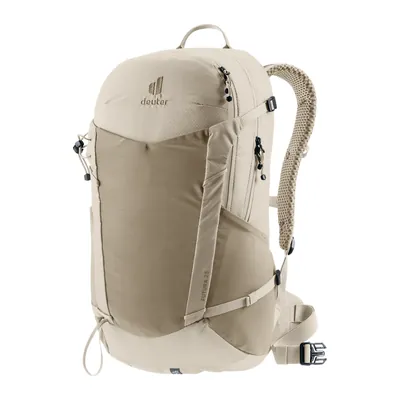
Deuter Futura 23
A 23 litre day pack with a ventilated Aircomfort mesh back, a rain cover included and room for a hydration bladder of up to 3 litres; 1,180 g, designed for loads of 3 to 6 kg.
View on Amazon (opens in a new tab)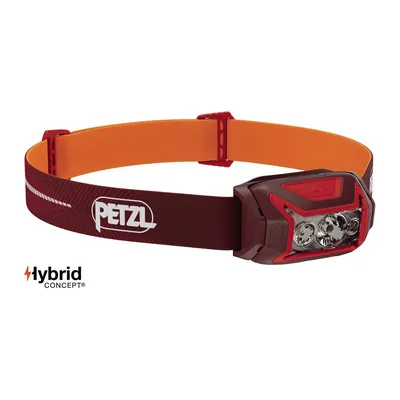
Petzl Actik Core
An 88 g head torch supplied with a rechargeable battery that also runs on three AAA batteries, with a red light that won’t dazzle anyone.
View on Amazon (opens in a new tab)
FAQs
What should I take on a day walk?
Water, at least 1.5 litres per person for a summer walk in the mountains, food, a waterproof jacket and a warm layer, sun protection, a map and compass, a charged phone, a head torch, a first aid kit, a survival blanket and a whistle. Add toilet paper, a bag for your rubbish and your ID, then adapt the rest to the season: hat and gloves, plus a flask in winter.
What size rucksack do I need for a day walk?
The Swiss Council for Accident Prevention recommends 18 to 32 litres for a day walk, adjustable and suited to your build, with outside pockets. Don’t go bigger than you need: the bigger the rucksack, the more you tend to fill it, warns the French Hiking Federation. Larger rucksacks are for trips of several days, although Mountaineering Scotland suggests about 35 litres for summer hillwalking in the Scottish hills.
How much water should I take on a walk?
The French Hiking Federation recommends at least 1.5 litres per person for a summer walk in the mountains. In a heatwave, France’s sports ministry advises drinking more and setting off earlier. On a long walk, find the streams on the map and treat the water before you drink it: clear water is not necessarily safe to drink.
How heavy should a walking rucksack be?
For a walk of several days, the French Hiking Federation sets the maximum at 20% of your body weight, or 11 kg for someone weighing 55 kg, and considers that too much for a simple day’s walk. The Swiss Council for Accident Prevention adds that, over a long period, a well-trained person can carry at most 20 to 25% of their body weight. For a day, stay well below that.
What are the ‘Ten Essentials’ of hiking?
An American list, devised by The Mountaineers club and promoted by the US National Park Service: navigation, sun protection, extra clothing, light, first aid, something to start a fire within local rules, a knife and repair kit, extra food, water and a way to treat it, and emergency shelter such as a survival blanket. In the UK, AdventureSmart UK’s hill walking kit list covers much the same ground.
Sources
- US National Park Service, ‘Ten Essentials’, updated 28 May 2026, accessed 27 October 2026. nps.gov https://www.nps.gov/articles/10essentials.htm ↩
- AdventureSmart UK, ‘Hill Walking Kit List’, updated 19 February 2025, accessed 27 October 2026. adventuresmart.co.uk https://www.adventuresmart.co.uk/hill-walking-kit-list/ ↩
- Mountaineering Scotland, ‘Essential kit’, summer hill-walking kit list, accessed 27 October 2026. mountaineering.scot https://www.mountaineering.scot/activities/hillwalking/getting-started/essential-kit ↩
- French Hiking Federation (FFRandonnée), ‘Préparer son sac à dos’ (in French), 6 June 2024, accessed 27 October 2026. ffrandonnee.fr https://www.ffrandonnee.fr/randonner/conseils/preparer-son-sac-a-dos ↩
- French Ministry of Sports, ‘Sortir en montagne’ (in French), accessed 27 October 2026. sports.gouv.fr https://www.sports.gouv.fr/sortir-en-montagne-1204 ↩
- Swiss Council for Accident Prevention (BFU), ‘Rando en montagne’ campaign, ‘Bien s’équiper’ (in French), accessed 27 October 2026. rando-en-montagne.ch https://www.rando-en-montagne.ch/fr/bien-s-equiper ↩
- French Hiking Federation (FFRandonnée), ‘Recommandations pour la randonnée en montagne l’été’ (in French), 19 October 2023, accessed 27 October 2026. ffrandonnee.fr https://www.ffrandonnee.fr/randonner/securite/recommandations-pour-la-randonnee-en-montagne-l-ete ↩
- French Hiking Federation (FFRandonnée), ‘Bien préparer sa randonnée’ (in French), 23 June 2022, accessed 27 October 2026. ffrandonnee.fr https://www.ffrandonnee.fr/randonner/conseils/bien-preparer-sa-randonnee ↩
- NHS, ‘Lyme disease’, page last reviewed 3 June 2025, accessed 27 October 2026. nhs.uk https://www.nhs.uk/conditions/lyme-disease/ ↩
- Mountain Rescue England and Wales, ‘In case of emergency’, accessed 27 October 2026. mountain.rescue.org.uk https://www.mountain.rescue.org.uk/how-to-call-out-mr/ ↩
- Natural England and Natural Resources Wales, ‘The Countryside Code: advice for countryside visitors’, GOV.UK, updated 26 May 2023, accessed 27 October 2026. gov.uk https://www.gov.uk/government/publications/the-countryside-code/the-countryside-code-advice-for-countryside-visitors ↩
- French Hiking Federation (FFRandonnée), ‘Comment éviter le grand frisson lors des randos en hiver’ (in French), 16 January 2023, accessed 27 October 2026. ffrandonnee.fr https://www.ffrandonnee.fr/randonner/conseils/comment-eviter-le-grand-frisson-lors-des-randos-en-hiver ↩

Camping, wild camping, bushcraft and hiking
Guillaume Hoarau writes for Outfarer about camping, wild camping, bushcraft and hiking. A survival-skills enthusiast and a collector of old field manuals, he likes clear explanations, lists that earn their place and other people’s stories, which he tells well.


 Arnaud Couderc
