 Français (France)
 English (UK)
 English (US)
 Deutsch (Deutschland)

Contents
Three days of rain in the Monts d’Arrée did not defeat all of my kit. Above all, they taught me a distinction: keeping water out and keeping your things dry are two separate problems. My jacket turned clammy without any leak I could find. My boots ended up damp inside. My sleeping bag and night clothes, on the other hand, stayed dry, protected inside the rucksack.
The most useful thing was not some impressive piece of equipment. It was a stubborn line between wet and dry, a few adjustments made early enough, and a pair of socks I forbade myself to walk in.
From Huelgoat to Saint-Rivoal, three wet days
Three days and two nights in the Monts d’Arrée, in Brittany, from Saturday 20 to Monday 22 September 2025. Setting off from Huelgoat, passing not far from Lake Brennilis, the Saint-Michel reservoir, then Mont Saint-Michel de Brasparts and Lake Drennec, and finishing at Saint-Rivoal, where someone came to pick me up by car. Not a loop, then, but a crossing. About 29 miles (47 km) in all, according to the route I traced afterwards on Map Planner: around 12 miles (20 km) on the first day, about 10 (16 km) on the second and 7 (11 km) on the third.
Two nights wild camping, one of them on private land, with the owner’s permission.
The rain was not constant. On the first day, mostly drizzle: fine, light rain. On the second, rain and showers, with some fairly long bright spells. The heaviest rain fell on the second night, and it was still raining on the morning of the third day. Between one day and the next, the boots never had time to dry.
It was around 10 to 15 °C. Nothing measured to the decimal point, and no rainfall readings either: I am not about to turn a sodden sleeve into a weather station.
The kit itself was nothing exotic.
This is not a product ranking. It is what I had on my back, and how the whole lot behaved when evening never brought a chance to dry out.
The jacket: a soaked surface does not prove a leak
On the first morning, the drops were still beading on the jacket. By evening, some patches had darkened. Inside, my top was damp between the shoulder blades.
My first instinct was to blame the jacket. Yet I saw no trickle in one spot, and no mark clear enough to show where water had got in. Mostly, I had been walking too fast, with the vents closed.
A membrane jacket does two jobs at once. The membrane is the barrier against water. The water-repellent surface finish, often known as Durable water repellent: a surface treatment that makes water bead up on the outer fabric., helps drops bead up rather than soak into the fabric. GORE-TEX, which explains this for its own garments, says that losing water repellency does not, on its own, mean the membrane has lost its waterproofing; a saturated outer fabric still makes you less comfortable and gets in the way of moisture escaping [5].
On the second day, I changed the way I was walking before thinking about changing jackets. I took off a layer I no longer needed while on the move, opened the vents and, above all, slowed down at the first sign of overheating, rather than waiting until my back was wet.
It worked better, though it was no miracle: my top still was not dry, but the damp was no longer building up as much. What gave way here was, first of all, comfort at the surface and the way I managed my effort. Not waterproofing whose failure I could actually have demonstrated.
The boots: water does not need to get through the membrane
On the first evening, my socks were damp. On the second day, the tops of my socks were properly wet. I had put my overtrousers on too late: the bottoms of my trousers had had time to soak up water from the vegetation, and covering the boots afterwards obviously did nothing about the water already inside.
A waterproof boot is still open at the ankle. REI, the American outdoor co-op, recommends gaiters or waterproof overtrousers to protect your socks and the tops of your boots [6]. That does not seal anything, but it deals with a way in that the membrane cannot close off.
So I cannot put all the damp down to a leak. Sweat, water coming in from the top and a possible seep through the boot all feel much the same. Without checking each separately, declaring a ‘faulty membrane’ after two days would be a convenient diagnosis, not a serious one.
At camp, I took out the insoles. By morning, they were still damp. The pair of socks kept for the night stayed in its bag: I did not sacrifice it for a few minutes of comfort in a wet boot.
The rucksack: the rain cover was only the first barrier
Under the cover, the rucksack did not stay dry for all that. The shoulder straps and back panel were wet, and an outside pocket had water sitting at the bottom. I could not work out which way that water had come: the rain, the run-off and the rucksack being opened again and again all had several chances to play a part.
The protection that counted was inside: the large dry bag, which keeps the night things apart from the rest of the load. The wet flysheet travelled in a separate bag, outside that dry space. This precaution answers a known limitation: a rucksack can be cut from waterproof fabric without its seams, zips and openings being waterproof too. REI recommends protection inside the pack, and dry bags for the most sensitive kit, even with a rain cover [6].
The real weak point was my organisation. On the first day, I had packed a snack too far down. To get at it, I opened the main compartment and handled several things with wet hands. The lesson: whatever you need during the day goes where you can reach it without opening the protected part. There is no need to unpack your entire bedroom to find a snack.
What held up: the sealed-off sleeping kit and night clothes. What gave way: my belief that a rain cover was enough to turn the whole rucksack into a dry space. Outside pockets are damp zones, best accepted as such, not places to leave anything fragile unprotected.
The tent: a dry night does not mean dry walls
On the first night, nothing came up through the ground. Yet when I woke, the inside of the flysheet was covered in condensation. That is not a contradiction: a tent can keep the rain off and still build up moisture. Even a well-ventilated shelter often holds some under the flysheet and under the floor, as REI points out [8].
My mistake was more mundane than a fault in the fabric. I had left the wet jacket in the The space covered by the flysheet in front of the inner tent, where boots and rucksack are kept., right against the door of the inner tent, and the entrance got soaked. On the second evening, I drew a clear line: wet boots and clothes in the porch, away from the inner tent. A small cloth dealt with the flysheet and the drips near the entrance.
One more thing to check when pitching: a groundsheet must not stick out beyond the tent floor, or it will catch the rain. REI advises folding the overhanging edges of an ordinary tarpaulin under the floor [8]; our guide to tarp set-ups applies the same rule.
The habits that keep you comfortable
Here is the routine I would keep to from the very first evening.
- Get the pitch ready before opening the rucksack. The tent and its accessories come out without anyone touching the dry clothes, and the dry bag is closed again as soon as something has been taken out of it.
- Finish setting up before getting the sleeping kit out. Tension, entrances, wet areas: the sleeping bag is not a place to park things while you sort out the rest.
- Only change under cover. Night clothes stay protected until the moment you put them on; keeping this dry reserve is also one of REI’s tips for walking in the rain [6].
- Keep what wipes apart from what must stay dry. The flysheet cloth never goes in with the clean clothes.
- Pack the wet things separately the next morning. The flysheet is folded away without touching the sleeping kit; a short lull gets rid of some of the drops, but it does not dry the fabric.
- Do not raid the dry reserve to walk in. Putting on your night clothes to set off again would only push the problem on to the next evening.
These habits take some care, especially when all you want is to crawl into the tent as fast as possible. Their whole point is to stop one hurried move from spoiling the hours that follow.
What I would check before heading out again
| Item | What happened | What I am changing |
|---|---|---|
| The jacket | Drops beading on the first morning, darkened patches by evening, top damp between the shoulder blades, no visible leak | Slow down, open the vents; check the water repellency |
| The boots | Damp socks on the first evening, tops of the socks wet on the second day, insoles still damp in the morning | Overtrousers on sooner; a slow dry back home |
| The rucksack | Wet shoulder straps and back panel, water at the bottom of an outside pocket | Protection on the inside; the snack within reach |
| The tent | Nothing through the ground, condensation under the flysheet, entrance soaked by the jacket left in the porch | Wet things in the porch, dry things in the inner tent |
Erik Gauden’s findings in the Monts d’Arrée, 20 to 22 September 2025.
After those three days, I would not replace my whole kit list. I would start by looking at the limits that showed up, one at a time.
For the jacket, the first check would be the water repellency. GORE-TEX suggests a simple test: sprinkle it with water and see whether the water beads up, or soaks into the fabric and leaves darker patches [5]. The manufacturer then recommends suitable care, following the garment’s label first; the instructions vary with the construction, and a treatment that suits one jacket does not suit them all [10].
For the boots, I would first look for better protection at the opening, and put the overtrousers on before the bottoms of my legs were soaked. Persistent damp would then call for a separate check, not a verdict based on wet socks. For the rucksack, I would keep the rain cover, but treat the inner dry bag as the real protection. For the tent, I would pitch it again in the dry, to check the tension, the seams and the floor.
Finally, getting home does not mean the job is done. REI recommends drying the tent completely before storing it: damp encourages mould and damages the waterproof coatings [8]. The boots, too, deserve a slow dry, as Nikwax advises [7].
By the end of the third day, then, I had not found a way to keep everything dry. I had learned to choose what absolutely had to stay dry, then to organise every move around that priority.
My night socks had not covered a single mile. Yet they were the pair that had worked best.
Kit related to this article
No affiliation: no commission, no sponsored products.
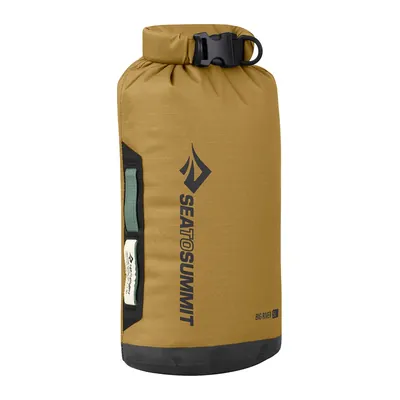
Sea to Summit Big River Dry Bag
A roll-top dry bag in 420D nylon with a TPU laminate, taped seams and lash points: to keep the tent, sleeping bag and evening clothes dry. From 5 to 65 litres.
View on Amazon (opens in a new tab)
Worth watching
GORE-TEX explains why a jacket whose water-repellent finish has worn off can feel damp and clammy, as if it were leaking, then shows how to restore that finish on outerwear, gloves and footwear.

The video is hosted by YouTube (Google): nothing loads until you play it, and Google may then set cookies.
FAQs
Does a jacket soaked on the surface always leak?
No. The outer fabric of a membrane jacket carries a water-repellent finish that wears off: once it no longer makes water bead up, the surface darkens and looks soaked, without the membrane leaking for all that, according to GORE-TEX. Comfort drops, because moisture escapes less easily, and effort wets your back from the inside. Slowing down and opening the vents often helps more than changing jackets.
How do you avoid wet socks in waterproof boots?
By protecting the opening at the ankle, which the membrane does not close: REI recommends gaiters or waterproof overtrousers. The overtrousers go on before the bottoms of your legs are soaked, or the water that has already got in stays in the boot. At camp, the insoles come out to dry, and a pair of socks kept for the night is never used for walking.
Is a rain cover enough to keep a rucksack dry?
No. A rucksack can be made of waterproof fabric without its seams, zips and openings being waterproof, and a rain cover lets water through at the back panel and shoulder straps. REI recommends protection inside, such as a large dry bag, and dry bags for sensitive kit. Outside pockets remain damp zones.
Why is there water in the tent when nothing is leaking?
It is often condensation: water vapour settles under the flysheet, and even a well-ventilated shelter holds some, under the flysheet as well as under the floor, as REI points out. The rest comes from handling: a wet jacket left near the entrance is enough to soak it. Wet things stay in the porch, dry things in the inner tent.
Sources
- Décret n° 93-208 du 9 février 1993 portant création de la réserve naturelle du Venec (Finistère) (French decree of 9 February 1993 creating the Venec nature reserve), text reproduced by AIDA (Ineris), accessed 27 October 2026. aida.ineris.fr https://aida.ineris.fr/reglementation/decret-ndeg-93-208-090293-portant-creation-reserve-naturelle-venec-finistere ↩
- UF PRO, Pantalon tactique P-40 All-Terrain Gen.3, composition of the PolyCo Ripstop and Schoeller-dynamic fabrics, page in French, accessed 27 October 2026. ufpro.com https://ufpro.com/fr/p/pantalon-tactique-p-40-all-terrain-gen3-gris-brun ↩
- 5.11 Tactical, RUSH 72 Backpack, original model page, accessed 27 October 2026. 511tactical.com https://www.511tactical.com/eu-en/rush-72-backpack-ws.html ↩
- 5.11 Tactical, RUSH 72 2.0 Backpack 55L, accessed 27 October 2026. 511tactical.com https://www.511tactical.com/rush72-2-0-backpack.html ↩
- GORE-TEX, How to Restore the Durable Water Repellency of Your Raingear, accessed 27 October 2026. gore-tex.com https://www.gore-tex.com/blog/restore-durable-water-repellency-raingear ↩
- REI, Tips for Backpacking in the Rain, accessed 27 October 2026. rei.com https://www.rei.com/learn/expert-advice/backpacking-in-the-rain.html ↩
- Nikwax, Footwear Care, accessed 27 October 2026. nikwax.com https://nikwax.com/en-gb/how-nikwax-works/footwear-care/ ↩
- REI, How to Clean, Waterproof and Care for a Tent, accessed 27 October 2026. rei.com https://www.rei.com/learn/expert-advice/caring-tent.html ↩
- Hilleberg, Do your tents have a rain fly?, frequently asked questions, accessed 27 October 2026. hilleberg.com https://hilleberg.com/eng/resources/faqs/do-your-tents-have-a-rain-fly ↩
- GORE-TEX, Care Instructions for GORE-TEX outerwear, accessed 27 October 2026. gore-tex.com https://www.gore-tex.com/support/care/outerwear ↩

The one who started Outfarer
Outfarer started with Erik, who launched it with a few passionate friends. A nature lover above all, he writes about the subjects closest to his heart and reviews a good part of the magazine, including every survival and bushcraft article before it is published.

 Nolwenn Bastide

 Guillaume Hoarau
