 Français (France)
 English (UK)
 English (US)
 Deutsch (Deutschland)

Contents
Can you wild camp in the UK? Few outdoor questions get as many contradictory answers, because there isn’t one rule but several: one in Scotland, another in England and Wales, and an exception on Dartmoor that went all the way to the Supreme Court. The most recent legal milestone is that ruling, handed down on 21 May 2025 [6]. Here is what each rule says, where it applies, and what to check before you pitch.
Scotland: camping is part of your access rights
In Scotland, you can enjoy the outdoors on most land as long as you act responsibly, and that includes ‘lightweight camping in a tent, in small numbers and for no more than two or three nights in one place’, says the Scottish Outdoor Access Code [1]. The Code sets out how to use these rights: small tents, pitched well away from buildings and roads, a backup plan if a spot is busy, no camping in enclosed fields of crops or farm animals, and taking away all belongings and litter [1]. Sweden, Norway and Finland have a comparable right, framed by their own laws: the Nordic right of public access.
Fire is the point the Code stresses most. Don’t light an open fire, even in a fire bowl or barbecue, during prolonged dry spells, near forests, farmland, peaty ground, buildings or historic sites; cook on a stove set on a level, non-flammable surface; and leave dead wood where it lies, because it is a home for wildlife [1]. In practice, a stove and a head torch do the job of a campfire.
England and Wales: the landowner’s permission comes first
South of the border, the starting point is the opposite. The ‘right to roam’ lets you walk, run, watch wildlife and climb on open access land, but camping is among the activities you cannot usually do there [4]. In other words, pitching a tent in England needs the landowner’s permission, and the same goes for Wales: Dartmoor is the only place in England and Wales where wild camping is enshrined in law, as the British Mountaineering Council points out [5].
In practice, some areas tolerate discreet camping. The Lake District National Park Authority states that wild camping is technically not permitted without the landowner’s prior permission, and that it cannot authorise camping on private land [8]. It is normally tolerated, though, if you camp above the highest fell wall, well away from towns, villages and lake shores, for one night only, in a very small group of one or two tents, with no fire and no litter [8]. Wherever you pitch, landowners or their representatives have the legal right to order you to break camp and move on [8]. Camping in car parks or on roadside verges is not allowed at any time [8].

Dartmoor: the exception confirmed by the Supreme Court
Dartmoor’s exception comes from section 10(1) of the Dartmoor Commons Act 1985, which gives the public a right of access to the commons on foot and on horseback for open-air recreation [6]. In 2023, a landowner asked the courts to rule that this right didn’t include camping. The High Court agreed, the Court of Appeal disagreed, and on 21 May 2025 the Supreme Court dismissed the landowner’s appeal, in a judgment by five justices [6]. Wild camping on the Dartmoor commons is therefore a right, not just a tolerance [5, 6].
A right with rules attached. The Dartmoor National Park Authority allows backpack camping on some commons only, shown on its camping map; ‘backpack camping’ means carrying your own kit as part of your walk and staying one or two nights at most [7]. No overnight stays in vehicles, campervans or motorhomes, no large tents or large groups, no fires, and take all rubbish home [7]. During the ground-nesting bird season, from 1 March to 31 July, the Authority asks for extra care around rare nesting sites [7].
| Where | Rule | How long | Main conditions |
|---|---|---|---|
| Scotland | Right of access, includes lightweight camping | 2 or 3 nights at most in one place | Small numbers, away from buildings and roads, no fires in dry spells |
| Loch Lomond and the Trossachs zones | Campsite or permit, 1 March to 30 September | Up to 3 nights per permit area | £4.50 per tent per night, booked up to 4 weeks ahead |
| England and Wales | Landowner’s permission needed | As agreed with the landowner | Camping not covered by open access land |
| Dartmoor commons | Right confirmed by the Supreme Court (2025) | 1 or 2 nights at most | Mapped areas only, no vehicles, no fires, firing ranges |
| Lake District | Not permitted, but tolerated | 1 night | Above the highest fell wall, 1 or 2 tents, no fire |
Based on the Scottish Outdoor Access Code, Loch Lomond and the Trossachs National Park Authority, GOV.UK, the Supreme Court, Dartmoor and Lake District National Park Authorities, the BMC and the Ministry of Defence. Northern Ireland is not covered here.
Before you pitch: the checks to make
- Which country are you in? The border changes everything: access rights in Scotland, permission in England and Wales.
- Is there a special zone? In summer, check the Loch Lomond and the Trossachs permit areas; on Dartmoor, the national park’s camping map.
- Is it fire season? In a dry spell, no open fire, even in a fire bowl: cook on a stove [1].
- On Dartmoor, are the ranges firing? Look up the firing times before setting off, and watch for red flags [9].
- Will you leave no trace? Small tent, short stay, all litter carried out, and a backup plan if the spot is busy [1, 7, 8].
These rules move slowly, but they do move: Dartmoor’s went from the High Court to the Supreme Court in three years, and the Loch Lomond permit has had several prices. If you plan your first wild camp in Scotland, our guide to wild camping rules in France shows how differently the question is handled across the Channel, and our pieces on sleeping bag temperature ratings and sleeping mat R-values cover the kit. Before you go, check the date on each page: the one that counts is the one in force on the night you pitch. The permit zone crosses a famous long-distance route, covered in our guide to the West Highland Way.
Kit related to this article
No affiliation: no commission, no sponsored products.

Petzl Actik Core
An 88 g head torch supplied with a rechargeable battery that also runs on three AAA batteries, with a red light that won’t dazzle anyone.
View on Amazon (opens in a new tab)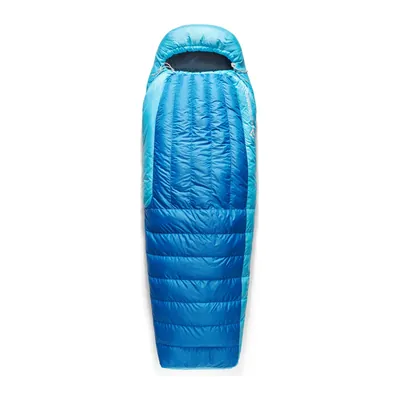
Sea to Summit Trek -1 °C
A down bag named after its limit temperature, -1 °C; its comfort temperature, the one to choose by, is 3 °C under ISO 23537. About 1.1 kg in Regular.
View on Amazon (opens in a new tab)
FAQs
Is wild camping legal in the UK?
It depends on where you are. In Scotland, access rights include lightweight camping, in small numbers, for two or three nights at most in one place. In England and Wales, there is no general right: you need the landowner’s permission, except on parts of the Dartmoor commons, where the Supreme Court confirmed a right to camp in 2025. The Lake District tolerates discreet wild camping above the highest fell wall.
Do I need a permit to camp at Loch Lomond?
Only from 1 March to 30 September, and only in the camping management zones, which cover less than 4% of Loch Lomond and the Trossachs National Park. There, you need a campsite pitch or a permit, at £4.50 per tent per night, bookable up to four weeks ahead for up to three nights. From October to February, no permit is needed and the Scottish Outdoor Access Code applies.
Can you still wild camp on Dartmoor?
Yes. On 21 May 2025, the Supreme Court dismissed a landowner’s appeal and confirmed that the Dartmoor Commons Act 1985 gives the public a right to camp on the commons. That right applies only in the areas shown on the national park’s camping map, for one or two nights, on foot with your own kit, without vehicles, large groups or fires. Check the military firing times too.
Can I wild camp in the Lake District?
Technically, not without the landowner’s permission, says the national park authority, which cannot authorise camping on private land. In practice, wild camping is normally tolerated above the highest fell wall, away from towns, villages and lake shores, for one night, with one or two tents, no fire and no litter. A landowner can still ask you to move on, and roadside or car park camping is never allowed.
Can I light a campfire when wild camping in Scotland?
The Scottish Outdoor Access Code asks you not to light an open fire, even in a fire bowl or barbecue, during prolonged dry weather or near forests, farmland, peaty ground, buildings or historic sites. It recommends cooking on a stove placed on a level, non-flammable surface, and leaving dead wood on the ground for wildlife. In Loch Lomond’s camping zones, byelaws also cover fires and collecting firewood.
Sources
- Scottish Outdoor Access Code, ‘Camping’, practical guide for all, accessed 23 October 2026. outdooraccess-scotland.scot https://www.outdooraccess-scotland.scot/practical-guide-all/camping ↩
- Loch Lomond and the Trossachs National Park Authority, ‘Camping Management Byelaws’, accessed 23 October 2026. lochlomond-trossachs.org https://www.lochlomond-trossachs.org/things-to-do/camping/campingbyelaws/ ↩
- Loch Lomond and the Trossachs National Park Authority, ‘Get a permit’, accessed 23 October 2026. lochlomond-trossachs.org https://www.lochlomond-trossachs.org/things-to-do/camping/get-a-permit/ ↩
- GOV.UK, ‘Rights of way and accessing land: Use your right to roam’, accessed 23 October 2026. gov.uk https://www.gov.uk/right-of-way-open-access-land/use-your-right-to-roam ↩
- British Mountaineering Council, ‘Supreme Court rules that Wild Camping on Dartmoor is legal’, 21 May 2025, accessed 23 October 2026. thebmc.co.uk https://thebmc.co.uk/en/supreme-court-rules-that-wild-camping-on-dartmoor-is-legal ↩
- UK Supreme Court, Darwall and another (Appellants) v Dartmoor National Park Authority (Respondent), [2025] UKSC 20, judgment of 21 May 2025, accessed 23 October 2026. supremecourt.uk https://supremecourt.uk/cases/uksc-2023-0126 ↩
- Dartmoor National Park Authority, ‘Camping Map’, backpack camping on Dartmoor commons, accessed 23 October 2026. dartmoor.gov.uk https://www.dartmoor.gov.uk/about-us/about-us-maps/camping-map ↩
- Lake District National Park Authority, ‘Wild camping’, accessed 23 October 2026. lakedistrict.gov.uk https://www.lakedistrict.gov.uk/visiting/where-to-stay/wild-camping ↩
- Ministry of Defence and Defence Infrastructure Organisation, ‘Dartmoor firing times’, GOV.UK, last updated 19 October 2026, accessed 23 October 2026. gov.uk https://www.gov.uk/government/publications/dartmoor-firing-times ↩

Fact-checking, regulations and safety
Arnaud Couderc reviews our contributors’ articles and writes for Outfarer about regulations, safety, fishing, the sea and outdoor pursuits. He traces every rule back to its official text and every figure to its source, so that you set off with sound benchmarks.


 Nolwenn Bastide

 Guillaume Hoarau