 Français (France)
 English (UK)
 English (US)
 Deutsch (Deutschland)

Contents
Can you wild camp in Switzerland? The question sounds simple; the answer is less so. There is no uniform rule: requirements vary from canton to canton and even from one municipality to the next, the Touring Club Switzerland noted in a press release on 13 July 2026 [1]. There is, however, a common baseline, a few bans that apply everywhere, and cantons with rules of their own. Here they are, each with its source.
The principle: one night, above the treeline
The starting point is the Civil Code: in Switzerland, forests and pastures are open to everyone under its Article 699, as the Swiss Alpine Club (SAC) points out in its leaflet on camping and bivouacking [2]. Having access to a place isn’t the same as camping there, though, and every canton or municipality can restrict it [2]. The SAC draws a rule of conduct from this: a single night by a small group in the mountains above the treeline is generally unproblematic if it’s done considerately, and an emergency bivouac is allowed in principle [2]. The Touring Club says the same: above the treeline, bivouacking is generally tolerated, subject to local rules [1].
The SAC also separates two words that are often confused. Bivouacking means spending the night without a tent, under the open sky, in an igloo or a snow cave; camping means sleeping in a small tent outside an official campsite [2]. Nights in a vehicle and camps lasting several days fall under other rules: for a camp, contact the municipality or the landowner [2]. On private land, you need the owner’s permission in any case [1].
Where it’s banned across the country
Some areas are excluded from any tolerance. The SAC lists them: the Swiss National Park, federal hunting reserves, which are wildlife reserves where hunting is banned, many nature reserves, and wildlife rest areas during their protection period; free camping there is explicitly banned, or impossible because access itself is banned [2]. The Touring Club adds, more broadly, protected natural areas [1].
The Swiss National Park, in Graubünden, is the strictest case. Its park ordinance bans lighting fires, bivouacking and spending the night in its car parks, and visitors may only walk on the marked paths [3]. Dogs are banned, even carried, and offences are punished with fines [3]. The bivouac question simply doesn’t arise there: you sleep in a hut or outside the park.
Canton by canton: what the main mountain cantons allow
With no federal law, the Touring Club asked each canton’s authorities and published their answers in a guide updated on 1 July 2026 [4]. For most Alpine cantons, the answer is the same: wild camping isn’t allowed in principle, with three exceptions, one night in the mountains above the treeline, not in a group, taking the tent down each day if you stay several nights, one night on private land with the owner’s permission, and the emergency bivouac [4]. A few cantons depart from this pattern.
| Canton | Wild camping in general | In the mountains | Particular rules |
|---|---|---|---|
| Valais | No: a building permit is needed in principle | One night above the treeline, not in a group | Patrolled protected areas, fines possible; municipal bans |
| Graubünden | No | One night above the treeline, not in a group | National Park: bivouacking banned |
| Bern | No | One night above the treeline, not in a group | City of Bern: banned on public land |
| Ticino | No: only on authorised campsites | A tent pitched for a mountain bivouac | Fine of 50 to 10,000 francs |
| Uri | No | One night above the treeline, not in a group | No general ban outside protected areas; municipal rules |
| Vaud | No | One night above the treeline, not in a group | Protected areas and hunting reserves excluded |
| Obwalden | Yes, for a single night | One night above the treeline | Without harming public or private interests; bogs and protected areas excluded |
Based on the Touring Club Switzerland guide, with answers from cantonal authorities updated on 1 July 2026, and Ticino’s camping law. Municipalities can add their own bans.
Ticino and Valais: two more precise rules
Ticino has the clearest rule, because it’s written into law. Its camping law states that you may only camp in authorised camping areas, with a single exception: a tent pitched for a bivouac in the mountains [5]. Camping covers any temporary stop or overnight stay away from home, in a tent, caravan or motorhome [5]. Offences are punished by the municipality with a fine of 50 to 10,000 francs [5].
In Valais, the canton told the Touring Club that pitching a tent or a caravan outside an authorised campsite requires a building permit under the federal spatial planning act and the cantonal building ordinance: wild camping there needs a permit in principle, however long it lasts [4]. The single night in the mountains above the treeline remains the accepted exception [4]. Several protected areas are actively patrolled, and wardens can fine offenders or report them to the police: the Pfyn-Finges forest, the Aletsch forest, the Binn valley, Derborence, the Vallon de Réchy and Les Épines [4].
Choosing your spot: the Swiss Alpine Club’s advice
- Above the treeline, on alpine pastures or rocky ground: these are the least sensitive spots [2].
- Not at the upper forest edge, home to grouse and a feeding ground for chamois and deer, nor in floodplains and wetlands [2].
- Near an alp or a hut, ask the farmer or the hut team first, and don’t sleep too close to huts [2].
- At dusk, avoid noise and big activities: that’s when many animals are out [2].
- For fires, use existing fireplaces and respect any fire ban; in dry weather, go without [1, 2].
- For waste, carry everything out, and relieve yourself well away from water [2].

Before you go: the checks
- The area: on map.geo.admin.ch, check you’re not in the National Park, a federal hunting reserve or a wildlife rest area during its protection period [2].
- The canton and municipality: ask the municipality, the tourist office or the local police, as the Touring Club recommends [1, 4].
- The altitude: aim for above the treeline, for a single night, in a small group [2].
- The weather: storms, floods, avalanches; if in doubt, don’t [1, 2].
- The kit: something to carry out all your rubbish, and a stove rather than a fire.
Switzerland doesn’t ask for a permit for a night under the stars above the forest; it asks you to know where you are. To compare with the neighbours, our articles on wild camping in France and wild camping in Germany set out their rules, and our guides to sleeping bag temperature ratings and sleeping mat R-values will help with the kit for the night itself.
Kit related to this article
No affiliation: no commission, no sponsored products.
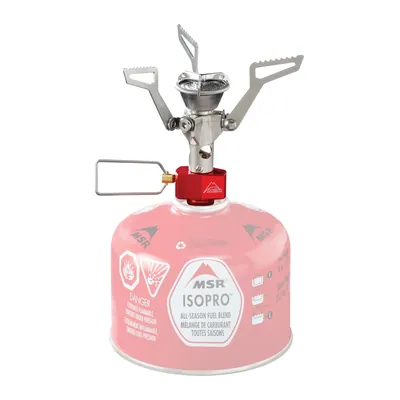
MSR PocketRocket 2
A 73 g gas canister stove that boils a litre of water in 3.5 minutes: where stoves are allowed, it saves lighting a fire, which is often banned.
View on Amazon (opens in a new tab)
FAQs
Is wild camping allowed in Switzerland?
It isn’t banned outright, but it isn’t allowed everywhere either: the rules depend on the cantons and municipalities. In most mountain cantons, a single night in small numbers above the treeline is tolerated, outside protected areas. On private land, you need the owner’s permission, and an emergency bivouac is always allowed.
Where is bivouacking banned in Switzerland?
In the Swiss National Park, where the park ordinance bans bivouacking and fires, in federal hunting reserves, in many nature reserves and in wildlife rest areas during their protection period. Municipalities can ban it too. The map.geo.admin.ch map shows most of these areas, so you can check before you set off.
What is the fine for wild camping in Switzerland?
There is no national rate. In Ticino, the camping law punishes offences with a fine of 50 to 10,000 francs, imposed by the municipality. In the National Park, breaches of the park ordinance are punished with fines. In Valais, the wardens of several protected areas can fine offenders or report them to the police.
Can I bivouac next to an SAC hut?
The Swiss Alpine Club advises against sleeping too close to huts. If you do, contact the hut team, offer something for using the toilet, or buy something at the hut. Near an alp, ask the farmer. It’s also a question of goodwill: hut teams are more tolerant of bivouackers who introduce themselves.
What’s the difference between bivouacking and wild camping?
For the Swiss Alpine Club, bivouacking means spending the night without a tent, under the open sky, in an igloo or a snow cave; camping means sleeping in a small tent outside an official campsite. In everyday use, a night in a small tent in the mountains is often called a bivouac too, and that is exactly what Ticino’s law allows.
Sources
- Touring Club Switzerland, ‘Camping sauvage en Suisse : où est-il autorisé ?’, press release of 13 July 2026 (in French), accessed 23 October 2026. tcs.ch https://www.tcs.ch/assets/docs/presse/2026/communiqu-de-presse-camping-sauvage.pdf ↩
- Swiss Alpine Club (SAC), ‘Campieren und Biwakieren in den Schweizer Bergen’, leaflet (in German), 2014, copy published by Ascona-Locarno Tourism, accessed 23 October 2026. ascona-locarno.com https://ascona-locarno.com/dam/jcr:964ca17a-0ddc-404f-93b7-a78dc2dc52b1/SAC_Campieren_Biwakieren_d.pdf ↩
- Canton of Graubünden, ‘Verordnung über den Schutz des Schweizerischen Nationalparks (Nationalparkordnung)’, BR 498.200, as of 1 January 2011 (in German), accessed 23 October 2026. gr-lex.gr.ch https://www.gr-lex.gr.ch/api/de/versions/2411/pdf_file ↩
- Touring Club Switzerland, ‘Peut-on faire du camping sauvage en Suisse ?’, rules canton by canton, updated 1 July 2026 (in French), accessed 23 October 2026. tcs.ch https://www.tcs.ch/fr/camping-voyages/camping-insider/conseils/preparatifs/faire-du-camping-sauvage-en-suisse.php ↩
- Republic and Canton of Ticino, ‘Legge sui campeggi’ of 26 January 2004 (RL 943.100), consolidated text as of 1 January 2024 (in Italian), accessed 23 October 2026. m3.ti.ch https://m3.ti.ch/CAN/RLeggi/public/index.php/raccolta-leggi/pdfatto/atto/631 ↩

Fact-checking, regulations and safety
Arnaud Couderc reviews our contributors’ articles and writes for Outfarer about regulations, safety, fishing, the sea and outdoor pursuits. He traces every rule back to its official text and every figure to its source, so that you set off with sound benchmarks.


