 Français (France)
 English (UK)
 English (US)
 Deutsch (Deutschland)

Contents
Camping on public land away from developed recreation facilities, in the Bureau of Land Management’s own definition., the American cousin of wild camping, is allowed on most land run by the Bureau of Land Management (BLM), the federal agency that manages public land, and most BLM areas need no permit or reservation [1]. But there is no single federal rule. Each land agency has its own regulations, and each forest, district or local office (field office) can add limits of its own. We read those regulations, then the pages and orders of the offices that apply them, as they stood on 8 November 2026. For each agency: the regulation, what it means for you, and how one local office spells it out. Useful reading before a trip in a hire car or a rented campervan.
The rules at a glance, agency by agency
| Agency | Dispersed camping | Stay limit | A local example |
|---|---|---|---|
| Bureau of Land Management (BLM) | Allowed on most land unless posted ‘Closed to Camping’ [1] | Set by the local office; generally 14 days within 28 | Tres Rios, Colorado: 14 days in 30, then 30 miles as the crow flies [2] |
| Forest Service (national forests) | No general ban; an order can limit or ban it [3] | Set by order, forest by forest | Chattahoochee-Oconee, Georgia: 14 days in 30 [4] |
| National Park Service (national parks) | Only at designated sites or areas [5] | Set by each park | Mojave National Preserve: existing sites, 14 consecutive days [6] |
| Fish and Wildlife Service (wildlife refuges) | Only where a refuge permits it [7] | Set by each refuge | Kofa, Arizona: 14 days in any 12 months [8] |
| Army Corps of Engineers (lakes) | Only at designated sites or areas [9] | 14 days within 30 at one project; longer only with written permission | Sites designated by the District Commander |
| State land | Varies by state | Set by each state | Washington DNR: 10 days in 30, unless posted [10]; New Mexico trust land: written permission from the lessee [11] |
Rules as read on 8 November 2026, in the regulations and on the pages cited. The rule of the place where you camp, in a local order or on a posted sign, always comes first.
BLM land: 14 days, then move on
What the text says: on public land, no one may camp for longer than the period allowed by the authorised officer [12]. The federal regulation, in the Code of Federal Regulations (CFR), the rulebook of the American agencies, sets no number; the local BLM office does. Each BLM state director can also adopt supplementary rules, which must be posted on site and published in the Federal Register, the federal government’s official journal [13]. The BLM’s national camping page gives the usual result: dispersed camping is generally limited to 14 days within any 28-day period, after which you move to a new location, often at least 25 to 30 miles away. It is meant for short-term recreation, not for living on, and personal property cannot be left unattended for more than 10 days [1].
What it means for you: the 14 days add up across visits. The BLM’s Las Cruces District Office, in New Mexico, says the limit can be reached through separate visits or through 14 days in a row within 28 consecutive days; after that, you relocate to a site at least 25 miles away [14]. BLM Idaho adds that you may not return to the area for 14 days after your last visit [15]. Some offices are stricter. Under a supplementary rule, the Tres Rios Field Office, in south-west Colorado, allows 14 days within a 30-day period, then requires a move of at least 30 miles as the crow flies, and no property left unattended for more than 48 hours [2].
The one long-stay exception is the BLM’s BLM areas set aside for long winter stays, open to holders of a permit. (LTVAs), in California and Arizona, where winter visitors can stay for up to seven consecutive months with a permit [1]. Free nights count in a travel budget: our sums on what a campervan really costs also price a night on the road.
National forests: the local order sets the limit
National forests are run by the Forest Service, part of the US Department of Agriculture. Its regulations prohibit camping for longer than an order allows, and can ban camping outright, but only where a forest has issued such an order [3]. So the stay limit is local. On the Chattahoochee-Oconee National Forest, in Georgia, camping in developed and dispersed areas is limited to 14 days within any 30-day period; after that, you must leave the forest’s land before returning for another stay [4]. Along Lincoln Creek Road, on Colorado’s White River National Forest, the 22 dispersed sites have a maximum stay of five days, with no toilets or water [16]. Breaking an order can bring up to six months in prison, a fine, or both [17].
In a designated wilderness area, a dispersed night can still need a permit. Desolation Wilderness, on California’s Eldorado National Forest, requires one for day and overnight visits all year round, bans campfires (stoves are allowed), and asks campers to pitch at least 30 m (100 ft) from lakeshores, streams and trails [18].
Where you can drive to camp: the MVUM
In a national forest, where you can park for the night depends on a map. The roads, tracks and areas open to motor vehicles are shown on a The Forest Service map showing which roads, trails and areas are open to which classes of vehicle, and at what times of year., available at the headquarters of each forest and ranger district and on its website [19]. A forest can also allow vehicles a specified distance off certain roads or trails, solely for dispersed camping [20]. The national rule sets no distance: each forest specifies it in its own designations.
National parks: designated sites or areas only
In the parks run by the National Park Service, camping outside designated sites or areas is prohibited, and each park superintendent can require permits, designate sites or areas, and set conditions. The same regulation bans camping within 7.6 m (25 ft) of a water hydrant or main road, or within 30 m (100 ft) of a flowing stream, river or body of water, unless the spot is designated [5]. For a night in a park’s backcountry, that usually means a permit and the sites or zones it covers: our guide to backcountry permits and bear canisters compares six parks, and our look at what foreign visitors pay covers the entrance fees.
Some units open much wider areas. Mojave National Preserve, in California, has no permit or registration system for backcountry travel and camping. Primitive campers must reuse existing sites, stay no more than 14 consecutive days per visit and 30 days per year, keep more than 180 m (200 yards) from any water source, and avoid the 400 m (a quarter of a mile) on either side of tarmac roads and Zzyzx Road [6]. That page was last updated on 3 April 2024, so read it again before you travel.
Wildlife refuges, Army Corps lakes and state land
National wildlife refuges, run by the Fish and Wildlife Service, start from the opposite end. Entering, occupying or using a refuge is trespass unless specifically authorised [7], and camping is one of the uses a refuge may permit, with public notice [22]. Kofa National Wildlife Refuge, in Arizona, allows it: campers choose their own sites, but not within 400 m (a quarter of a mile) of water sources, and vehicles must stay within 30 m (100 ft) of the road [23]. Its January 2025 leaflet limits camping to 14 days in any 12-month period, says the quarter-mile rule comes from state law, and asks you to take rubbish away rather than bury it [8].
At the lakes and other water projects of the US Army Corps of Engineers, camping is permitted only at sites or areas designated by the District Commander, and staying more than 14 days within 30 consecutive days at one project takes the District Commander’s written permission [9]. State land is a patchwork, each state with its own rules; two examples show how far apart they can be.
Campfires: restriction stages and California’s permit
Fire rules change faster than stay limits. A national forest can prohibit fires, campfires, stove fires or smoking by order [26], and breaking a state fire law is itself prohibited on national forest land [27]. Many restrictions come in numbered stages (Stage 1, Stage 2), as in these two examples. Under the Stage 1 order the BLM’s Paria River District, in southern Utah, put in force on 31 July 2026, until rescinded, open fires and campfires using solid fuel were banned except in permanent cement or metal fire pits at campsites and picnic areas developed by the agency. Appliances fuelled by pressurised liquid or gas with a shut-off valve remained allowed where a circle at least 0.91 m (3 ft) across was clear of vegetation [28].
Stage 2 goes further. In May 2021, state and federal agencies in south-eastern Arizona banned fires, campfires, charcoal, coal, raised barbecues and wood stoves, even in developed campsites, while still allowing pressurised liquid or gas stoves with shut-off devices [29]. Those two orders are examples, not today’s rules: the details change from one order to the next, so read the one in force where you camp.
Rubbish and toilets: what the rules require
There is no rubbish collection at a dispersed pitch. On BLM land, the regulation asks visitors to take their rubbish home for disposal whenever practicable, and prohibits draining sewage or dumping waste other than washing water from a caravan or other vehicle except in the places provided [32]. For human waste, the BLM recommends a portable toilet or carrying it out; in some places, you can bury it 15 to 20 cm (6 to 8 in) deep, at least 61 m (200 ft) from water and trails [1]. On DNR land in Washington, burial at a set distance is the law [10].
Much of this comes from Leave No Trace, the outdoor-ethics principles that land agencies quote. Mojave National Preserve reprints the seven principles with permission from the Leave No Trace Center for Outdoor Ethics, alongside its own rules: catholes 10 to 15 cm (4 to 6 in) deep, at least 61 m (200 ft) from water, camp and trails, and toilet paper carried out, not buried [6]. Note the numbers: 10 to 15 cm there, 15 to 20 cm in the BLM’s advice. Follow the unit you are in. Our guide to leaving no trace on a walk covers the seven principles.
Maps and apps: which ones count
Official maps come from the agency that manages the land. In a national forest, that is the MVUM [19]. The BLM’s camping page links to an interactive map of its recreation sites and to a ‘Where to Camp’ search, and sends you to the local BLM office for the details, with posted signs to follow on site [1]. For a refuge, a park or state land, the unit’s own page and leaflet are the reference, as the examples above show.
Apps such as iOverlander, Campendium and The Dyrt collect campers’ own reports. They are handy for seeing what a track or a pitch looked like recently, but they are community sources, not official ones. A spot listed on an app is not open for that reason, and last year’s review says nothing about this summer’s fire order. When an app and a posted sign disagree, go by the sign and the local order.
What an offence can cost
| Agency or order | Maximum penalty | Text |
|---|---|---|
| Bureau of Land Management | Fine of up to $1,000, up to 12 months in prison, or both; supplementary rules included | 43 CFR 8360.0-7 [33] |
| Forest Service | Up to six months in prison, a fine under federal sentencing law, or both | 36 CFR 261.1b [17] |
| Army Corps of Engineers | Fine of up to $5,000, up to six months in prison, or both | 36 CFR 327.25 [34] |
| BLM fire orders, California and Paria River (2026) | Up to $100,000, up to 12 months, plus firefighting costs | Orders CA910-2026-001 and UT-020-2026-08 [28, 30] |
Maximums set in the texts; the actual penalty is decided case by case. Park, refuge and state rules carry their own penalties: ask the managing office. The BLM’s 2026 fire orders state a higher maximum than the regulation’s $1,000: each row gives the figure of the text it cites.
Before you go: what to check
- Who manages the land: the BLM, the Forest Service, the National Park Service, a wildlife refuge, the Army Corps or the state.
- The local stay limit, and any order or supplementary rule from that office or forest.
- The MVUM for a national forest, or the BLM office’s maps and closures.
- The current fire restriction stage, and on BLM land in California, a California Campfire Permit for any campfire or wood or charcoal stove outside a developed campsite.
- How you will deal with rubbish and human waste: bags, a portable toilet, or a trowel where burial is allowed.
- A permit where the place requires one: a wilderness area, state trust land, a park’s backcountry.
A stay limit is easy to read and easy to forget: the clock starts on the first night, not on the evening the view talked you into staying. Check before you go the date of every page you rely on, this one included. A fire order signed in July can be lifted by November, and the next one can be stricter. To fit these rules into the rest of your planning, our step-by-step guides cover a first wild camp and the nights of a campervan trip.
Kit related to this article
No affiliation: no commission, no sponsored products.
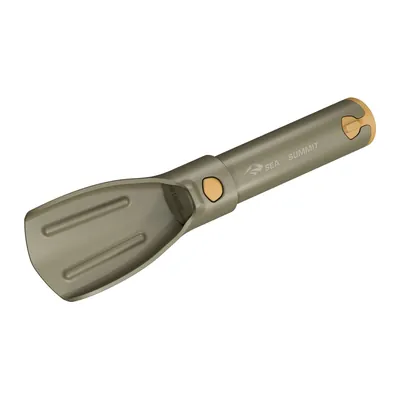
Sea to Summit Pocket Trowel
A 68 g trowel in glass-reinforced nylon, with a hollow retractable handle for loo roll and depth markings for digging the 15 to 20 cm hole the guidance asks for.
View on Amazon (opens in a new tab)
FAQs
Is dispersed camping in the USA free?
On most BLM land, yes: the BLM says most areas need no permit or reservation, with exceptions for large groups or campfires, such as California’s free campfire permit. Elsewhere, look for passes and permits before you go: Washington’s DNR land requires a Discover Pass while you are parked, Desolation Wilderness requires a permit all year round, and New Mexico’s state trust land requires a $35 annual permit.
How long can I stay in one dispersed spot?
It depends on the agency and the office. On BLM land the usual limit is 14 days within any 28-day period, then a move often 25 to 30 miles away; the Tres Rios Field Office, in Colorado, uses 14 days in 30. National forests set their limits by order, from 14 days in 30 on the Chattahoochee-Oconee to five days at Lincoln Creek, Colorado.
How far from the road and from water should I camp?
There is no single number. The BLM recommends camping within 46 m (150 ft) of designated routes and at least 61 m (200 ft) from water. National parks prohibit camping within 30 m (100 ft) of a stream or lake unless the site is designated; Desolation Wilderness asks for 30 m from water and trails, and Kofa refuge 400 m from water sources. Follow the rule of the unit you are in.
Can I sleep in a campervan or motorhome on BLM land or in a national forest?
Yes, where dispersed camping is allowed: the Tres Rios Field Office’s definition of camping, for instance, includes parking a motor vehicle, motorhome or caravan for the night. In a national forest, you can only drive and park where the Motor Vehicle Use Map allows. Dispersed camping is for recreation, not for living on, except in the BLM’s Long-Term Visitor Areas.
Do I need a permit for a campfire?
Sometimes. On BLM land in California, a free California Campfire Permit is required until the end of 2030 for a campfire or a charcoal, coal or wood stove outside a developed campsite. Elsewhere, the question is the restriction stage: the Paria River District’s 2026 Stage 1 order limited campfires to developed fire pits, and a 2021 Stage 2 order in Arizona banned them even there.
Sources
- Bureau of Land Management, Camping on Public Lands, accessed 8 November 2026. blm.gov https://www.blm.gov/programs/recreation/camping ↩
- Bureau of Land Management, Tres Rios Field Office and Canyons of the Ancients National Monument (Colorado), Camping and Occupancy Regulations, undated leaflet citing the supplementary rule at 75 FR 32968, accessed 8 November 2026. blm.gov https://www.blm.gov/sites/blm.gov/files/blm_co_trfo_campingoccupancy_regulations.pdf ↩
- Code of Federal Regulations, 36 CFR 261.58, ‘Occupancy and use’ (Forest Service prohibitions provided by an order), 2025 edition, same text in the eCFR as of 5 November 2026, govinfo.gov, accessed 8 November 2026. govinfo.gov https://www.govinfo.gov/content/pkg/CFR-2025-title36-vol2/xml/CFR-2025-title36-vol2-sec261-58.xml ↩
- Recreation.gov, Pocket Campground, Chattahoochee-Oconee National Forest (Forest Service listing, ‘14-Day Forest Stay Limit’), accessed 8 November 2026. recreation.gov https://www.recreation.gov/camping/campgrounds/10296890 ↩
- Code of Federal Regulations, 36 CFR 2.10, ‘Camping and food storage’ (National Park Service), 2025 edition, same text in the eCFR as of 5 November 2026, govinfo.gov, accessed 8 November 2026. govinfo.gov https://www.govinfo.gov/content/pkg/CFR-2025-title36-vol1/xml/CFR-2025-title36-vol1-sec2-10.xml ↩
- Mojave National Preserve, Camping: Guidelines & Regulations, National Park Service, updated 3 April 2024, accessed 8 November 2026. nps.gov https://www.nps.gov/moja/planyourvisit/camping-regs.htm ↩
- Code of Federal Regulations, 50 CFR 26.21, ‘General trespass provision’ (National Wildlife Refuge System), 2025 edition, govinfo.gov, accessed 8 November 2026. govinfo.gov https://www.govinfo.gov/content/pkg/CFR-2025-title50-vol9/xml/CFR-2025-title50-vol9-sec26-21.xml ↩
- U.S. Fish and Wildlife Service, Kofa National Wildlife Refuge, Public Use and Hunting Regulations, leaflet, January 2025, accessed 8 November 2026. fws.gov https://www.fws.gov/sites/default/files/documents/2025-01/kofa-hunt-and-public-use-brochure_jan-2025.pdf ↩
- Code of Federal Regulations, 36 CFR 327.7, ‘Camping’ (U.S. Army Corps of Engineers water resources projects), 2025 edition, same text in the eCFR as of 5 November 2026, govinfo.gov, accessed 8 November 2026. govinfo.gov https://www.govinfo.gov/content/pkg/CFR-2025-title36-vol3/xml/CFR-2025-title36-vol3-sec327-7.xml ↩
- Washington State Legislature, chapter 332-52 WAC, ‘Public access and recreation’ (sections 332-52-120, 332-52-135 and 332-52-300, in force since 14 March 2009), accessed 8 November 2026. app.leg.wa.gov https://app.leg.wa.gov/wac/default.aspx?cite=332-52&full=true ↩
- New Mexico State Land Office, FAQs: Surface Resources (‘Can I camp on state trust land?’), accessed 8 November 2026. nmstatelands.org https://www.nmstatelands.org/divisions/surface-resources/faqs-surface-resources/ ↩
- Code of Federal Regulations, 43 CFR 8365.1-2, ‘Occupancy and use’ (Bureau of Land Management), 2025 edition, same text in the eCFR as of 5 November 2026, govinfo.gov, accessed 8 November 2026. govinfo.gov https://www.govinfo.gov/content/pkg/CFR-2025-title43-vol2/xml/CFR-2025-title43-vol2-sec8365-1-2.xml ↩
- Code of Federal Regulations, 43 CFR 8365.1-6, ‘Supplementary rules’ (Bureau of Land Management), 2025 edition, govinfo.gov, accessed 8 November 2026. govinfo.gov https://www.govinfo.gov/content/pkg/CFR-2025-title43-vol2/xml/CFR-2025-title43-vol2-sec8365-1-6.xml ↩
- Bureau of Land Management, Las Cruces District Office (New Mexico), Camping on Public Lands, leaflet BLM/NM/PL-20/006+1711, 2020, accessed 8 November 2026. blm.gov https://www.blm.gov/sites/blm.gov/files/docs/2021-08/NM_LCDO_Camping2020%28508%29_0.pdf ↩
- Bureau of Land Management Idaho, Camping Guidelines on Public Land, 2022, accessed 8 November 2026. blm.gov https://www.blm.gov/sites/default/files/docs/2022-07/BLM_ID_Camping_Guidelines_2022.pdf ↩
- Recreation.gov, Lincoln Creek Dispersed Campground, White River National Forest (Forest Service listing), accessed 8 November 2026. recreation.gov https://www.recreation.gov/camping/poi/259461 ↩
- Code of Federal Regulations, 36 CFR 261.1b, ‘Penalty’ (Forest Service), as amended on 25 November 2024, 2025 edition, govinfo.gov, accessed 8 November 2026. govinfo.gov https://www.govinfo.gov/content/pkg/CFR-2025-title36-vol2/xml/CFR-2025-title36-vol2-sec261-1b.xml ↩
- Recreation.gov, Desolation Wilderness Permit, Eldorado National Forest (Forest Service permit page), accessed 8 November 2026. recreation.gov https://www.recreation.gov/permits/233261 ↩
- Code of Federal Regulations, 36 CFR 212.56, ‘Identification of designated roads, trails, and areas’ (Forest Service), 2025 edition, govinfo.gov, accessed 8 November 2026. govinfo.gov https://www.govinfo.gov/content/pkg/CFR-2025-title36-vol2/xml/CFR-2025-title36-vol2-sec212-56.xml ↩
- Code of Federal Regulations, 36 CFR 212.51, ‘Designation of roads, trails, and areas’ (Forest Service), 2025 edition, govinfo.gov, accessed 8 November 2026. govinfo.gov https://www.govinfo.gov/content/pkg/CFR-2025-title36-vol2/xml/CFR-2025-title36-vol2-sec212-51.xml ↩
- Forest Service, US Department of Agriculture, ‘Travel Management; National Forest System Lands’, notice of intent to prepare an environmental impact statement, 91 FR 54686, Federal Register, 24 August 2026, govinfo.gov, accessed 8 November 2026. govinfo.gov https://www.govinfo.gov/content/pkg/FR-2026-08-24/html/2026-17211.htm ↩
- Code of Federal Regulations, 50 CFR 26.32, ‘Recreational uses’ (National Wildlife Refuge System), 2025 edition, govinfo.gov, accessed 8 November 2026. govinfo.gov https://www.govinfo.gov/content/pkg/CFR-2025-title50-vol9/xml/CFR-2025-title50-vol9-sec26-32.xml ↩
- U.S. Fish and Wildlife Service, Kofa National Wildlife Refuge, Rules and Policies, accessed 8 November 2026. fws.gov https://www.fws.gov/refuge/kofa/visit-us/rules-policies ↩
- Washington State Department of Natural Resources, Find your Campsite, accessed 8 November 2026. dnr.wa.gov https://dnr.wa.gov/recreation/find-your-campsite ↩
- New Mexico State Land Office, Outdoor Recreation, accessed 8 November 2026. nmstatelands.org https://www.nmstatelands.org/outdoorrecreation/ ↩
- Code of Federal Regulations, 36 CFR 261.52, ‘Fire’ (Forest Service prohibitions provided by an order), 2025 edition, govinfo.gov, accessed 8 November 2026. govinfo.gov https://www.govinfo.gov/content/pkg/CFR-2025-title36-vol2/xml/CFR-2025-title36-vol2-sec261-52.xml ↩
- Code of Federal Regulations, 36 CFR 261.5, ‘Fire’ (Forest Service), 2025 edition, govinfo.gov, accessed 8 November 2026. govinfo.gov https://www.govinfo.gov/content/pkg/CFR-2025-title36-vol2/xml/CFR-2025-title36-vol2-sec261-5.xml ↩
- Bureau of Land Management, Paria River District (Utah), Fire Prevention Order UT-020-2026-08, Stage 1 Fire Restrictions, 29 July 2026, accessed 8 November 2026. blm.gov https://www.blm.gov/sites/default/files/docs/2026-07/FPO_2026_Stage1_FireRestrictions_PRD_v2.pdf ↩
- Bureau of Land Management, Fire activity and dry conditions trigger stage 2 fire restrictions in Southeastern Arizona, news release, 24 May 2021 (archived page), accessed 8 November 2026. blm.gov https://www.blm.gov/press-release/fire-activity-and-dry-conditions-trigger-stage-2-fire-restrictions-southeastern ↩
- Bureau of Land Management California, Fire Prevention Order CA910-2026-001, California Year-round Fire Restrictions, signed 13 February 2026, accessed 8 November 2026. blm.gov https://www.blm.gov/sites/default/files/docs/2026-02/2026_BLM_CA_Statewide_Fire_Prevention_Order_508.pdf ↩
- Bureau of Land Management, California Fire Information and Fire Restrictions, accessed 8 November 2026. blm.gov https://www.blm.gov/programs/fire/regional-info/california/fire-restrictions ↩
- Code of Federal Regulations, 43 CFR 8365.1-1, ‘Sanitation’ (Bureau of Land Management), 2025 edition, govinfo.gov, accessed 8 November 2026. govinfo.gov https://www.govinfo.gov/content/pkg/CFR-2025-title43-vol2/xml/CFR-2025-title43-vol2-sec8365-1-1.xml ↩
- Code of Federal Regulations, 43 CFR 8360.0-7, ‘Penalties’ (Bureau of Land Management), 2025 edition, govinfo.gov, accessed 8 November 2026. govinfo.gov https://www.govinfo.gov/content/pkg/CFR-2025-title43-vol2/xml/CFR-2025-title43-vol2-sec8360-0-7.xml ↩
- Code of Federal Regulations, 36 CFR 327.25, ‘Violations of rules and regulations’ (U.S. Army Corps of Engineers), 2025 edition, govinfo.gov, accessed 8 November 2026. govinfo.gov https://www.govinfo.gov/content/pkg/CFR-2025-title36-vol3/xml/CFR-2025-title36-vol3-sec327-25.xml ↩

Fact-checking, regulations and safety
Arnaud Couderc reviews our contributors’ articles and writes for Outfarer about regulations, safety, fishing, the sea and outdoor pursuits. He traces every rule back to its official text and every figure to its source, so that you set off with sound benchmarks.


 Nolwenn Bastide

 Guillaume Hoarau