 Français (France)
 English (UK)
 English (US)
 Deutsch (Deutschland)

Contents
In the adverts, a campervan promises freedom, ‘fully equipped’. On paper, that’s true. On the road, that freedom is counted in kilos, amp-hours and litres of grey water, and that’s where first trips get complicated. Nothing to put you off, though: you simply need to ask the right questions in the right order. Is the vehicle in order, and does my licence cover it? How much can I load? How many days will the power last? Where do I fill up, empty out and sleep? And what changes in winter? This guide takes them in turn, from the log book to the first morning.
Its benchmarks come from official texts and services, those of GOV.UK, the DVLA, the Highway Code and Scottish law, from the French and EU rules that apply across the Channel, from manufacturers’ instructions, and from our guides, each sourced in its own right. They apply to a campervan or motorhome of up to 3.5 tonnes, in Great Britain first, then in France and its neighbours, where the rule changes at the border.
| When | What to do |
|---|---|
| A few months before | Hire a campervan for a few days before buying one; for a van you convert yourself, update the V5C and send DVLA the evidence it asks for to record a motor caravan |
| A few weeks before | Check your licence, insurance and MOT; look up the low emission zones and stickers on your route; visit a weighbridge; check the battery, the gas and the tyres |
| The night before | Fill the fresh water, empty the grey water and the toilet cassette, fill up with gas and charge the battery; find the stopovers and places to sleep |
| The day you leave | Stow and wedge everything, turn off the gas if the regulator has no crash sensor, read through the checklist, and go |
1Hire first, choose later
Before you buy, hire. A few days are enough to find out what you really want from a campervan: a fixed bed or one to make up every evening, a shower or a washroom you’ll never use, a van that goes anywhere or a wider motorhome that gets stuck in the first village lane. Hiring costs less than a bad purchase, and the gap between two conversions is dizzying: among French converters, from €5,000 for a removable kit, according to a directory of professionals [1], to at least €80,000 for a bespoke build at a high-end workshop [2], vehicle not included.
Running it has a price too. On Ford’s June 2026 prices and October 2026 diesel, our guide to what a campervan really costs comes to about £9,100 to £10,900 a year at 15,000 miles, before finance and the build, with depreciation and fuel making up around 90% of it. And before you fall for a model, look at one figure: its maximum authorised mass, shown on the plate fitted to the vehicle. Above 3,500 kg, your car licence is no longer enough, as the next step explains.


2A vehicle and a licence in order
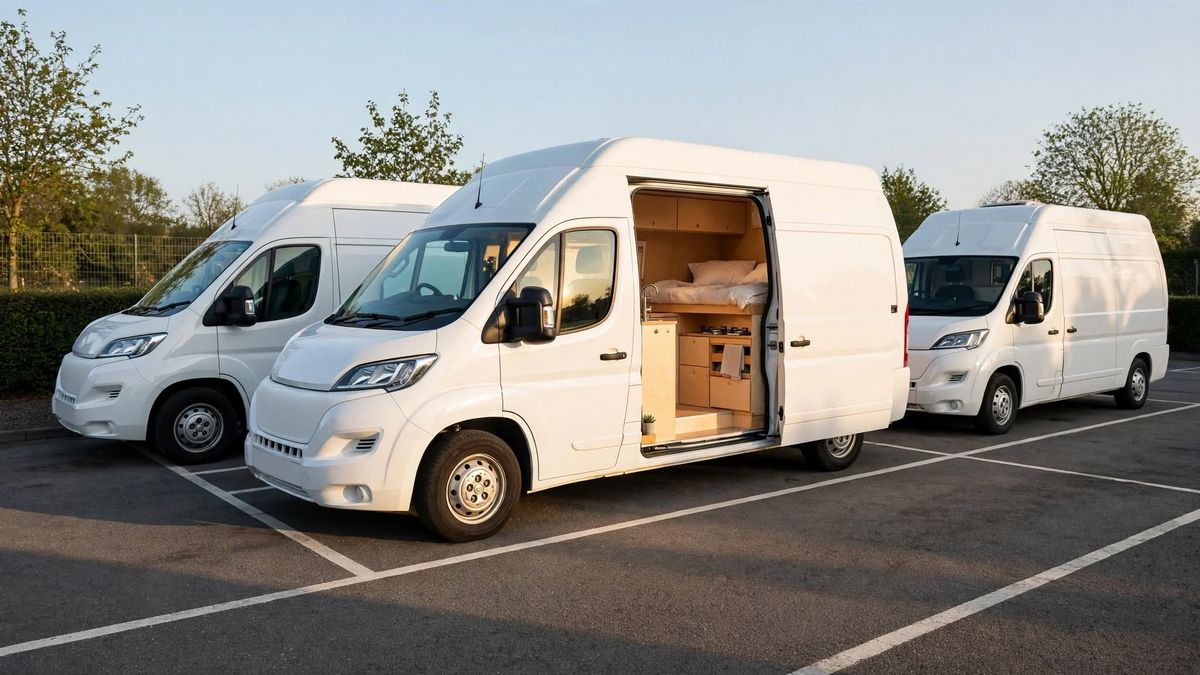
A van doesn’t become a motor caravan because someone sleeps in it. For the type-approval rules that DVLA refers to, it takes four features rigidly fixed to the living area: seats and a table, sleeping accommodation, which may be converted from the seats, cooking facilities and storage [3]. Convert a van yourself and you must update its V5C log book when the body type changes [4]. DVLA then decides the description from what the vehicle looks like in traffic: to record ‘motor caravan’, it also expects at least 2 windows on one side of the main body, a separate door into the living area and a high-top or pop-top roof, shown in photos with a completed checklist, and it may inspect the van [3]. Its policy has changed recently, and an application refused in the past can be reviewed. Without that label, DVLA adds, the van can still be used as a camper if the internal features are there, and the body type should not affect its insurance category or its speed limits [3].
On the licence side, the limit fits in one figure: 3,500 kg of maximum authorised mass. A car licence from a test passed on or after 1 January 1997 covers petrol and diesel vehicles up to that mass [5]; to drive a motorhome of 3.5 to 7.5 tonnes, GOV.UK requires category C1 [6]. Older licences may go further: drivers who passed before 1 January 1997 can usually drive a vehicle and trailer combination up to 8,250 kg [5], and on licences issued before June 1990, the old group A became several categories, C1 among them [7]. Check what yours covers online before buying anything heavier. As for the EU directive that will open category B to motorhomes of up to 4.25 tonnes, after at least 7 hours of training or a test, it only applies from 26 November 2029 [8], and not in the UK, as our guide to 4.25-tonne motorhomes explains. Licence requirements may be different in Northern Ireland [6].
That leaves two papers people forget. Insurance first: third party cover is the legal minimum to drive on UK roads, and under continuous insurance enforcement a vehicle must stay insured unless it is declared off the road with a SORN. The registered keeper of an uninsured vehicle risks a £100 fine, and a driver caught without insurance a £300 fixed penalty and 6 penalty points; any UK policy gives the minimum third party cover in the EU, where you don’t need a green card [9]. Then the MOT: a motor caravan takes its first at three years old, then once a year, for £54.85 at most, and driving without a valid MOT can cost up to £1,000 [10].
3Weight: do the sums before you load
Payload comes from two weights. The maximum authorised mass, the most the vehicle may weigh fully loaded, is listed in the owner’s manual and normally shown on a plate or sticker fitted to the vehicle [11]; take away what the vehicle weighs before you load it, and the difference is what you can carry. DVLA puts it the same way for conversions, and wants that margin to cover as many passengers as there are seats, plus the luggage and full water tanks [3]. Take a vehicle invented for the example: 3,500 kg on the plate, 3,050 kg for the vehicle itself, which leaves 450 kg.
On the road, it gets tighter. Every passenger, every litre of fresh water, about 1 kg, every gas cylinder, the bikes, the contents of the lockers and the accessories fitted later all come off those 450 kg. And a check only looks at the result: DVSA, whose roadside checks mostly concern commercial vehicles, sets graduated fixed penalties for excess weight, £100 below 10% over, £200 from 10% to under 15%, and £300 beyond, and its examiner then stops the vehicle from going any further [12].
The rule to remember: load up as if you were leaving, tanks full and passengers on board, and drive onto a weighbridge. Most are run by private businesses, so contact the operator first to check the price and opening hours [13]. Only a weighing tells you what you really have left.

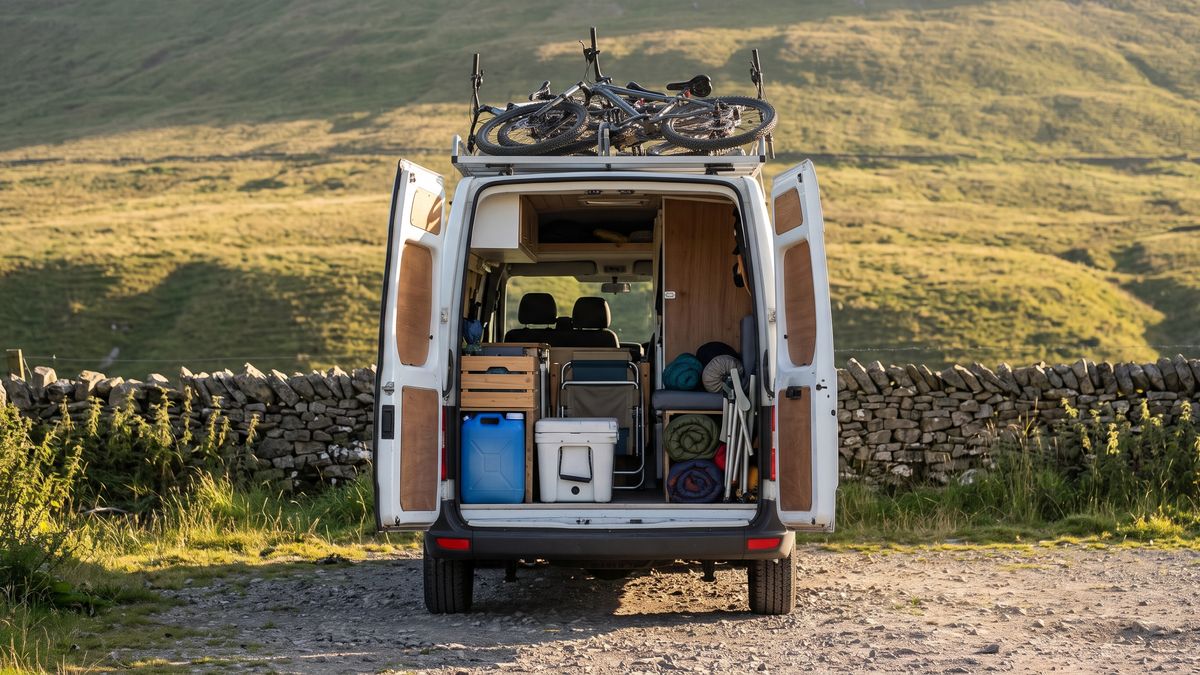
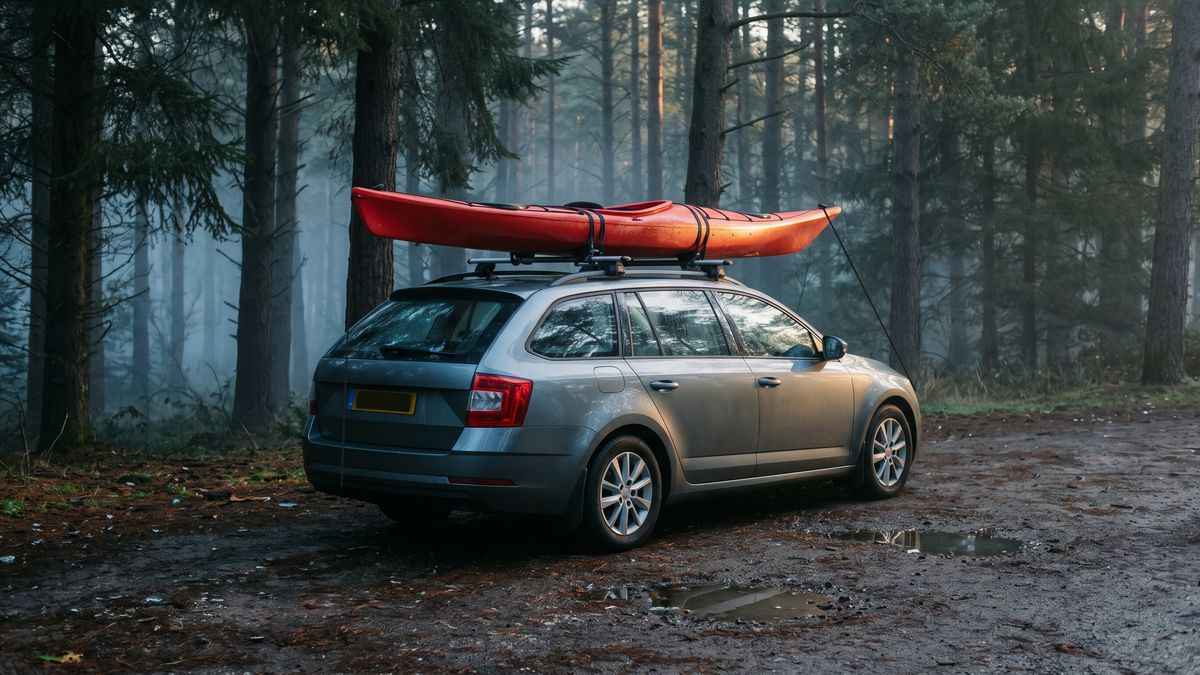
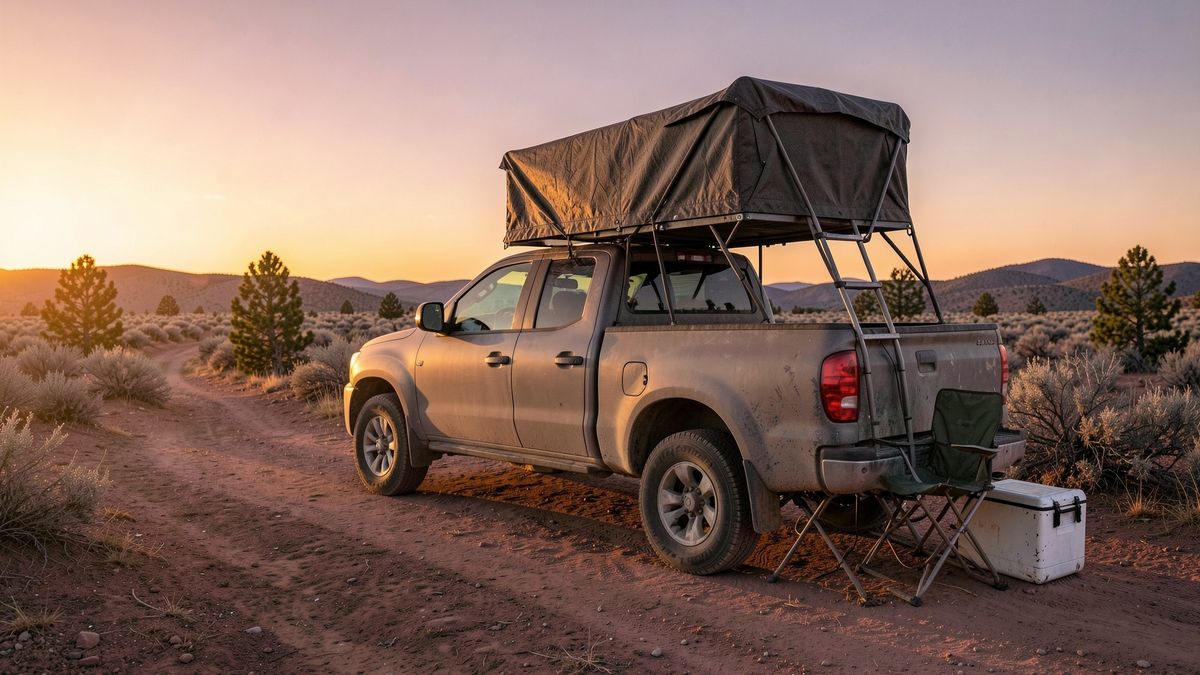
The roof has its own limit, and it is often low. The permitted load is in the vehicle’s handbook, then in the instructions for the bars and the carrier: in a roof rack system, Thule points out, the component with the lowest weight capacity sets the capacity of the whole [14]. Add up bars, carrier and boat or roof box, and stay under the lowest of the three limits, as our guide to carrying a kayak or paddleboard explains.


4Power: a battery for the days without a hook-up
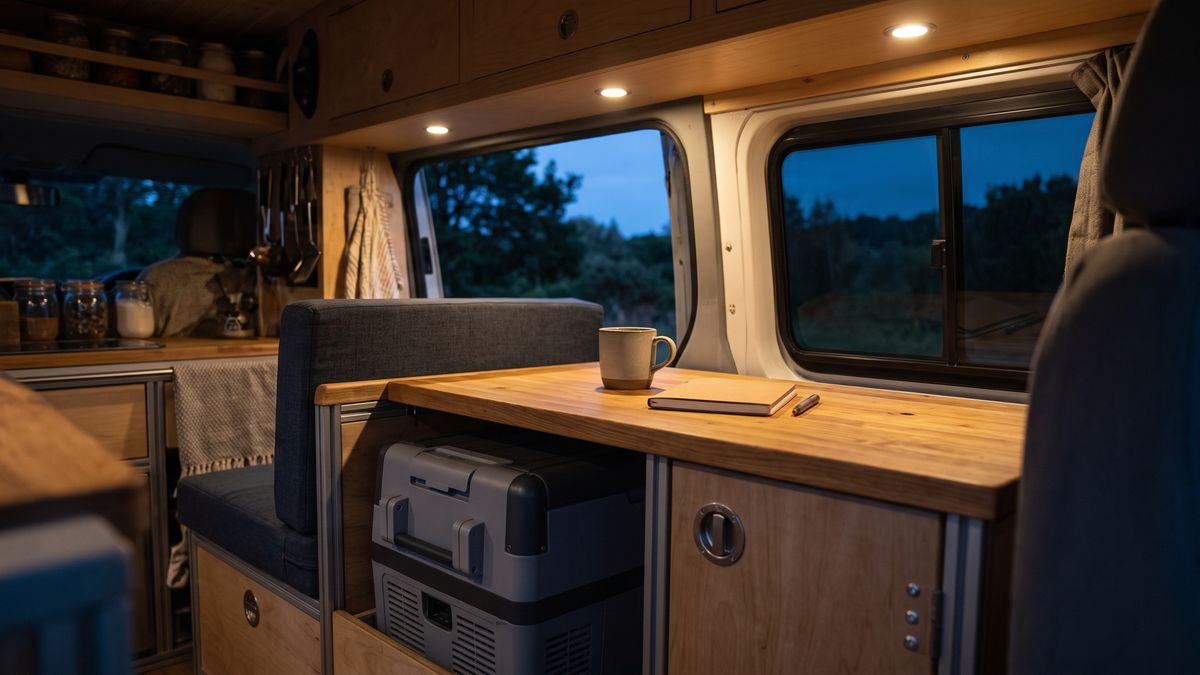
A leisure battery is sized in three steps: what you use each day, in watt-hours; multiplied by the number of days without charging; then converted into amp-hours, by dividing by the voltage. Then comes the trap on the label: an AGM lead-acid battery is only economical to use down to 50% of its capacity, a lithium iron phosphate one to 80% [15]. For the same amp-hours, the second gives back far more energy. In the example in our guide to the leisure battery, two days without charging call for about 100 Ah of lithium in summer, and nearly 190 Ah in winter, heater included.
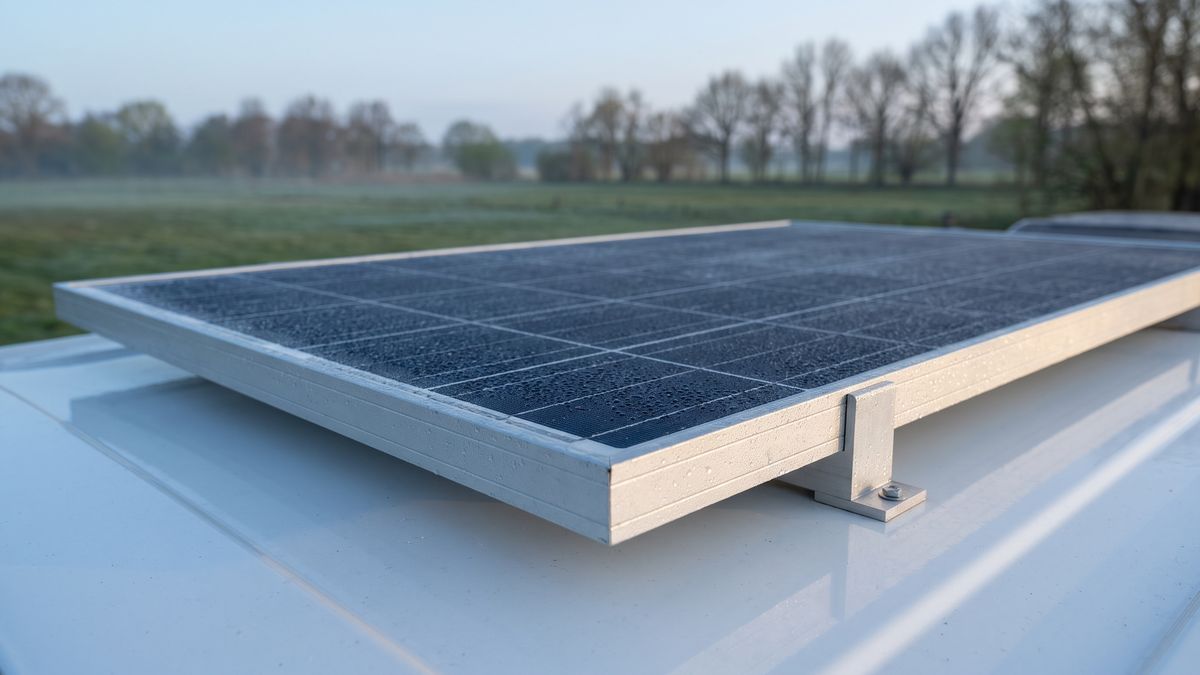
Solar panels mostly earn their keep in summer. Lying flat on the roof, a 200 W panel produces about 750 to 1,170 Wh a day in June, from Edinburgh to Marseille, and only 45 to 260 Wh in December, according to PVGIS, the European Commission’s solar tool [16], which our guide to campervan solar panels queried city by city. For 495 Wh used a day, 200 W covers the average from April to August, by its calculation; in winter, charging comes mainly from driving, or from a hook-up.


5Gas and water: fill, empty, turn off
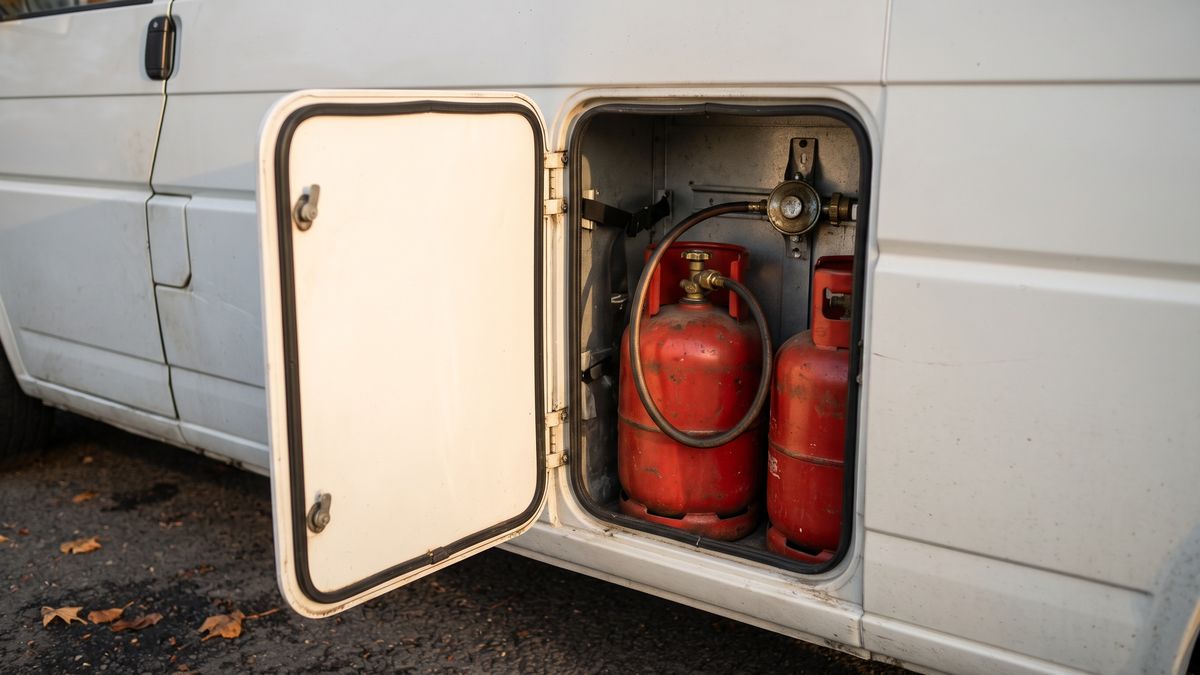
A campervan’s gas cooks, sometimes heats the water and the living space, and forgives no guesswork. Two gases are sold in cylinders: butane stops vaporising at around 0 °C, while propane only stops at around -42 °C, its boiling point [17]. In winter, then, it’s propane. Driving with the gas on, to keep the fridge or the heater running, needs, according to the manufacturer Truma, a regulator with a crash sensor and hoses protected against rupture; without a crash sensor, the cylinders stay closed while you drive [18]. A rubber hose has a use-by date: 10 years for one with screw fittings at Butagaz, a French supplier [19], while the Caravan and Motorhome Club advises changing low-pressure hoses every three years [20]. Check the date on yours.
Abroad, cylinders are a national affair. The Caravan and Motorhome Club notes that local suppliers exist, but that you will probably need a different regulator or a connecting hose or adaptor, that Campingaz is the only UK supplier also selling the same cylinder in Europe, and that a Calor cylinder, or any other not designed for refilling by its user, must never be refilled abroad [20]. Our guide to campervan gas goes round the countries.
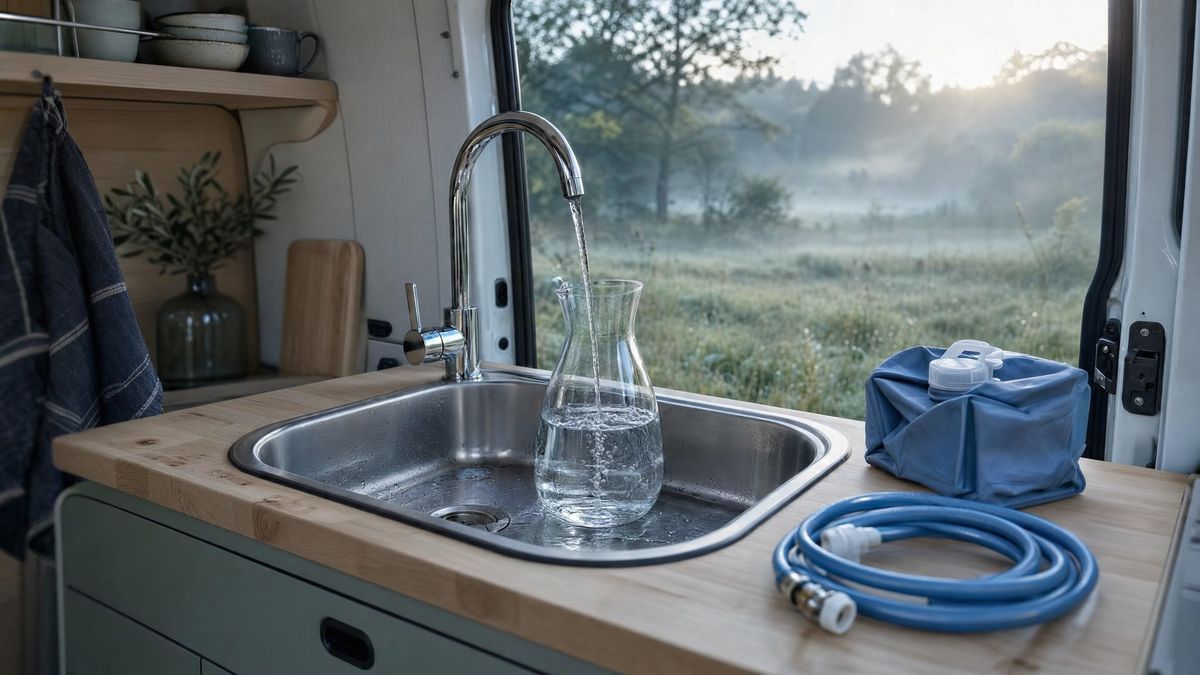
On the water side: three tanks, three habits. Fresh water is filled at campsite taps and service points, with a hose kept for that job alone. Grey water, from the sink and the shower, and the toilet cassette are emptied at the same places, into the drain or the chemical disposal point provided; in Scotland, Forestry and Land Scotland charges £5 to drop off chemical waste at some of its forest car parks, without staying [24]. Anywhere else, a gutter, a storm drain, a ditch or a patch of countryside is no disposal point. In France, dumping or pouring any kind of waste on a public or private road carries a €135 fixed fine, and up to €1,500, with the vehicle confiscated, if it was used to carry the waste, according to Service-Public, the French government’s information site [25]. In winter, think about frost too: our guide to the campervan in winter says what to drain.


6Where to sleep: parking is not camping
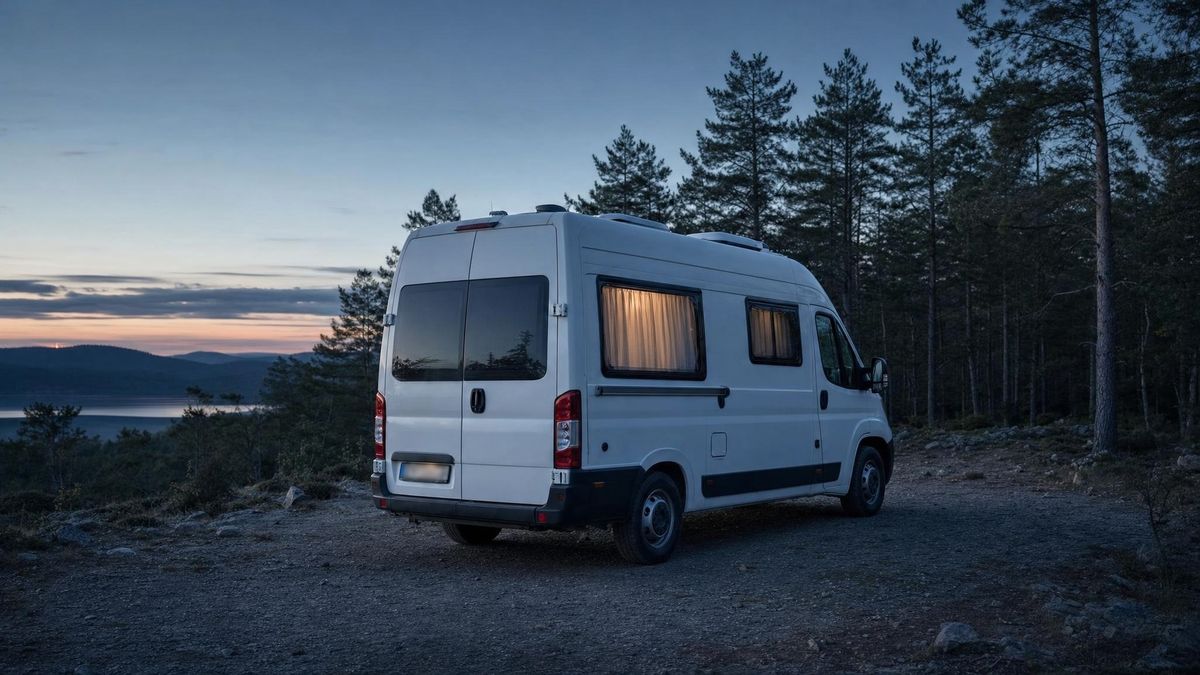
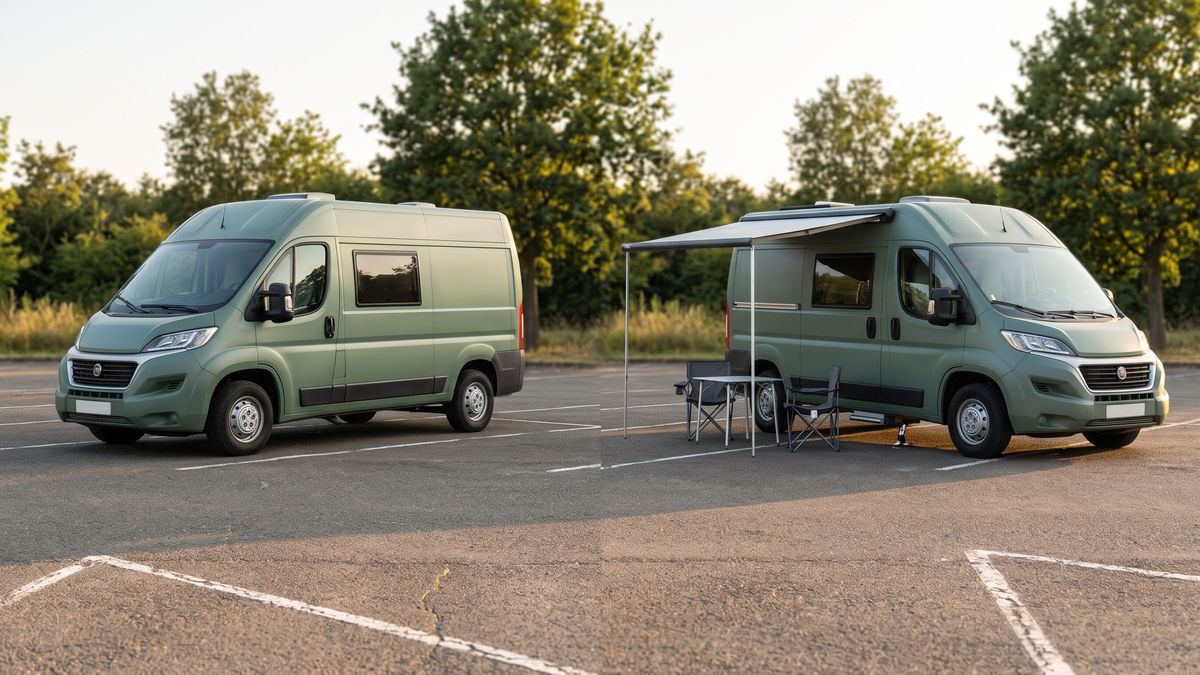
In Scotland, the question is settled by law, and the answer surprises walkers. The Scottish Outdoor Access Code includes lightweight camping in a tent among the things you can do on most land, but reminds you that access rights don’t include motor vehicles: use a car park, and respect any restriction a landowner puts on parking [26]. The law behind it, the Land Reform (Scotland) Act 2003, excludes from access rights being on or crossing land in or with a motorised vehicle [27]. There are paid ways round it: Forestry and Land Scotland’s Stay the Night scheme lets campervans and motorhomes with their own toilet facilities stay one night, between 6pm and 10am, in some of its car parks, for £10 at most sites and £13 at those with chemical waste disposal, without returning to the same car park within 48 hours [24].
In England, there is less to read, and less to claim. The Lake District National Park Authority says that no one has a right to wild camp anywhere in England, that the places where wild camping has long been tolerated don’t apply to campervans, and that the only legal places to park a campervan for the night are formal campsites, since all land belongs to someone whose permission you need. Parking on the road is not a right either, it adds, but it is generally accepted if the vehicle causes no obstruction; a lay-by is part of the highway, and the police can ask you to move, even in the middle of the night [28].
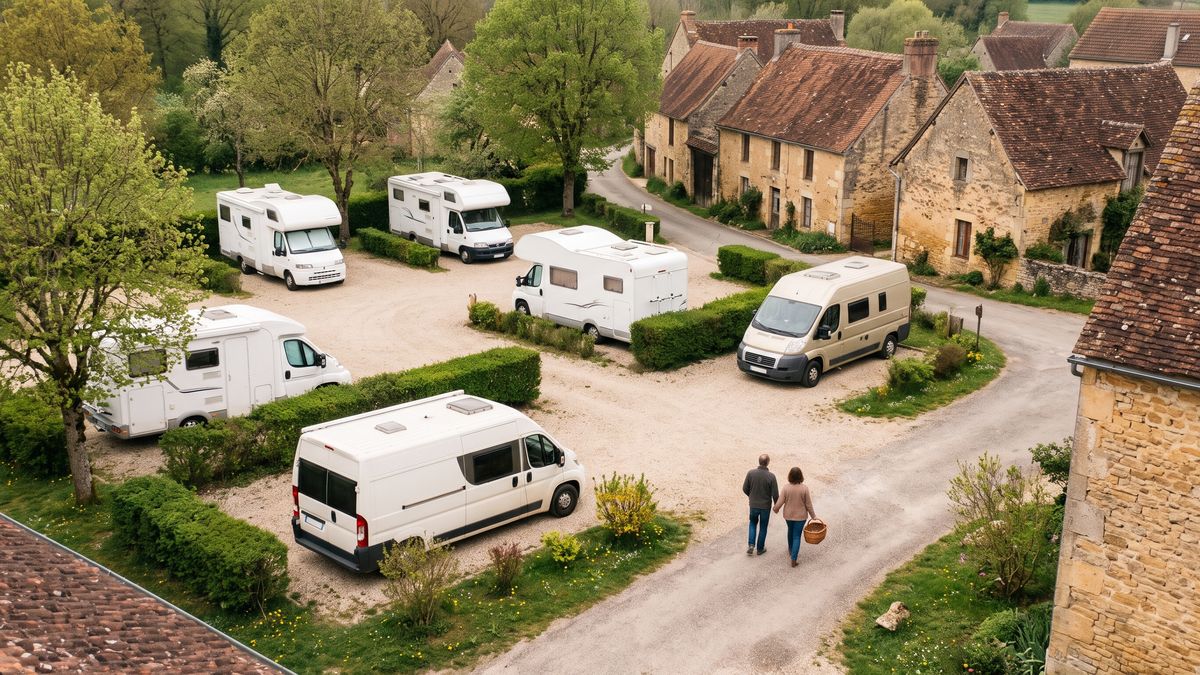
Across the Channel, France settles the question with two texts, and everything lies in the difference between them. On a public road, a motorhome is a vehicle like any other: it may park as long as it is neither dangerous, nor obstructive, nor excessive, as the minister responsible for transport reminded the French Senate in 2025 [30], and parking becomes excessive after more than 7 days in the same place, or sooner if a local order says so [31]. Camping falls under another text, the planning code, and needs the consent of whoever has the use of the land, as our guide to sleeping in a campervan in France explains. A mayor can restrict parking by a reasoned order, and a height barrier at a car park entrance must do no more than give effect to such an order [30]: read the signs, and if in doubt, ask at the town hall. That leaves the options beyond debate: aires for motorhomes, campsites, and networks of stopovers on farms, such as France Passion and its more than 2,000 stopovers of 24 hours with its members, reserved for vehicles with their own water, electricity, toilet and shower [32].
Further afield, each country has its own logic. In Spain, people inside a correctly parked motorhome do not, by themselves, turn it into a camp [33]; in Italy, where stopping is allowed, an autocaravan on the carriageway that rests only on its wheels, discharges nothing and stays within its own footprint is not camping, under article 185 of the highway code [34]; in Portugal, outside protected areas and where no municipal regulation covers it, an autocaravan approved by the country’s mobility institute may stay overnight for 48 hours in the same municipality [35]. Our guide to sleeping in a campervan in Europe compares the countries, and points out that none of these rules overrides a sign or a protected area.


7On the road: low emission zones and mountain kit
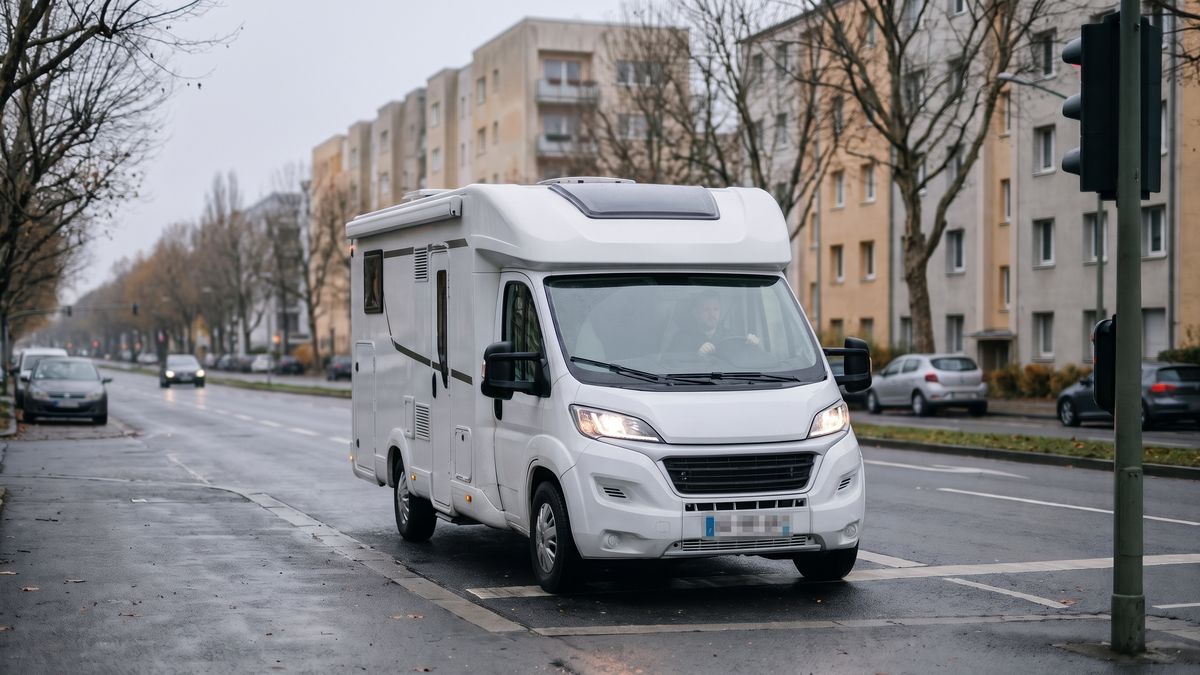
Before the mountains, look at the cities on your route. Britain has three systems, and they don’t work the same way: London charges by the day, England’s Clean Air Zones charge only some classes of vehicle, and Scotland’s zones don’t charge at all, they fine. The standards hardly change: Euro 4 for petrol and Euro 6 for diesel, and your V5C or the manufacturer will tell you which one your vehicle meets [36].
| Zone | Who is caught | What it costs |
|---|---|---|
| London, Ultra Low Emission Zone | Motor caravans below Euro 4 for petrol or Euro 6 for diesel | £12.50 a day; a £180 penalty if unpaid, reduced to £90 if paid within 14 days [37] |
| Clean Air Zones in seven English cities | Vans in Class C and D zones; cars only in the Class D zones of Birmingham and Bristol | A daily charge, to pay by the sixth day after driving in, or a penalty charge notice [36] |
| Low emission zones of Aberdeen, Dundee, Edinburgh and Glasgow | Cars and vans below Euro 4 for petrol or Euro 6 for diesel [38] | No charge to pay, only a £60 penalty, halved if paid within 14 days, doubled on each return within 90 days, up to £480 for a car or light goods vehicle [39] |
Clean Air Zones have national exemptions, historic and ultra low emission vehicles among them [36]; London and Scotland publish their own lists of discounts and exemptions.
Across the Channel, same logic, other stickers. In France, low emission zones, the ZFE, don’t all ban the same stickers: Paris and Lyon remain under the stricter regime, and elsewhere the minimum obligation targets unclassified vehicles [41]. Their abolition, voted in a law simplifying economic life, was struck down by the Constitutional Council on 21 May 2026 for a procedural reason, without it ruling on the substance [42]; a new bill has been in committee since October [43]. In short, the ZFE still apply, each with its own rules: check the cities on your route before you leave. The Crit’Air sticker costs €3.85 for delivery within France; for a vehicle registered abroad, it is ordered online only, and certificat-air.gouv.fr is the only official site. Driving without one, or with a sticker banned in the zone, generally costs €68 [44].
In Germany, only vehicles with the right Umweltplakette may enter environmental zones; the sticker costs €5 to €10 at the offices that issue it, and can be ordered by post before the trip, postage extra [45], while entering despite the ban costs €100 [46]. In Italy, towns mark out limited traffic zones, the ZTL, and driving in one without authorisation costs €83 to €332 [47]. Finally, keep on board what French law requires in a car: a high-visibility vest within reach and a warning triangle [48].
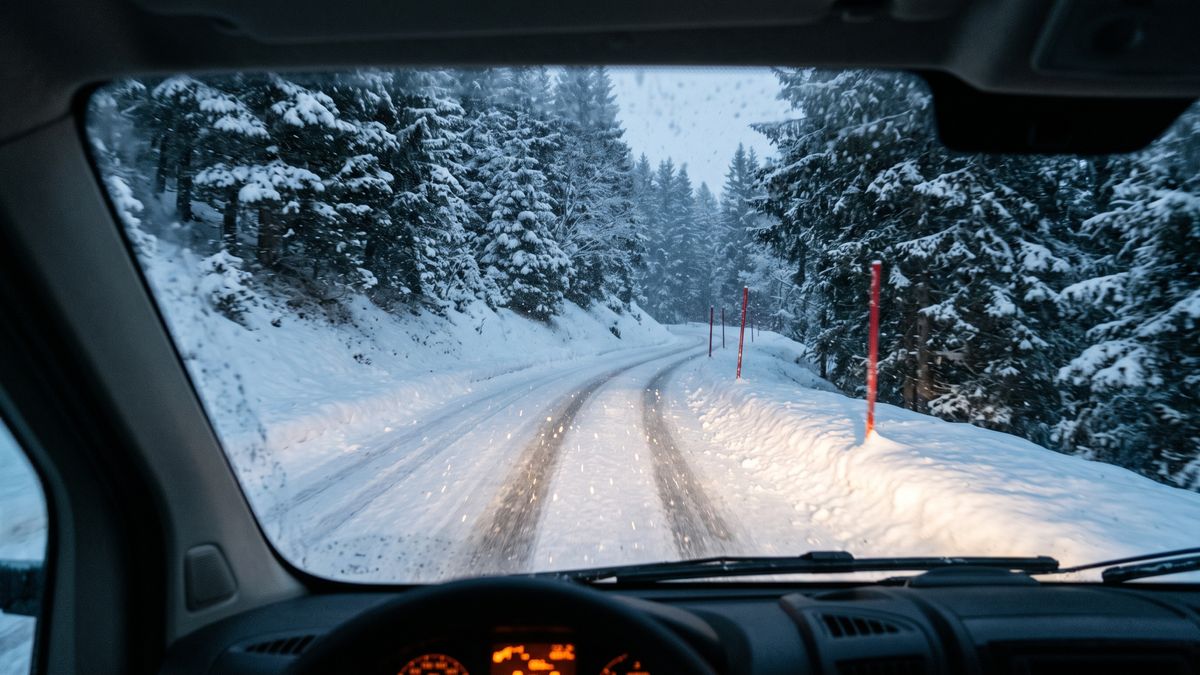
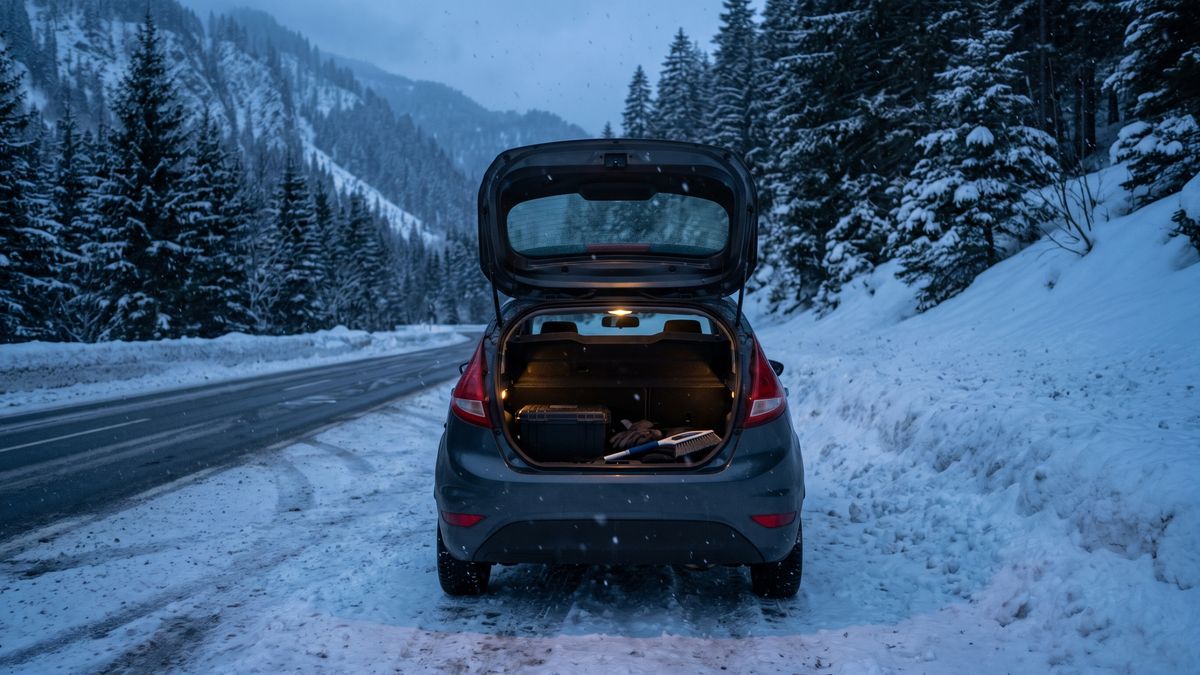
In the mountains, winter starts by the calendar. In France, from 1 November to 31 March, in the areas set by the prefects, light vehicles, vans and motorhomes must have four winter tyres, or carry chains or snow socks for at least two driven wheels, and only tyres marked 3PMSF, the three-peak mountain with a snowflake, count as an alternative to chains [49]. Tyres marked only M+S have not been enough since 2024, as our guide to winter tyres and chains explains, with the rules of the neighbouring countries. No fine specific to this obligation existed when the interior ministry answered Parliament in 2023; ignoring a B26 sign, which requires chains to be fitted, costs up to €150 [50].


8Winter trips: heating, gas and battery
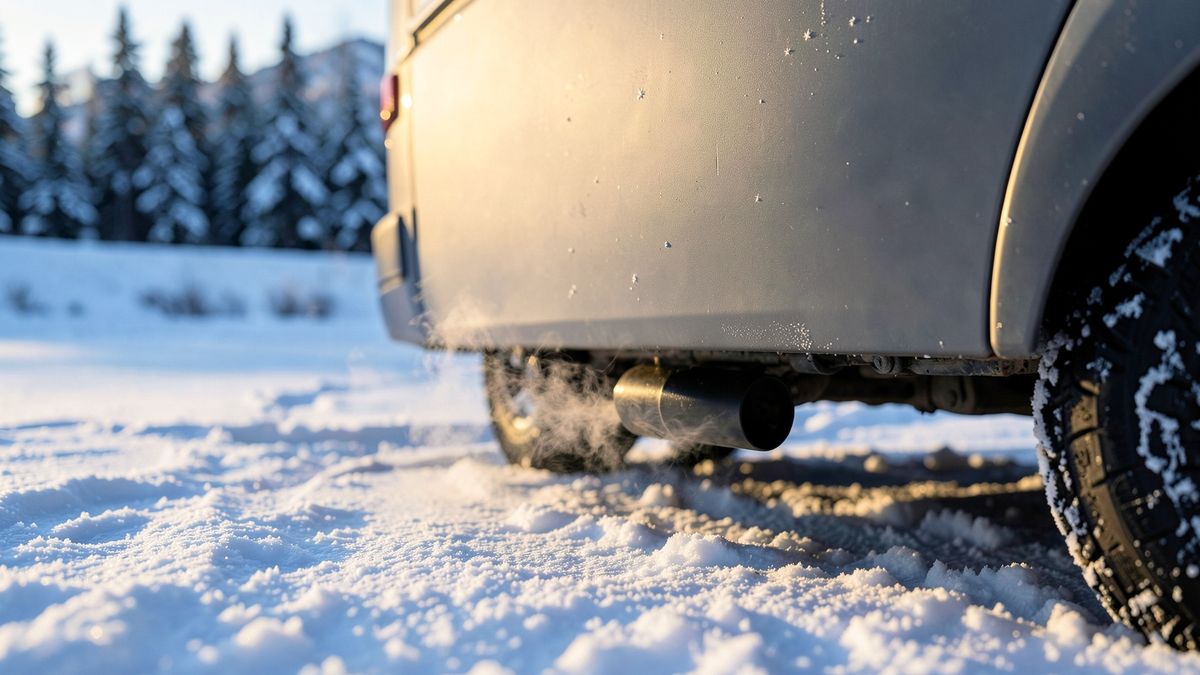
In winter, the campervan changes jobs: it becomes a shelter that has to be heated at night. A 2 kW diesel air heater, such as the Webasto Air Top 2000 STC, which its maker has since replaced with a successor model, burns 1.5 to 3 litres of diesel over a 12-hour night, and draws 15 to 29 Ah from the battery for its fans and electronics [51]. In theory, an electric heater running off the leisure battery would do as well, with no fuel at all; let’s do the maths: 2 kW for 12 hours is 24 kWh, and a 100 Ah lithium battery at 12.8 V stores 1.28 kWh. You would need nearly 19 of them. At that point, it’s less a campervan than a battery depot on wheels.
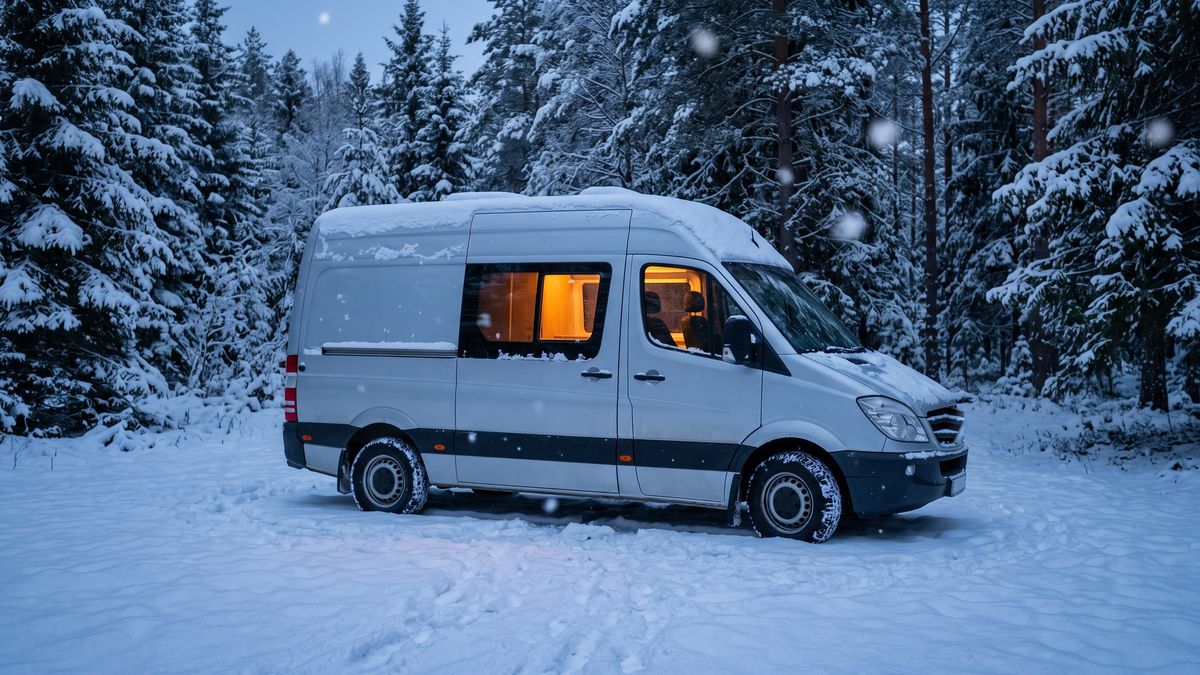
The cold also gets at what feeds the heater. Below freezing, of the bottled gases, only propane works; and some lithium batteries refuse to charge below 5 °C, such as Victron’s, whose management system cuts off charging below that temperature [52]: install yours inside the heated space. Add December’s solar output, 4.5 to 17 times lower than in June depending on latitude, and you have the equation of a winter in a campervan: stored energy, and a heater made for the job. Our guide to the campervan in winter covers insulation, condensation and frozen water.



9Going further: boats, walking, wild camping
The campervan is often just the base camp. For a kayak or a paddleboard on the roof: a cam strap round each bar, bow and stern lines, and never a bungee cord, as our guide to carrying a kayak explains. To set off on foot from the car park, our step-by-step guides to planning a walk and to a first wild camp take over, and in winter, the snowshoes fit in the locker.
For every trip, the rule stays the same, and it fits in one sentence: a campervan is planned like a budget, counting everything that goes in, kilos, amp-hours and litres, before you count the miles.





The checklist before you set off
Tick it off a few days before, then read it again on the morning you leave. It follows the steps of this guide; adapt it to the season, the countries on your route and the length of the trip.
- V5C up to date (body type ‘motor caravan’ for a converted van, if DVLA has accepted it) and a maximum authorised mass your licence covers
- Insurance in force and a valid MOT
- Load under the maximum authorised mass, checked on a weighbridge fully loaded; roof load under the lowest of the limits
- Tyre pressures set for the load, as the vehicle’s handbook says
- For France: a high-visibility vest within reach and a warning triangle on board
- Battery charged and the trip’s consumption estimated
- Gas cylinders full (propane in winter), adaptors for the countries on the route, hose within its date
- Carbon monoxide alarm tested, vents clear
- Fresh water filled, grey water and toilet cassette emptied
- Low emission zones on the route checked (ULEZ, Clean Air Zones, Scottish LEZs); Crit’Air sticker for France, Umweltplakette or ZTL as the route requires
- From 1 November to 31 March in French mountain areas: four winter tyres, or chains or snow socks on board
- Stopovers and places to sleep found, signs and local rules checked on the spot
- Everything stowed and wedged, lockers shut, gas off if the regulator has no crash sensor
Kit related to this article
No affiliation: no commission, no sponsored products.

FireAngel FA6813 CO alarm
A carbon monoxide alarm that complies with EN 50291-2:2019, the standard for leisure vehicles, for wall mounting; it adds to open vents, never replaces them.
View on Amazon (opens in a new tab)
AutoSock HP snow socks
Snow socks certified to EN 16662-1, sized to your tyres: they meet France’s Loi Montagne, but not the “snow chains compulsory” sign in Switzerland or Austria.
View on Amazon (opens in a new tab) Victron Energy
Victron SmartSolar MPPT 100/20
A 20 A MPPT solar charge controller for 290 W of panels on a 12 V system, with Bluetooth and a 30-day history: a way to check your output against PVGIS.
View on Amazon (opens in a new tab)
Worth watching
The Caravan and Motorhome Club runs through five starting points for van life: choosing a first vehicle, planning the conversion, budgeting, packing and finding places to stay.

The video is hosted by YouTube (Google): nothing loads until you play it, and Google may then set cookies.
FAQs
Do I need a special licence to drive a campervan?
Not up to 3,500 kg of maximum authorised mass: a car licence is enough. Between 3.5 and 7.5 tonnes, GOV.UK requires category C1, which licences from before 1997 may already include: if you passed then, check your entitlements. The EU directive that will open category B to motorhomes of up to 4.25 tonnes, after training or a test, applies from 26 November 2029, and not in the UK. A self-converted van also needs its V5C updated.
Can I sleep in my campervan anywhere in the UK?
No. In Scotland, access rights don’t include motor vehicles, so the Access Code tells you to use a car park and respect landowners’ parking rules; Forestry and Land Scotland sells one-night stays in some of its car parks. In England, the Lake District National Park Authority says no one has a right to wild camp, and that formal campsites are the only legal places to park a campervan overnight. Signs and local restrictions always come first.
What battery and solar panel does a campervan need?
Count your watt-hours a day, multiply them by the number of days without charging, then convert into amp-hours by dividing by the voltage. A lithium iron phosphate battery is used to 80% of its capacity, AGM lead-acid to 50%. Lying flat, a 200 W panel produces 750 to 1,170 Wh a day in June, but 45 to 260 Wh in December: in winter, charging comes mainly from driving or a hook-up.
Where do I empty grey water and the toilet cassette?
At campsites and service points: a drain for grey water, a chemical disposal point for the cassette, and in Scotland, some Forestry and Land Scotland car parks, for £5 without staying. Never into a gutter, a storm drain, a ditch or the countryside. In France, Service-Public says dumping any kind of waste on a road carries a €135 fixed fine, and up to €1,500, with the vehicle confiscated, if it was used to carry the waste.
Can I take a campervan away in winter?
Yes, with a heater designed to run overnight in a vehicle, such as a diesel air heater, a carbon monoxide alarm and vents that are never blocked. Below freezing, of the bottled gases, only propane works, and some lithium batteries refuse to charge below 5 °C. In French mountain areas, from 1 November to 31 March, the designated communes require four winter tyres, or chains or snow socks on board.
How much does a campervan trip cost?
By our calculation, on Ford’s June 2026 prices and October 2026 diesel, a campervan costs about £9,100 to £10,900 a year at 15,000 miles, before finance and the build, with depreciation and fuel the largest items. In our examples, a paid night costs from £10 in a Forestry and Land Scotland car park to £25 on a club campsite. Hiring for a few days before buying is still the best way not to choose the wrong van.
Sources
- allvan.fr, Aménagement van : annuaire des professionnels (conversion budgets by level of service, in French), commercial site, accessed 8 November 2026. allvan.fr https://allvan.fr/amenagement-van/ ↩
- Wood and Van, Le vrai prix d’un aménagement de fourgon sur mesure, high-end French converter (in French), accessed 8 November 2026. woodandvan.fr https://woodandvan.fr/le-vrai-prix-dun-amenagement-sur-mesure/ ↩
- DVLA, Converting a vehicle into a motor caravan (motor home), GOV.UK, updated 6 November 2026, accessed 8 November 2026. gov.uk https://www.gov.uk/government/publications/converting-a-vehicle-into-a-motor-caravan/converting-a-vehicle-into-a-motor-caravan ↩
- GOV.UK, Change vehicle details on a V5C registration certificate (log book), accessed 8 November 2026. gov.uk https://www.gov.uk/change-vehicle-details-registration-certificate ↩
- GOV.UK, Driving licence categories, accessed 8 November 2026. gov.uk https://www.gov.uk/driving-licence-categories ↩
- GOV.UK, Driving a motorhome, accessed 8 November 2026. gov.uk https://www.gov.uk/driving-motorhome ↩
- GOV.UK, Compare old and new driving licence categories, accessed 8 November 2026. gov.uk https://www.gov.uk/old-driving-licence-categories ↩
- Directive (EU) 2025/2205 of the European Parliament and of the Council of 22 October 2025 on driving licences, Articles 6 and 29 and Annex V, Official Journal of the European Union, L series, 5 November 2025, accessed 8 November 2026. eur-lex.europa.eu https://eur-lex.europa.eu/eli/dir/2025/2205/oj/eng ↩
- GOV.UK, Vehicle insurance, accessed 8 November 2026. gov.uk https://www.gov.uk/vehicle-insurance ↩
- GOV.UK, Getting an MOT (when to get one, maximum fees by vehicle class), accessed 8 November 2026. gov.uk https://www.gov.uk/getting-an-mot ↩
- GOV.UK, Vehicle weights explained, accessed 8 November 2026. gov.uk https://www.gov.uk/vehicle-weights-explained ↩
- Driver and Vehicle Standards Agency (DVSA), DVSA roadside checks: fines and financial deposits, section on excess weight offences, GOV.UK, updated 29 January 2019, accessed 8 November 2026. gov.uk https://www.gov.uk/government/publications/guide-to-graduated-fixed-penalties-financial-deposits/dvsa-roadside-checks-fines-and-financial-deposits ↩
- GOV.UK, Find a weighbridge, accessed 8 November 2026. gov.uk https://www.gov.uk/find-weighbridge ↩
- Thule, Thule Rooftop Tent Guidelines (5564366001), vehicle and roof rack compatibility, accessed 8 November 2026. thule.com https://www.thule.com:443/-/s/approved/std.lang.all/02/00/670200.pdf?rev=13.3 ↩
- Victron Energy, Batteries: Lithium-ion vs AGM, blog, 30 March 2015, accessed 8 November 2026. victronenergy.com https://www.victronenergy.com/blog/2015/03/30/batteries-lithium-ion-vs-agm/ ↩
- European Commission, Joint Research Centre (JRC), Photovoltaic Geographical Information System (PVGIS), overview page (current production version 5.3), accessed 8 November 2026. joint-research-centre.ec.europa.eu https://joint-research-centre.ec.europa.eu/photovoltaic-geographical-information-system-pvgis_en ↩
- Deutscher Verband Flüssiggas (DVFG), Informationsblatt zu chemisch-physikalischen Eigenschaften (properties of propane and butane, in German), accessed 8 November 2026. dvfg.de https://www.dvfg.de/wp-content/uploads/2026/06/Factsheet-Flussiggas-2022-12.pdf ↩
- Truma, How to find the right Truma gas pressure regulator, accessed 8 November 2026. truma.com https://www.truma.com/truma-guides/how-to-find-the-right-truma-gas-pressure-regulator/ ↩
- Butagaz, Guide du gaz en bouteille 2025 (in French), page 9, accessed 8 November 2026. lp.butagaz.fr https://lp.butagaz.fr/media/3806/download/GUIDE_DU_GAZ_EN_BOUTEILLE_2025.pdf ↩
- The Caravan and Motorhome Club, Liquefied Petroleum Gas, technical advice, accessed 8 November 2026. caravanclub.co.uk https://www.caravanclub.co.uk/advice-and-training/technical-advice/liquefied-petroleum-gas/ ↩
- NHS, Carbon monoxide poisoning, page last reviewed 16 December 2025, accessed 8 November 2026. nhs.uk https://www.nhs.uk/conditions/carbon-monoxide-poisoning/ ↩
- EVS, the Estonian standards body, listing of the standard EVS-EN 50291-2:2019, carbon monoxide detection apparatus for fixed installation in recreational vehicles and recreational craft, valid from 16 September 2019, accessed 8 November 2026. evs.ee https://evs.ee/en/evs-en-50291-2-2019 ↩
- Santé publique France, Intoxications au monoxyde de carbone. Adopter les bons gestes peut sauver des vies, press release of 26 November 2025 (in French), accessed 8 November 2026. santepubliquefrance.fr https://www.santepubliquefrance.fr/presse/intoxications-au-monoxyde-de-carbone-adopter-les-bons-gestes-peut-sauver-des-vies ↩
- Forestry and Land Scotland, Stay the Night (vehicles, fees and rules), accessed 8 November 2026. forestryandland.gov.scot https://forestryandland.gov.scot/staythenight ↩
- Service-Public.fr, the French government’s information site, Existe-il une amende pour abandon de déchets dans la rue ?, checked 5 June 2026 (in French), accessed 8 November 2026. service-public.gouv.fr https://www.service-public.gouv.fr/particuliers/vosdroits/F31963 ↩
- NatureScot, Scottish Outdoor Access Code, Camping, practical guide for all, accessed 8 November 2026. outdooraccess-scotland.scot https://www.outdooraccess-scotland.scot/practical-guide-all/camping ↩
- Land Reform (Scotland) Act 2003, section 9, Conduct excluded from access rights, legislation.gov.uk, accessed 8 November 2026. legislation.gov.uk https://www.legislation.gov.uk/asp/2003/2/section/9 ↩
- Lake District National Park Authority, Campervans and where to park, accessed 8 November 2026. lakedistrict.gov.uk https://lakedistrict.gov.uk/explore/where-to-stay/campervans-and-where-to-park/ ↩
- GOV.UK, The Highway Code, rules 238 to 252 on waiting and parking, updated 10 April 2025, accessed 8 November 2026. gov.uk https://www.gov.uk/guidance/the-highway-code/waiting-and-parking-238-to-252 ↩
- French Senate, written question no. 04932, Règles de stationnement des camping-cars, answer from the minister responsible for transport published in the Senate’s Journal officiel on 17 July 2025 (in French), accessed 8 November 2026. senat.fr https://www.senat.fr/questions/base/2025/qSEQ250504932.html ↩
- Service-Public.fr, Amende pour stationnement interdit (abusif, gênant, très gênant, dangereux), checked 20 May 2025 (in French), accessed 8 November 2026. service-public.gouv.fr https://www.service-public.gouv.fr/particuliers/vosdroits/F34212 ↩
- France Passion, home page (stopovers with producers, self-contained vehicles, in French), accessed 8 November 2026. france-passion.com https://www.france-passion.com/ ↩
- Spanish Directorate-General for Traffic (DGT), Instrucción PROT 2026/04 sobre autocaravanas, signed 11 March 2026, PDF, accessed 8 November 2026. dgt.es https://www.dgt.es/export/sites/web-DGT/.galleries/downloads/muevete-con-seguridad/normas-de-trafico/NOR-normativa-general/report_Instruccion-PROT-2026_04-Autocaravanas.pdf ↩
- Italian Ministry of Infrastructure and Transport, Circolazione e sosta delle autocaravan, direttiva prot. n. 777, of 27 April 2006, PDF, accessed 8 November 2026. mit.gov.it https://www.mit.gov.it/sites/default/files/media/normativa/2016-02/Decreto_Ministeriale_protocollo_777_27-04-2006_all_1.pdf ↩
- Portuguese official gazette (Diário da República), Lei n.º 66/2021, of 24 August 2021, series 1, no. 164, accessed 8 November 2026. files.diariodarepublica.pt https://files.diariodarepublica.pt/1s/2021/08/16400/0000900013.pdf ↩
- GOV.UK, Clean Air Zones, updated 12 February 2026, accessed 8 November 2026. gov.uk https://www.gov.uk/guidance/driving-in-a-clean-air-zone ↩
- Transport for London, Vans, minibuses and more (Ultra Low Emission Zone standards and charges), accessed 8 November 2026. tfl.gov.uk https://tfl.gov.uk/modes/driving/ultra-low-emission-zone/vans-minibuses-and-more ↩
- mygov.scot, Check if you can drive a vehicle in a Low Emission Zone, last updated 26 June 2026, accessed 8 November 2026. mygov.scot https://www.mygov.scot/low-emission-zones/vehicles ↩
- mygov.scot, Fines for Low Emission Zones, last updated 26 June 2026, accessed 8 November 2026. mygov.scot https://www.mygov.scot/low-emission-zones/fines ↩
- GOV.UK, Speed limits, accessed 8 November 2026. gov.uk https://www.gov.uk/speed-limits ↩
- Service-Public.fr (business section), Circuler en zone à faibles émissions mobilité (ZFE ou ZFE-m), checked 5 October 2026 (in French), accessed 8 November 2026. service-public.gouv.fr https://www.service-public.gouv.fr/entreprendre/vosdroits/F38025 ↩
- French Constitutional Council, decision no. 2026-903 DC of 21 May 2026, Loi de simplification de la vie économique (in French), accessed 8 November 2026. conseil-constitutionnel.fr https://www.conseil-constitutionnel.fr/decision/2026/2026903DC.htm ↩
- French National Assembly, bill no. 3320 to abolish low emission zones, tabled on 13 October 2026 and referred to committee, dossier in French, accessed 8 November 2026. assemblee-nationale.fr https://www.assemblee-nationale.fr/dyn/17/dossiers/_abroger_les_zones_a_faible_emission_17e ↩
- Service-Public.fr, Vignette ou pastille Crit’Air (certificat qualité de l’air), checked 1 January 2026 (in French), accessed 8 November 2026. service-public.gouv.fr https://www.service-public.gouv.fr/particuliers/vosdroits/F33371 ↩
- German Federal Environment Ministry (BMUV), Umweltzonen und Umweltplakette, as of 6 July 2022 (in German), accessed 8 November 2026. bundesumweltministerium.de https://www.bundesumweltministerium.de/themen/luft/umweltzonen-und-umweltplakette ↩
- German federal catalogue of fines (Bußgeldkatalog-Verordnung), annex, no. 153, Gesetze im Internet, accessed 8 November 2026. gesetze-im-internet.de https://www.gesetze-im-internet.de/bkatv_2013/anlage.html ↩
- Italian highway code (Nuovo codice della strada, legislative decree no. 285 of 30 April 1992), article 7, as updated on 24 April 2026, Normattiva, accessed 8 November 2026. normattiva.it https://www.normattiva.it/uri-res/N2Ls?urn:nir:stato:decreto.legislativo:1992-04-30;285~art7 ↩
- Service-Public.fr, Équipements obligatoires en voiture : gilet de sécurité, triangle..., checked 2 November 2026 (in French), accessed 8 November 2026. service-public.gouv.fr https://www.service-public.gouv.fr/particuliers/vosdroits/F19459 ↩
- Service-Public.fr, Pneus hiver, chaînes : quelles sont vos obligations jusqu’au 31 mars 2027 ?, published 20 October 2026 (in French), accessed 8 November 2026. service-public.gouv.fr https://www.service-public.gouv.fr/particuliers/actualites/A14389 ↩
- French National Assembly, written question no. 3489 on penalties for winter vehicle equipment, answer from the interior ministry published in the Journal officiel on 21 March 2023 (in French), accessed 8 November 2026. assemblee-nationale.fr https://www.assemblee-nationale.fr/dyn/16/questions/QANR5L16QE3489 ↩
- Webasto, Air Top 2000 STC, product page and technical specifications (US website), accessed 8 November 2026. webasto.com https://www.webasto.com/en-us/heating/air-heaters/air-top-2000-stc.html ↩
- Victron Energy, VictronConnect now with Smart Lithium battery update, blog, 28 November 2018, accessed 8 November 2026. victronenergy.com https://www.victronenergy.com/blog/2018/11/28/victronconnect-now-with-smart-lithium-update/ ↩

Campervans, motorhomes, cycling and calculators
Julien de Jurquet writes for Outfarer about campervans, motorhomes, cycling and calculators. He reads instruction manuals to the very end and never lets a figure through without its unit, so that your choices rest on sums rather than promises.
 Arnaud Couderc