 Français (France)
 English (UK)
 English (US)
 Deutsch (Deutschland)

Contents
Booking: when, where and how
6.45pm. The sun is leaving the ridges, the common room smells of soup, and a walker pushes the door open without having booked. The warden counted beds and plates the night before: there may be a spot on a bench tonight, but there is no guarantee. At a mountain hut, the evening is won or lost long before you set foot on the path.
So booking comes first. It lets the hut warden, the gardien, allocate the dormitories and prepare the meals, and it guarantees you a bed: huts are in high demand at weekends and all summer long, and some have very few places [1]. For huts run by the French Federation of Alpine and Mountain Clubs (FFCAM), you book online, on each hut’s own website, and pay a deposit for the accommodation by card [2].
Read the cancellation terms before you pay: hut stays are not covered by the 14-day cooling-off period of French consumer law. At the Valmasque hut, in the Mercantour in the southern French Alps, cancel more than 3 days before your stay and you get your deposit back, minus €0.35 per night per person; any later and the deposit is lost [2]. When you book, give the warden your mobile number, your route and your arrival time, useful if anything goes wrong, as well as any allergies or dietary requirements [1].
What a night and half board cost
Prices vary from hut to hut, depending on the altitude, how hard it is to get supplies up and the state of the building [1] [4]. Two FFCAM examples in the Mercantour, for 2026: a night’s accommodation alone costs €21 at the Valmasque hut and €23 at the Rabuons hut, and FFCAM members pay half price [5] [6] (what that membership costs and covers). At the Valmasque, half board, meaning your bed, dinner and breakfast, comes to €55 for an adult [5].
| Item | Adult | Aged 12 to 18 | Aged 8 to 11 | Aged 4 to 7 |
|---|---|---|---|---|
| Dinner | €24 | €24 | €19 | €16 |
| Breakfast | €10 | €10 | €8 | €8 |
| Packed lunch to take away | €13 | €13 | €13 | €13 |
| Half board, night included | €55 | €48.70 | €41.70 | €29 |
Night only: €21 for an adult, €14.70 for ages 8 to 17, €5 under 8, €10.50 for an FFCAM member. Children aged 3 and under pay €5 for half board. Source: the hut’s website, 2025-2026 and 2026 rates.
Where does the money go? The French Hiking Federation (FFRandonnée) has broken down a €20 night in an FFCAM hut: €1 to €1.50 for the warden, to cover cleaning and day-to-day upkeep, €6 for routine maintenance of the building, €3 for the FFCAM’s running costs and €10 for renovating huts [4].
When it comes to paying, carry cash: the Rabuons hut does not take cards, only cash, French cheques and chèques-vacances, a French holiday voucher [6]. The French Hiking Federation suggests carrying €50 per person to be on the safe side, and reminds FFCAM members not to forget their membership card [1].
What to pack for the night
The hut provides a blanket or duvet and a pillow; the linen is up to you: a sleeping bag liner, which the French call, rather unappetisingly, a sac à viande (‘meat bag’), and a pillowcase [1]. The rest comes down to a handful of items.
- A head torch, kept on you after dark and switched to red light in the dormitory if it has that mode, so you do not dazzle your neighbours [1].
- Earplugs, if you are a light sleeper [1].
- A water bottle by your bed: in summer, dormitories are often warm [1].
- Your night things out of your rucksack before bedtime, and not in a plastic bag, whose rustling wakes the whole dormitory [1].
- For children, their own slippers: small sizes are often in short supply among the clogs lent at the entrance [1].

Arrival, dinner, lights-out: the rhythm of the hut
When you arrive, report to the warden, who will show you to your dormitory. Walking boots stay at the entrance, in a room set aside for them, along with poles and wet clothes: that is where you slip on the clogs or slippers provided [1]. Aim to arrive by mid-afternoon: turning up after 7pm is frowned upon, because dinner is served only once [1].
Dinner, for that matter, is a single set menu, served at a fixed time, around 6.30pm or 7pm, and eaten all together. A hand laying the table or clearing up is always welcome. Order the next day’s packed lunch the evening before [1]. Lights-out is set by the warden, usually at 9pm, 10pm at the latest; anyone who wants to stay up does so quietly in the common room [1].
Two details help avoid misunderstandings. Charging your phone is not a guaranteed service: in remote spots, electricity often comes from solar-charged batteries, so power is limited, and wardens charge phones as best they can because a phone has become a piece of safety kit. And if you are camping near the hut, ask the warden where to pitch your tent, so you do not take up the helicopter landing area [1].
The unstaffed hut: out of season, everything changes
Once summer is over, from late September to early June, mountain huts in France are not staffed, except sometimes in March and April for the spring skiing season. Some leave a winter room open, more basic and smaller, usually with a stove, minimal lighting, something to cook with and somewhere to sleep, for a modest fee [1]. At both the Valmasque and the Rabuons, it is €8 a night in 2026 [5] [6].
Out of season, there is no warden and no meals: bring your own food. Dormitories are not necessarily heated, hence the case for a sleeping bag chosen for the season [1]. The FFCAM now advises booking and paying online in advance, at least for some huts, but warns that a booking does not guarantee a bed: other walkers may turn up without one [7].
With children or a dog
Children are welcome, and prices take them into account: at the Valmasque, a night costs €5 for under-8s and half board €29 for ages 4 to 7 [5]. Ring the warden before you set off: they know the state of the path and the weather, and can point out sights along the way that will keep younger walkers going [1].
A dog raises two questions. The first is the hut: whether dogs are welcome is up to the warden, so ask when you book. The second is the route: in the core zone of the Écrins National Park, for instance, dogs are banned, even on a lead or carried, except dogs working with flocks, assistance dogs and avalanche search dogs [8]. Before you go, check the rules of the national park you will be crossing.
A good habit to get into: ring the warden the day before. They know the weather, the state of the path and how many beds are left, and they will know you are on your way.
Kit related to this article
No affiliation: no commission, no sponsored products.
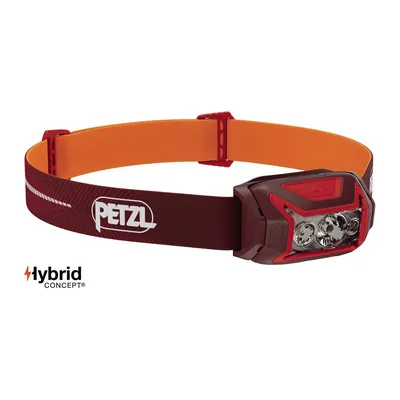
Petzl Actik Core
An 88 g head torch supplied with a rechargeable battery that also runs on three AAA batteries, with a red light that won’t dazzle anyone.
View on Amazon (opens in a new tab)
FAQs
Do you need to book a mountain hut in France?
Yes, when it is staffed. Booking lets the warden plan beds and meals, and huts are in high demand at weekends and in summer. FFCAM huts are booked online, with a deposit. Out of season, some huts also advise booking, but a booking does not guarantee a bed: set off early and have a fallback plan.
How much does a night in a mountain hut with half board cost?
It depends on the hut. In 2026, at the Valmasque hut (FFCAM, Mercantour), half board costs €55 for an adult: €21 for the night, €24 for dinner and €10 for breakfast. FFCAM members pay half price for the night, and children get reduced rates. Bring cash: cards are not always accepted.
Do you need a sleeping bag in a mountain hut?
Not in a staffed hut: blankets or duvets and pillows are provided, and all you need is a sleeping bag liner, which the French call a sac à viande, and a pillowcase. Out of season, in the winter room of an unstaffed hut, take a proper sleeping bag: dormitories are not necessarily heated.
What time should you arrive at a mountain hut?
Ideally by mid-afternoon, and in any case before dinner. The meal is served only once, at a fixed time, around 6.30pm or 7pm, and turning up after 7pm is frowned upon. Lights-out is set by the warden, usually around 9pm or 10pm. Let the warden know if you are running late.
Can you stay in a mountain hut with a dog?
That depends on the warden: ask when you book. Check your route too: in the core zone of some national parks, such as the Écrins, dogs are banned, even on a lead or carried, except dogs working with flocks, assistance dogs and avalanche search dogs. Unless the park lists an exception, a hut in the core zone of such a park is off limits with a dog.
Sources
- MonGR (French Hiking Federation), Les clés pour une bonne nuit en refuge (in French), accessed 22 October 2026. mongr.fr https://www.mongr.fr/conseils/sinformer/les-cles-pour-une-bonne-nuit-en-refuge ↩
- FFCAM, Valmasque hut, Conditions générales de vente (terms of sale, in French), accessed 22 October 2026. refugedevalmasque.ffcam.fr https://refugedevalmasque.ffcam.fr/cgv.html ↩
- Swiss Alpine Club (SAC), What the resolutions passed by the 2026 Assembly of Delegates mean for members, sections and hut guests, 17 June 2026, accessed 22 October 2026. sac-cas.ch https://www.sac-cas.ch/en/huts-and-tours/was-die-av-beschluesse-fuer-mitglieder-sektionen-und-huettengaeste-bedeuten-52053/ ↩
- French Hiking Federation (FFRandonnée), Comment se décompose le montant d’une nuitée en refuge ? (in French), 26 October 2022, accessed 22 October 2026. ffrandonnee.fr https://www.ffrandonnee.fr/s-informer/actualites/comment-se-decompose-le-montant-d-une-nuitee-en-refuge ↩
- FFCAM, Valmasque hut, Tarifs (rates), 2025-2026 and 2026 rates, accessed 22 October 2026. refugedevalmasque.ffcam.fr https://refugedevalmasque.ffcam.fr/GB_tarifs.html ↩
- FFCAM, Rabuons hut, Tarifs (rates), 2025-2026 rates, accessed 22 October 2026. refugederabuons.ffcam.fr https://refugederabuons.ffcam.fr/GB_tarifs.html ↩
- FFCAM, Valmasque hut, Réservation hors gardiennage (booking outside the staffed season, in French), accessed 22 October 2026. refugedevalmasque.ffcam.fr https://refugedevalmasque.ffcam.fr/reservation-hg.html ↩
- Écrins National Park, Animaux domestiques (pets, in French), accessed 22 October 2026. ecrins-parcnational.fr https://www.ecrins-parcnational.fr/animaux-domestiques ↩

Camping, wild camping, bushcraft and hiking
Guillaume Hoarau writes for Outfarer about camping, wild camping, bushcraft and hiking. A survival-skills enthusiast and a collector of old field manuals, he likes clear explanations, lists that earn their place and other people’s stories, which he tells well.

 Alex Aubert


 Nolwenn Bastide