 Français (France)
 English (UK)
 English (US)
 Deutsch (Deutschland)

A wooden door that sticks a little, a log book open on the table, a cold stove and a tin box for the money. Nobody to tell you where to sleep or when dinner is: in an unstaffed shelter, you are the warden, from the moment you push the door open to the moment you close it behind you. In Europe, three families of shelters, among others, work this way: unstaffed huts and refuges in France, the winter rooms of the Alpine clubs, and the bothies of Great Britain. They look alike, but their rules are not the same, and each body that runs them writes its own.
What follows applies to the organisations named, as of 8 November 2026. A hut, refuge or bothy may have its own instructions, posted on site or on its web page: those are the ones to read before you set off.
| Winter refuge (FFCAM, France) | Winterraum (German and Austrian Alpine clubs) | Bothy (MBA, Great Britain) | |
|---|---|---|---|
| Who runs it | The club that manages the hut | The club section that owns the hut | The Mountain Bothies Association, with the owner’s agreement |
| Booking | Advised online for 28 huts; it does not guarantee a bed | Generally no need to register beforehand (DAV); online where available (ÖAV) | Not possible: there is no booking system |
| Payment | Required: online, in the honesty box (cheque or cash) or by cheque to the club | A rate per night, firewood included: cash box on site or bank transfer to the section | Free; donations accepted |
| What you find | It varies: beds and blankets, but no gas or stove, at La Pra; a few blankets at the Brèche de Roland | Bunks, blankets, somewhere to cook, crockery, fuel or a note of where it is stored | A dry shelter, sometimes a sleeping platform, a fireplace or stove, rarely any fuel |
| What you bring | Sleeping bag, stove, food, the means to pay | Sleeping-bag liner or sleeping bag, a stove just in case, cash, a key if the room is locked | All your camping kit except the tent, fuel, candles; a tent in a popular area |
As of 8 November 2026, based on the FFCAM, DAV, ÖAV and MBA pages listed in the sources. Each hut, section or bothy may have its own rules.
In France: winter refuges and unstaffed huts
First, a common confusion: a hut in the mountains is not necessarily a shelter for walkers. In the Pyrenees National Park, in France, the park’s charter counts nearly 250 shepherds’ huts, and plans to reserve their use for shepherds during the summer season [1]. The same charter also aims to create a network of walkers’ shelters from existing huts, but ones with no pastoral use [1]. So a shepherd’s hut is not, by default, a walkers’ shelter: in summer, it is first and foremost the shepherd’s lodging.
Mountain huts, for their part, have planned for this. Out of season, every hut in the Pyrenees National Park has a part left open to serve as a shelter [2]. The French federation of Alpine and mountain clubs (Fédération française des clubs alpins et de montagne, FFCAM) does the same: its huts, generally staffed from spring to early autumn, keep a part accessible and open for the rest of the year, so that they can still serve as a shelter and for rescue [3]. Some call it le refuge d’hiver, the winter refuge [4].
No warden, no meals, and facilities that change from one hut to the next. At La Pra, in the Belledonne range, the winter section has beds, blankets and dry toilets, but no gas, stove or crockery: the hut asks you to bring a stove and a good sleeping bag, and reports having recorded -2 °C inside in a recent January [4]. At the Brèche de Roland, above Gavarnie, it sleeps 30 and has a few blankets, but no gas or utensils, and the fireplace cannot be used [5].
Open does not mean free, the FFCAM stresses: in remote places, costs are higher [3]. You pay for the night online on the hut’s website, in advance or afterwards, in the hut’s honesty box by cheque or in cash, or by cheque sent to the club that manages it [3]. For 28 huts, from Isère to the Pyrenees and the Mercantour, the federation advises booking and paying online, which gives an idea of the places left. But a booking does not guarantee a bed: others may turn up without knowing the rule, and the FFCAM asks you to welcome them kindly [3]. Prices are given on each hut’s page; our guide to staying in a French mountain hut gives two examples in the Mercantour.
That leaves the hut that belongs to no club: one owned by a commune, a grazing association or a park. Its rules sometimes fit in a few lines on the tourist office website. The Aoulhet hut, above Saint-Pé-de-Bigorre in the French Pyrenees, is open all year round, free and with no booking, with six sleeping places on a mezzanine and a section kept for pastoral use; the tourist office suggests bringing a tent depending on how busy it is, and the commune relies on everyone’s public spirit to keep it clean [6]. An account of a night at Aoulhet shows what this sharing looks like in practice.
In the German-speaking Alps: the Alpine clubs’ Winterraum
The German Alpine Club (Deutscher Alpenverein, DAV) describes the The winter room of an Alpine club hut, open when the hut is not staffed; plural Winterräume. as a heatable, miniature version of a self-catering hut: bunks, blankets, somewhere to cook and crockery. If there is no fuel in the room itself, a note says where it is stored [7]. Category I huts, the most remote, generally have one; failing that, an unlocked shelter that you enter from outside, with blankets at the very least, is provided instead [7]. The German, Austrian and South Tyrolean Alpine clubs run some 550 category I and II huts between them [8].
This second room goes by another name, the The emergency shelter of an Alpine club hut, for taking cover in an emergency.. The Austrian Alpine Club (Österreichischer Alpenverein, ÖAV) explains that it is meant for emergencies, for short-term shelter: at least 3 m², enclosed on all sides, with blankets at the very least. The Winterraum, by contrast, is meant for planned stays, but not for parties or for a long-term nomadic life [9].
The door? It is normally unlocked, or opened with the clubs’ special key, the AV key, which the section lends out [7]. The Vorarlberg Alpine Club, a section of the ÖAV, puts the number of Winterräume in Austria at around 300; it says they are normally open and need no key, lists the exceptions in its region, and lends its keys for €3 a day plus a €100 deposit [10]. Its page, dated 9 October 2025, also announces that the winter rooms of the Tilisuna-Hütte and the Freschen-Haus will stay closed until mid-January 2027, while their emergency shelters remain open [10]. Hence the first step: check on the hut’s page, or with the section that owns it, that the room is open, and how you get in.
Do you need to book? The DAV says that registering in advance is generally not necessary [7]. The ÖAV nevertheless advises booking online where you can, so that you don’t end up in a completely overcrowded winter room [9]. Paying, on the other hand, is never optional. The rate includes a contribution to the firewood and the facilities; there is a cash box in almost every Winterraum, and you can also transfer the money to the section’s account [7]. The ÖAV advises taking cash [9].
How much? The joint hut rules of the German and Austrian clubs cap a night in a dormitory or a Winterraum, in a category I hut, at €15 for a member aged 25 or over until 2026, then at €18 from 2027; non-members pay at least €12 more [8, 11]. The exact rate comes from the section that owns the hut [7], and our comparison of Alpine club membership sets out what the card costs. The DAV does not mince its words: in recent years the fee has often gone unpaid, or the room has been left in a sorry state, and many sections lose several hundred euros a year, even though they bring the firewood up, sometimes by helicopter [7].
The DAV sums up the spirit of the place in one sentence: leave the hut as you would like to find it yourself. Its instructions, in order [13]:
- check the stove and the flue before lighting the fire;
- use firewood sparingly, without chopping it on the stove or on the floor;
- wash and put away the crockery, put the blankets back, clean the table and the stove, air the room;
- sign the hut book, noting, in your own interest, where you are heading next;
- pay the fees, firewood included, by payment slip to the section if there is no cash box;
- when you leave, put out the fire, empty the ash drawer, close the windows and shutters, lock the door and return the key to the section;
- report any damage without delay: a broken window, a damaged lock, wood running low.
The ÖAV adds three points: the equipment may be missing or in poor condition, so a gas stove goes in the rucksack just in case; even when the firewood has run out, you never burn the furniture; and you never light a fire in the oven or the flue [9]. Finally, the hut rules require a sleeping-bag liner on every bed, and quiet, as a rule, from 10pm to 6am [8].
In Great Britain: bothies and the Bothy Code
The word originally meant farm accommodation for itinerant workers. Today, a An open shelter, free and unstaffed, usually an old cottage in a remote spot, in Scotland, northern England or Wales. is an open shelter, usually in a remote location: four walls and a roof for travellers who need them, most often an old cottage at least several hours’ walk from the public road [14]. The Mountain Bothies Association (MBA) maintains about 100 of them, in Scotland, northern England and Wales; it owns hardly any, and works by agreement with the landowners [14]. Founded in 1965, it funds this maintenance from membership subscriptions and donations, and most of the work is done by volunteers [15].
No cash box and no booking here: MBA bothies are free, open to anyone, member or not, and cannot be booked. ‘Just turn up’, says the association: expect others to arrive looking for shelter too, and make room for them. If you intend to use a bothy in a popular area, it advises taking a tent [14].
What you will find fits in one line: a wind- and waterproof building with somewhere dry to sleep. Sometimes a sleeping platform, often a wooden or concrete floor; a fireplace or stove, but you will usually need to carry fuel in; water comes from a nearby stream or spring; a stove is for cooking, candles for light [14]. The MBA advises starting with all the kit you would take camping, except the tent, and reminds you that most bothies are up in the hills, where nights are on the cool side [16]. For water, bring a way to treat it: our guide to water for wild camping compares the methods.
The code also asks you to record your visit in the bothy log book, and points out that bothies are used entirely at your own risk [17]. For toilet trips, the MBA gives the distances: some 200 metres at least from the bothy, and 60 metres from the water supply [16]. ‘Short stays’ meaning what? For more than a couple of nights, you need the owner’s permission [18]. And the restrictions follow a calendar: stag stalking from August to October in Scotland, the hind cull from November to February on some estates, and lambing for about a month, between March and May depending on the place. Often it is access to the hills that is the concern, and the bothy stays open. The most reliable source, according to the MBA, is each bothy’s page on its website, rather than books or social media not run by the association [19].
The MBA warns, finally, that most bothies are remote: you need to be able to use a map and compass, and there is often no mobile signal [14]. If you bring a tent, access rules differ between Scotland and the rest of the UK: see our guide to wild camping in the UK.
What to take, what to leave behind
Put the rules of the three families side by side, and the rucksack almost packs itself. The MBA gives the starting point: assume the shelter has no facilities at all [16].
- Something to sleep in: a sleeping bag and a sleeping mat, even if there are blankets; at the very least a sleeping-bag liner in a Winterraum [5, 8, 16].
- Something to cook with and see by: a stove, a head torch, and candles in a bothy [4, 9, 14].
- Food and drink: there are no meals and no tap, and the water often comes from the stream [4, 14].
- A way to sleep outside: a tent or a light shelter, since a place is never guaranteed [3, 14].
- The means to pay: cash, a cheque or the section’s bank details [3, 7, 9].
- A rubbish bag: nothing gets collected up there, neither at a winter refuge nor at a bothy [4, 14].
What you leave behind depends on the place, and this is where the rules diverge most, especially on firewood. The MBA asks you to leave dry kindling and, if possible, some fuel to welcome the next visitors [17, 18]. The FFCAM, on the contrary, asks you to go easy on the logs, since nobody will restock the hut before it reopens [3]. In a Winterraum, the wood is paid for with the night [7], and a notice may reserve it for emergencies. The rest doesn’t change: a clean shelter, your rubbish in your rucksack, the fire out, the doors and shutters closed.
A place never guaranteed, a shelter shared
None of these shelters promises a bed. Booking an unstaffed hut does not guarantee a place, the FFCAM warns; it advises bringing what you need in case the hut is full, and considering another destination if the hut already shows as full, especially over the Christmas and New Year holidays [3]. In a bothy, the first to arrive don’t own the place [18]. And in an Alpine club hut, a sick or injured person who cannot be expected to descend, or a rescue team on duty, comes before everyone else for a bed [8].
Hence the tent at the bottom of the rucksack, which will make the gram-counters wince. It then follows the rules of the place: wild camping is allowed here, banned there, tolerated elsewhere at certain hours. Our guide to your first wild camp points, step by step, to the rules in each country.
Sharing, finally, means keeping your things together even if there is room to spare, and respecting other people’s sleep. The Alpine club hut rules forbid cooking and eating in the dormitories, going in wearing mountain boots and using a naked flame there, candle or stove; they also ask you to take your rubbish back down to the valley [8]. Faced with a large group, the MBA asks you to remind them politely of its policy, and never to try to evict them [18].
A good habit to get into: before you set off, open the page of whoever runs the shelter, club, section, commune or MBA, and read it to the end. Then pack as if the shelter were full. If it isn’t, you will have carried a tent for nothing, and slept dry all the same.
Kit related to this article
No affiliation: no commission, no sponsored products.
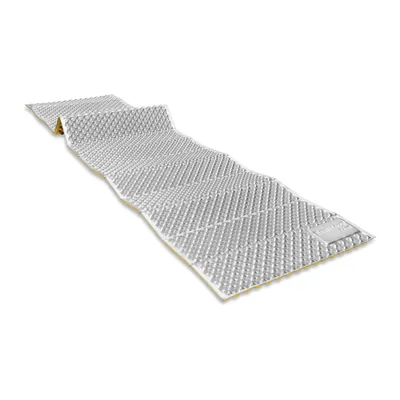
Therm-a-Rest Z Lite Sol
A concertina-fold foam mat rated R 2.0, 410 g in Regular: the bottom layer of the winter pairing, which also shields an inflatable mat from stones.
View on Amazon (opens in a new tab)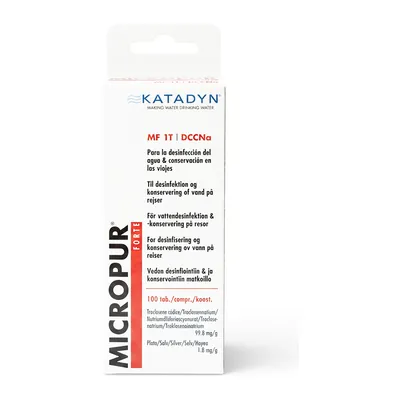
Katadyn Micropur Forte
Chlorine and silver tablets, one per litre of clear water, which Katadyn says act on bacteria and viruses within 30 minutes: the partner to a filter, which viruses pass through.
View on Amazon (opens in a new tab)
Worth watching
Made for the Mountain Bothies Association, this video walks through the five parts of the Bothy Code, from making room for others to leaving the bothy clean and the fire out.

The video is hosted by YouTube (Google): nothing loads until you play it, and Google may then set cookies.
FAQs
Can you book a night in a bothy?
No. The Mountain Bothies Association has no booking system: its bothies are open to anyone, free, and you simply turn up. Everyone should expect others to arrive looking for shelter, and make room for them. In a popular area, the association advises taking a tent. Groups of six or more should not use a bothy, and planned overnight stays by commercial groups are not permitted.
Do you need to be an Alpine club member to stay in a Winterraum?
No: Alpine club huts are open to everyone. Members pay less: in a category I hut, the joint rules of the German and Austrian clubs cap a night in a Winterraum at €15 for a member aged 25 or over in 2026, then €18 in 2027, and non-members pay at least €12 more. If the room is locked, the AV key can be borrowed from a club section.
Do you need a sleeping bag in a French winter refuge?
Yes. Outside the staffed season, facilities vary from hut to hut: at the Brèche de Roland, a few blankets and a fireplace that cannot be used; at La Pra, beds and blankets, but no gas or stove, and -2 °C recorded inside one January. Both huts advise bringing a sleeping bag. Add a stove and something to eat: there is no warden and there are no meals.
Can you take a dog to a bothy?
Yes, according to the Mountain Bothies Association, as long as it is kept under close control at all times: other visitors will not appreciate a dog begging for, or stealing, their food, toileting in the wrong place or otherwise annoying them. In a winter refuge or a Winterraum, the rule depends on who runs it: ask the club or the owning section before you go, and check the rules of the route too.
What if the shelter is full when you arrive?
Plan for it before you set off. The FFCAM points out that booking an unstaffed hut does not guarantee a bed, and advises considering another destination if the hut already shows as full. In a bothy, you make room for those who arrive. So bring the means to sleep outside, and check where wild camping is allowed: the rule changes from one country, park and nature reserve to the next.
Sources
- Pyrenees National Park, Charte du parc national des Pyrénées, approved by decree no. 2012-1542 of 28 December 2012, pp. 17, 25 and 59 (in French), accessed 8 November 2026. pyrenees-parcnational.fr https://www.pyrenees-parcnational.fr/sites/pyrenees-parcnational.fr/files/available_docs/charte_du_parc_national_des_pyrenees_1.pdf ↩
- Pyrenees National Park, Refuges, page on the park’s huts (in French), accessed 8 November 2026. pyrenees-parcnational.fr https://pyrenees-parcnational.fr/votre-visite/preparer-sa-visite/ou-dormir/refuges ↩
- FFCAM (French federation of Alpine and mountain clubs), Refuges et chalets non gardés : mode d’emploi, guide to unstaffed huts (in French), accessed 8 November 2026. ffcam.fr https://www.ffcam.fr/periode-hors-gardiennage.html ↩
- FFCAM, La Pra hut, home page and out-of-season information (in French), accessed 8 November 2026. refugedelapra.ffcam.fr https://refugedelapra.ffcam.fr/ ↩
- FFCAM, Brèche de Roland hut (Les Sarradets), Hors gardiennage, out-of-season information (in French), accessed 8 November 2026. refugebrechederoland.ffcam.fr https://refugebrechederoland.ffcam.fr/info-refugeng.html ↩
- Saint-Pé-de-Bigorre tourist office, Balades & randonnées à Saint-Pé-de-Bigorre, description of the Aoulhet hut (in French), accessed 8 November 2026. saintpedebigorre-tourisme.com https://www.saintpedebigorre-tourisme.com/randonnees/ ↩
- German Alpine Club (Deutscher Alpenverein, DAV), Hüttenkategorien, Selbstversorgerhütten und Winterräume (in German), accessed 8 November 2026. alpenverein.de https://www.alpenverein.de/verband/huetten-und-wege/huettenkategorien-winterraeume-und-selbstversorger ↩
- German and Austrian Alpine clubs, Hütten- und Tarifordnung für Alpenvereinshütten (HÜOTO) ab 2027, hut rules and rates (in German), accessed 8 November 2026. alpenverein.at https://www.alpenverein.at/portal_wAssets/docs/huetten-wege/regelungen/huetten_tarif_ordnung/Huetten-und-Tarifordnung_HueOTO-gueltig-ab-2027.pdf ↩
- Austrian Alpine Club (Österreichischer Alpenverein, ÖAV), Übernachten im Winterraum (in German), accessed 8 November 2026. alpenverein.at https://www.alpenverein.at/portal/berg-aktiv/huetten/regelungen/Winterraum.php ↩
- Alpenverein Vorarlberg, Winterräume und Hüttenschlüssel (in German), accessed 8 November 2026. alpenverein.at https://www.alpenverein.at/vorarlberg/huetten/Winterraeume.php ↩
- German and Austrian Alpine clubs, Hütten- und Tarifordnung für Alpenvereinshütten (HÜOTO) ab 2024 (in German), accessed 8 November 2026. alpenverein.at https://www.alpenverein.at/portal_wAssets/docs/huetten-wege/regelungen/huetten_tarif_ordnung/20240101_HueOTO.pdf ↩
- Swiss Alpine Club (SAC), Infos pratiques sur les cabanes (in French), accessed 8 November 2026. sac-cas.ch https://www.sac-cas.ch/fr/cabanes-et-courses/les-cabanes-du-cas/infos-pratiques-sur-les-cabanes/ ↩
- German Alpine Club (DAV), Tipps für die Nutzung von Selbstversorgerhütten und Winterräumen (in German), last updated 12 February 2025, accessed 8 November 2026. alpenverein.de https://www.alpenverein.de/artikel/winterraume-und-selbstversorger_1ab29667-720f-4a8b-8739-b63af877e76c ↩
- Mountain Bothies Association, FAQ, accessed 8 November 2026. mountainbothies.org.uk https://www.mountainbothies.org.uk/bothies/faq/ ↩
- Mountain Bothies Association, About the MBA, accessed 8 November 2026. mountainbothies.org.uk https://www.mountainbothies.org.uk/about-the-mba/ ↩
- Mountain Bothies Association, What is a Bothy?, accessed 8 November 2026. mountainbothies.org.uk https://www.mountainbothies.org.uk/bothies/what-is-a-bothy/ ↩
- Mountain Bothies Association, Bothy Code, accessed 8 November 2026. mountainbothies.org.uk https://www.mountainbothies.org.uk/bothies/bothy-code/ ↩
- Mountain Bothies Association, Using a Bothy, accessed 8 November 2026. mountainbothies.org.uk https://www.mountainbothies.org.uk/bothies/using-a-bothy/ ↩
- Mountain Bothies Association, Accessing Bothies, accessed 8 November 2026. mountainbothies.org.uk https://www.mountainbothies.org.uk/bothies/access/ ↩
- WSL Institute for Snow and Avalanche Research (SLF), Avalanche bulletin and snow situation, accessed 8 November 2026. slf.ch https://www.slf.ch/en/avalanche-bulletin-and-snow-situation/ ↩
- European Avalanche Warning Services (EAWS), website of the network of European avalanche warning services, accessed 8 November 2026. avalanches.org https://www.avalanches.org/ ↩
- Scottish Avalanche Information Service (sportscotland), Avalanche Information for the Scottish Mountains, accessed 8 November 2026. sais.gov.uk https://www.sais.gov.uk/ ↩

Camping, wild camping, bushcraft and hiking
Guillaume Hoarau writes for Outfarer about camping, wild camping, bushcraft and hiking. A survival-skills enthusiast and a collector of old field manuals, he likes clear explanations, lists that earn their place and other people’s stories, which he tells well.


 Alex Aubert
