 Français (France)
 English (UK)
 English (US)
 Deutsch (Deutschland)

22 inches (56 cm). That’s the snowshoe length gear maker MSR recommends for an adult weighing 125 to 175 pounds (57 to 79 kg), gear included, on packed snow [1]. Way smaller than the giant snowshoes most people picture, and that’s a good thing: a small snowshoe is easier to walk in. Getting started comes down to that choice, and then to choosing where you walk.
Float and grip: what snowshoes are for
Handed down from the trappers of the Far North, snowshoes let you get around on snow whatever the terrain and snow conditions, out in the wild or on a groomed, marked loop, explains Nordic France, the federation of France’s Nordic ski areas [2]. They do two jobs. First, flotation: keeping you from sinking too deep into the snow. Second, traction, from crampons underfoot and, depending on the model, steel traction rails or aluminum frames along the edges [3].
U.S. gear maker MSR sorts its snowshoes into three families by terrain: recreational models for flat and rolling terrain and established trails, then more aggressive models for slopes and variable snow, with heel lifts that raise your heels on steep climbs, and finally lightweight models for high mountains [3]. To get started on marked trails, the first family is plenty.
Choosing your size by weight and snow
The heavier you are, the more flotation you need. MSR says to count your weight with your clothes and backpack on, and suggests adding 10 to 15 lb (4.5 to 7 kg) for gear as a starting point; French manufacturer TSL assumes an average backpack of about 18 lb (8 kg) in its online size finder, which asks for your weight and shoe size [1] [4]. Snow matters just as much: the lighter and deeper it is, the more surface area you need.
| Weight, gear included | Packed snow | Soft snow | Soft and deep snow |
|---|---|---|---|
| 90 to 125 lb (41 to 57 kg) | 22 in (56 cm) | 22 in (56 cm) | 25 in (64 cm), or 22 in (56 cm) with tails |
| 125 to 175 lb (57 to 79 kg) | 22 in (56 cm) | 25 in (64 cm) or 22 in (56 cm) | 25 in (64 cm), or 22 in (56 cm) with tails |
| 175 to 225 lb (79 to 102 kg) | 22 in (56 cm) | 25 in (64 cm), or 22 in (56 cm) with tails | 30 in (76 cm) with tails, or 22 or 25 in (56 or 64 cm) with tails |
| Over 225 lb (102 kg) | 22 or 25 in (56 or 64 cm) | 22, 25, or 30 in (56, 64, or 76 cm) with tails | 30 or 25 in (76 or 64 cm) with tails |
Source: MSR snowshoe sizing guide, which gives weights in pounds and lengths in inches. Metric conversions are ours; for the third row, MSR’s page lists 79 to 120 kg, which doesn’t match the 175 to 225 lb it gives. Tails are removable extensions that add surface area.
Here’s the detail that changes everything: MSR advises choosing for the snow you’ll see on most of your outings, not for that once-a-year Snowmageddon. If you spend 80% of your time on existing tracks or packed snow, a giant pair will have you regretting your purchase 80% of the time; that’s where removable tails come in, added on light-snow days [1] [3]. TSL says the same thing another way: a bigger snowshoe for powder, a smaller one for following a track [4].
Bindings, boots, and poles
There are two main types of bindings. A fixed binding, attached to the snowshoe with straps, keeps the snowshoe close to your foot; a hinged binding pivots on a rod, so the tail of the snowshoe drops with each step and sheds snow [3]. MSR bindings fit men’s US sizes 6 to 13, which covers regular winter boots; its women’s models are a bit narrower, by about 3/4 inch (1.9 cm), for a more natural stride [1].
Poles, on the other hand, aren’t optional: MSR considers them essential for stability and safety. They should be adjustable, so you can shorten them on steep climbs and lengthen them on descents, with a locking mechanism that resists freezing and works with gloves on [3].

Where to start: marked trails at Nordic ski areas
Nordic France brings together more than 160 Nordic ski areas across every mountain range in France: the Northern and Southern Alps, the Jura, the Vosges, the Massif Central, and the Pyrenees. At these areas, different types of trails are laid out so that people on snowshoes, or on foot, can explore the mountains without getting in the way of skiers [2]. A groomed, marked loop is the ideal terrain for a first outing: the track is already broken, the route is maintained, and getting back is a sure thing.
These areas charge a fee for Nordic activities. Nordic France’s national pass covers the cross-country ski trails at member areas [2] [5]: for snowshoe trails, check with each area at the trailhead. And if you want to head beyond the loops, Nordic France recommends going with a professional [2]. For a look at the cross-country trails, see also our guide to choosing between classic and skate skiing.
Avalanches: why we stick to marked trails
Snow can turn deadly when it slides as an avalanche. In France, avalanches kill an average of 31 people and injure 26 a year, and more than 90% of these accidents are caused by a dry slab avalanche, most often triggered by the victim or someone in their group, according to Météo-France, France’s national weather service [6]. That’s why, for beginners, we only recommend marked, maintained trails.
Before every outing, check the avalanche bulletin, called the BERA (bulletin d’estimation du risque d’avalanche), which Météo-France forecasters publish all season long for the Alps, the Pyrenees, and Corsica. It uses the European avalanche danger scale, adopted in 1993 by every country in the Alpine arc, which runs from 1, low, to 5, very high [6].
Family outings: snowshoes for kids
Manufacturers make snowshoes sized for kids. MSR offers two types: a very simple starter model for toddlers, with a solid deck and a fixed binding, and a more complete model with a hinged binding, for shoe sizes up to a US men’s 7 [3]. TSL also has a junior line [4]. On a marked, groomed loop, a first family outing is just a walk, paced for the youngest legs.

A pair that fits, two well-adjusted poles, a marked loop from a Nordic center: all that’s left is to wait for the first real snowfall, and go make your first tracks.
Gear related to this article
No affiliation: no commission, no sponsored products.
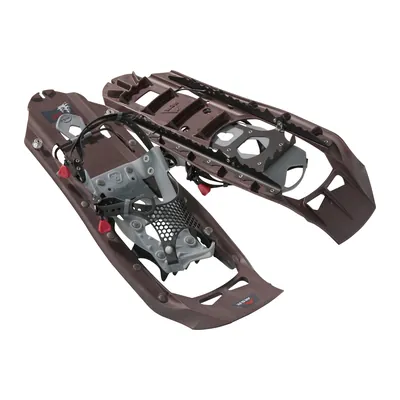
MSR Evo Trail
22-inch snowshoes for flat and rolling trails, rated up to 180 lb with your gear, or 250 lb with the 6-inch tails sold separately. Steel crampons.
View on Amazon (opens in a new tab)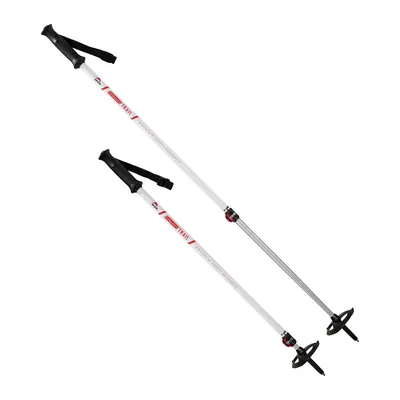
MSR DynaLock Trail Poles
Aluminum poles adjustable from 39.5 to 55 in, with a DynaLock lever lock that tightens without tools, plus snow and summer baskets: shorter uphill, longer downhill.
View on Amazon (opens in a new tab)
Worth watching
REI walks first-timers through snowshoe anatomy, materials, and how to pick the right type and size, with links to its guides on snowshoeing basics and avalanche safety.
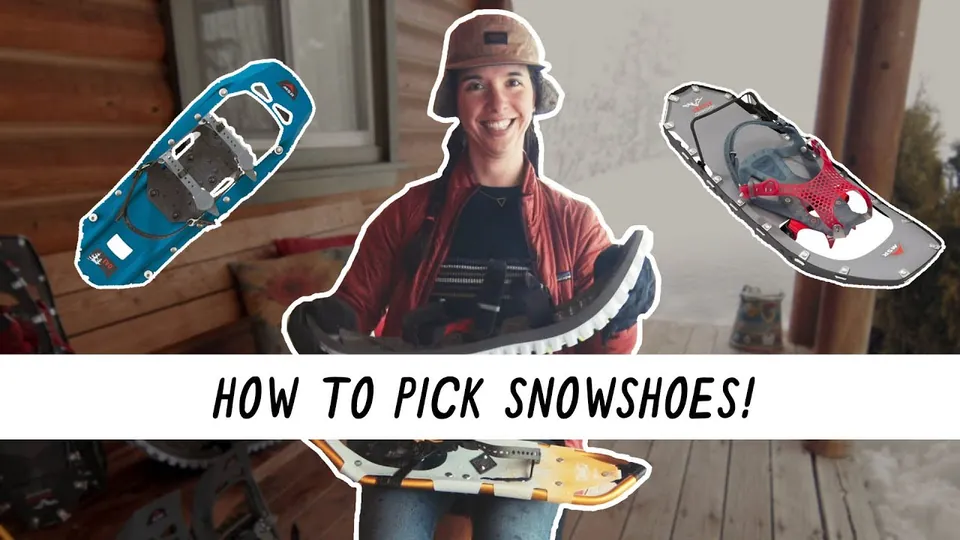
The video is hosted by YouTube (Google): nothing loads until you play it, and Google may then set cookies.
FAQ
What size snowshoes do I need for my weight?
Count your weight with your clothes and pack. According to MSR’s chart, from 125 to 175 lb (57 to 79 kg), 22 inches (56 cm) is enough on packed snow and 25 inches (64 cm) on soft snow; from 175 to 225 lb (79 to 102 kg), 25 inches, or 22 inches with tails. In deep snow, go bigger, up to 30 inches (76 cm) with tails for the heaviest hikers.
Do I need poles for snowshoeing?
Yes. Gear maker MSR considers them essential for stability and safety. Choose adjustable poles, so you can shorten them on steep climbs and lengthen them on descents, with a locking mechanism that resists freezing and is easy to work with gloves on.
Where should beginners go snowshoeing in France?
On the marked trails at Nordic ski areas. Nordic France brings together more than 160 areas across every mountain range in France, where trails are laid out for people on snowshoes or on foot, away from skiers. A groomed loop gives you a ready-made track and a sure way back. Ask on site about any trail fee.
Is there an avalanche risk on snowshoes?
Off secured trails, yes. In France, avalanches kill an average of 31 people a year, and more than 90% of accidents are caused by a dry slab, often triggered by the victim or their group, according to Météo-France. Start on marked trails, check the BERA avalanche bulletin, and don’t head out when an avalanche warning is in effect.
Sources
- MSR (Cascade Designs), Snowshoe Sizing: How to Pick Your Perfect Length, accessed October 22, 2026. cascadedesigns.com https://cascadedesigns.com/blogs/msr-gear-guides/snowshoe-sizing-how-to-pick-snowshoe-length ↩
- Nordic France (federation of French Nordic ski areas), Raquettes, Nordic activities page (in French), accessed October 22, 2026. nordicfrance.fr https://www.nordicfrance.fr/activites-nordiques/mode-detente/raquettes/ ↩
- MSR (Cascade Designs), The Ultimate Guide to MSR Snowshoes, accessed October 22, 2026. cascadedesigns.com https://cascadedesigns.com/blogs/msr-gear-guides/ultimate-guide-msr-snowshoes ↩
- TSL Outdoor (French snowshoe manufacturer), Trouvez votre raquette idéale, size finder (in French), accessed October 22, 2026. tsloutdoor.com https://www.tsloutdoor.com/fr-fr/raquette-ideale ↩
- Nordic France, Pass National (in French), accessed October 22, 2026. nordicfrance.fr https://www.nordicfrance.fr/qui-sommes-nous/pass-national ↩
- Météo-France (France’s national weather service), Avalanche : quels dangers, comment réagir et s’informer ? (in French), accessed October 22, 2026. meteofrance.com https://meteofrance.com/vigilance-et-securite/avalanche-quels-dangers-comment-reagir-et-sinformer ↩

Trail running, snow, water, nature and destinations
Nolwenn covers trail running, snow, water, nature and destinations for Outfarer. Curious about everything, from meteor showers to night-train schedules, she has a knack for digging up the one detail that changes everything, and nailing it in a single sentence.


