 Français (France)
 English (UK)
 English (US)
 Deutsch (Deutschland)

The Big Garden Birdwatch: what we know about the 2027 count
In 1979, the children’s programme Blue Peter asked its viewers to post in the birds they saw. That request grew into what the RSPB calls the world’s largest garden wildlife survey: now in its 47th year, the Big Garden Birdwatch drew more than 650,000 people in 2026, who counted 9.4 million birds between them [9]. Not bad for a letter to a television programme.
On 22 October 2026, the RSPB had not yet announced the dates of the 2027 Birdwatch; registrations open on 9 December [9]. The count is held over the same long weekend for everyone, at a similar time every year, so that results can be compared from one year to the next: in 2026, it ran from Friday 23 to Sunday 25 January [14].
No need to be an expert, nor a member: the Birdwatch is free and open to everyone. All it takes is one hour, in your garden, on your balcony or in a local park, and the RSPB’s free guide and ID chart help you put names to the birds [14].
Counting without counting the same bird twice
Pick one spot and stay there: the RSPB accepts one Birdwatch per person and per location [14]. Choose a part of the garden you can see well from a discreet place, indoors or out, so as not to disturb the birds [8], and note when you start and finish [3]. Only count the birds that land, not those flying over [10].
Here’s the detail that changes everything: for each species, give the highest number you see at any one time, not the total you see in the hour [10]. Five blue tits, then seven, then four? Record 7, not 16, because some of them almost certainly came back [6].
A busy feeder doesn’t stop you taking part, but it makes the job harder, with species jostling and the same birds coming and going. France’s LPO suggests keeping the highest number of birds with identical plumage seen together: 4 male chaffinches at one moment and 2 females at another make 6 chaffinches [8]. And for a feeder that does its visitors no harm, see our guide to feeding garden birds in winter.
Sending in your results
In 2026, the RSPB asked for results in three simple steps [14]:
- count the birds that land for one hour, at any time over the weekend, in a single place;
- note, for each species, the highest number seen at any one time [10], and send your results even if you saw nothing at all;
- send your results online at rspb.org.uk/birdwatch, by 22 February in 2026, or by post, to arrive by 17 February.
The time of day doesn’t matter: it may change what you see, but not the overall results, because so many people count at different times over the three days. Friends and family can count together, but should send only one set of results, otherwise the same birds end up counted twice [14].
What happens to your results
Because the Birdwatch takes place at the same time every year, the RSPB can look back through the years and see what has changed [14]. In 2026, the house sparrow topped the charts for the 23rd year running, ahead of the blue tit, the starling, the woodpigeon and the blackbird [9].
The long series tells the bigger story. In 2025, average house sparrow counts were the lowest since 1998 and 64% down on the first Birdwatch in 1979, and starlings dropped out of the top three at their lowest average count ever recorded [10]. In France, the national count fills a gap: ornithologists’ monitoring schemes leave private gardens out, and the counts help show how far gardens act as a refuge for birds [3]. In January 2025, 20,027 gardens took part, with 493,919 birds recorded, 25 per garden on average; great tits, robins and blue tits were seen in more than 70% of them [4].
Counts also show that the most frequent bird is not always the most numerous: in French gardens, the great tit is the species seen most often, but the house sparrow holds the record for numbers [1].
Winter bird counts elsewhere in Europe and in the Americas
The idea has caught on. Almost everywhere, the golden rule is the same: one hour of watching, and for each species the highest number seen at once.
| Count | Organiser | Dates | Watching time |
|---|---|---|---|
| Big Garden Birdwatch (UK) | RSPB | Not yet announced; 23 to 25 January in 2026 | 1 hour |
| National garden bird count (France) | LPO and French National Museum of Natural History | 30 and 31 January 2027 | 1 hour |
| Oiseaux en hiver (Switzerland) | BirdLife Switzerland | 7 to 10 January 2027 | 1 hour |
| Stunde der Wintervögel (Germany) | NABU and LBV | 8 to 10 January 2027 | 1 hour |
| Christmas Bird Count (Americas) | National Audubon Society | 14 December 2026 to 5 January 2027 | One count day per area |
Dates read on 22 October 2026 on the organisers’ official pages; for Germany, on the LBV’s, as NABU’s website was offline [2, 9, 11, 12, 13].
In France, the national garden bird count run by the LPO and the French National Museum of Natural History will take place on 30 and 31 January 2027 [2]. Like the Birdwatch, it asks for one hour on one of the two days [4], in a well-defined garden, square, park or balcony, with a form limited to 52 common species [5, 6]; it is the January edition of an observatory that runs all year, with a second weekend at the end of May for breeding birds [3].
In Germany, the Stunde der Wintervögel, run by NABU and its Bavarian partner, the LBV, will take place from 8 to 10 January 2027: one hour at a time of your choice, the highest number seen at once for each species, and results sent online from 8 January, or by post until 18 January [12]. In Switzerland, BirdLife Switzerland’s ‘Oiseaux en hiver’, also held in Germany, Austria, Czechia and Slovakia, runs from 7 to 10 January 2027, with the same hour of watching [11]. In Belgium, Natagora also holds a winter count [4], but its website, under maintenance on 22 October 2026, did not yet give the date.
Getting children involved
Counting birds suits children well, as long as you prepare. The RSPB runs a Big Schools’ Birdwatch for classes, which took place from 6 January to 13 February in 2026; for more than 20 years, it has connected children and teachers with nature in their school grounds [10]. At home, go through the RSPB’s guide and ID chart together in the days before [14]; France’s schools programme, Vigie-Nature École, also uses quizzes and an identification key to train pupils [6].
On the day, teach them to take a ‘mental photograph’ of the bird before looking it up: its size, its colour, and where that colour is [6]. No need to drag them out of bed at dawn: in winter, according to observations by French participants, the hours between 10am and 5pm seem ideal [1]. An hour is a long time when you’re six, so take turns at the window if you need to: what matters is that the spot is watched for the whole hour.
All that’s left is to keep an hour free once the RSPB announces its dates, with a hot cup of tea and the ID chart on the windowsill. Count carefully: you’ll be adding your line to a story that began with a children’s programme in 1979.
Kit related to this article
No affiliation: no commission, no sponsored products.
 William Collins (HarperCollins)
Collins Bird Guide (third edition)
The third edition (2023) of the guide by Lars Svensson, Killian Mullarney and Dan Zetterström: the birds of Britain and Europe, with a distribution map and plumage plates for each species.
View on Amazon (opens in a new tab)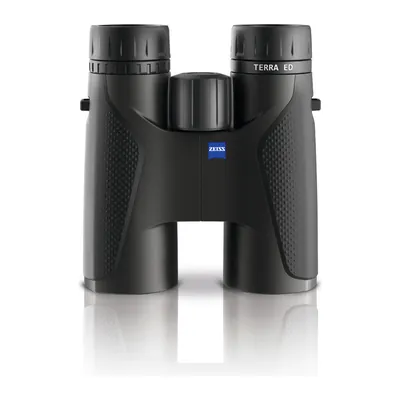
Zeiss Terra ED 8x42
8x42 binoculars: 5.3 mm exit pupil, 125 m field of view at 1,000 m, close focus from 1.6 m and 18 mm of eye relief for glasses wearers. 725 g, waterproof.
View on Amazon (opens in a new tab)
FAQs
When is the Big Garden Birdwatch 2027?
The RSPB had not announced the dates on 22 October 2026; registrations open on 9 December. The Birdwatch is held at a similar time every year, so that results can be compared: in 2026, it ran from Friday 23 to Sunday 25 January. The principle doesn’t change: one hour of watching, birds that land only, and the highest number of each species seen at once.
How long do I need to count for?
One hour, at any time of day over the Birdwatch weekend: the time you choose may change what you see, but not the overall results, the RSPB explains. Note when you start and finish. In France, the garden bird observatory asks for one hour on its national weekends, and suggests shorter 10-minute counts the rest of the year; in French schools, the protocol lasts 15 minutes.
Can I take part without a garden?
Yes. The RSPB welcomes counts from a balcony or a local park, as long as you send one set of results per person and per location. In 2026, it even sent information to some households in Manchester and Glasgow to encourage people without gardens to count from a window, a balcony or a park. France’s national count accepts balconies, squares and parks too.
Do I need to know all the birds?
No. The RSPB’s free guide and ID chart cover the most common species, and anything else can go in the free-text box or online, where the list is much longer. In France, the observatory’s form is limited to 52 common species, with look-alikes placed side by side. One participant quoted by the French programme suggests starting with the species you already know.
Does a bird feeder make counting harder?
It can: species jostle and the same birds come and go. Keep to one spot you can see clearly, and for each species note only the highest number seen at the same moment, never a running total. France’s LPO suggests counting birds with identical plumage separately, so 4 male and 2 female chaffinches seen at different moments make 6. If you feed, follow the RSPB’s seasonal advice and keep feeders clean.
When are the other winter bird counts?
In Switzerland, BirdLife Switzerland’s count runs from 7 to 10 January 2027, and Germany’s Stunde der Wintervögel from 8 to 10 January 2027. France’s national garden bird count is on 30 and 31 January 2027. Across the Atlantic, the National Audubon Society’s Christmas Bird Count runs every year from 14 December to 5 January. Belgium’s Natagora had not yet published its date.
Sources
- Vigie-Nature École (French National Museum of Natural History), Quelques résultats scientifiques pour Oiseaux des jardins, accessed 22 October 2026. vigienature-ecole.fr https://www.vigienature-ecole.fr/node/354 ↩
- Oiseaux des jardins (LPO and French National Museum of Natural History), Sur votre agenda, accessed 22 October 2026. oiseauxdesjardins.fr https://www.oiseauxdesjardins.fr/index.php?m_id=19 ↩
- Vigie-Nature, French National Museum of Natural History, Oiseaux des jardins, accessed 22 October 2026. vigienature.fr https://www.vigienature.fr/fr/oiseaux-des-jardins ↩
- LPO and French National Museum of Natural History, Garden Birds Observatory, Bilan 2025, accessed 22 October 2026. cdnfiles1.biolovision.net https://cdnfiles1.biolovision.net/www.oiseauxdesjardins.fr/userfiles/BilanOiseauxOiseauxDesJardins2025V5BWEB1.pdf ↩
- Oiseaux des jardins, Participer : mode d’emploi, accessed 22 October 2026. oiseauxdesjardins.fr https://www.oiseauxdesjardins.fr/index.php?m_id=1127&item=18 ↩
- Vigie-Nature École, Oiseaux des jardins, protocol page, accessed 22 October 2026. vigienature-ecole.fr https://www.vigienature-ecole.fr/oiseaux ↩
- Oiseaux des jardins, Toutes les nouvelles, news items from December 2025 to January 2026, accessed 22 October 2026. oiseauxdesjardins.fr https://www.oiseauxdesjardins.fr/index.php?m_id=1164 ↩
- Oiseaux des jardins, J’ai une mangeoire, puis-je participer au comptage de janvier ?, advice written for the 2022 count, accessed 22 October 2026. oiseauxdesjardins.fr https://www.oiseauxdesjardins.fr/index.php?m_id=20122 ↩
- RSPB, Big Garden Birdwatch, accessed 22 October 2026. rspb.org.uk https://www.rspb.org.uk/whats-happening/big-garden-birdwatch ↩
- RSPB, RSPB Big Garden Birdwatch 2026, press release, accessed 22 October 2026. rspb.org.uk https://www.rspb.org.uk/media-centre/rspb-big-garden-birdwatch ↩
- BirdLife Switzerland, Action « Oiseaux en hiver », accessed 22 October 2026. birdlife.ch https://www.birdlife.ch/fr/content/oiseaux-de-nos-jardins-en-hiver ↩
- LBV, Die Stunde der Wintervögel in Bayern, accessed 22 October 2026. lbv.de https://www.lbv.de/mitmachen/stunde-der-wintervoegel/ ↩
- National Audubon Society, Christmas Bird Count, accessed 22 October 2026. audubon.org https://www.audubon.org/community-science/christmas-bird-count ↩
- RSPB, Big Garden Birdwatch FAQs, accessed 22 October 2026. rspb.org.uk https://www.rspb.org.uk/whats-happening/big-garden-birdwatch/faqs ↩
- National Audubon Society, Join the Christmas Bird Count, accessed 22 October 2026. audubon.org https://www.audubon.org/community-science/christmas-bird-count/join-christmas-bird-count ↩

Trail running, snow, water, nature and destinations
Nolwenn covers trail running, snow, water, nature and destinations for Outfarer. Curious about everything, from meteor showers to night-train timetables, she has a knack for unearthing the one detail that changes everything, and putting it in a single sentence.


 Joséphine Garand
