 Français (France)
 English (UK)
 English (US)
 Deutsch (Deutschland)

Contents
Seven a.m., lakeside, not a cloud in the sky. It didn’t rain last night, yet the top of your sleeping bag is damp. You brush the rainfly and it’s dripping, and three drops land on your neck. Your first instinct is to curse the brand and hunt for the hole. Don’t bother: this water didn’t get in. It was already in the air inside your tent, and some of it came out of your lungs.
On this, the manufacturers agree. Hilleberg writes that there’s no such thing as a condensation-proof tent [1], MSR that you’ll never fully eliminate it [2], Nordisk that you can limit it but never remove it completely [3]. So the real questions are where it comes from, what actually reduces it, and how to tell it from a leak. This guide builds on the shelter step in our guide to your first backcountry camping trip.
The dew point, explained simply
Air always contains water vapor, an invisible gas. It can only carry so much, and that limit depends on its temperature: the warmer the air, the more it can hold, as Météo-France, France’s national weather service, points out [4]. At that limit, the air is saturated: that’s 100% relative humidity, when fog, dew, or frost can form [4].
Now cool that air without taking anything out of it, and it moves closer to its limit. The temperature at which it gets there is the The temperature to which air must be cooled, at constant pressure and water vapor content, for it to reach saturation., in the National Weather Service’s definition [5]. Any colder, and the extra vapor turns back into liquid. Hilleberg gives the example of your car on a cold morning and a glass of cold beer, fogged on the outside [1]. I can’t think of a better physics experiment.
It all depends on how humid the air is to start with. The table below gives the dew point for a few common conditions, calculated with the formula published by the National Weather Service [6].
| Air at | 60% humidity | 80% humidity | 95% humidity |
|---|---|---|---|
| 41 °F | 28 °F | 36 °F | 39 °F |
| 50 °F | 37 °F | 45 °F | 48 °F |
| 59 °F | 45 °F | 54 °F | 57 °F |
Dew points calculated by us in °C and rounded, then converted to °F and rounded again. A surface colder than this value gets covered in water. [6]
Look at the last column: in air at 95% humidity, fabric that’s about 2 °F colder is enough. At 60%, it takes a gap of 13 to 14 °F. That’s why the same tent stays dry one night and drips the next, with nothing about the tent having changed. MSR puts it another way: the higher the humidity and the bigger the temperature difference, the faster condensation happens [2].
Why the water settles on the fabric
But why is the fabric colder than the air? Under a clear sky, explains Decathlon, the French sporting goods retailer, the rainfly radiates heat toward the sky until it’s colder than both the outside air and the air in the tent [7]. It’s the same mechanism as dew on a lawn: ground that cools at night, and a clear sky that lets that radiation escape, where clouds would send some of it back [8].
Inside, meanwhile, your breath and body warm the air [2] and load it with vapor [9]. That air passes through the breathable fabric of the The inner tent you sleep in, with its floor, often partly made of mesh., hits the cold The waterproof outer layer pitched over the tent body, which keeps off rain and wind., and condenses there; a cold floor does the same [2]. Hilleberg also points to the underside of your sleeping bag, and to the foot of the bag, which is less warm, when it touches the wall [1].
Where the water comes from: seven causes
Nordisk, a tent maker, names three big contributors: the ground, wet gear, and you [3]. The rest comes down to the air and the spot you choose.
| Cause | What happens | Source |
|---|---|---|
| Your breath and body | They warm the air in the tent and load it with vapor | MSR, Vaude [2, 9] |
| Wet ground | It gives off vapor under the rainfly; for Nordisk, most of the moisture comes from here | Nordisk [3] |
| Air that’s already humid | After a day of rain, air and ground are saturated; fall and cool summer days are prone to it | Decathlon, Hilleberg [1, 7] |
| Wet gear | It dries in the tent, and its water ends up on the fabric | Nordisk, Which? [3, 10] |
| No wind | Humid air stays put; dew is heavier when the wind is light | Hilleberg, NWS document [1, 8] |
| Tall grass | It blocks ventilation at the foot of the tent | Nordisk [3] |
| Water close by | Lakes and rivers raise the humidity of the air | Vaude, Decathlon [7, 9] |
Each brand is talking about its own tents; none puts a number on the share of each cause.
As for the time of year, our only reference point is French: Météo-France notes that in mainland France, air humidity is on average higher in December and lower in July and August [4]. As for the sleeper, Hilleberg points out that body type, sleeping bag, and how much heat you produce all affect condensation [1], which explains why your neighbor sometimes sleeps dry in the same tent model.
How to reduce condensation: air, site, ground
Getting air moving is still the most effective fix, according to MSR [2]. The brand suggests rolling up the The area covered by the rainfly in front of the door, outside the tent body. doors as far as possible, opening the top of the door zipper a little, and, if you have two doors, opening each a bit for cross-flow [2]. Decathlon says to keep the vents open even in the rain, with a gap between the ground and the bottom of the rainfly, to create a draft from bottom to top [7]. In dry weather, Nordisk goes so far as to lift the bottom of the fabric with a stone or stick [3].
One caveat the quick tips leave out: venting only works if the air coming in is a little drier than the air going out. When it’s more humid outside than inside, Hilleberg writes, the vents actually increase condensation [1]. The brand adds that you can wake up to a soaking ceiling even under a tarp, wide open as it is [1]. So don’t judge your vents by a single foggy night.
- Pitch on flat ground, away from tall grass [3].
- Move away from the lake or river [7, 9].
- Where camping under trees is allowed, they help: temperature and humidity are more regular there, according to Decathlon [7].
- Slip a footprint under the tent: Vaude, Nordisk, and Hilleberg say it holds back moisture from the ground [3, 13, 14].
- Pitch the fabric snug but not too tight: the rainfly shouldn’t touch the tent body, and wrinkles concentrate the drops [7]. On a taut tent, water runs down the rainfly to the ground [2].
- Keep wet gear out of the tent, under a tarp for example [3].
- Keep your sleeping bag and sleeping pad away from the walls [7].
One last fix, and one more roof: Will Copestake, a brand ambassador quoted in Hilleberg’s handbook, pitches a tarp over his tent, partly because it reduces condensation [15]. The setups are in our tarp guide. Ounce counters can run their own numbers.
Double wall, single wall: what each one changes
A double wall doesn’t get rid of condensation: it moves it away from you. The water settles under the rainfly and stays out of the tent body, Vaude explains [9]. Hilleberg describes the same principle: a waterproof rainfly, neither breathable nor air permeable, and a highly breathable tent body that lets humid air escape and stops the drops [1]. Still, the brand warns that the walls of the tent body sometimes become the coldest spot and get wet in turn [1]. In a small tent, it adds, condensation is more noticeable, because there’s less air and the walls are closer to you [1].
A single-wall tent has just one layer of fabric. At MSR, it’s waterproof and breathable, which helps solve the weight problem but complicates ventilation [16]; you’ll mostly find these tents in mountaineering and among tarp-style shelters [16]. The head of the lab that examined ten tents for the Swiss consumer show Kassensturz in 2022 summed up the constraint: a thin waterproof fabric doesn’t let air through either, so ventilation relies on openings [17].
The fabric matters too. Vaude says to pay special attention to ventilation with silicone-coated rainflies, or condensation will increase [13]. A tent’s waterproof rating, on the other hand, tells you nothing about condensation: it measures what the fabric keeps out, not the vapor it lets out. Decathlon even notes that a fabric made perfectly waterproof keeps the sleeper’s vapor inside [18].
Condensation or leak: how to tell the difference
It’s an easy mistake to make. According to Nordisk, heavy condensation gives the impression that rain is getting through, because wind or a simple touch knocks the drops loose [3]. Hilleberg tells of the same misunderstanding: in the early 1980s, users of its large vestibules saw rain hit the fabric, knock the condensation loose, and send drops falling, as if the shower were coming straight through [1]. Three clues help you decide.
| Clue | More likely condensation | More likely a leak |
|---|---|---|
| The shape | A patch of moisture or droplets on the ceiling | Water coming in at one small, specific spot |
| The location | The ceiling and the coldest walls | Along a seam or near the door |
| The flow | Drops that fall when you touch the fabric, or in the wind | A heavy, steady flow |
In dry weather, the doubt doesn’t last long: no rain, no leak, and both Decathlon and Vaude point out that condensation says nothing about how waterproof your tent is [7, 9]. If water really is coming in along a seam, Which? calls that a likely stitching problem, which should be covered by the warranty, and suggests testing the tent with a garden hose before you go [10]. Our guide to waterproof ratings explains why seams and zippers often let water through before the fabric does.
In the morning: wipe, dry, pack dry
Once the water’s there, MSR offers two solutions: wipe the inside of the rainfly with a towel, or take it off and spread it out in the sun [2]. Decathlon recommends a microfiber cloth and a gentle touch [7]. Hilleberg has a trick for the next night: wrap a rain jacket around the bottom of your sleeping bag [1]. Erik Gauden ran into that same damp rainfly during three days of rain in Brittany’s Monts d’Arrée, and he tells how he kept the wet separate from the dry.
Once you’re home, get the tent out of its bag: MSR insists that it be completely dry before you store it, since dampness leads to mold that can do irreparable damage to the fabric [2].
The smart move comes down to three things, before the tent’s even out of its bag: get away from the water, lay down the footprint, and keep one opening up high and one down low. And in the morning, keep a towel within reach. The rest is physics, and physics has never read a spec sheet.
Gear related to this article
No affiliation: no commission, no sponsored products.
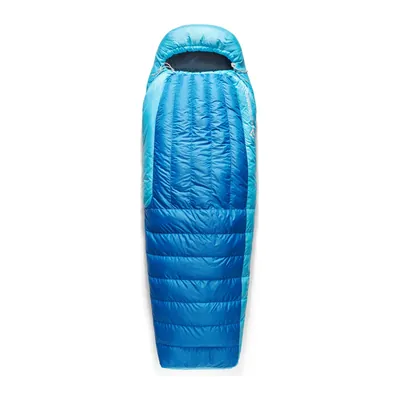
Sea to Summit Trek 30°F
A down bag named after its limit temperature, 30 °F; its comfort temperature, the one to shop by, is 37 °F under ISO 23537. 2.47 lb in Regular.
View on Amazon (opens in a new tab)
Worth watching
Oscar Hikes gives ten tips built on one idea: cut the humidity in the tent and the temperature gap between the air inside and out. A handy companion to the reasons laid out here.
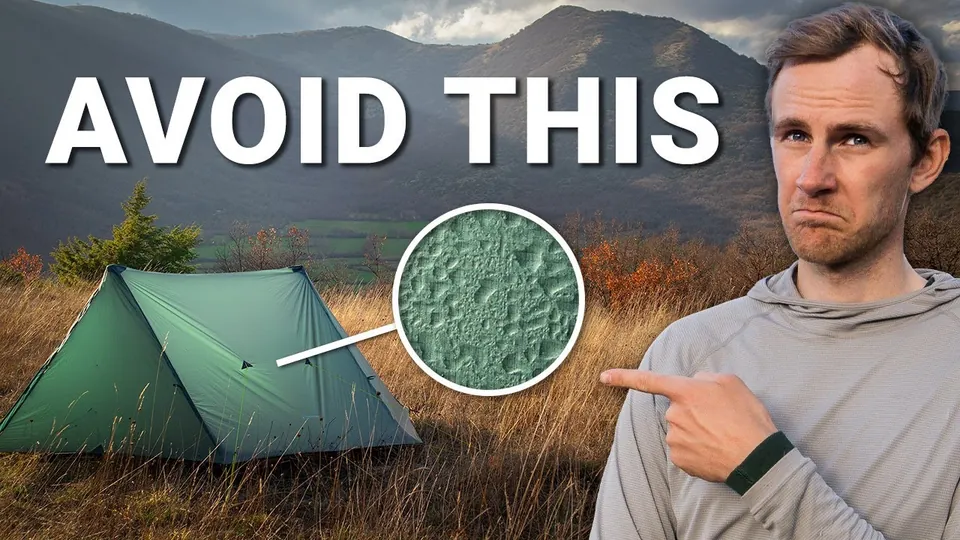
The video is hosted by YouTube (Google): nothing loads until you play it, and Google may then set cookies.
FAQ
Why is my tent wet inside when it didn’t rain?
It’s condensation. Your breath, your body, the ground, and damp gear load the air in the tent with vapor. When that air touches the rainfly, cooled by the night, it drops below its dew point and the vapor turns back into water. Vaude and Decathlon point out that this natural process doesn’t mean your tent is leaking.
Is there a tent without condensation?
No, Hilleberg writes, and MSR and Nordisk both say you can only limit it. A double wall keeps the water under the rainfly, away from the tent body, according to Vaude, and a larger tent makes it less noticeable, according to Hilleberg. Even a tarp, for all its ventilation, can end up covered in water in some weather: the humidity of the air matters as much as the model.
Should you leave the vents open when it rains?
Decathlon recommends it, while also leaving a gap between the ground and the bottom of the rainfly, and MSR calls airflow the most effective fix. Hilleberg adds a caveat: venting only helps if the air coming in is drier than the air in the tent. When it’s more humid outside than inside, it can actually increase condensation.
Does a footprint reduce condensation?
Yes, according to Vaude, Nordisk, and Hilleberg, because it holds back moisture that rises from the ground and would end up under the rainfly. Nordisk figures most of the moisture in a tent comes from there. These brands sell footprints, so take away the principle rather than a number: none publishes a measurement in the pages we read.
How do you dry a tent covered in condensation?
At camp, wipe the inside of the rainfly with a towel or microfiber cloth, without rubbing, or spread it out in the sun. At home, dry the tent completely before storing it: according to MSR, dampness leads to mold that damages the fabric. Never use a stove under the tent to speed up the drying.
Sources
- Hilleberg, “I want a tent with no condensation,” FAQs, accessed November 7, 2026. hilleberg.com https://hilleberg.com/eng/resources/faqs/i-want-a-tent-with-no-condensation ↩
- MSR (Cascade Designs), “How to Avoid Tent Condensation,” July 10, 2023, first published January 18, 2020, accessed November 7, 2026. cascadedesigns.com https://cascadedesigns.com/blogs/msr-gear-guides/msr-youtube-tips-condensation-tents ↩
- Nordisk, “Trekking Tents FAQ,” FAQs, accessed November 7, 2026. nordisk.eu https://nordisk.eu/pages/faq-trekking-tents ↩
- Météo-France, “Qu’est-ce que l’humidité ?” web page (in French), accessed November 7, 2026. meteofrance.com https://meteofrance.com/actualites-et-dossiers/comprendre-la-meteo/quest-ce-que-lhumidite ↩
- National Weather Service (NOAA), glossary, entry “Dew Point,” accessed November 7, 2026. forecast.weather.gov https://forecast.weather.gov/glossary.php?word=dew+point ↩
- National Weather Service (NOAA), “Vapor Pressure,” calculation sheet, accessed November 7, 2026. weather.gov https://www.weather.gov/media/epz/wxcalc/vaporPressure.pdf ↩
- Decathlon, “Comment remédier à la condensation des tentes ?” advice page (in French), accessed November 7, 2026. conseilsport.decathlon.fr https://conseilsport.decathlon.fr/comment-eviter-la-condensation-des-tentes ↩
- Jeff Haby, “The Forecasting of Dew,” training document “Dew and Frost Development” hosted by the National Weather Service, accessed November 7, 2026. weather.gov https://www.weather.gov/source/zhu/ZHU_Training_Page/fog_stuff/Dew_Frost/Dew_Frost.htm ↩
- Vaude, “Welches Zelt ist das beste für mich?” blog post, June 10, 2023, updated April 30, 2026 (in German), accessed November 7, 2026. vaude.com https://www.vaude.com/de/de/blog/post/welches-zelt-ist-das-beste-fuer-mich.html ↩
- Which?, “Why you shouldn’t rely on the waterproof rating of your tent,” May 18, 2024, accessed November 7, 2026. which.co.uk https://www.which.co.uk/news/article/why-you-shouldnt-rely-on-the-waterproof-rating-of-your-tent-a0NT34h6Xhbe ↩
- P. O. Iversen and M. Fogelholm, “Fluid and water balance: a scoping review for the Nordic Nutrition Recommendations 2023,” Food & Nutrition Research, 2023, accessed November 7, 2026. pmc.ncbi.nlm.nih.gov https://pmc.ncbi.nlm.nih.gov/articles/PMC10710856/ ↩
- M. Tipton and H. Montgomery, “The physiology of survival: Fluid and food,” editorial, Experimental Physiology, 2025, accessed November 7, 2026. pmc.ncbi.nlm.nih.gov https://pmc.ncbi.nlm.nih.gov/articles/PMC13140192/ ↩
- Vaude, “Aus welchen Teilen besteht ein Zelt?” blog post, June 5, 2024, updated April 30, 2026 (in German), accessed November 7, 2026. vaude.com https://www.vaude.com/de/de/blog/post/aus-welchen-teilen-besteht-ein-zelt.html ↩
- Hilleberg, “Do I need footprints? Do the footprints cover the vestibules?” FAQs, accessed November 7, 2026. hilleberg.com https://hilleberg.com/eng/resources/faqs/do-i-need-footprints-do-the-footprints-cover-the-vestibules ↩
- Hilleberg, “The Tent Handbook 2026/2027,” catalog, accessed November 7, 2026. cdn.hilleberg.com https://cdn.hilleberg.com/cms/support/order-catalog/Hilleberg2026Handbook-EN.pdf ↩
- MSR (Cascade Designs), “How to Choose the Best Backpacking Tent,” guide first published August 24, 2021, and since updated, accessed November 7, 2026. cascadedesigns.com https://cascadedesigns.com/blogs/msr-gear-guides/how-to-choose-best-backpacking-tent ↩
- SRF, Kassensturz, “Zweierzelte im Test: Undicht und kein Platz fürs Gepäck,” May 31, 2022 (in German), accessed November 7, 2026. srf.ch https://www.srf.ch/sendungen/kassensturz-espresso/tests/camping-zelte-zweierzelte-im-test-undicht-und-kein-platz-fuers-gepaeck ↩
- Decathlon, “Comment imperméabiliser une tente ?” advice page (in French), accessed November 7, 2026. conseilsport.decathlon.fr https://conseilsport.decathlon.fr/comment-impermeabiliser-une-tente ↩
- Direction générale de la santé, Santé publique France, and Anses, “Intoxications au monoxyde de carbone. Adopter les bons gestes peut sauver des vies,” press release, November 26, 2025 (in French), accessed November 7, 2026. santepubliquefrance.fr https://www.santepubliquefrance.fr/presse/intoxications-au-monoxyde-de-carbone-adopter-les-bons-gestes-peut-sauver-des-vies ↩
- Campingaz, instructions for use of the “Bivouac” stove (ref. 4010057703), manufacturer’s manual, accessed November 7, 2026. campingaz.com https://www.campingaz.com/trade/images/SpareParts/01ad513b-3784-4fc5-9430-1d51b5db5b6b/4010057703.pdf ↩
- U.S. Consumer Product Safety Commission, “Portable Heaters & Camping Equipment,” Carbon Monoxide Information Center, accessed November 7, 2026. cpsc.gov https://www.cpsc.gov/Safety-Education/Safety-Education-Centers/Carbon-Monoxide-Information-Center/Portable-Heaters--Camping-Equipment ↩
- Centers for Disease Control and Prevention, “Carbon Monoxide Poisoning Deaths Associated with Camping, Georgia, March 1999,” MMWR, 1999, accessed November 7, 2026. cdc.gov https://www.cdc.gov/mmwr/preview/mmwrhtml/mm4832a1.htm ↩

Camping, backpacking, bushcraft and hiking
Guillaume Hoarau writes for Outfarer about camping, backpacking, bushcraft, and hiking. A survival-skills buff and a collector of vintage field manuals, he loves clear explanations, lists that actually help and other people’s stories, which he tells well.


