 Français (France)
 English (UK)
 English (US)
 Deutsch (Deutschland)

Contents
Choosing a river that fits your skills
18,000 people, or very nearly. That’s how many used the two bivouac areas in the Ardèche gorges, in southern France, in 2026 [1], in the heart of a nature reserve where you can’t sleep anywhere else [2]. A night by the water, deep in a canyon, after a day of paddling: the promise is a big draw, and it takes some planning.
It all starts with picking the river. France’s canoe-kayak federation, the FFCK, separates flatwater, meaning lakes, canals, and Class I rivers, from whitewater, which starts at Class II; on whitewater, it considers it essential for beginners to learn with a club or an instructor [3] [4]. For a first trip on your own, aim for a calm river, or a route your outfitter confirms is suitable for beginners. If you’re still deciding between boats, our guide to choosing between a canoe and a kayak lays out the differences.
Flatwater touring, the federation points out, is one of the oldest and most popular ways to paddle, for a few hours or several days, from inn to hotel or from bivouac to campground. Touring boats are long, roughly 15 feet (4.5 m) or more, track very well, and have watertight compartments for hauling plenty of gear [3].
The Ardèche gorges as an example
The trip through the Ardèche gorges is the only one on the river that crosses the national nature reserve, protected since 1980. Two routes lead through it to the beach at Sauze, in Saint-Martin-d’Ardèche: about 15 miles (24 km) from the hamlet of Chames, just past the Pont d’Arc, a natural stone arch, or 19 to 20 miles (30 to 32 km) from Vallon-Pont-d’Arc [5] [6]. You can do it in one day, but it’s a demanding one, with 5 to 7 hours of paddling; it’s better spread over two days, with a night at a bivouac area [5].
| Key point | What the official sources say |
|---|---|
| Full route | About 15 miles (24 km) from Chames or 19 to 20 miles (30 to 32 km) from Vallon-Pont-d’Arc, ending at the beach at Sauze |
| Time | 5 to 7 hours of paddling in one day; two days recommended, with a night at a bivouac area |
| Requirements | Age 7 or older and able to swim, under a prefectural order |
| Gournier bivouac area | Open April 4 to September 27, 2026 |
| Gaud bivouac area | Open Saturdays in June and July 1 to August 29, 2026 |
| Fire | All use of fire banned in the reserve; stoves banned July 1 to September 30, strongly discouraged the rest of the year |
Sources: Gorges de l’Ardèche Pont d’Arc tourist office and Syndicat de gestion des gorges de l’Ardèche (SGGA), the public agency that manages the gorges, pages accessed October 22, 2026. Confirm opening dates with the bivouac reservation service.
There’s no lodging in the reserve, so the wildlife is left in peace; the two bivouac areas at Gaud and Gournier, owned by the Ardèche département (the county-level local government), welcome hikers and paddlers with a reservation [2]. During a drought alert, the tourist office warns that the fire risk becomes especially high, and that all use of fire is then strictly banned in the reserve, including camp stoves, barbecues, and cigarettes [6]. The agency that manages the reserve adds that stoves are banned from July 1 to September 30 under prefectural regulations (rules set by the French government’s local representative), strongly discouraged the rest of the year, and recommends planning cold meals [2].

Where can you sleep by the water in France?
Away from the Ardèche, France’s general rules apply: you sleep at a campground, at a designated bivouac area, or where backcountry camping is allowed, with the landowner’s permission. Riverbanks often belong to private owners, and protected areas have their own bans. Our guide to backcountry camping in France explains what the law says, from beaches to national parks.
In practice, the easiest approach is to build your route around a known place to stay: a riverside campground, a bivouac area you reserve ahead, or a gîte d’étape (a simple hikers’ hostel). The canoe outfitter usually knows the options on its river, and can often arrange a shuttle back to where you started.
Loading the canoe: everything dry, everything tied down
On the Ardèche, outfitters provide the canoe, paddles, PFDs (personal flotation devices), and waterproof barrels for your gear [5]. The principle holds everywhere: anything that needs to stay dry rides in a sealed barrel, and anything that doesn’t float well gets tied to the boat. Keep the weight low and centered so the canoe stays stable, and keep water, sunscreen, and a windbreaker within reach.
- In the barrels: the tent, your sleeping bag, dry clothes for the evening, the first-aid kit, the food.
- Within reach: plenty of water, a hat, sunscreen, a windbreaker, your phone in a waterproof pouch.
- For the bivouac: a headlamp, and food you can eat cold where fires and stoves are banned.
- On the way out: a trash bag so you can pack out all your trash.
Safety: don’t overestimate your strength
The Ardèche gorges tourist office puts it with good sense: canoeing is a sport, the boat doesn’t move on its own, and you shouldn’t overestimate your strength. Factor in the distance and your experience, and avoid heading out on a trip that’s beyond your abilities. Without being truly difficult, the river can be lively in places, and ending up in the water in a rapid isn’t out of the question [5].
Here’s the detail that changes everything: the season. In midsummer, the bivouac areas fill up and the river gets very crowded; in spring or September, when the Gournier area is open and the heat has eased, the same trip feels completely different. Book early, and check the water level with your outfitter the day before you set out.
And when evening comes, with the canoe resting on the pebbles and the cliff glowing red above the bivouac, it’s easy to see why so many paddlers come back to the same river year after year.
Gear related to this article
No affiliation: no commission, no sponsored products.
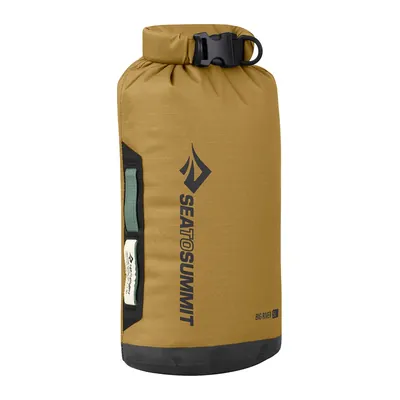
Sea to Summit Big River Dry Bag
A roll-top dry bag in 420D nylon with a TPU laminate, taped seams and lash points: to keep the tent, sleeping bag and evening clothes dry. Sizes from 5 to 65 liters.
View on Amazon (opens in a new tab)
Worth watching
A quick primer from Canoe & Kayak Magazine: Paul and Willa Mason pack a canoe for an overnight trip and explain why you don’t need to bring the kitchen sink.
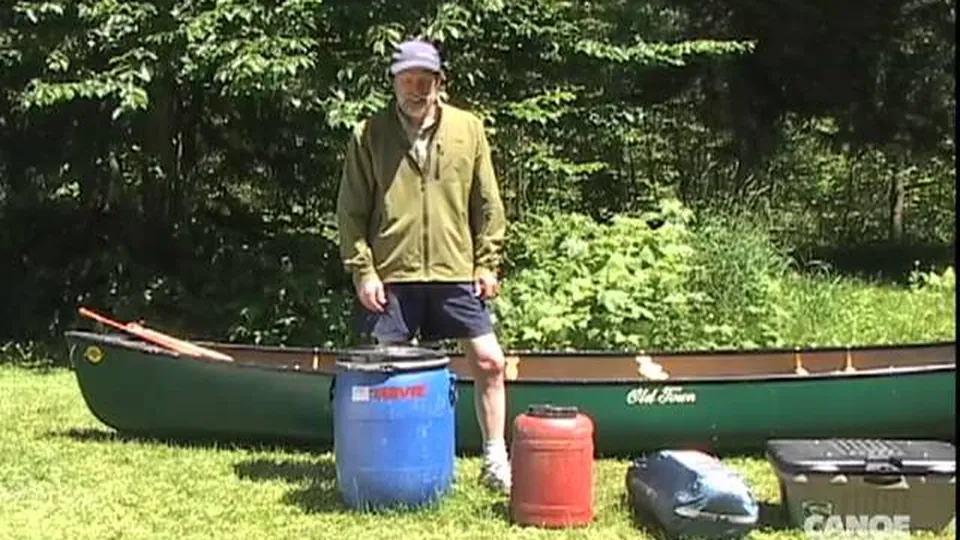
The video is hosted by YouTube (Google): nothing loads until you play it, and Google may then set cookies.
FAQ
Can you canoe the Ardèche gorges in one day?
Yes, but it’s a demanding day: plan on 5 to 7 hours of paddling for the full 15- or 20-mile (24 or 32 km) trip, according to the local tourist office. It recommends two days instead, with a night at one of the nature reserve’s two bivouac areas, Gaud or Gournier, which you need to reserve in advance.
When are the Ardèche gorges bivouac areas open?
In 2026, the Gournier bivouac area was open from April 4 to September 27, and the Gaud area on Saturdays in June, then from July 1 to August 29. The dates change every year: confirm them with the bivouac reservation service or the tourist office before you book.
Do you have to know how to swim to canoe a river in France?
Yes. On the Ardèche, a prefectural order requires paddlers to be at least 7 years old and able to swim, and the tourist office stresses that this rule isn’t negotiable. Everywhere else, knowing how to swim and wearing a buckled PFD are still the foundation of safety, even on a calm river.
What should you do if your canoe flips?
Let your gear go and don’t try to hold on to it: you can pick it up more calmly downstream. Get into the safety position, on your back, feet first, and let yourself float down in line with the current, as the Ardèche gorges tourist office advises. If there’s an accident in France, call 112.
Sources
- Syndicat de gestion des gorges de l’Ardèche (SGGA, the public agency that manages the Ardèche gorges), Bilan de la saison des bivouacs (in French), 2026, accessed October 22, 2026. gorgesdelardeche.fr https://www.gorgesdelardeche.fr/bilan-de-la-saison-des-bivouacs/ ↩
- SGGA, Les aires de bivouac (in French), accessed October 22, 2026. gorgesdelardeche.fr https://www.gorgesdelardeche.fr/decouvrir/les-aires-de-bivouac/ ↩
- Fédération française de canoë-kayak et sports de pagaie (FFCK, France’s canoe-kayak federation), Eau calme (in French), accessed October 22, 2026. ffck.org https://www.ffck.org/pratiquer/loisirs/eau-calme/ ↩
- FFCK, Eaux vives (in French), accessed October 22, 2026. ffck.org https://www.ffck.org/pratiquer/loisirs/eaux-vives/ ↩
- Office de tourisme Gorges de l’Ardèche Pont d’Arc (tourist office), Canoë en Ardèche : toutes les infos pour se lancer (in French), accessed October 22, 2026. gorges-ardeche-pontdarc.fr https://www.gorges-ardeche-pontdarc.fr/canoe-en-ardeche-toutes-les-infos-pour-se-lancer/ ↩
- Office de tourisme Gorges de l’Ardèche Pont d’Arc (tourist office), Réserver votre bivouac dans les gorges de l’Ardèche (in French), accessed October 22, 2026. gorges-ardeche-pontdarc.fr https://www.gorges-ardeche-pontdarc.fr/reserver-votre-bivouac-dans-les-gorges-de-lardeche/ ↩
- Service-public.fr (official French government information site), Quels sont les numéros en cas d’urgence (Samu, pompiers...) et les numéros d’écoute ? (in French), checked by Service-public.fr on August 25, 2026, accessed October 22, 2026. service-public.gouv.fr https://www.service-public.gouv.fr/particuliers/vosdroits/F33954 ↩

Trail running, snow, water, nature and destinations
Nolwenn covers trail running, snow, water, nature and destinations for Outfarer. Curious about everything, from meteor showers to night-train schedules, she has a knack for digging up the one detail that changes everything, and nailing it in a single sentence.


 Guillaume Hoarau