 Français (France)
 English (UK)
 English (US)
 Deutsch (Deutschland)

Contents
What changes when you leave the road
About an inch (2.5 cm). That was the height of the biggest bumps on an “uneven” treadmill used by researchers at the University of Michigan. It was enough to make the 12 runners tested burn 5% more energy than at the same pace on a smooth belt, and the width and length of their steps got about a quarter more irregular [1]. Now picture the roots, rocks, mud and steps of a real trail.
Terrain is the first change, and the one road runners underestimate most. The others come down to elevation: climbing costs more and more energy as the grade gets steeper, and running downhill makes your muscles work as brakes [2]. Your pace per mile, so precious on pavement, loses much of its meaning. And if you’re starting from scratch, with no running background at all, I’d almost call that an advantage: you have no road habits to unlearn.
| On the road | On the trail | |
|---|---|---|
| The ground | Smooth and even: every stride is like the last | Roots, rocks, mud: irregular strides, and more energy at the same pace |
| Climbs | Usually moderate | Frequent and sometimes steep: the cost rises with the grade, and hiking becomes a technique |
| Downhills | Little braking | Your muscles brake with every step: this is what loads your legs |
| The benchmark | Pace per mile | Time, plus km-effort to compare two routes |
| On race day | A set distance on closed roads | No set distance, at least 75% unpaved, a fully marked course |
Based on Voloshina and Ferris (2015), Vernillo et al. (2017), Finiel et al. (2026), and Rule 57 of the World Athletics Technical Rules.
Climbs: hiking isn’t cheating
On the road, walking feels like giving up. On a steep trail, it’s often the most economical choice. At the University of Lausanne in Switzerland, researchers had 17 endurance runners walk and run on slopes of varying steepness, always at the same rate of climb: about 2,600 ft (800 m) of elevation gain per hour. Beyond an average grade of 7.2°, roughly 13%, they spontaneously preferred to walk, and that was about the point where walking became cheaper than running [3]. Your body does the math for you: let it, no shame involved.
Downhills: less huffing, more work for your quads
A downhill doesn’t leave you gasping, and that’s exactly the trap. Going up, your muscles produce work to lift your body; going down, they mostly absorb it by braking, as a 2017 research review sums it up [2]. The energy cost of running drops on gentle downhill grades to a minimum around -20%, then climbs again as the slope steepens [2]. You breathe easier, but your quads take the hit. Our training plan for a first trail race explains how to get your legs used to downhills, with the research behind it.
Thinking in hours instead of miles
On the road, a 10K is a 10K. On trails, the same distance can be an easy jog or half a day in the mountains. Britain’s Fell Runners Association warns newcomers to A British style of hill and mountain racing, often off-trail on unmarked courses, where runners navigate with a map and compass. that a 10 km fell race is likely to be a much tougher undertaking than a 10 km trail race, and that it takes longer, “often much longer,” than a race of the same length on the flat [4].
Even at the elite level, the clock reads in hours. For the short trail race at its world championships, 22 to 28 miles (35 to 45 km) with 6,600 to 9,800 ft (2,000 to 3,000 m) of The total of all the climbing on a route, added up., World Athletics aims for a men’s winning time between 3 hours 45 minutes and 4 hours 15 minutes [5]. To compare two routes, the trail world adds distance and climbing together. That’s km-effort: 1 km for each kilometer covered, plus 1 km for every 100 m (330 ft) of elevation gain [5, 6]. A 20 km (12.4-mile) route with 800 m (2,625 ft) of gain comes to 28 km-effort.
To estimate how long a run will take, your own numbers are the most reliable guide: log the time, distance and elevation gain every time, and you’ll soon know your own rhythm, just as hikers do with our guide to estimating hiking time.
The minimum gear: what race rules really require
Good news: for a first run on a forest road or an easy trail, the list is short. Shoes suited to the terrain, first: drop, cushioning and lugs are explained in our guide to trail running shoes. Quick-drying clothes, layered when it’s cool using the three-layer system. Water, and a charged phone. The rest depends on how long, how high, the season and how remote you’ll be, and that’s where race rules make handy checklists, even for training.
Their logic is the same everywhere. In France, the rules of the French Athletics Federation (FFA) require trail race organizers to impose the gear that lets runners, for the whole event, avoid getting into distress (a light, clothing, water, food) and, if there’s an accident, call for help (a whistle, a phone) and wait safely for rescuers (an emergency blanket, extra clothing) [6]. World Athletics Rule 57 says much the same: depending on expected conditions, organizers may recommend or require minimum clothing, a wind jacket, a headlamp, water or food [5]. The exact list, and how much water to carry, is up to the organizer, who knows the terrain and the season [6].
| Rules | What’s required | Checks and penalties |
|---|---|---|
| French Athletics Federation (2027 rules) | Gear to avoid distress, call for help and wait for rescuers; list and water reserve set by the organizer | Gear must be shown on request; suggested penalty of 5 minutes per missing item below 50 km-effort |
| World Athletics (Rule 57) | Depending on expected conditions: minimum clothing, wind jacket, headlamp, water, food | Gear and penalties published in the race rules |
| UTMB Mont-Blanc (2027 rules) | A basic list, plus items activated based on the forecast and announced at least 24 hours before the start | Checks during the race; penalties up to disqualification |
| Fell Runners Association (UK) | For longer races: full waterproof jacket and pants with taped seams, hat, gloves, map, compass, whistle, food | Gear check; a runner who doesn’t comply can be excluded |
Rules accessed on October 23, 2026. Each race’s own list comes first: read it before you sign up.
The detail that changes everything is a single sentence in the rules of the UTMB, the famous race series around Mont Blanc in the French Alps: it’s important “not to choose the lightest possible clothing” [7]. A jacket that checks the box but lets the rain through is useless on the day it pours. The Fell Runners Association puts it its own way: its mandatory gear is “the bare minimum,” to be added to depending on conditions and experience [4]. One more, newer point for races in France: since the FFA’s 2027 rules, trail races must replace plastic cups and bottles by refilling runners’ own containers [6]. Bring your soft flask or a cup.

Your first runs: building up without rushing
If you’re coming from the road, the temptation is to keep your numbers: same mileage, same pace, just somewhere else. If you’re coming from nowhere, it’s the opposite: you have no idea where to start. Either way, I’d begin on wide, easy trails close to home before heading for narrow singletrack and the mountains.
So how much should you add from one week to the next? The honest answer is that nobody knows down to the percent. The famous 10% weekly rule was put to the test in the Netherlands, with no result [9]; a Danish study suggests watching out for big jumps instead [10].
| Study | Participants | What was compared | Result |
|---|---|---|---|
| Netherlands, 2008 (randomized trial) | 532 beginners training for a 4-mile (6.7 km) race | A 13-week program built on the 10% rule, and a standard 8-week program | 20.8% injured in one group, 20.3% in the other: no difference |
| Denmark, 2014 (exploratory study) | 874 beginners followed for a year | Mileage up more than 30% over two weeks, and up less than 10% | No difference in injuries overall, but more distance-related injuries above 30%, a result still to be confirmed |
Buist et al. (2008); Nielsen et al. (2014).
Those distance-related injuries include IT band syndrome and patellofemoral pain, and the Danish authors themselves call their result exploratory [10]. My takeaway: build up in small steps, with no sudden jump from one week to the next, and count elevation gain as a load in its own right, since climbing takes more energy and downhills work your muscles differently [2]. For a week-by-week program, our plan for a first trail race takes it from there.
Technical terrain, for its part, is tamed by slowing down. In a U.S. study published in 2026, 27% of the 227 runners followed across nine trail races of 12 to 31 miles (20 to 50 km) reported a fall, and 23% a rolled ankle [11]. More surprisingly, these incidents were more common in faster races with less climbing, and on singletrack; pace and perceived effort predicted them better than anything else [11]. Backing off on technical sections, especially as you tire, is still your first line of defense.
Alone on the trail: weather, water and your route
In a race, an organizer marks the course, staffs the aid stations, checks runners through and sweeps the course behind the last runner. Even then, the French federation’s rules remind runners that they are “the first link in the safety chain” [6]. Out training, alone on a trail, you’re the only link: a few simple habits, taken from official advice, make all the difference.
Common mistakes when you’re starting out
- Starting at road pace. Go for a pace at which you can still talk on the first climb: in the study on falls, speed and perceived effort were the best predictors of risk [11].
- Trying to run every climb. Past a certain grade, walking costs less energy than running [3]: power hiking is a technique, not a surrender.
- Forgetting the downhills. They don’t leave you winded, but they load your muscles through braking [2]: train for them just like the climbs.
- Treating the gear list as a ceiling. It’s a minimum, to be chosen for real protection rather than the lowest weight [4, 7].
- Cutting switchbacks. The French federation’s 2027 rules require organizers to ban leaving the marked trail, with disqualification among the possible consequences [6].
- Counting on your phone for everything. There isn’t a signal everywhere [8], and a dead battery calls nobody.
Your first race: formats, categories and signing up
Choosing a format
There’s no official distance in trail running: no set length and no required amount of climbing, as both World Athletics and the French federation point out [5, 6]. A race does have to be mostly off-road, with no more than 25% on paved surfaces, and marked so that no navigation skills are needed [5, 6]. To sort it all out, the French federation groups trail races into seven km-effort categories, from XXS, up to 24, to XXL, from 210; these are the bands used by the International Trail Running Association (ITRA) and adopted by World Athletics [5, 6].
For a first race, I’d aim for an XXS: short enough to finish with a smile, long enough to discover climbs, downhills and an aid station. Km-effort measures effort, not technical difficulty: a runnable 9-mile (15 km) loop through the woods and a rocky 9-mile route in the mountains can land in the same category and have nothing in common. The elevation profile and the course description fill in what the number leaves out.
Reading the race rules
Before you sign up, read the race rules all the way through. World Athletics requires organizers to publish at least the schedule and any cutoff times, the distance, elevation gain and loss and the main difficulties, the location of aid stations, a map and an elevation profile, permitted, recommended or mandatory gear, and the safety rules [5]. Many trail races are semi-self-supported: you then have to carry enough water and food to get from one aid station to the next [6]. In France, cutoff times are mandatory above 40 km-effort, and a runner who drops out must tell the organizers as soon as possible [6].
Racing in France: a license or the Pass prévention santé
If a trail race in France is on your list, know that adults no longer need a medical certificate there: the French Athletics Federation replaced it with the Pass prévention santé (PPS), in line with a French law of March 2, 2022 [15]. Its running event rules, in effect since October 14, 2026, for all organizers, affiliated or not, require adults to show one of two documents [6]:
- a French Athletics Federation license (Athlé Compétition, Athlé Entreprise or Athlé Running) valid on race day; the Santé and Encadrement licenses don’t count;
- or the PPS, issued no more than a year before the race: an online health awareness course that costs €5 for a year and includes liability coverage [15].
Foreign licenses aren’t accepted, and neither are licenses from other French federations unless they have an express partnership with the FFA; the current rules list none [6]. Minors show a French athletics license or, depending on the organizer, a health questionnaire filled out with their parents, free and repeated for each race; a single “yes” answer then means a medical certificate less than six months old [6, 15]. There are limits, too: 20 km-effort at most for 16- and 17-year-olds, and any trail race with more than 3,100 ft (950 m) of elevation gain is open only to runners 18 and older [6]. These rules apply to races in France; in the U.S., check each race’s own registration requirements.
Which leaves the best part: finding your first trail. It often starts where the pavement ends, a few minutes from your door, with a climb you’ll hike without blushing and a downhill that, the first time, makes you laugh as much as it makes you wobble.
Gear related to this article
No affiliation: no commission, no sponsored products.
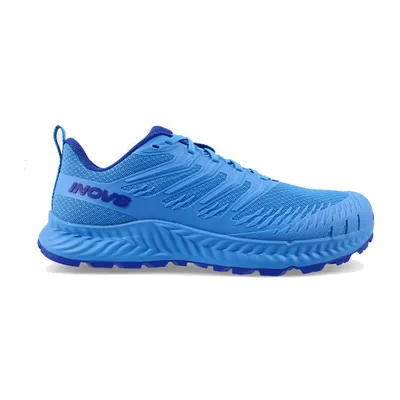
Inov-8 TrailFly V2
A trail shoe whose spec sheet lists every figure: 18 mm of midsole at the heel and 12 mm at the forefoot (a 6 mm drop), plus 4 mm lugs for dry, rocky trails.
View on Amazon (opens in a new tab)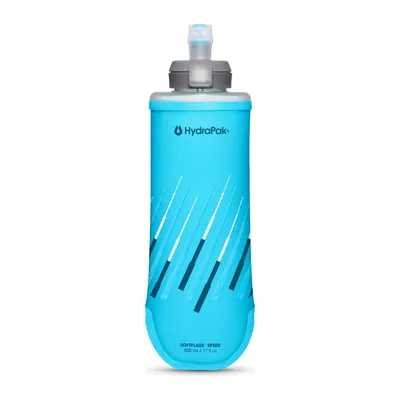
HydraPak SoftFlask Speed 500 ml
A 17 fl oz, 1.6 oz soft flask that slips into a vest pocket and fills one-handed: the kind of container races now ask runners to bring for refills.
View on Amazon (opens in a new tab)
Worth watching
The Run Experience shows what to change on steep trails, both on the way up and on the way down: the terrain that most sets trail running apart from the road.
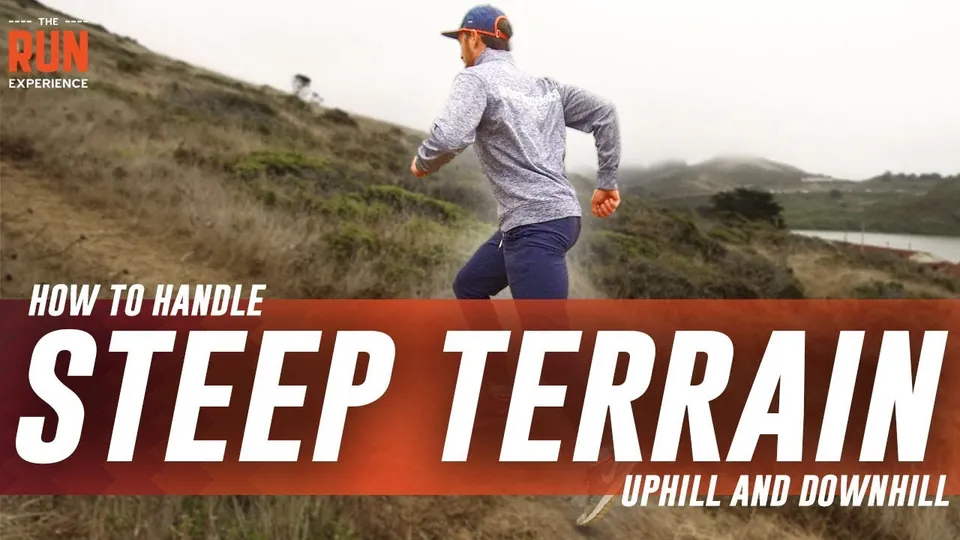
The video is hosted by YouTube (Google): nothing loads until you play it, and Google may then set cookies.
FAQ
Can you start trail running at 40 or 50?
Nothing’s stopping you, and trail running isn’t just for the young: in a 2026 study of nine trail races of 12 to 31 miles, participants averaged 41 years old. France’s Sports Cardiologists’ Club does recommend a medical checkup before taking up intense sport over age 35 for men and 45 for women. Then start on easy trails and build up without big jumps.
Do you need a medical certificate to run a trail race in France?
Not as an adult. Under the French Athletics Federation’s rules in effect as of October 14, 2026, you need an FFA Athlé Compétition, Athlé Entreprise or Athlé Running license, or the Pass prévention santé, which costs €5 and must be issued no more than a year before the race. Foreign licenses and those from other federations aren’t accepted. Minors fill out a health questionnaire with their parents.
How far should your first trail race be?
There’s no official distance: the French federation classifies trail races by km-effort, the distance plus 1 km for every 100 m (330 ft) of elevation gain. The XXS category, up to 24 km-effort, works well for a first race, for example 15 km (9.3 miles) with 500 m (1,640 ft) of gain, which comes to 20 km-effort. Check the elevation profile and how technical the course is, too.
What gear do you need to start trail running?
For a first run on an easy trail: shoes suited to the terrain, quick-drying clothes, water and a charged phone. The longer, higher or more remote the run, the more you need to cover up, see in the dark, call for help and wait for rescuers. On race day, the organizer sets the mandatory gear list, and it comes first.
Why is trail running slower than road running?
Because everything costs more. On uneven ground, bumps of about an inch (2.5 cm) are enough to raise energy use by roughly 5% at the same pace. Climbing costs more and more as the grade steepens, and running downhill forces your muscles to brake. That’s why trail runners think in hours rather than pace per mile.
Sources
- Voloshina A. S., Ferris D. P., “Biomechanics and energetics of running on uneven terrain,” Journal of Experimental Biology, March 2015, accessed October 23, 2026. pubmed.ncbi.nlm.nih.gov https://pubmed.ncbi.nlm.nih.gov/25617451/ ↩
- Vernillo G. et al., “Biomechanics and Physiology of Uphill and Downhill Running,” Sports Medicine, April 2017, accessed October 23, 2026. pubmed.ncbi.nlm.nih.gov https://pubmed.ncbi.nlm.nih.gov/27501719/ ↩
- Finiel L. et al., “Energetic cost of locomotion closely aligns with the preferred uphill walk-run transition at constant vertical speed in runners,” European Journal of Applied Physiology, published online July 30, 2026, accessed October 23, 2026. pubmed.ncbi.nlm.nih.gov https://pubmed.ncbi.nlm.nih.gov/42530641/ ↩
- Fell Runners Association (UK), “Frequently Asked Questions,” sections “For beginners” and “About Kit,” accessed October 23, 2026. fellrunner.org.uk https://www.fellrunner.org.uk/faq/frequently-asked-questions ↩
- World Athletics, “Book of Rules,” Technical Rules (Book C2.1), Rule 57 “Mountain and Trail Races,” version including amendments in effect as of July 1, 2026, downloadable from this page, accessed October 23, 2026. worldathletics.org https://worldathletics.org/about-iaaf/documents/book-of-rules ↩
- Fédération française d’athlétisme (French Athletics Federation), Règlement des manifestations running 2027, adopted in May and July 2026, in effect as of October 14, 2026 (in French), accessed October 23, 2026. monclub.athle.fr https://monclub.athle.fr/wp-content/uploads/2026/10/Reglementation_Running_2027.pdf ↩
- HOKA UTMB Mont-Blanc, “Règlement 2027” (race rules), “Équipement” section (in French), accessed October 23, 2026. montblanc.utmb.world https://montblanc.utmb.world/fr/races-runners/other-information/regulation ↩
- French Ministry of Sports, Youth and Community Life, “Prévention montagne été” (summer mountain safety, in French), accessed October 23, 2026. sports.gouv.fr https://www.sports.gouv.fr/prevention-montagne-ete ↩
- Buist I. et al., “No effect of a graded training program on the number of running-related injuries in novice runners: a randomized controlled trial,” American Journal of Sports Medicine, January 2008, accessed October 23, 2026. pubmed.ncbi.nlm.nih.gov https://pubmed.ncbi.nlm.nih.gov/17940147/ ↩
- Nielsen R. Ø. et al., “Excessive progression in weekly running distance and risk of running-related injuries: an association which varies according to type of injury,” Journal of Orthopaedic & Sports Physical Therapy, October 2014, accessed October 23, 2026. pubmed.ncbi.nlm.nih.gov https://pubmed.ncbi.nlm.nih.gov/25155475/ ↩
- Needle A. R. et al., “Falls and Ankle Rolls in 227 Distance Trail Runners: Incidence and Contributing Factors Including Neurocognitive Function,” Journal of Sport Rehabilitation, 2026, accessed October 23, 2026. pubmed.ncbi.nlm.nih.gov https://pubmed.ncbi.nlm.nih.gov/41605186/ ↩
- Club des cardiologues du sport (French Sports Cardiologists’ Club), “Les 10 règles d’or” (ten golden rules), issued in 2006 (in French), accessed October 23, 2026. clubcardiosport.com https://www.clubcardiosport.com/10-regles-or ↩
- Fédération française de la randonnée pédestre (French Hiking Federation), “Recommandations pour la randonnée en montagne l’été,” October 19, 2023 (in French), accessed October 23, 2026. ffrandonnee.fr https://www.ffrandonnee.fr/randonner/securite/recommandations-pour-la-randonnee-en-montagne-l-ete ↩
- French Ministry of Sports, Youth and Community Life, “Sport et canicule” (exercising in a heat wave, in French), accessed October 23, 2026. sports.gouv.fr https://www.sports.gouv.fr/sport-et-canicule-105 ↩
- Fédération française d’athlétisme, “Pass Prévention Santé” (in French), accessed October 23, 2026. pps.athle.fr https://pps.athle.fr/ ↩
- National Park Service, “Ten Essentials,” last updated May 28, 2026, accessed October 23, 2026. nps.gov https://www.nps.gov/articles/10essentials.htm ↩

Trail running, snow, water, nature and destinations
Nolwenn covers trail running, snow, water, nature and destinations for Outfarer. Curious about everything, from meteor showers to night-train schedules, she has a knack for digging up the one detail that changes everything, and nailing it in a single sentence.


 Julien de Jurquet