 Français (France)
 English (UK)
 English (US)
 Deutsch (Deutschland)

Contents
Before you start: paperwork, fitness base, and the right race
€5. That’s now the cost of the paperwork for a first trail race in France if you don’t hold a federation license. For adults without one, the French Athletics Federation (FFA) has replaced the medical certificate with its Pass Prévention Santé, or Health Prevention Pass: an online health awareness course, provided for by a French law dated March 2, 2022 [1]. It started out free; since January 2026, it costs €5 and is good for one year [2]. Runners under 18 fill out a free health questionnaire with a parent before each race instead [1]. Racing in the US? Your race’s own rules spell out what you need to sign up.
The pass isn’t a medical exam; it’s an awareness course. A known health condition, ongoing treatment, a comeback after a long break: all good reasons to check with a doctor before you start a plan.
On the fitness side, the starting point is simple: the World Health Organization (WHO) recommends that every adult get at least 150 minutes of moderate-intensity physical activity a week [3]. If you’re nowhere near that, start there, before any trail plan. For the race itself, aim short and not too steep, and compare races by km-effort, which adds the climbing to the distance, rather than by miles alone: elevation gain counts as much as distance.
A four-phase plan over 12 weeks
A trail plan rests on three ideas: build up in small steps, train on terrain that looks like the race, and give your body time to recover. The table below shows an example for a short first trail race; adjust it to your starting level.
| Weeks | Goal | Typical workouts |
|---|---|---|
| 1 to 4 | Build the base | Three easy runs a week at a conversational pace; one of them a bit longer, on a hilly route |
| 5 to 8 | Add the terrain | One hill workout (climbs run or power-hiked), one workout with short, controlled descents, one long run on trails |
| 9 and 10 | Rehearse the race | A long run close to your expected race time, on similar terrain, with the gear, food, and drink you’ll use on race day |
| 11 and 12 | Taper | Volume cut by about half, same paces, same number of runs; a very easy final week |
A sample, not a prescription: how long and how much depend on your starting level and your target race. The taper principle comes from a 2007 meta-analysis (Bosquet et al.).
An easier week every three or four weeks keeps fatigue from piling up: I recommend it even when everything’s going well. As for the long run, it’s less about going far than learning to last: drinking, eating, pacing yourself on the climbs, with or without heart rate zones.
Train the climbs, and the descents too
Everyone thinks about the climbs: they’re what leave you gasping. And they hold a surprise for runners coming from the road: on steep grades, walking isn’t cheating. A University of Colorado study measured the energy cost for 15 runners climbing at the same vertical speed on steeper and steeper slopes: from 15.8°, a grade of about 28%, walking used less energy than running, by 8% on average [4].
So practicing power hiking on the climbs, with or without trekking poles, belongs in the plan as much as running does. As for the benefits of uphill running itself, the science is cautious: a meta-analysis published in 2026 reports gains in running economy and endurance in several trials, but finds no significant effect once the results are pooled, and rates the evidence as weak, with too few trials so far [5]. In trail running, you train the climbs first and foremost because they’re on the course.

A 2020 literature review by researchers at the University of Toulon in France and Liverpool John Moores University in England sums it up: running downhill makes your muscles work as brakes, which causes muscle damage and can hurt performance; and the runners least used to downhills suffer the most [6].

Good news: the best protection known is to get your legs used to it ahead of time [6]. A University of Calgary study showed it in 10 recreational runners: a second 30-minute downhill run, three weeks after the first, caused less muscle soreness and a smaller loss of strength [7]. In practice, short, controlled descents from the second month on, gradually lengthened, beat one big descent discovered on race day.
Recovery: the days off count too
The fatigue from a downhill run doesn’t disappear overnight: in the Calgary study, the researchers tracked the runners’ strength for seven days after each session, and the strength loss was still measurable in the days that followed [7]. So keep at least one day without running after a downhill workout, and never stack two hard workouts back to back.
The last two weeks: taper, don’t stop
Here’s the detail that changes everything, and it comes at the very end. A 2007 meta-analysis that pooled 27 studies of competitive athletes looked for the best way to cut back training before a race. Its conclusion: a two-week taper, during which volume drops by 41 to 60%, without changing either intensity or the number of workouts [8].
In other words, you run for less time, but just as often and at the same paces. These results apply to trained athletes: for a first trail race, remember the principle rather than the percentages, and above all, don’t stop cold in the final week.
Classic first trail race pitfalls
The first is your starting pace. On the road, you think in minutes per mile; on a trail, that number stops meaning anything as soon as the trail tilts up. Better to work from an estimated finish time, in hours, and hold a pace on the first climb at which you can still talk.
The second is believing the race is won or lost on the climbs. Legs often give out on the last descent, the one you didn’t train for: that’s why the plan includes descents from the second month on.

The third is new gear. Shoes fresh out of the box the night before, a drink you’ve never tried, a hydration vest you’ve never worn fully loaded: race day isn’t the time to discover them. The long runs in weeks 9 and 10 are there precisely to test everything.
The last is trying to make up for missed workouts in the final week. The work is done: the taper is there to get you to the start line fresh, not to catch up.
Race week: what to take care of before the start
- For a race in France, the Pass Prévention Santé, the participation pass required for running events there [1], or your license.
- The race rules, read all the way through: required gear, cutoff times, aid stations.
- The weather forecast the day before and that morning, to adjust what you wear.
- Nothing new on race day: shoes, vest, drink, and food already tested on your long runs.
- One last short, easy run two or three days out, to keep your legs awake.
And then the moment will come, at the top of the last climb, when the descent opens up in front of you: your legs will know it, and all that’s left will be to enjoy it.
Gear related to this article
No affiliation: no commission, no sponsored products.

COROS PACE 3
A 1.1 oz GPS watch with a barometric altimeter: it records the distance and the elevation gain of every run, enough to track progress and km-effort.
View on Amazon (opens in a new tab)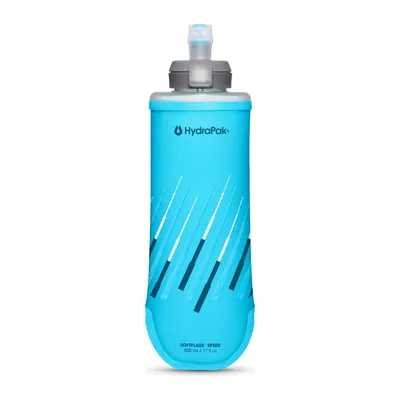
HydraPak SoftFlask Speed 500 ml
A 17 fl oz, 1.6 oz soft flask that slips into a vest pocket and fills one-handed: the kind of container races now ask runners to bring for refills.
View on Amazon (opens in a new tab)
Worth watching
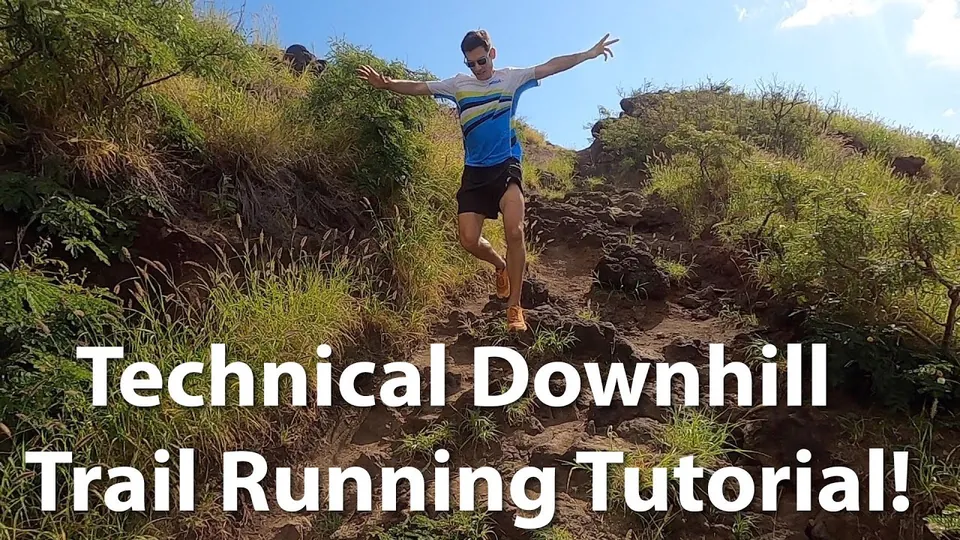
Coach Sage Canaday breaks technical downhill trail running into three form and technique tips, in just over five minutes: the skill the plan asks you to practice before race day.
The video is hosted by YouTube (Google): nothing loads until you play it, and Google may then set cookies.
FAQ
Do I need a medical certificate to run a trail race in France?
Not anymore, if you’re an adult without a federation license entering a race sanctioned by the French Athletics Federation (FFA): its Pass Prévention Santé, an online health awareness course, replaces the certificate. It has cost €5 since January 2026 and is good for one year. Runners under 18 fill out a free health questionnaire with a parent before each race. If you have any doubts about your health, a doctor’s advice is still worth getting.
How long does it take to train for a first trail race?
It depends on your starting point and on the race. For a short trail race, a plan of about 12 weeks lets you build your base, add climbs and descents, rehearse the race, and then taper. If you’re not yet getting the 150 minutes of moderate activity a week recommended by the World Health Organization, start there.
How do I train for downhills in trail running?
By getting used to them early and gradually. Runners least used to running downhill are the ones whose muscles suffer most, and a first downhill session protects you against the next: in one study, a second 30-minute session three weeks later caused less muscle soreness. Start with short, controlled descents, then make them longer.
Should I stop running before a trail race?
No: you should taper. A 2007 meta-analysis concluded that a two-week taper, with volume cut by 41 to 60% and no drop in intensity or in the number of workouts, is the most effective strategy for competitive athletes. For a first trail race, that means running for less time, but just as often.
Is it OK to walk the uphills in a trail race?
Yes, and it’s often more efficient. A University of Colorado study showed that at the same vertical speed, walking uses less energy than running from 15.8°, a grade of about 28%: 8% less on average. On steep grades, power hiking, with or without trekking poles, is a technique in its own right, and one worth practicing.
Sources
- French Athletics Federation (Fédération française d’athlétisme, FFA), Pass Prévention Santé, page in French and English, accessed October 22, 2026. pps.athle.fr https://pps.athle.fr/ ↩
- Assemblée nationale (French National Assembly), written question No. 12519 from Virginie Duby-Muller, member of the National Assembly, Pass prévention santé payant et sécurité des coureurs amateurs, published January 27, 2026, answer published March 31, 2026 (in French), accessed October 22, 2026. assemblee-nationale.fr https://www.assemblee-nationale.fr/dyn/17/questions/QANR5L17QE12519 ↩
- World Health Organization, Physical activity, fact sheet, June 26, 2024, accessed October 22, 2026. who.int https://www.who.int/news-room/fact-sheets/detail/physical-activity ↩
- Giovanelli N., Ortiz A. L., Henninger K., Kram R., Energetics of vertical kilometer foot races; is steeper cheaper?, Journal of Applied Physiology, February 2016, accessed October 22, 2026. pubmed.ncbi.nlm.nih.gov https://pubmed.ncbi.nlm.nih.gov/26607247/ ↩
- Tham S. K. et al., Effects of uphill running on muscle strength, jumping performance, running time, and aerobic capacity outcomes in athletes and recreational adults: A systematic review and meta-analysis, Medicine, July 2026, accessed October 22, 2026. pubmed.ncbi.nlm.nih.gov https://pubmed.ncbi.nlm.nih.gov/42536523/ ↩
- Bontemps B., Vercruyssen F., Gruet M., Louis J., Downhill Running: What Are The Effects and How Can We Adapt? A Narrative Review, Sports Medicine, December 2020, accessed October 22, 2026. pubmed.ncbi.nlm.nih.gov https://pubmed.ncbi.nlm.nih.gov/33037592/ ↩
- Khassetarash A. et al., Neuromuscular, biomechanical, and energetic adjustments following repeated bouts of downhill running, Journal of Sport and Health Science, May 2022, accessed October 22, 2026. pubmed.ncbi.nlm.nih.gov https://pubmed.ncbi.nlm.nih.gov/34098176/ ↩
- Bosquet L., Montpetit J., Arvisais D., Mujika I., Effects of tapering on performance: a meta-analysis, Medicine & Science in Sports & Exercise, August 2007, accessed October 22, 2026. pubmed.ncbi.nlm.nih.gov https://pubmed.ncbi.nlm.nih.gov/17762369/ ↩
- National Highway Traffic Safety Administration (NHTSA), National 911 Program, 911.gov, accessed October 22, 2026. 911.gov https://www.911.gov/ ↩

Trail running, snow, water, nature and destinations
Nolwenn covers trail running, snow, water, nature and destinations for Outfarer. Curious about everything, from meteor showers to night-train schedules, she has a knack for digging up the one detail that changes everything, and nailing it in a single sentence.


 Julien de Jurquet
