 Français (France)
 English (UK)
 English (US)
 Deutsch (Deutschland)

Contents
Abisko to Nikkaluokta: 107 km in seven stages
Step off the train at Abisko Turiststation, right across from the STF mountain station. The trail starts 300 m (980 ft) away, under a gateway of logs, below the famous U-shaped notch of Čuonjávággi, better known as Lapporten. The rest of the adventure comes down to one word: huts. The Svenska Turistföreningen (STF), the Swedish Tourist Association, has put one at the end of every stage, which is why this trek works without a tent or a stove. [1]
The seven STF stages add up to 107 km (66 miles). The first five follow the true Kungsleden, the “King’s Trail,” which is 450 km (280 miles) long in all, as far as Singi; from there you leave it for Kebnekaise and then Nikkaluokta, and that last stretch is not part of the official Kungsleden. [1] It’s worth the detour anyway: it’s what brings you back to a road and a bus.
| Stage | Route | Distance, km (miles) | Hiking time | Night |
|---|---|---|---|---|
| 1 | Abisko to Abiskojaure | 15 (9.3) | 4 to 6 hours | Abiskojaure hut (store, sauna) |
| 2 | Abiskojaure to Alesjaure | 21 (13) | 6 to 8 hours | Alesjaure hut (store, sauna) |
| 3 | Alesjaure to Tjäktja | 13 (8.1) | 4 to 5 hours | Tjäktja hut (no store) |
| 4 | Tjäktja to Sälka | 12 (7.5) | 3 to 5 hours | Sälka hut (store, sauna) |
| 5 | Sälka to Singi | 12 (7.5) | 3 to 4 hours | Singi hut (no store) |
| 6 | Singi to Kebnekaise | 15 (9.3) | 4 to 5 hours | Kebnekaise mountain station |
| 7 | Kebnekaise to Nikkaluokta | 19 (12) | 5 to 7 hours | Nikkaluokta, not an STF site |
Source: the STF route page. The times are the site’s figures for a hiker with a full backpack; on the first day, it’s best to sleep at the Abisko station before you set off.
How many days to allow, and where to cut it short
The STF lists seven stages, or five days if you combine some. [1] For its own guided hike it plans eight days and seven nights, from arrival in Abisko to the finish at Nikkaluokta, and warns that some stages exceed 20 km (12 miles) with a notable amount of elevation gain. [2] The STF’s rough figures: about 100 m (330 ft) of climbing on the first day, 300 m (980 ft) on the second, and 200 m (660 ft) on the third. [2]
The high point is the Tjäktjapasset pass, at about 1,150 m (3,800 ft), 4 km (2.5 miles) beyond the Tjäktja hut, with a shelter on the spot. [1] After that comes the descent into Tjäktjavagge, a valley 30 km (19 miles) long; between Sälka and Singi, the STF says the stretch may be one of the most beautiful in Sweden, depending on who you ask. [1]
There are two boat shortcuts, both privately run. Between Alesjaure and Abiskojaure, crossing the lake saves about 6 km (3.7 miles), from July 1 to August 30, for 500 SEK per adult and a minimum of six passengers, on the STF’s 2026 schedule. [3] Between Nikkaluokta and Kebnekaise, a boat saves about 6 km (3.7 miles) in 20 to 30 minutes, run privately, with schedules on the Enoks website, then 5 km (3.1 miles) on foot to Nikkaluokta. [3]
The STF huts: reserving, paying, sleeping
A A mountain hut run by the STF along the trails, with dormitory beds, a warden, and a shared kitchen, but no electricity or running water. (the STF calls them mountain cabins) has no electricity, no running water, and no shower. You fetch your own water, chop your own wood, and light the stove alongside the other guests. [4] A volunteer warden welcomes you and explains how things work; they’re on hand from dawn until late evening, with a break in the middle of the day, and the STF guarantees at least the slots from 8 to 10 a.m. and from 4 to 8 p.m. [4]
Capacities are hard to read off a map, yet they matter for reservations: 78 beds at Alesjaure, the largest of the STF huts, 54 at Sälka, 44 at Singi, and only 33 at Tjäktja. [5] [6] [7] [8] Abiskojaure has two guest huts, with 41 beds in the first and 12 in the second, which also takes dogs. [9] Tjäktja, the smallest, leaves the least wiggle room, so it’s the one to reserve first.
| Situation | Reserved online | Paid on arrival |
|---|---|---|
| Adult, STF member (SEK) | 480 | 530 |
| Adult, non-member (SEK) | 580 | 630 |
| Age 16 to 25, member (SEK) | 480 | 370 |
| Child aged 6 to 15, member (SEK) | 240 | 265 |
| Child under 6 | free | free |
Source: STF. A non-member pays 100 SEK more a night (50 SEK for a child). The 30% discount for ages 16 to 25 applies only when you haven’t reserved. Five nights in huts (Abiskojaure to Singi) therefore come to 2,400 SEK reserved, or 2,650 SEK paid on arrival, for an adult member.
Reserving online guarantees a bed to anyone who arrives before 6 p.m. Without it, you get an unassigned bed, which may be a bed, a mattress on the floor, or some other corner, usually allocated after 6 p.m. The number of bookable beds is limited and can sell out. [10] Tents and day visits can’t be reserved: a tent pays a fee of 210 SEK per adult member, which gives access to the kitchen, the drying room, and the common rooms, and a day visit costs 40 SEK. [10]
On payment, Swedish kronor in cash are accepted everywhere, and euros at a few huts, including the five on this route, though at a poor rate. Cards are accepted at Abiskojaure, Alesjaure, Tjäktja, Sälka, and Singi, even if patchy cell coverage can get in the way. [10] The Kebnekaise station, by contrast, takes no cash at all: everything is paid by card. [11]
Every hut has a shared kitchen and a drying room. An emergency phone linked to the police is provided; a cell phone rarely works, and there are no outlets to charge anything. [2] When the huts are closed, an emergency room stays open, but for emergencies only: out of season, you have to carry everything, tent included. [4]
What to eat, and where to buy it
Three huts have a store: Abiskojaure, Alesjaure, and Sälka. Tjäktja and Singi don’t. [1] The STF sells dry goods, canned food, drinks, and candy, never fresh produce, with a reduced selection at the end of the season. [2] Plan food for at least two days, then: that’s what the STF asks of its guided groups. [2] The last hot meal off the trail is at the Abisko mountain station, or at the Kebnekaise one, which both have a restaurant with a full liquor license. [1]
Water comes from the streams along the trail, at every stage. [1] On the open plateau, streams can be far apart, especially late in the summer: the STF advises planning your drinking water carefully. [2]
Can you set up a tent on the Kungsleden?
Yes, but not everywhere. In Abisko National Park, a tent is allowed only at the designated sites: near the mountain station, at Nissonjohka, 5 km (3 miles) south of Abisko on the Kungsleden, and near the Abiskojaure huts. [12] Fires are banned there except in the fire rings provided, which are at the tent sites; a stove is allowed. [12] Dogs must be kept on a leash on roads and marked trails, the Kungsleden included, and near the station and the Abiskojaure huts. [12] Access to the Abiskojåkka delta is banned from May 1 to July 31, to protect the birds. [12]
Outside the park, the Swedish right of public access (allemansrätten) allows camping, but the mountains have their own rules: one tent for one or a few nights in the same spot, a carefully chosen site, a good distance from trails, huts, and watercourses. [13] A stove comes before a campfire, and dogs are always kept on a leash on reindeer-herding land. [13] For the detail of access rights in three Nordic countries, see our guide to the right of access to nature in Scandinavia.
Reaching Abisko, and getting home from Nikkaluokta
Abisko Turiststation is served by SJ trains, right across from the mountain station, five minutes from the front desk. [14] Kiruna Bus coaches, which link Kiruna and Narvik with two stops a day at the Abisko station, add to the choice; tickets are sold on the Norrtåg website, among others. [14] Abisko is 100 km (62 miles) from Kiruna and 80 km (50 miles) from Narvik; the nearest airports are Kiruna and Narvik (Evenes). [14] Long-term parking is available at the station. [5]
At the end of the trail, Nikkaluokta is a village with a store and a restaurant, linked by bus to Kiruna station. [1] The Nikkaluoktaexpressen bus announces a 2027 season from February 19 to April 18, then from June 18 to September 19; the spring schedule will be published in mid-December 2026. The ticket is cheaper online, with a 200 SEK per person surcharge if you buy on board, and online booking closes one hour before departure. [15]
Kebnekaise: one more night, and the question of the summit
The Kebnekaise mountain station, 19 km (12 miles) from Nikkaluokta, has a restaurant, a store, rooms, and a sauna with a view. [11] The STF recommends spending an extra night there, but doesn’t make it mandatory. [1]
Sweden’s highest summit is now the north summit, free of ice, at 2,096.8 m (6,879 ft). The south summit, capped with an ice cap, measured 2,088.4 m (6,852 ft) on September 10, 2025, which is 1.5 m (4.9 ft) lower than a year earlier and 8.4 m (28 ft) below the north summit: it’s the seventh year running that the south summit has been the lower one. [16]
The STF runs guided ascents of the south summit, with a certified guide and the equipment. In summer 2026 they all took the western route, 20 km (12 miles) round trip with 1,800 m (5,900 ft) of elevation gain, for 10 to 15 hours of effort. A mandatory briefing takes place the evening before, at 8 p.m., and the guide may turn away anyone whose boots aren’t stiff enough. [17] We don’t describe the route: it’s a high-mountain outing, best prepared with a guide.
When to go: crowds, light, and closing day
The huts open from June 18 to September 19, 2027. [5] The STF’s visitor calendar gives the picture: few visitors in June and from late August to mid-September, the most people in weeks 28 to 31, from mid-July to early August, then slightly fewer in weeks 32 and 33. [1] The quieter weeks also have, the STF points out, better prices. [1]
The midnight sun lights the region from about May 15 to July 31, with daylight clarity right through the night. In August and September you need a headlamp, because the nights are dark again, with a chance of the aurora. [2] For the aurora, see our guide to watching it. The huts close on September 19, 2027; the STF notes that on closing day the wardens usually leave around noon. [3]
What does it cost?
The STF huts alone come to five nights between Abiskojaure and Singi: 2,400 SEK for an adult member who reserves, 2,650 SEK if they pay on arrival, and 2,900 and 3,150 SEK for a non-member. [10] On top of that come the night at the Abisko station and the one at Kebnekaise, whose prices we don’t quote because they vary with the room, then food, the bus, and, perhaps, the boat (500 SEK at Alesjaure). The smart move: work out whether an STF membership pays for itself against the 100 SEK saved on each hut night before you buy one. [4]
Gallery: the Kungsleden in six landscapes
Six real photos of the trail and its huts, from north to south, from Abiskojaure to the approach to Nikkaluokta, published under free licenses on Wikimedia Commons by their photographers, who are credited under each image. Tap or click a photo to enlarge it.
Gear related to this article
No affiliation: no commission, no sponsored products.
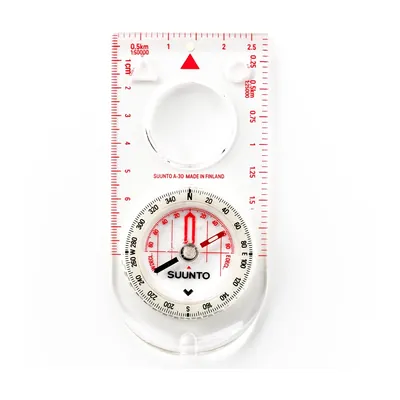
Suunto A-30 NH
A 1.1 oz baseplate compass with a magnifier and luminous markings, sold with metric or USGS map scales: for going back to the map when the blazes run out.
View on Amazon (opens in a new tab)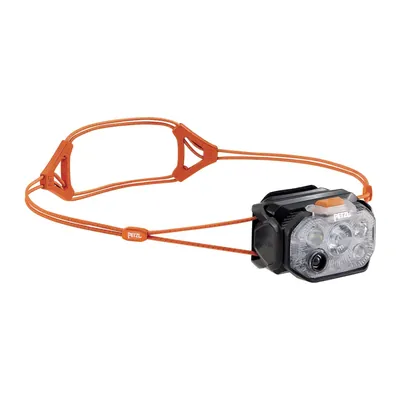
Petzl Swift RL
A 3.2 oz rechargeable headlamp whose 1,200 lumens last only 6 seconds (BOOST mode). In standard lighting, under FL1: 800 lumens and a 377 ft beam for 2 hours, or 190 lumens for 7 hours.
View on Amazon (opens in a new tab)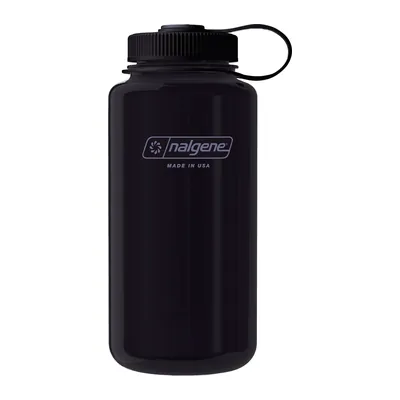
Nalgene Wide Mouth 32 oz
A 32 oz wide-mouth bottle in Tritan Renew, BPA- and BPS-free, leakproof and dishwasher-safe, 6.25 oz empty: the wide opening fills fast at a spigot and takes ice cubes.
View on Amazon (opens in a new tab)
Worth watching
A hiker talks through what to know before setting out on the Kungsleden: rocks, water, weather, phone signal, cash, and trash. It adds the feel of the trail to this guide’s logistics.
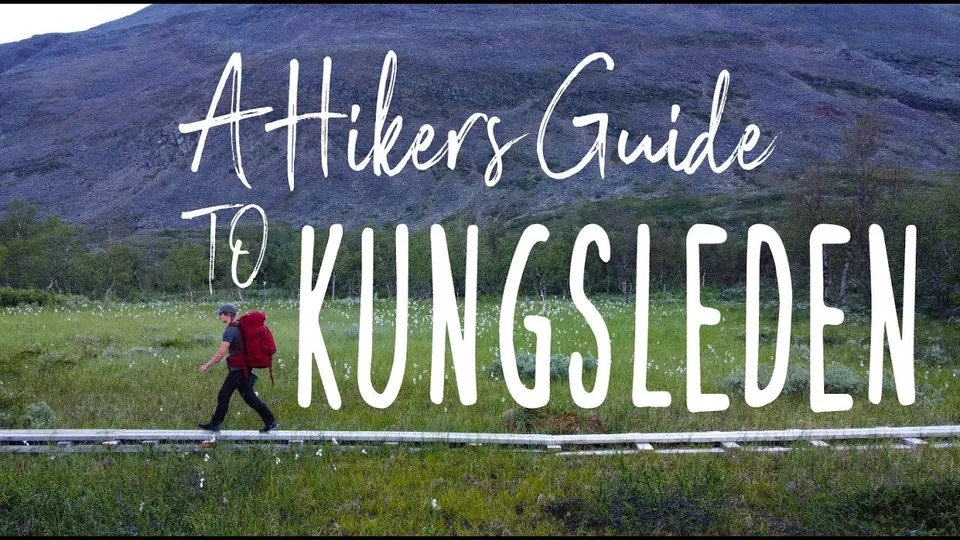
The video is hosted by YouTube (Google): nothing loads until you play it, and Google may then set cookies.
FAQ
How long does the Kungsleden take between Abisko and Nikkaluokta?
The STF counts seven stages of 12 to 21 km (7.5 to 13 miles), or at most 6 to 8 hours of hiking a day, for 107 km (66 miles) in all, and says you can squeeze them into five days. Its own guided hike lasts eight days and seven nights, counting arrival in Abisko. Allow one more day if you want to climb from Kebnekaise.
Do you need to reserve the Kungsleden huts?
The STF recommends it. Reserving online gives a reduced rate and a guaranteed bed for anyone arriving before 6 p.m. Without it, you get an unassigned bed, sometimes a mattress on the floor, usually allocated after 6 p.m. The number of bookable beds is limited, and Tjäktja has only 33.
What do you need to bring to an STF hut?
A bottom sheet, a pillowcase, and a duvet cover, or a sleeping bag plus a sheet and a pillowcase. There’s no electricity or running water. Bring Swedish kronor in cash, a power bank, a headlamp for the nights of August and September, and food for at least two days.
Can you camp on the Kungsleden?
In Abisko National Park, only at the three designated sites, with no fires outside the fire rings. Further on, the right of public access allows camping for one or a few nights, away from trails, huts, and watercourses. Near a hut, a tent pays a 210 SEK fee for the kitchen and the drying room.
How do you get back from Nikkaluokta to Kiruna?
By the Nikkaluoktaexpressen bus, which announces a 2027 season from February 19 to April 18 and from June 18 to September 19. The ticket is cheaper online, and costs 200 SEK more if bought on board.
Sources
- Svenska Turistföreningen (STF), “Kungsleden Abisko-Nikkaluokta” (in English), accessed November 14, 2026. swedishtouristassociation.com https://www.swedishtouristassociation.com/trails/signature-trail-kungsleden-abisko/ ↩
- STF, “Kungsleden Abisko-Kebnekaise,” summer 2026 information (in Swedish), accessed November 14, 2026. svenskaturistforeningen.se https://www.svenskaturistforeningen.se/app/uploads/2022/11/kungsleden-abisko-kebnekaise-informationsblad-sommar-2026-1.pdf ↩
- STF, “Boats in the mountains” (in English), last updated May 21, 2026, accessed November 14, 2026. swedishtouristassociation.com https://swedishtouristassociation.com/boats-in-the-mountains ↩
- STF, “Mountain cabins in Sweden” (in English), accessed November 14, 2026. swedishtouristassociation.com https://www.swedishtouristassociation.com/stfmountaincabin ↩
- STF, “STF Alesjaure Mountain cabin” (in English), accessed November 14, 2026. swedishtouristassociation.com https://www.swedishtouristassociation.com/alesjaure ↩
- STF, “STF Tjäktja Mountain cabin” (in English), accessed November 14, 2026. swedishtouristassociation.com https://www.swedishtouristassociation.com/tjaktja ↩
- STF, “STF Sälka Mountain cabin” (in English), accessed November 14, 2026. swedishtouristassociation.com https://www.swedishtouristassociation.com/salka ↩
- STF, “STF Singi Mountain cabin” (in English), accessed November 14, 2026. swedishtouristassociation.com https://www.swedishtouristassociation.com/facilities/stf-singi-mountain-cabin/ ↩
- STF, “STF Abiskojaure Mountain cabin” (in English), accessed November 14, 2026. swedishtouristassociation.com https://www.swedishtouristassociation.com/abiskojaure ↩
- STF, “Priser, bokning & betalning i fjällstuga” (in Swedish), accessed November 14, 2026. svenskaturistforeningen.se https://www.svenskaturistforeningen.se/guider-tips/fjallen/betalning-fjallstuga/ ↩
- STF, “STF Kebnekaise Mountain Station” (in English), accessed November 14, 2026. swedishtouristassociation.com https://www.swedishtouristassociation.com/kebnekaise ↩
- Länsstyrelsen Norrbotten, “Abisko,” national park page (in Swedish), accessed November 14, 2026. lansstyrelsen.se https://www.lansstyrelsen.se/norrbotten/besoksmal/nationalparker/abisko ↩
- Naturvårdsverket, “Allemansrätten i fjällen” (in Swedish), revised August 19, 2026, accessed November 14, 2026. naturvardsverket.se https://www.naturvardsverket.se/amnesomraden/allemansratten/platser/fjallen/ ↩
- STF, “Abisko Tourist Station” (in English), accessed November 14, 2026. swedishtouristassociation.com https://www.swedishtouristassociation.com/abisko ↩
- Nikkaluoktaexpressen, home page (in English), accessed November 14, 2026. nikkaluoktaexpressen.se https://nikkaluoktaexpressen.se/?lang=en ↩
- Stockholm University, “Kebnekaise’s southern peak continues to melt,” September 12, 2025 (in English). su.se https://www.su.se/english/news/articles/2025-09-12-kebnekaises-southern-peak-continues-to-melt ↩
- STF, “Kebnekaise, guided tour South Summit” (in English), accessed November 14, 2026. swedishtouristassociation.com https://www.swedishtouristassociation.com/activities/kebnekaise-guided-tour-south-summit/ ↩

Camping, backpacking, bushcraft and hiking
Guillaume Hoarau writes for Outfarer about camping, backpacking, bushcraft, and hiking. A survival-skills buff and a collector of vintage field manuals, he loves clear explanations, lists that actually help and other people’s stories, which he tells well.

 Arnaud Couderc

