 Français (France)
 English (UK)
 English (US)
 Deutsch (Deutschland)

Can you camp anywhere in Scandinavia? The question comes up every year, and the answer is yes, with a few buts. The right to roam, which Sweden calls the right of public access, is even written into the Swedish constitution: chapter 2, section 15 of the Instrument of Government guarantees everyone access to nature in accordance with it [1]. Norway sets it out in a 1957 law, the Outdoor Recreation Act (friluftsloven) [2]. In Finland, several laws grant, guide, or restrict the right [3]. One shared core, three different rulebooks: here’s what the laws say, and what that means for your trip.
What applies everywhere, and what isn’t included
The shared core is simple. On foot, you can cross uncultivated land in all three countries, and in Norway, on what the law calls uncultivated land: forest, bog, mountain, and shoreline, year-round [2]. You can camp temporarily [3] [4] and pick wild berries, mushrooms, and flowers, as long as they aren’t protected [2] [3] [4]. In Finland, Metsähallitus stresses that this takes no permission from the landowner and costs nothing [3].
What’s not included is just as clear. Fields, pastures with animals, yards, and house lots are off-limits: in Norway, any stop on cultivated land, the fields, meadows, yards, and farmyards, needs the owner’s consent [2]. Driving off-road isn’t part of the right [3] [4], hunting and fishing have their own rules [3] [5], and nature reserves and national parks have separate regulations [3] [4]. If most of your camping back home happens on public lands, here’s the big shift: this right also applies on land that belongs to someone else, within those limits. In Europe, the closest thing to the Nordic model is Scotland, whose access rights include lightweight camping.

| Sweden | Norway | Finland | |
|---|---|---|---|
| Camping | Yes, temporarily; not on fields or pastures; several tents only with permission | Yes, on utmark; on innmark only with consent | Yes, temporarily |
| How long | Rule of thumb: one or two nights | Two nights max without consent; longer in the high mountains | Temporarily, no set number |
| Distance from homes | Out of sight and earshot of residents | At least 150 meters (about 490 feet) from an occupied house or cabin | Not too close, no noise |
| Campfires | Allowed if safe; never during a fire ban | Banned April 15 to September 15 in or near forests and other utmark | Only with the landowner’s permission or at designated fire sites |
| Fishing | Without a permit only with handheld gear, on parts of the coast and in the five largest lakes | At sea, handheld tackle only for tourists; fishing permit in fresh water | Hook and line and ice fishing free; lure fishing requires the fisheries management fee |
| RV off-road | Driving and parking banned | Parking by a public road if it does no harm | Off-road driving banned |
Sweden: one or two nights, out of sight of homes
Naturvårdsverket, Sweden’s environmental protection agency, sums up the rules in a 2025 handbook, also available in English [4]. What the text says: choose a suitable spot, avoid fields with crops or farm animals, and stay away from residential areas. Neighbors shouldn’t be able to see or hear you from their property; the farther away, the better [4]. One or two nights is the rule of thumb, and a group with several tents needs the landowner’s permission [4]. Pack out everything, trash included [4]; and water from lakes and streams needs treating, as anywhere.
A campfire is allowed if conditions are safe, and you’re fully responsible for it [4]. The agency recommends a stove or a fixed grill area; otherwise, a small fire on gravel or sand, away from large rocks or cliffs, which can crack, using only twigs and branches from the ground [4]. During a fire ban or in very dry or windy weather, no fire at all [4]. Municipalities can also ban camping or fires locally [4].
Fishing has tighter rules. It isn’t part of the right of public access, and most lakes and rivers require a permit [5]. Fishing with handheld gear is free on parts of the coast and in the five largest lakes: Vänern, Vättern, Mälaren, Hjälmaren, and Storsjön in Jämtland [5]. That goes for foreign visitors too, with handheld gear only; net fishing, trolling with or without a motor, and tip-up fishing are still banned without a permit [5].
Norway: 150 meters (about 490 feet) and two nights
Norway puts the numbers in the law itself. Section 9 of the Outdoor Recreation Act says a tent must be pitched far enough from an occupied house or cabin not to disturb the residents, and at least 150 meters (about 490 feet) away in any case [2]. Without the owner’s consent, you stay two nights at most in one spot; in the high mountains and far from settlements, longer, unless the stay is likely to cause significant damage or nuisance [2]. No camping on young forest or replanted land where it could do significant damage, and any damage animals do to your tent or gear is at your own risk [2].
By canoe, you can pull a boat ashore for a short time on a shoreline in utmark; using a dock or jetty takes the owner’s consent [2]. To pick the right boat, see our comparison canoe or kayak. Campfires are where the rule gets strict: from April 15 to September 15, lighting a fire in or near forests and other utmark is banned, unless the municipality has allowed it or a fire obviously can’t start [6]. When the fire risk is especially high, the municipality can ban fires at any time of year, across all or part of its area, for 60 days at most; and you never leave a fire until it’s completely out [6].
At sea, tourists can only fish with handheld tackle, must follow minimum sizes, and can’t sell their catch [7]. Only tourists 12 and older fishing through a registered fishing camp can export fish: 15 kilograms (about 33 pounds) of fish or fish products, twice per calendar year, and only 10 kilograms (about 22 pounds) starting January 1, 2027; the quota doesn’t cover salmon, trout, char, or other freshwater species [8]. In fresh water, the landowner holds exclusive fishing rights, so you need a permit; kids under 16 can fish freshwater species free, with rod and hand line, from January 1 to August 20, except in waters with salmon, sea trout, or sea char and in artificial ponds [9]. Those three species also carry the state fishing fee: NOK 347 for adults [10]. Breaking the Outdoor Recreation Act can mean a fine [2].
Finland: camp freely, campfires only with permission
Metsähallitus, the state-owned enterprise managing state forests and national parks, lists what Finland’s everyman’s rights allow: hiking, skiing, and biking, camping temporarily where access is allowed, picking unprotected berries, mushrooms, and plants, swimming, boating, crossing frozen waterways, and hook and line or ice fishing [3]. They exclude lighting a fire on someone else’s land, camping too close to homes or making noise, cutting or damaging trees, collecting dry wood or fallen trees, taking moss or lichen, driving off-road, and disturbing nests and animals [3]. Dogs must be leashed from March 1 to August 19 [3].
On campfires, Finland stands apart. Outside a few wilderness areas in the north and Lapland, lighting a fire without the landowner’s permission is forbidden [11]. In national parks, fires are allowed at designated sites, often with a woodshed and free firewood, when no wildfire warning is in effect [11]. During a warning, fires are only allowed at covered fire sites with a chimney and in hut fireplaces; portable stoves still are, hobo stoves aren’t [11]. In the northern wilderness areas, use an existing fire site if one lies within 500 meters (about 1,600 feet) [11]. Fishing and hunting supervisors can fine anyone who lights a fire during a warning [11].
For fishing: if you fish with a lure, say with a spinning rod, you first pay the fisheries management fee, a statutory fee valid everywhere in Finland except Åland; it lets you fish with one rod almost anywhere [12]. Hook and line fishing and ice fishing are exempt, and so is anyone under 18 or over 70, or who turned 65 by the end of 2023 [12]. For more than one rod, nets, crayfish, and in rapids and flowing waters, you also need a permit from the owner of the water [12]. In national parks, camping is allowed only at designated sites, in some small protected areas not at all, and you can enter strict nature reserves only with Metsähallitus’s permission [3].
Traveling by RV or camper van
Here’s where the most common misunderstanding lies. The right of public access applies to people, not to vehicles. In Sweden, driving or parking an RV, a car with a rooftop tent, or a travel trailer off-road, on beaches, in forests, and in meadows, is illegal; Naturvårdsverket advises checking the local rules for driving and overnight parking [4]. In Finland, off-road driving is explicitly excluded from everyman’s rights [3]. Norway allows parking on utmark next to a public road, as long as it causes no significant damage or nuisance; on a private road, the owner can ban it [2]. If you’re traveling in winter, our guide to the camper van in winter covers the technical side.
What to check before you go
- Campfires: in Sweden, fire bans and the Brandrisk Ute app [4]; in Norway, the municipality’s rules [6]; in Finland, the wildfire warning [11]. A camp stove is the safer choice everywhere.
- Protected areas: national parks and nature reserves have their own rules, posted on site and on the parks’ websites [3] [4].
- Fishing permits: none needed only on parts of the Swedish coast and in the five big lakes [5] and in Finland for hook and line or ice fishing [12]; at sea in Norway, the rules for tourists apply [7]; otherwise, a permit or a fee.
- Overnight parking: for a night in an RV, local rules and signs apply, not the right of public access [4].
- The numbers: in Norway, the two nights and the 150 meters (about 490 feet) [2], and for campfires, April 15 and September 15 [6].
A rule is only as good as its date: these were checked on October 26, 2026, and Norway’s fish export quota already drops from 15 to 10 kilograms (about 33 to 22 pounds) on January 1, 2027 [8]. So checking before you go means opening the relevant agency’s page one more time: it takes precedence over any guide, this one included.
Gear related to this article
No affiliation: no commission, no sponsored products.
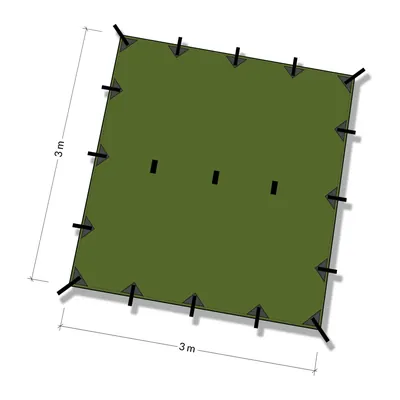
DD Hammocks Tarp 3x3
A 10 × 10 ft (3 × 3 m) square tarp in coated polyester (3,000 mm), 1.74 lb, with 19 reinforced attachment points: the size for all four basic setups, diamond and closed included.
View on Amazon (opens in a new tab)
Worth watching
Naturvårdsverket, Sweden’s Environmental Protection Agency, explains the right of public access (allemansrätten) in four minutes, in English, filmed out in the Swedish countryside.
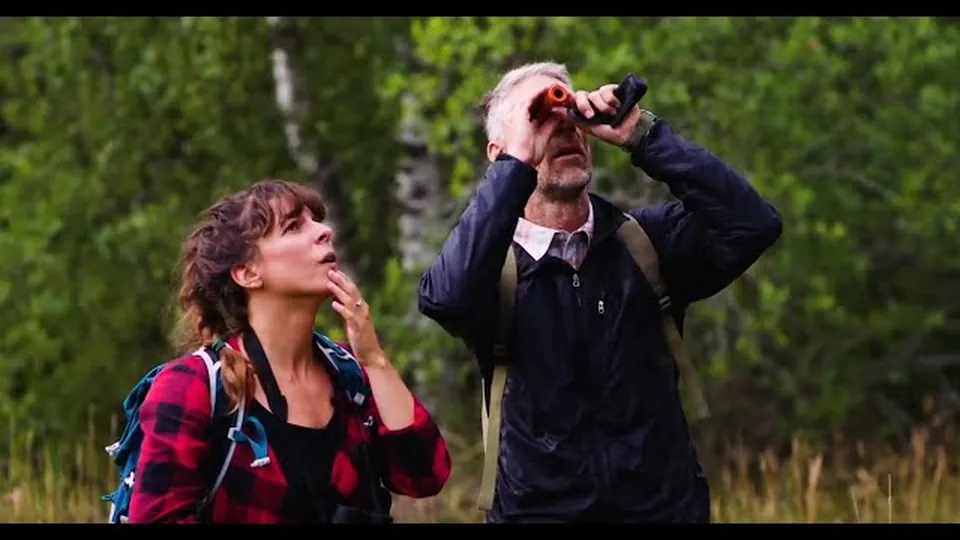
The video is hosted by YouTube (Google): nothing loads until you play it, and Google may then set cookies.
FAQ
Can you wild camp in Sweden?
Yes, the right of public access allows it, temporarily: one or two nights in the same place is the rule of thumb. Avoid fields and pastures, and camp where residents can’t see or hear you from their property. A group with several tents needs the landowner’s permission, and municipalities, nature reserves, and national parks can restrict camping.
How long can you camp in one spot in Norway?
Two nights at most without the owner’s consent, under section 9 of the Outdoor Recreation Act. In the high mountains and far from settlements, you can stay longer, unless the stay is likely to cause significant damage or nuisance. Either way, your tent has to be at least 150 meters (about 490 feet) from an occupied house or cabin, and never on fields, meadows, or in yards.
Can you have a campfire in Finland?
Only with the landowner’s permission or at designated fire sites, like those in national parks; in some wilderness areas in the north, also without permission, when no warning is in effect. During a wildfire warning, fires are only allowed at covered fire sites with a chimney and in hut fireplaces. A portable camp stove is still allowed then, a hobo stove isn’t.
Does the right to roam cover RVs?
No. In Sweden, driving or parking an RV or travel trailer off-road is illegal, and in Finland, off-road driving isn’t part of everyman’s rights. Norway allows parking on uncultivated land next to a public road if it does no harm. For a night in a vehicle, local rules and signs apply.
Do I need a fishing license in Scandinavia?
Usually, yes. It’s free with handheld gear on parts of the Swedish coast and in the five largest lakes, and for hook and line or ice fishing in Finland, where lure fishing means paying the fisheries management fee. At sea in Norway, tourists can only use handheld tackle and can’t sell their catch; in fresh water, you need a fishing permit, plus the state fee for salmon.
Sources
- Sveriges riksdag, Regeringsform (1974:152), the Instrument of Government, chapter 2, section 15 (in Swedish), accessed October 26, 2026. riksdagen.se https://www.riksdagen.se/sv/dokument-och-lagar/dokument/svensk-forfattningssamling/kungorelse-1974152-om-beslutad-ny-regeringsform_sfs-1974-152/ ↩
- Lovdata, Lov om friluftslivet (friluftsloven), the Outdoor Recreation Act, LOV-1957-06-28-16, sections 2 to 9 and 39 (in Norwegian), accessed October 26, 2026. lovdata.no https://lovdata.no/dokument/NL/lov/1957-06-28-16 ↩
- Metsähallitus, “Everyman’s rights,” Luontoon.fi, accessed October 26, 2026. luontoon.fi https://www.luontoon.fi/en/activities/hiking-and-outdoor-recreation/everymans-rights ↩
- Naturvårdsverket, “The Right of Public Access: your outdoor access code for enjoying Sweden’s nature responsibly,” 2025 handbook, English version, accessed October 26, 2026. naturvardsverket.se https://www.naturvardsverket.se/499a9c/globalassets/vagledning/allemansratten/material/2025-handbok-engelska-latt-att-gora-allemansratt-a4-helhet.pdf ↩
- Naturvårdsverket, “Hunting and fishing,” right of public access page, last reviewed June 19, 2025, accessed October 26, 2026. naturvardsverket.se https://www.naturvardsverket.se/en/topics/the-right-of-public-access/activities-and-places/hunting-and-fishing/ ↩
- Lovdata, Forskrift om brannforebygging, the fire prevention regulations, FOR-2015-12-17-1710, section 3 (in Norwegian), accessed October 26, 2026. lovdata.no https://lovdata.no/dokument/SF/forskrift/2015-12-17-1710 ↩
- Fiskeridirektoratet, “Sea angling in Norway: regulations you should know,” accessed October 26, 2026. fiskeridir.no https://www.fiskeridir.no/english/sea-angling-in-norway/regulations ↩
- Fiskeridirektoratet, “Export quota,” accessed October 26, 2026. fiskeridir.no https://www.fiskeridir.no/english/sea-angling-in-norway/export-quota ↩
- Lovdata, Lov om laksefisk og innlandsfisk mv. (lakse- og innlandsfiskloven), the salmon and freshwater fish act, LOV-1992-05-15-47, sections 17 and 18 (in Norwegian), accessed October 26, 2026. lovdata.no https://lovdata.no/dokument/NL/lov/1992-05-15-47 ↩
- Miljødirektoratet, “Fiskeravgift,” page on the state fishing fee (in Norwegian), accessed October 26, 2026. fiskeravgift.miljodirektoratet.no https://fiskeravgift.miljodirektoratet.no/ ↩
- Metsähallitus, “Making a fire,” Luontoon.fi, accessed October 26, 2026. luontoon.fi https://www.luontoon.fi/en/activities/hiking-and-outdoor-recreation/tips/visitor-guidelines/campfires ↩
- Metsähallitus, “Fishing permits,” Luontoon.fi, accessed October 26, 2026. luontoon.fi https://www.luontoon.fi/en/articles/fishing-permits ↩

Fact-checking, regulations, and safety
Arnaud Couderc reviews our contributors’ articles and writes for Outfarer about regulations, safety, fishing, the ocean, and outdoor activities. He traces every rule back to its official text and every number to its source, so you head out with solid benchmarks.

 Guillaume Hoarau


 Nolwenn Bastide