 Français (France)
 English (UK)
 English (US)
 Deutsch (Deutschland)

Contents
Seeing the northern lights from the Lower 48: possible, but rare
On the night of November 11, 2025, the northern lights were sighted as far south as Florida [19], after NOAA announced severe, G4, storm levels at 8:20 p.m. EST [28]. Eighteen months earlier, on May 10, 2024, NOAA had first observed extreme, G5, conditions at 6:54 p.m. EDT [27]. That night, even France got a show: Météo-France logged aurora over Brittany, barely visible to the naked eye but spectacular on photos exposed for 8 to 10 seconds [1], and a research dataset traced it as far south as the French Riviera [2].
The May 2024 storm was Earth’s strongest A major disturbance of Earth’s magnetic field, triggered by a surge of energy from the solar wind, the stream of particles the Sun gives off all the time. in two decades [3], and the index that measures these storms hit the top of its scale [4]. G5 is rare: over a solar cycle of about 11 years, NOAA counts an average of 4 days of G5 storms, and 60 days of G4, the level just below [5]. So the real question isn’t whether you can see the aurora from the Lower 48, but how to know, in time, whether the next one will reach your backyard.
The Kp index and the G scale: what the numbers mean
Every aurora forecast revolves around one index: Kp. It measures how disturbed Earth’s magnetic field is over 3-hour periods, on a scale from 0 to 9: 1 means calm, 5 or more means a geomagnetic storm [6]. The “K” comes from the German Kennziffer, “characteristic digit,” and the “p” stands for planetary: it’s the average of 13 observatories between 44° and 60° Latitude measured from the geomagnetic pole, which is tied to Earth’s magnetic field, rather than from the geographic North Pole., north and south [6].
The official index is calculated by GFZ, Germany’s geosciences research center in Potsdam, which NOAA itself points to [6]. It comes in thirds of a unit, 28 values in all, from 0o to 9o by way of 8+ and 9-, as described by the international service that distributes these indices, based in Strasbourg, France [7]. Since each step is a third, 9- can also be written 8.67. NOAA publishes its own estimate alongside it, updated every minute from just 8 magnetometers, including stations in Alaska and Virginia [6].
For the public, NOAA translates these values into five storm levels: G1, minor, at Kp 5; G2, moderate, at Kp 6; G3, strong, at Kp 7; G4, severe, at Kp 8 and 9-; G5, extreme, at Kp 9o [6, 5].
Where your city sits on the geomagnetic map
The key word is geomagnetic. NOAA’s scale places the aurora seen during a G3 storm as far south as Illinois and Oregon, typically around 50° geomagnetic latitude, and during a G5 storm as far as Florida and southern Texas, around 40° [5]. NOAA spells it out for its rule of thumb: the link between Kp and the aurora holds in geomagnetic latitude, not geographic [8].
And the geomagnetic pole isn’t the North Pole. The British Geological Survey’s public online calculator, based on the International Geomagnetic Reference Field, lets you compare: at the same geographic latitude, North American cities come out farther north than European ones [9]. With the tool’s main calculation, Chicago, at 41.9° N, sits at about 51° geomagnetic latitude, close to the 50° NOAA gives for Illinois; Paris, at 48.9° N, comes out at about 44°.
| City | Geographic latitude | Geomagnetic latitude |
|---|---|---|
| Fairbanks, Alaska | 64.8° N | 64.9° |
| Seattle | 47.6° N | 52.4° |
| Minneapolis | 45.0° N | 54.0° |
| Chicago | 41.9° N | 51.1° |
| New York | 40.7° N | 48.6° |
| Denver | 39.7° N | 47.7° |
| San Francisco | 37.8° N | 42.7° |
| Houston | 29.8° N | 39.0° |
| Miami | 25.8° N | 35.2° |
| London | 51.5° N | 47.4° |
| Paris | 48.9° N | 44.2° |
Quasi-dipole coordinates, the tool’s main calculation, for each city center, calculated on October 22, 2026, with the British Geological Survey calculator (IGRF-14 model) [9]. For these US cities, the simpler tilted-dipole model the tool gives for comparison agrees within about 1°; in Europe, it comes out higher, putting Paris at about 50°. Use these figures as a guide, not a threshold.
Find your city, compare it with NOAA’s typical latitudes, and you get an order of magnitude, not a promise. NOAA also gives an average rule: the southern edge of the The ring centered on each geomagnetic pole where aurora forms; it widens toward the equator during storms. moves about 2° of geomagnetic latitude per Kp point, from 66° at Kp 0 to 48° at Kp 9, an approximate relationship that represents an average, it stresses [8]. But a bright aurora can be seen from as far as 600 miles (1,000 km) away [10]: from much of the Lower 48, it may well show up low over the northern horizon [18]. Even in the November 12, 2025, storm, the auroral oval itself didn’t reach central Europe, Austria’s APA news agency reported, citing GeoSphere Austria, yet the aurora was seen there [11].
The thresholds published for the US
For the US, NOAA and NASA give rough guides, and they don’t quite agree. Official services in Europe, for comparison, describe what their own readers can expect:
| Where | Source | What it says |
|---|---|---|
| Northern US | NOAA | Kp 6 to 7: it might be possible to see the aurora from the northern edge of the US; Kp 8 to 9: it may appear directly overhead in the northern states [8]. |
| Northern US | NASA | Northern states can see aurora with a Kp as low as 4; viewing farther south takes higher values [18]. |
| Belgium | Royal Observatory of Belgium | Kp 7 is already needed to glimpse a reddish aurora low on the northern horizon; at Kp 8 or 9, it climbs higher [12]. |
| Switzerland | MeteoSwiss | Kp has to exceed 6 or 7 for the aurora to be visible in Switzerland [13]. |
| UK | Met Office | Kp 6 to 7: aurora faintly visible from the UK; Kp 8 to 9+ to bring the auroral belt directly overhead [14]. |
The detail that changes everything: at the low end, these thresholds usually mean a glow, often red, low on the horizon. The displays that made headlines came with far stronger storms. In May 2024, when aurora was seen as far as Belgium [15], the official Kp hit 9o, the very top of the scale [4]. It reached 9- in the storm of November 11 to 12, 2025, and again on January 19, 2026, when NOAA announced G4 levels at 2:38 p.m. EST [4, 29].
NOAA’s forecasts: 3 days, 27 days, 30 minutes
NOAA’s Space Weather Prediction Center is the US government’s official source for space weather forecasts, watches, warnings, and alerts [3], and its products are online, open to everyone. Three of them are enough to follow a storm:
- The 3-day forecast, issued every 12 hours, at 00:30 and 12:30 UT: the expected Kp for each 3-hour period, in Universal Time, with a short explanation from the forecaster [16]. To read it, subtract 5 hours for Eastern Standard Time, 6 for Central, 7 for Mountain, and 8 for Pacific, or one hour less during daylight saving time.
- The 27-day outlook, issued on Mondays: a single Kp per day, the highest expected [17]. It helps you spot an active stretch, not pick an evening.
- The OVATION map: the likely location and intensity of the aurora over the next 30 to 90 minutes, the time it takes the solar wind, measured by satellites stationed between the Sun and Earth, to reach us [10].
What doesn’t exist: an official aurora forecast 7 days out, let alone one by ZIP code. NASA sums up the limit: scientists can sometimes tell a day or two ahead that aurora is possible, but only when the cloud of particles reaches the monitoring satellites, about an hour out from Earth, do they learn the orientation of its magnetic field, which is critical for knowing where aurora may be seen [18].
NOAA’s experimental forecast for tonight and tomorrow night maps the aurora’s likely intensity and location over North America, using the highest Kp forecast between 6 p.m. and 6 a.m. Central Time. Its “viewline,” a visibility line drawn on the map, was removed in May 2026 [20]: if an article sends you looking for it, it predates the change.
Getting alerted: NOAA, citizen science and apps
NOAA emails its alerts, watches, and warnings to subscribers within moments of issuing them [21]. For the magnetic field, a watch goes out when the highest Kp predicted for a day reaches 5, 6, 7, or 8 and above; a warning when a Kp of 4 to 7 or more is expected; an alert when the estimate reaches 4, 5, 6, 7, 8, or 9 [6].
In 2016, NASA described Aurorasaurus, a citizen science project that tracked auroras through its website and mobile apps: observers reported sightings, and nearby registered users got a notification once enough reports came in. The project plotted those reports against a visibility line calculated with NOAA’s OVATION model, and after analyzing 500 reports from spring 2015, its team found that many people saw the aurora farther south than the model suggested [23].
As for apps, check where their data comes from: an app is only as good as the measurements behind it. In the UK, for instance, AuroraWatch UK, run by Lancaster University from two magnetometer networks, lists apps written by third-party developers that use the same data as its own alerts [22].
Where and when to look: dark skies, a clear view north, around midnight
The aurora glows far above the clouds, so you need a clear sky [24]. Then darkness: get away from city lights, and ideally skip nights with a full moon, which dims the aurora’s apparent brightness [8]. Look for an unobstructed view to the north, from a hilltop or a shoreline, for example [24]: from high ground, you can spot an aurora that sits 600 miles (1,000 km) farther north [8]. During extreme storms, look overhead too, and even to the south [24]. The same conditions (clear skies, real darkness, and little moonlight) also make for good meteor shower nights.
As for timing, the best window is usually within an hour or two of midnight, between 10 p.m. and 2 a.m. local time [8]. During big events, aurora can appear as early as sunset and as late as sunrise [18]. Storms also tend to be stronger around the spring and fall equinoxes [8]. An aurora night is mostly a long wait, head tipped back, with the cold creeping up from your ankles.
If you’re tempted to wait up all night, check first that you’re allowed to stay where you are, and pack a sleeping bag rated for the cold in the forecast. In Sweden, Norway and Finland, the rules come from the right of public access.
Naked eye or phone: why the camera sees more than you do
Good news: faced with a faint aurora, your phone sees better than you do. At night, your eyes rely on rods, cells that are very sensitive but can’t tell colors apart, and it takes about half an hour for them to fully adjust to the dark [25]. A faint aurora then looks white or gray, while a long-exposure photo brings out its greens, reds, or purples [24].
That’s why aurora photos often look far brighter than the sky does to the naked eye: the camera, on a tripod, gathers light for several seconds, the same technique used to photograph the Milky Way, the UK’s Met Office explains [14]. Météo-France described exactly that in Brittany in May 2024 [1].
The solar cycle: what 2026 and 2027 hold
The Sun runs on a cycle of about 11 years. The current one, cycle 25, peaked in October 2024, according to the sunspot number tracked by the Royal Observatory of Belgium [15]. That’s not the end of the aurora: strong storms also happen, less often, during the declining phase, NASA noted when it announced, with NOAA, that the Sun had reached its solar maximum period [3]. In January 2026, the UK’s Met Office still expected G4 storms a couple of times a year at this stage of the cycle [26].
On January 19, 2026, a G4 storm did just that, with vivid aurora widely across the UK wherever skies were clear and reports as far south as northern Italy [26]. In December 2025, Christian Möstl, head of GeoSphere Austria’s space weather office, estimated that 2026 could bring three to five storms strong enough for aurora in central Europe [11]. Since that January storm, things have been quiet: from January 22 to September 30, 2026, the official Kp didn’t go above 7o, the G3 level [4].
So keep NOAA’s 3-day forecast handy and sign up for its alerts. The evening a G4 watch comes through, check the cloud forecast, find a dark spot with a view north, grab a blanket and set your phone on a tripod: the next aurora might just turn your horizon pink.
Gear related to this article
No affiliation: no commission, no sponsored products.
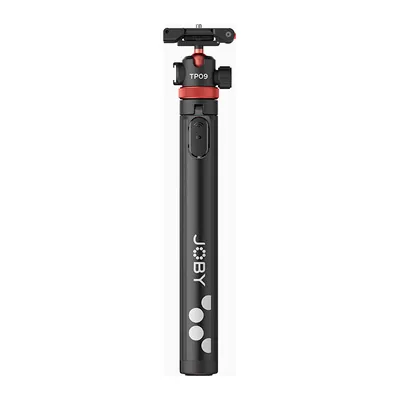
Joby TelePod TP09
A grip tripod that extends to 71 in, with a phone clamp, ball head, and wireless remote: the phone stays perfectly still during long exposures, without being touched.
View on Amazon (opens in a new tab)
Black Diamond Spot 400
A headlamp that runs on three AAA batteries, waterproof to IPX8 (30 min at 3.6 ft underwater). Under FL1: 400 lumens and a 328 ft beam for 2.5 hours, or 6 lumens for 200 hours.
View on Amazon (opens in a new tab)
Worth watching
A 10-minute walkthrough of the 3-day forecast from NOAA’s Space Weather Prediction Center: what you’re looking at when you open it, and how it estimates the geomagnetic activity behind the northern lights.
The video is hosted by YouTube (Google): nothing loads until you play it, and Google may then set cookies.
FAQ
Can you see the northern lights from the Lower 48?
Yes, but it takes a strong geomagnetic storm, especially the farther south you are. NOAA says Kp 6 to 7 might bring them into view from the northern edge of the US, and Kp 8 to 9 overhead in the northern states. In November 2025, sightings reached as far south as Florida. From most of the country, expect a glow low on the northern horizon, much clearer on camera than to the eye.
What Kp do you need to see the northern lights in the US?
It depends on where you are. NASA says northern states can see aurora with a Kp as low as 4; NOAA puts the northern edge of the country at Kp 6 to 7, and aurora overhead in the northern states at Kp 8 to 9. NOAA’s scale reaches Illinois and Oregon at G3, or Kp 7, and Florida and southern Texas at G5, or Kp 9o.
Is there a 7-day northern lights forecast?
Not an official, detailed one. NOAA forecasts Kp 3 days ahead, in 3-hour periods, and publishes a 27-day outlook on Mondays with a single maximum Kp per day. Its OVATION map only looks 30 to 90 minutes ahead, and the decisive orientation of the particle cloud’s magnetic field is known only about an hour before it arrives.
Why do the northern lights look better in photos?
At night, your eyes rely mainly on rods, which are very sensitive but can’t tell colors apart, and it takes about half an hour to adjust to the dark. A faint aurora then looks white or gray. A camera sensor, or a phone in night mode, gathers light for several seconds and brings out the red, pink, or green.
What time is best to see the northern lights?
Usually between 10 p.m. and 2 a.m. local time, around midnight, according to NOAA. During big storms, aurora can show up as early as sunset and as late as sunrise, NASA notes. NOAA’s 3-day forecast is in Universal Time: subtract 5 hours for Eastern Standard Time, 6 for Central, 7 for Mountain, and 8 for Pacific, or one hour less during daylight saving time.
Will there still be northern lights in 2026 and 2027?
The solar cycle peaked in October 2024, but the declining phase can still produce strong storms, NASA points out, and in January 2026 the UK’s Met Office still expected G4 storms a couple of times a year at this stage. Even so, from January 22 to September 30, 2026, the official Kp didn’t go above 7o, the G3 level.
Sources
- Météo-France, Bulletin climatologique mensuel régional, Bretagne, mai 2024 (in French), copy archived by the Internet Archive on December 10, 2025. web.archive.org https://web.archive.org/web/20251210234041/https://donneespubliques.meteofrance.fr/donnees_libres/bulletins/BCMR/BCMR_03_202405.pdf ↩
- Jean-Marie Malherbe, Aurore boréale des 10-11 mai 2024 visible dans les Alpes et observée par les caméras panoramiques et automatiques de haute montagne (in French), dataset, Recherche Data Gouv, 2025. recherche.data.gouv.fr https://recherche.data.gouv.fr/en/dataset/exceptional-aurora-borealis-of-10-11-may-2024-observed-by-alpine-cameras ↩
- NASA, NASA, NOAA: Sun Reaches Maximum Phase in 11-Year Solar Cycle, October 15, 2024. science.nasa.gov https://science.nasa.gov/science-research/heliophysics/nasa-noaa-sun-reaches-maximum-phase-in-11-year-solar-cycle/ ↩
- GFZ Potsdam, monthly tables of the definitive Kp index (kpYYMM.tab files, CC BY 4.0 license), GWDG mirror, accessed October 22, 2026. ftp.gwdg.de https://ftp.gwdg.de/pub/geophys/kp-ap/tab/ ↩
- NOAA Space Weather Prediction Center, NOAA Space Weather Scales, accessed October 22, 2026. spaceweather.gov https://www.spaceweather.gov/noaa-scales-explanation ↩
- NOAA Space Weather Prediction Center, Planetary K-index, accessed October 22, 2026. spaceweather.gov https://www.spaceweather.gov/products/planetary-k-index ↩
- International Service of Geomagnetic Indices (ISGI), hosted by EOST in Strasbourg, France, Kp page, accessed October 22, 2026. isgi.unistra.fr https://isgi.unistra.fr/indices_kp.php ↩
- NOAA Space Weather Prediction Center, Tips on Viewing the Aurora, accessed October 22, 2026. spaceweather.gov https://www.spaceweather.gov/content/tips-viewing-aurora ↩
- British Geological Survey, Geomagnetism, Geomagnetic Coordinate Calculator, IGRF-14 model, calculations of October 22, 2026: “Geomagnetic coordinates are determined using model calculations provided by British Geological Survey - Geomagnetism.” geomag.bgs.ac.uk https://geomag.bgs.ac.uk/data_service/models_compass/coord_calc.html ↩
- NOAA Space Weather Prediction Center, Aurora - 30 Minute Forecast, accessed October 22, 2026. spaceweather.gov https://www.spaceweather.gov/products/aurora-30-minute-forecast ↩
- Vienna.at, Bringt 2026 Polarlichter über Österreich? (in German), APA news agency report citing GeoSphere Austria, December 23, 2025. vienna.at https://www.vienna.at/bringt-2026-polarlichter-ueber-oesterreich/9886652 ↩
- Solar Influences Data analysis Center, Royal Observatory of Belgium, Anatomy of an aurora, article published after the January 19, 2026, storm, copy archived by the Internet Archive on May 18, 2026. web.archive.org https://web.archive.org/web/20260518214201/https://www.sidc.be/article/anatomy-aurora ↩
- MeteoSwiss, Aurores boréales pour la nouvelle année (in French), blog, January 2, 2025. meteosuisse.admin.ch https://www.meteosuisse.admin.ch/portrait/meteosuisse-blog/fr/2025/01/aurores-boreale-pour-la-nouvelle-annee.html ↩
- Met Office (UK), Auroras, with photography advice from the Royal Photographic Society, accessed October 22, 2026. weather.metoffice.gov.uk https://weather.metoffice.gov.uk/learn-about/space-weather/auroras ↩
- Solar Influences Data analysis Center, Royal Observatory of Belgium, Solar Cycle 25 reached its maximum in October 2024, 2026, copy archived by the Internet Archive on July 23, 2026. web.archive.org https://web.archive.org/web/20260723112009/https://www.sidc.be/article/solar-cycle-25-reached-its-maximum-october-2024 ↩
- NOAA Space Weather Prediction Center, 3-Day Forecast, accessed October 22, 2026. spaceweather.gov https://www.spaceweather.gov/products/3-day-forecast ↩
- NOAA Space Weather Prediction Center, 27-Day Outlook of 10.7 cm Radio Flux and Geomagnetic Indices, accessed October 22, 2026. spaceweather.gov https://www.spaceweather.gov/products/27-day-outlook-107-cm-radio-flux-and-geomagnetic-indices ↩
- NASA, NASA’s Guide to Finding and Photographing Auroras, November 13, 2024, updated June 13, 2025. science.nasa.gov https://science.nasa.gov/feature/nasas-guide-to-finding-and-photographing-auroras/ ↩
- NASA Scientific Visualization Studio, The Sun Unleashes Six November X-class Flares, November 2025. svs.gsfc.nasa.gov https://svs.gsfc.nasa.gov/14927/ ↩
- NOAA Space Weather Prediction Center, Aurora for Tonight and Tomorrow Night (Experimental), accessed October 22, 2026. spaceweather.gov https://www.spaceweather.gov/products/aurora-viewline-tonight-and-tomorrow-night-experimental ↩
- NOAA Space Weather Prediction Center, Subscription Services, accessed October 22, 2026. spaceweather.gov https://www.spaceweather.gov/content/subscription-services ↩
- AuroraWatch UK, Lancaster University, AuroraWatch UK alerts, accessed October 22, 2026. aurorawatch.lancs.ac.uk https://aurorawatch.lancs.ac.uk/alerts/ ↩
- NASA, Citizen Scientists Help NASA Researchers Understand Auroras, 2016. nasa.gov https://www.nasa.gov/solar-system/citizen-scientists-help-nasa-researchers-understand-auroras/ ↩
- British Geological Survey, Geomagnetism, Viewing Northern Lights in the UK, accessed October 22, 2026. geomag.bgs.ac.uk https://geomag.bgs.ac.uk/education/viewing_aurora.html ↩
- BrainFacts.org, Society for Neuroscience, Nightvision, 2018. brainfacts.org https://www.brainfacts.org/thinking-sensing-and-behaving/vision/2018/nightvision-081618 ↩
- Met Office (UK), How the Met Office forecasts space weather and why it matters, January 21, 2026. metoffice.gov.uk https://www.metoffice.gov.uk/blog/2026/how-the-met-office-forecasts-space-weather-and-why-it-matters ↩
- NOAA Space Weather Prediction Center, G5 Conditions Observed!, May 10, 2024. spaceweather.gov https://www.spaceweather.gov/news/g5-conditions-observed ↩
- NOAA Space Weather Prediction Center, G4 (Severe) Storm Levels Reached!, November 12, 2025. spaceweather.gov https://www.spaceweather.gov/news/g4-severe-storm-levels-reached ↩
- NOAA Space Weather Prediction Center, G4 (Severe) Geomagnetic Storm Levels Reached 19 Jan, 2026, January 19, 2026. spaceweather.gov https://www.spaceweather.gov/news/g4-severe-geomagnetic-storm-levels-reached-19-jan-2026 ↩

Trail running, snow, water, nature and destinations
Nolwenn covers trail running, snow, water, nature and destinations for Outfarer. Curious about everything, from meteor showers to night-train schedules, she has a knack for digging up the one detail that changes everything, and nailing it in a single sentence.


 Joséphine Garand

 Erik Vadas-Gauden