 Français (France)
 English (UK)
 English (US)
 Deutsch (Deutschland)

Contents
In July, you can start close to home, without a net and without naming everything. On July 9, 10, and 11, 2026, I was in the western Côtes-d’Armor, in Brittany, France. What worked for me came down to three things: a trail sheltered from the wind, a sunny riverbank, and photos between 9:30 a.m. and mid-afternoon.
The real progress was accepting incomplete names. “A white” or “a blue damselfly” is already an answer.
Where to go when the coast is too windy?
On July 9, I tried a stretch of coastal trail facing the sea. After half an hour, almost nothing was flying. The wind was flattening the grass. I put the camera away. The date wasn’t the problem. The place was, that day.
On the morning of July 10, I was at the Quellen marsh in Trébeurden. It’s a freshwater marsh behind a line of dunes. The tourist office’s page describes about 54 acres (22 hectares) of reed beds, wet meadows, and woods, with Camargue horses on two-thirds of the site [1, 2]. The trail is about 1.4 miles (2.3 km) long, with 56 feet (17 m) of elevation gain. Without stopping, it takes 1 hour [1]. It took me nearly two.
There’s a blind, built mostly for birdwatchers. I found the insects lower down, on the brambles and the flowers along the edge.
I stayed on the marked trail. I didn’t go into the grazed area, and I didn’t approach the horses. In July and August, the same page lists guided tours about the horses and the plants [1]. It doesn’t give the 2026 schedule. I didn’t go on one. Check before you make the trip.
The Quellen gave me butterflies. Few dragonflies to see from the trail. Before noon, the wind off the sea picked up. The butterflies tucked themselves deep into the brambles. I stopped.
In the afternoon, I moved on to a public riverbank in the Léguer valley, out of the wind. I won’t give an exact spot: I stayed on the path, without going into the meadows. There, running water and a small sunny pond did what the marsh, seen from the trail, hadn’t. Damselflies on the rushes. A big dragonfly on patrol. Damselflies of running water, with metallic bodies; the males have colored wings. North America’s jewelwings belong to the same genus, Calopteryx. perched on the plants along the bank.
The Léguer’s Natura 2000 site, part of the European Union’s network of protected areas, is far richer than my list. Its page names, among others, the Large Chequered Skipper, the Heath Fritillary, and the Queen of Spain Fritillary, and among the dragonflies, the Scarce Emerald Damselfly, Boyeria irene, two clubtails, and the Black Darter [3]. I didn’t look for them. A first outing isn’t about checking off the discreet species.
What time do they actually settle down?
On July 10, 2026, the Météo-France weather station in Lannion recorded 64 to 88 °F (18 to 31 °C), and on July 11, 64 to 82 °F (18 to 28 °C) [4, 5]. Here’s what those three days showed me, not a rule for all of Brittany. On the day: short sleeves in the shelter in the early afternoon, a light jacket as soon as the wind picked up again on the coast.
From 9:30 a.m. to 11 a.m., the insects were still perched. That’s when I got my sharp photos. At the Quellen, that window lasted until the sea breeze picked up.
Between noon and 4 p.m., in the sun and out of the wind, there was more flying. I saw the comings and goings better. My photos were worse. A dragonfly patrolling without landing is something to watch. And, very often, to miss.
After 5 p.m., just one attempt. Fewer insects, beautiful light on the plants, a Meadow Brown at rest. Good for looking at plants. Poor for dragonflies, that day.
| Time slot | The insects | Photos |
|---|---|---|
| 9:30 a.m. to 11 a.m. | Still perched; at the Quellen, until the sea breeze | The sharp photos |
| Noon to 4 p.m., in the sun and out of the wind | More flying, comings and goings | More watching than photographing |
| After 5 p.m. | Fewer of them, a Meadow Brown at rest | Beautiful light on the plants, poor for dragonflies |
| Strong wind or heavy cloud | An empty trail | Head home |
Joséphine Garand’s observations in the western Côtes-d’Armor, Brittany, on July 9, 10, and 11, 2026: what she found, not a rule for all of Brittany.
If there’s a strong wind or heavy cloud, I head home. Forcing an hour on an empty trail teaches you nothing. On July 11, with big clouds at times in a mostly clear sky, the sheltered valley worked better than the coast.
As for the calendar, July fell within the periods I checked. The Meadow Brown flies from late May to September [6]. The Swallowtail, Papilio machaon, known in North America as the Old World Swallowtail, from February to October depending on the climate [7]. The Baie de Saint-Brieuc nature reserve’s page on the species gives adult Beautiful Demoiselles from late May to early September [8]. I don’t make it a rule for the whole Côtes-d’Armor. It fit my dates. A calm, sunny day mattered more than the date on the calendar.
What actually earned a spot in my backpack?
No net. No collecting box. My usual camera, with a zoom lens, and my phone.
I stayed about 7 to 10 feet (2 to 3 m) away when the insect let me. For a damselfly on a rush, I knelt down. For a green caterpillar on a leaf, I got down on all fours. I didn’t name it. The photo is blurry, and I kept it anyway.
Two apps, for different jobs.
ObsIdentify gave me a first lead from a photo [9]. I treat it as a hypothesis. A high score isn’t a confirmation.
INPN Espèces, the app from France’s National Museum of Natural History, does something else. You can see what’s known around a place in France. You can also send in a sharp photo, with the date, the place, and the group. Experts confirm, or correct [10]. It’s slow. That’s exactly why I save it for the evening, not for settling things on the trail.
In the evening, two guides. For butterflies, Tristan Lafranchis’s Papillons de France (Diatheo, 2016), in French. The book is out of print. The publisher offers the PDF free for personal, noncommercial use [11]. I opened it at home, not out in the sun. For dragonflies, Dijkstra and Lewington’s guide, published in French by Delachaux (Guide des libellules de France et d’Europe), the one France’s League for the Protection of Birds (LPO) cites in its species pages [12]. Too big for a pocket. Very clear at the table.
Long, light-colored pants and closed-toe shoes. Not for style. For ticks, and for brambles. More on that below.
Which names could I keep?
A word first. Dragonflies and damselflies together make up the order Odonata. Damselflies hold their wings together above the body at rest; true dragonflies rest with their wings spread out [12]. The pterostigma is the small colored cell near the wingtip. An eyespot is the round spot that looks like an eye, on the wings of some butterflies.
Butterflies, only when the feature showed in the photo.
The Peacock, Aglais io, wings open, with its big eyespots. No doubt about it, on a bramble at the Quellen.
The Red Admiral, red bands on black. Same place, a little later. It landed, flew off, came back. I waited. That’s often the secret. Not a camera setting.
The Meadow Brown, Maniola jurtina. Orangey brown, a black eyespot near the tip of the forewing. Wingspan 1.5 to 1.8 inches (39 to 46 mm), according to the LPO. Very common, not protected in France, one generation a year, from late May to September [6]. I saw several in the grass along the trail. The male usually has a single small white dot in the eyespot. The female often has more orange, and two white dots [6]. I remember that sentence, because it saved me from a blunder. I’ll get to that.
The Swallowtail, on July 11, on a wild carrot (Queen Anne’s lace) beside a sunny path. Yellow background, black markings, blue crescents, a red spot, tails on the hindwings. Wingspan 2.5 to 3 inches (63 to 75 mm). Not protected in France. The LPO gives it from February to October, with caterpillars on various plants of the carrot family, including wild carrot, fennel, and parsley [7]. That one, I can name. It stayed. So did I.
A female Brimstone, Gonepteryx rhamni. Leaf-shaped wings, pale, with no black tip. I nearly called it a white. The evening guide settled it. A male, bright yellow, same leaf shape, would have been quicker.
The Speckled Wood, Pararge aegeria, in the shade of the sunken lane. Cream spots, short flights from one patch of sunlight to the next. I already know it from woodland edges. I didn’t go looking for it elsewhere.
The Small Copper, Lycaena phlaeas, small and orange, on a low flower. A clear feature in the photo, confirmed in the evening.
Dragonflies and damselflies: same rule.
A male demoiselle, on the sunny bank. A broad dark band across the wing, about a thumb’s width, not covering the whole wing. That matches the Banded Demoiselle, Calopteryx splendens, as the LPO describes it: sunny running water, banks at least partly covered in plants. The extent of the band varies between populations [12]. If the photo is ambiguous, I don’t decide.
The next day, on a shadier stretch, a male with wings almost entirely tinted blue-green. The Baie de Saint-Brieuc nature reserve puts it simply: in the Banded Demoiselle, a large oval patch. In the Beautiful Demoiselle, Calopteryx virgo, the male’s wing is entirely smoky [8]. I kept “Beautiful Demoiselle” for that male. Not for the females nearby. With them, the feature is the position of a white spot near the wingtip [8]. I couldn’t see it well enough.
A small damselfly, bronze-black abdomen, blue eighth segment, two-tone pterostigma. That’s how Écrins National Park, in the French Alps, describes the male Blue-tailed Damselfly, Ischnura elegans, which it records from May to September on sunny, slow-moving water [13]. The female changes color with age. I only named the male whose blue segment showed.
A blue dragonfly, with a very broad, flattened abdomen and dark patches at the base of the wings, perched at the edge of a pond. In the evening, the guide told it apart from the slimmer Orthetrum skimmers. I kept “Broad-bodied Chaser,” Libellula depressa, only for the photos where both details were clear.
A big dragonfly, green thorax, blue abdomen, patrolling without landing. The guide fit the Emperor Dragonfly, Anax imperator, better than the Lesser Emperor, Anax parthenope. The photo is poor. I write “Anax, probably Emperor.” I don’t submit it as a confirmed record.
Where did I go wrong?
First, the whites. On the first day, I called everything a Large White, Pieris brassicae. In the evening, the guide showed several white species, not one. Size, the shape of the black patch at the wingtip, the veins underneath. My eye isn’t sure enough yet. Now I write “a white.” If I have the underside of the wings, I attach it. If not, I stop there.
Next, the Meadow Brown and the Gatekeeper, Pyronia tithonus. I thought an eyespot with two white dots was enough to rule out a Meadow Brown. The LPO’s page says otherwise for the female. Two white dots, more orange: it can still be a Meadow Brown [6]. I probably saw Gatekeepers. I didn’t name them. A doubtful orangey brown stays “Meadow Brown or Gatekeeper.”
| What you see | What’s often missing | The name to keep |
|---|---|---|
| A white butterfly | The underside of the wings, the shape of the black patch at the wingtip | “A white” |
| An orangey brown with an eyespot | A reliable feature: two white dots aren’t enough in the female | “Meadow Brown or Gatekeeper” |
| A small blue butterfly, seen from above | The underside of the wings and its small spots | “A blue” |
| A red dragonfly at rest | The thorax in profile, the legs, the black markings | “A darter” |
| A big dragonfly in flight | A sharp photo | “Anax, probably Emperor” |
Based on Joséphine Garand’s mistakes and choices, checked in the evening against her field guides.
Then the blues. ObsIdentify suggested a particular blue from a photo taken from above. I didn’t have the underside of the wings, the side with the small spots. I deleted the species name. “A blue” is enough. Females are often brown. A blue seen from above, without the underside, isn’t a record.
Same with the reds. I saw Dragonflies of the genus Sympetrum, called meadowhawks in North America. at rest. I didn’t separate the species. The thorax in profile, the legs, the black markings: I lack the practice, and often the photo. “A darter” is the right level. The Léguer page lists the Black Darter, Sympetrum danae, which isn’t the classic red one of ponds [3]. One more reason not to guess.
Finally, the apps. A lead, yes. A name to publish, no, as long as the feature isn’t in the photo and no guide or reviewer has backed it up. INPN Espèces is built for that: correction is part of the system [10]. Being corrected isn’t a failure.
What to photograph before putting the camera away?
A short list. I wrote it down after missing too many wing undersides.
If it flies off, I stop. I don’t follow it into tall vegetation. A missed photo can be retaken another day. A trampled meadow can’t be undone.
What not to do, even for a great photo?
I don’t catch anything, protected or not. Photographing isn’t catching.
Two species deserve a mention, because you could run into them while wanting “just a closer look.” The Marsh Fritillary, Euphydryas aurinia, was found in 2010 in a meadow at Belle-Isle-en-Terre, in the Léguer valley. Its presence is tied to its host plant, devil’s-bit scabious [3]. The Southern Damselfly, Coenagrion mercuriale, is a small blue damselfly, easy to mistake for others.
When you’re starting out, you can’t sort that out on the spot. So no net, no hands on the insect. If you want to handle insects, that’s not something you pick up over a weekend. It takes training, with someone who knows what they’re allowed to do.
The Meadow Brown and the Swallowtail aren’t protected in France [6, 7]. That doesn’t change how I go about it. I photograph them; I don’t take them.
At the Quellen, the site is grazed. The trail is the way to go. I kept to it, and I won’t tell you that leaving the route does no harm. For the horses as much as for the wet meadows, I stick to the markers.
In France, ticks are active from March to November, mostly in fairly damp areas like forests, but also in fields, meadows, and yards. Santé publique France, France’s national public health agency, says so on a page updated on August 2, 2024 [15]. Lyme disease is found throughout France. In 2023, nearly 39,000 cases were diagnosed by family doctors, or 59 cases per 100,000 people. Cases are more frequent in the east and center of the country than in the west [15]. That’s no reason to skip the check.
I kneel to take photos. That means more contact with the grass. Hence the light-colored pants, and the check in the evening. I’m not saying that’s enough in every case.
In the evening, at the table
I sort the photos before I go looking for names. The ones where the feature shows on one side. The ones that stay at the genus level on the other. A few go off to INPN Espèces, with the date and place, to be checked [10]. I don’t submit a confirmed record when the photo doesn’t show the detail.
The Swallowtail from July 11 stayed on the wild carrot. So did I. My traveling companion ended up sitting down in the frame. In the last photo, you mostly see his shoes, and a bit of yellow wing. It’s my favorite photo of those three days. It doesn’t deserve a species name, and it taught me more than the list.
Gear related to this article
No affiliation: no commission, no sponsored products.
 Kaufman Field Guides
Kaufman Field Guide to Butterflies of North America
A compact guide with more than 2,300 images of butterflies in natural poses and range maps beside the text: the North American guide the article says to use back home.
View on Amazon (opens in a new tab)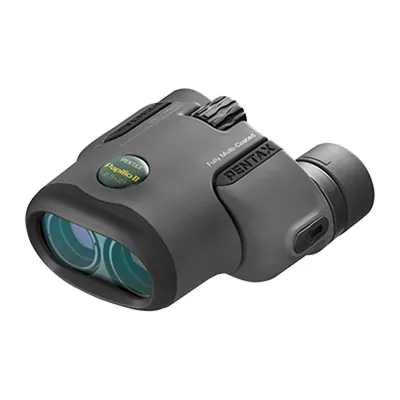
Pentax Papilio II 6.5x21
Compact 6.5x21 binoculars weighing 10.2 oz that focus from just 20 inches: study a perched dragonfly or a butterfly’s wing up close without moving in, then look far off.
View on Amazon (opens in a new tab)
FAQ
Do you need a net to get started?
No. A camera with a zoom lens, or a phone, is enough to begin, staying about 7 to 10 feet (2 to 3 m) from the insect when it lets you. Photographing isn’t catching, and it means you can’t take a protected species by mistake, like the Southern Damselfly in France. Binoculars that focus up close also help you look without getting near. Handling insects takes training.
Which app can you trust, and how far?
None settles it alone. ObsIdentify offers a first lead from a photo: it’s a hypothesis, and a high score isn’t a confirmation. INPN Espèces, the app from France’s National Museum of Natural History, shows the species known around a place and has the photos sent in, with the date and place, checked by experts who confirm or correct them. It’s slower: a job for the evening, not for the trail.
What time should you go out, especially when the coast is windy?
During the three days in July 2026 described here, in the western Côtes-d’Armor, in Brittany, the insects were still perched from 9:30 a.m. to 11 a.m., the best window for sharp photos. Between noon and 4 p.m., in the sun and out of the wind, they flew more. When the sea breeze picks up, a sheltered trail or a valley works better than the coast; in strong wind or under heavy cloud, you’re better off heading home.
Why isn’t a white butterfly necessarily a Large White?
Because several white species look alike. You tell them apart by size, the shape of the black patch at the wingtip, and the veins on the underside, so that’s what you need to photograph. Without that underside, “a white” is the right level of name. A female Brimstone, pale and with no black tip, can also pass for a white: its leaf-shaped wings give it away.
Can you submit a record from your very first photo?
Yes, if the photo is sharp and comes with the date and place: on INPN Espèces, for sightings in France, expert review is part of the system, and being corrected is no failure. But a species name is only given as certain when the feature shows in the photo; otherwise, you stay at the genus level. That’s how community science works, as in the backyard bird counts.
Which species are you not allowed to catch in France?
In mainland France, the ministerial order of April 23, 2007, sets out the lists of protected insects. For the Southern Damselfly and the Marsh Fritillary, it bans, among other things, destroying or removing their eggs, larvae, and pupae, and destroying, capturing, or removing the animals themselves; other species are protected even more strictly, including against deliberate disturbance. Since you can’t always tell them apart on the spot, the simplest thing is to catch nothing at all.
Sources
- Bretagne Côte de Granit Rose tourist office, Le marais du Quellen, accessed October 27, 2026. bretagne-cotedegranitrose.com https://www.bretagne-cotedegranitrose.com/mon-sejour/loisirs-et-decouvertes-sur-la-cote-de-granit-rose/circuits-de-balades-et-randonnees/le-marais-du-quellen-trebeurden-fr-6774860/ ↩
- Côtes-d’Armor Tourisme, Marais du Quellen, Trébeurden, accessed October 27, 2026. cotesdarmor.com https://www.cotesdarmor.com/fr/fiche/patrimoine-naturel/marais-du-quellen-trebeurden_TFOPNABRE0220HA630D/ ↩
- Natura 2000 Rivière du Léguer (Lannion-Trégor Communauté), Les espèces animales, accessed October 27, 2026. riviere-du-leguer.n2000.fr https://riviere-du-leguer.n2000.fr/le-site-riviere-du-leguer/les-especes-animales ↩
- Infoclimat, Archives des relevés météo du vendredi 10 juillet 2026, Lannion-Servel (Météo-France station readings for July 10, 2026), accessed October 27, 2026. infoclimat.fr https://www.infoclimat.fr/observations-meteo/archives/10/juillet/2026/lannion-servel-aero/07118.html ↩
- Infoclimat, Archives des relevés météo du samedi 11 juillet 2026, Lannion-Servel (Météo-France station readings for July 11, 2026), accessed October 27, 2026. infoclimat.fr https://www.infoclimat.fr/observations-meteo/archives/11/juillet/2026/lannion-servel-aero/07118.html ↩
- LPO, Myrtil (Meadow Brown), species page, accessed October 27, 2026. lpo.fr https://www.lpo.fr/decouvrir-la-nature/fiches-especes/fiches-especes/invertebres/papillons/myrtil ↩
- LPO, Machaon (Swallowtail), species page, accessed October 27, 2026. lpo.fr https://www.lpo.fr/decouvrir-la-nature/fiches-especes/fiches-especes/invertebres/papillons/machaon ↩
- Baie de Saint-Brieuc nature reserve, Le caloptéryx vierge (Beautiful Demoiselle), updated September 22, 2021, accessed October 27, 2026. reservebaiedesaintbrieuc.com https://www.reservebaiedesaintbrieuc.com/decouvrir/la-faune/invertebres-terrestres/le-calopteryx-vierge ↩
- Observation.org, ObsIdentify, app page, accessed October 27, 2026. observation.org https://observation.org/apps/obsidentify/ ↩
- French National Museum of Natural History, INPN Espèces, découvrez la faune et la flore autour de chez vous, accessed October 27, 2026. mnhn.fr https://www.mnhn.fr/fr/inpn-especes-decouvrez-la-faune-et-la-flore-autour-de-chez-vous ↩
- Tristan Lafranchis, Papillons de France, Diatheo, 2016, publisher’s page, accessed October 27, 2026. diatheo.weebly.com https://diatheo.weebly.com/papillons-de-france.html ↩
- LPO, Les Caloptéryx (demoiselles), species page expanded in February 2025, accessed October 27, 2026. lpo.fr https://www.lpo.fr/decouvrir-la-nature/fiches-especes/fiches-especes/invertebres/les-calopteryx ↩
- Écrins National Park, Agrion élégant (Ischnura elegans) (Blue-tailed Damselfly), wildlife and plant atlas, accessed October 27, 2026. biodiversite.ecrins-parcnational.fr https://biodiversite.ecrins-parcnational.fr/espece/65109 ↩
- Arrêté du 23 avril 2007 fixant les listes des insectes protégés sur l’ensemble du territoire et les modalités de leur protection (France’s ministerial order of April 23, 2007, on protected insects), articles 2 and 3, Légifrance, version in force, accessed October 27, 2026. legifrance.gouv.fr https://www.legifrance.gouv.fr/loda/id/JORFTEXT000000465500 ↩
- Santé publique France, Maladies vectorielles à tique : bien se protéger pendant la saison d’activité des tiques, updated August 2, 2024, accessed October 27, 2026. santepubliquefrance.fr https://www.santepubliquefrance.fr/les-actualites/maladies-vectorielles-a-tique-bien-se-proteger-pendant-la-saison-dactivite-des-tiques ↩
- Assurance Maladie (French national health insurance), Morsure de tique et maladie de Lyme : que faire ?, ameli.fr, accessed October 27, 2026. ameli.fr https://www.ameli.fr/assure/sante/urgence/morsures-griffures-piqures/morsure-tique-maladie-de-lyme-que-faire ↩
- CiTIQUE, Signalez vos piqûres, envoyez vos tiques, Signalement Tique app, accessed October 27, 2026. citique.fr https://www.citique.fr/participer/signalement-tique/ ↩

Nature, photography, walks and travel
Joséphine loves nature for its beauty: walks, photography, travel, nights in a camper van or glamping. Neither an expert nor especially athletic, she writes and reviews with a newcomer’s eye, a perspective that’s invaluable for all our content aimed at beginners.

 Nolwenn Bastide

