 Français (France)
 English (UK)
 English (US)
 Deutsch (Deutschland)

Contents
Why start at a surf school
Do you need lessons to start surfing? You don’t need any credential to surf just for fun. Still, the French Surfing Federation (FFSurf) is clear: you learn at an affiliated club or an accredited school [1]. The way I see it, the reason has less to do with technique than with everything around it: the beach, the other surfers, the ocean that day.
The safety sign the federation publishes starts with three conditions: knowing how to swim, surfing with a The cord that connects the board to the surfer’s ankle., and preferably wearing a wetsuit [2]. Then come the rules for beginners: stay in the Waves that have already broken and roll toward shore as foam. or the small waves, use a foam board, stay out of the shore break, and protect your head when you fall [2].
That’s exactly the framework a school provides. The rules of Germany’s surfing federation, the Deutscher Wellenreitverband (DWV), make it concrete: beginner lessons on lifeguarded beaches, in water no deeper than the hips, in surf of 5 feet (1.5 m) at most, with every student’s swimming ability checked as a requirement [3]. Surfing England, the national body in England, also trains its instructors to teach beginners in waist-deep water, in groups of no more than 8 [4].
Choosing a school: the credential, the card, and the label
Surfing may have a reputation as the sport of freedom, but like everything else, it starts with a little paperwork. In France, what the text says is clear: article L212-1 of the sports code reserves paid surf instruction, from intro sessions to full courses, for holders of a professional credential listed in the code, such as the BPJEPS vocational diploma in “surf et disciplines associées” [5]. What that means for you: an instructor who charges for a lesson has to hold one of those credentials.
The proof is posted on-site. Once their credential and background have been checked, paid sports instructors in France receive a professional card, renewed every 5 years; a copy of the card and of the credential must be posted where the public can see it, wherever the activity takes place [6]. The card carries a QR code, and the French Ministry of Sports lists every instructor with a valid card online: its sports instructor search portal lets you look up a name [6].
The “École française de surf” label, created by the FFSurf in 1995, adds a quality charter on top of that legal minimum: accredited schools issue the federation’s progression passports and “École” memberships, and hire only state-certified instructors [7]. The label isn’t mandatory; it’s a commitment the school makes to its federation, and you can ask to see it.
What changes from one country to the next
Elsewhere, the logic is similar, but the gatekeeper changes. In England, Surfing England accredits schools and has issued its own surf instructor certification since spring 2023, which requires a current beach lifeguard or surf lifesaving award [4, 9]. In Germany, the “DWV-anerkannte Surfschule” label is renewed every calendar year: each location is run by the holder of a level B surf coaching license, lessons are taught by an instructor with a DWV level C license, or by holders of an equivalent credential, and all instructors hold the DLRG Silver lifesaving award and first aid training [3].
In the US, North Myrtle Beach, South Carolina, shows how a city can regulate the schools on its beach: a $100 annual permit, one instructor for every 8 students at most, and instructors certified in CPR and first aid [10]. Rules like these are set locally, so check with the city or county that manages your beach. In Portugal, the national federation publishes a list of the schools registered with it [11]: the first thing to check before booking a surf camp there.
| Country | What to look for | What the instructor needs | Group size |
|---|---|---|---|
| France | FFSurf “École française de surf” label | A credential listed in the sports code and a professional card; state certification at accredited schools | Not stated on the label page: ask the school |
| England | School accredited by Surfing England | Surfing England instructor certification and a current lifesaving award | 8 students at most |
| Germany | “DWV-anerkannte Surfschule” label, renewed every year | DWV level C license or equivalent, DLRG Silver lifesaving award, first aid | 8 students per instructor at most |
| United States (North Myrtle Beach example) | Annual permit issued by the city | CPR and first aid certification | 8 students per instructor at most |
The England row describes the Surfing England network. In the United States, school rules are set locally: North Myrtle Beach is just one example.
The first lesson: from the whitewater to the pop-up
A lesson starts on the sand. The DWV requires its schools to cover a minimum of theory in every beginner course, no matter how long: the international rules of surfing, including right of way and how to avoid collisions. Over a weeklong course, weather, waves, tides, and currents get added [3].
In the water, you stay where the waves have already broken, and you learn the Going from lying down to standing on the board as the wave pushes it; the French call it the take-off. in the whitewater before trying it on a wave that hasn’t broken yet. That’s the whole idea behind the Pass’Surf, the progression shared by FFSurf-accredited schools in France, which has 4 levels [8].
| Level | Technique | Understanding the ocean | Safety and independence |
|---|---|---|---|
| 1. Wave garden | Getting comfortable on the board, lying down, then kneeling | Discovering the setting and the basic vocabulary | Constant supervision, protected zone |
| 2. Whitewater | Pop-up in the whitewater, standing balance | Understanding waves, tide, and wind | Knowing the gear, the flag, and the zones |
| 3. Wave | Pop-up on an unbroken wave, turns | Right-of-way rules, sharing the peak | Reading the water, choosing a session |
| 4. Surfer | Maneuvers and linking them together | Competition, environment, the ocean | Surfing independently, helping younger surfers |
The Pass’Surf is meant for school students and occasional surfers; it doesn’t replace the federation’s membership.
The passport costs €10 on top of the lesson, then €2 for each additional course; every level your instructor signs off stays on record online and carries over from one accredited school to the next [8]. The DWV even trains instructors who specialize in teaching beginners in wave pools, another way in, far from any tide chart [12].
The beginner’s board, wetsuit, and leash
A first board is foam, long, and floaty. Schools recognized by the DWV must use soft “malibu” boards with beginners, in sizes from 7 to 9 feet, matched to each student’s age, weight, and height [3]. For later on, figuring out the right volume for your weight and level gets its own guide: choosing your surfboard volume, and the volume calculator gives the number in two answers.
A wetsuit isn’t required, but the FFSurf considers it the better choice [2], and its thickness depends on the water temperature: see our guide to wetsuit thickness by water temperature. The leash, on the other hand, isn’t optional: “I always surf with a leash,” says the federation’s sign [2].
Right-of-way rules: one wave, one surfer
At the The spot where the wave starts to break., surfers wait their turn, and the basic rule fits into four words on the FFSurf sign: “one wave, one surfer” [2]. Surfing England publishes very similar rules [13]. Here’s what both organizations ask:
- The right of way goes to the surfer closest to the peak, the one farthest inside the breaking wave, as the FFSurf puts it [2, 13].
- You don’t take off on a wave someone is already riding: that’s a Taking off on a wave in front of a surfer who’s already riding it and has the right of way., ruled out by both organizations [2, 13].
- You don’t paddle around other surfers to cut ahead of them at the peak, which Surfing England calls snaking [13].
- You call out where you’re going, “left” or “right,” so others know [13].
- To get to the lineup, you paddle around the zone where the waves are breaking; caught inside, you paddle back out through the whitewater, not across the The part of the wave next to the peak that hasn’t broken yet., so you don’t ruin the ride of the surfer on it [2, 13].
- You never let go of your board, whether you’re diving under a wave or kicking out of one [2, 13].
For a beginner, that last rule matters from day one. A board you let go of keeps going with the wave, at the end of its leash, toward whoever is behind you: I can’t think of a better reason to keep it close, even in the whitewater. The other rules really kick in at the “Wave” level of the Pass’Surf, the one about sharing the peak [8].
Reading a beach before you paddle out
Before you look at the waves, look at the bottom. Surfing England describes three kinds of waves: ones that spill gently onto a gradually sloping beach, great for beginners; hollow, powerful waves that break over reefs or sandbars; and ones that dump all at once on the shoreline or in very shallow water, best left to experienced surfers [14]. Those are the “rouleaux de bord,” or shore break, that the FFSurf sign tells beginners to avoid [2].
The type of break matters too. A A wave that breaks over sand, changing shape with the sandbars and the tide. breaks over sand; a A wave that breaks along a point, a river mouth, or a reef. breaks along a point, a river mouth, or a reef, and in the UK those spots are often harder to reach, not lifeguarded, with currents and rocky bottoms [14]. Finally, the tide changes the shape and power of the waves, as well as the strength of the currents [14]: before a session, check the tide chart, then the swell and wind forecast.
In France, the federation gives two tips before you paddle out at an unfamiliar spot for the first time: ask local surfers or a specialist source, and never surf alone [15]. It names the Pays de la Loire region on the Atlantic coast, from Les Sables-d’Olonne along the nearby long beaches, as ideal for beginners, since its waves are less powerful than in Brittany or Aquitaine [15].
Flags and zones: where boards belong
In France, flags on lifeguarded beaches follow decree no. 2022-105 of January 31, 2022, in force since March 1, 2022. On the flagpole, green means “lifeguarded swimming with no apparent danger,” yellow “lifeguarded swimming with limited or marked danger,” and red “no swimming”; two red-and-yellow flags, planted near the water, mark off the lifeguarded swimming area [16].
Boards don’t belong in that area: “Respect swimming zones,” says the FFSurf sign, which shows a buffer zone on each side, then a surfing zone marked with checkered flags [2]. The checkered flag isn’t in the decree [16]. In France, the mayor controls swimming and water activities launched from the shore, out to 300 meters (about 980 feet), and sets the lifeguarded zones and hours [17]: to find out where boards are allowed, ask at the lifeguard station or the town hall.
In the UK, on beaches guarded by the RNLI, the national lifesaving charity, red-and-yellow flags mark the area for swimmers and bodyboarders, and black-and-white checkered flags the area for surfboards, stand-up paddleboards, and kayaks, where you never swim [14]. In Germany, the DLRG gives the checkered flag the same meaning, a water sports zone closed to swimmers, and notes that the green flag has no official meaning there, while it does in France [18, 16].
| Flag | France (2022 decree) | UK (Surfing England) | Germany (DLRG) |
|---|---|---|---|
| Red and yellow | Marks off the lifeguarded swimming area | Lifeguarded area for swimming and bodyboarding | Swimming area watched by lifeguards |
| Black-and-white checkered | Not in the decree; surfing zone on the FFSurf sign | Surfboards, paddleboards, and kayaks; no swimming or bodyboarding | Water sports zone; no swimming |
| Green | Lifeguarded swimming, no apparent danger | Not on the Surfing England list | No official meaning |
| Yellow | Lifeguarded swimming, limited or marked danger | Not on the Surfing England list | Dangerous conditions: strong swimmers only |
| Red | No swimming | Danger: never go in the water | No swimming or bathing: life-threatening |
| Orange windsock | Not in the decree | Offshore or strong wind: no inflatables | Not on the DLRG list |
On a French beach, the surfing zone is set by a town ordinance: the lifeguard station or the town hall can tell you where it is.
Rip currents: how to spot them, and why not to fight them
A A narrow, fast current that carries the water brought in by the waves back out to sea. carries the water that waves push onto the beach back out to sea. According to the National Weather Service, rips typically form at breaks in sandbars and near structures like jetties and piers; they move at 1 to 2 feet per second on average, but have been measured as fast as 8 feet per second (2.4 m/s), faster than an Olympic swimmer [19, 20]. A rip doesn’t pull you under: it pulls you away from shore, and it’s panic and exhaustion that cause drownings [21].
The numbers show where rips rank among beach hazards. NOAA estimates that rip currents kill about 100 people a year in the US [20]; in the UK, more than 60% of RNLI lifeguard incidents involve rip currents [21].
On France’s sandy coastline, people call them “baïnes,” meaning “little basins” in the southwest, “bâches” in the north, or “pouldours” in Brittany. The SNSM, France’s sea rescue service, explains how they work: waves and tide fill a hollow in the sand until it overflows, and that overflow creates a strong current heading out to sea that even a very good swimmer can’t fight [22]. It adds that no one ever knows exactly when or how fast it will happen, and that baïnes keep moving, even for people who’ve known the beach for years [22].
To spot a rip, the National Weather Service lists four signs: a narrow gap of darker, calmer-looking water between areas of breaking waves, a channel of churning, choppy water, a difference in water color, and a line of foam or seaweed moving seaward [19]. That’s the trap: lots of people get in the water where there’s no whitewater, which is often exactly where the rip is [21, 22]. The same agency advises asking the lifeguard, when you get to the beach, about the rip currents expected that day [23].
After surf school: surfing without an instructor
When can you surf without an instructor? The FFSurf progression gives a benchmark: surfing independently is its final level, after the one where you learn to read the water and choose your session [8]. Even then, the federation says never to surf alone [15], and to pick waves that match your level and uncrowded spots [2].
That leaves insurance. Outside lessons, the FFSurf offers a “Surfingfrance” membership for €45, good for a year, so you’re insured when surfing on your own outside a club in France; it doesn’t let you compete or teach [25]. The other route is membership through an affiliated club, which offers, in the federation’s words, community, training, and competition [25].
Gear related to this article
No affiliation: no commission, no sponsored products.
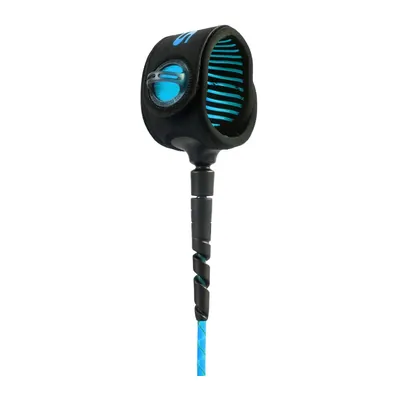
FCS Freedom Helix Longboard
A 9 ft longboard leash with a 6.5 mm (about 1/4-inch) cord whose inner helix absorbs shock, ankle cuff: it keeps the board within reach after a wipeout.
View on Amazon (opens in a new tab)
Worth watching
Surf Life Saving Australia trains your eye on real beaches to spot a rip: darker, deeper water, fewer breaking waves, a rippled surface, and foamy water flowing out past the waves.
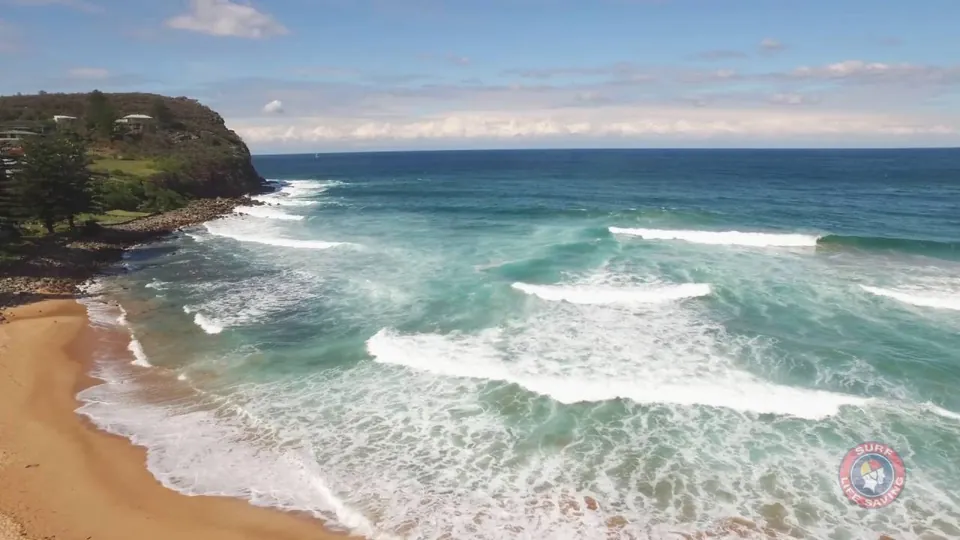
The video is hosted by YouTube (Google): nothing loads until you play it, and Google may then set cookies.
FAQ
Do you need to know how to swim to learn to surf?
Yes. “I can swim” is the first condition on the French Surfing Federation’s safety sign, along with the leash and the wetsuit. In Germany, schools recognized by the DWV must check every student’s swimming ability, and they teach beginners in water no deeper than the hips. If you’re not a strong swimmer, tell the school before you book.
Can you teach yourself to surf without lessons?
You don’t need any credential to surf on your own, but the French Surfing Federation recommends learning at an affiliated club or an accredited school, and says never to surf alone. Without an instructor, you don’t know where the surfing zone, the currents, and the local rules are. If you go for it anyway, choose a lifeguarded beach, stay in the whitewater, and talk to the lifeguards.
Is it better to start surfing on an incoming or outgoing tide?
No rule works everywhere. The tide changes the shape and power of the waves as well as the strength of the currents, and France’s SNSM notes that baïnes can fill and overflow on an incoming tide as well as an outgoing one. The right time depends on the spot: the school picks it for you, then the lifeguards and the tide chart help you understand why.
What is a baïne?
It’s the name used in southwestern France for a hollow in the sand along the beach that waves and tide fill with water. When it overflows, it creates a strong current flowing out to sea, a rip current that even a very good swimmer can’t fight, according to the SNSM. Its position keeps changing: swim in the lifeguarded area, and surf in the zone set aside for it.
What is the right-of-way rule in surfing?
“One wave, one surfer”: the right of way goes to the surfer closest to the peak, where the wave starts to break. Others don’t take off in front of them, the mistake known as a drop-in. The French Surfing Federation and Surfing England also ask you to paddle around the zone where waves are breaking to get to the lineup, and never to let go of your board.
How can you check that a surf instructor is certified?
In France, a paid sports instructor receives a professional card, and a copy of that card and of the credential must be posted where the public can see it, wherever the activity takes place. The card carries a QR code, and the French Ministry of Sports’ instructor search portal lists every registered instructor whose card is currently valid.
Sources
- French Surfing Federation (FFSurf), “#4 Adapter le spot de pratique,” from the J’apprends le surf series, accessed October 24, 2026. surfingfrance.com https://www.surfingfrance.com/j-apprends-le-surf/4-adapter-le-spot-de-pratique.html ↩
- French Surfing Federation (FFSurf), “Pratiquez le surf en toute sécurité,” July 27, 2020, with its sign “5 règles pour surfer en toute sécurité,” accessed October 24, 2026. surfingfrance.com https://www.surfingfrance.com/actualites/federation/pratiquez-le-surf-en-toute-securite.html ↩
- German Surfing Federation (DWV), “Surfschulen,” rules for DWV-recognized schools, accessed October 24, 2026. wellenreitverband.de https://wellenreitverband.de/verband/surfschulen/ ↩
- Surfing England, “Become a surf instructor,” accessed October 24, 2026. surfingengland.org https://www.surfingengland.org/coaching-hub/become-a-surf-instructor/ ↩
- France compétences, RNCP record 36973, BPJEPS “éducateur sportif” in “surf et disciplines associées,” accessed October 24, 2026. francecompetences.fr https://www.francecompetences.fr/recherche/rncp/36973/ ↩
- French Ministry of Sports, “Éducateurs sportifs,” accessed October 24, 2026. sports.gouv.fr https://www.sports.gouv.fr/educateurs-sportifs ↩
- French Surfing Federation (FFSurf), “Le label Ecole Française de Surf,” accessed October 24, 2026. surfingfrance.com https://www.surfingfrance.com/infos/le-label-ecole-francaise-de-surf.html ↩
- French Surfing Federation (FFSurf), “Passeport Surf” and Pass’Surf, accessed October 24, 2026. surfingfrance.com https://www.surfingfrance.com/clubs-ecoles/passeport-surf.html ↩
- Surfing England, “Lifesaving & Rescue Awards,” accessed October 24, 2026. surfingengland.org https://www.surfingengland.org/coaching-hub/lifesaving-and-rescue-awards/ ↩
- City of North Myrtle Beach, South Carolina, “Surf/Paddleboard Instruction,” annual permit terms, accessed October 24, 2026. nmb.us https://nmb.us/728/SurfPaddleboard-Instruction ↩
- Portuguese Surfing Federation (FPS), “Lista de Escolas Registadas na FPS,” accessed October 24, 2026. surfingportugal.com https://www.surfingportugal.com/lista-de-escolas-registadas-na-fps/ ↩
- German Surfing Federation (DWV), “Surf Breitensport,” instructor courses, accessed October 24, 2026. wellenreitverband.de https://wellenreitverband.de/verband/surf-ausbildung/ ↩
- Surfing England, “Wave Riding Etiquette,” accessed October 24, 2026. surfingengland.org https://www.surfingengland.org/surf-and-sup-safety/wave-riding-etiquette/ ↩
- Surfing England, “Beach Safety,” accessed October 24, 2026. surfingengland.org https://www.surfingengland.org/surf-and-sup-safety/beach-safety/ ↩
- French Surfing Federation (FFSurf), “Les spots de Surf en France,” accessed October 24, 2026. surfingfrance.com https://www.surfingfrance.com/federation/les-spots-de-surf-en-france.html ↩
- French National Resource Center for Outdoor Sports (Ministry of Sports), “Baignade et natation” webinar, April 2022, quoting decree no. 2022-105 of January 31, 2022, accessed October 24, 2026. sportsdenature.gouv.fr https://www.sportsdenature.gouv.fr/data/userfiles/actualites/Webinaire-avril-2022-baignade-natation.pdf ↩
- French National Assembly, written question no. 63520 and the Interior Ministry’s answer, Journal officiel, December 15, 2015, on article L2213-23 of the French local government code, accessed October 24, 2026. assemblee-nationale.fr https://www.assemblee-nationale.fr/dyn/14/questions/QANR5L14QE63520 ↩
- DLRG (German Life Saving Association), “Flaggen am Strand und ihre Bedeutung,” accessed October 24, 2026. dlrg.de https://www.dlrg.de/informieren/freizeit-im-wasser/strandsicherheitsflaggen/ ↩
- National Weather Service (NOAA), Rip Current Basics, 2021 presentation, accessed October 24, 2026. weather.gov https://www.weather.gov/media/safety/2021_RipCurrentBasics_final.pdf ↩
- NOAA, National Ocean Service, “What is a rip current?,” updated September 23, 2026, accessed October 24, 2026. oceanservice.noaa.gov https://oceanservice.noaa.gov/facts/ripcurrent.html ↩
- Met Office (UK), “Understanding rip currents,” RNLI advice, accessed October 24, 2026. weather.metoffice.gov.uk https://weather.metoffice.gov.uk/warnings-and-advice/seasonal-advice/travel/out-and-about/understanding-rip-currents ↩
- SNSM (French sea rescue service), “Comment ne pas se laisser entraîner par les courants ?,” October 14, 2025, accessed October 24, 2026. snsm.org https://www.snsm.org/conseil/plage-et-baignade/comment-ne-pas-se-laisser-entrainer-par-les-courants/ ↩
- National Weather Service (NOAA), “NWS Offices Issuing Surf Zone Forecasts,” accessed October 24, 2026. weather.gov https://www.weather.gov/safety/ripcurrent-forecasts ↩
- German Maritime Search and Rescue Service (DGzRS), “Notfall,” accessed October 24, 2026. seenotretter.de https://www.seenotretter.de/notfall ↩
- French Surfing Federation (FFSurf), “La licence SurfingFrance,” accessed October 24, 2026. surfingfrance.com https://www.surfingfrance.com/infos/la-licence-surfingfrance.html ↩

Fact-checking, regulations, and safety
Arnaud Couderc reviews our contributors’ articles and writes for Outfarer about regulations, safety, fishing, the ocean, and outdoor activities. He traces every rule back to its official text and every number to its source, so you head out with solid benchmarks.

 Nolwenn Bastide

