 Français (France)
 English (UK)
 English (US)
 Deutsch (Deutschland)

Contents
About 250. That is how many cranes now live in the UK, after a record 2025 in which 87 pairs raised 37 chicks [1]. Across the Channel the scale changes: 268,120 cranes were counted at Lac du Der, in Champagne, in early November 2019 [2]. And in autumn 2025, bird flu killed around one in ten cranes on the western European flyway [3]. Between those numbers lies the recent story of a bird you nearly always hear before you see it.
Cranes died out in the UK in the 1600s, hunted and robbed of their wetlands, and only began to return in 1979, when a few wild birds from mainland Europe settled in Norfolk [1]. The great migration is a continental affair: the cranes crossing France breed mainly in Sweden, Norway, Finland, the Baltic states, Poland and Germany, and two thirds carry on to Spain [4]. The trick is knowing when, and where, to look up.
When to see them: the crane calendar
- In Britain, winter is flock time: you can now see more than a hundred cranes together in the Fens, says the RSPB [1].
- Late summer: on the Continent, the first cranes gather in the north. In 2025, 2,178 were already assembled on the German island of Rügen on 17 August [4].
- Mid-October to late November: the migration south-west, in successive waves. Cranes fly by day and by night, and often set off in the morning [5].
- Late October and early November: the peak at Lac du Der, judging by the LPO’s counts since 2017 [2]. On 25 October 2026, 60,000 cranes were counted leaving the roost there [6].
- Winter: some stay in France. In mid-January 2026, Lac du Der and its satellite lakes held 13,900, and the Arjuzanx reserve, in the Landes, 16,737 [4].
- The return: cranes wintering in Champagne often leave from late January, those in Aquitaine around 25 February, those in Spain around 1 March [5]; 5 March now often marks the end of the big movements [4].
- In Sweden, Lake Hornborga’s spring peak came on 28 March 2026, with 16,760 cranes [7].
Where to see cranes in the UK
Norfolk is where the comeback began: the first wild cranes re-established themselves on the Horsey Estate, in the Broads, in 1979 [11]. Today, Norfolk Wildlife Trust’s Hickling Broad reserve offers the sight of dozens of cranes coming in to roost at twilight each winter [11]. Among the RSPB’s own reserves, the Nene Washes and Lakenheath Fen, in Suffolk, have cranes [12], and Lincolnshire Wildlife Trust’s Willow Tree Fen, where more than 50 roost, has a viewpoint over them [1].
Somerset owes its cranes to the Great Crane Project: between 2009 and 2014, the RSPB, the WWT and the Pensthorpe Conservation Trust hatched, hand-reared and released cranes on the Somerset Levels and Moors [1]. In 2024, the RSPB’s West Sedgemoor, Greylake and Ham Wall reserves all had breeding pairs [12]. West Sedgemoor itself is closed to visitors, but the public footpaths around its edge give you a chance of spotting cranes [13]. Don’t expect much in spring: breeding pairs turn secretive and are hard to spot, while other times of year are easier [11]. Scotland had a record year in 2025, with at least 10 pairs fledging nine chicks [1], and the RSPB’s Loch of Strathbeg is on its list of reserves with cranes [12].
Across the Channel: Lac du Der, Germany, Sweden, Spain
Lac du Der, in Champagne, is the largest artificial lake in France: 4,800 hectares, flooded in 1974 to regulate the Marne [14]. The show happens at first light, when thousands of cranes leave the lake for their feeding grounds in about an hour. The LPO Champagne-Ardenne runs three-hour ‘lever de grues’ sunrise outings, breakfast included, booking essential; in 2025 they cost €10 per person [15].
The Arjuzanx reserve, in the Landes, has France’s largest winter roost: 16,737 cranes in mid-January 2026 [4], and already 20,200 on 9 November 2026 [6]. Its observation tower opens only for guided visits, from November to February; the reserve suggests arriving between 7 and 8am for the departure, or around 5pm for the return [9]. Adults pay €10 [16].
- Germany hosts more than 350,000 cranes on autumn stopovers, over 90% of the western flyway population [17]. Around Rügen, on the Baltic coast, the Groß Mohrdorf crane centre closed on 1 August 2025; its successor, the KRANICHWELTEN centre at Günz, opened on 6 September 2025 and charges adults €8 [18].
- Linum, 30 to 40 km (19 to 25 miles) from the Berlin city limits [19]: a record 123,000 cranes in 2014 [17], but only 15,230 at the 2026 peak, against at least 70,600 in 2024 [19].
- The Diepholzer Moorniederung, in Lower Saxony: 31,525 cranes counted in mid-October 2026, against more than 60,000 in both 2024 and 2025 [20].
- Lake Hornborga, in Sweden: the first crane of spring 2026 arrived on 27 February, and the naturum visitor centre opened on 14 March [21].
- Spain, the end of the line for most: the Gallocanta lagoon, in Aragon, holds about 25,000 cranes in winter, and sometimes far more on the return, says the LPO [22].
Bird flu: what happened in 2025
In autumn 2025, the H5N1 virus hit cranes as never before. In Germany, 18,164 dead cranes were reported between October and December; in France, an estimated 15,000 to 20,000 died, including 4,000 to 5,000 at Lac du Der between October and mid-November; in all, about 10% of the more than 420,000 cranes on the western European flyway, according to a study published in May 2026 [3]. Shallow-water roosts, where the birds crowd together at night, probably sped up transmission [3].
At Lac du Der, cranes behaving strangely, with little fear of people, were reported from 17 October 2025 [4], and the Marne prefecture confirmed bird flu on 22 October [23]. The LPO Champagne-Ardenne estimates that 10 to 15% of the cranes passing through France died within a few weeks [4].
The good news for this autumn: on 4 November 2026, the German conservation charity NABU knew of no sick or dead cranes [8], and France has been at ‘moderate’ risk since 5 November 2026 [24]. The precautions still stand.
Watching without disturbing
Cranes stay very wary. The LPO gives a flight distance of 300 to 400 metres in France [29], Kranichschutz Deutschland 150 to 300 metres [30], and up to 1 km in Spain, where they are often disturbed [31]. The detail that changes everything: stay in your car. Kranichschutz Deutschland asks visitors to park only in designated spots and not to get out [30]; the moment you step out, the birds see you and take off [32].
- Never drive down farm tracks to get closer; stay on public roads [30].
- At Lac du Der, the quiet zones are off limits, as is the lake bed, and dogs must be kept on a lead [33, 29].
- No flash on cranes flying in to roost, and no dogs running loose [30].
- The warning sign: when every crane lifts its head, the flock feels disturbed [30].
In Germany, it is also the law: the Federal Nature Conservation Act bans significantly disturbing wild European birds during migration and wintering, meaning disturbance that worsens the state of the local population (section 44) [34].
A pair of binoculars does the rest; our guide to choosing binoculars explains why an 8x42 suits the half-light. And if you’d like to help count birds, see our article on winter bird counts.
Recognising a crane, in the air and on the ground
Standing up to 1.2 metres tall, the crane is the UK’s tallest bird, 25% taller than a grey heron [13], with a wingspan of 2 to 2.2 metres and a weight of 4 to 6 kg [4]. The red patch on an adult’s crown is bare skin; the young are brownish all over and easy to tell apart [4], and take three to four years to acquire adult colours [35]. In flight, the neck is held straight out and the legs stick out well beyond the tail [35]; flocks travel in long lines or V-formations [17]. And then there is the call, a bugling that carries up to 3.5 miles [13].
In the UK, the crane’s conservation status is Amber [13]. On the Continent, it is listed in Annex I of the EU Birds Directive [36], and it has been protected in France since 1967 [29].
All it takes is a winter’s evening at the edge of a Norfolk broad, as the light goes. First a sound, like a crowd talking among itself; then the first lines gliding in to roost, by the dozen. A train timetable, a pair of binoculars, a little patience: the cranes take care of the rest.
Kit related to this article
No affiliation: no commission, no sponsored products.
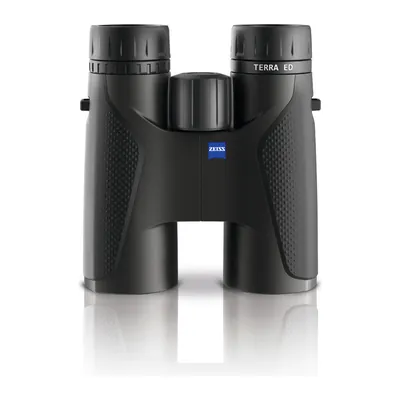
Zeiss Terra ED 8x42
8x42 binoculars: 5.3 mm exit pupil, 125 m field of view at 1,000 m, close focus from 1.6 m and 18 mm of eye relief for glasses wearers. 725 g, waterproof.
View on Amazon (opens in a new tab) William Collins (HarperCollins)
Collins Bird Guide (third edition)
The third edition (2023) of the guide by Lars Svensson, Killian Mullarney and Dan Zetterström: the birds of Britain and Europe, with a distribution map and plumage plates for each species.
View on Amazon (opens in a new tab)
Worth watching
A 40-second RSPB clip of a crane family striding through a wetland in eastern England: the UK’s tallest bird, at home.
The video is hosted by YouTube (Google): nothing loads until you play it, and Google may then set cookies.
FAQs
When is the best time to see cranes in the UK?
Winter is the easiest time. You can now see a flock of over a hundred cranes in the Fens, and dozens fly in to roost at twilight at Hickling Broad, in Norfolk, each winter. In spring, breeding pairs keep to the reeds and become secretive. On the Continent, the big autumn migration runs from mid-October to late November, peaking at Lac du Der in late October and early November.
Where can I see cranes in the UK?
In Norfolk, where the comeback began in 1979, Norfolk Wildlife Trust’s Hickling Broad is the classic winter roost. The RSPB lists West Sedgemoor, Greylake, Ham Wall, Lakenheath Fen, the Nene Washes and Loch of Strathbeg among its reserves with cranes, and Lincolnshire Wildlife Trust’s Willow Tree Fen has a viewpoint. West Sedgemoor itself is closed to visitors: walk the public footpaths around its edge.
When do cranes migrate through France?
The autumn passage runs from about mid-October to late November, in waves, with a peak at Lac du Der in late October and early November according to LPO counts. Some cranes winter in France, at Lac du Der and the Arjuzanx reserve, and leave again from late January. The best time of day is dawn, when thousands leave the roost in about an hour.
What should I do if I find a dead crane or other wild bird?
Don’t touch it. In England, Scotland and Wales, report it to Defra and the Animal and Plant Health Agency, online or on 03459 33 55 77; it may be collected and tested for bird flu. Northern Ireland has separate guidance. Abroad, follow local rules: in France, contact the OFB’s local office or the town hall; in Germany, the district veterinary office.
Is bird flu still killing cranes in 2026?
In autumn 2025, the H5N1 virus killed about one in ten cranes on the western European flyway, including an estimated 15,000 to 20,000 in France, while 18,164 dead cranes were reported in Germany. In autumn 2026, the German charity NABU knew of no sick or dead cranes as of 4 November, and France has been at moderate risk since 5 November. The precautions still apply.
Sources
- RSPB, ‘UK’s tallest bird, the Crane, has record high year’, press release, 2 April 2026, accessed 13 November 2026. rspb.org.uk https://www.rspb.org.uk/media-centre/cranes-have-record-high-year ↩
- LPO Champagne-Ardenne, ‘Synthèse des comptages Grues au lac du Der’ (ten-day maxima, 2017 to 2026, in French), accessed 13 November 2026. champagne-ardenne.lpo.fr https://champagne-ardenne.lpo.fr/grue-cendree/migration-et-hivernage/synthese-des-comptages-sur-le-der ↩
- Günther et al., ‘Highly Pathogenic Avian Influenza A(H5N1) Clade 2.3.4.4b Virus and Mass Mortality in Eurasian Cranes, Germany, 2025’, Emerging Infectious Diseases, vol. 32, no. 5, May 2026, accessed 13 November 2026. wwwnc.cdc.gov https://wwwnc.cdc.gov/eid/article/32/5/pdfs/26-0170.pdf ↩
- LPO Champagne-Ardenne and Réseau Grues France, ‘La Grue cendrée en France, saison 2025-2026’ (PDF, July 2026, in French), accessed 13 November 2026. champagne-ardenne.lpo.fr https://champagne-ardenne.lpo.fr/images/mediatheque/fichiers/Espace_grue/Syntheses_migration/synthese_grues_2025-2026_compress.pdf ↩
- LPO Champagne-Ardenne, ‘La migration : un éternel recommencement’ (in French), accessed 13 November 2026. champagne-ardenne.lpo.fr https://champagne-ardenne.lpo.fr/grue-cendree/pesentation-de-la-grue-cendree/la-migration-c-est-quand ↩
- LPO Champagne-Ardenne, ‘La migration des Grues cendrées au jour le jour’, autumn 2026 (in French), accessed 13 November 2026. champagne-ardenne.lpo.fr https://champagne-ardenne.lpo.fr/grue-cendree/migration-et-hivernage/la-migration-des-grues-cendrees-au-jour-le-jour ↩
- Naturum Hornborgasjön, ‘Transtatistik’ (crane counts, in Swedish), accessed 13 November 2026. hornborga.com https://www.hornborga.com/naturen/transtatistik/ ↩
- NABU (Nature and Biodiversity Conservation Union, Germany), ‘Aktueller Kranichzug’ (in German), entries from 7 October to 4 November 2026, accessed 13 November 2026. nabu.de https://www.nabu.de/aktueller-kranichzug ↩
- Arjuzanx National Nature Reserve, ‘L’observation des Grues’ (in French), updated 9 October 2026, accessed 13 November 2026. reserve-arjuzanx.fr https://www.reserve-arjuzanx.fr/decouvrir/l-observation-des-grues ↩
- Naturum Hornborgasjön, ‘Upplev Trandansen’ (in Swedish), accessed 13 November 2026. hornborga.com https://www.hornborga.com/gora/upplev-trandansen/ ↩
- RSPB, ‘British Crane Bird Population at Record-Breaking Highs’, press release, 2 February 2024, accessed 13 November 2026. rspb.org.uk https://www.rspb.org.uk/media-centre/population-of-uk-tallest-bird-hits-record-breaking-high ↩
- RSPB, ‘RSPB nature reserves celebrate record-breaking year for UK’s tallest bird’, 5 May 2025, accessed 13 November 2026. rspb.org.uk https://www.rspb.org.uk/whats-happening/news/record-breaking-year-for-cranes ↩
- RSPB, ‘Crane Bird Facts’, accessed 13 November 2026. rspb.org.uk https://www.rspb.org.uk/birds-and-wildlife/crane ↩
- LPO Champagne-Ardenne, ‘Le lac du Der-Chantecoq’ (in French), accessed 13 November 2026. champagne-ardenne.lpo.fr https://champagne-ardenne.lpo.fr/decouverte/ou-voir-les-oiseaux-en-champagne-ardenne/le-lac-du-der ↩
- LPO Champagne-Ardenne, ‘Venez profiter de la magie d’un lever de grues sur les rives du lac du Der’ (in French), accessed 13 November 2026. champagne-ardenne.lpo.fr https://champagne-ardenne.lpo.fr/grue-cendree/ou-voir-les-grues-cendrees/vivre-un-lever-de-grues-cendrees ↩
- Arjuzanx National Nature Reserve, ‘Réservation et tarifs’ (in French), updated 8 November 2026, accessed 13 November 2026. reserve-arjuzanx.fr https://www.reserve-arjuzanx.fr/infos-pratiques/reservation-et-tarifs ↩
- Kranichschutz Deutschland, ‘Rast’ (in German), accessed 13 November 2026. kraniche.de https://www.kraniche.de/de/rast.html ↩
- Kranichschutz Deutschland, ‘Moderne Ausstellung’ (KRANICHWELTEN centre, in German), accessed 13 November 2026. kraniche.de https://www.kraniche.de/de/NABU-Kranichzentrum.html ↩
- Landschaftsförderverein Oberes Rhinluch, ‘Kranichschutz’ (Linum counts, in German), accessed 13 November 2026. oberes-rhinluch.de https://oberes-rhinluch.de/projekte-themen/kranichschutz ↩
- BUND Diepholzer Moorniederung, ‘Kraniche’ (counts, in German), accessed 13 November 2026. bund-dhm.de https://bund-dhm.de/kraniche ↩
- Länsstyrelsen Västra Götaland (Västra Götaland County Administrative Board), ‘Vårens första trana sedd vid Hornborgasjön’, 27 February 2026 (in Swedish), accessed 13 November 2026. lansstyrelsen.se https://www.lansstyrelsen.se/vastra-gotaland/om-oss/nyheter-och-press/nyheter---vastra-gotaland/2026-02-27-varens-forsta-trana-sedd-vid-hornborgasjon.html ↩
- LPO Champagne-Ardenne, ‘Gallocanta’ (in French), accessed 13 November 2026. champagne-ardenne.lpo.fr https://champagne-ardenne.lpo.fr/grue-cendree/grus/gallocanta ↩
- Marne prefecture, press release of 22 October 2025 on avian influenza (PDF published by the LPO Champagne-Ardenne, in French), accessed 13 November 2026. champagne-ardenne.lpo.fr https://champagne-ardenne.lpo.fr/images/mediatheque/fichiers/actualites/2025/cp__influenza_aviaire__octobre.pdf ↩
- French Ministry of Agriculture, ‘Influenza aviaire : la situation en France’ (in French), page of 12 November 2026, accessed 13 November 2026. agriculture.gouv.fr https://agriculture.gouv.fr/influenza-aviaire-la-situation-en-france ↩
- Department for Environment, Food & Rural Affairs and Animal and Plant Health Agency, ‘Report dead wild birds’, GOV.UK, last updated 17 May 2024, accessed 13 November 2026. gov.uk https://www.gov.uk/guidance/report-dead-wild-birds ↩
- French Biodiversity Agency (OFB), ‘Ce qu’il faut savoir sur l’influenza aviaire’ (in French), accessed 13 November 2026. ofb.gouv.fr https://ofb.gouv.fr/ce-qu’il-faut-savoir-sur-influenza-aviaire ↩
- Brandenburg Ministry of Agriculture, Environment and Consumer Protection (MLEUV), ‘Vogelgrippe bei Kranichen und anderen Wildvögeln in Brandenburg’, press release, 22 October 2025 (in German), accessed 13 November 2026. mleuv.brandenburg.de https://mleuv.brandenburg.de/mleuv/de/aktuelles/presseinformationen/detail/~22-10-2025-vogelgrippe-bei-kranichen-und-anderen-wildvoegeln ↩
- LPO Champagne-Ardenne, ‘Évolution Influenza aviaire chez la Grue cendrée’ (in French), accessed 13 November 2026. champagne-ardenne.lpo.fr https://champagne-ardenne.lpo.fr/lpo-ca/actualites/actualites-a-la-une/3365-hecatombe-chez-les-grues-cendrees-au-lac-du-der ↩
- LPO Champagne-Ardenne, brochure for the 2026 Fête de la Grue et de la migration (PDF, in French), accessed 13 November 2026. champagne-ardenne.lpo.fr https://champagne-ardenne.lpo.fr/images/mediatheque/fichiers/actualites/2026/brochure_a6_fdg_2026_1.pdf ↩
- Kranichschutz Deutschland, ‘Beobachten ohne zu stören’ (in German), accessed 13 November 2026. kraniche.de https://www.kraniche.de/de/beobachten-ohne-zu-stoeren.html ↩
- Kranichschutz Deutschland, ‘FAQs, 32 häufige Fragen’ (in German), accessed 13 November 2026. kraniche.de https://www.kraniche.de/de/faqs-haeufige-fragen.html ↩
- BUND Diepholzer Moorniederung, ‘Beobachten ohne zu stören’ leaflet (PDF, in German), accessed 13 November 2026. bund-dhm.de https://bund-dhm.de/wp-content/uploads/2022/04/entwurf_fly_verhaltenscodex_de.pdf ↩
- French Biodiversity Agency (OFB), ‘La Réserve nationale de chasse et de faune sauvage du lac du Der et des étangs d’Outines et d’Arrigny’ (in French), accessed 13 November 2026. ofb.gouv.fr https://ofb.gouv.fr/la-reserve-nationale-de-chasse-et-de-faune-sauvage-du-lac-du-der-et-des-etangs-outines-et-arrigny ↩
- Federal Nature Conservation Act (Bundesnaturschutzgesetz), section 44, gesetze-im-internet.de (in German), accessed 13 November 2026. gesetze-im-internet.de https://www.gesetze-im-internet.de/bnatschg_2009/__44.html ↩
- Kranichschutz Deutschland, ‘Allgemein’ (common crane fact file, in German), accessed 13 November 2026. kraniche.de https://www.kraniche.de/de/steckbrief-479.html ↩
- French National Inventory of Natural Heritage (MNHN, OFB), ‘Grus grus’ (in French), accessed 13 November 2026. inpn.mnhn.fr https://inpn.mnhn.fr/espece/cd_nom/3076 ↩

Trail running, snow, water, nature and destinations
Nolwenn covers trail running, snow, water, nature and destinations for Outfarer. Curious about everything, from meteor showers to night-train timetables, she has a knack for unearthing the one detail that changes everything, and putting it in a single sentence.

 Joséphine Garand

