 Français (France)
 English (UK)
 English (US)
 Deutsch (Deutschland)

Contents
The phases of the Moon in 2027, month by month
Thirteen. That is how many new Moons 2027 holds, two of them in August, on the 2nd and the 31st, against twelve full Moons [1]. The Moon takes 29.5 days to come back to the same phase [2], a little less than a calendar month, so every so often a phase turns up twice in the same month [3]. The times in the table mark the exact instant of each phase, which is the same everywhere on Earth, given here in UK time.
Two dates matter when you read it: the clocks go forward on Sunday 28 March and back on Sunday 31 October [4]. In between, the UK is on British Summer Time (BST), an hour ahead of Greenwich Mean Time (GMT), which it keeps the rest of the year [4]. Ireland, which follows the EU timetable, changes on the same Sundays, at the same moment, 1am in Universal Time [5].
| Month | New Moon | First quarter | Full Moon | Last quarter |
|---|---|---|---|---|
| January | 7, 8.24pm | 15, 8.34pm | 22, 12.17pm | 29, 10.55am |
| February | 6, 3.56pm | 14, 7.58am | 20, 11.23pm | 28, 5.16am |
| March | 8, 9.29am | 15, 4.25pm | 22, 10.44am | 30, 1.54am |
| April | 7, 12.51am | 13, 11.56pm | 20, 11.27pm | 28, 9.18pm |
| May | 6, 11.58am | 13, 5.44am | 20, 11.59am | 28, 2.58pm |
| June | 4, 8.40pm | 11, 11.56am | 19, 1.44am | 27, 5.54am |
| July | 4, 4.02am | 10, 7.39pm | 18, 4.45pm | 26, 5.55pm |
| August | 2, 11.05am and 31, 6.41pm | 9, 5.54am | 17, 8.29am | 25, 3.27am |
| September | 30, 3.36am | 7, 7.31pm | 16, 12.03am | 23, 11.20am |
| October | 29, 2.36pm | 7, 12.47pm | 15, 2.47pm | 22, 6.29pm |
| November | 28, 3.24am | 6, 8.00am | 14, 3.26am | 21, 12.48am |
| December | 27, 8.12pm | 6, 5.22am | 13, 4.09pm | 20, 9.11am |
Our calculation: Universal Time from the US Naval Observatory (USNO) [1], converted to UK time, with BST from 28 March to 31 October [4]. Checked against the Royal Observatory Greenwich’s full Moon calendar, in London time [3]: it agrees to within a minute, except for two slips on its page, where 22 January (12.17pm) and 20 May (11.59am) are given the wrong side of noon.
A few dates stand out. The new Moon of 2 August is the one that brings the total solar eclipse, partial from the UK. The full Moon of 20 May, which will not be remotely blue, is a ‘blue moon’ in the traditional sense: the third full Moon of a season that has four, the Royal Observatory Greenwich explains [6]. And the new Moons of 4 June and 4 July fall in the weeks when the sky over London never gets truly dark, from 24 May to 21 July: our guide to stargazing gives, month by month, the time true darkness begins.
Dark evenings, dark mornings: what each phase tells you
Each day, the Moon rises about 50 minutes later than the day before, according to NASA [7]. Over the month it slides from one part of the night to another, and its phase is enough to tell you where it will be. NASA sets out the pattern, which holds at most latitudes [2]:
- New Moon: it rises and sets with the Sun, and stays invisible. The night is dark from dusk to dawn.
- First quarter: up around midday, it sets around the middle of the night, about six hours after the Sun [8]. The evening is moonlit, the end of the night dark again.
- Full Moon: it rises at sunset and sets at sunrise. The whole night is lit.
- Last quarter: up around the middle of the night, about six hours before the Sun [8], it sets around midday. The evening stays dark until it rises.
Hence a simple rule. Between new Moon and full Moon, the waxing Moon lights the start of the night and leaves the end dark. Between full Moon and new Moon, it is the other way round: the evenings are dark, and the waning Moon only turns up in the depths of the night, then in the small hours. For an observing session that does not end at 3am, aim for the stretch from last quarter to a few days after new Moon.
The season has its say. The first quarter of 15 March will set in London at 3.13am on the 16th; the one on 7 October, by 11.03pm [9]. Same phase, more than four hours apart on the clock: in early spring the first quarter climbs high in the sky, in early autumn it stays low, and the last quarter does the opposite, as France’s Cité des sciences explains for Paris [8]. On 23 September, the last quarter rises at 10.50pm; on 30 March, not until 3.51am [9].
Full Moon: what it washes out, and what it leaves
A full Moon is no night light. It can light the ground 400 times more than a moonless sky, according to the US National Park Service [10]. The background sky brightens too: by about one Astronomers’ scale of brightness: the bigger the number, the fainter the object; one magnitude means about 2.5 times more or less light. at quarter Moon, and by up to four at full Moon, according to a technical note from the Isaac Newton Group of Telescopes on La Palma [11]. Four magnitudes make a sky about 40 times brighter (our conversion). The Royal Observatory Greenwich calls it natural light pollution, enough to stop you seeing fainter objects [12].
The faint glows go first: the Milky Way, galaxies, nebulae. Even a thin crescent makes the Milky Way harder to see, warns Arches National Park, in Utah [13], and the Royal Observatory Greenwich notes that the Moon can still brighten the sky when it is just below the horizon [12]. Faint meteors drown too: for 2027, the International Meteor Organization (IMO) has the Geminids at full Moon, the Perseids under a waxing Moon and the Quadrantids just before new Moon [14]. To photograph the Milky Way, pick a moonless night, and even in a dark sky reserve, the date matters as much as the place.
Good news: a full-Moon night is not wasted. Bright objects stay visible, Greenwich points out [12]. I would even call it the ideal evening to learn the brightest stars, whatever your site’s class on the Bortle scale, before going after the faint stuff on a night of new Moon.
Looking at the Moon itself: the terminator and earthshine
Here is the paradox: full Moon is not the best phase for looking at the Moon. For craters and mountains, NASA suggests other phases, when the shadows on the surface are more pronounced [17]. The relief stands out along the The boundary between the lit and dark parts of the Moon, where the Sun is rising or setting on the lunar surface., the line between light and dark, where features cast long shadows [17].
The best time? The evenings around first quarter: the Moon is then high in the evening sky and makes for excellent viewing, according to NASA [2]. Through binoculars, it changes face: its grey and white patches resolve into craters and mountain ridges. NASA recommends a magnification of at least 7; at 10 or 15 you will see more detail, but you may need a tripod to hold the image steady [17]. Our guide to binoculars explains how to read those numbers.
Then there is the quietest show of all. Three to four days after new Moon, the thin evening crescent lets you make out the rest of the disc, grey and faintly lit: this is The glow on the unlit part of the Moon, caused by sunlight reflected off the Earth. [8]. NASA ties it to the crescent phases [2]. The detail that changes everything: at mid-northern latitudes, the evening crescent is best placed in the months around the spring equinox, when the ecliptic, the Sun’s path across the sky, stands steeply above the western horizon, according to the USNO [18]; the same geometry favours the morning crescent in early autumn, as the Cité des sciences shows for Paris [8]. In 2027, aim for the evenings of 11 and 12 March and of 10 and 11 April, then the early mornings of 26 and 27 September and of 25 and 26 October (our calculation from the dates of new Moon). On 11 March, the crescent will not set in London until 10.12pm [9].
The sky’s big dates in 2027, and what the Moon will be doing
A date in the sky is only as good as the Moon that comes with it. Here are the main events of 2027, each with what the Moon will be doing as seen from London.
| Event | Date and UK time | The Moon that day |
|---|---|---|
| Quadrantids (meteor shower) | Peak on 4 January around 3.25am | Thin crescent, not up until 5.44am: no Moon at the peak |
| Dark Skies Festival, Yorkshire Dales | 5 to 21 February | New Moon on the 6th, crescent set by about 10pm until the 10th; full Moon on the 20th |
| Penumbral eclipse of the Moon | 20 February, around 11.15pm | Full Moon; one edge barely shaded, perhaps |
| Total solar eclipse, partial in the UK | 2 August, around 10am | New Moon |
| Perseids (meteor shower) | Night of 12-13 August | Waxing Moon, sets at 1.13am: the end of the night is moonless |
| International Observe the Moon Night | Friday 10 September | Three days after first quarter, rises at 5.26pm |
| Geminids (meteor shower) | Peak on 14 December around 8pm | Full Moon the day before, rises at 4.28pm: a bright night |
Meteor showers: IMO [14]; lunar eclipse: NASA [21]; Dark Skies Festival: Yorkshire Dales National Park Authority [22]; Moon Night: NASA [23]; solar eclipse: our eclipse guide. Moonrise and moonset in London from the USNO tables [9], converted by us.
For eclipses of the Moon, 2027 is a blank year: no partial or total eclipse, only three penumbral ones [21], which NASA describes as pale and difficult to see [24]. Only February’s comes close enough to the Earth’s shadow for a faint veil on one edge of the Moon to be just perhaps detectable; those of 18 July and 17 August will not be visible from Europe [21]. For meteor showers, our meteor shower calendar has the details, night by night and hour by hour.
Planning your night, from a year ahead to the day before
- In the calendar, find the month’s new Moon and the last quarter before it: the evenings in between are the darkest.
- For exact times, the US Naval Observatory works out moonrise and moonset free of charge for any place and a whole year [9].
- For true darkness, add the end of twilight: our beginner’s guide to stargazing gives the time for each month of 2027 in London, and explains where to find a dark sky.
- The day before, check the overnight forecast: a Moon safely set is no use under cloud.
The rest takes very little: a March evening and a crescent glowing with light from the Earth; an autumn night at last quarter, with the Milky Way all to yourself before midnight. With thirteen new Moons on the clock, 2027 leaves you room to miss a few.
Kit related to this article
No affiliation: no commission, no sponsored products.
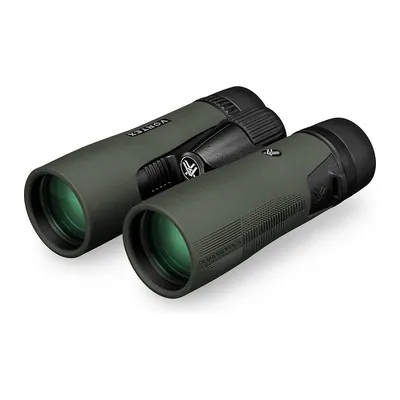
Vortex Diamondback HD 10x42
10x42 binoculars: 4.2 mm exit pupil, 110 m field of view at 1,000 m and 15 mm of eye relief, the minimum advised for glasses wearers. 604 g, waterproof and fogproof.
View on Amazon (opens in a new tab)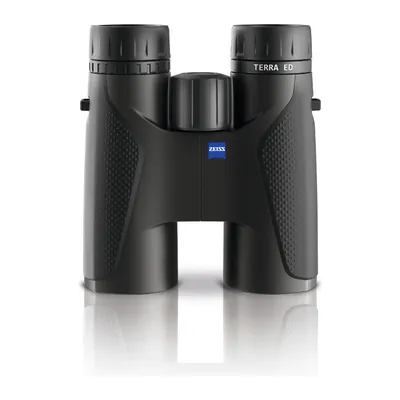
Zeiss Terra ED 10x42
10x42 binoculars: 4.2 mm exit pupil, 110 m field of view at 1,000 m, more detail over open ground. Eye relief of 14 mm: try them with your glasses before buying.
View on Amazon (opens in a new tab)
Worth watching
Four and a half minutes from NASA: astronaut Anne McClain shows each phase of the Moon, the geometry behind this calendar’s dark evenings and dark mornings.
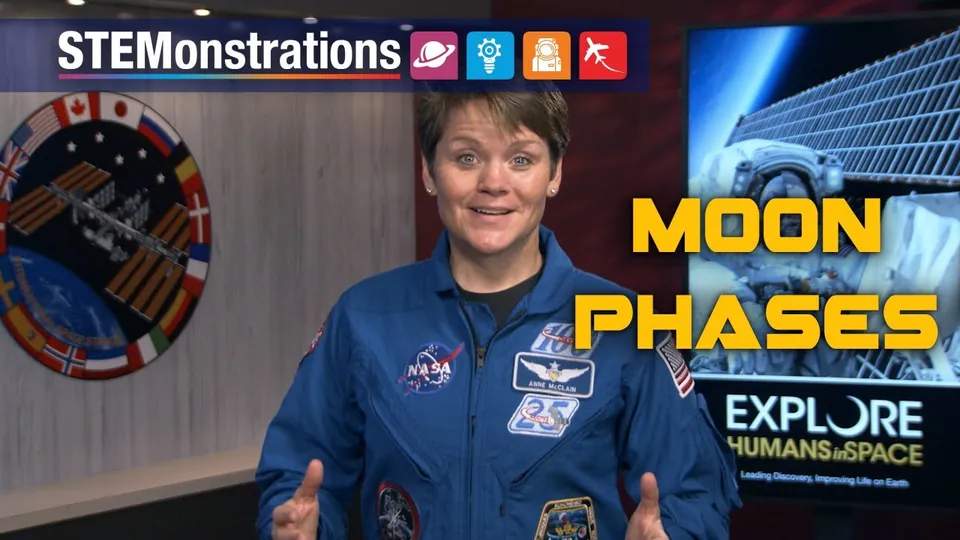
The video is hosted by YouTube (Google): nothing loads until you play it, and Google may then set cookies.
FAQs
When are the full Moons in 2027?
In UK time: 22 January, 20 February, 22 March, 20 April, 20 May, 19 June, 18 July, 17 August, 16 September, 15 October, 14 November and 13 December. Two of them fall late in the evening, on 20 February and 20 April, and are already dated the next day in Paris or Berlin. The times are in the table, worked out from the US Naval Observatory’s data.
When are the new Moons in 2027?
Thirteen times: 7 January, 6 February, 8 March, 7 April, 6 May, 4 June, 4 July, 2 and 31 August, 30 September, 29 October, 28 November and 27 December, in UK time. Together with the few days either side, these are the darkest nights of the month: the Moon then rises and sets with the Sun.
How much later does the Moon rise each day?
About 50 minutes on average, according to NASA. But the gap changes a lot with the season: by our calculation from the US Naval Observatory’s tables for London, it ranges in 2027 from 11 minutes to 1 hour 35. Around the full Moon of 16 September, the Moon rises only about 11 minutes later each evening; around that of 22 January, about an hour and a half.
Can you see stars during a full Moon?
Yes, but not all of them. A full Moon lights the ground 400 times more than a moonless night, according to the US National Park Service: the Milky Way, galaxies and faint meteors disappear. The planets, the bright stars and the Moon itself stay visible, and the British Astronomical Association notes that you do not even need dark-adapted eyes for the Moon or the planets.
When should you look at the Moon through binoculars?
Preferably not at full Moon, when it is lit without shadows and looks flat. The evenings around first quarter are the most convenient: the Moon is high early in the night, and its craters stand out along the terminator, the boundary between lunar day and night. NASA recommends a magnification of at least 7, and a tripod can help from 10 upwards.
Will there be a lunar eclipse in 2027?
Not a partial or total one: 2027 has only three penumbral eclipses of the Moon, according to NASA, pale and difficult to see. The one on 20 February, around 11.15pm UK time, grazes the Earth’s shadow: a slight darkening of one edge may just be detectable. The next partial eclipse visible from Europe comes on 12 January 2028.
Sources
- US Naval Observatory, Phases of the Moon, API, year 2027, times in Universal Time; converted to UK time by us, accessed 16 November 2026. aa.usno.navy.mil https://aa.usno.navy.mil/api/moon/phases/year?year=2027 ↩
- NASA Science, Moon Phases, updated 3 August 2026, accessed 16 November 2026. science.nasa.gov https://science.nasa.gov/moon/moon-phases/ ↩
- Royal Museums Greenwich (Royal Observatory), When is the next full Moon? Full Moon Calendar 2026 and 2027, accessed 16 November 2026. rmg.co.uk https://www.rmg.co.uk/stories/space-astronomy/full-moon-calendar-2026 ↩
- GOV.UK, When do the clocks change?, updated 24 November 2025, accessed 16 November 2026. gov.uk https://www.gov.uk/when-do-the-clocks-change ↩
- European Commission, communication C/2026/1660, Schedule for the summer-time period for 2027 to 2031, Official Journal of the European Union, C series, 18 March 2026, accessed 16 November 2026. eur-lex.europa.eu https://eur-lex.europa.eu/legal-content/EN/TXT/HTML/?uri=OJ:C_202601660 ↩
- Royal Museums Greenwich (Royal Observatory), What is a blue moon and when will the next one occur?, accessed 16 November 2026. rmg.co.uk https://www.rmg.co.uk/stories/space-astronomy/what-blue-moon-how-often-does-it-occur ↩
- NASA, Astronomy Picture of the Day, ‘Full Moon Silhouettes’, 10 October 2021, accessed 16 November 2026. science.nasa.gov https://science.nasa.gov/image-article/apod-2021-october-10-full-moon-silhouettes/ ↩
- Universcience, Cité des sciences et de l’industrie, La Lune éclaire nos nuits, teaching pack for schools, April 2020 (PDF), pages 5 to 10 (in French), accessed 16 November 2026. cite-sciences.fr https://www.cite-sciences.fr/fileadmin/fileadmin_CSI/fichiers/vous-etes/enseignant/Documents-pedagogiques/_documents/Ressources-en-ligne/2.Lune.pdf ↩
- US Naval Observatory, rise and set table for the Moon, London (51.51° N, 0.13° W), year 2027, in Universal Time; UK times and day-to-day gaps calculated by us, accessed 16 November 2026. aa.usno.navy.mil https://aa.usno.navy.mil/calculated/rstt/year?ID=AA&year=2027&task=1&lat=51.51&lon=-0.13&label=London&tz=0&tz_sign=1&submit=Get+Data ↩
- National Park Service, Night Skies, Natural Light in the Night Sky, updated 17 June 2024, accessed 16 November 2026. nps.gov https://www.nps.gov/subjects/nightskies/natural-light-in-night-sky.htm ↩
- Chris R. Benn and Sara L. Ellison, Isaac Newton Group of Telescopes, La Palma Night-Sky Brightness, La Palma technical note no. 115, section 1.6, updated 12 April 2007, accessed 16 November 2026. ing.iac.es https://www.ing.iac.es/astronomy/observing/conditions/skybr/skybr.html ↩
- Royal Museums Greenwich (Royal Observatory), Astronomy without a telescope: what can I see in the night sky?, accessed 16 November 2026. rmg.co.uk https://www.rmg.co.uk/stories/space-astronomy/astronomy-naked-eye ↩
- National Park Service, Arches National Park, Stargazing, updated 16 December 2025, accessed 16 November 2026. nps.gov https://www.nps.gov/arch/planyourvisit/stargazing.htm ↩
- International Meteor Organization, Jürgen Rendtel (ed.), 2027 Meteor Shower Calendar, IMO INFO(3-26), PDF, accessed 16 November 2026. imo.net https://www.imo.net/files/meteor-shower/cal2027.pdf ↩
- British Astronomical Association, Hints and tips for visual observing, accessed 16 November 2026. britastro.org https://britastro.org/section_information_/hints-and-tips-for-visual-observing ↩
- Vereinigung der Sternfreunde (VdS), Germany’s association of amateur astronomers, Unser Mond (in German), accessed 16 November 2026. sternfreunde.de https://sternfreunde.de/astronomie-entdecken/astronomie-fuer-einsteiger/sonne-mond-und-planeten/unser-mond/ ↩
- NASA Science, Moon Viewing Tips, updated 18 February 2026, accessed 16 November 2026. science.nasa.gov https://science.nasa.gov/moon/viewing-tips/ ↩
- US Naval Observatory, Astronomical Applications Department, Crescent Moon Visibility, accessed 16 November 2026. aa.usno.navy.mil https://aa.usno.navy.mil/faq/crescent ↩
- Royal Museums Greenwich (Royal Observatory), How to sight the new crescent Moon, accessed 16 November 2026. rmg.co.uk https://www.rmg.co.uk/stories/space-astronomy/how-sight-new-crescent-moon ↩
- NASA Science, Eclipse Viewing Safety, updated 20 March 2026, accessed 16 November 2026. science.nasa.gov https://science.nasa.gov/eclipses/safety/ ↩
- Fred Espenak, NASA Goddard, Lunar Eclipses: 2021 - 2030, accessed 16 November 2026. eclipse.gsfc.nasa.gov https://eclipse.gsfc.nasa.gov/LEdecade/LEdecade2021.html ↩
- Yorkshire Dales National Park Authority, Dark Skies Festival, 2027 festival from 5 to 21 February, accessed 16 November 2026. yorkshiredales.org.uk https://www.yorkshiredales.org.uk/visit/shows-markets-festivals/dark-skies-festival ↩
- NASA Science, International Observe the Moon Night, updated 26 October 2026, accessed 16 November 2026. science.nasa.gov https://science.nasa.gov/moon/observe-the-moon-night/ ↩
- Fred Espenak, NASA Goddard, Visual Appearance of Lunar Eclipses, accessed 16 November 2026. eclipse.gsfc.nasa.gov https://eclipse.gsfc.nasa.gov/LEcat5/appearance.html ↩

Trail running, snow, water, nature and destinations
Nolwenn covers trail running, snow, water, nature and destinations for Outfarer. Curious about everything, from meteor showers to night-train timetables, she has a knack for unearthing the one detail that changes everything, and putting it in a single sentence.


