 Français (France)
 English (UK)
 English (US)
 Deutsch (Deutschland)

Contents
When and where: a shorter season than you think
The centre of the Galaxy lies about 29° south of the celestial equator, in the constellation of Sagittarius [1]. By our calculation, it therefore peaks at 90° minus your latitude minus 29° above the horizon: about 10.9° at Penzance, 9.5° in London, 7.5° in Manchester and 5° in Edinburgh (geometric heights, with no allowance for refraction). To make matters worse, Sky at Night points out that, from the UK, such a low angle means looking through a thick layer of atmospheric haze [2].
Sources give slightly different seasons. Sky at Night puts the peak of the ‘Milky Way season’ around the June solstice, with July and August as great months to shoot it [2]. In Britain, though, there is a catch: around the solstice there is no true darkness. In 2027, London has none from 24 May to 21 July, and Edinburgh none from 5 May to 8 August [3, 4]. The magazine’s own suggested dates for 2022, the last week of July to 4 August and 20 August to the end of the month [2], also start after that midsummer gap. So the usable windows are short: late evening in August around the new Moon, and the small hours of April and May, before dawn. The 2027 new Moon dates come from the US Naval Observatory [5].
| New Moon (UK time) | London: window and highest point of the centre | Edinburgh: window and highest point of the centre |
|---|---|---|
| 7 April, 12.51am | 8 April, 2.39am to 4.18am, 7.4° | 8 April, 3.35am to 4.03am, 1.8° |
| 6 May, 11.58am | 7 May, 12.45am to 2.42am, 8.2° | No true darkness |
| 4 June, 8.40pm | No true darkness | No true darkness |
| 4 July, 4.02am | No true darkness | No true darkness |
| 2 August, 11.05am | 2 August, 11.35pm to 3 August, 1.03am, 6.9° | No true darkness |
| 31 August, 6.41pm | 31 August, 9.56pm to 11.09pm, 6.0° | Centre at or below the horizon |
| 30 September, 3.36am | 30 September, 8.33pm to 9.11pm, 3.5° | Centre below the horizon |
Our calculation (UK clock time, GMT or BST, to within a day and a few minutes): Sun more than 18° below the horizon and centre above it, from the published position of the galactic centre and the US Naval Observatory’s new Moon dates. Heights are geometric, with no allowance for haze.
Further north, the squeeze is tighter: our calculation finds that from Edinburgh the centre never gets above about 2° while the sky is truly dark. By our reckoning, Scotland’s better bet is the higher part of the band: Sky at Night traces the summer Milky Way from Cassiopeia in the north, through Cygnus overhead, down to Sagittarius low in the south [6]. Good news: even the low core is worth a try anywhere in Britain, because a camera can restore at least some of the impact the haze takes away [2].
Then there is the rest of the sky. Sky at Night asks for a low, flat southern horizon, as far from light pollution as you can get and with no direct lights in view; a south- or south-west-facing coast can be ideal [2]. Light is the real hurdle: according to the 2016 world atlas of night sky brightness, 77% of people in the UK live under skies too bright for the Milky Way to be seen from home [7]. Aim for class 3 or 4 on the Bortle scale, where the Milky Way is still there, and use our guide to UK dark sky places to choose a site. And in winter? The band is still up there, only fainter: the magazine’s tour runs from Sirius, left of Orion, up through Perseus and Cassiopeia [8].
The minimum kit: a camera, a wide lens, a tripod
The US National Park Service gives the starter list: a digital camera with manual settings and a wide-angle lens, a sturdy tripod, and an app or website to find dark areas [9]. Sky at Night lists a DSLR, a mirrorless camera or a smartphone that can take night shots, a tripod (or a tracking mount) and a remote release [2]. Royal Museums Greenwich passes on the advice of a commended photographer from its Astronomy Photographer of the Year competition: no need to spend thousands, just start simple with a DSLR or mirrorless camera on a tripod [10].
The lens matters as much as the body. Sky at Night suggests a wide-field lens of around 12 to 14 mm [2]. Nikon UK finds lenses opening to f/2.8 or wider particularly useful: they let more light reach the sensor, which keeps the ISO down and the exposure short, and its list of suitable full-frame lenses runs from 14 to 35 mm [11]. Fujifilm Germany recommends 14 to 24 mm, again at f/2.8 or wider (in German) [12]. To avoid shaking the camera, the Park Service suggests a self-timer of two to five seconds, a remote release or a smartphone [9]; NASA adds that a cable release removes the need to touch the camera at all [13].
Starting settings, source by source
Start in manual mode, with the widest aperture your lens allows and the focus set by hand [9], and shoot RAW files, which make it easier to correct the colour afterwards [11]. Beyond that, the sources disagree, and that is normal: the right values depend on your camera, your lens and the night.
| Source | Aperture | Sensitivity (ISO) | Exposure |
|---|---|---|---|
| Nikon UK (October 2026) | f/2.8 or wider | 3,200 to 6,400 | 8 to 20 seconds [11] |
| Sky at Night (BBC) | Fully open | Mid to high, on a fixed tripod | 10-second test exposure [2] |
| US National Park Service, Acadia (Maine) | f/1.4 to f/3.5 | Start at 400, higher if needed | 10 to 20 seconds [9] |
| A photographer featured by Nikon USA | f/2.8 | 3,200 to 4,000 | 20 to 25 seconds [17] |
| Fujifilm Germany (in German) | f/2.8 or wider | 1,600 to 3,200 | 20 to 25 seconds at most [12] |
These are starting points, not instructions: try them, look at the result on the screen, and change one setting at a time.
White balance is where the sources contradict each other. The Park Service says to leave it on auto [9]; the photographer featured by Nikon USA uses 4,000 K [17]; Fujifilm Germany suggests 3,000 to 4,000 K [12]; Nikon UK says a cooler setting can enhance the ethereal feel of a starry sky [11]. In RAW, you can correct it afterwards anyway. What matters more, NASA advises, is changing only one setting at a time, so you understand what each one does [13].
Exposure time: the 500 rule against the NPF rule
The Earth turns, so a long exposure stretches the stars into trails. The best-known guard rail is the 500 rule: divide 500 by the focal length in millimetres [13, 18]. With a 20 mm lens, that gives 25 seconds at most [13]. On a smaller sensor (APS-C), multiply the focal length by the crop factor first: 1.5 on Sony and Nikon APS-C cameras, 1.6 on Canon’s [18, 19]. Our calculation gives, for full frame, 35.7 seconds at 14 mm, 20.8 at 24 mm and 14.3 at 35 mm.
But the rule dates from film, and Sony admits it can be too generous with a high-megapixel camera [18]. In 2010, Frédéric Michaud, of the Société astronomique du Havre (SAH), came up with the NPF rule, short for Nightscape Photography Formula, which takes account of the aperture and the size of the sensor’s pixels [20]. His own comparison finds the 500 rule very poor for wide-aperture lenses, especially on full-frame sensors [19].
The simplified version of the NPF rule reads (35 × N + 30 × p) ÷ f, where N is the f-number, p the pixel size in microns and f the focal length in millimetres [20]; its author says it is enough for the Milky Way shot with a wide or ultra-wide lens [19]. For a 24-megapixel full-frame camera, which we assume has 6-micron pixels, at f/2.8, our calculation gives 19.9 seconds at 14 mm, 11.6 at 24 mm and 7.9 at 35 mm. The rule is Michaud’s work, published by the SAH, which asks anyone using it to credit both [20].
Focusing on a star
At night, autofocus finds nothing to grab. NASA advises switching to manual, setting the focus to infinity to get close, then taking test images and fine-tuning: if the stars look like fuzzy blobs, make tiny adjustments and shoot again [13]. If your camera has a zoomable live view, you can zoom in on a star and focus without a test frame [13]. Sky at Night suggests a bright star such as Altair, or a planet [2]; the Park Service, a distant light, a street light or a house [9]. Once the focus is sharp, a photographer featured by Nikon USA locks it with gaffer tape [17].
And with a smartphone?
The three big makers each offer a night mode, with different promises. None of their pages promises the Milky Way from a town: Google even says light pollution makes stars less visible [21]. Sky at Night adds that some phones can take night shots handheld, but a tripod mount for the phone gives the best results [2].
| Maker | The mode | What the page says |
|---|---|---|
| Google (Pixel) | Astrophotography: the shutter switches to this mode when the phone is still, and a countdown runs [21] | Get away from city lights, wait at least 45 to 90 minutes after sunset and set the phone down rather than holding it [21]. In 2019, a Pixel 4 could expose for up to 4 minutes, in frames of 16 seconds at most [22] |
| Apple (iPhone) | Night mode, automatic in low light; a ‘Max’ setting extends the capture time [23] | A shot can take several seconds; a solid surface or a tripod is advised. The page mentions neither stars nor the sky [23] |
| Samsung (Galaxy) | Astrophoto, in the Expert RAW app, on the S22 and S23 series [24] | Adjust the focus, white balance and exposure time to photograph the night sky [24] |
Google’s 2019 figures apply to the phones of the time, and Samsung’s page names only the S22 and S23 series: check that your own phone is supported.
Composing, planning, choosing your night
A foreground gives scale: a tree, a rock, a drystone wall. One photographer featured by Nikon USA used the glow of light pollution on the horizon to make silhouetted trees stand out, noting that you sometimes have to shoot around its limits [17]. To find where the Milky Way will be on a given date and hour, Stellarium is a free, open-source planetarium [25].
The night proper begins when the Sun is 18° below the horizon, the end of astronomical twilight [26]. Scout the site ahead of time [14] and pick a clear night with little wind [10]; Nikon UK points out that the phase and position of the Moon matter too [11]. A heavy tripod resists the wind, and sandbags on its feet add weight [13]. Our stargazing guide covers cloud forecasts, clothing, safety and the rules of access after dark in Scotland, England and Wales.
Light editing, no cheating
Develop the RAW file, then keep a light touch. Sky at Night describes a simple routine: adjust the levels, add a gentle S-shaped curve, apply auto-colour, then tweak the brightness and contrast [2]. A novice photographer published by Sony lifts the exposure, lowers the highlights and brings out the shadows, but not too far, because light pollution lives in the shadows; the colour temperature is then cooled, and noise reduction and lens correction come last [27].
Honesty has a limit. A finalist in the Royal Museums Greenwich competition urges photographers to create real images rather than paste a Milky Way over a landscape [14]. To go further, a star tracker, also called an equatorial mount, turns at the speed of the Earth’s rotation, in the opposite direction, so that the camera follows the sky [10]. And, as Nikon UK notes for star trails, stacking several short exposures can reduce noise and lets you drop frames spoiled by a plane or a satellite [11].
Out there: red light and good manners
Tell someone where you are going and when you expect to be back, as in the guide. Then pick a new Moon and a southern horizon: the finalists agree that it takes a lot of trial and error, and that there is no faster way to learn than being outside, trying [10]. The new Moon of 2 August 2027 falls on the day of the total solar eclipse; that night in London, the sky is dark enough from 11.35pm to 1.03am, with the centre of the Galaxy at 6.9° at best. Circle the date, charge two batteries and go.
Kit related to this article
No affiliation: no commission, no sponsored products.
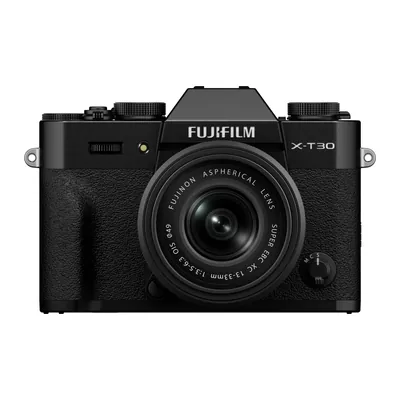
Fujifilm X-T30 III (body only)
APS-C mirrorless body, 26.1 MP, ISO 160 to 12,800, 14-bit RAW, mechanical exposures up to 15 minutes, 378 g with battery and card. Sold without a lens.
View on Amazon (opens in a new tab)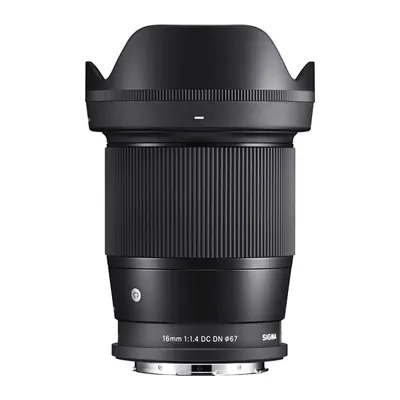
Sigma 16mm F1.4 DC DN Contemporary (Fujifilm X mount)
16 mm lens opening at f/1.4 for APS-C cameras with the Fujifilm X mount: 24 mm full-frame equivalent, stepping-motor autofocus, 405 g.
View on Amazon (opens in a new tab)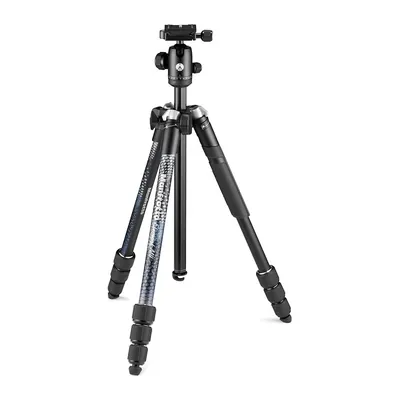
Manfrotto Element MII aluminium with ball head
Four-section aluminium travel tripod with ball head: 160 cm maximum, 42.5 cm folded, 1.55 kg, 8 kg payload, and a ballast hook under the centre column.
View on Amazon (opens in a new tab)
Worth watching
Glenn Martin, who says he has taught beginners since 2017, goes through manual mode and the basic night sky settings, a remote trigger, lens choice and how to focus on the stars.
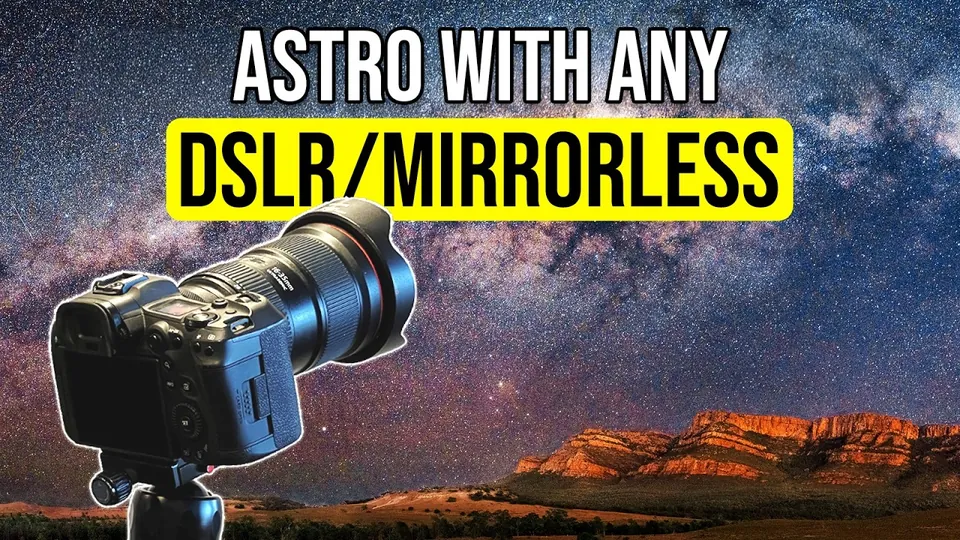
The video is hosted by YouTube (Google): nothing loads until you play it, and Google may then set cookies.
FAQs
When is the best time to photograph the Milky Way in the UK?
Late evening in August around the new Moon, or the small hours of April and May, before dawn. London has no true darkness from 24 May to 21 July, and the centre of the Galaxy peaks at only 9.5° there (our calculation). Choose a site with a clear southern horizon, ideally a south- or south-west-facing coast, well away from towns.
What exposure time should I use for the Milky Way?
Divide 500 by the focal length in millimetres: 35.7 seconds at 14 mm on full frame. Sony admits that can be too generous for a high-megapixel camera. The NPF rule, which accounts for aperture and pixel size, gives about 20 seconds at 14 mm for a 24-megapixel full-frame camera at f/2.8 (our calculation, assuming 6-micron pixels). Take a test shot and zoom in to check.
Which ISO and aperture should a beginner start with?
Use the widest aperture your lens offers, ideally f/2.8 or wider. Sources run from ISO 400 (US National Park Service) to 6,400 (Nikon UK), depending on the camera: Nikon UK suggests 3,200 to 6,400, Fujifilm Germany 1,600 to 3,200. Start there, then change one setting at a time.
Can I photograph the Milky Way with a smartphone?
Yes, with a dark sky and a steady support. Google describes an Astrophotography mode on Pixel phones, Apple a Night mode with a ‘Max’ setting, and Samsung an Astrophoto mode in Expert RAW. None of their pages promises the Milky Way from a town: get away from the lights and set the phone down on a tripod.
Do I need a star tracker to start?
No. A DSLR or mirrorless camera on a tripod is enough for a first shot, according to a photographer from the Royal Museums Greenwich competition. A star tracker, or equatorial mount, follows the rotation of the sky and allows longer exposures; stacking several short exposures is another next step.
Sources
- European Southern Observatory (ESO), ‘A view of the Milky Way supermassive black hole Sagittarius A* in polarised light’, image eso2406a, 27 March 2024, accessed 15 November 2026. eso.org https://www.eso.org/public/images/eso2406a/ ↩
- BBC Sky at Night Magazine, Pete Lawrence, ‘How to photograph the Milky Way’, 21 June 2022, accessed 15 November 2026. skyatnightmagazine.com https://www.skyatnightmagazine.com/astrophotography/astrophoto-tips/how-photograph-milky-way/ ↩
- US Naval Observatory, astronomical twilight table for London (51.5° N, 0.13° W), 2027, in Universal Time, accessed 15 November 2026. aa.usno.navy.mil https://aa.usno.navy.mil/calculated/rstt/year?ID=AA&year=2027&task=4&lat=51.5074&lon=-0.1278&label=London&tz=0&tz_sign=-1&submit=Get+Data ↩
- US Naval Observatory, astronomical twilight table for Edinburgh (55.95° N, 3.19° W), 2027, in Universal Time, accessed 15 November 2026. aa.usno.navy.mil https://aa.usno.navy.mil/calculated/rstt/year?ID=AA&year=2027&task=4&lat=55.9533&lon=-3.1883&label=Edinburgh&tz=0&tz_sign=-1&submit=Get+Data ↩
- US Naval Observatory, ‘Phases of the Moon’, 2027, in Universal Time, converted to UK time by us, accessed 15 November 2026. aa.usno.navy.mil https://aa.usno.navy.mil/api/moon/phases/year?year=2027 ↩
- BBC Sky at Night Magazine, Iain Todd, ‘Why the summer Milky Way is brighter than the winter Milky Way’, 8 March 2024, accessed 15 November 2026. skyatnightmagazine.com https://www.skyatnightmagazine.com/advice/summer-winter-milky-way ↩
- Fabio Falchi et al., ‘The new world atlas of artificial night sky brightness’, Science Advances, vol. 2, no. 6, 10 June 2016, table 2 (United Kingdom), accessed 15 November 2026. pmc.ncbi.nlm.nih.gov https://pmc.ncbi.nlm.nih.gov/articles/PMC4928945/ ↩
- BBC Sky at Night Magazine, Stuart Atkinson, ‘Take a midwinter tour of the Milky Way’, 19 December 2021, accessed 15 November 2026. skyatnightmagazine.com https://www.skyatnightmagazine.com/advice/winter-milky-way ↩
- US National Park Service, Acadia National Park, ‘How to Photograph Acadia’s Night Skies’, 14 October 2021, accessed 15 November 2026. nps.gov https://www.nps.gov/articles/000/night-skies-photography-acadia.htm ↩
- Royal Museums Greenwich (Royal Observatory), ‘How to get started in astrophotography’, undated (advice from the 2020 competition), accessed 15 November 2026. rmg.co.uk https://www.rmg.co.uk/stories/space-astronomy/how-get-started-astrophotography ↩
- Nikon UK, ‘Night photography: How to create better images after dark’, 21 October 2026, accessed 15 November 2026. nikon.co.uk https://www.nikon.co.uk/en_GB/learn-and-explore/magazine/tips-and-tricks/5-exposure-settings-to-try-for-night-time-photography--an-advanced-guide ↩
- Fujifilm Deutschland, ‘Astrofotografie’, undated (in German), accessed 15 November 2026. fujifilm-x.com https://www.fujifilm-x.com/de-de/kreative-fotoideen/astrofotografie/ ↩
- NASA Science, ‘How to Photograph a Meteor Shower’, updated 5 November 2024, accessed 15 November 2026. science.nasa.gov https://science.nasa.gov/solar-system/how-to-photograph-a-meteor-shower/ ↩
- Royal Museums Greenwich, ‘Top 10 astrophotography tips’, 15 September 2017, accessed 15 November 2026. rmg.co.uk https://www.rmg.co.uk/stories/space-astronomy/astronomy/top-10-astrophotography-tips ↩
- Nikon UK, ‘Photographing winter landscapes: an advanced guide’, undated, accessed 15 November 2026. nikon.co.uk https://www.nikon.co.uk/en_GB/learn-and-explore/magazine/tips-and-tricks/photographing-winter-landscapes-an-advanced-guide ↩
- British Astronomical Association, David Arditti, ‘Dealing with dew’, 15 May 2021, accessed 15 November 2026. britastro.org https://britastro.org/2021/dealing-with-dew ↩
- Nikon USA, ‘How to Photograph the Milky Way’, undated, accessed 15 November 2026. nikonusa.com https://www.nikonusa.com/learn-and-explore/c/tips-and-techniques/how-to-photograph-the-milky-way ↩
- Sony Alpha Universe, Stan Moniz, ‘Photo Fundamentals: How To Get Sharp Stars With The 500 Rule For Astrophotography’, 16 August 2022, accessed 15 November 2026. alphauniverse.com https://alphauniverse.com/stories/photo-fundamentals-how-to-get-sharp-stars-with-the-500-rule-for-astrophotography/ ↩
- Société astronomique du Havre, Frédéric Michaud, ‘Les coulisses de la règle NPF’, 28 March 2013 (in French), accessed 15 November 2026. sahavre.fr https://sahavre.fr/wp/les-coulisses-de-la-regle-npf/ ↩
- Société astronomique du Havre, Frédéric Michaud, ‘La Règle NPF’, 1 December 2020 (in French, with a notice in English), accessed 15 November 2026. sahavre.fr https://sahavre.fr/wp/regle-npf-rule/ ↩
- Google, Pixel Camera Help, ‘Take photos in low light or at night on your Pixel phone or tablet’, accessed 15 November 2026. support.google.com https://support.google.com/pixelcamera/answer/9708795?hl=en-GB ↩
- Google Research, Florian Kainz and Kiran Murthy, ‘Astrophotography with Night Sight on Pixel Phones’, 26 November 2019, accessed 15 November 2026. research.google https://research.google/blog/astrophotography-with-night-sight-on-pixel-phones/ ↩
- Apple Support (UK), ‘Use Night mode on your iPhone’, 20 April 2026, accessed 15 November 2026. support.apple.com https://support.apple.com/en-gb/102519 ↩
- Samsung UK, ‘Professional Photography with Galaxy Expert RAW App’, accessed 15 November 2026. samsung.com https://www.samsung.com/uk/support/mobile-devices/professional-photography-with-galaxy-expert-raw-app/ ↩
- Stellarium, home page, accessed 15 November 2026. stellarium.org https://stellarium.org/ ↩
- US Naval Observatory, ‘Rise, Set, and Twilight Definitions’, accessed 15 November 2026. aa.usno.navy.mil https://aa.usno.navy.mil/faq/RST_defs ↩
- Sony Alpha Universe, Matt Leccadito, ‘How A Novice Photographer Captured The Milky Way & Glowing Water’, 5 August 2020, accessed 15 November 2026. alphauniverse.com https://alphauniverse.com/stories/behind-the-shot-how-a-novice-photographer-created-a-milky-way-and-water-long-exposure/ ↩

Trail running, snow, water, nature and destinations
Nolwenn covers trail running, snow, water, nature and destinations for Outfarer. Curious about everything, from meteor showers to night-train timetables, she has a knack for unearthing the one detail that changes everything, and putting it in a single sentence.


 Erik Vadas-Gauden
