 Français (France)
 English (UK)
 English (US)
 Deutsch (Deutschland)

Contents
When and where: the season is shorter than you’d think
The center of our galaxy lies about 29° south of the celestial equator [1], in the constellation Sagittarius [2]. That’s why it never climbs high from the United States. By our calculation, its peak height above the horizon is 90° minus your latitude minus 29°: about 21° at Denver, 13° at Seattle and 23° at Bryce Canyon, at roughly 37.6° north (geometric heights, with no allowance for refraction). The lower the center sits, the more air you look through: BBC Sky at Night notes that from the UK, where it peaks near 9.5° over London by the same formula, a thick layer of atmospheric haze dims the view [3]. Expect a duller core from Seattle than from Denver; that’s our reasoning, not a measurement.
Sources give slightly different seasons. Bryce Canyon National Park says June through August gives the best views if you want to shoot not long after sunset, and hints that a 4 a.m. alarm changes the picture [4]. Joshua Tree says the Milky Way is at its best on a moonless summer night [2], and NASA’s June column says the core is visible all night in June and on through August [5]. True darkness, in astronomers’ terms, begins when the Sun is 18° below the horizon [6]; our Stargazing for Beginners guide explains how to find that moment. The longest windows come around each New Moon, and the 2027 dates come from the U.S. Naval Observatory [7].
On the June New Moon, the core is above the horizon for the whole of true darkness in both Denver and Seattle. The difference is how long that darkness lasts: about 5 hours at Denver, about 2.5 hours at Seattle (our calculation). The table shows the same thing for every New Moon from April through September.
| New Moon (UT) | Denver: window and peak height of the center (MDT) | Seattle: window and peak height of the center (PDT) |
|---|---|---|
| April 6, 11:51 p.m. | April 8, 1:31 to 4:59 a.m., 20.6° | April 8, 2:19 to 4:43 a.m., 12.0° |
| May 6, 10:58 a.m. | May 6, 11:37 p.m. to May 7, 4:07 a.m., 21.3° | May 7, 12:25 to 3:29 a.m., 13.2° |
| June 4, 7:40 p.m. | June 4, 10:24 p.m. to June 5, 3:33 a.m., 21.3° | June 4, 11:56 p.m. to June 5, 2:20 a.m., 13.4° |
| July 4, 3:02 a.m. | July 4, 10:32 p.m. to July 5, 3:37 a.m., 21.3° | July 5, 12:07 to 2:21 a.m., 13.4° |
| August 2, 10:05 a.m. | August 2, 10:00 p.m. to August 3, 2:09 a.m., 21.3° | August 2, 10:59 p.m. to August 3, 1:38 a.m., 12.6° |
| August 31, 5:41 p.m. | August 31, 9:08 p.m. to September 1, 12:15 a.m., 19.7° | August 31, 9:44 to 11:44 p.m., 10.8° |
| September 30, 2:36 a.m. | September 30, 8:14 to 10:17 p.m., 15.2° | September 30, 8:34 to 9:46 p.m., 7.4° |
Our calculation, in local daylight time and accurate to within a day and a few minutes: Sun more than 18° below the horizon and center above the horizon, from the center’s published position and the U.S. Naval Observatory’s New Moon dates. MDT and PDT are Mountain and Pacific daylight time. UT is Universal Time, 6 hours ahead of Denver and 7 hours ahead of Seattle in daylight time.
Denver’s windows run about 3 to 5 hours from April through August, Seattle’s about 2 to 3. Around the June solstice itself, Seattle’s true darkness shrinks to under two hours (about 105 minutes on June 21, by our calculation), so the longest windows there come in May and early August. Whatever your city, the rest of the sky counts too. You need a clear southern horizon with no trees or buildings in the way, according to Astronomy [8]; Acadia’s rangers simply say to point the camera south [9]; and if possible no direct light in sight [3]. Aim for a Bortle class 3 or 4 sky, where the Milky Way still shows (see the Bortle scale). And winter? The band is still there, but it’s fainter and harder to spot, say Bryce Canyon’s rangers and Sky at Night [4, 10].
The minimal gear: a camera, a wide-angle lens, a tripod
Good news: the National Park Service’s starter list for Acadia is short: a digital camera with manual settings and a wide-angle lens, a sturdy tripod, and an app or website that shows dark areas (search for a “dark sky map”) [9]. Joshua Tree’s rangers add that a sturdy tripod keeps shots sharp, with no vibration [2]. Britain’s Royal Observatory Greenwich, home of the Astronomy Photographer of the Year contest, advises beginners to start simple with a DSLR or mirrorless camera on a tripod [11].
The lens matters as much as the body. Nikon’s featured photographer shoots at 14 mm on a 14-24 mm zoom [12]; Nikon’s U.K. guide lists lenses from 14 to 35 mm, all f/2.8 or faster, and calls f/2.8 or wider especially useful because the lens lets more light reach the sensor, which keeps how sensitive the sensor is to light; a higher number brightens the picture but adds grain down and exposures shorter [13]. Joshua Tree asks beginners to use the largest aperture the lens allows, with f/2.8 ideal [2]. To avoid shaking the camera, Acadia suggests a two- to five-second self-timer, a remote or a phone [9]; NASA adds that a cable release means you never touch the camera at all [14].
Starting settings, source by source
Shoot in manual mode, with the widest aperture, focus by hand, and save RAW files, which make it easier to fix colors afterward [9, 12]. Beyond that, the numbers vary from source to source, and that’s normal: they depend on your camera, your lens and the night.
| Source | Aperture | ISO | Exposure |
|---|---|---|---|
| National Park Service, Acadia (Maine) | f/1.4 to f/3.5 | Start at 400, go higher if needed | 10 to 20 seconds [9] |
| National Park Service, Joshua Tree (California) | f/2.8, ideal | 1,600 or higher | Start at 25 seconds [2] |
| Nikon, a photographer in the United States | f/2.8 | 3,200 to 4,000 | 20 to 25 seconds [12] |
| Sony, example photos by a photographer | f/2 to f/2.8 | 1,600 to 3,200 | 8 to 10 seconds [18] |
| Nikon U.K. (October 2026) | f/2.8 or wider | 3,200 to 6,400 | 8 to 20 seconds [13] |
These are starting points, not rules: try them, check the result on the screen and change one setting at a time.
White balance is where the sources disagree. The National Park Service says to leave it on auto [9]; Nikon’s photographer sets 4,000 K, so the screen previews the image she wants [12]. If you shoot RAW, you can correct it afterward anyway. The one piece of advice NPS and NASA both repeat is to change only one setting at a time, so you can see what each one does [2, 14].
Exposure time: the 500 rule versus the NPF rule
The Earth turns, so a long exposure stretches stars into trails. The best-known fix is the 500 rule: divide 500 by your lens’s focal length in millimeters, and you get the longest exposure in seconds [14, 18]. With a 20 mm lens, that’s 25 seconds at most [14]. On a camera with a smaller sensor (a sensor smaller than full frame; its crop factor is 1.5 on Sony and Nikon cameras), multiply the focal length by 1.5 first [18]. By our calculation, on a a sensor the size of a 35 mm film frame, 36 by 24 mm camera that gives 35.7 seconds at 14 mm, 20.8 at 24 mm and 14.3 at 35 mm.
But the rule dates from the film era, and Sony acknowledges it gets too generous on a high-megapixel camera [18]. So in 2010 Frédéric Michaud, of France’s Société astronomique du Havre (SAH), proposed the NPF rule, which accounts for the aperture and the size of the sensor’s pixels [19]. The simplified version is (35 × N + 30 × p) ÷ f, where N is the aperture, p the pixel size in microns and f the focal length in millimeters; its author says it’s enough for the Milky Way with a wide-angle lens [19]. For a full-frame camera with 24 megapixels, assumed to have 6-micron pixels, at f/2.8, our calculation gives 19.9 seconds at 14 mm, 11.6 at 24 mm and 7.9 at 35 mm.
Focusing on a star
At night, autofocus finds nothing to lock onto. NASA says to switch to manual, set the focus to infinity to get close, then take test shots and fine-tune: if the stars look like fuzzy blobs, nudge the focus and try again [14]. If your camera has a zoomable live view, you can zoom in on a star and focus without a test shot [14]. Nikon’s photographer does exactly that on a bright star or Jupiter, then locks the focus with gaffer tape and turns autofocus off [12]; the National Park Service suggests a distant bright light such as a star, a streetlight or a house [9]. If a foreground object is more than 10 or so feet (about 3 m) away, focus stays fine at f/2.8 once you’ve focused on stars or infinity; closer than that, Nikon’s photographer takes a second shot and combines the two [12].
What about a cell phone?
The three big makers all offer a night mode, with different promises. None of their pages promises the Milky Way from a city: Google even says light pollution makes stars less visible [20].
| Maker | The mode | What the page says |
|---|---|---|
| Google (Pixel) | Astrophotography: a countdown starts once the phone is still [20] | Get away from city lights, wait 45 to 90 minutes after sunset, set the phone down without holding it [20]. In 2019, a Pixel 4 could expose for up to 4 minutes, in frames of 16 seconds at most [21] |
| Apple (iPhone) | Night mode, automatic in low light; the “Max” setting extends the capture [22] | The exposure can take several seconds; a solid surface or a tripod is recommended. The page says nothing about stars or the sky [22] |
| Samsung (Galaxy) | Astrophotography in the Expert RAW app, on the S22 and S23 series [23] | Adjust the focus, white balance and exposure time to shoot the night sky [23] |
The models cited date from 2019 for Google Research and from Samsung’s U.K. support page; check that your phone supports the mode.
Composing, preparing, picking your night
A foreground gives scale: a tree, a rock, a silhouette. One photographer featured by Nikon even used the glow of a town to make silhouetted trees stand out against a lighter horizon, and reminds you that you sometimes have to shoot around the limits of light pollution [12]. To find where the Milky Way will be on a given date and time, Stellarium is a free, open source planetarium [24]; the National Park Service recommends it for predicting what you’ll see [4].
Scout your spot in daylight [15] and pick a clear night with little wind [11]. A heavy tripod resists wind, and you can weigh down its legs with sandbags [14]. Watch your footing, too: Joshua Tree warns that cacti, nocturnal animals and uneven ground are hard to see at night, so check your area with a red light [2]. Our Stargazing for Beginners guide covers safety, clothing and the rules for night outings.
Light editing, no cheating
Develop the RAW file, then stay moderate. Sky at Night describes a simple workflow: set the levels, add a gentle S curve and an automatic color adjustment, then finish with a tweak to brightness and contrast [3]. A beginner published by Sony raises the exposure, lowers the highlights and brings out the shadows, but not too much, because the light pollution lives in the shadows; he cools the color temperature and finishes with noise reduction [25].
There’s an honesty line, too: one finalist in the Greenwich contest urges photographers to make real images rather than paste a Milky Way over a landscape [15]. To go further, star trackers compensate for the Earth’s rotation [11]. Nikon adds, about star trails, that stacking a sequence of shorter exposures can reduce noise and makes it easier to drop frames spoiled by satellites, planes or stray lights [13].
On site: red light, drones and your neighbors
No drones, either: a Milky Way photo doesn’t need one. A 2014 policy memorandum from the director of the National Park Service directed each park superintendent to prohibit launching, landing or operating drones, with some exceptions, and the agency says it is still in force with a few exceptions [27]. The Park Service’s authority ends at the park boundary, and the Federal Aviation Administration’s rules apply separately [27]. Before you go, tell someone you trust where you’re headed and when you’ll be back, as in our guide. Then check the forecast, pick the next New Moon from the table and go find out what a few seconds of light can reveal.
Gear related to this article
No affiliation: no commission, no sponsored products.
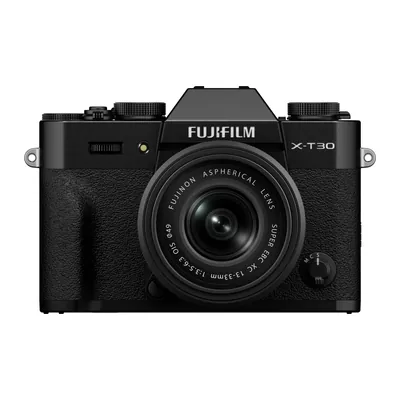
Fujifilm X-T30 III (body only)
APS-C mirrorless body, 26.1MP, ISO 160 to 12,800, 14-bit RAW, mechanical exposures up to 15 minutes, 13.3 oz with battery and card. Sold without a lens.
View on Amazon (opens in a new tab)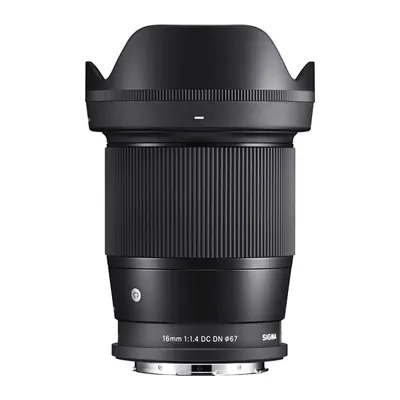
Sigma 16mm F1.4 DC DN Contemporary (Fujifilm X mount)
16mm lens opening at f/1.4 for APS-C cameras with the Fujifilm X mount: 24mm full-frame equivalent, stepping-motor autofocus, 14.3 oz.
View on Amazon (opens in a new tab)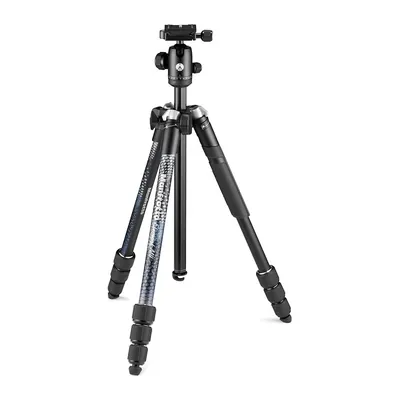
Manfrotto Element MII aluminum with ball head
Four-section aluminum travel tripod with ball head: 63 in maximum, 16.7 in folded, 3.4 lb, 17.6 lb payload, and a ballast hook under the center column.
View on Amazon (opens in a new tab)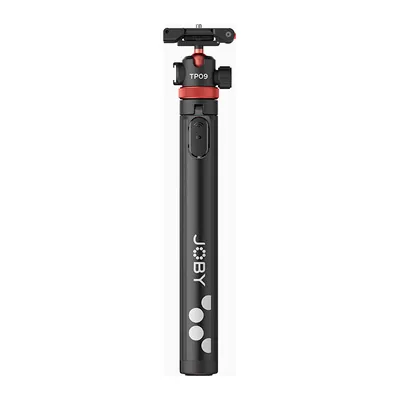
Joby TelePod TP09
A grip tripod that extends to 71 in, with a phone clamp, ball head, and wireless remote: the phone stays perfectly still during long exposures, without being touched.
View on Amazon (opens in a new tab)
Worth watching
Lonely Speck gives a five minute overview of planning, camera settings and focusing for Milky Way photography, with links to its exposure calculator and its guides to finding the Milky Way and focusing at night.
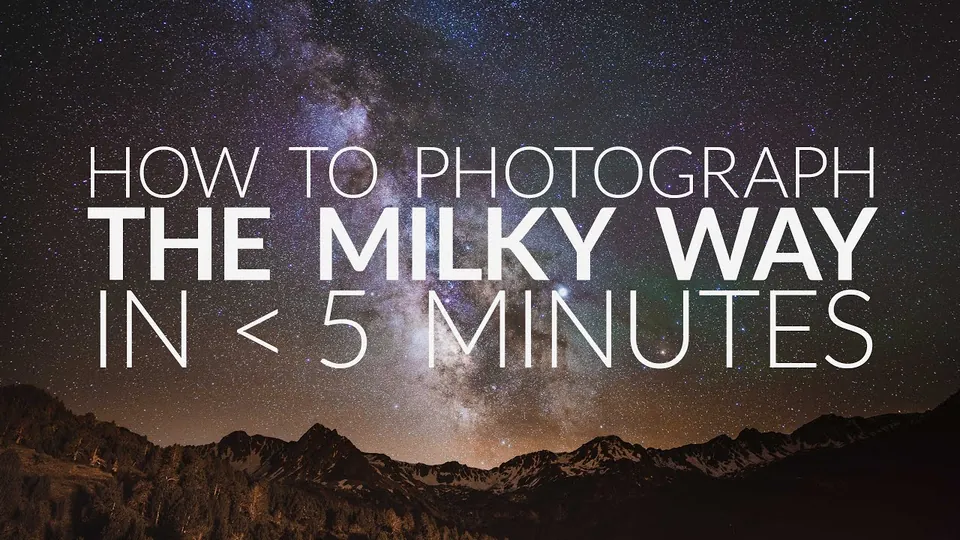
The video is hosted by YouTube (Google): nothing loads until you play it, and Google may then set cookies.
FAQ
When is the best time to photograph the Milky Way in the United States?
From late spring through summer, on a moonless night. Bryce Canyon’s rangers point to June through August for views not long after sunset, and Joshua Tree calls the Milky Way best on a moonless summer night. By our calculation the center peaks at about 21° over Denver and 13° over Seattle, with dark windows around each New Moon from April through August.
What exposure time should I use for the Milky Way?
Divide 500 by your lens’s focal length in millimeters: 35.7 seconds at 14 mm on full frame. Sony admits that’s generous on a recent camera. The finer NPF rule gives about 20 seconds at 14 mm for a 24-megapixel full-frame camera at f/2.8 (our calculation, assuming 6-micron pixels). Take a test shot and zoom in on it.
What ISO and aperture should I start with?
Sources range from ISO 400 to 6,400 depending on the camera, with the lens wide open, ideally f/2.8 or faster. Nikon’s U.K. site suggests 3,200 to 6,400, Nikon’s U.S. photographer 3,200 to 4,000, and Joshua Tree 1,600 or higher at f/2.8. Start there, then change one setting at a time.
Can I photograph the Milky Way with a cell phone?
Yes, if the sky is dark and the phone is steady. Google describes an Astrophotography mode on Pixel phones, Apple a Night mode with a longer Max capture, Samsung an Astrophoto mode in Expert RAW. None of those pages promises the Milky Way from a city: get away from the lights and rest the phone on a tripod.
Do I need a star tracker to get started?
No. A DSLR or mirrorless camera on a tripod is enough for a first shot, according to the Royal Observatory Greenwich. A star tracker, an equatorial mount that follows the Earth’s rotation, allows longer exposures; it’s a next step, like stacking several short exposures.
Sources
- European Southern Observatory (ESO), “A view of the Milky Way supermassive black hole Sagittarius A* in polarised light,” image eso2406a, 2024, accessed November 15, 2026. eso.org https://www.eso.org/public/images/eso2406a/ ↩
- National Park Service, Joshua Tree National Park, “Stargazing,” updated January 29, 2026, accessed November 15, 2026. nps.gov https://www.nps.gov/jotr/planyourvisit/stargazing.htm ↩
- BBC Sky at Night Magazine, Pete Lawrence, “How to photograph the Milky Way,” June 21, 2022, accessed November 15, 2026. skyatnightmagazine.com https://www.skyatnightmagazine.com/astrophotography/astrophoto-tips/how-photograph-milky-way/ ↩
- National Park Service, Bryce Canyon National Park, “See the Night Sky,” updated June 8, 2026, accessed November 15, 2026. nps.gov https://www.nps.gov/thingstodo/see-the-night-sky.htm ↩
- NASA, “What’s Up: June 2025 Skywatching Tips from NASA,” accessed November 15, 2026. science.nasa.gov https://science.nasa.gov/solar-system/skywatching/whats-up-june-2025-skywatching-tips-from-nasa/ ↩
- U.S. Naval Observatory, “Rise, Set, and Twilight Definitions,” accessed November 15, 2026. aa.usno.navy.mil https://aa.usno.navy.mil/faq/RST_defs ↩
- U.S. Naval Observatory, Moon phases for the year 2027 (UT), accessed November 15, 2026. aa.usno.navy.mil https://aa.usno.navy.mil/api/moon/phases/year?year=2027 ↩
- Astronomy, “Now is the best time to see the summer Milky Way,” July 10, 2023, accessed November 15, 2026. astronomy.com https://www.astronomy.com/observing/now-is-the-best-time-to-see-the-summer-milky-way/ ↩
- National Park Service, Acadia National Park, “How to Photograph Acadia’s Night Skies,” October 14, 2021, accessed November 15, 2026. nps.gov https://www.nps.gov/articles/000/night-skies-photography-acadia.htm ↩
- BBC Sky at Night Magazine, Stuart Atkinson, “Take a midwinter tour of the Milky Way,” December 19, 2021, accessed November 15, 2026. skyatnightmagazine.com https://www.skyatnightmagazine.com/advice/winter-milky-way ↩
- Royal Museums Greenwich, “How to get started in astrophotography,” 2020, accessed November 15, 2026. rmg.co.uk https://www.rmg.co.uk/stories/space-astronomy/how-get-started-astrophotography ↩
- Nikon USA, “How to Photograph the Milky Way,” accessed November 15, 2026. nikonusa.com https://www.nikonusa.com/learn-and-explore/c/tips-and-techniques/how-to-photograph-the-milky-way ↩
- Nikon U.K., “5 exposure settings to try for night-time photography: an advanced guide,” October 21, 2026, accessed November 15, 2026. nikon.co.uk https://www.nikon.co.uk/en_GB/learn-and-explore/magazine/tips-and-tricks/5-exposure-settings-to-try-for-night-time-photography--an-advanced-guide ↩
- NASA, “How to Photograph a Meteor Shower,” November 5, 2024, accessed November 15, 2026. science.nasa.gov https://science.nasa.gov/solar-system/how-to-photograph-a-meteor-shower/ ↩
- Royal Museums Greenwich, “Top 10 astrophotography tips,” accessed November 15, 2026. rmg.co.uk https://www.rmg.co.uk/stories/space-astronomy/astronomy/top-10-astrophotography-tips ↩
- Nikon U.K., “Photographing winter landscapes: an advanced guide,” accessed November 15, 2026. nikon.co.uk https://www.nikon.co.uk/en_GB/learn-and-explore/magazine/tips-and-tricks/photographing-winter-landscapes-an-advanced-guide ↩
- British Astronomical Association, David Arditti, “Dealing with dew,” 2021, accessed November 15, 2026. britastro.org https://britastro.org/2021/dealing-with-dew ↩
- Sony Alpha Universe, Stan Moniz, “Photo Fundamentals: How to Get Sharp Stars with the 500 Rule for Astrophotography,” August 16, 2022, accessed November 15, 2026. alphauniverse.com https://alphauniverse.com/stories/photo-fundamentals-how-to-get-sharp-stars-with-the-500-rule-for-astrophotography/ ↩
- Société astronomique du Havre, Frédéric Michaud, “La Règle NPF” (in French), December 1, 2020, accessed November 15, 2026. sahavre.fr https://sahavre.fr/wp/regle-npf-rule/ ↩
- Google, Pixel Camera Help, “Take photos in low light or at night on your Pixel phone or tablet” (Astrophotography section), accessed November 15, 2026. support.google.com https://support.google.com/pixelcamera/answer/9708795?hl=en ↩
- Google Research, Florian Kainz and Kiran Murthy, “Astrophotography with Night Sight on Pixel Phones,” November 26, 2019, accessed November 15, 2026. research.google https://research.google/blog/astrophotography-with-night-sight-on-pixel-phones/ ↩
- Apple, “Use Night mode on your iPhone,” February 18, 2026, accessed November 15, 2026. support.apple.com https://support.apple.com/en-us/102519 ↩
- Samsung U.K., “Professional Photography with Galaxy Expert RAW App,” accessed November 15, 2026. samsung.com https://www.samsung.com/uk/support/mobile-devices/professional-photography-with-galaxy-expert-raw-app/ ↩
- Stellarium, home page, accessed November 15, 2026. stellarium.org https://stellarium.org/ ↩
- Sony Alpha Universe, Matt Leccadito, “Behind the Shot: How a Novice Photographer Created a Milky Way and Water Long Exposure,” August 5, 2020, accessed November 15, 2026. alphauniverse.com https://alphauniverse.com/stories/behind-the-shot-how-a-novice-photographer-created-a-milky-way-and-water-long-exposure/ ↩
- National Park Service, Joshua Tree National Park, “Night Sky Viewing: Etiquette and Advice,” updated April 21, 2017, accessed November 15, 2026. nps.gov https://www.nps.gov/jotr/planyourvisit/nightskyetiquette.htm ↩
- National Park Service, “Uncrewed Aircraft in the National Parks,” May 22, 2025, accessed November 15, 2026. nps.gov https://www.nps.gov/articles/uncrewed-aircraft-in-the-national-parks.htm ↩

Trail running, snow, water, nature and destinations
Nolwenn covers trail running, snow, water, nature and destinations for Outfarer. Curious about everything, from meteor showers to night-train schedules, she has a knack for digging up the one detail that changes everything, and nailing it in a single sentence.


 Erik Vadas-Gauden
