 Français (France)
 English (UK)
 English (US)
 Deutsch (Deutschland)

Contents
The phases of the Moon in 2027, month by month
Thirteen. That’s how many new Moons 2027 has, two of them in August, on the 2nd and the 31st, against twelve full Moons [1]. The Moon takes 29.5 days to come back to the same phase [2], a little less than a calendar month, so every now and then a phase shows up twice in one month [3]. The times in the table mark the exact instant of each phase, which is the same everywhere on Earth, converted here to Eastern Time.
Two dates matter when you read it: daylight saving time starts on Sunday, March 14, and ends on Sunday, November 7, both at 2 a.m. local time, under the rule NIST spells out (dates are our calculation) [4]. In between, Eastern clocks run four hours behind Universal Time, and five the rest of the year [4, 5]. Central Time is one hour behind Eastern, Mountain Time two, and Pacific Time three [5, 6]: subtract that from the table, which can push a phase back a day. The last quarter of February 28 at 12:16 a.m. Eastern, for instance, falls on the evening of February 27 everywhere farther west. Hawaii and most of Arizona don’t observe daylight saving time at all, NIST notes [4].
| Month | New Moon | First quarter | Full Moon | Last quarter |
|---|---|---|---|---|
| January | 7, 3:24 p.m. | 15, 3:34 p.m. | 22, 7:17 a.m. | 29, 5:55 a.m. |
| February | 6, 10:56 a.m. | 14, 2:58 a.m. | 20, 6:23 p.m. | 28, 12:16 a.m. |
| March | 8, 4:29 a.m. | 15, 12:25 p.m. | 22, 6:44 a.m. | 29, 8:54 p.m. |
| April | 6, 7:51 p.m. | 13, 6:56 p.m. | 20, 6:27 p.m. | 28, 4:18 p.m. |
| May | 6, 6:58 a.m. | 13, 12:44 a.m. | 20, 6:59 a.m. | 28, 9:58 a.m. |
| June | 4, 3:40 p.m. | 11, 6:56 a.m. | 18, 8:44 p.m. | 27, 12:54 a.m. |
| July | 3, 11:02 p.m. | 10, 2:39 p.m. | 18, 11:45 a.m. | 26, 12:55 p.m. |
| August | 2, 6:05 a.m. and 31, 1:41 p.m. | 9, 12:54 a.m. | 17, 3:29 a.m. | 24, 10:27 p.m. |
| September | 29, 10:36 p.m. | 7, 2:31 p.m. | 15, 7:03 p.m. | 23, 6:20 a.m. |
| October | 29, 9:36 a.m. | 7, 7:47 a.m. | 15, 9:47 a.m. | 22, 1:29 p.m. |
| November | 27, 10:24 p.m. | 6, 4:00 a.m. | 13, 10:26 p.m. | 20, 7:48 p.m. |
| December | 27, 3:12 p.m. | 6, 12:22 a.m. | 13, 11:09 a.m. | 20, 4:11 a.m. |
Our calculation: Universal Time from the U.S. Naval Observatory (USNO) [1], converted to Eastern Time, with daylight saving time from March 14 to November 7 [4]. For Central, Mountain, and Pacific Time, subtract one, two, or three hours [5, 6].
A few dates stand out. The new Moon of August 2 brings a total solar eclipse over Spain, North Africa, and Egypt, with nothing to see from the US. The full Moon of May 20, which won’t be the least bit blue, is a “blue moon” in the traditional sense: the third full Moon in a season that has four, explains the Royal Observatory Greenwich, in the UK [3]. And the new Moon of June 4 comes close to the solstice, when full darkness doesn’t begin in New York until about 10:37 p.m.: our stargazing guide gives, month by month, the time full darkness begins.
Dark evenings, dark mornings: what each phase tells you
Each day, the Moon rises about 50 minutes later than the day before, according to NASA [7]. Over the month it slides from one part of the night to another, and its phase alone tells you where it’ll be. NASA spells out the pattern, which holds at most latitudes [2]:
- New Moon: it rises and sets with the Sun, and stays invisible. The night is dark from dusk to dawn.
- First quarter: up around midday, it sets around the middle of the night, about six hours after the Sun [8]. The evening is moonlit, the end of the night dark again.
- Full Moon: it rises at sunset and sets at sunrise. The whole night is lit.
- Last quarter: up around the middle of the night, about six hours before the Sun [8], it sets around midday. The evening stays dark until it rises.
That gives you a simple rule. Between new Moon and full Moon, the waxing Moon lights up the start of the night and leaves the end dark. Between full Moon and new Moon, it’s the other way around: evenings are dark, and the waning Moon only shows up in the middle of the night, then in the small hours. For a night of stargazing that doesn’t end at 3 a.m., aim for the stretch from last quarter to a few days after new Moon.
The season gets a say, too. The first quarter of March 15 will set in New York at 3:22 a.m. on the 16th; the one on October 7, by 11:59 p.m. [9]. Same phase, nearly three and a half hours apart on the clock: in early spring the first quarter rides high in the sky, in early fall it stays low, and the last quarter does the opposite, as France’s Cité des sciences, the Paris science museum, explains for Paris [8]. The last quarter of September 23 rises at 10:47 p.m. the evening before; the one on March 29 doesn’t rise until 3 a.m. on the 30th [9].
Full Moon: what it washes out, and what it leaves you
A full Moon is no night-light. It can light the ground 400 times more than a moonless sky, and while the Moon is up, faint stars and many celestial objects won’t be visible, says the National Park Service [11]. The background sky brightens, too: by about one Astronomers’ brightness scale: the bigger the number, the fainter the object; one magnitude is a factor of about 2.5 in light. at quarter Moon, and by up to four at full Moon, according to a technical note from the Isaac Newton Group of Telescopes on La Palma, in the Canary Islands [12]. Four magnitudes make a sky about 40 times brighter (our conversion).
The faint glows go first: the Milky Way, galaxies, nebulae. Even a thin crescent makes fainter stars and the Milky Way harder to see, warns Arches National Park, in Utah [13], and the Royal Observatory Greenwich notes that the Moon can still brighten the sky when it’s just below the horizon [14]. Faint meteors get drowned out as well: for 2027, the International Meteor Organization (IMO) has the Geminids at full Moon, the Perseids under a waxing Moon, and the Quadrantids just before new Moon [15]. To photograph the Milky Way, pick a moonless night, and even at a dark sky park, the date matters as much as the place.
Good news: a full-Moon night isn’t a lost cause. Brighter objects stay visible, Greenwich points out [14]. I’d even call it the perfect evening to learn the brightest stars, whatever your site’s class on the Bortle scale, before you go after faint objects on a new-Moon night.
Looking at the Moon itself: the terminator and earthshine
Here’s the paradox: full Moon isn’t the best phase for looking at the Moon. For craters and mountains, NASA suggests other phases, when the shadows on the surface are more pronounced [18]. The terrain stands out along the The boundary between the lit and dark parts of the Moon, where the Sun is rising or setting on the lunar surface., the line between light and dark, where features cast long shadows [18].
The best time? Evenings around first quarter: the Moon is then high in the evening sky and makes for excellent viewing, according to NASA [2]. Through binoculars, it takes on a whole new look: its gray and white patches resolve into craters and mountain ridges. NASA recommends a magnification of at least 7; 10 or 15 shows more detail, but you may need a tripod to hold the view steady [18]. Our guide to binoculars explains how to read those numbers.
Then there’s the quietest show of all. Three to four days after new Moon, the thin evening crescent lets you make out the rest of the disk, gray and faintly lit: that’s The glow on the unlit part of the Moon, caused by sunlight reflected off Earth. [8]. NASA ties it to the crescent phases [2]. Here’s the detail that changes everything: for observers at mid-northern latitudes, the evening crescent is best placed in the months around the spring equinox, when the ecliptic, the Sun’s path across the sky, makes a steep angle with the western horizon, according to the USNO [19]; the same geometry favors the morning crescent in early fall, as the Cité des sciences shows for Paris [8]. In 2027, aim for the evenings of March 11 and 12 and April 9 and 10, then the early mornings of September 25 and 26 and October 25 and 26 (our calculation from the new Moon dates). On March 11, the crescent won’t set in New York until 9:50 p.m. [9].
The sky’s big dates in 2027, and what the Moon will be doing
A date in the sky is only as good as the Moon that comes with it. Here are the big events of 2027, each with what the Moon will be doing as seen from New York.
| Event | Date and Eastern Time | The Moon that day |
|---|---|---|
| Quadrantids (meteor shower) | Peak on January 3 around 10:25 p.m. | Thin crescent, not up until 4:57 a.m.: no Moon at the peak |
| Penumbral lunar eclipse | February 20, around 6:15 p.m. | Full Moon, up since 5:33 p.m. and still low; one edge barely shaded, maybe |
| Total solar eclipse, Spain to Egypt | August 2 | New Moon; nothing to see from the US |
| Perseids (meteor shower) | Night of August 12-13 | Waxing Moon, sets at 2:17 a.m.: dark sky before dawn |
| International Observe the Moon Night | Friday, September 10 | Three days past first quarter, rises at 4:42 p.m. |
| Geminids (meteor shower) | Peak on December 14 around 3 p.m., in daylight | Full Moon the day before, rises at 5:32 p.m. on the 14th: a bright night |
Meteor showers: IMO [15]; lunar eclipse: NASA [22]; Moon Night: NASA [23]; solar eclipse: our eclipse guide. Moonrise and moonset in New York from the USNO tables [9], converted by us: elsewhere, run the same free tool for your town. For peak times, subtract an hour for Central Time, two for Mountain, and three for Pacific [5, 6].
For lunar eclipses, 2027 is a blank year: no partial or total eclipse, just three penumbral ones [22], which NASA describes as pale and difficult to see [24]. Only February’s comes close enough to Earth’s shadow for a faint veil on one edge of the Moon to show, maybe. July 18’s won’t be visible from the Americas, and August 17’s, which will be, around 3:15 a.m. Eastern, passes much farther from the shadow [22]. For meteor showers, our meteor shower calendar has the details, night by night and hour by hour.
Planning your night, from a year out to the day before
- On the calendar, find the month’s new Moon and the last quarter before it: the evenings in between are the darkest.
- For exact times, the U.S. Naval Observatory calculates moonrise and moonset for free, for any location and a whole year [9].
- For full darkness, add the end of twilight: our beginner’s guide to stargazing gives the time for every month of 2027 in New York and Denver, and explains how to find a dark sky.
- The day before, check the overnight forecast: a Moon that’s set does you no good under clouds.
The rest doesn’t take much: a March evening and a crescent glowing with light from Earth; a fall night at last quarter, with the Milky Way all to yourself before midnight. With thirteen new Moons on the calendar, 2027 gives you room to miss a few.
Gear related to this article
No affiliation: no commission, no sponsored products.
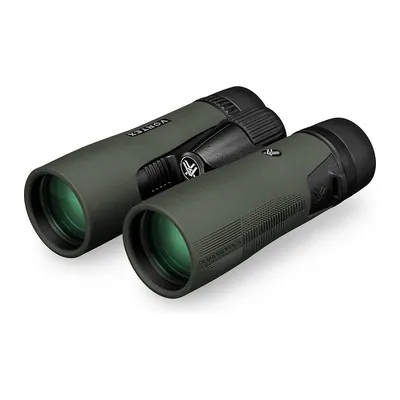
Vortex Diamondback HD 10x42
10x42 binoculars: 4.2 mm exit pupil, a 330 ft field of view at 1,000 yd, and 15 mm of eye relief, the minimum advised for eyeglass wearers. 21.3 oz, waterproof and fogproof.
View on Amazon (opens in a new tab)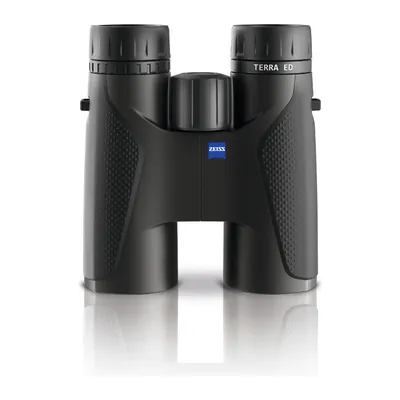
Zeiss Terra ED 10x42
10x42 binoculars: 4.2 mm exit pupil, a 330 ft field of view at 1,000 yd, more detail over open country. Eye relief of 14 mm: try them with your glasses before you buy.
View on Amazon (opens in a new tab)
Worth watching
Under five minutes from NASA: astronaut Anne McClain demonstrates each phase of the Moon, the geometry behind this calendar’s dark evenings and dark mornings.
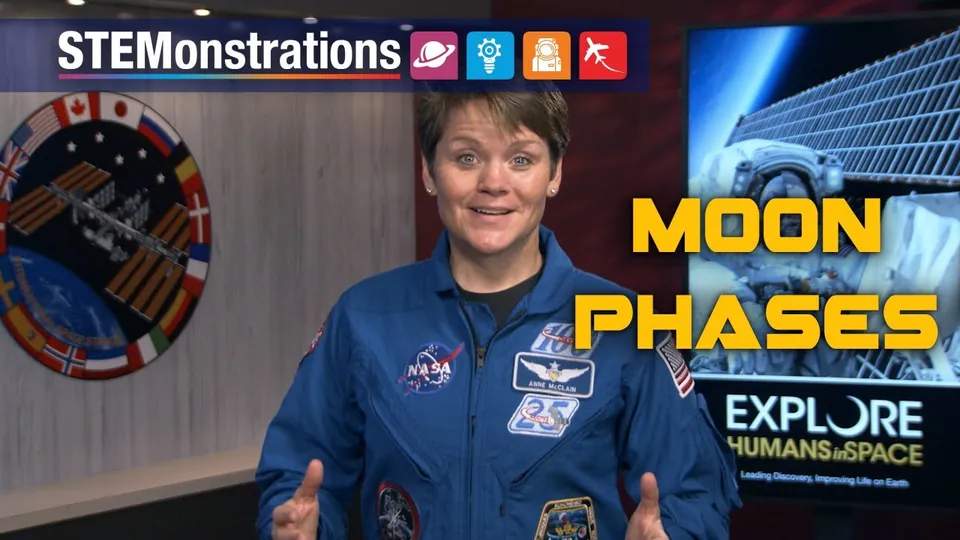
The video is hosted by YouTube (Google): nothing loads until you play it, and Google may then set cookies.
FAQ
When are the full Moons in 2027?
In Eastern Time: January 22, February 20, March 22, April 20, May 20, June 18, July 18, August 17, September 15, October 15, November 13, and December 13. Several land on a different date in Europe: the June 18 full Moon, for instance, is already June 19 in London. The times are in the table, calculated from U.S. Naval Observatory data.
When are the new Moons in 2027?
Thirteen times: January 7, February 6, March 8, April 6, May 6, June 4, July 3, August 2 and 31, September 29, October 29, November 27, and December 27, in Eastern Time. Along with the few days on either side, those are the darkest nights of the month: the Moon then rises and sets with the Sun.
How much later does the Moon rise each day?
About 50 minutes on average, according to NASA. But the gap changes a lot with the season: by our calculation from the U.S. Naval Observatory’s tables for New York, it runs from 20 minutes to 1 hour 23 in 2027. Around the full Moon of September 15, the Moon rises only about 21 minutes later each evening; around January 22’s, about 80 minutes later.
Can you see stars during a full Moon?
Yes, but not all of them. A full Moon lights the ground 400 times more than a moonless night, according to the National Park Service: the Milky Way, galaxies, and faint meteors disappear. Planets, bright stars, and the Moon itself stay visible, and the British Astronomical Association notes you don’t even need dark-adapted eyes for the Moon or the planets.
When should you look at the Moon through binoculars?
Preferably not at full Moon, when it’s lit without shadows and looks flat. The evenings around first quarter are the most convenient: the Moon is high early in the night, and its craters stand out along the terminator, the boundary between lunar day and night. NASA recommends a magnification of at least 7, and a tripod can help from 10 up.
Will there be a lunar eclipse in 2027?
Not a partial or total one: 2027 has only three penumbral lunar eclipses, according to NASA, and they’re pale and hard to see. The one on February 20, around 6:15 p.m. Eastern, just after moonrise in New York, grazes Earth’s shadow: a slight darkening of one edge may be detectable. The next partial eclipse visible from the Americas comes late on January 11, 2028, Eastern Time.
Sources
- U.S. Naval Observatory, Phases of the Moon, API, year 2027, times in Universal Time; converted to Eastern Time by us, accessed November 16, 2026. aa.usno.navy.mil https://aa.usno.navy.mil/api/moon/phases/year?year=2027 ↩
- NASA Science, Moon Phases, updated August 3, 2026, accessed November 16, 2026. science.nasa.gov https://science.nasa.gov/moon/moon-phases/ ↩
- Royal Museums Greenwich (Royal Observatory, UK), What is a blue moon and when will the next one occur?, accessed November 16, 2026. rmg.co.uk https://www.rmg.co.uk/stories/space-astronomy/what-blue-moon-how-often-does-it-occur ↩
- National Institute of Standards and Technology (NIST), Daylight Saving Time (DST), updated February 9, 2026, accessed November 16, 2026. nist.gov https://www.nist.gov/pml/time-and-frequency-division/popular-links/daylight-saving-time-dst ↩
- 15 U.S. Code § 261, Zones for standard time; interstate or foreign commerce, subsection (a), Legal Information Institute, Cornell Law School, accessed November 16, 2026. law.cornell.edu https://www.law.cornell.edu/uscode/text/15/261 ↩
- 49 CFR part 71, Standard Time Zone Boundaries, §§ 71.4 (Eastern, second zone), 71.6 (Central, third), 71.8 (Mountain, fourth), and 71.10 (Pacific, fifth), Legal Information Institute, Cornell Law School, accessed November 16, 2026. law.cornell.edu https://www.law.cornell.edu/cfr/text/49/part-71 ↩
- NASA, Astronomy Picture of the Day, “Full Moon Silhouettes,” October 10, 2021, accessed November 16, 2026. science.nasa.gov https://science.nasa.gov/image-article/apod-2021-october-10-full-moon-silhouettes/ ↩
- Universcience, Cité des sciences et de l’industrie, La Lune éclaire nos nuits, teaching pack for schools, April 2020 (PDF), pages 5 to 10 (in French), accessed November 16, 2026. cite-sciences.fr https://www.cite-sciences.fr/fileadmin/fileadmin_CSI/fichiers/vous-etes/enseignant/Documents-pedagogiques/_documents/Ressources-en-ligne/2.Lune.pdf ↩
- U.S. Naval Observatory, rise and set table for the Moon, New York (40.71° N, 74.01° W), year 2027, in Universal Time; Eastern Time and day-to-day gaps calculated by us, accessed November 16, 2026. aa.usno.navy.mil https://aa.usno.navy.mil/calculated/rstt/year?ID=AA&year=2027&task=1&lat=40.71&lon=-74.01&label=New+York&tz=0&tz_sign=1&submit=Get+Data ↩
- Royal Museums Greenwich (Royal Observatory, UK), When is the next full Moon? Full Moon Calendar 2026 and 2027, accessed November 16, 2026. rmg.co.uk https://www.rmg.co.uk/stories/space-astronomy/full-moon-calendar-2026 ↩
- National Park Service, Night Skies, Natural Light in the Night Sky, updated June 17, 2024, accessed November 16, 2026. nps.gov https://www.nps.gov/subjects/nightskies/natural-light-in-night-sky.htm ↩
- Chris R. Benn and Sara L. Ellison, Isaac Newton Group of Telescopes, La Palma Night-Sky Brightness, La Palma technical note no. 115, section 1.6, updated April 12, 2007, accessed November 16, 2026. ing.iac.es https://www.ing.iac.es/astronomy/observing/conditions/skybr/skybr.html ↩
- National Park Service, Arches National Park, Stargazing, updated December 16, 2025, accessed November 16, 2026. nps.gov https://www.nps.gov/arch/planyourvisit/stargazing.htm ↩
- Royal Museums Greenwich (Royal Observatory, UK), Astronomy without a telescope: what can I see in the night sky?, accessed November 16, 2026. rmg.co.uk https://www.rmg.co.uk/stories/space-astronomy/astronomy-naked-eye ↩
- International Meteor Organization, Jürgen Rendtel (ed.), 2027 Meteor Shower Calendar, IMO INFO(3-26), PDF, accessed November 16, 2026. imo.net https://www.imo.net/files/meteor-shower/cal2027.pdf ↩
- British Astronomical Association, Hints and tips for visual observing, accessed November 16, 2026. britastro.org https://britastro.org/section_information_/hints-and-tips-for-visual-observing ↩
- Vereinigung der Sternfreunde (VdS), Germany’s association of amateur astronomers, Unser Mond (in German), accessed November 16, 2026. sternfreunde.de https://sternfreunde.de/astronomie-entdecken/astronomie-fuer-einsteiger/sonne-mond-und-planeten/unser-mond/ ↩
- NASA Science, Moon Viewing Tips, updated February 18, 2026, accessed November 16, 2026. science.nasa.gov https://science.nasa.gov/moon/viewing-tips/ ↩
- U.S. Naval Observatory, Astronomical Applications Department, Crescent Moon Visibility, accessed November 16, 2026. aa.usno.navy.mil https://aa.usno.navy.mil/faq/crescent ↩
- Royal Museums Greenwich (Royal Observatory, UK), How to sight the new crescent Moon, accessed November 16, 2026. rmg.co.uk https://www.rmg.co.uk/stories/space-astronomy/how-sight-new-crescent-moon ↩
- NASA Science, Eclipse Viewing Safety, updated March 20, 2026, accessed November 16, 2026. science.nasa.gov https://science.nasa.gov/eclipses/safety/ ↩
- Fred Espenak, NASA Goddard Space Flight Center, Lunar Eclipses: 2021 - 2030, accessed November 16, 2026. eclipse.gsfc.nasa.gov https://eclipse.gsfc.nasa.gov/LEdecade/LEdecade2021.html ↩
- NASA Science, International Observe the Moon Night, updated October 26, 2026, accessed November 16, 2026. science.nasa.gov https://science.nasa.gov/moon/observe-the-moon-night/ ↩
- Fred Espenak, NASA Goddard Space Flight Center, Visual Appearance of Lunar Eclipses, accessed November 16, 2026. eclipse.gsfc.nasa.gov https://eclipse.gsfc.nasa.gov/LEcat5/appearance.html ↩

Trail running, snow, water, nature and destinations
Nolwenn covers trail running, snow, water, nature and destinations for Outfarer. Curious about everything, from meteor showers to night-train schedules, she has a knack for digging up the one detail that changes everything, and nailing it in a single sentence.


