 Français (France)
 English (UK)
 English (US)
 Deutsch (Deutschland)

Contents
2027 at a glance: which planets show up, evening or morning
Planets don’t keep fixed hours: each one shifts its schedule from month to month, and some vanish for weeks into the Sun’s glare. To know which one to look for, and when, we calculated the positions of the five naked-eye planets for every night of 2027 as seen from Washington, D.C., using NASA’s Horizons ephemeris system [1]. The chart and the table below sum it up. If it’s your first night out, our step-by-step stargazing guide covers the basics.
Our rule is simple: a planet counts as visible if it’s at least 5° above the horizon at the end of The period after sunset until the Sun is 6° below the horizon: the bright planets and the first stars appear., about half an hour after sunset in Washington, or at the start of morning twilight, or if it spends at least an hour in the night sky. It’s marked “most of the night” when it can be seen for at least two-thirds of the night, and “low” when it never climbs above 10°. You’ll then need a perfectly clear horizon.
| Month | Mercury | Venus | Mars | Jupiter | Saturn |
|---|---|---|---|---|---|
| January | Evening, from the 23rd (low) | Morning | Most of the night | Most of the night | Evening |
| February | Evening, until the 12th | Morning | All night | All night | Evening |
| March | Morning, from the 2nd to the 17th (low) | Morning (low from the 18th) | Most of the night | Most of the night | Evening, until the 23rd |
| April | Invisible | Morning, low | Most of the night | Most of the night, then evening | Invisible |
| May | Evening, from the 9th | Morning, low, until about the 10th, then very low at dawn | Evening and first half of the night | Evening | Morning, from the 9th (low at first) |
| June | Evening, until the 9th | Very low at dawn | Evening | Evening | Morning |
| July | Morning, from the 10th to the 29th (low) | Very low at dawn, until the 13th | Evening | Evening (low from the 23rd) | Morning |
| August | Invisible | Invisible | Evening | Evening, low, until the 2nd | Most of the night, from the 7th |
| September | Invisible | Very low at dusk, from the 26th | Evening | Morning, from the 16th | Most of the night |
| October | Morning, from the 25th (low) | Very low at dusk | Evening | Morning | All night |
| November | Morning, until the 18th | Very low at dusk, then evening from the 7th (low until the 25th) | Evening, low from the 24th | Morning | Most of the night |
| December | Invisible | Evening | Evening, low | Morning | Evening |
Outfarer’s calculation for Washington, D.C., on JPL’s Horizons ephemerides [1]; a morning is dated by the morning itself, in Eastern Time. “Low”: never more than 10° up during the night; “very low”: only in the glow of sunrise or sunset.
February: Jupiter and Mars at opposition, nine days apart
A planet is at When Earth passes between the Sun and a planet farther out: the planet rises as the Sun sets and stays up for much of the night. when Earth passes directly between it and the Sun. As the Sun sets in the west, the planet appears in the east, at its largest and brightest, explains the UK’s Royal Observatory Greenwich [3]. Jupiter opens the show on the evening of February 10 at 7:29 p.m. EST, when it’s already February 11 in Universal Time, and Mars follows on February 19 at 10:51 a.m., according to Japan’s National Astronomical Observatory (times converted by us) [4]. Greenwich lists the same days, in UK time [3].
Mars comes closest to Earth that same evening, February 19 at 7:13 p.m., at 0.678 astronomical units, or 63 million miles (101 million km) [4, 5]. The detail that changes everything: this is an An opposition that happens when Mars is near the point of its orbit farthest from the Sun: the planet then stays fairly far from Earth. opposition, and the disk of Mars reaches only 13.8 arcseconds, a little smaller than in 2025 [5]. To the naked eye, you won’t notice. Jupiter then shines at The brightness scale of celestial objects, which runs backward: the smaller the number, the brighter the object; the brightest go below zero. -2.6 and Mars at -1.3, both in Leo [1].
| Opposition | Jupiter | Mars | Saturn |
|---|---|---|---|
| Date and Eastern Time | February 10, 7:29 p.m. | February 19, 10:51 a.m. | October 17, 8:36 p.m. |
| Distance from Earth | 405 million miles (652 million km) | 63 million miles (101 million km), on February 19 | 774 million miles (1,246 million km) |
| Magnitude | -2.6 | -1.3 | +0.1 |
| Apparent diameter | 45 arcseconds | 13.8 arcseconds | 20 arcseconds |
| Constellation | Leo | Leo | Pisces |
Dates: National Astronomical Observatory of Japan [4], times converted by us; distance of Mars: ALPO [5]; other distances, magnitudes, diameters, and constellations: JPL [1].
From January to April, both planets are up most of the night, by our calculation [1]: in January they rise during the evening and shine until dawn; in March and April they’re already high at nightfall and set before daybreak. On January 1, Jupiter clears 5° in the east around 9 p.m. and Mars around 10:10 p.m.; by mid-February, Jupiter is already up as twilight ends, with Mars only minutes behind. On the night of March 30-31, they’re just 4.3° apart, due south and 68° up around 10 p.m.: an easy pair to spot, one dazzling, the other orange.
After that, the pair splits up. Jupiter stays in the evening sky until late July and low until early August, passes behind the Sun on August 31 [4], then returns at dawn in mid-September and dominates the predawn hours through December. Mars lingers in the evening for months: from mid-August to December, it’s still 9 to 18° up at the end of twilight, at magnitude +1.3, and only turns low for good in late November [1].
Saturn: evenings in winter, opposition on October 17
Saturn starts the year in the evening. On January 15, it’s 52° up in the south-southwest around 5:40 p.m., at magnitude +0.8, in Cetus and then Pisces [1]. It slides west week by week, disappears around March 23, and passes behind the Sun on April 7 [4]. It returns at dawn in mid-May, rises earlier and earlier, and is visible most of the night from early August to early December [1]. Its opposition falls on October 17 at 8:36 p.m. EDT [4], at 8.33 astronomical units, about 774 million miles (1.25 billion km) [1].
Venus: morning star into spring, evening star from November
People call it the morning star or the evening star, but Venus is a planet, the brightest of them all and the second-brightest object in the night sky after the Moon [7]. It starts 2027 in style. On January 3, it reaches its greatest morning The apparent angle between a planet and the Sun, seen from Earth. Mercury and Venus are seen in the evening when they’re east of the Sun, and in the morning when they’re west of it., 47° [4], and shines at magnitude -4.5. On January 4 around 6:50 a.m., as the sky starts to brighten, it’s 28° up in the southeast [1].
Then it slowly slips away. From Washington, it stays above 5° at first light until about May 10, low from mid-March on; after that, it’s only 9 to 10° up by sunrise into June [1]. At that height, a horizon clear of trees, buildings, and haze becomes essential, the British Astronomical Association warns about a pair of planets just as low [8]. On August 11, Eastern Time, Venus passes behind the Sun [4], then slowly reappears in the evening.
It becomes visible again at dusk in early November, low in the southwest, then more convincingly from late November: on December 30, it’s 20° up at 5:30 p.m. [1].
Mercury: five windows, and the biggest elongations aren’t the best
Mercury is the trickiest of the five: it never strays far from the Sun, and even at greatest elongation you may struggle to spot it [7]. It reaches six of them in 2027: on February 3, May 28, and September 24 in the evening, and on March 17, July 15, and November 4 in the morning [4].
The catch is that the greatest isn’t the best. All the planets stick closely to the The apparent path of the Sun among the stars over the year. The planets always stay close to this line., and the angle this path makes with the horizon changes with the seasons: in spring it rises steeply in the evening sky, in the fall in the morning sky, explains the British Astronomical Association [8]. The result, by our calculation for Washington: the September elongation, at 26.3° [4], leaves Mercury just 3.5° up at the end of civil twilight, too low to count. March’s, the largest of the year at 27.6°, barely makes it, with 6 to 7° at first light. Those of February, May, and November, more modest, lift it to 11 to 13° [1].
From Washington, that makes five windows. In the evening, from January 23 to February 12, at best around February 3 at 6 p.m., 11° up in the west-southwest. In the morning, from March 2 to 17, low, with 6 to 7° around 6 to 7 a.m. in the east-southeast. In the evening again, from May 9 to June 9, the best of the year, with 13° around 8:50 p.m. in the west-northwest around May 21. In the morning, from July 10 to 29, with up to 9° around 5:30 a.m. in the east-northeast around July 23. And in the morning from October 25 to November 18, with up to 12° around 7 a.m. in the east-southeast in early November [1]. Good news: once found, Mercury can be an easy naked-eye object, says the British Astronomical Association, the whole trick being to know when and where to look [8].
The 2027 conjunctions: the ones you’ll see, and the rest
A Two objects that look very close together in the sky, although they’re very far apart in space. is only a trick of perspective: two objects very far apart seem almost to touch, seen from Earth [7]. On paper, 2027 has some very tight ones: Venus and Saturn 0.6° apart on May 7, Mercury and Venus 0.5° apart on August 11, and Venus and Jupiter 0.5° apart on the evening of August 25, Eastern Time. From Washington, only the first can be caught, and barely: on the morning of May 7, the pair is 0.7° apart and about 6° up in the east at 5:40 a.m., as dawn starts to brighten, with Saturn hard to pick out in the glow [1]. The August ones happen just 1 to 4° from the Sun and stay out of reach. The truly fine evenings are the ones in the table.
As for “planet parades,” NASA points out that the planets always appear along the ecliptic, and that what makes these events special is seeing four or five at once with the naked eye; its list of recent and upcoming lineups goes straight from August 2025 to late October 2028 [9]. In 2027, three at a time is the rule, as on February evenings, with Saturn in the west and Jupiter and Mars in the east.
| Date | What’s happening | Where and when to look |
|---|---|---|
| January 3-4 | Venus at greatest morning elongation, 47° | Southeast, 28° up around 6:50 a.m. |
| January 23 | Nearly full Moon 2 to 4° from Jupiter | East, 7:20 to 11 p.m. |
| February 3 | Mercury at its best in the evening (elongation the same day) | West-southwest, 11° around 6 p.m. |
| February 10 | Jupiter at opposition, 7:29 p.m. | All night, in Leo |
| February 19 | Mars at opposition, then closest that evening, 63 million miles | All night, in Leo |
| February 19-20 | Nearly full Moon within 2° of Jupiter | High in the south-southeast around 11 p.m. |
| March 2-17 | Mercury low at dawn (greatest elongation on the 17th) | East-southeast, 6 to 7° around 6 to 7 a.m. |
| March 30-31 | Mars and Jupiter 4.3° apart | Due south, 68° up around 10 p.m. |
| May 7 | Venus and Saturn 0.7° apart | East, very low, 6° up at 5:40 a.m. |
| May 12 | Half Moon 2° from Jupiter | Southwest, high, at dusk (8:20 p.m.) |
| May 21-27 | Mercury’s best evening window (elongation on the 28th) | West-northwest, about 13° around 8:50 p.m. |
| October 17 | Saturn at opposition, 8:36 p.m. | All night, in Pisces |
| November 1-6 | Mercury at its best in the morning (elongation on the 4th) | East-southeast, 10 to 12° around 7 a.m. |
| November 24-25 | Venus and Mars 0.3 to 0.5° apart | Southwest, 14° up around 4:50 p.m. |
| December 30 | Thin crescent Moon less than 3° from Venus | Southwest, 24° up around 5 p.m. |
Eastern Time: EST, then EDT from March 14 to November 7, 2027, under the federal rule (second Sunday in March, first Sunday in November) [10]. Dates of oppositions and elongations: National Astronomical Observatory of Japan [4]; distance of Mars: ALPO [5]; heights, directions, times, and separations: our calculation [1].
Telling a planet from a star: three clues
First clue: a planet doesn’t twinkle. Stars twinkle because the air bends their light; planets, much closer to us, show tiny disks, and the effect cancels out, explains the Royal Observatory Greenwich [7]. One exception: very close to the horizon, even Venus can flash with colors, to the point of being reported as a mysterious object [6].
Second clue: where it sits. The planets all keep close to the ecliptic [8]: a very bright object on that path, where the Sun has just set or is about to rise, is very likely one of them. Third clue: brightness and color. Venus is the brightest object in the night sky after the Moon [7]; Jupiter is outshone only by the Moon, Venus, and occasionally Mars at opposition, according to NASA [12]. Mars gives itself away with its orange tint, while the others look white [7]. To find your way among the winter stars, our guide to the winter constellations starts from Orion; in February, Mars and Jupiter shine farther east, in Leo.
Through binoculars and a small telescope: what to expect
Binoculars are all you need for Jupiter. Most will show at least one or two of its four large moons, points lined up beside the planet, according to NASA; a small telescope shows all four, except when one passes in front of or behind Jupiter [12]. The Royal Observatory Greenwich is more optimistic and speaks of all four in binoculars [6], as do German amateur astronomers, who announce them “with binoculars and telescope” for mid-March 2027 [13]. Our guide to binoculars explains how to read their numbers.
| Planet | Naked eye | Binoculars | Small telescope |
|---|---|---|---|
| Mercury | A low point in the twilight glow, hard to find | Helps you find it, once the Sun has set | Phases, like the Moon |
| Venus | The brightest object after the Moon | No detail | Phases, like the Moon |
| Mars | An orange point | No detail | A small disk, sometimes a polar cap |
| Jupiter | A dazzling point, no detail | One or two moons, sometimes all four | All four moons and cloud bands |
| Saturn | A point, no visible rings | An elongated shape | The rings and Titan, its largest moon |
Based on the Royal Observatory Greenwich [7, 6], NASA [12], the UK’s Society for Popular Astronomy [14], and the British Astronomical Association [8].
Venus, by the way, looks better at twilight than in a dark sky, where it’s too bright [6]. In January 2027 it’s half lit; in December, about 85% lit and half the size [1]. Mars is often disappointing except near its close approaches [6], and February’s is a modest one. To choose an instrument, our guide to your first telescope weighs the options.
The first date of the year doesn’t even wait for February. On the first clear nights of January, face east around 10 p.m.: the dazzling point that doesn’t twinkle is Jupiter, and the orange glow climbing behind it, a little over an hour later, is Mars. The rest of 2027 unfolds from there, one planet at a time.
Gear related to this article
No affiliation: no commission, no sponsored products.
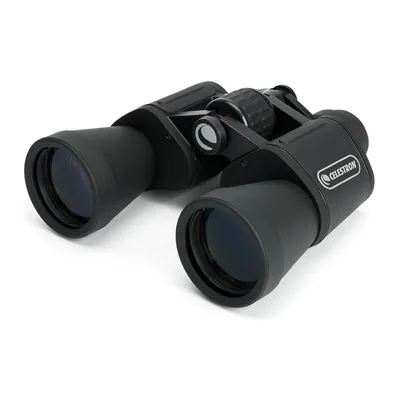
Celestron UpClose G2 10x50
10x50 Porro prism binoculars: 50mm objectives, 5mm exit pupil, 6.8° field of view, 27 oz, and tripod-adaptable (adapter sold separately).
View on Amazon (opens in a new tab)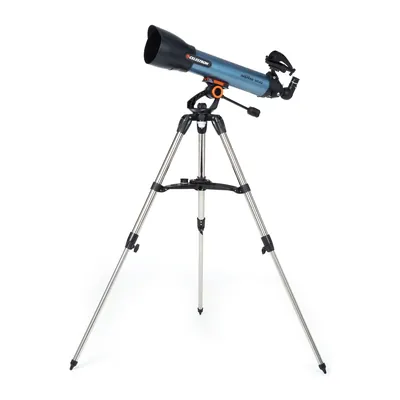
Celestron Inspire 100AZ
Short 100mm refractor with fully coated glass optics on a manual alt-azimuth mount, with 20mm and 10mm eyepieces, an erect-image diagonal, a red-dot finder and a smartphone adapter.
View on Amazon (opens in a new tab)
FAQ
What’s that bright planet in the sky tonight?
In 2027, it depends on the month. From January to April, the brilliant evening object, in the east, then high in the south, is Jupiter, with orange Mars nearby. From May to July, both shine in the southwest and then the west after sunset. From November on, the very bright point low in the southwest at dusk is Venus. Before dawn, from January to March, it’s Venus again, in the southeast.
When is the Mars opposition in 2027?
On February 19, at 10:51 a.m. EST, and Mars comes closest to Earth that same evening, at 7:13 p.m., 63 million miles (101 million km) away. It then shines all night in Leo, at magnitude -1.3. From January to early May, it’s up most of the night; from May through the fall, in the evening. In December, it sits low in the southwest at dusk, and it’s much fainter.
Will there be a planet parade in 2027?
Not a big one. NASA, which notes that “planet parade” isn’t a technical term, lists four- and five-planet lineups in August 2025 and then late October 2028, with nothing in between. In 2027, you’ll still get three at once: on February evenings, Saturn in the west with Jupiter and Mars in the east, and in late November and December, Venus and Mars low in the southwest with Saturn higher in the east.
Is the morning star really a star?
No: it’s the planet Venus, the brightest object in the night sky after the Moon, according to the Royal Observatory Greenwich. In 2027, it plays the morning star from January into May, in the southeast and then the east before dawn, and the evening star from November, in the southwest after sunset. In between, it’s too close to the Sun to be seen properly.
Can you see Saturn’s rings with binoculars?
Not really. To the naked eye, Saturn is just a point; with good binoculars, it looks slightly elongated, with no distinct rings. You need a small telescope to make them out, according to the Royal Observatory Greenwich. In 2027, they’re opening up again: about 13° as seen from Earth at the October 17 opposition, by our calculation, whereas they turn edge-on roughly every 15 years.
Why can’t I see some of the conjunctions listed for 2027?
Because most happen too close to the Sun. Mercury and Venus on August 11 and Venus and Jupiter on August 25 come within 0.5° of each other, but just 1 to 4° from the Sun, in its glare: you won’t see them. Venus and Saturn on May 7 can be caught from Washington, barely, about 6° up at dawn. Never look for any of them with binoculars before the Sun has set, or after it has risen.
Sources
- NASA Jet Propulsion Laboratory, Horizons System (DE441 ephemerides); positions, heights, magnitudes, and close approaches for 2027 calculated by us for Washington, D.C., with Miami and Seattle for comparison, accessed November 16, 2026. ssd.jpl.nasa.gov https://ssd.jpl.nasa.gov/horizons/ ↩
- U.S. Naval Observatory, Astronomical Applications Department, U.S. Time Zones, with its conversion table from UTC, accessed November 16, 2026. aa.usno.navy.mil https://aa.usno.navy.mil/faq/us_tzones ↩
- Royal Museums Greenwich, Royal Observatory (UK), What does a planet ‘in opposition’ mean?, with the dates of the next oppositions, accessed November 16, 2026. rmg.co.uk https://www.rmg.co.uk/stories/space-astronomy/what-planet-opposition ↩
- National Astronomical Observatory of Japan, Celestial Phenomena in 2027, times in Universal Time, accessed November 16, 2026. eco.mtk.nao.ac.jp https://eco.mtk.nao.ac.jp/cgi-bin/koyomi/cande/phenomena_en.cgi?year=2027 ↩
- Association of Lunar and Planetary Observers, Jeffrey D. Beish, The 2026-2027 Aphelic Apparition of Mars, accessed November 16, 2026. alpo-astronomy.org https://alpo-astronomy.org/jbeish/2027_MARS.htm ↩
- Royal Museums Greenwich, Royal Observatory (UK), What can you see in the Solar System through binoculars or a small telescope?, accessed November 16, 2026. rmg.co.uk https://www.rmg.co.uk/stories/space-astronomy/solar-system-through-your-own-telescope ↩
- Royal Museums Greenwich, Royal Observatory (UK), Astronomy without a telescope: what can I see in the night sky?, accessed November 16, 2026. rmg.co.uk https://www.rmg.co.uk/stories/space-astronomy/astronomy-naked-eye ↩
- British Astronomical Association, Stewart Moore, Mercury and Venus well displayed in the evening sky, February 28, 2018, accessed November 16, 2026. britastro.org https://britastro.org/2018/mercury-and-venus-well-displayed-in-the-evening-sky ↩
- NASA Science, Planetary Alignments and Planet Parades, accessed November 16, 2026. science.nasa.gov https://science.nasa.gov/solar-system/skywatching/planetary-alignments-and-planet-parades/ ↩
- National Institute of Standards and Technology, Daylight Saving Time, current rules for the United States, accessed November 16, 2026. nist.gov https://www.nist.gov/pml/time-and-frequency-division/popular-links/daylight-saving-time-dst ↩
- NASA Science, Eclipse Viewing Safety, accessed November 16, 2026. science.nasa.gov https://science.nasa.gov/eclipses/safety/ ↩
- NASA Science, Night Sky Network, Spot the King of Planets: Observe Jupiter, updated February 2024, accessed November 16, 2026. science.nasa.gov https://science.nasa.gov/solar-system/skywatching/night-sky-network/spot-the-king-of-planets-observe-jupiter/ ↩
- Vereinigung der Sternfreunde and Schweizerische Astronomische Gesellschaft, Astronomietag 13. März 2027 (in German), accessed November 16, 2026. astronomietag.de https://www.astronomietag.de/ ↩
- Society for Popular Astronomy (UK), Using and choosing binoculars for astronomy, page 1, accessed November 16, 2026. popastro.com https://www.popastro.com/help-and-advice/using-and-choosing-binoculars-for-astronomy/ ↩

Trail running, snow, water, nature and destinations
Nolwenn covers trail running, snow, water, nature and destinations for Outfarer. Curious about everything, from meteor showers to night-train schedules, she has a knack for digging up the one detail that changes everything, and nailing it in a single sentence.


