 Français (France)
 English (UK)
 English (US)
 Deutsch (Deutschland)

Contents
- When to look: Orion due south, December to March
- Step 1: how to find Orion’s Belt
- Betelgeuse, the orange shoulder everyone talks about
- Step 2: from the Belt to Sirius
- Step 3: Aldebaran, the Hyades, and the Pleiades
- Step 4: Procyon, Castor, Pollux, and Capella
- The Winter Triangle and the Winter Hexagon
- What Orion tells you about your sky
- Your eyes, a chart, and maybe binoculars
- Gear
- Video
- FAQ
The three stars of Orion’s Belt look like triplets: similar brightness, even spacing, lined up as if with a ruler. Yet they’re anything but neighbors. According to NASA, Alnitak lies about 800 light-years away, Mintaka about 900, and Alnilam, the middle one, about 1,300 [1]; other estimates put Alnilam much farther, between 1,550 and 2,720 light-years [2]. A trick of perspective, then, but the most useful one in the winter sky: once you’ve found the Belt, it’ll take you almost anywhere.
When to look: Orion due south, December to March
Orion rises in the east, reaches its highest point due south, then sets in the west. Like all the stars, it rises about 4 minutes earlier each day, which adds up to 2 hours a month: in November, it’s a late-night show; by February, it’s due south not long after dinner. The table gives the time it crosses due south as seen from New York, worked out for the middle star of the Belt, and what you’ll see in the evening.
| Date | Due south, at its highest | In the evening |
|---|---|---|
| November 1 | 2:45 a.m. (night of November 1-2) | Rises in the east around 8:50 p.m. |
| December 1 | 12:50 a.m. (night of December 1-2) | Rises in the east around 6:50 p.m. |
| January 1 | 10:45 p.m. | Up at nightfall, still low in the east |
| February 1 | 8:45 p.m. | Well up in the southeast at nightfall |
| March 1 | 6:55 p.m. | At its highest, due south, at nightfall |
| April 1 | 5:55 p.m. EDT, in daylight | Still well up in the southwest at nightfall |
| May 1 | 3:55 p.m. EDT, in daylight | Low in the west at nightfall, sets around 9:55 p.m. |
Chicago and Denver keep nearly the same clock times: on January 1, Orion crosses due south around 10:40 p.m. Central Time in Chicago and 10:50 p.m. Mountain Time in Denver, by our calculation. The Belt climbs to 48° above the horizon in New York, 47° in Chicago, and 49° in Denver, more than halfway up the sky. These times line up with NASA, which calls February one of the clearest times to see Orion, looking south from dusk through the night [3], and notes that it’s easy to spot rising in the east on early January evenings [4].
Step 1: how to find Orion’s Belt
Face south and look for three bright stars close together in an almost straight line: that’s the Belt, and NASA’s easiest way into Orion [1]. Around it, the constellation draws a big hourglass [7]: four bright stars at the corners, the Belt at the waist. At the top left shines Betelgeuse, orange; at the bottom right, Rigel, blue-white. You can see those colors with the naked eye [1]. From left to right, the Belt lines up Alnitak, Alnilam, and Mintaka, the names adopted by the International Astronomical Union [8].
Below the Belt hangs the Sword, a short line of stars. The middle one isn’t a star at all: it’s the Orion Nebula, M42, a cloud of gas where stars are being born. From a dark site, you can spot it with the unaided eye as a small fuzzy patch, and NASA calls January the best month to observe it [9]. Another perk: the celestial equator runs through the Belt, so Orion can be seen from almost the whole Earth, in both hemispheres [10].
Betelgeuse, the orange shoulder everyone talks about
Betelgeuse bears the letter alpha, meant for the brightest star in its constellation, yet Rigel outshines it [11]. This A massive star near the end of its life, huge and relatively cool, hence its color. is so big that, put in the Sun’s place, it would reach past the asteroid belt between Mars and Jupiter [1]. Its distance is still uncertain, roughly 500 to 700 light-years depending on the measurement: NASA itself gives 550 on one page and 700 on another [1, 11].
In late 2019, it lost about 60% of its brightness within a few months, a change you could see with the naked eye [11, 12]. Talk of an imminent supernova followed. By April 2020, Betelgeuse was back to its usual brightness [11], and in 2021 a team led by Miguel Montargès, of the Paris Observatory and KU Leuven, found the answer: a cloud of dust had partly hidden the star [13]. It will explode one day, but probably not for another 100,000 years or so, according to NASA [11]. In 2025, astronomers even found it a small companion, six magnitudes fainter, with the Gemini North telescope in Hawaii [14].
Step 2: from the Belt to Sirius
Follow the Belt down and to the left: you’ll land on the brightest star in the night sky, Sirius, in Canis Major [15, 2]. It’s about eight Belt lengths away, by our calculation. It owes its brilliance not to its size but to its relative closeness: 8.6 light-years [2, 16].
Sirius tops out a little over 30° above the southern horizon from New York, Chicago, or Denver, by our calculation, and climbs higher the farther south you go. If it flickers in flashes of different colors, it isn’t an aircraft: it really does twinkle like that, and photos show it well [15].
Step 3: Aldebaran, the Hyades, and the Pleiades
The other way, up and to the right, the Belt points to an orange star: Aldebaran, the eye of Taurus the bull [15, 17]. It marks the tip of a V of stars, the Hyades cluster. Once again, the lineup is deceptive: Aldebaran lies about 68 light-years away, the Hyades about 150 [17, 10]. It isn’t a member of the cluster; it just happens to sit between us and the Hyades [4]. And NASA’s Pioneer 10 probe, launched in 1972, is coasting generally toward Aldebaran, a trip of more than 2 million years [17].
Keep going along the line to a small, tight cluster: the Pleiades, or M45, also known as the Seven Sisters. On a very good, moonless night, the eye picks out six or seven stars; from town, often just a grainy smudge [10]. The cluster holds more than a thousand, and NASA calls December the best month to observe it [18]. Even its distance has been argued over: the European Space Agency’s Hipparcos satellite put it at 392 light-years, before the Hubble Space Telescope and then the Gaia satellite brought it back to around 440 [4].
Step 4: Procyon, Castor, Pollux, and Capella
Two more lines lead off from Orion, according to the Cité des sciences, Paris’s science museum. The line through the shoulders, from Bellatrix to Betelgeuse, extended to the left, takes you close to Procyon, in Canis Minor. The line from Rigel through Betelgeuse, extended upward, passes near two close stars of different colors: Castor, white, and Pollux, orange, the heads of the Gemini twins [2]. Both lines are approximate: by our calculation, they pass 4 to 8° from their targets.
Procyon, 11.5 light-years away [2], owes its Greek name, “before the dog,” to the fact that it rises ahead of Sirius [10]: by our calculation, 20 to 30 minutes earlier from New York, Chicago, or Denver. Castor is actually six stars [2], and Pollux has a giant planet, known since 2006 [19]. Higher still, almost overhead around 9:35 p.m. in mid-January as seen from New York, shines Capella, in Auriga. North of 44° N, it never sets [2]; from New York, Chicago, or Denver, all farther south, it dips below the northern horizon for a few hours a day, by our calculation.
And the Big Dipper? No simple line runs from it to Orion’s Belt. The Milwaukee Astronomical Society suggests a long chain instead: across the Dipper’s cup, from the back top to the bottom front, to Castor, then on to Betelgeuse [20]. In winter, it’s quicker to face south and look for three stars in a row.
| Star | Color to the naked eye | Magnitude | Worth knowing |
|---|---|---|---|
| Sirius (Canis Major) | White | -1.45 | The brightest star in the night sky, 8.6 light-years away |
| Capella (Auriga) | Yellowish | 0.08 | Almost overhead in January, 43 light-years away |
| Rigel (Orion) | Blue-white | 0.18 | The brightest star in Orion |
| Procyon (Canis Minor) | White | 0.40 | “Before the dog,” 11.5 light-years away |
| Betelgeuse (Orion) | Orange | 0.45, variable | Red supergiant, 500 to 700 light-years away |
| Aldebaran (Taurus) | Orange | 0.87 | The eye of the bull, 68 light-years away |
| Pollux (Gemini) | Orange | 1.16 | Has a known giant planet |
| Castor (Gemini) | White | 1.98 | Six stars in one |
The A star’s brightness as seen from Earth: the smaller the number, the brighter the star, and a negative magnitude means a very bright one. come from the International Astronomical Union’s catalog [8]; the colors and distances, from the sources cited above, except Capella’s color, which Germany’s association of amateur astronomers describes as yellowish [21].
The Winter Triangle and the Winter Hexagon
Two large figures link these stars across several constellations. They aren’t constellations themselves but Star patterns recognized by custom, with no official status, like the Big Dipper in Ursa Major.: there are 88 official constellations, set by the International Astronomical Union in 1922 [22]. The Winter Triangle joins Betelgeuse, Sirius, and Procyon. The Winter Hexagon, also called the Winter Circle, runs through Sirius, Procyon, Pollux, Capella, Aldebaran, and Rigel [7].
Some charts use Castor instead of its neighbor Pollux, and the IMCCE, part of the Paris Observatory, takes both [21, 10]. It hardly matters: the hexagon fills a good part of the sky, and Betelgeuse sits close to its center.
What Orion tells you about your sky
Orion shows up even in the heart of a big city: eight of its stars are brighter than magnitude 3 [2, 8]. Under a sky free of light pollution, you can count more than a hundred stars in the constellation [2]. In between, what you can see in Orion measures the quality of your sky. That’s the idea behind Globe at Night, a citizen science program of NSF NOIRLab, the US national center for ground-based nighttime astronomy: you compare your sky with charts showing more and more stars, then send in your result [23].
Searching for Globe at Night 2026? This year’s Orion campaigns are over: they ran January 10-19, February 9-18, and March 10-19. The next ones, in early 2027, fall on these dates [23].
| Dates | Constellations suggested |
|---|---|
| January 29 to February 7 | Orion or Perseus |
| February 28 to March 9 | Orion or Perseus |
| March 29 to April 7 | Orion or Leo |
The program asks you to head out more than an hour after sunset, between 8 and 10 p.m. local time, with no Moon in the sky, and to give your eyes 10 minutes to adjust [23]. These counts have already proved their worth: a study analyzed more than 50,000 observations submitted between 2011 and 2022 and, keeping those from Europe and North America, found that the night sky there had been getting brighter by 9.6% a year. NOIRLab adds that light pollution has robbed about 80% of people in the United States of their view of the Milky Way [24].
Your eyes, a chart, and maybe binoculars
The detail that changes everything is time. About 10 minutes in the dark is enough to compare charts [23], but NASA suggests giving your eyes about half an hour to adjust [6]. A screen or a white light undoes it in an instant; to read a chart, use a dim red light, such as the red mode of a headlamp. The British Astronomical Association adds that a red bike light is usually too bright [26].
- Stellarium, a free, open source planetarium for your computer, also available in a browser as Stellarium Web: it shows a realistic sky, as you’d see it with the naked eye, binoculars, or a telescope [27].
- The Evening Sky Map, a two-page monthly star chart in PDF, free for personal use and drawn for latitude 40° north, close to that of New York and Denver [28].
- NASA’s What’s Up, a monthly roundup of what to look for in the night sky, from Orion to meteor showers [3, 6].
Binoculars aren’t essential, but they show the Orion Nebula in much more detail [1]: a pair of 10x50s makes it stand out, and they deepen Betelgeuse’s orange tint [2]. In the Hyades and the Pleiades, they bring out lots of extra stars [4]. To choose a pair, read our guide to reading the numbers on binoculars. And in mid-December, keep an eye on Gemini: that’s where the Geminids seem to come from, and our meteor shower calendar dates them night by night.
The hardest part, honestly, is getting out the door. After that, Orion does the rest: one evening for the Belt, another for Sirius and the Pleiades, a third for Gemini, and you’ll be reading the whole winter sky before spring.
Gear related to this article
No affiliation: no commission, no sponsored products.
 David Chandler Company
The Night Sky 40°-50° Planisphere (Small)
A pocket-size plastic planisphere for 40° to 50° north latitude, with a 5-inch map: dial in the date and time to see which constellations are up and where the radiant sits.
View on Amazon (opens in a new tab)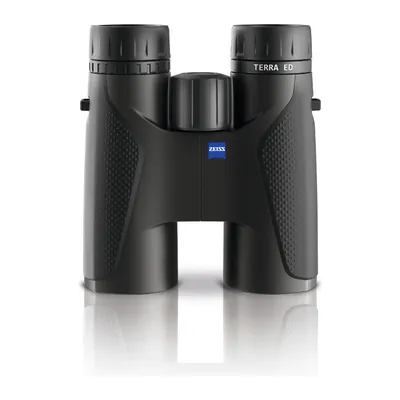
Zeiss Terra ED 10x42
10x42 binoculars: 4.2 mm exit pupil, a 330 ft field of view at 1,000 yd, more detail over open country. Eye relief of 14 mm: try them with your glasses before you buy.
View on Amazon (opens in a new tab)
Worth watching
Chicago’s Adler Planetarium shows how to find Orion the Hunter in the winter sky, points out Betelgeuse and the Orion Nebula, and tells the story behind the constellation.

The video is hosted by YouTube (Google): nothing loads until you play it, and Google may then set cookies.
FAQ
What time can I see Orion tonight?
From New York, Orion rises in the east around 8:50 p.m. in early November and 6:50 p.m. in early December. It’s due south, at its highest, around 10:45 p.m. in early January, 8:45 p.m. in early February, and 6:55 p.m. in early March. Chicago and Denver run within a few minutes of those clock times. In April, you’ll only catch it early in the evening, in the west, and it fades into the twilight in May.
Is Betelgeuse about to explode?
It will one day, like all red supergiants, but nothing suggests it’s imminent: NASA expects it in about 100,000 years, with no certainty. Its sharp dimming in 2019-2020 wasn’t a warning sign but a cloud of dust that partly hid it, according to the European Southern Observatory. NASA adds that there’s a tiny chance it happens in your lifetime, and at about 550 light-years away, it wouldn’t be dangerous to us.
How many stars can you see in the Pleiades?
Six or seven with the naked eye, on a very good, moonless night, hence the nickname Seven Sisters. From town, you often see only a small grainy smudge. Yet the cluster holds more than a thousand stars, loosely bound by gravity, and binoculars already show many more. Look for it above and to the right of Aldebaran, following the line of Orion’s Belt. NASA calls December the best month to observe it.
How do you find Orion’s Belt from the Big Dipper?
Not directly: no simple line leads from the Big Dipper to Orion’s Belt. The Milwaukee Astronomical Society suggests a long chain, across the Dipper’s cup to Castor in Gemini, then on to Betelgeuse, Orion’s orange shoulder. In winter, that takes longer than looking for Orion itself: face south, look for three bright stars in a row about halfway up the sky, and you’ve found it.
Which free star chart should I use?
Stellarium, free open source software, shows a realistic sky on a computer or in a browser, set to your location and time. The Evening Sky Map publishes a free two-page PDF chart each month for personal use, drawn for 40° north, close to the latitude of New York and Denver. NASA’s monthly What’s Up tips tell you what to look for. Outside, light your chart with a dim red light to keep your eyes adapted.
Sources
- NASA Science, Discovering the Universe Through the Constellation Orion, January 6, 2023, updated August 12, 2026, accessed November 13, 2026. science.nasa.gov https://science.nasa.gov/universe/stories/quick-reads/discovering-the-universe-through-the-constellation-orion/ ↩
- Cité des sciences et de l’industrie, Paris, Astres en cours no. 1, La constellation d’Orion (PDF, in French), February 2023. cite-sciences.fr https://www.cite-sciences.fr/fileadmin/fileadmin_CSI/fichiers/vous-etes/enseignant/Documents-pedagogiques/_documents/Ressources-en-ligne/Gazette01-Orion.pdf ↩
- NASA Science, Chelsea Gohd, What’s Up: February 2026 Skywatching Tips from NASA, January 30, 2026, accessed November 13, 2026. science.nasa.gov https://science.nasa.gov/solar-system/whats-up-february-2026-skywatching-tips-from-nasa/ ↩
- NASA Science, Night Sky Network, Spot the Young Stars of the Hyades and Pleiades, updated November 2, 2024, accessed November 13, 2026. science.nasa.gov https://science.nasa.gov/solar-system/skywatching/night-sky-network/spot-the-young-stars-of-the-hyades-and-pleiades/ ↩
- U.S. Naval Observatory, Dates of Primary Phases of the Moon, December 2026 to April 2027, in Universal Time, converted to Eastern and Mountain Time, calculated on November 13, 2026. aa.usno.navy.mil https://aa.usno.navy.mil/calculated/moon/phases?date=2026-12-01&nump=20&format=p&submit=Get+Data ↩
- NASA Science, Raquel Villanueva, What’s Up: November 2026 Skywatching Tips from NASA, November 2, 2026, accessed November 13, 2026. science.nasa.gov https://science.nasa.gov/solar-system/skywatching/whats-up-november-2026-skywatching-tips-from-nasa/ ↩
- NASA Science, Night Sky Network, Kat Troche, January’s Night Sky Notes: Connecting the ‘Dots’ with Asterisms, January 1, 2024, accessed November 13, 2026. science.nasa.gov https://science.nasa.gov/solar-system/skywatching/night-sky-network/connecting-the-dots-with-asterisms/ ↩
- International Astronomical Union, Working Group on Star Names (WGSN), IAU Catalog of Star Names, version of April 4, 2022, accessed November 13, 2026. pas.rochester.edu https://www.pas.rochester.edu/~emamajek/WGSN/IAU-CSN.txt ↩
- NASA Science, Hubble’s Messier Catalog, Messier 42 (The Orion Nebula), updated August 3, 2026, accessed November 13, 2026. science.nasa.gov https://science.nasa.gov/mission/hubble/science/explore-the-night-sky/hubble-messier-catalog/messier-42/ ↩
- IMCCE (Paris Observatory), newsletter, Observer le ciel en janvier 2017 (PDF, in French). imcce.fr https://www.imcce.fr/newsletter/docs/2017_01_Observer-le-ciel.pdf ↩
- NASA Science, Chelsea Gohd, What Is Betelgeuse? Inside the Strange, Volatile Star, May 3, 2023, updated March 9, 2026, accessed November 13, 2026. science.nasa.gov https://science.nasa.gov/universe/what-is-betelgeuse-inside-the-strange-volatile-star/ ↩
- European Southern Observatory (ESO), press release eso2003, ESO Telescope Sees Surface of Dim Betelgeuse, February 14, 2020. eso.org https://www.eso.org/public/news/eso2003/ ↩
- European Southern Observatory (ESO), press release eso2109, Mystery of Betelgeuse’s dip in brightness solved, June 16, 2021 (study by M. Montargès et al., Nature). eso.org https://www.eso.org/public/news/eso2109/ ↩
- NSF NOIRLab, press release noirlab2523, Gemini North Discovers Long-Predicted Stellar Companion of Betelgeuse, July 21, 2025. noirlab.edu https://noirlab.edu/public/news/noirlab2523/ ↩
- CPRE, the countryside charity (England), Mary McIntyre, How to find constellations in the night sky, February 28, 2023, accessed November 13, 2026. cpre.org.uk https://www.cpre.org.uk/discover/how-to-find-constellations-in-the-night-sky/ ↩
- Chandra X-ray Observatory (NASA, Harvard-Smithsonian), photo album, Sirius A and B, 2000. chandra.harvard.edu https://chandra.harvard.edu/photo/2000/0065/ ↩
- NASA Science, Pioneer 10 Sends Last Signal, March 23, 2003, updated November 6, 2024, accessed November 13, 2026. science.nasa.gov https://science.nasa.gov/missions/pioneer/pioneer-10-sends-last-signal/ ↩
- NASA Science, Hubble’s Messier Catalog, Messier 45 (The Pleiades), updated August 3, 2026, accessed November 13, 2026. science.nasa.gov https://science.nasa.gov/mission/hubble/science/explore-the-night-sky/hubble-messier-catalog/messier-45/ ↩
- NASA Exoplanet Archive (Caltech/IPAC), overview of the star HD 62509 (Pollux) and its planet HD 62509 b, accessed November 13, 2026. exoplanetarchive.ipac.caltech.edu https://exoplanetarchive.ipac.caltech.edu/overview/HD%2062509 ↩
- Milwaukee Astronomical Society, Spring Sky Tour: Polar Constellations, updated July 18, 2023, accessed November 13, 2026. milwaukeeastro.org https://milwaukeeastro.org/Stargazing/Polar.asp ↩
- Vereinigung der Sternfreunde (Germany’s association of amateur astronomers), Der Sternenhimmel im Jahr 2026, monthly texts (Word file, in German), December 2025. sternfreunde.de https://sternfreunde.de/wp-content/uploads/2025/12/VdS-Sternenhimmel_2026.docx ↩
- German Aerospace Center (DLR), 100 Jahre Neuordnung des Himmels (in German), 2022. dlr.de https://www.dlr.de/de/blog/archiv/2022/100-jahre-neuordnung-des-himmels ↩
- Globe at Night (NSF NOIRLab), Campaigns, 2026-2027 campaign calendar and observing steps, accessed November 13, 2026. globeatnight.org https://globeatnight.org/campaigns/ ↩
- NSF NOIRLab, press release noirlab2302, Stars Disappear Before Our Eyes, Citizen Scientists Report, January 19, 2023 (study published in Science). noirlab.edu https://noirlab.edu/public/news/noirlab2302/ ↩
- National Park Service, Night Skies, Partnerships to Protect Night Skies, updated June 13, 2024, accessed November 13, 2026. nps.gov https://www.nps.gov/subjects/nightskies/partnerships.htm ↩
- British Astronomical Association, Hints and tips for visual observing, accessed November 13, 2026. britastro.org https://britastro.org/section_information_/hints-and-tips-for-visual-observing ↩
- Stellarium, free open source planetarium, home page, accessed November 13, 2026. stellarium.org https://stellarium.org/ ↩
- Skymaps.com, The Evening Sky Map, downloads and terms of use, accessed November 13, 2026. skymaps.com https://www.skymaps.com/downloads.html ↩

Trail running, snow, water, nature and destinations
Nolwenn covers trail running, snow, water, nature and destinations for Outfarer. Curious about everything, from meteor showers to night-train schedules, she has a knack for digging up the one detail that changes everything, and nailing it in a single sentence.


 Erik Vadas-Gauden
