 Français (France)
 English (UK)
 English (US)
 Deutsch (Deutschland)

Contents
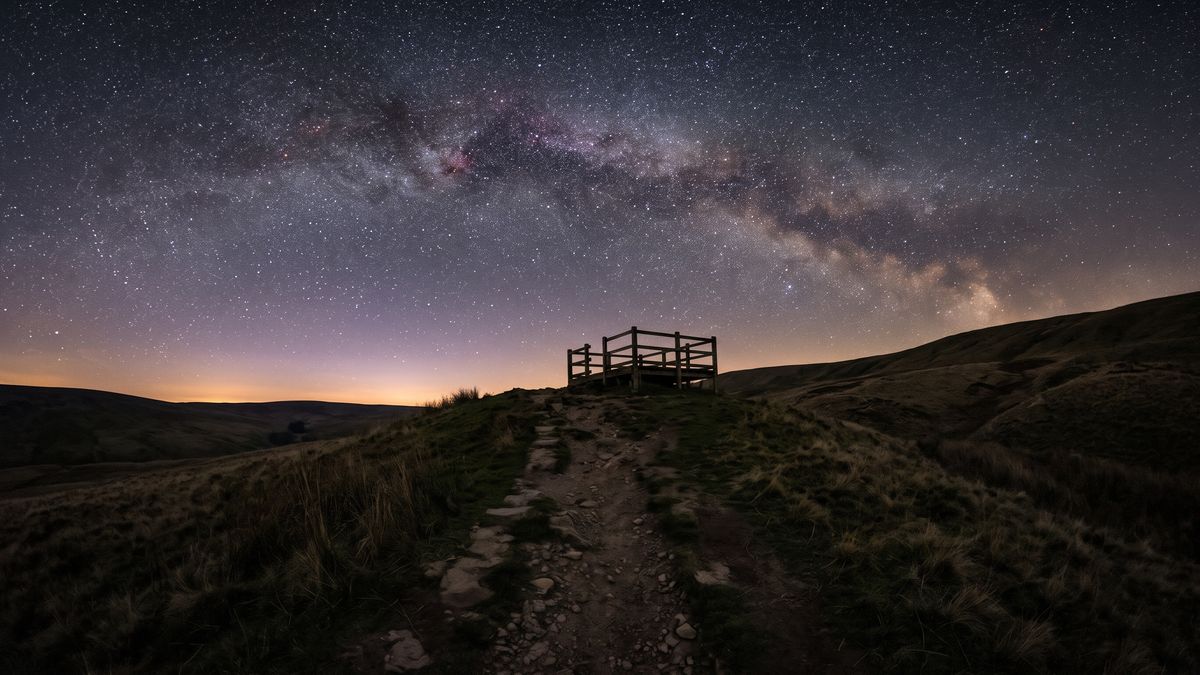
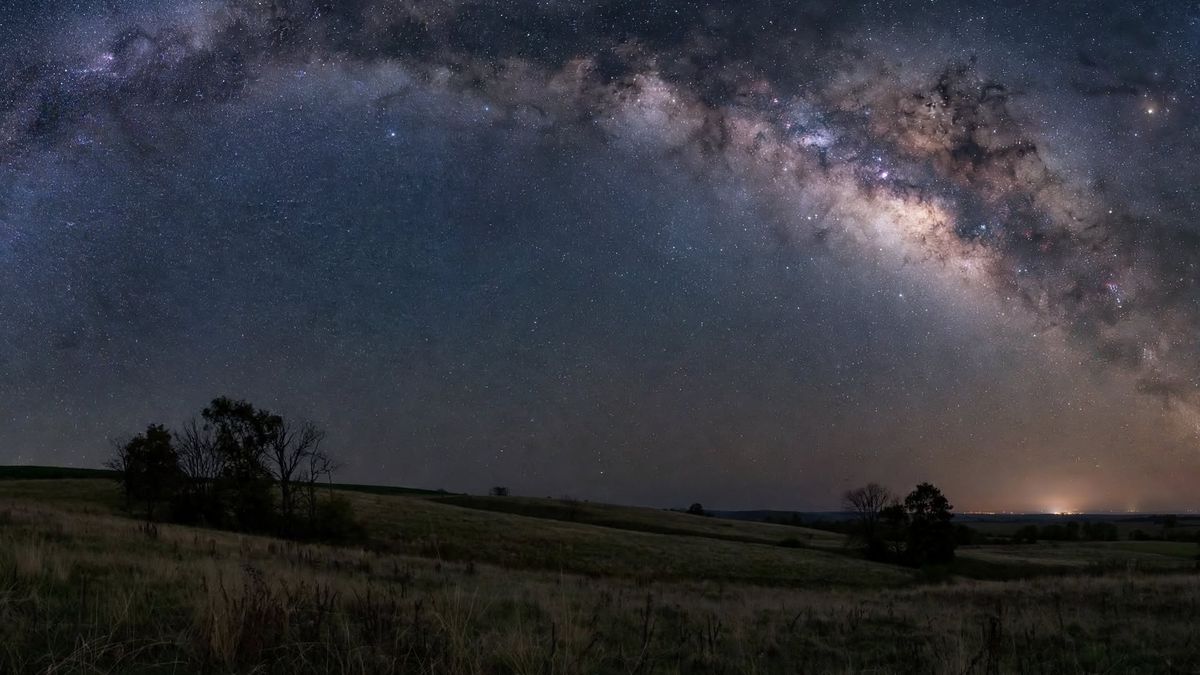
One clear night away from the street lights is enough to change the sky completely: where the town showed a handful of stars, they appear everywhere, then the Milky Way, a pale band from one horizon to the other. Good news: none of this needs a telescope. What it takes is the right evening, the right place, warm clothes and eyes given time to adjust to the dark. This guide follows that order, and each step leads to our detailed guides.
A word of warning, to spare you disappointment: to the naked eye, the Milky Way never has the colours of the photos. You see it in monochrome, as ‘fuzzy patches of light in a straight-ish strip’, says the Royal Observatory Greenwich [1]. And from home, 77% of people in the UK can’t see it at all because of artificial light, and 45% in Ireland, according to the world atlas of light pollution published in 2016 [2]: you nearly always have to take to the road.
| When | What to do |
|---|---|
| One to two weeks before | Choose an evening near new Moon; find a dark site on a light pollution map, and check whether you can be there at night |
| The day before | Read the cloud forecast for the night; note when it gets truly dark; set your planisphere or app to the date |
| On the day | Look at the site in daylight; pack warm layers, a hot drink and a red light; tell someone where you’re going and when you’ll be back |
| On site | Switch off screens and give your eyes 20 to 40 minutes; start with the bright stars, then Polaris |
1Choosing the night: the Moon, the time and the clouds
The Moon first. It reflects sunlight and acts as natural light pollution, which hides fainter objects: the best time to stargaze is around new Moon, says the Royal Observatory Greenwich, which adds that the Moon can disrupt your viewing even when it is just below the horizon [1]. Galloway Forest Park, in Scotland, advises keeping an eye on the lunar cycle beforehand, as new Moon nights show the most stars [3]. One rule of thumb helps you plan: the first quarter Moon is highest about six hours after the Sun, so it lights up the first half of the night, while the last quarter is highest six hours before the Sun and only rises in the middle of the night [4].
Next, the time. Nautical twilight, when the centre of the Sun is 12° below the horizon, is ‘to all intents and purposes the time when it is dark’, says the Royal Observatory; but it is only truly dark, with the faintest stars visible overhead, at the end of astronomical twilight, at 18° [5, 4]. According to the US Naval Observatory’s tables for London, that comes 1 hour 52 minutes after sunset on 21 February and 21 October, and more than three and a half hours after it on 21 May and 21 July [6, 7]. Allow two hours, and far longer in late spring and summer.
Around the summer solstice, true night disappears altogether: in 2027, London has none from 24 May to 21 July, as evening twilight runs straight into morning twilight [6], and the new Moons of 4 June and 4 July fall right in the middle of that stretch. The further north you go, the longer it lasts: in Edinburgh, from 5 May to 8 August [8]. The long winter nights, by contrast, are dark in London from about 6pm.
| Month | New Moon | Truly dark on the 21st from |
|---|---|---|
| January | 7 January | 6.29pm |
| February | 6 February | 7.18pm |
| March | 8 March | 8.09pm |
| April | 7 April | 10.22pm |
| May | 6 May | 12.22am, on the night of 20-21 May |
| June | 4 June | No true darkness from 24 May to 21 July |
| July | 4 July | None until the night of 21-22 July, from 12.46am |
| August | 2 and 31 August | 10.26pm |
| September | 30 September | 8.56pm |
| October | 29 October | 7.47pm |
| November | 28 November | 6.03pm |
| December | 27 December | 5.58pm |
The new Moon dates come from the US Naval Observatory, converted to UK time [9], and the times of true darkness from its tables for London [6]. That leaves the clouds. The Met Office’s cloud cover map shows where cloud is forecast across the UK, up to five days ahead [10], and the private service meteoblue adds a three-day forecast of ‘seeing’, the turbulence of the air, from 1, poor, to 5, excellent [11]. And the detail that changes everything: the clearest nights are also the coldest. Cloud acts ‘like a blanket’, the Met Office explains, and on a clear night the ground often ends up colder than the forecast air temperature, grass sooner than tarmac [12].


2Finding a dark sky, and being allowed there at night
The further you get from towns, the darker the sky. The Bortle scale rates it from 1, the darkest, to 9, the sky of a city centre [13]. To choose a site, free maps such as lightpollutionmap.info show the artificial glow seen by satellite, and the designated dark sky parks [14]. In England, CPRE, the countryside charity, produced an interactive map in 2016 from satellite data captured in September 2015, with maps of every county and national park, or of your postcode area [15]. These are models, useful for ruling places out; they don’t replace a look at the sky on site.
Six UK national parks hold International Dark Sky Reserve status: Exmoor, the Brecon Beacons (Bannau Brycheiniog), Moore’s Reserve in the South Downs, Snowdonia (Eryri), the North York Moors and the Yorkshire Dales; Northumberland, with England’s most pristine dark skies, is a Gold Tier International Dark Sky Park [16]. In Scotland, Galloway Forest Park became one of the first International Dark Sky Parks in the world in 2009, and on a clear night more than 7,000 stars and planets can be seen there with the naked eye [3]. Closer to home, look for a Dark Sky Discovery Site: these places are generally freely accessible at all times, have firm ground for wheelchairs, and are rated ‘Orion’, where the seven main stars of Orion are visible to the naked eye, or ‘Milky Way’, much darker and found only in rural areas [17].
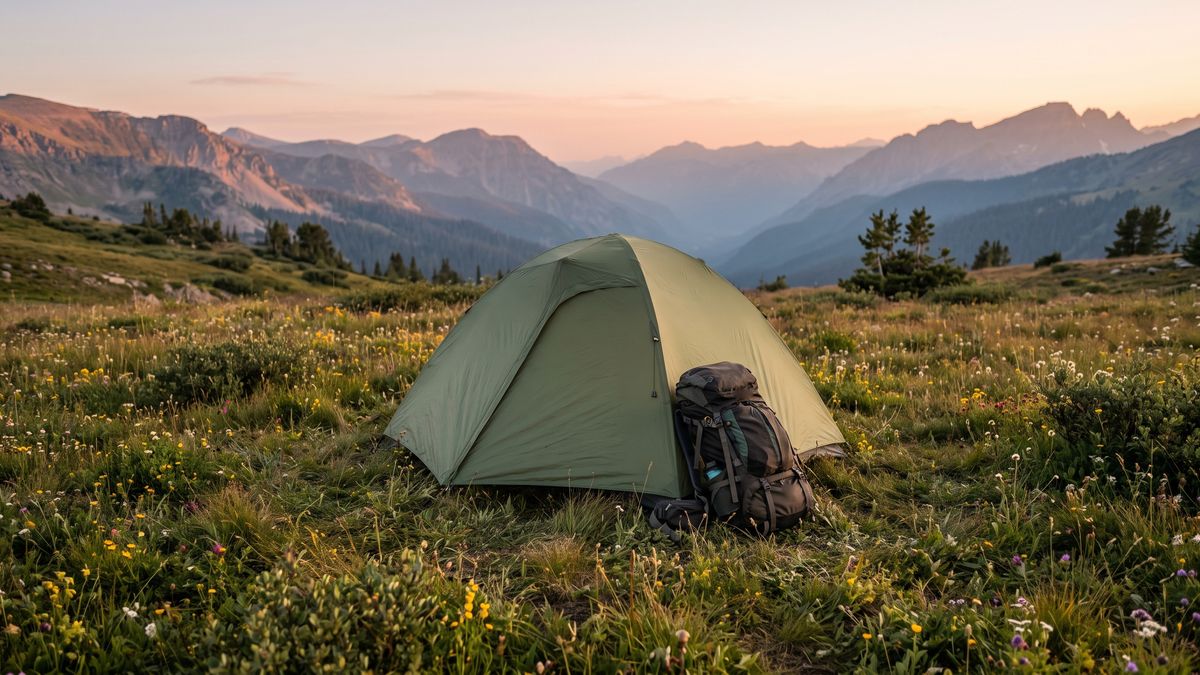
Then there is the right to be there. The perfect spot is not always open at night, and the rules are not the same in Scotland as in England and Wales. Before you set off, read the rules of the place you have in mind; on private land, ask the landowner.


3Going out at night safely, without disturbing anyone
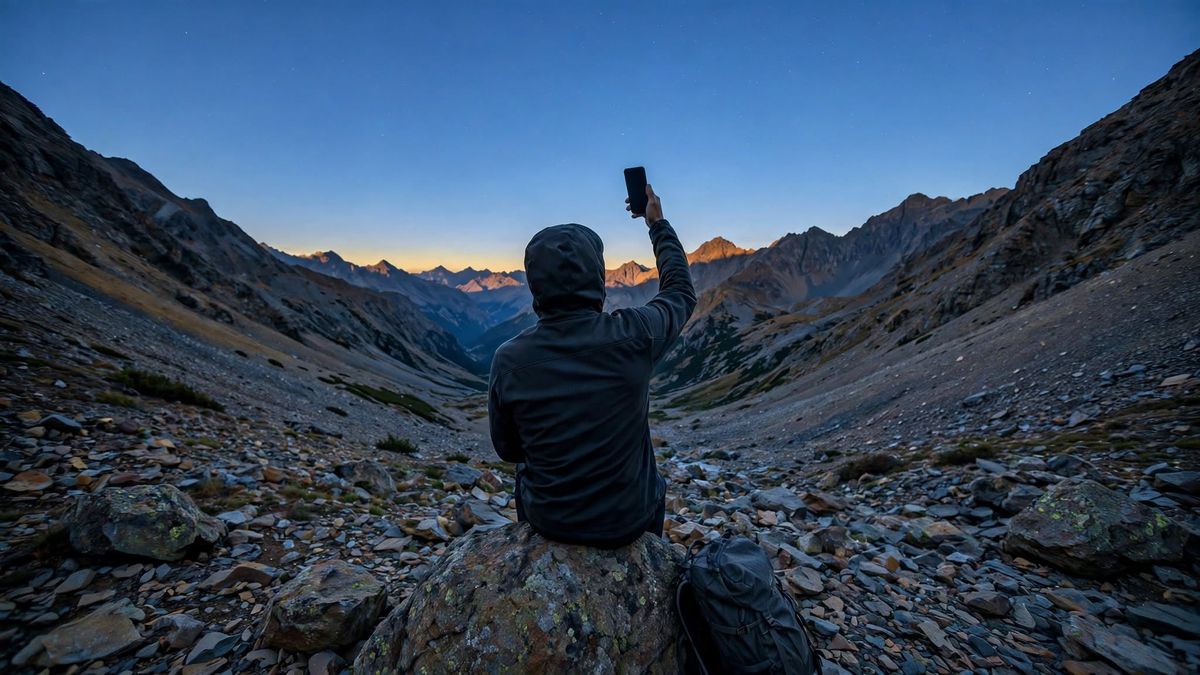
An unfamiliar field at night has little in common with the same field by day. Look at your site before dark: the way in, where to park, a bank, a ditch, an electric fence. Let someone know where you are going, what you intend to do and what time you will be back, as Mountaineering Scotland asks of everyone heading out in winter [21], and go with a friend if you can. In an emergency, dial 999 or 112 and ask for the police, then for Mountain Rescue if you are in the hills [22].
The night has its own users, too. In Scotland, the Access Code points out that land managers may be carrying out work such as pest control at night, that natural and man-made hazards are less obvious, and that residents, fearful of crime under cover of darkness, may misunderstand your presence: keep away from buildings, and use paths and tracks where they exist [18]. On Dartmoor, red flags by day and red lamps by night mean live firing within the range boundaries, which are marked by red and white poles: when the signals are displayed, don’t cross the boundary [23]. Check the firing times before you go.
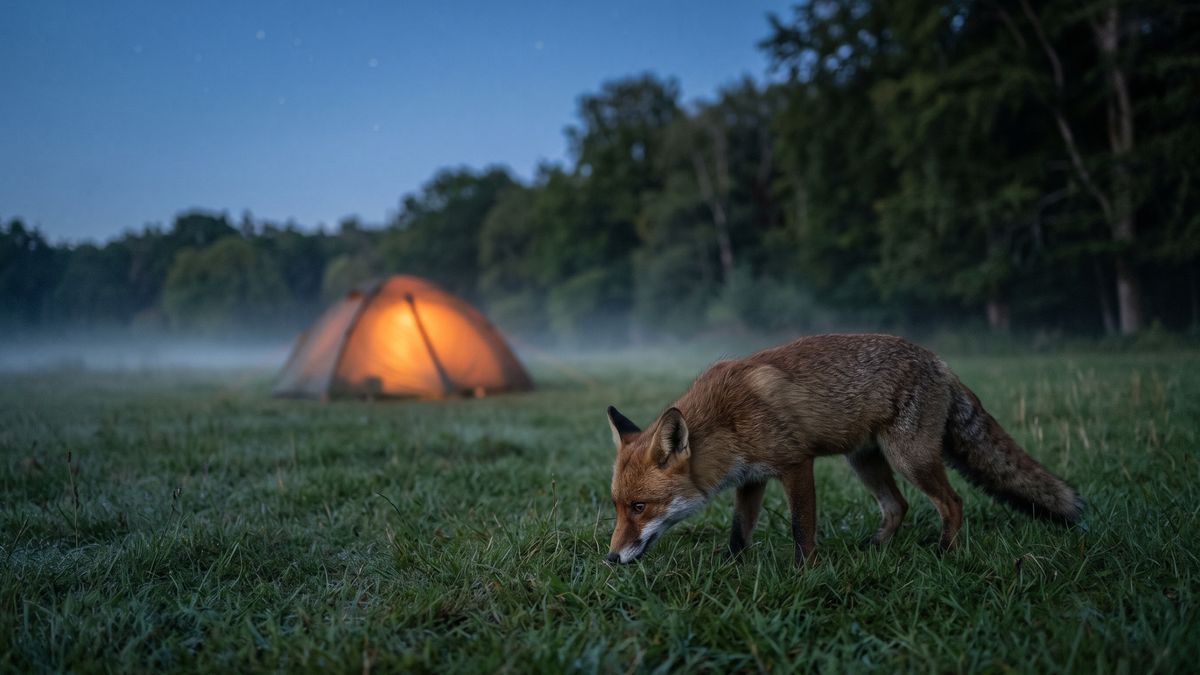
The real danger of a night’s stargazing is the cold. Sitting still, you make little heat, and the NHS lists staying out in the cold too long and getting cold in wet clothes among the causes of hypothermia, a drop in body temperature below 35 °C; it is a medical emergency, and the advice is to go to A&E or call 999 [24]. Leave the hip flask at home: alcohol is on the NHS’s list of things not to give someone with hypothermia [24]. Finally, be discreet: no headlights or white torches aimed at other stargazers, no noise near houses. The night also belongs to the animals that come round camps after dark.


4Dressing and settling in to sit still in the cold
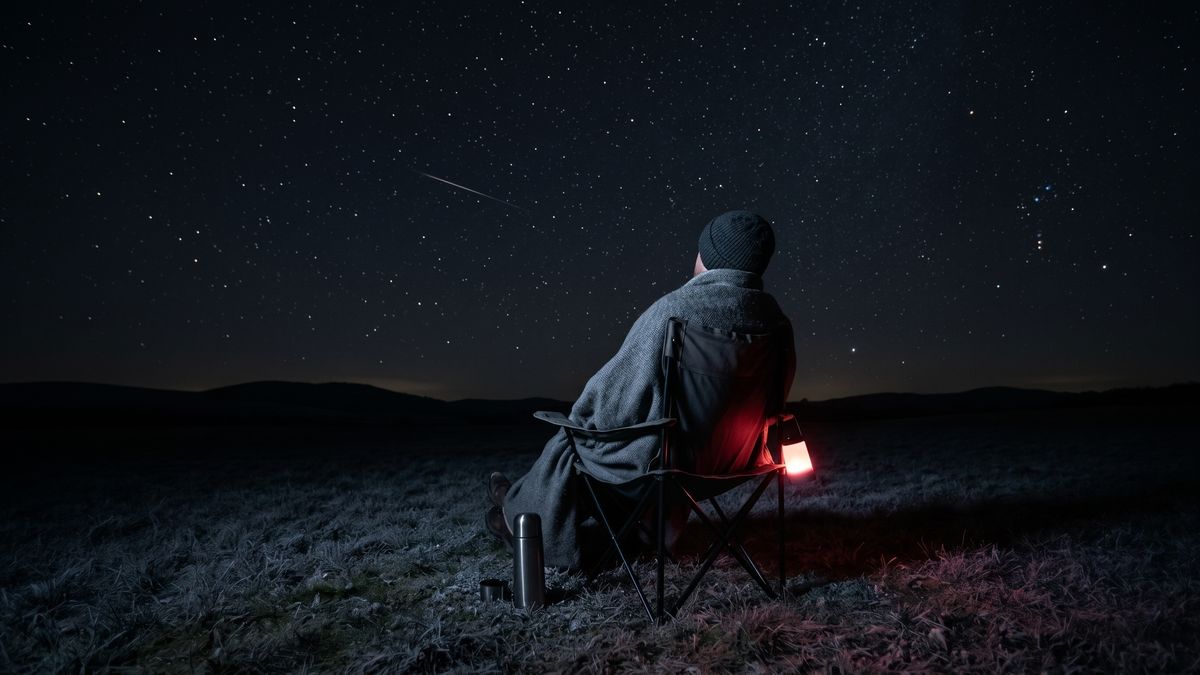
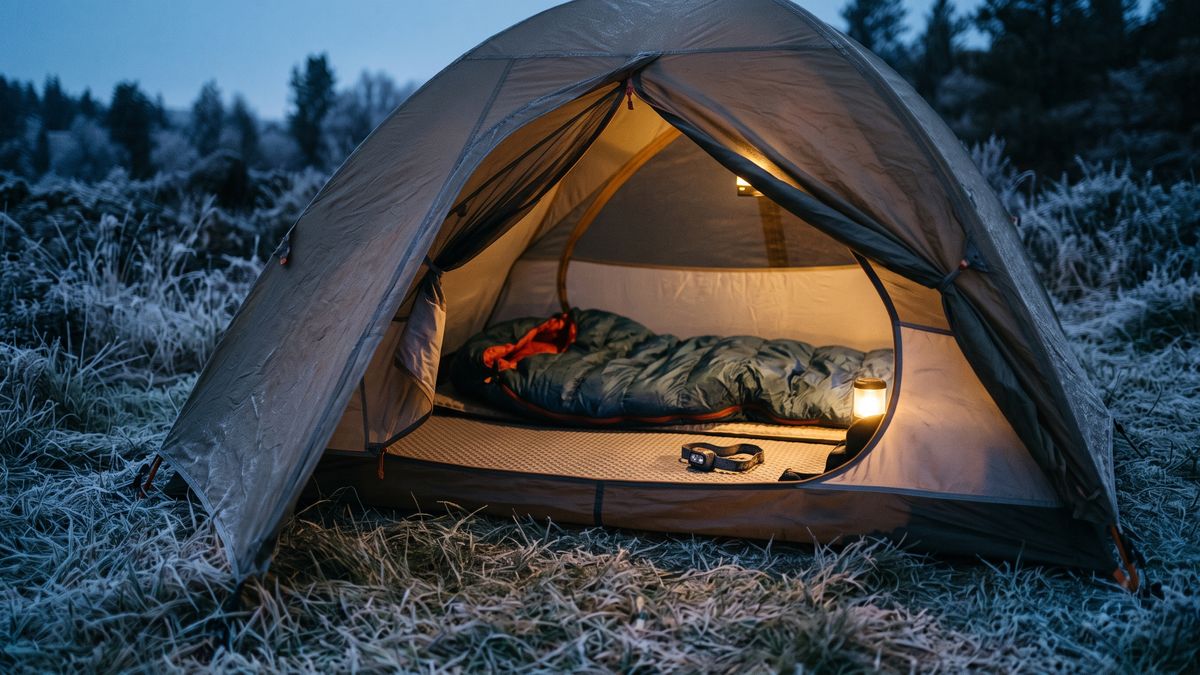
Stargazing means staying still for hours, often with your head tipped back. Dress as you would for a winter walk, even in August: the three-layer system, a hat, thin gloves that still let you handle a chart, warm socks. A spare down jacket in the bag weighs next to nothing and often rescues the end of the evening.
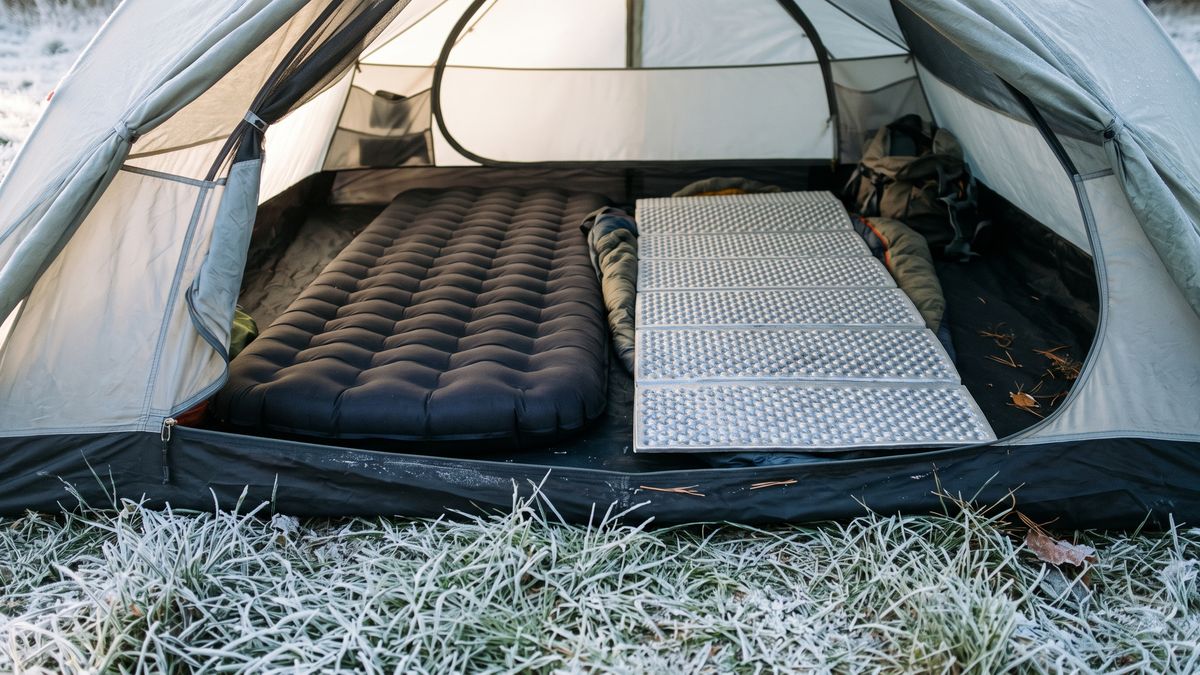
Standing up, you soon tire. A reclining chair or a thick sleeping mat, with a sleeping bag or blanket on top, makes all the difference: the cold comes up from the ground, which is exactly what the R-value of a mat measures. Galloway Forest Park simply suggests a chair to make viewing more comfortable [3], and a former director of the British Astronomical Association’s Deep Sky Section goes further: a camera tripod is no good for looking close to the zenith, whereas a sun lounger makes an ideal observing chair [25].



5Letting your eyes adjust to the dark
In the dark, the eye switches from the cones, which see colour, to the rods, which are far more sensitive. The rods take over after 5 to 10 minutes, and the eye only reaches its greatest sensitivity after about forty minutes [26]. Hence the figures you read everywhere, anything from 10 to 40 minutes: after ten minutes, you can see; after forty, you can see everything.
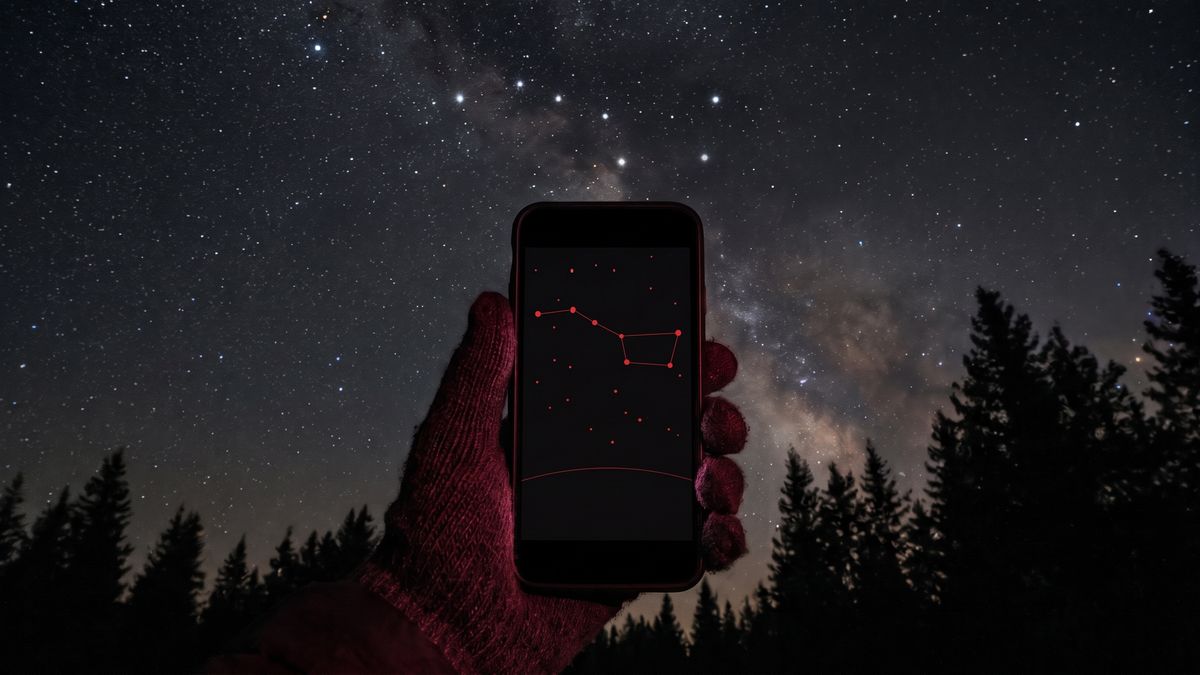
That adaptation is fragile. The British Astronomical Association puts it plainly: look at a bright white light and your dark adaptation is lost in an instant, and you have to wait another 15 minutes [27]. The culprit is rhodopsin, the pigment in the rods, which a few seconds of bright light is enough to break down [28]. A glance at your phone screen will do it. If you need light, make it red, and dim: deep red spares rhodopsin, but even a bright red light reduces it, and red cellophane over an ordinary torch will do at a pinch [28]; the BAA finds red bicycle lights generally too bright [27]. On your phone, put a red filter on your stargazing app [1].
To see a faint object, don’t stare at it: look slightly to one side. Cones are concentrated in the middle of the eye and rods around the edges, which is why this ‘averted vision’ works [1, 26]. And for the Moon or the bright planets, there is no need to wait: you only need dark-adapted eyes for the Milky Way, meteors and faint ‘deep sky’ objects [27].

6Finding your way: from the Plough to Polaris
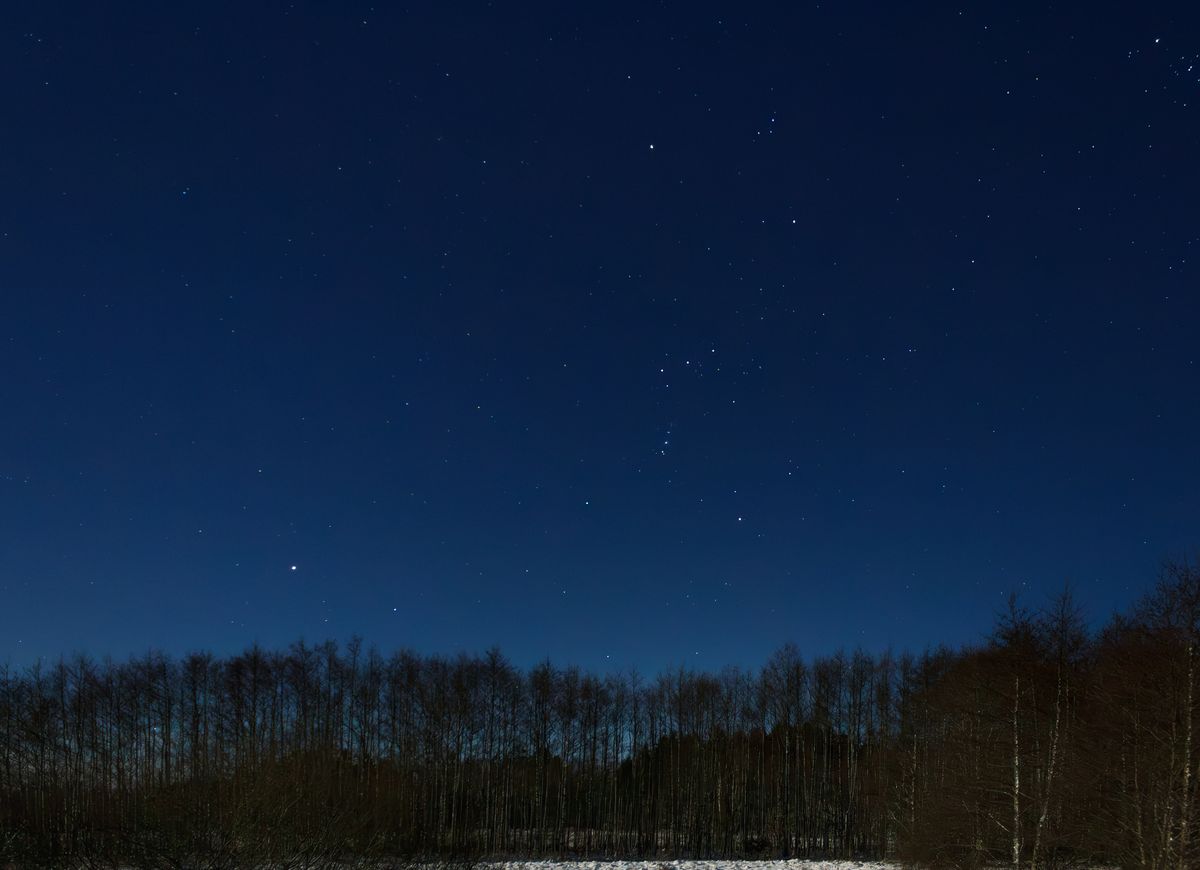
From the UK, the Plough is circumpolar: it never sets, and you can see it all year round, though it changes position with the seasons [29]. Its seven bright stars, in Ursa Major, the Great Bear, draw a saucepan, or a plough. Extend the line through the two stars on the outer edge of the bowl, from Merak to Dubhe, by about five times the gap between them, and you reach Polaris, the Pole Star [30, 29]. Our calculation from a star catalogue gives 5.3 times.
Polaris is not a particularly bright star, as CPRE points out, but it is easy to find, and it won’t move in our lifetime [29]. It sits very close to the north celestial pole, and its height above the horizon gives your latitude [31]: about 51.5° in London, 56° in Edinburgh. When the Plough is low, look for the W of Cassiopeia on the other side of Polaris: the two patterns circle around it, and when one is low near the horizon, the other is high in the sky [30].
Then a chart. A planisphere is a disc showing the night sky for the whole year: line up the date and the time, and it shows which stars you will see [32]. It fits in a pocket and needs no battery; if yours is set to GMT, take an hour off your watch during British Summer Time, and hold it up towards the sky in the direction you are facing, not flat like a road map. The free, open source Stellarium shows a realistic sky on your computer, or in a browser with Stellarium Web [33], and every month the Royal Observatory Greenwich’s Night Sky Highlights tell you what to look for from the UK [34]. In winter, our guide to the winter constellations starts from Orion to find Sirius, Aldebaran and the Pleiades.


7The naked eye, then binoculars, before a telescope
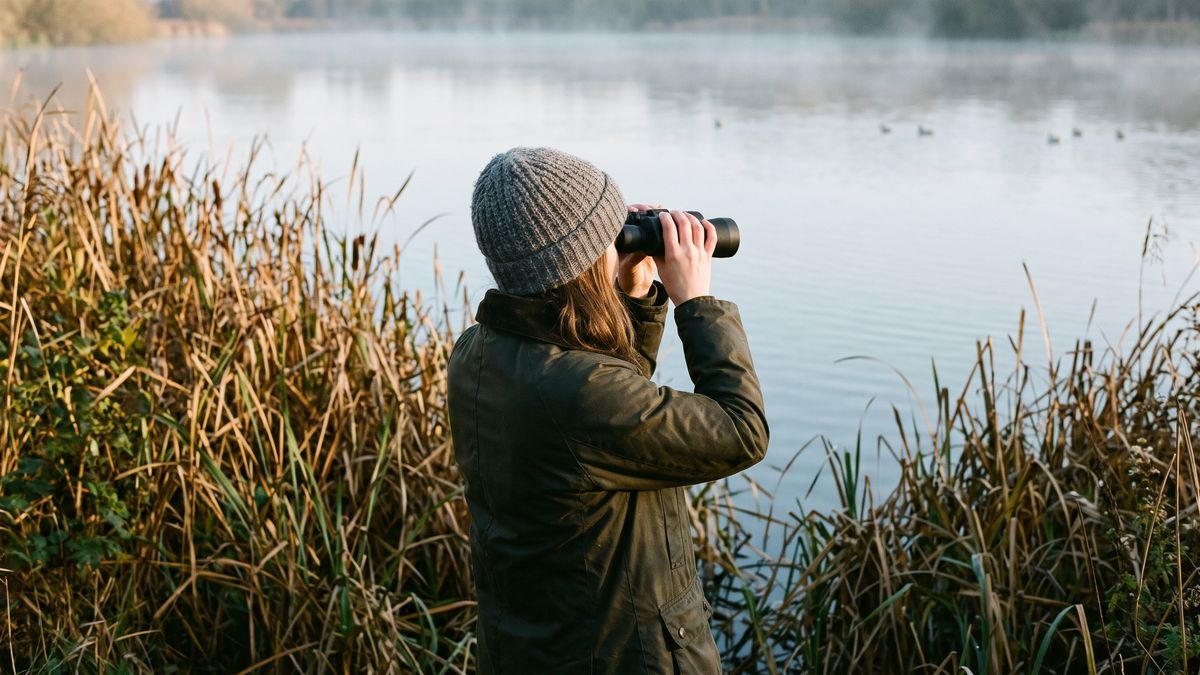
Under a dark sky, the naked eye can do a great deal: the Milky Way, the planets, which don’t twinkle, and even the Andromeda Galaxy, a faint fuzzy patch around 2.5 million light-years away, probably the most distant object you will manage to see without an instrument [1].
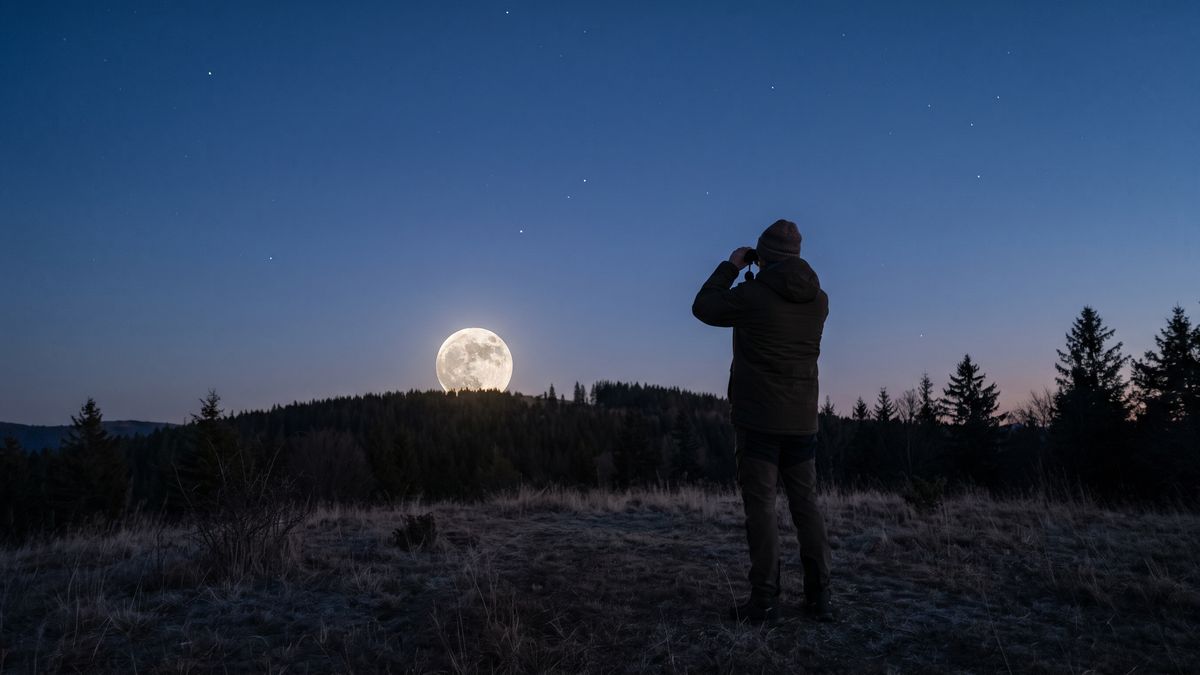
NASA’s first instrument of choice? A good pair of binoculars, and nothing much more powerful than 10x50 to begin with: bigger pairs are heavier and harder to hold steady [35]. In Britain, the Society for Popular Astronomy regards 10x50s as the standard binocular for astronomy, and warns that users over 40 may not see the full brightness of 7x50s, because their pupils no longer open wide enough [36]; around £50 buys a perfectly serviceable pair [37]. Good binoculars show craters on the Moon about 10 km (6 miles) across [35], at least one or two of Jupiter’s moons [38], and the whole of the Pleiades, which most telescopes can’t fit into a single view [35]. Our guide to binoculars explains how to read the numbers. For the Moon, forget full Moon: look along the terminator, the line between light and dark, where features cast long shadows [39].
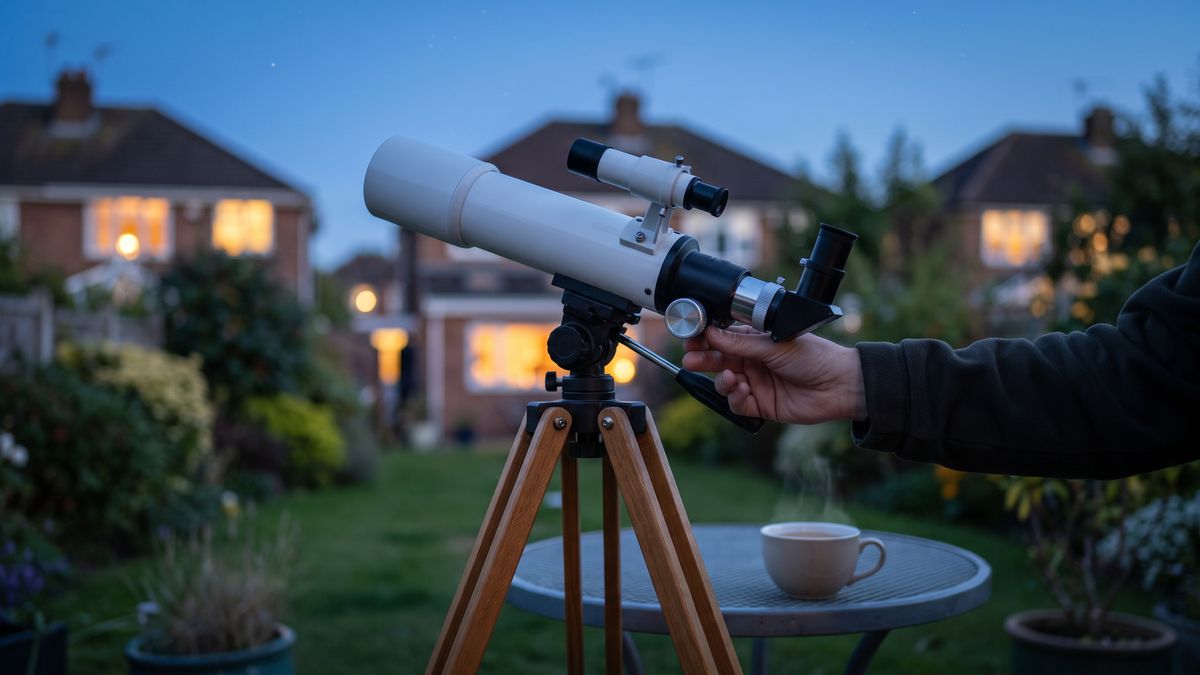
And the telescope? NASA advises starting with binoculars [35]; sources differ, and the Society for Popular Astronomy recommends consulting a specialist supplier before buying [40]. Our guide to your first telescope weighs the arguments. Ignore the magnification on the box: the Society for Popular Astronomy sizes a telescope by its aperture, the width of its main lens or mirror, and with a 60 mm instrument no amount of magnification will show the gap in Saturn’s rings known as the Cassini Division, which a 100 mm usually makes obvious [40]. Perfectly reasonable telescopes cost around £200; the SPA recommends a specialist supplier, or an astronomy fair such as Astrofest, held in London in February [41]. And no telescope ever made will show the colour and detail of the photos of faint nebulae and galaxies [40].


8Dates for your diary: the sky in 2027
Meteor showers first. In 2027, the Quadrantids peak shortly before new Moon, around 3.25am on 4 January, UK time; the mid-August Perseids come under a waxing Moon, and December’s Geminids at full Moon [42]. For meteors, you need neither binoculars nor a telescope: a dark sky, a reclining chair and patience.
Then the planets. Mars reaches opposition on 19 February 2027 and comes closest to Earth the next day, at 101 million km (63 million miles); it is an ‘aphelic’ opposition, with a fairly small disc in a telescope [43]. Jupiter reaches opposition around 11 February, Saturn around 18 October [44]: around those dates, the planet rises at sunset and can be seen all night.
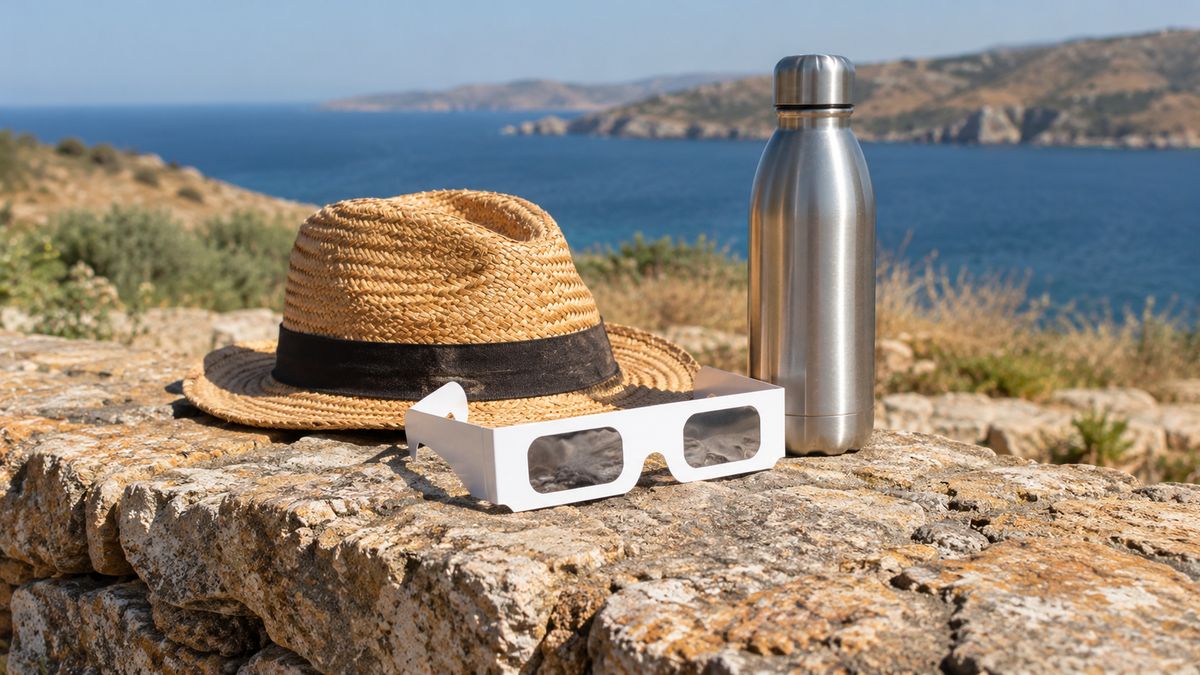
On 2 August 2027, a total solar eclipse touches Gibraltar and the southern tip of Spain; from the UK it is only partial, with about 42% of the Sun covered in London around 10am BST and 27% in Edinburgh [45], and it should only be watched through proper eclipse glasses. The Moon, for its part, has only three penumbral eclipses in 2027, which are usually too pale to notice [46]. The one on 20 February, around 11.15pm UK time, almost touches the darkest part of the Earth’s shadow: a slight darkening of one edge of the full Moon may just be detectable [46, 47].
The International Space Station passes often: a very bright point crossing the sky without flashing lights or changing direction, always within a few hours before or after sunrise or sunset [48]. What you see is sunlight bouncing off its solar panels, 400 km (about 250 miles) above us [1], and NASA’s Spot the Station app gives the time, duration, maximum height and direction of each pass [49]. One quirk for Britain: the station never goes further north than 51.6° latitude, so north of that line, which runs just north of central London, it never goes directly overhead, and NASA warns that the app may not list every visible pass there [48].
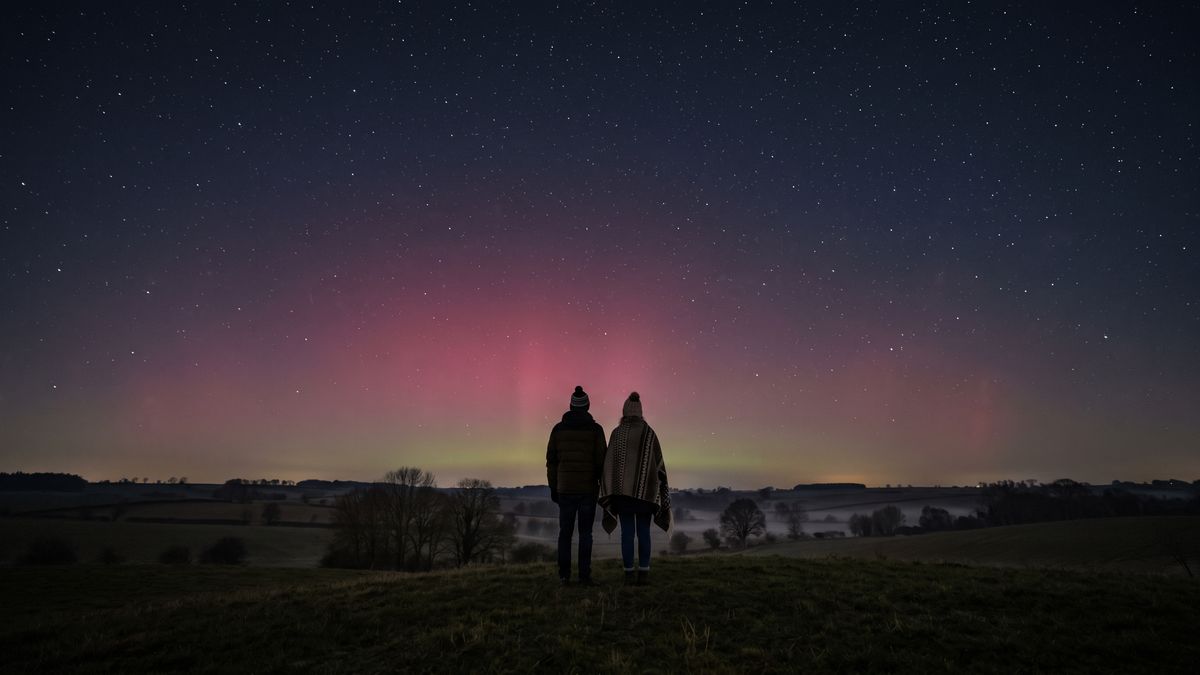
During strong geomagnetic storms, the northern lights can be seen from the UK, too. And for a first guided evening, the Yorkshire Dales Dark Skies Festival runs from 5 to 21 February 2027 across the whole national park [50], starting the day before the new Moon of 6 February; other national parks hold their own dark skies festivals through autumn and winter [16].


9Going further: photography, a local society, a night outdoors
Recent phones have a night or astrophotography mode, which only works when the phone is propped up, never handheld. On a Pixel, Google advises a stand or tripod, and taking star photos at least 45 to 90 minutes after sunset [51]; on an iPhone, Apple also suggests a tripod, and the Max setting to extend the capture time [52]. With a camera, NASA recommends a tripod, a wide-angle lens, the self-timer or a cable release, and manual focus; to stop the stars trailing, divide 500 by the focal length in millimetres: with a 20 mm lens, no more than 25 seconds [53].
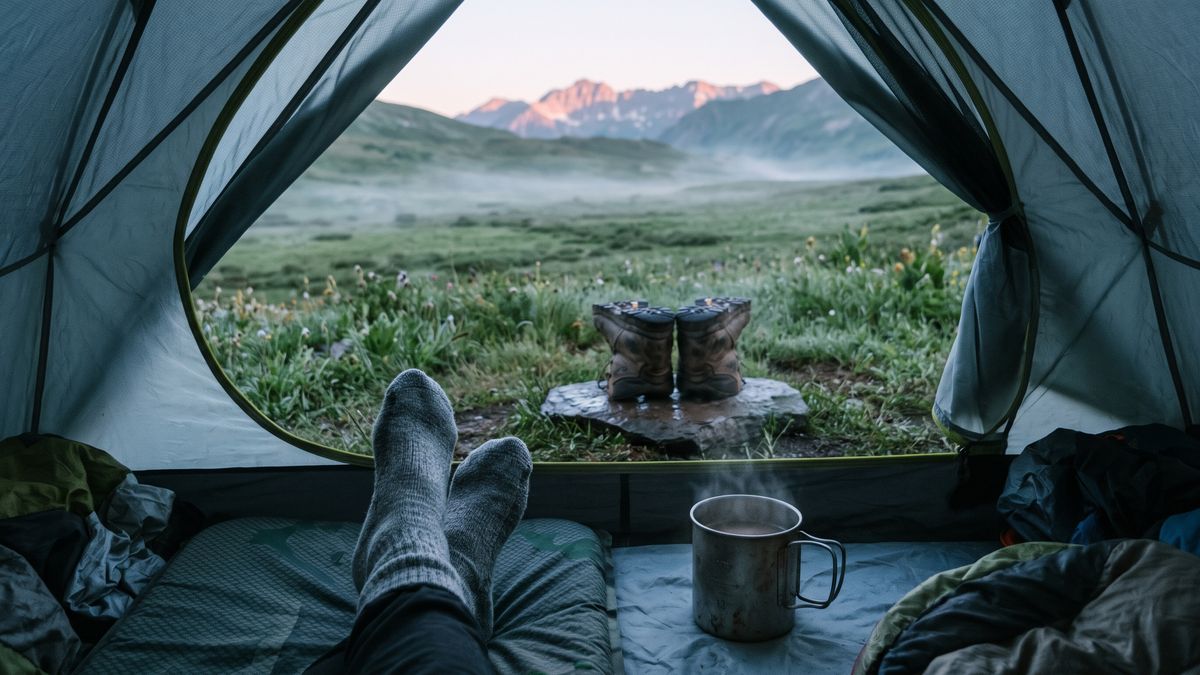
The shortest route to looking through a telescope is still a local society: the Federation of Astronomical Societies brings together nearly 200 affiliated societies across the UK and overseas [54], and the Society for Popular Astronomy, founded in 1953, publishes the beginners’ advice quoted in this guide [55]. Every year, around February, CPRE’s Star Count asks people all across the country to look up for one night and count the stars with the naked eye [56]. And to watch the sky until dawn, nothing beats a night outdoors: our guide to a first wild camp covers every step, and our winter walking guide helps with long, cold nights.


The checklist before you set off
Tick it off the night before, or print it and slip it into your bag.
- An evening near new Moon, or a time when the Moon has set
- Time of true darkness noted: about two hours after sunset, much later in late spring and summer
- Cloud forecast read for the night
- Site checked in daylight; access and parking allowed at night; on Dartmoor, firing times checked
- Someone told where you’re going and when you’ll be back; phone charged
- Three layers, warm jacket, hat, gloves, warm socks
- Reclining chair or sleeping mat, blanket or sleeping bag
- Hot drink, no alcohol, and something to nibble
- Dim red light; red filter on your phone
- Planisphere set to the date, or an app in night mode
- Binoculars, if you have them
- A bag for your rubbish, and a quiet arrival
Kit related to this article
No affiliation: no commission, no sponsored products.
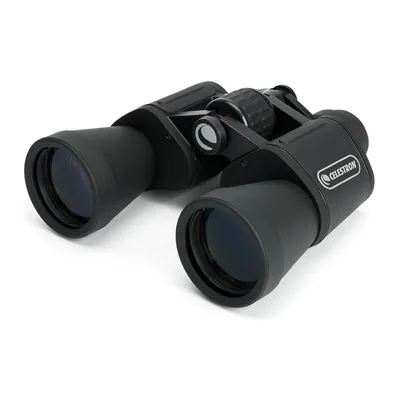
Celestron UpClose G2 10x50
10x50 Porro prism binoculars: 50 mm objectives, 5 mm exit pupil, 6.8° field of view, 765 g, and tripod-adaptable (adapter sold separately).
View on Amazon (opens in a new tab)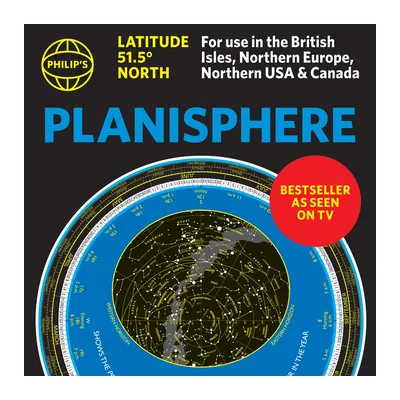
Philip’s Planisphere (Latitude 51.5 North)
A rotating star map for 51.5° north, plus or minus 10°, showing every star down to magnitude 5, with a planet tracker: turn the disc to tonight’s date and time to find the radiant.
View on Amazon (opens in a new tab)
Worth watching
Under three minutes from BBC Sky at Night Magazine: five simple tips for getting started in stargazing, a quick companion to the first steps of this guide.
The video is hosted by YouTube (Google): nothing loads until you play it, and Google may then set cookies.
FAQs
When is the best time to go stargazing in the UK?
Choose a clear night near new Moon, or a time when the Moon has set, then wait for the end of astronomical twilight, when the Sun is 18° below the horizon. In London, that comes about two hours after sunset in autumn and winter, but there is no true darkness at all from late May to late July, and in Edinburgh from early May to early August.
How long does it take for your eyes to adjust to the dark?
The rods, the cells of night vision, take over after 5 to 10 minutes, and the eye reaches its greatest sensitivity after about forty minutes. A bright light, even a phone screen, undoes it in an instant, and the British Astronomical Association reckons you then have to wait another 15 minutes. Use a dim red light, and put a red filter on your stargazing app.
How do you find the North Star?
Find the Plough, which never sets from the UK. Extend the line through the two stars on the outer edge of its bowl, from Merak to Dubhe, by about five times the gap between them: you reach Polaris, the Pole Star. It isn’t particularly bright, but it stays almost still in the north. If the Plough is low, the W of Cassiopeia is high on the other side.
Do you need a telescope to start stargazing?
No. Under a dark sky, the naked eye already shows the Milky Way, the planets and the Andromeda Galaxy. NASA’s first choice is a pair of binoculars, nothing much more powerful than 10x50 to begin with, and the Society for Popular Astronomy says around £50 buys a perfectly serviceable pair. Before buying a telescope, try a few at a local astronomy society or a dark skies festival.
Where can you see the darkest skies in the UK?
Away from towns, and ideally in a designated dark sky place. Exmoor, the Brecon Beacons, the South Downs, Snowdonia, the North York Moors and the Yorkshire Dales are International Dark Sky Reserves; Northumberland and Galloway Forest Park are International Dark Sky Parks. Dark Sky Discovery Sites are good local options. Always check that you can park and stay there at night.
Why is it never really dark in a British summer?
Because around the solstice, the Sun doesn’t sink 18° below the horizon, the point at which the sky becomes truly dark. In 2027, London has no astronomical night from 24 May to 21 July, and Edinburgh none from 5 May to 8 August. The sky never goes completely black, and the faintest stars stay lost in the twilight glow, although the bright stars and planets still show.
Sources
- Royal Museums Greenwich (Royal Observatory), ‘Astronomy without a telescope: what can I see in the night sky?’, accessed 15 November 2026. rmg.co.uk https://www.rmg.co.uk/stories/space-astronomy/astronomy-naked-eye ↩
- Fabio Falchi et al., ‘The new world atlas of artificial night sky brightness’, Science Advances, vol. 2, no. 6, 10 June 2016, table 2 (United Kingdom, Ireland), accessed 15 November 2026. pmc.ncbi.nlm.nih.gov https://pmc.ncbi.nlm.nih.gov/articles/PMC4928945/ ↩
- Forestry and Land Scotland, ‘Galloway International Dark Sky Park’, accessed 15 November 2026. forestryandland.gov.scot https://forestryandland.gov.scot/visit/forest-parks/galloway-forest-park/galloway-international-dark-sky-park ↩
- US Naval Observatory, ‘Rise, Set, and Twilight Definitions’, accessed 15 November 2026. aa.usno.navy.mil https://aa.usno.navy.mil/faq/RST_defs ↩
- Royal Museums Greenwich (Royal Observatory), ‘Dawn, dusk and twilight’, accessed 15 November 2026. rmg.co.uk https://www.rmg.co.uk/stories/time/when-dawn-dusk-twilight ↩
- US Naval Observatory, astronomical twilight table for London (51.51° N, 0.13° W), 2027, in Universal Time (GMT), one hour added by us for British Summer Time, accessed 15 November 2026. aa.usno.navy.mil https://aa.usno.navy.mil/calculated/rstt/year?ID=AA&year=2027&task=4&lat=51.5074&lon=-0.1278&label=London&tz=0&tz_sign=-1&submit=Get+Data ↩
- US Naval Observatory, sunrise and sunset table for London, 2027, in Universal Time; gaps between sunset and the end of astronomical twilight calculated by us, accessed 15 November 2026. aa.usno.navy.mil https://aa.usno.navy.mil/calculated/rstt/year?ID=AA&year=2027&task=0&lat=51.5074&lon=-0.1278&label=London&tz=0&tz_sign=-1&submit=Get+Data ↩
- US Naval Observatory, astronomical twilight table for Edinburgh (55.95° N, 3.19° W), 2027, in Universal Time, accessed 15 November 2026. aa.usno.navy.mil https://aa.usno.navy.mil/calculated/rstt/year?ID=AA&year=2027&task=4&lat=55.9533&lon=-3.1883&label=Edinburgh&tz=0&tz_sign=-1&submit=Get+Data ↩
- US Naval Observatory, ‘Phases of the Moon’, 2027, in Universal Time, converted to UK time by us, accessed 15 November 2026. aa.usno.navy.mil https://aa.usno.navy.mil/api/moon/phases/year?year=2027 ↩
- Met Office, ‘UK cloud cover map’, accessed 15 November 2026. weather.metoffice.gov.uk https://weather.metoffice.gov.uk/maps-and-charts/cloud-cover-map ↩
- meteoblue, ‘Astronomy Seeing’, forecast of seeing and cloud, accessed 15 November 2026. meteoblue.com https://www.meteoblue.com/en/weather/outdoorsports/seeing ↩
- Met Office, ‘What is frost and ice?’, accessed 15 November 2026. weather.metoffice.gov.uk https://weather.metoffice.gov.uk/learn-about/weather/types-of-weather/frost-and-ice ↩
- John E. Bortle, ‘Gauging Light Pollution: The Bortle Dark-Sky Scale’, Sky & Telescope, February 2001, online since 18 July 2006, accessed 31 October 2026. skyandtelescope.org https://skyandtelescope.org/astronomy-resources/light-pollution-and-astronomy-the-bortle-dark-sky-scale/ ↩
- lightpollutionmap.info, ‘Light pollution map’, interactive world map, accessed 15 November 2026. lightpollutionmap.info https://www.lightpollutionmap.info/ ↩
- CPRE, the countryside charity, ‘England’s Light Pollution and Dark Skies Map’, accessed 15 November 2026. cpre.org.uk https://www.cpre.org.uk/what-we-care-about/nature-and-landscapes/dark-skies/englands-light-pollution-dark-skies-map/ ↩
- National Parks UK, ‘Dark skies’, accessed 15 November 2026. nationalparks.uk https://nationalparks.uk/dark-skies/ ↩
- Dark Sky Discovery, ‘Dark Sky Discovery Sites’, accessed 15 November 2026. darkskydiscovery.org.uk https://www.darkskydiscovery.org.uk/dark-sky-discovery-sites/ ↩
- Scottish Outdoor Access Code (2005), Part 3, ‘Exercising access rights responsibly’, paragraphs 3.19 and 3.20 (PDF), accessed 15 November 2026. outdooraccess-scotland.scot https://www.outdooraccess-scotland.scot/sites/default/files/2018-09/Scottish%20Outdoor%20Access%20Code%20-%20Part%203%20Exercising%20access%20rights%20responsibly.pdf ↩
- Countryside and Rights of Way Act 2000, section 2, ‘Rights of public in relation to access land’, legislation.gov.uk, accessed 15 November 2026. legislation.gov.uk https://www.legislation.gov.uk/ukpga/2000/37/section/2 ↩
- Countryside and Rights of Way Act 2000, Schedule 2, ‘Restrictions to be observed by persons exercising right of access’, legislation.gov.uk, accessed 15 November 2026. legislation.gov.uk https://www.legislation.gov.uk/ukpga/2000/37/schedule/2 ↩
- Mountaineering Scotland, ‘ThinkWINTER’, accessed 15 November 2026. mountaineering.scot https://www.mountaineering.scot/safety-and-skills/thinkwinter ↩
- Mountain Rescue England and Wales, ‘In case of emergency’, accessed 15 November 2026. mountain.rescue.org.uk https://www.mountain.rescue.org.uk/how-to-call-out-mr/ ↩
- Ministry of Defence and Defence Infrastructure Organisation, ‘Dartmoor firing times’, GOV.UK, last updated 3 November 2026, accessed 15 November 2026. gov.uk https://www.gov.uk/government/publications/dartmoor-firing-times ↩
- NHS, ‘Hypothermia’, page last reviewed 9 June 2023, accessed 15 November 2026. nhs.uk https://www.nhs.uk/conditions/hypothermia/ ↩
- Stewart L. Moore, ‘Binoculars for the travelling astronomer’, Journal of the British Astronomical Association, vol. 122, no. 1, 2012, accessed 15 November 2026. britastro.org https://britastro.org/2017/binoculars-for-the-travelling-astronomer ↩
- Michael Kalloniatis and Charles Luu, ‘Light and Dark Adaptation’, Webvision, accessed 15 November 2026. webvision.pitt.edu https://www.webvision.pitt.edu/book/part-viii-psychophysics-of-vision/light-and-dark-adaptation/ ↩
- British Astronomical Association, ‘Hints and tips for visual observing’, accessed 15 November 2026. britastro.org https://britastro.org/section_information_/hints-and-tips-for-visual-observing ↩
- US National Park Service, Jim O’Connor, ‘Dark Adaptation of the Human Eye and the Value of Red Flashlights’, last updated 1 March 2021, accessed 15 November 2026. nps.gov https://www.nps.gov/articles/dark-adaptation-of-the-human-eye-and-the-value-of-red-flashlights.htm ↩
- CPRE, the countryside charity, Mary McIntyre, ‘How to find constellations in the night sky’, 28 February 2023, accessed 15 November 2026. cpre.org.uk https://www.cpre.org.uk/discover/how-to-find-constellations-in-the-night-sky/ ↩
- David P. Stern, NASA Goddard, ‘From Stargazers to Starships’, ‘Finding the Pole Star’, updated 28 March 2014, accessed 15 November 2026. pwg.gsfc.nasa.gov https://pwg.gsfc.nasa.gov/stargaze/Spolaris.htm ↩
- David P. Stern, NASA Goddard, ‘From Stargazers to Starships’, ‘Navigation’, accessed 15 November 2026. pwg.gsfc.nasa.gov https://pwg.gsfc.nasa.gov/stargaze/Snavigat.htm ↩
- Nikon, ‘Stargazing’, Binocular User’s Guide, accessed 15 November 2026. imaging.nikon.com https://imaging.nikon.com/sport-optics/best/star/ ↩
- Stellarium, free open source planetarium, home page, accessed 15 November 2026. stellarium.org https://stellarium.org/ ↩
- Royal Museums Greenwich (Royal Observatory), ‘Night sky highlights - November 2026’, accessed 15 November 2026. rmg.co.uk https://www.rmg.co.uk/stories/space-astronomy/astronomy/night-sky-highlights-november-2026 ↩
- NASA Science, Night Sky Network, ‘Binoculars: A Great First Telescope’, updated 9 November 2026, accessed 15 November 2026. science.nasa.gov https://science.nasa.gov/solar-system/skywatching/night-sky-network/binoculars-a-great-first-telescope/ ↩
- Society for Popular Astronomy, ‘Using and choosing binoculars for astronomy’, page 2, accessed 15 November 2026. popastro.com https://www.popastro.com/help-and-advice/using-and-choosing-binoculars-for-astronomy/2/ ↩
- Society for Popular Astronomy, ‘Using and choosing binoculars for astronomy’, page 1, accessed 15 November 2026. popastro.com https://www.popastro.com/help-and-advice/using-and-choosing-binoculars-for-astronomy/ ↩
- NASA Science, Night Sky Network, ‘Spot the King of Planets: Observe Jupiter’, February 2024, accessed 15 November 2026. science.nasa.gov https://science.nasa.gov/solar-system/skywatching/night-sky-network/spot-the-king-of-planets-observe-jupiter/ ↩
- NASA Science, ‘Moon Viewing Tips’, updated 18 February 2026, accessed 15 November 2026. science.nasa.gov https://science.nasa.gov/moon/viewing-tips/ ↩
- Society for Popular Astronomy, ‘Choosing a telescope’, page 1, accessed 15 November 2026. popastro.com https://www.popastro.com/help-advice/choosing-a-telescope/ ↩
- Society for Popular Astronomy, ‘Choosing a telescope’, page 4, accessed 15 November 2026. popastro.com https://www.popastro.com/help-advice/choosing-a-telescope/4/ ↩
- International Meteor Organization, Jürgen Rendtel (ed.), ‘2027 Meteor Shower Calendar’, IMO INFO(3-26), PDF, accessed 15 November 2026. imo.net https://www.imo.net/files/meteor-shower/cal2027.pdf ↩
- Association of Lunar and Planetary Observers, Jeffrey D. Beish, ‘The 2026-2027 Aphelic Apparition of Mars’, accessed 15 November 2026. alpo-astronomy.org https://alpo-astronomy.org/jbeish/2027_MARS.htm ↩
- NASA Jet Propulsion Laboratory, Horizons ephemeris system; oppositions of Jupiter and Saturn in 2027 calculated by us to within a day, accessed 15 November 2026. ssd.jpl.nasa.gov https://ssd.jpl.nasa.gov/horizons/ ↩
- Chris O’Byrne and Fred Espenak, NASA’s GSFC, ‘Javascript Solar Eclipse Explorer’, our calculations for London and Edinburgh of 23 October 2026, made for our eclipse guide, accessed 15 November 2026. eclipse.gsfc.nasa.gov https://eclipse.gsfc.nasa.gov/JSEX/JSEX-index.html ↩
- Fred Espenak, NASA’s GSFC, ‘Lunar Eclipses: 2021 - 2030’, accessed 15 November 2026. eclipse.gsfc.nasa.gov https://eclipse.gsfc.nasa.gov/LEdecade/LEdecade2021.html ↩
- Fred Espenak, NASA’s GSFC, ‘Visual Appearance of Lunar Eclipses’, accessed 15 November 2026. eclipse.gsfc.nasa.gov https://eclipse.gsfc.nasa.gov/LEcat5/appearance.html ↩
- NASA, ‘Spot the Station’, updated 6 May 2026, accessed 15 November 2026. nasa.gov https://www.nasa.gov/spot-the-station/ ↩
- NASA, Claire A. O’Shea, ‘Spot the Station Frequently Asked Questions’, 6 May 2025, accessed 15 November 2026. nasa.gov https://www.nasa.gov/missions/station/spot-the-station-frequently-asked-questions/ ↩
- Yorkshire Dales National Park Authority, ‘Dark Skies Festival toolkit for businesses’, accessed 15 November 2026. yorkshiredales.org.uk https://www.yorkshiredales.org.uk/park-authority/living-and-working/tourism-in-the-dales/for-tourism-businesses/business-support-and-promotion/host-your-own-dark-skies-festival-event/social-media-toolkit/ ↩
- Google, Pixel Camera Help, ‘Take photos in low light or at night on your Pixel phone or tablet’, accessed 15 November 2026. support.google.com https://support.google.com/pixelcamera/answer/9708795?hl=en ↩
- Apple, ‘Use Night mode on your iPhone’, accessed 15 November 2026. support.apple.com https://support.apple.com/en-us/102519 ↩
- NASA Science, ‘How to Photograph a Meteor Shower’, updated 5 November 2024, accessed 15 November 2026. science.nasa.gov https://science.nasa.gov/solar-system/how-to-photograph-a-meteor-shower/ ↩
- Federation of Astronomical Societies, presentation of the federation, accessed 15 November 2026. fedastro.org.uk https://fedastro.org.uk/fas/ ↩
- Society for Popular Astronomy, home page, accessed 15 November 2026. popastro.com https://www.popastro.com/ ↩
- CPRE, the countryside charity, ‘Star Count 2023’, accessed 15 November 2026. cpre.org.uk https://www.cpre.org.uk/what-we-care-about/nature-and-landscapes/dark-skies/star-count-2023/ ↩

Trail running, snow, water, nature and destinations
Nolwenn covers trail running, snow, water, nature and destinations for Outfarer. Curious about everything, from meteor showers to night-train timetables, she has a knack for unearthing the one detail that changes everything, and putting it in a single sentence.
 Guillaume Hoarau