 Français (France)
 English (UK)
 English (US)
 Deutsch (Deutschland)

What a dark sky label means
In the UK, about 77% of people live under a sky where the Milky Way is lost, according to the 2016 world atlas of artificial night sky brightness; the same study finds it hidden from 60% of Europeans and nearly 80% of North Americans [1]. A few places do the opposite and protect their nights. The American organisation DarkSky International, formerly the International Dark-Sky Association, recognises them with five labels, under a programme launched in 2001 that is voluntary and non-regulatory [2].
| Label | What the official guide says |
|---|---|
| Park | A site with an exceptional or distinguished quality of starry nights, protected for its scientific, natural, educational or cultural heritage, or for public enjoyment [3] |
| Reserve | A core area that meets the sky quality criteria, surrounded by a peripheral area that supports dark sky values: at least 700 km² around the core, or enough land to mitigate 80% of current and expected light pollution threats [4] |
| Sanctuary | A very remote site with few, if any, nearby threats to its dark skies, which does not meet the requirements of a Park or a Reserve [5] |
| Community | A town, city or similar body that has shown exceptional dedication to the night sky through its lighting policies, its education and its residents’ support [6] |
| Urban Night Sky Place | A site near or surrounded by a large urban area, whose planning and design promote an authentic night-time experience amid significant artificial light [7] |
June 2018 guidelines: DarkSky may have revised them since.
For a Park or a Reserve, the sky criterion is a number: a brightness at the zenith, the point straight overhead, of about 21.2 the unit for the brightness of a patch of sky; the higher the number, the darker the sky and a naked-eye limiting magnitude of +6, with the Milky Way readily visible and no nearby light source causing significant glare [3]. A Sanctuary has to do better: about +6.7 [5]. A Park must give the public a chance to visit at night, with or without supervision, and run dedicated events at least four times a year [3]. DarkSky grants each designation after an application that includes sky measurements, an inventory of lighting and the land manager’s consent [4].
What the label does not guarantee
A label is not a promise of a dark sky on every visit. It describes a territory and a commitment, and the people who run these places are frank about the limits.
- It is not a rule of law: the programme is voluntary, and in Switzerland the lighting rules of the Gantrisch park are not legally binding [2, 10].
- It does not clear the clouds: at Kielder Observatory, sessions go ahead in most weather, and cloud, rain or poor visibility do not normally lead to a cancellation, so a ticket buys a session, not a view [11].
- It does not remove the glow of cities: the Sternenpark Westhavelland, in Germany, says that high veil cloud scatters the light of Berlin and Stendal, that its sky at full Moon is comparable to a big city’s, and that its village of Gülpe is not even the darkest place in the park [12].
- It does not open the night to everyone: Kielder admits ticket holders only, and in Germany’s Eifel, pitching a tent or sleeping on site, even in a motorhome, is forbidden [11, 13].
- It does not mean every corner is dark: the South Downs authority’s 2016 announcement put 66% of the park at bronze level, the lowest of the three sky tiers [9].
- It can be lost: DarkSky may suspend or revoke a Park’s designation if its sky falls below 20.0 magnitudes per square arcsecond, or below +5 to the naked eye [3].
Britain: reserves, parks and a ticketed observatory
The UK has more certified dark sky places than any other country outside the United States, according to the British Astronomical Association (BAA), on a page that carries no date [14]. National Parks UK gives a more recent list, but only for national parks [15]. Put side by side, the two do not agree.
| Category | BAA (undated page) | National Parks UK (2026 page) |
|---|---|---|
| Reserves | Brecon Beacons, Exmoor, Snowdonia, the South Downs, Cranborne Chase (an Area of Outstanding Natural Beauty) [14] | Exmoor, Brecon Beacons, the South Downs (Moore’s Reserve), Snowdonia, North York Moors, Yorkshire Dales [15] |
| Parks | Northumberland National Park and Kielder Water & Forest Park, Elan Valley Estate, Galloway Forest Park [14] | Northumberland, in the gold tier [15] |
| Communities | Moffat, Coll, Sark [14] | Not listed |
Lists go out of date quickly: check a site’s own page for its current status.
Part of the gap is a matter of scope: National Parks UK speaks for national parks only, and Cranborne Chase is not one. The BAA page, for its part, does not mention North York Moors or the Yorkshire Dales. Treat both lists as snapshots.
In Scotland, Galloway Forest Park was designated an International Dark Sky Park in 2009, one of the first in the world, and was also awarded a Gold Tier [16]. Forestry and Land Scotland, which manages it, suggests giving your eyes 30 minutes to adjust, using a red light or a red filter on your torch, and choosing a night around the new Moon [16]. It lists Clatteringshaws Loch, Stroan Loch and Glentrool among its favourite stargazing spots, and its visitor hub at Kirroughtree has information points to help you identify constellations and planets [16].
In England, Kielder Observatory, in Northumberland, can only be visited with a ticket for a session: it says it is not open to visitors who have not booked an event [11]. Most sessions last up to three hours [11], and the booking calendar lets you choose between the observatory and the nearby Twice Brewed Inn, so check the venue before you book [17]. On its calendar on 15 November 2026, main evening sessions cost £39 a ticket on weeknights and £42 on Friday and Saturday evenings, Late Night Discovery sessions £49 and family Space Kids sessions £25; the Late Night sessions of 20 and 21 November had already sold out [17]. The observatory is 2 miles up a forest track, and its own page warns that satnavs can be unreliable and tells visitors to follow the signs from the C200 road [18].
Good news: not every good sky needs a label. The Dark Sky Discovery network lists local sites that are away from the worst of any local light pollution, with good public access and, in general, free entry at any time; they carry one of two ratings, ‘Orion’, where the seven main stars of Orion are visible to the naked eye, or ‘Milky Way’, for much darker sites found only in rural areas [19]. And a reserve is not always remote: the South Downs authority points out that 2.2 million people live within 10 km of its park, which makes its reserve one of the most accessible in the world [20].
As for the country as a whole, CPRE’s Star Count 2023, in which nearly 4,000 people counted the stars they could see in Orion, led the charity to say that its results suggest only 5% of people can enjoy a truly dark starry sky, and that three-quarters of people in the UK have an obscured view of the night sky [21].
Beyond Britain: France, Germany, Austria, Switzerland and the USA
France has seven International Dark Sky Reserves, known there as réserves internationales de ciel étoilé (RICE). The first, at the Pic du Midi, was recognised in 2013, the first in continental Europe [24]; the Morvan regional park’s press pack of May 2025 counts seven [25].
| Reserve | Awarded | Area |
|---|---|---|
| Pic du Midi (Hautes-Pyrénées) | December 2013 | 3,037 km², 250 communes [24] |
| Cévennes (national park) | 13 August 2018 [26] | More than 3,560 km², 938 km² of it in the core zone [27] |
| Alpes Azur Mercantour | December 2019 | 2,300 km², 74 communes [28] |
| Millevaches en Limousin (regional natural park) | 2021 | Area not found [24] |
| Vercors (regional natural park) | September 2023 | 1,600 km², 39 communes [29] |
| Landes de Gascogne (regional natural park) | February 2025 | Area not found [30] |
| Morvan (regional natural park) | May 2025 | 1,300 km² [25] |
No source we read lists an eighth reserve at 15 November 2026; lists go out of date quickly.
A night at the summit of the Pic du Midi is limited to 27 people, booking is compulsory and made several months, sometimes years, ahead, and the experience is not suitable for children under 8 [31]. The Cévennes, labelled in 2018, were then the largest reserve in Europe, and the national park points out that stars, constellations and the Milky Way can be seen there with the naked eye, something impossible for more than a third of the world’s population [26]. At the level of a town or village, the ANPCEN, a French association for the protection of the night sky, runs the Villes et villages étoilés label, from one to five stars, valid for five years, with 1,062 communes labelled at 30 September 2025 [32, 33]. It rewards lighting policies, such as switching off in the middle of the night, rather than guaranteeing a dark sky, and the association says that complying with the regulations alone is not enough to earn it [32].
In Germany, Sternenpark (star park) is the word for every type of label. The Westhavelland park, in Brandenburg, was recognised in 2014 and covers 1,380 km² with no entrance, no opening hours and no fee; it is easy to reach by train or car, and camping is forbidden [34, 12]. The Eifel has been a recognised Sternenpark since 2014, with guided night visits that are often booked up early [13], and the Rhön was named the world’s Sternenpark of the Year by the American organisation in 2022, at the silver tier [35].
In Austria, the Naturpark Attersee-Traunsee became the country’s first certified star-park region in 2021 [36], and the Naturnachtgebiet Eisenwurzen (literally ‘natural night area’) was certified as a Reserve on 17 March 2026, over more than 2,400 km² and with free entry [37]. In Switzerland, the Gantrisch park has been the country’s first Dark Sky Park since 5 March 2024, over 104.7 km²: its lighting rules are not legally binding, but the six municipalities in the zone apply them voluntarily [10].
It all began in the USA: on 6 March 2007, the International Dark-Sky Association certified Natural Bridges National Monument, in Utah, as the first International Dark Sky Park [38]. The National Park Service marks certified units with an asterisk in its ‘Where to Stargaze’ list, last updated on 24 July 2025: by our count, 47 entries carry one, which makes 46 sites because Dinosaur National Monument appears twice, under Colorado and under Utah [39]. Such lists age fast: Badlands National Park was certified in July 2026, after the list was published [2].
State parks count too. At Cherry Springs State Park, in Pennsylvania, a public viewing area is meant for stays of a few hours, while an overnight astronomy field takes registered users all night: they must pay a user fee, arrive in daylight, drive at 5 mph at most and use only red-filtered or fully shielded lights [40, 41]. At the Headlands, in Michigan, the site is open day and night, but camping is not permitted and white lights, phones included, are banned in the viewing area [42].
Choosing a site with a map
A light pollution map can save you hours of driving in the dark. None is perfect: they rest mainly on satellite data rather than measurements on the ground, and the Falchi and Lorenz atlases describe the sky straight overhead, whereas towards a town the glow near the horizon can be far stronger [1, 43]. Read them alongside our guide to the Bortle scale and light pollution maps.
| Map | What it shows | Its limit |
|---|---|---|
| Light Pollution Map (lightpollutionmap.info) | VIIRS satellite data, sky brightness and ground measurements; an experimental tool finds the closest dark site and its straight-line distance [44] | Persistently cloudy areas can have poor data coverage, and the aurora is very hard to remove from the satellite images [44] |
| CPRE light pollution and dark skies map, 2016 | An interactive map of light pollution and dark skies in Britain, with printable maps of English counties, districts and national parks, or of a postcode area [45] | Based on a single satellite image of September 2015, taken at 1.30am as the satellite passed over the UK [45] |
| World atlas of Falchi and colleagues, 2016 | The artificial brightness of the sky, from satellite data and precise sky measurements [1] | Calibrated to the satellite’s pass at around 1am: expect brighter skies earlier in the night [1] |
| Lorenz’s light pollution atlas | An estimate from a model of how light travels through the atmosphere [43] | Not based on direct measurements, and its maps do not show the Bortle scale [43] |
Check the date of the data before you trust a map.
Going there: the night rules that come up everywhere
For the tent and the night outdoors, read the site’s own rules: at several of the sites we read about, camping is banned or tightly controlled. For Germany, see wild camping in Germany; for the USA, wild camping in the USA; for France, the French national park rules. Our guide to stargazing says what to bring, how to choose the night and how to dress. All that is left is to pick a site, and a night without the Moon.
Kit related to this article
No affiliation: no commission, no sponsored products.
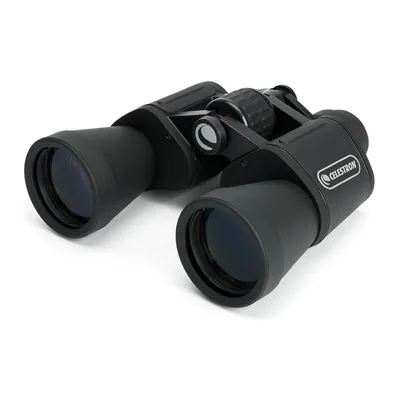
Celestron UpClose G2 10x50
10x50 Porro prism binoculars: 50 mm objectives, 5 mm exit pupil, 6.8° field of view, 765 g, and tripod-adaptable (adapter sold separately).
View on Amazon (opens in a new tab)
Worth watching
Exmoor National Park walks the Dark Sky Discovery Trail in the International Dark Sky Reserve, the first designated in Europe, and shows what a reserve sky looks like on the ground, Milky Way included.
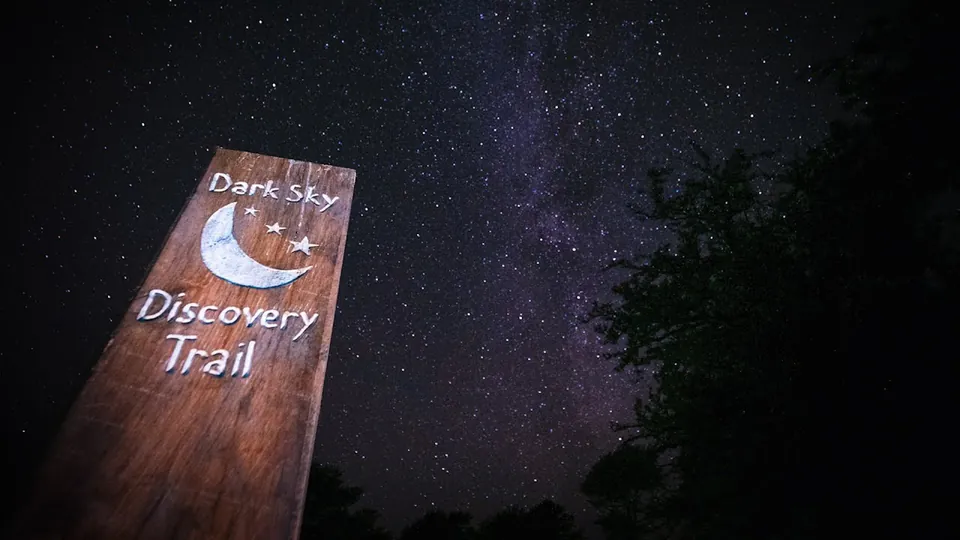
The video is hosted by YouTube (Google): nothing loads until you play it, and Google may then set cookies.
FAQs
What is the difference between a dark sky park, reserve and sanctuary?
A Park protects a place with an exceptional night sky, for its heritage or for public enjoyment. A Reserve adds a peripheral area, at least 700 km² around a core zone or enough land to mitigate 80% of the expected light pollution. A Sanctuary is a very remote site with few nearby threats. Parks and Reserves need about 21.2 magnitudes per square arcsecond overhead; a Sanctuary has to do better still.
How many dark sky places are there in the UK?
No single count is reliable. The British Astronomical Association says the UK has more certified places than any country outside the USA, but its page is undated and its list differs from National Parks UK’s. Between them they name at least six Reserves in national parks, plus Cranborne Chase, and Parks such as Northumberland, Galloway and Elan Valley. DarkSky’s own counts could not be checked, as its site blocks our tools.
Does a label guarantee I will see the Milky Way?
No. It describes a territory, not a night. Cloud, high haze and a full Moon can wash out the sky even in a park: the Westhavelland park notes that at full Moon its sky resembles a big city’s, and Galloway’s managers recommend a night around the new Moon. Choose a moonless night and a clear forecast.
Can I camp or sleep in a dark sky reserve?
It depends on the site, and the label says nothing about it. In Scotland, access rights include lightweight camping in small numbers for two or three nights; on open access land in England, camping is usually not allowed; in the Eifel, tents and overnight stays, even in motorhomes, are forbidden; at the Headlands in Michigan, camping is not permitted. Check the site’s own rules.
How do I find a dark sky near me?
Open a light pollution map such as Light Pollution Map, whose experimental tool finds the closest dark site and its straight-line distance, or CPRE’s map of Britain. Compare the result with labelled sites and Dark Sky Discovery Sites near you, then check the sky, the rules and the access. Remember that these maps come from satellite images, not measurements on the ground.
Sources
- Fabio Falchi et al., ‘The new world atlas of artificial night sky brightness’, Science Advances, vol. 2, no. 6, 10 June 2016, table 2 (United Kingdom), accessed 15 November 2026. pmc.ncbi.nlm.nih.gov https://pmc.ncbi.nlm.nih.gov/articles/PMC4928945/ ↩
- National Park Service, ‘Badlands National Park achieves Dark Sky Park certification’, 17 July 2026, accessed 15 November 2026. home.nps.gov https://home.nps.gov/badl/learn/news/badlands-national-park-achieves-dark-sky-park-certification.htm ↩
- International Dark-Sky Association, ‘International Dark Sky Park Program Guidelines’, June 2018, accessed 15 November 2026. darksky.org https://darksky.org/app/uploads/2018/12/IDSP-Guidelines-2018.pdf ↩
- International Dark-Sky Association, ‘International Dark Sky Reserve Program Guidelines’, June 2018, accessed 15 November 2026. darksky.org https://darksky.org/app/uploads/2018/12/IDSR-Guidelines-2018.pdf ↩
- International Dark-Sky Association, ‘International Dark Sky Sanctuary Program Guidelines’, June 2018, accessed 15 November 2026. darksky.org https://darksky.org/app/uploads/2018/12/IDSS-Guidelines-2018.pdf ↩
- International Dark-Sky Association, ‘International Dark Sky Community Program Guidelines’, June 2018, accessed 15 November 2026. darksky.org https://darksky.org/app/uploads/2018/12/IDSC-Guidelines-2018.pdf ↩
- International Dark-Sky Association, ‘Urban Night Sky Place Guidelines’, June 2018, accessed 15 November 2026. darksky.org https://darksky.org/app/uploads/bsk-pdf-manager/UNSP-Guidelines-Jun2018_63.pdf ↩
- John Barentine, ‘Going for the Gold: Sky quality tiers for International Dark Sky Places’, poster, ALAN 2016, accessed 15 November 2026. darksky.org https://darksky.org/app/uploads/2016/09/Barentine_ALAN2016.pdf ↩
- South Downs National Park Authority, ‘South Downs National Park wins International Dark Sky Reserve status’, 10 May 2016, accessed 15 November 2026. southdowns.gov.uk https://www.southdowns.gov.uk/south-downs-national-park-wins-international-dark-sky-reserve-status/ ↩
- Naturpark Gantrisch, ‘Naturpark Gantrisch ist erster “Dark Sky Park” der Schweiz’, press release of 5 March 2024 (in German), accessed 15 November 2026. gantrisch.ch https://www.gantrisch.ch/wp-content/uploads/2024/03/20240305_Medienmitteilung_Naturpark-Gantrisch_Darky-Sky-Park.pdf ↩
- Kielder Observatory, ‘FAQs’, accessed 15 November 2026. kielderobservatory.org https://kielderobservatory.org/events/faqs ↩
- Sternenpark Westhavelland, ‘FAQ’ (in German), accessed 15 November 2026. sternenpark-westhavelland.de https://www.sternenpark-westhavelland.de/faq/ ↩
- Nationalpark Eifel, ‘Sternenpark’ (in German), accessed 15 November 2026. nationalpark-eifel.de https://www.nationalpark-eifel.de/de/nationalpark-erleben/sternenpark/ ↩
- British Astronomical Association, ‘Protected dark-sky areas within the UK’, undated page, accessed 15 November 2026. britastro.org https://britastro.org/section_information_/dark-skies-overview/advice/protected-dark-sky-areas-within-the-uk ↩
- National Parks UK, ‘Dark skies’, accessed 15 November 2026. nationalparks.uk https://nationalparks.uk/dark-skies/ ↩
- Forestry and Land Scotland, ‘Galloway International Dark Sky Park’, accessed 15 November 2026. forestryandland.gov.scot https://forestryandland.gov.scot/visit/forest-parks/galloway-forest-park/galloway-international-dark-sky-park ↩
- Kielder Observatory, event calendar and ticket prices for 15 to 21 November 2026, accessed 15 November 2026. kielderobservatory.org https://kielderobservatory.org/our-events ↩
- Kielder Observatory, ‘Getting Here’, accessed 15 November 2026. kielderobservatory.org https://kielderobservatory.org/events/when-you-arrive ↩
- Dark Sky Discovery, ‘Dark Sky Discovery Sites’, accessed 15 November 2026. darkskydiscovery.org.uk https://www.darkskydiscovery.org.uk/dark-sky-discovery-sites/ ↩
- South Downs National Park Authority, ‘What does International Dark Sky Reserve status mean?’, accessed 15 November 2026. southdowns.gov.uk https://www.southdowns.gov.uk/dark-skies-hub/what-does-international-dark-sky-reserve-status-mean/ ↩
- CPRE, ‘Only one in 20 of us can enjoy a starry sky, Star Count results find’, 27 April 2023, accessed 15 November 2026. cpre.org.uk https://www.cpre.org.uk/news/only-one-in-20-of-us-can-enjoy-a-starry-sky-star-count-results-find/ ↩
- Scottish Outdoor Access Code, ‘Camping’, practical guide for all, accessed 15 November 2026. outdooraccess-scotland.scot https://www.outdooraccess-scotland.scot/practical-guide-all/camping ↩
- GOV.UK, ‘Rights of way and accessing land: Use your right to roam’, accessed 15 November 2026. gov.uk https://www.gov.uk/right-of-way-open-access-land/use-your-right-to-roam ↩
- Parc national des Pyrénées, press pack for the congress of the French reserves (RICE), 2023 (in French), accessed 15 November 2026. pyrenees-parcnational.fr https://pyrenees-parcnational.fr/sites/pyrenees-parcnational.fr/files/2025-01/DP_congres_RICE_2023.pdf ↩
- Parc naturel régional du Morvan, press pack ‘Labellisation de la 7e RICE de France’, May 2025 (in French), accessed 15 November 2026. tourisme.parcdumorvan.org https://tourisme.parcdumorvan.org/uploads/2025/06/dossier-de-presse-rice-morvan_web.pdf ↩
- Parc national des Cévennes, ‘Le ciel étoilé et l’environnement nocturne’ (in French), accessed 15 November 2026. cevennes-parcnational.fr https://www.cevennes-parcnational.fr/nos-actions/gerer-et-preserver-les-patrimoines/le-ciel-etoile-et-lenvironnement-nocturne ↩
- Parc national des Cévennes, press pack on the international dark sky reserve, June 2018 (in French), accessed 15 November 2026. cevennes-parcnational.fr https://www.cevennes-parcnational.fr/sites/cevennes-parcnational.fr/files/dossierpressrice1_bd.pdf ↩
- Parc national du Mercantour, ‘Réserve internationale de ciel étoilé Alpes Azur’ (in French), accessed 15 November 2026. mercantour-parcnational.fr https://mercantour-parcnational.fr/nos-actions/proteger-et-restaurer-les-patrimoines/reserve-internationale-de-ciel-etoile-alpes-azur ↩
- tEDmag, ‘Vercors named fifth International Dark Sky Reserve in France’, 27 September 2023, accessed 15 November 2026. tedmag.com https://tedmag.com/vercors-named-fifth-international-dark-sky-reserve-in-france/ ↩
- The Connexion, ‘Regional park in west of France named dark sky preserve’, 16 February 2025, accessed 15 November 2026. connexionfrance.com https://www.connexionfrance.com/news/regional-park-in-west-of-france-named-dark-sky-preserve/707436 ↩
- Pic du Midi, ‘Nuit au sommet’, page published on 25 September 2026 (in French), accessed 15 November 2026. picdumidi.com https://picdumidi.com/fr/nuit-au-sommet ↩
- ANPCEN, ‘Villes et villages étoilés’ (in French), accessed 15 November 2026. anpcen.fr https://www.anpcen.fr/?id_rub=19 ↩
- ANPCEN, home page, figures at 30 September 2025 (in French), accessed 15 November 2026. anpcen.fr https://www.anpcen.fr/ ↩
- Sternenpark Westhavelland, home page and ‘Anreise’ (in German), accessed 15 November 2026. sternenpark-westhavelland.de https://www.sternenpark-westhavelland.de/ ↩
- Biosphärenreservat Rhön, ‘Rhön ist weltweiter Sternenpark des Jahres’, press release of 14 November 2022 (in German), accessed 15 November 2026. fladungen-rhoen.de https://www.fladungen-rhoen.de/wp-content/uploads/2022/11/PM-Rhoen-ist-Weltweiter-Sternenpark-des-Jahres.pdf ↩
- Land Oberösterreich, ‘Naturpark Attersee-Traunsee ist erste zertifizierte Sternenparkregion Österreichs’, 8 April 2021 (in German), accessed 15 November 2026. land-oberoesterreich.gv.at https://www.land-oberoesterreich.gv.at/252822.htm ↩
- Nationalpark Gesäuse, press release on the Naturnachtgebiet Eisenwurzen, 17 March 2026 (in German), accessed 15 November 2026. nationalpark-gesaeuse.at https://nationalpark-gesaeuse.at/wp-content/uploads/PA-Naturnachtgebiet-Eisenwurzen.docx.pdf ↩
- National Park Service, ‘Stargazing at Natural Bridges National Monument’, accessed 15 November 2026. nps.gov https://www.nps.gov/nabr/planyourvisit/stargazing.htm ↩
- National Park Service, ‘Where to Stargaze’, last updated 24 July 2025, accessed 15 November 2026. nps.gov https://www.nps.gov/subjects/nightskies/stargaze.htm ↩
- Pennsylvania DCNR, ‘Cherry Springs State Park’, accessed 15 November 2026. pa.gov https://www.pa.gov/agencies/dcnr/recreation/where-to-go/state-parks/find-a-park/cherry-springs-state-park ↩
- Pennsylvania DCNR, ‘Cherry Springs State Park: stargazing’, accessed 15 November 2026. pa.gov https://www.pa.gov/agencies/dcnr/recreation/where-to-go/state-parks/find-a-park/cherry-springs-state-park/stargazing ↩
- Emmet County, ‘Headlands International Dark Sky Park’, accessed 15 November 2026. emmetcounty.org https://www.emmetcounty.org/experiences/headlands/index.php ↩
- D. J. Lorenz, ‘Light pollution atlas’, accessed 15 November 2026. djlorenz.github.io https://djlorenz.github.io/astronomy/lp/index.html ↩
- Jurij Stare, ‘Light Pollution Map: help’, accessed 15 November 2026. lightpollutionmap.info https://www.lightpollutionmap.info/help.html ↩
- CPRE, ‘England’s light pollution and dark skies map’, accessed 15 November 2026. cpre.org.uk https://www.cpre.org.uk/what-we-care-about/nature-and-landscapes/dark-skies/englands-light-pollution-dark-skies-map/ ↩

Trail running, snow, water, nature and destinations
Nolwenn covers trail running, snow, water, nature and destinations for Outfarer. Curious about everything, from meteor showers to night-train timetables, she has a knack for unearthing the one detail that changes everything, and putting it in a single sentence.


 Erik Vadas-Gauden
