 Français (France)
 English (UK)
 English (US)
 Deutsch (Deutschland)

Contents
Where to start when almost every bird looks new
At a window, today. Winter is a kind teacher: deciduous trees are bare, and you can learn a few regulars before the migrants pile back in. Audubon reminds beginners that their own yard, the street trees on a morning run, and a noisy hedge by the mailboxes all count [8]. The National Park Service adds a tip: get to know your regulars, the common year-round residents, by sight, sound, and habits, so you’ll notice when something unusual drops in [9].
A good first-month goal is five or six species, the ones that show up day after day. They become your measuring sticks. Once you know them cold, a stranger jumps out. Which ones? That depends on where you live, and backyard counters have done the scouting.
| FeederWatch region | Top five (share of sites) | Sites reporting |
|---|---|---|
| Northeast: eastern Canada, plus the U.S. from Wisconsin and Illinois to New England, south to Kentucky and Virginia | Chickadees 91%, dark-eyed junco 90%, northern cardinal 89%, downy woodpecker 87%, blue jay 86% [10] | 10,268 |
| Southeast (U.S. only): from Texas and Oklahoma to the Carolinas and Florida | Northern cardinal 92%, house finch 79%, Carolina chickadee 79%, Carolina wren 77%, tufted titmouse 73% [10] | 2,579 |
| Central: the Dakotas to Kansas, Minnesota to Missouri, plus Saskatchewan and Manitoba | Dark-eyed junco 87%, chickadees 87%, downy woodpecker 87%, blue jay 82%, house finch 76% [10] | 1,273 |
| Northwest: Washington to Wyoming, plus British Columbia and Alberta | Dark-eyed junco 87%, black-capped chickadee 80%, northern flicker 75%, house finch 73%, red-breasted nuthatch 62% [10] | 1,653 |
| Southwest (U.S. only): California to Colorado and New Mexico | House finch 87%, dark-eyed junco 71%, lesser goldfinch 56%, white-crowned sparrow 56%, mourning dove 55% [10] | 1,625 |
Read the map before the numbers. Three of these regions reach into Canada, and in the Northeast and Central tables, “chickadees” lumps black-capped and Carolina chickadees together [10]. Alaska, northern Canada, and Hawaii fall outside these five rows.
A feeder can bring your first teachers right up to the glass, as long as you keep it clean. The CDC advises cleaning feeders and birdbaths regularly, wearing disposable gloves, then washing your hands with soap and water [11]. Our guide to feeding backyard birds in winter covers what to put out. No feeder, no problem: a balcony or a neighborhood park works too.
How to identify a bird: what to look at first
Color grabs your eye, yet experienced birders use it as one of their last clues [8]. Plumage can be hard to judge: distance, tricky light, individual variation, stains, and worn feathers can all hide field marks, the clues birders use to tell species apart. That’s why Audubon suggests noting size and structure before you study the plumage [2]. Yosemite’s birding advice adds a shortcut: first pin down the general group (warblers, flycatchers, hawks, owls, wrens), then move on to the marks [12].
- Size, compared with another bird nearby. On its own, size is hard to judge, even at close range [2].
- Shape and bill. Is the body slender or stocky, are the neck and legs long or short, is the bill thin or heavy [2]?
- Behavior. Phoebes, for instance, dip or flare their tails more noticeably than smaller flycatchers do [2].
- Habitat, date, time of day, and weather, which all shape what you’re likely to see [9].
- Field marks on the head, body, and wings [12].
Plumage also shifts as a young bird molts into adult feathers, or an adult into its breeding dress [12]. So flip through every picture your guide offers. Flight adds clues. Audubon’s example: a large, dark, crow-like bird that somersaults in midair is often a raven rather than a crow [2].
Here’s the detail that changes everything: a notebook. Jot down the species, date, place, who was there, the weather, and what the bird did [12]. Add a sketch, even a clumsy one. Audubon notes that good note-takers recall details more easily, because writing, photographing, and sketching help fix them in memory [2]. “Small brown bird, on the ground, tail often cocked” beats a name picked at random.
Learning bird songs and calls without drowning
Many birds reach your ears before your eyes. Males use songs to attract mates and claim territory, and in some species females sing too. Calls are shorter sounds, given by birds of all ages and sexes to keep in touch or warn of predators. Most birds sing only during the breeding season, most intensely early in the morning [2].
Good news: a quieter season makes a gentle classroom. Your first step is simply to notice calls and songs when you step outside. Even before you can name them, you’ll grow familiar with the voices of your neighborhood [13]. How many different voices can you pick out on one walk around the block?
When spring brings the singers back, start small. One new voice a week is a pace you can actually keep, and it adds up to a dozen species in about three months. Begin with the birds you already know by sight. Dawn and dusk are lively because cooler air and lighter wind help songs carry farther [9], but a full dawn chorus can be a lot to untangle. A single singer at a calmer hour is an easier lesson. Between outings, the Park Service’s sound galleries include a dawn chorus recorded near Mammoth Hot Springs in Yellowstone [13].
Bird identification apps: how far to trust them
Apps make eager study partners whose answers need checking. The details below are what their publishers said on November 26, 2026.
| App | What it does | Terms and offline use |
|---|---|---|
| Merlin Bird ID (Cornell Lab) | Identifies 2,000+ species by sound, including most birds of the U.S., Canada, and Europe [14]; also works from a photo or a description [15] | Free, with no credit card number asked [16]; works offline [14] |
| BirdNET (Cornell Lab, Chemnitz University of Technology) | Sound suggestions with confidence scores; more than 11,000 species claimed [17] | Free; a separate app, BirdNET Live, runs without internet [17] |
| Audubon Bird Guide | Field guide to more than 800 North American species; its Bird ID tool narrows the list from what you saw, where, and when [18] | Free [18] |
Merlin’s team says it plainly: the app isn’t always right. It suggests likely species and relies on you to confirm what you’re hearing [14]. In 2023, Audubon magazine reported that its errors often came from short audio, since Sound ID analyzed three-second slices, and that mimics such as the northern mockingbird could fool it [19].
A study published in 2025 put numbers on it. Researchers ran 144 paired point counts (timed counts from fixed spots), repeated at 10 locations in a coastal spruce-fir forest in Maine, from July to October 2023. Precision, meaning the share of detections that named the right species, was 92% for intermediate-level human observers and 86% for Merlin. People logged 382 detections against Merlin’s 222. The app caught 4 species the humans missed but also reported 12 false ones. And when two devices ran Merlin at the same time, it disagreed with itself on 57% of those counts [3].
For BirdNET, an evaluation using a single recorder on a rooftop in Munich shows how much the settings matter. Its F1 score, which blends correct hits and misses on a scale from 0 to 1, ranged from 0.46 to 0.84. The best result, close to expert identification, took tuned settings and data pooled over longer periods [20], a far cry from a phone in your backyard. Two studies in two places can’t tell you how an app will do where you live. The Cornell Lab’s advice travels well: treat each suggestion as a starting point, check it yourself, and try to see the singer before you report it [21].
Binoculars, field guide, notebook: your starter gear
The list is short: a field guide, a weatherproof notebook, and an easy birding app will get you going, and binoculars are a very useful next step [8]. Wear inconspicuous colors and keep quiet, so you don’t scare birds off [9].
In a binocular label like 8x42, the first number is the magnification, the second the width of each front lens in millimeters. Audubon says most birders prefer 7x or 8x, which are bright and offer a wide view, so it’s easier to find a bird and follow it in flight. Lenses larger than 42 mm weigh more, while those under 30 mm are light but not bright enough to show detail in poor light [4]. On price, Audubon’s beginner primer suggests saving for a pair in the $120 to $180 range, where optics help rather than hinder (read November 26, 2026) [8]. Our explainer on 8x42 vs. 10x42 binoculars decodes the rest of the spec sheet.
Which book? According to the Park Service, guides arranged by color are light and less overwhelming for beginners, but cover only some species. Those arranged by shape are typically complete; taxonomic ones, ordered by scientific classification, suit experienced users and are heavier [9]. Drawings or photos? The old debate runs like this: an artist can pose a bird to show the plumage you need, while a photo shows more accurately how it looks in the wild. Audubon magazine’s rundown, first published in 2015, ranked The Sibley Guide to Birds, illustrated by drawings, best overall for its thoroughness and clean design. Whatever you choose, check the area covered, since some guides handle only part of the country [22].
First outings: where to go and when
When the window stops surprising you, head somewhere new. Look for a spot where two habitats meet, such as a forest edge along a meadow or a muddy shoreline by the water, and sit still: you’ll likely see more birds than by walking [9]. Water is a generous first bet in winter. A blind, meaning a screen or shelter that hides watchers, lets you look without disturbing [5].
National wildlife refuges, run by the U.S. Fish and Wildlife Service, make a big first day out. Here are three with a strong winter season, from West to East. Hours, fees, and closures change, so check each refuge’s page before you drive.
| Refuge | What you may find | Good to know |
|---|---|---|
| Sacramento (California) | Waterfowl numbers peak from late November to early December [23] | Auto tour and trails open from 1 hour before sunrise to 1 hour after sunset; the auto tour needs an entrance pass [23] |
| Bosque del Apache (New Mexico) | Mid-November through late January: thousands of snow geese, Ross’s geese, and sandhill cranes; the geese take off together near dawn [24] | $5 a day per private vehicle; refuge lands open from 1 hour before sunrise to 1 hour after sunset [25] |
| Merritt Island (Florida) | Winter waterfowl can peak in the tens of thousands, with a wide variety of shorebirds; November to April is generally the best birding [26] | Open sunrise to sunset; a pass is needed for Black Point Wildlife Drive. On November 26, 2026, the refuge reported flood-related closures [27] |
At Bosque del Apache, check the sunrise time, then ask at the visitor center where the birds have been roosting and feeding, because those spots move during the winter [24]. When a whole flock starts calling in the cold, the urge to creep closer is real. Resist it. Audubon’s photo guide asks people never to advance on birds to make them fly, since that disrupts feeding and rest and costs energy [5]. Winter can also be hunting season: Sacramento, for one, has a hunt area that requires passes and permits [23].
On the coast, the tide matters as much as the clock. At Grays Harbor National Wildlife Refuge in Washington, high tide pushes shorebirds closer to the boardwalk of the Sandpiper Trail, and the best viewing runs from three hours before high tide to three hours after. The big draw there is spring migration, a good date to pencil in [28]. Before any coastal outing, look up the hours, the weather, and NOAA’s tide predictions [29].
Birding without disturbing: the ground rules
The American Birding Association’s code asks birders to avoid stressing birds or exposing them to danger, and to be particularly cautious around active nests, nesting colonies, roosts, display sites, and feeding sites. It also asks you to stay out of private property without the owner’s permission and to follow the rules of the place you’re visiting [30]. For a signal you can read on the spot, borrow Audubon’s photography rule: if your approach makes a bird fly or run off, or change its behavior, you’re too close. Some freeze or hunch instead, so watch for a change in posture and back away [5].
- Go easy on recordings. The ABA asks you to limit playback and other audio lures, particularly in heavily birded areas and for species that are rare locally, threatened, or endangered [30]. Audubon’s photo guide goes further: don’t use playback at all [5].
- Give beach-nesting birds at least 25 yards (about 23 m), the minimum in Audubon’s photo guide [5].
- Skip direct flash, which may temporarily blind owls, and never lure birds with bait for a picture [5].
- Leave young birds found out of the nest where they are; their parents are nearby, the Park Service says [9].
Then there’s the law. Under the Migratory Bird Treaty Act, it’s unlawful, except as regulations permit, to take, kill, or possess a covered migratory bird, or any part, nest, or egg of one [31]. The Fish and Wildlife Service spells out what that means for nests: destroying one that holds eggs, chicks, or still-dependent young is illegal, and so is keeping a nest taken from a tree or found on the ground without a federal permit [32]. Feathers count too. The agency’s forensics lab says possessing feathers or other parts of native North American birds without a permit is prohibited, even molted feathers or ones from a road or window kill. Exceptions include feathers from legally hunted migratory game birds, and use by Native Americans [6]. That pretty feather on the trail? Photograph it and leave it.
Counting for science and finding your flock
Your sightings become useful as soon as you can name a few species with confidence. eBird, from the Cornell Lab, is free with a Cornell Lab account. Mark a checklist “complete” when it reports all the birds you could detect and identify by sight or sound [15]. If Merlin gave you a name you haven’t checked yourself, leave it off [21].
| Count | When | How it works |
|---|---|---|
| Project FeederWatch (U.S. and Canada) | November 1 through April 30 [1] | Two consecutive days, as often as once a week; record the most of each species visible at once [1]. $18 a year for U.S. residents, and no feeder required [36] |
| Christmas Bird Count (Audubon) | December 14 to January 5 [37] | Free; register with a local count circle for a feeder count or a field count [37] |
| Great Backyard Bird Count | February 12 to 15, 2027 [38] | Free; count for at least 15 minutes on one or more days, then report online [38] |
Our guide to winter bird counts walks through the methods. For company, look for an Audubon chapter near you: chapters offer birding field trips and identification classes to members and the public [39]. People who know the local birds can put names to the sounds you’ve been puzzling over. And when warm weather returns, butterflies and dragonflies will be waiting.
Your first-outing checklist
- Five common species you already recognize from your window.
- Hours, fees, closures, and rules checked the same day, plus tide predictions on the coast.
- Binoculars adjusted, a strap, and a field guide for your region.
- A weatherproof notebook and a pencil.
- Warm layers in quiet colors, and footwear that can handle mud.
- Your dog leashed where dogs are allowed, and left at home where they aren’t.
- The contact for your state wildlife agency, in case you find a sick or dead bird.
A gray morning, a quiet shoreline, twenty minutes without moving: the first duck you name without opening the book is a small, bright thrill. The second one won’t be far behind.
Gear related to this article
No affiliation: no commission, no sponsored products.
 Knopf (Penguin Random House)
The Sibley Guide to Birds (second edition)
David Allen Sibley’s guide to North American birds, second edition: nearly 7,000 paintings, updated range maps, and habitat and voice notes for every species. 624 pages.
View on Amazon (opens in a new tab)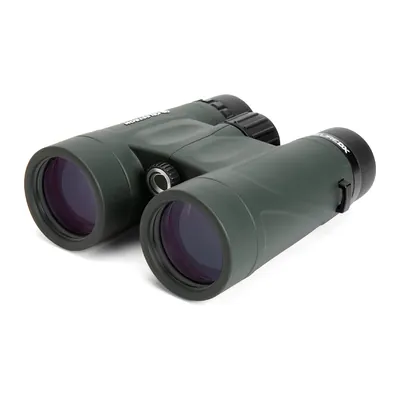
Celestron Nature DX 8x42
Waterproof 8x42 binoculars: 388 ft field of view at 1,000 yd, 17.5 mm eye relief for eyeglass wearers, 6.5 ft close focus, 22.2 oz.
View on Amazon (opens in a new tab)
Worth watching
Chris Wood and Jessie Barry of the Cornell Lab show how to use size and shape to compare birds, including look-alikes such as Hairy and Downy Woodpeckers.
The video is hosted by YouTube (Google): nothing loads until you play it, and Google may then set cookies.
FAQ
Can I start bird watching without binoculars?
Yes. From a window, near a clean feeder, or by a pond, you can start learning common birds by eye and ear. Audubon’s primer lists a field guide, a weatherproof notebook, and an app to begin, with binoculars as a very useful next step [8]. They earn their keep once birds sit far out on the water.
Is winter a good time to start birding?
It’s a friendly one. Leaves are down on deciduous trees, feeder counts are underway, and a handful of regulars gives you a base to build on. Project FeederWatch runs November 1 through April 30 [1], and the Christmas Bird Count runs December 14 to January 5 [37]. Spring brings more song, and more voices to untangle.
Is an app enough to identify birds?
What should I do if I find a dead bird?
Don’t touch it. Contact your state wildlife agency or health department, and follow local rules [7]. On a national wildlife refuge, tell the staff [34]. The CDC also tells bird watchers to report sick birds or unusual deaths through a state veterinarian or USDA at 1-866-536-7593 (page dated March 7, 2025) [11]. Keep pets away [34].
Sources
- Project FeederWatch, How to Participate feederwatch.org https://feederwatch.org/about/how-to-participate/ ↩
- National Audubon Society, How to Identify Birds audubon.org https://www.audubon.org/content/how-identify-birds ↩
- Goodman et al., “Humans outperform Merlin Sound ID in field-based point-count surveys,” Ornithological Applications, 2025 (PDF) gonm.org https://www.gonm.org/public/ACTUALITES/2026/duaf049.pdf ↩
- National Audubon Society, The Audubon Guide to Binoculars audubon.org https://www.audubon.org/gear/binocular-guide ↩
- National Audubon Society, Audubon’s Guide to Ethical Bird Photography and Videography audubon.org https://www.audubon.org/get-outside/audubons-guide-ethical-bird-photography ↩
- U.S. Fish & Wildlife Service Forensics Laboratory, Feathers and the Law fws.gov https://www.fws.gov/lab/featheratlas/feathers-law.html ↩
- CDC, Preventing Bird Flu Infections (April 23, 2025) cdc.gov https://www.cdc.gov/bird-flu/prevention/index.html ↩
- National Audubon Society, How to Start Birding audubon.org https://www.audubon.org/birding/how-to-start-birding ↩
- National Park Service, Birding for Beginners nps.gov https://www.nps.gov/articles/birding-for-beginners.htm ↩
- Project FeederWatch, Winter Bird Highlights, 2024-25 season (Cornell Lab of Ornithology and Birds Canada, December 2025, PDF) cdn.feederwatch.org https://cdn.feederwatch.org/wp-content/uploads/2025/12/Winter-Bird-Highlights-2025_12.22.2025.pdf ↩
- CDC, Bird Hobbyists and Bird Flu (March 7, 2025) cdc.gov https://www.cdc.gov/bird-flu/risk-factors/bird-hobbyists.html ↩
- Yosemite National Park (NPS), Birding Tips and Ethics nps.gov https://www.nps.gov/yose/learn/nature/birding-tips.htm ↩
- National Park Service, Heeding the Call: Birding by Sound nps.gov https://www.nps.gov/articles/heedingthecall.htm ↩
- Cornell Lab of Ornithology (eBird Help Center), Sound ID in Merlin support.ebird.org https://support.ebird.org/en/support/solutions/articles/48001185783 ↩
- Cornell Lab of Ornithology (eBird Help Center), Get started with eBird support.ebird.org https://support.ebird.org/en/support/solutions/articles/48001158707-get-started-with-ebird ↩
- Cornell Lab of Ornithology (eBird Help Center), Merlin Bird ID FAQs support.ebird.org https://support.ebird.org/en/support/solutions/articles/48000961587 ↩
- BirdNET app (Cornell Lab of Ornithology and Chemnitz University of Technology) birdnet.cornell.edu https://birdnet.cornell.edu/app/ ↩
- National Audubon Society, Your Guide to the Audubon Bird Guide App audubon.org https://www.audubon.org/app ↩
- Audubon magazine, “Merlin Is Magical, but It Still Makes Mistakes” (August 23, 2023) audubon.org https://www.audubon.org/magazine/merlin-magical-it-still-makes-mistakes ↩
- Fairbairn et al., evaluation of BirdNET on a recorder in Munich, PLOS One, 2025 pmc.ncbi.nlm.nih.gov https://pmc.ncbi.nlm.nih.gov/articles/PMC12425287/ ↩
- Cornell Lab of Ornithology (eBird Help Center), Merlin Sound ID Best Practices support.ebird.org https://support.ebird.org/en/support/solutions/articles/48001214056-merlin-sound-id-best-practices ↩
- Audubon magazine, What Bird Guide Is Best for You? (May 2015, since updated) audubon.org https://www.audubon.org/magazine/what-bird-guide-best-you ↩
- U.S. Fish & Wildlife Service, Sacramento National Wildlife Refuge fws.gov https://www.fws.gov/refuge/sacramento ↩
- U.S. Fish & Wildlife Service, Bosque del Apache National Wildlife Refuge, Wildlife watching fws.gov https://www.fws.gov/refuge/bosque-del-apache/visit-us/activities/wildlife-watching ↩
- U.S. Fish & Wildlife Service, Bosque del Apache National Wildlife Refuge, hours and passes fws.gov https://www.fws.gov/refuge/bosque-del-apache ↩
- U.S. Fish & Wildlife Service, Merritt Island National Wildlife Refuge, Birding fws.gov https://www.fws.gov/refuge/merritt-island/visit-us/activities/birding ↩
- U.S. Fish & Wildlife Service, Merritt Island National Wildlife Refuge, alerts, hours and passes (page read November 26, 2026) fws.gov https://www.fws.gov/refuge/merritt-island ↩
- U.S. Fish & Wildlife Service, Grays Harbor National Wildlife Refuge, Visit Us fws.gov https://www.fws.gov/refuge/grays-harbor/visit-us ↩
- NOAA, Tide Predictions tidesandcurrents.noaa.gov https://tidesandcurrents.noaa.gov/tide_predictions.html ↩
- American Birding Association, ABA Code of Birding Ethics aba.org https://www.aba.org/aba-code-of-birding-ethics/ ↩
- 16 U.S. Code § 703, Migratory Bird Treaty Act (Cornell Legal Information Institute) law.cornell.edu https://www.law.cornell.edu/uscode/text/16/703 ↩
- U.S. Fish & Wildlife Service, Bird nests fws.gov https://www.fws.gov/story/bird-nests ↩
- CDC, A(H5) Bird Flu: Current Situation (November 20, 2026) cdc.gov https://www.cdc.gov/bird-flu/situation-summary/index.html ↩
- U.S. Fish & Wildlife Service, Avian Influenza fws.gov https://www.fws.gov/avian-influenza ↩
- USDA APHIS, Found a Dead Wild Bird? Here’s What To Do Next (June 2022, PDF) aphis.usda.gov https://www.aphis.usda.gov/sites/default/files/fs-hpai-dead-wild-bird.508.pdf ↩
- Project FeederWatch, Project Overview feederwatch.org https://feederwatch.org/about/project-overview/ ↩
- National Audubon Society, Join a Christmas Bird Count audubon.org https://www.audubon.org/community-science/christmas-bird-count/join-christmas-bird-count ↩
- National Audubon Society, About the Great Backyard Bird Count audubon.org https://www.audubon.org/great-backyard-bird-count ↩
- National Audubon Society, Audubon Chapters audubon.org https://www.audubon.org/chapters ↩

Trail running, snow, water, nature and destinations
Nolwenn covers trail running, snow, water, nature and destinations for Outfarer. Curious about everything, from meteor showers to night-train schedules, she has a knack for digging up the one detail that changes everything, and nailing it in a single sentence.


