 Français (France)
 English (UK)
 English (US)
 Deutsch (Deutschland)

Contents
Where to start when you can barely name a thing
At a window, and now. All you need to begin is an outdoor space, some patience and a keen pair of eyes, the RSPB says: a garden, a local park or the view from your balcony [1]. Waiting for spring is optional. Autumn and winter bring the UK an influx of birds from colder places, including geese, redwings and fieldfares [2], and in November 2025 BirdWatch Ireland said it expected birds to return to Irish gardens and feeders as natural food ran short [3].
A good target for the first month is five or six species, the ones that turn up daily. They become your yardsticks: learn the features of the common birds first, the WWT advises, and you have something to measure a stranger against [4]. The winter counts tell you which ones you’re likely to meet.
| Count | Leading birds | What the figure measures |
|---|---|---|
| United Kingdom, Big Garden Birdwatch 2026 | House sparrow (3.57; 57.1%), blue tit (3.12; 78.5%), starling (2.23; 31.4%), woodpigeon (2.21; 75.2%), blackbird (1.68; 71.7%). The robin, seventh, reached 83.1% of gardens [5] | Average number per garden, which sets the order; then share of gardens |
| Northern Ireland, Big Garden Birdwatch 2026, 12,734 participants | House sparrow, starling, blue tit, chaffinch, goldfinch [6] | Ranking in the RSPB’s top 10 |
| Island of Ireland, Irish Garden Bird Survey, winter 2024/25, 1,638 gardens | Robin (95%), blackbird (94%), blue tit (89%) [3] | Share of gardens where the bird was recorded |
A feeder can bring your first pupils to the window, provided you keep it clean: the rules are in our guide to feeding garden birds in winter. No garden? The park pond will do nicely.
How to identify a bird: what to look at first
Colour grabs the eye, but it can mislead: it looks quite different in bright and dull light [2]. Start with size, which is surprisingly hard to judge on a lone bird. Compare it with a neighbour you know, or ask whether it’s bigger or smaller than a robin or a woodpigeon [2]. Then work down the list.
- Size, set against a familiar bird nearby [2].
- Silhouette and bill: short and chunky suggests a seed-eater, hooked probably means a bird of prey [2].
- Behaviour: a dunnock tends to skulk on the ground under bushes, while the similar-looking house sparrow happily clings to hanging feeders [2].
- Habitat and time of year, which rule some species in and others out [2].
- Colour and markings: eyebrow stripes, wing bars, bright patches [2].
Plumage changes with age and season too. Young birds can differ in colour from adults, and in summer drake mallards moult into a drab ‘eclipse’ plumage that makes them look a bit like females [2]. Close relatives call for one precise detail. A carrion crow is big and glossy black with a large, blunt black bill; a jackdaw is smaller, with a stubby bill, a grey hood and pale blue-grey eyes in adults [7]. In Ireland and in northern and western Scotland, the grey-and-black hooded crow largely takes the carrion crow’s place [7].
The detail that changes everything is the notebook. Write down what you saw and when [8], how the bird looked and what it was doing [1]. Read up while the memory is fresh [8]. ‘Small brown bird, on the ground, tail often cocked’ beats a name picked at random, and wobbly sketches count.
Learning birdsong without drowning in it
Plenty of birds are heard before they’re seen. The UK’s dawn chorus runs from mid-March to mid-June and peaks in early May; on the day, it’s at its height just before and just after sunrise [9]. That’s a lot of voices at once, so the quieter months make a gentler classroom. Robins sing through winter when other species fall silent, the Natural History Museum notes, though they stop while moulting [10]. On a bright late January morning you may also hear a song thrush or a great tit warming up [9].
A manageable pace is one song a week: the RSPB reckons that gets you well on the way with the garden regulars on its page in a little over three months [11]. The museum suggests focusing on one or two birds a day, listening to a recording, then going back out to hear the real thing [10]. Xeno-canto, a free library of bird recordings, is a handy place to look them up [4].
Bird identification apps: how good are they?
They suggest a name from a recording or a photo. Think of them as eager prompters whose answers need checking. The details below are those their publishers showed on 26 November 2026.
| App | What it identifies | Stated conditions |
|---|---|---|
| Merlin Bird ID (Cornell Lab) | Over 2,000 species by sound, including most birds of Europe [12] | Free, no credit card, email address requested [13]; Sound ID works offline [12] |
| BirdNET (Cornell Lab, Chemnitz University of Technology) | Sounds, with confidence scores; over 11,000 species claimed [14] | Free; a separate app, BirdNET Live, works without internet [14] |
| ObsIdentify (Observation International) | Wild animals, plants and mushrooms from photos, only in Europe and the Dutch Caribbean [15] | See the app’s store listing [15] |
Merlin’s makers are frank about it: the app suggests which species are more likely, and relies on you to confirm what you’re hearing or seeing [12]. A study published in 2025 set it against intermediate-level human observers in 144 paired counts, repeated at 10 points in a coastal forest in Maine, in the United States. Precision, the share of detections judged correct, was 92% for the humans and 86% for Merlin. The humans reported 382 detections against 222; the app found 4 species they had missed but also reported 12 false positive species, and in the 70 counts run on two devices at once, their lists differed 57% of the time [16].
For BirdNET, an assessment using a single recorder in Munich shows how much the settings matter. Its F1 score, which weighs correct identifications against misses on a scale of 0 to 1, ranged from 0.46 to 0.84. The best result, close to an expert’s, needed tuned settings and data pooled over longer periods [17], a far cry from waving a phone about the garden for ten seconds.
Two studies in two places can’t tell you how well an app will do on your patch. The museum warns that background noise and several singers at once can confuse these tools [10], and the BTO currently asks its volunteers not to rely solely on automatic identification when submitting data [18]. Hear the suggestion, then go looking for the bird.
Binoculars, guide and notebook: the starter kit
The list is short, and you don’t have to spend a fortune [1]. A simple illustrated guide makes an ideal companion [1]. Binoculars come in handy once you’ve caught the bug [1]; the WWT suggests something light and portable, and practising your focusing from a window [4]. The RSPB’s shop, which sells them, calls 8x or 10x magnification the best compromise: 10x for open country and large stretches of water, 8x for woodland, close quarters and poor light [19]. Try both before choosing [19]. Our guide to 8x42 or 10x42 binoculars decodes the figures.
With books, check that yours covers your part of the world. Britain’s Birds takes in 631 species recorded in Britain and Ireland, with photographs of plumages; a reader reviewing the 2020 second edition for the BTO called it a must for beginners and experts alike [20]. Whichever you pick, leaf through it at home, so you can find the right page quickly outdoors [4].
First outings: where and when to go
Once the window stops surprising you, head for water. Native wetland birds are an ideal place for beginners to start, whether on a park pond, a canal or an estuary [8]. At a wetland, a viewing platform, bench or hide lets you keep still while the birds come into view [4].
| Site | What you’ll find | Good to know |
|---|---|---|
| RSPB Titchwell Marsh (Norfolk, England) | Freshwater and saltwater lagoons, reedbeds, hides and a wide beach [21] | Reserve and car park listed as open 24 hours in late November, visitor centre 9.30am to 4.30pm [22]; apart from assistance dogs, dogs only on the West Bank Path, and always on a lead [21] |
| WWT Caerlaverock (Dumfriesshire, Scotland) | In winter, thousands of birds on the Solway, including barnacle geese and whooper swans [23] | Tuesday to Saturday, 10am to 4.30pm, last entry 3.30pm; admission charge; no dogs except assistance dogs [24] |
| Wexford Wildfowl Reserve (Ireland) | Greenland white-fronted geese, which winter from October to March; an observation tower and hides [25] | 9am to 5pm, free entry; car park and gates locked at 5pm [26] |
If cranes are what you dream of, our guide to common cranes covers where to see them in the UK and on migration in France.
On the coast, the tide matters as much as the clock. At RSPB Snettisham in Norfolk, from late summer to early winter, rising tides push waders shorewards, and the biggest spring tides can lift vast flocks [27]. The reserve says to expect its spectacles only on its selected dates and times [27], and its listed 2026 wader months (March, August, September and October) have passed [28]. Winter has another draw, up to 30,000 pink-footed geese on the Wash, taking flight at first light [27]. Before any trip, check the site’s rules, the weather and, by the sea, the tides [1].
Watching without disturbing: the code and the law
The Birders’ Code, which the BTO adapted from The Birdwatchers’ Code of the RSPB and partners, puts the birds’ interests first. In cold weather, repeated disturbance can burn energy they need for feeding and recovering. If a bird flies off or keeps giving alarm calls, you’re too close; a flock of waders on the foreshore can be disturbed by someone on the sea wall hundreds of metres away [18].
- Never play recorded songs or calls to attract a species in its breeding season; for some species it can be a criminal offence [18].
- Stay on roads and paths where they exist [18], and follow signs: some birds, such as little terns and nightjars, nest on the ground [1].
- Stay off private land without permission, unless it is open to the public on foot; access rules differ between the nations [18].
- Photographers are bound by the same priority: the birds come first [18].
- In hides, keep your voice down [1].
The law has a say too. In England and Wales, under the Wildlife and Countryside Act 1981 and subject to its exceptions, it is an offence intentionally to kill, injure or take any wild bird, to damage or destroy a nest while it is in use or being built, or to take or destroy an egg. Possessing a wild bird, alive or dead, or an egg is also an offence, with defences. Disturbing a species listed in Schedule 1 at its nest, or its dependent young, intentionally or recklessly, is an offence as well [29].
Counting for science and meeting other birdwatchers
Your sightings are useful as soon as you can name a few species with confidence. The next RSPB Big Garden Birdwatch runs from 29 to 31 January 2027: count for one hour in your garden, from your balcony or in a local park, only birds that land, and note the highest number of each species seen at once. Send in your result even if you saw nothing [37]. Our guide to winter bird counts covers more of them.
For a year-round habit, BTO Garden BirdWatch collects weekly lists, running Sunday to Saturday, of birds you’re sure about [38]; taking part is free, with an optional £17 annual subscription [39]. Away from home, BirdTrack takes sightings from across Britain and Ireland: tick ‘complete list’ only if you recorded every species you saw and heard [40]. It’s free [18].
Keen on water birds? The Wetland Bird Survey asks UK volunteers to count an adopted site once a month, with September to March as the core season [42]. In the Republic, I-WeBS counters commit to a monthly visit to an allocated site over the same months [43]. For company, the RSPB has more than 130 volunteer-led local groups, from Guernsey to Inverness and Essex to Fermanagh [44]. When the warm days return, butterflies and dragonflies can take over.
Your first outing checklist
- Five common species you already know from the window.
- The site’s opening hours and rules, checked that day, plus the tide times on the coast.
- Binoculars adjusted to your eyes, on a strap, and a guide covering Britain and Ireland.
- A notebook and a pencil, which will still write when it’s freezing.
- Warm clothes in quiet colours and footwear that can cope with mud.
- The dog rules: on a lead where it’s welcome, at home where it isn’t.
- The right reporting route for a dead bird in the nation you’re visiting.
A grey morning, a stretch of water, twenty minutes without fidgeting: naming your first duck without opening the book is not a bad result. There may even be a second.
Kit related to this article
No affiliation: no commission, no sponsored products.
 William Collins (HarperCollins)
Collins Bird Guide (third edition)
The third edition (2023) of the guide by Lars Svensson, Killian Mullarney and Dan Zetterström: the birds of Britain and Europe, with a distribution map and plumage plates for each species.
View on Amazon (opens in a new tab)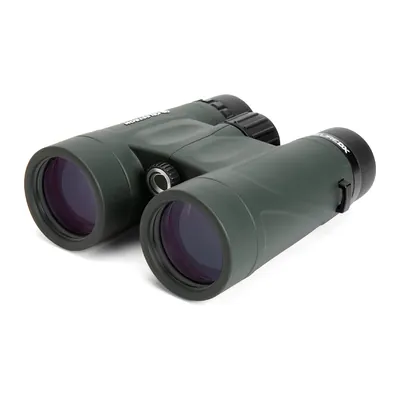
Celestron Nature DX 8x42
Waterproof 8x42 binoculars: 129 m field of view at 1,000 m, 17.5 mm eye relief for glasses wearers, close focus from 2 m, 629 g.
View on Amazon (opens in a new tab)
Worth watching
The BTO’s Paul Stancliffe explains how to tell apart two yellowish garden finches, the goldfinch and the greenfinch: a short lesson in looking for the detail.
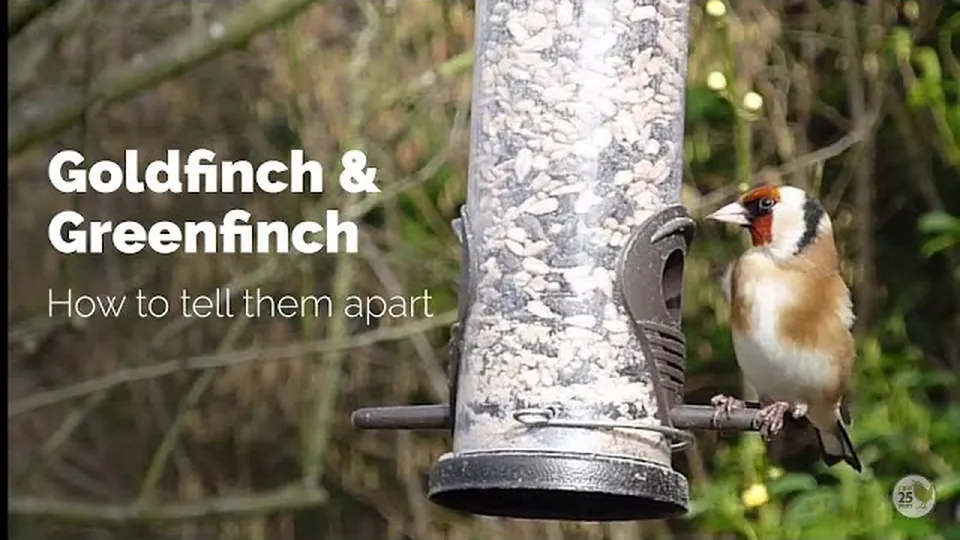
The video is hosted by YouTube (Google): nothing loads until you play it, and Google may then set cookies.
FAQs
Can I start birdwatching without binoculars?
Yes. To begin with, the RSPB says, all you need is an outdoor space, some patience and a keen pair of eyes [1]. Start with the birds near your window. Binoculars become much more useful by open water, where you’ll want to watch from a distance without sending everything into the air.
When is the best time of year to start?
Is an app enough to identify birds?
What should I do if I find a dead bird?
Sources
- RSPB, A beginner’s guide to birdwatching, article of 2 April 2026, accessed 26 November 2026. rspb.org.uk https://www.rspb.org.uk/birds-and-wildlife/identifying-birds/a-beginners-guide-to-birdwatching ↩
- RSPB, Top tips on how to identify birds, advice page, accessed 26 November 2026. rspb.org.uk https://www.rspb.org.uk/birds-and-wildlife/identifying-birds/top-tips-on-how-to-identify-birds ↩
- RTÉ and BirdWatch Ireland, Irish Garden Bird Survey, article of 27 November 2025 with the winter 2024/25 results, accessed 26 November 2026. rte.ie https://www.rte.ie/radio/radio1/mooney/2025/1127/1546226-irish-garden-bird-survey ↩
- WWT (Wildfowl & Wetlands Trust), 11 easy things you can do to improve your bird ID, article of 1 September 2024, accessed 26 November 2026. wwt.org.uk https://www.wwt.org.uk/news-and-stories/blog/11-easy-things-you-can-do-to-improve-your-bird-id ↩
- RSPB, Big Garden Birdwatch: 2026 full results, United Kingdom, PDF, accessed 26 November 2026. base-prod.rspb-prod.magnolia-platform.com https://base-prod.rspb-prod.magnolia-platform.com/dam/jcr:f3dd8d79-17db-49f9-8956-4586b1f4237e/Full%20UK%20Results.pdf ↩
- RSPB, Big Garden Birdwatch: 2026 top 10, Northern Ireland, PDF, accessed 26 November 2026. base-prod.rspb-prod.magnolia-platform.com https://base-prod.rspb-prod.magnolia-platform.com/dam/jcr:2867fdc6-ce0e-4f8b-a247-41d7b4f47f9d/Northern%20Ireland%20Top%2010.pdf ↩
- RSPB, Corvids: how to identify the crow family, identification guide, accessed 26 November 2026. rspb.org.uk https://www.rspb.org.uk/birds-and-wildlife/identifying-birds/corvids-how-to-identify-the-crow-family ↩
- WWT, Bird watching for beginners: advice for a first-time birder, article of 20 December 2019, accessed 26 November 2026. wwt.org.uk https://www.wwt.org.uk/discover-wetlands/blog/birdwatching-for-beginners-advice-for-a-first-time-birder ↩
- RSPB, The Dawn Chorus 2026, article, accessed 26 November 2026. rspb.org.uk https://www.rspb.org.uk/whats-happening/news/the-dawn-chorus-all-you-need-to-know-about-natures-big-show ↩
- Natural History Museum, Birdsong identification for beginners, article of 2021, accessed 26 November 2026. nhm.ac.uk https://www.nhm.ac.uk/discover/bird-song-identification-common-garden-birds.html ↩
- RSPB, Bird song identifier, web page, accessed 26 November 2026. rspb.org.uk https://rspb.org.uk/birds-and-wildlife/identifying-birds/bird-song-identifier ↩
- Cornell Lab of Ornithology, Sound ID, Merlin help centre, accessed 26 November 2026. support.ebird.org https://support.ebird.org/en/support/solutions/articles/48001185783 ↩
- Cornell Lab of Ornithology, Merlin Bird ID FAQs, help centre, accessed 26 November 2026. support.ebird.org https://support.ebird.org/en/support/solutions/articles/48000961587 ↩
- BirdNET (Cornell Lab and Chemnitz University of Technology), BirdNET App, web page, accessed 26 November 2026. birdnet.cornell.edu https://birdnet.cornell.edu/app/ ↩
- Observation International, ObsIdentify, Google Play listing, accessed 26 November 2026. play.google.com https://play.google.com/store/apps/details?id=org.observation.obsidentify ↩
- Goodman et al., Ornithological Applications, 2025, Humans outperform Merlin Sound ID in field-based point-count surveys, open-access article (PDF copy hosted by the GONm, a French bird group), accessed 26 November 2026. gonm.org https://www.gonm.org/public/ACTUALITES/2026/duaf049.pdf ↩
- Fairbairn et al., PLOS ONE, 11 September 2025, BirdNET can be as good as experts for acoustic bird monitoring in a European city, study, accessed 26 November 2026. pmc.ncbi.nlm.nih.gov https://pmc.ncbi.nlm.nih.gov/articles/PMC12425287/ ↩
- BTO (British Trust for Ornithology), The Birders’ Code, adapted from The Birdwatchers’ Code of the RSPB and partners, accessed 26 November 2026. bto.org https://www.bto.org/node/86019 ↩
- RSPB Shop, Choosing the Best Binoculars for Birdwatching, retailer’s buying guide, accessed 26 November 2026. shopping.rspb.org.uk https://shopping.rspb.org.uk/page/how-to-choose-binoculars-for-bird-watching ↩
- BTO (reader review by Gillian Birtles), Britain’s Birds: an Identification Guide to the Birds of Great Britain and Ireland, book review of 30 June 2020, accessed 26 November 2026. bto.org https://www.bto.org/learn/about-birds/book-reviews/fieldguide-birds-britain-ireland ↩
- RSPB, Titchwell Marsh, reserve page, accessed 26 November 2026. rspb.org.uk https://www.rspb.org.uk/days-out/reserves/titchwell-marsh ↩
- RSPB, Opening Times at Titchwell Marsh, web page, accessed 26 November 2026. rspb.org.uk https://www.rspb.org.uk/days-out/reserves/titchwell-marsh/opening-times ↩
- WWT, WWT Caerlaverock: wildlife, web page, accessed 26 November 2026. wwt.org.uk https://www.wwt.org.uk/wetland-centres/caerlaverock/wildlife ↩
- WWT, WWT Caerlaverock: plan your visit, web page, accessed 26 November 2026. wwt.org.uk https://www.wwt.org.uk/wetland-centres/caerlaverock/plan-your-visit ↩
- Wexford Wildfowl Reserve, Welcome to Wexford Wildfowl Nature Reserve, official site, accessed 26 November 2026. wexfordwildfowlreserve.ie https://www.wexfordwildfowlreserve.ie/ ↩
- Wexford Wildfowl Reserve, Visit Us, official site, accessed 26 November 2026. wexfordwildfowlreserve.ie https://www.wexfordwildfowlreserve.ie/visit-us/ ↩
- RSPB, Snettisham, reserve page, accessed 26 November 2026. rspb.org.uk https://www.rspb.org.uk/days-out/reserves/snettisham ↩
- RSPB, Snettisham Spectacular: your guide to an unmissable wader wonder, web page, accessed 26 November 2026. rspb.org.uk https://www.rspb.org.uk/days-out/reserves/snettisham/wader-dates ↩
- legislation.gov.uk, Wildlife and Countryside Act 1981, section 1 (England and Wales), revised text, up to date to 24 November 2026, accessed 26 November 2026. legislation.gov.uk https://www.legislation.gov.uk/ukpga/1981/69/section/1 ↩
- legislation.gov.uk, Wildlife and Countryside Act 1981, section 1 (Scotland), revised text, accessed 26 November 2026. legislation.gov.uk https://www.legislation.gov.uk/ukpga/1981/69/section/1/scotland ↩
- legislation.gov.uk, The Wildlife (Northern Ireland) Order 1985, article 4, revised text, accessed 26 November 2026. legislation.gov.uk https://www.legislation.gov.uk/nisi/1985/171/article/4 ↩
- Law Reform Commission (Ireland), Wildlife Act 1976, section 22, revised text, accessed 26 November 2026. revisedacts.lawreform.ie https://revisedacts.lawreform.ie/eli/1976/act/39/section/22/revised/en/html ↩
- Defra and APHA, Bird flu (avian influenza): latest situation in England, GOV.UK page updated 25 November 2026, accessed 26 November 2026. gov.uk https://www.gov.uk/government/news/bird-flu-avian-influenza-latest-situation-in-england ↩
- Defra and APHA, Report dead wild birds, GOV.UK guidance updated 25 November 2026, accessed 26 November 2026. gov.uk https://www.gov.uk/guidance/report-dead-wild-birds ↩
- DAERA (Northern Ireland), Wild Birds and Advice for the Public, web page, accessed 26 November 2026. daera-ni.gov.uk https://www.daera-ni.gov.uk/articles/wild-birds-and-advice-public ↩
- Department of Agriculture, Food and the Marine (Ireland), NDCC Disease Update 5 of 2026: Avian Influenza, PDF of 17 November 2026, accessed 26 November 2026. animalhealthsurveillance.agriculture.gov.ie https://www.animalhealthsurveillance.agriculture.gov.ie/media/animalhealthsurveillance/NDCC%20Avian%20Influenza%20Update%20No%205%20of%202026%2017.11.2026.pdf ↩
- RSPB, Big Garden Birdwatch 2027: your how-to guide, PDF, accessed 26 November 2026. base-prod.rspb-prod.magnolia-platform.com https://base-prod.rspb-prod.magnolia-platform.com/dam/jcr:705d419d-92a2-4675-8237-6aae0ff23259/BigGardenBirdwatch2027-HowToGuide-English.pdf ↩
- BTO, BTO Garden BirdWatch: how to take part, PDF, accessed 26 November 2026. weblive.bto.org https://weblive.bto.org/sites/default/files/gbw_how_to_take_part.pdf ↩
- BTO, About Garden BirdWatch, web page, accessed 26 November 2026. bto.org https://www.bto.org/node/55469 ↩
- BTO, What to record, BirdTrack guidance, accessed 26 November 2026. bto.org https://www.bto.org/get-involved/volunteer/projects/birdtrack/bird-recording/what-record ↩
- BirdWatch Ireland, Irish Garden Bird Survey 2026/27, online survey form, accessed 26 November 2026. form.jotform.com https://form.jotform.com/262813831078359 ↩
- BTO, Wetland Bird Survey, web page, accessed 26 November 2026. bto.org https://www.bto.org/get-involved/volunteer/projects/wetland-bird-survey ↩
- BirdWatch Ireland, I-WeBS Counter Manual, PDF, accessed 26 November 2026. birdwatchireland.ie https://birdwatchireland.ie/app/uploads/2019/03/IWeBS-Counter-Manual.pdf ↩
- RSPB, Discover more nature where you are with an RSPB local group, article, accessed 26 November 2026. rspb.org.uk https://www.rspb.org.uk/whats-happening/news/discover-more-nature-where-you-are-with-an-rspb-local-group ↩

Trail running, snow, water, nature and destinations
Nolwenn covers trail running, snow, water, nature and destinations for Outfarer. Curious about everything, from meteor showers to night-train timetables, she has a knack for unearthing the one detail that changes everything, and putting it in a single sentence.


