 Français (France)
 English (UK)
 English (US)
 Deutsch (Deutschland)

Contents
Can you wild camp in Austria? It depends on where you pitch your tent. In the woods, a federal law sets the rule for the whole country [1]. Outside the woods, there’s no single rule: the provisions sit in the laws of Austria’s nine states (Bundesländer), some of which let municipalities pass their own ordinances [2]. Unlike Scandinavia, Austria has no legal basis that allows camping in the wild, the Austrian Alpine Club (Österreichischer Alpenverein, ÖAV) points out [3]. We read the forest law and the nine state laws in the Austria’s federal legal information system: the official database with the current versions of federal and state laws., as they stood on October 29, 2026. Here’s what they ban, what they allow under conditions and what is merely tolerated.
In the woods: only with consent, everywhere in Austria
What the law says, first. Austria’s Forest Act of 1975 lets everyone enter the woods for recreation and stay there. Any use beyond that, “such as resting in one spot after dark, tent camping, driving or riding,” requires the forest owner’s consent, or on forest roads the consent of whoever maintains them [1]. The law also applies in the forest’s “combat zone” at treeline, the Under the forest law, the zone between the natural limit of tree growth and the actual edge of closed forest. [1]. What that means for you: without the owner’s permission, a night in the woods is illegal in all nine states; with it, it’s allowed, as long as no state law or protected area says otherwise.
Austria’s federal government portal, oesterreich.gv.at, also counts sleeping in a vehicle as such a use [4]. Closed-off forest areas are completely off-limits: the owner may, for example, temporarily close logging sites or storm-damaged areas, and marks them with signs [1]. The penalty is modest: using the woods without the necessary consent, or entering a closed area, risks a fine of up to €150 [1].
Nine states, three situations: an overview
Outside the woods, the laws talk about “Zelten” (tent camping), “Campieren” or, in Tyrol and Vienna, “Kampieren,” and each draws the line differently. Three situations stand out. Banned: the law prohibits spending the night outside campgrounds, and a violation is an In Austria, a violation of an administrative rule, which an authority punishes with a fine. (Verwaltungsübertretung). Allowed with conditions: there’s no statewide ban, but municipalities, landowners or protected areas can prohibit a night out. Tolerated: something isn’t actually allowed, but an authority says in writing that it accepts it; we only mention such tolerance along with its source.
| State | Law | What applies | For mountaineers | Maximum fine in the law |
|---|---|---|---|---|
| Burgenland | NG 1990, sections 12 and 78 [5] | Banned in open countryside (freie Landschaft), outside authorized campgrounds or mobile home parks | No exception | €3,600, €7,300 for repeated and serious offenses |
| Carinthia | K-NSG 2002, sections 15 and 67 [6] | Tents banned in open countryside, outside authorized campgrounds | “Alpine bivouacking” exempt | €3,630, €7,260 with aggravating circumstances or for a repeat offense |
| Lower Austria | NÖ NSchG 2000, sections 6 and 36 [7] | Travel trailers, RVs and “mobile dwellings” banned on undeveloped land (Grünland) outside built-up areas; tents count as such, according to the federal portal [8] | No exception in the law | €14,500 |
| Salzburg | S.CampG, sections 1, 13 and 15 [9] | No general ban; the mayor and the municipality can prohibit it | Bivouacking in high alpine terrain outside the law’s scope | €10,000, where a ban applies |
| Styria | Mountain access law, section 3 [10] | No express rule on camping outside campgrounds [11] | Uncultivated land (Ödland) above treeline open to everyone | No specific offense |
| Tyrol | Camping Act 2001, sections 1, 3 and 16 [12] | Camping (Kampieren) outside campgrounds banned | Bivouacking in high alpine terrain outside the law’s scope | €600 |
| Upper Austria | Oö. TG 2018, sections 70, 76 and 83 [13] | No general ban; the municipality can restrict or ban it by ordinance | No specific rule | €3,000, where an ordinance applies |
| Vienna | Kampierverordnung 1985 [14], WStV section 108 [15] | Sleeping bags, tents and living in a vehicle banned in outdoor public places | None | €700 |
| Vorarlberg | Campground Act, sections 14 and 19 [16] | No general ban; the mayor and the municipality can prohibit it | No specific rule | €700, where a ban applies |
Maximum amounts set by law, read in the RIS as they stood on October 29, 2026; the authority sets the actual fine case by case. In the woods, the forest law also applies in every state, and municipalities or protected areas can be stricter.
Where tents are banned: five states
Tyrol has the clearest rule. The Tyrolean Camping Act of 2001 bans camping (Kampieren) outside campgrounds, except on land where a municipality has made a temporary exception by ordinance [12]. Camping means spending the night in mobile accommodations such as tents, travel trailers, cars or RVs “as part of tourism” [12]. In mountaineering, spending the night in a makeshift shelter or under the open sky, in a bivy sack, for example. (Biwakieren) in high alpine terrain isn’t covered, “for a short period required by the occasion” [12]. A violation costs up to €600, even an attempt is punishable, and the authority must order you to remove your shelter within a set deadline [12].
Carinthia bans pitching a tent or parking a travel trailer, RVs included, in open countryside outside officially authorized campgrounds; “alpine bivouacking,” among other things, is exempt [6]. The fine can reach €3,630, or €7,260 with aggravating circumstances or for a repeat offense [6]. Lower Austria bans setting up or parking travel trailers, RVs or “mobile dwellings” on undeveloped land outside built-up areas and outside approved campgrounds [7]. The law doesn’t mention tents; the federal portal and the ÖAV count them as mobile dwellings [8, 17]. The text makes no exception for mountaineers, and its maximum fine is the highest of the nine states: up to €14,500, and an attempt is punishable [7].
In Burgenland, camping in open countryside outside officially authorized campgrounds or mobile home parks is banned, with fines of up to €3,600, or up to €7,300 for repeated and serious offenses [5]. Finally, Vienna’s 1985 camping ordinance (Kampierverordnung) bans, in outdoor public places outside campgrounds, even laying out and using a sleeping bag, putting up a tent, and parking a car, RV or travel trailer to live or sleep in [14]. The fine is up to €700 [15].
Where the municipality decides: Upper Austria, Salzburg, Vorarlberg
Upper Austria’s Tourism Act of 2018 contains no general ban. It does, however, let a municipality decide by ordinance that camping outside campgrounds is only allowed in certain places or on certain occasions, is banned in certain places, or even across the entire municipality [13]. Even where an ordinance applies, camping is still allowed if the person who controls the land tolerates it without seeking financial gain. Violating an ordinance risks a fine of up to €3,000 [13].
In Salzburg, the mayor can ban camping outside campgrounds if it significantly harms, among other things, safety, farming or the natural balance, and the town council can decide by ordinance where it’s allowed and where it isn’t [9]. Some municipalities use this to ban, for example within town limits, setting up tents, travel trailers or RVs to sleep in at night, the federal portal says [20]. A violation can cost up to €10,000; bivouacking in high alpine terrain is outside the law’s scope [9]. Salzburg’s Nature Conservation Act, however, protects Under Salzburg’s Nature Conservation Act, land above the zone of closed forest that is cultivated neither for farming nor for forestry., the uncultivated land above the forest: any measure that could harm it needs a permit from the nature conservation authority [19]. Whether a single night in a tent counts, the act doesn’t say.
Vorarlberg follows the same pattern: the mayor must ban the setting up of tents, travel trailers and similar mobile shelters outside campgrounds by formal decision if certain interests are “grossly harmed,” and the town council can restrict them to certain places by ordinance [16]. Pitching anyway risks up to €700 [16]. Finally, Styria has no provision expressly dealing with camping outside campgrounds, according to the federal portal [11]. Its 1921 law on free access in the mountains opens the uncultivated land above treeline to visitors, except alpine pastures used for something other than grazing: anyone may go there [10]. The ÖAV concludes that camping on this land should be possible too [17]. That’s the club’s reading, not the text of the law.
Above treeline: bivouacs, emergency bivouacs, shelters
The exceptions for mountaineers are tersely worded and defined nowhere. Tyrol and Salzburg exclude bivouacking in high alpine terrain from their camping laws, and Carinthia exempts “alpine bivouacking” from its tent ban [12, 9, 6]. How far that goes is read in different ways. For Tyrol, the federal portal takes it to mean a single makeshift night on a mountain tour above treeline, planned or forced by a sudden change in the weather, an injury or darkness [21]; for Carinthia, by contrast, it says a planned bivouac that doesn’t arise from an emergency is banned [18]. In its overview, the ÖAV warns in general that a deliberate bivouac is treated like a night in a tent, but for Tyrol it gives the same reading as the federal portal [17]. So anyone planning a bivouac is relying on an interpretation, not a clear text; if in doubt, ask the district authority.
The alpine clubs’ Small, unstaffed emergency huts made of wood or metal in the high mountains. (Biwakschachteln) are mostly meant for emergencies, too. According to the alpine club, the Fleischer-Biwak on the Hochschwab is an unlocked emergency room with no beds and no water, where a planned overnight stay isn’t possible [23]. For the Konrad Schuster Biwak below the Lalidererspitze in the Karwendel range, the Alpine Gesellschaft Gipfelstürmer, the Alpenverein Innsbruck and the Karwendel Nature Park urge visitors to use it only as intended: emergency bivouac shelters aren’t freely accessible self-service huts, and a planned stay doesn’t match their intended use [24].
National parks and protected areas: mostly off-limits
In protected areas, the rules get stricter, even in states with no general ban. In the Salzburg part of Hohe Tauern National Park, camping is banned in the outer zones, except tents at authorized sites, alpine bivouacking and youth camps; in the core zones, anything banned in the outer zones counts as a prohibited intervention [25]. In Kalkalpen National Park in Upper Austria, a regulation from January 2026 bans spending the night and camping anywhere other than the sites provided and marked for that purpose [26].
Gesäuse National Park in Styria bans camping and planned bivouacking throughout the park, parking lots included. The only exception, in the park’s own English: “Bivouacs for alpinists in case of (mountain) distress are tolerated” [27]. That’s one of the few written tolerances we found. More generally, the ÖAV names national parks, nature reserves and special protection areas (Sonderschutzgebiete) as the protected areas with the strictest rules, and advises checking before a trip with the area’s management or with the state and district nature conservation departments [17].
Sleeping in a car, camper van or RV
An RV isn’t a free pass, and neither is the station wagon. Most of the state laws mention vehicles expressly, each in its own way.
| Where | What applies to vehicles |
|---|---|
| In the woods, throughout Austria | Sleeping in a vehicle only with the owner’s consent [4] |
| Tyrol | Spending the night in cars and RVs as part of tourism is banned; a stay only to recover fitness to drive doesn’t count as camping [12] |
| Upper Austria | A stay of more than 90 minutes within three hours in or next to a parked vehicle already counts as camping; banned where a municipal ordinance says so [13]. On undeveloped land outside built-up areas, setting up or parking travel trailers and the like must generally be reported to the nature conservation authority, according to the federal portal [28] |
| Salzburg | Setting up an RV or travel trailer to stay and sleep in also counts as camping; banned where the mayor or municipality prohibits it [9] |
| Carinthia | Travel trailers and RVs banned in open countryside, except briefly in parking areas [6] |
| Burgenland | Travel trailers and RVs banned in open countryside, except briefly in parking areas [5] |
| Lower Austria | Travel trailers and RVs banned on undeveloped land outside approved campgrounds [7] |
| Vorarlberg | Travel trailers, which under the law include motor vehicles fitted out for living in, banned where the mayor or municipality prohibits them [16] |
| Vienna | Parking cars, station wagons, RVs or travel trailers in public places to live in, and sleeping in them, banned [14] |
| Styria | No express rule on camping outside campgrounds [11] |
The laws don’t say how long brief parking may last; only Upper Austria gives a time.
Carinthia also bans driving motor vehicles in open countryside off the areas meant for moving or parked traffic, or parking them there; parking on the roadside is allowed [6]. And in Gesäuse National Park, sleeping in the parking lots is banned too [27].
What a violation costs
The amounts in the table are ceilings, not set rates. Under Austria’s Administrative Penal Act (Verwaltungsstrafgesetz), a fine depends on how important the protected interest is and how seriously the offense harms it; in ordinary proceedings, how far the offender is at fault and their income and assets also count [29]. For certain offenses, an authorized officer may collect an A fine an authorized enforcement officer collects on the spot, at an amount set in advance. (Organstrafverfügung) of up to €90, if a regulation sets the amount [29]. Carinthia has done so for pitching a tent in open countryside: €50 [30]. The highest ceilings apply to serious cases and repeat offenses, for which Carinthia and Burgenland set their own maximums [6, 5].
Sleeping out legally: huts, winter rooms, permission
The ÖAV itself points to the alternative: Austria’s dense network of mountain huts, affordable and “quite definitely legal” [3]. At the alpine clubs’ category I huts, a bunk in a shared dorm (Matratzenlager) or in the A simple room in a mountain hut that serves as shelter when the hut isn’t staffed. (Winterraum) costs adult members at most €15 under the clubs’ rate rules, and at most €18 starting in 2027; nonmembers pay at least €12 more [31, 32]. Our comparison of alpine club memberships explains what joining costs.
And a tent next to the hut? The alpine clubs’ hut and rate rules cover overnight stays, meals and self-catering, but say nothing about pitching a tent nearby [31]. We found no general tolerance in the ÖAV’s rules: the state law and the landowner’s word are what count. The owner’s consent helps, but not everywhere. Under the forest law, it makes camping in the woods legal, and in Upper Austria it even applies despite a municipal ordinance, as long as the owner seeks no financial gain [1, 13]; Tyrol’s Camping Act, on the other hand, makes no exception for it [12].
Before you go: the checklist
- The state: in Tyrol, Carinthia, Lower Austria and Burgenland, tents outside campgrounds are banned in principle, in Vienna in public places; in Upper Austria, Salzburg and Vorarlberg, municipalities have a say, as the table above shows.
- The municipality: is there an ordinance or a ban by the mayor? The municipality, the district authority or the state’s nature conservation department can tell you [3, 20].
- The place: woods, open countryside or uncultivated alpine land, national park or nature reserve?
- The owner: in the woods you need the owner’s consent, on forest roads that of whoever maintains them [1].
- Emergencies: bivy sack, emergency blanket, headlamp, and the numbers 140 and 112 memorized [33, 34].
Austria has no right to camp wherever you like; instead it has nine state laws and many municipal ordinances, and every rule has a date: we read these on October 29, 2026. So check before you go: the current version of the state law in the RIS, and the ordinance of the municipality where you plan to sleep; a rule from last summer won’t cover you this summer. For Austria’s neighbors, see our articles on wild camping in Germany, Switzerland and France; to plan your first night out, read our guide to your first backcountry camp.
Gear related to this article
No affiliation: no commission, no sponsored products.
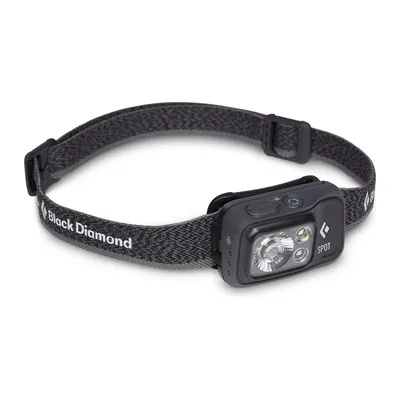
Black Diamond Spot 400
A headlamp that runs on three AAA batteries, waterproof to IPX8 (30 min at 3.6 ft underwater). Under FL1: 400 lumens and a 328 ft beam for 2.5 hours, or 6 lumens for 200 hours.
View on Amazon (opens in a new tab)
FAQ
Is wild camping legal in Austria?
There’s no general right to it. In the woods, camping anywhere in Austria requires the owner’s consent. Outside the woods, Tyrol, Carinthia, Lower Austria and Burgenland ban tents outside campgrounds in principle, and Vienna does so in outdoor public places; in Upper Austria, Salzburg and Vorarlberg, municipalities can restrict it, and Styria has no express rule. In national parks, it’s mostly banned.
Is bivouacking allowed in Austria?
According to the Austrian Alpine Club, an unplanned emergency bivouac after an injury or a sudden change in the weather is allowed nationwide. A planned bivouac is a matter of interpretation: Tyrol and Salzburg exclude bivouacking in high alpine terrain from their camping laws, and Carinthia exempts alpine bivouacking. But for Carinthia the federal portal only accepts emergencies, and the club warns in general that a deliberate bivouac counts as a night in a tent.
What’s the fine for wild camping in Austria?
The laws set maximums, and the authority sets the fine case by case. In the woods it’s up to €150, in Tyrol up to €600, in Vorarlberg and Vienna up to €700, in Carinthia up to €3,630 and in Lower Austria up to €14,500. An unauthorized fire in the woods can cost up to €7,270. In Carinthia, an officer can also collect €50 on the spot for a tent.
Can you sleep in a car or RV in Austria?
It depends on the state and the place. Tyrol bans a night in a car or RV as part of tourism, unless it only serves to recover fitness to drive. Vienna bans sleeping in a vehicle in public places. Carinthia and Burgenland exempt brief parking of RVs in parking areas, without saying how long. In the woods, a night in a vehicle also needs the owner’s consent.
Can you camp next to an alpine club hut?
The alpine clubs’ hut and rate rules say nothing about it; the state law and the landowner’s consent apply, in Tyrol for example the general camping ban. The legal, affordable option is a bunk in a dorm or winter room: at category I huts it costs adult members at most €15, and at most €18 starting in 2027. Bivouac shelters are mostly meant for emergencies.
Sources
- Forest Act 1975 (Forstgesetz 1975), sections 2, 33, 34, 40 and 174, Federal Legal Information System (RIS), version of October 29, 2026, last amended by BGBl. I No. 144/2023 (in German), accessed October 29, 2026. ris.bka.gv.at https://www.ris.bka.gv.at/GeltendeFassung.wxe?Abfrage=Bundesnormen&Gesetzesnummer=10010371 ↩
- oesterreich.gv.at, Austrian federal portal, Camping, English version, last updated March 16, 2026, accessed October 29, 2026. oesterreich.gv.at https://www.oesterreich.gv.at/en/themen/reisen_und_freizeit/freizeit-in-der-natur/campen ↩
- Austrian Alpine Club (Österreichischer Alpenverein, ÖAV), Wildcampen und Biwakieren am Berg: Was ist legal?, press release of June 27, 2023 (in German), accessed October 29, 2026. alpenverein.at https://www.alpenverein.at/portal/service/presse/2023/2023_06_22-Wildcampen.php ↩
- oesterreich.gv.at, Campen im Wald, last updated March 16, 2026 (in German), accessed October 29, 2026. oesterreich.gv.at https://www.oesterreich.gv.at/de/themen/reisen_und_freizeit/freizeit-in-der-natur/freizeit_im_wald/Seite.3750020 ↩
- State of Burgenland, Nature Conservation and Landscape Management Act (NG 1990), sections 11, 12 and 78, RIS, version of October 29, 2026, last amended by LGBl. No. 106/2025 (in German), accessed October 29, 2026. ris.bka.gv.at https://www.ris.bka.gv.at/GeltendeFassung.wxe?Abfrage=LrBgld&Gesetzesnummer=10000254 ↩
- State of Carinthia, Nature Conservation Act (K-NSG 2002), sections 14, 15 and 67, RIS, version of October 29, 2026, last amended by LGBl No. 47/2025 (in German), accessed October 29, 2026. ris.bka.gv.at https://www.ris.bka.gv.at/GeltendeFassung.wxe?Abfrage=LrK&Gesetzesnummer=20000118 ↩
- State of Lower Austria, Nature Conservation Act (NÖ Naturschutzgesetz 2000), sections 6 and 36, RIS, version of October 29, 2026, last amended by LGBl. No. 2/2026 (in German), accessed October 29, 2026. ris.bka.gv.at https://www.ris.bka.gv.at/GeltendeFassung.wxe?Abfrage=LrNO&Gesetzesnummer=20000814 ↩
- oesterreich.gv.at, Campen in Niederösterreich, last updated March 16, 2026 (in German), accessed October 29, 2026. oesterreich.gv.at https://www.oesterreich.gv.at/de/themen/reisen_und_freizeit/freizeit-in-der-natur/campen/Seite.3390004 ↩
- State of Salzburg, Campground Act (S.CampG), sections 1, 2, 13 and 15, RIS, version of October 29, 2026, last amended by LGBl No. 64/2026 (in German), accessed October 29, 2026. ris.bka.gv.at https://www.ris.bka.gv.at/GeltendeFassung.wxe?Abfrage=LrSbg&Gesetzesnummer=20000849 ↩
- State of Styria, Act of October 28, 1921 on Freedom of Access in the Mountains (Wegfreiheit im Bergland), section 3, RIS, version of October 29, 2026, last amended by LGBl. No. 68/2025 (in German), accessed October 29, 2026. ris.bka.gv.at https://www.ris.bka.gv.at/GeltendeFassung.wxe?Abfrage=LrStmk&Gesetzesnummer=20000965 ↩
- oesterreich.gv.at, Campen in der Steiermark, last updated March 16, 2026 (in German), accessed October 29, 2026. oesterreich.gv.at https://www.oesterreich.gv.at/de/themen/reisen_und_freizeit/freizeit-in-der-natur/campen/Seite.3390002 ↩
- State of Tyrol, Camping Act 2001 (Tiroler Campinggesetz 2001), sections 1, 2, 3 and 16, RIS, version of October 29, 2026, last amended by LGBl. No. 76/2024 (in German), accessed October 29, 2026. ris.bka.gv.at https://www.ris.bka.gv.at/GeltendeFassung.wxe?Abfrage=LrT&Gesetzesnummer=20000099 ↩
- State of Upper Austria, Tourism Act (Oö. Tourismusgesetz 2018), sections 70, 76 and 83, RIS, version of October 29, 2026, last amended by LGBl. No. 64/2025 (in German), accessed October 29, 2026. ris.bka.gv.at https://www.ris.bka.gv.at/GeltendeFassung.wxe?Abfrage=LrOO&Gesetzesnummer=20000953 ↩
- City of Vienna, Magistrate’s ordinance banning camping (Kampierverordnung 1985), Amtsblatt 1985/12, amended 1996/40, RIS, municipal law (in German), accessed October 29, 2026. ris.bka.gv.at https://www.ris.bka.gv.at/Dokumente/Gemeinderecht/GEMRE_WI_90101_I455_000/GEMRE_WI_90101_I455_000.html ↩
- Vienna City Constitution (Wiener Stadtverfassung, WStV), section 108, RIS, version of October 29, 2026 (in German), accessed October 29, 2026. ris.bka.gv.at https://www.ris.bka.gv.at/GeltendeFassung.wxe?Abfrage=LrW&Gesetzesnummer=20000308 ↩
- State of Vorarlberg, Campground Act (Campingplatzgesetz), sections 1, 14 and 19, RIS, version of October 29, 2026, last amended by LGBl. No. 34/2026 (in German), accessed October 29, 2026. ris.bka.gv.at https://www.ris.bka.gv.at/GeltendeFassung.wxe?Abfrage=LrVbg&Gesetzesnummer=20000745 ↩
- Austrian Alpine Club, Campen in den Bergen: Was ist erlaubt?, overview of the state laws (in German), accessed October 29, 2026. alpenverein.at https://www.alpenverein.at/portal/natur-umwelt/respektamberg/zelten-biwakieren.php ↩
- oesterreich.gv.at, Campen in Kärnten, last updated March 16, 2026 (in German), accessed October 29, 2026. oesterreich.gv.at https://www.oesterreich.gv.at/de/themen/reisen_und_freizeit/freizeit-in-der-natur/campen/Seite.3390003 ↩
- State of Salzburg, Nature Conservation Act (Salzburger Naturschutzgesetz 1999), sections 5 and 24, RIS, version of October 29, 2026, last amended by LGBl No. 53/2025 (in German), accessed October 29, 2026. ris.bka.gv.at https://www.ris.bka.gv.at/GeltendeFassung.wxe?Abfrage=LrSbg&Gesetzesnummer=20000003 ↩
- oesterreich.gv.at, Campen in Salzburg, last updated March 16, 2026 (in German), accessed October 29, 2026. oesterreich.gv.at https://www.oesterreich.gv.at/de/themen/reisen_und_freizeit/freizeit-in-der-natur/campen/Seite.3390006 ↩
- oesterreich.gv.at, Campen in Tirol, last updated March 16, 2026 (in German), accessed October 29, 2026. oesterreich.gv.at https://www.oesterreich.gv.at/de/themen/reisen_und_freizeit/freizeit-in-der-natur/campen/Seite.3390007 ↩
- Austrian Alpine Club, long-distance hiking section (Sektion Weitwanderer), Fragen & Antworten (in German), accessed October 29, 2026. alpenverein.at https://www.alpenverein.at/weitwanderer/faq/index.php ↩
- Austrian Alpine Club, Fleischer-Biwak, shelter page (in German), accessed October 29, 2026. alpenverein.at https://www.alpenverein.at/fleischerbiwak/ ↩
- Alpine Gesellschaft Gipfelstürmer, Alpenverein Innsbruck and Karwendel Nature Park, Nutzungs- und Benutzungsordnung Konrad Schuster Biwak, shelter page on the Austrian Alpine Club website (in German), accessed October 29, 2026. alpenverein.at https://www.alpenverein.at/lalidererspitzenbiwak/index.php ↩
- State of Salzburg, National Park Act 2014 (Salzburger Nationalparkgesetz 2014, Hohe Tauern National Park), sections 6 and 7, RIS, version of October 29, 2026, last amended by LGBl No. 121/2024 (in German), accessed October 29, 2026. ris.bka.gv.at https://www.ris.bka.gv.at/GeltendeFassung.wxe?Abfrage=LrSbg&Gesetzesnummer=20000928 ↩
- Upper Austrian state government, regulation issuing management plans for Kalkalpen National Park, LGBl. No. 4/2026 of January 15, 2026, section 13, RIS (in German), accessed October 29, 2026. ris.bka.gv.at https://www.ris.bka.gv.at/Dokumente/LgblAuth/LGBLA_OB_20260115_4/LGBLA_OB_20260115_4.html ↩
- Gesäuse National Park, Camping, English version, accessed October 29, 2026. nationalpark-gesaeuse.at https://nationalpark-gesaeuse.at/en/discover-national-park/activities/camping/ ↩
- oesterreich.gv.at, Campen in Oberösterreich, last updated March 16, 2026 (in German), accessed October 29, 2026. oesterreich.gv.at https://www.oesterreich.gv.at/de/themen/reisen_und_freizeit/freizeit-in-der-natur/campen/Seite.3390005 ↩
- Administrative Penal Act 1991 (Verwaltungsstrafgesetz, VStG), sections 19 and 50, RIS, version of October 29, 2026, last amended by BGBl. I No. 86/2026 (in German), accessed October 29, 2026. ris.bka.gv.at https://www.ris.bka.gv.at/GeltendeFassung.wxe?Abfrage=Bundesnormen&Gesetzesnummer=10005770 ↩
- State of Carinthia, nature conservation on-the-spot fines regulation (K-NOV), annex, RIS, version of October 29, 2026, last amended by LGBl No. 8/2026 (in German), accessed October 29, 2026. ris.bka.gv.at https://www.ris.bka.gv.at/GeltendeFassung.wxe?Abfrage=LrK&Gesetzesnummer=20000664 ↩
- German and Austrian Alpine Clubs, Hütten- und Tarifordnung für Alpenvereinshütten (HÜOTO) ab 2024, hut rules and rates (in German), accessed October 29, 2026. alpenverein.at https://www.alpenverein.at/portal_wAssets/docs/huetten-wege/regelungen/huetten_tarif_ordnung/20240101_HueOTO.pdf ↩
- German and Austrian Alpine Clubs, Hütten- und Tarifordnung, valid from 2027 (in German), accessed October 29, 2026. alpenverein.at https://www.alpenverein.at/portal_wAssets/docs/huetten-wege/regelungen/huetten_tarif_ordnung/Huetten-und-Tarifordnung_HueOTO-gueltig-ab-2027.pdf ↩
- Gerhard Mössmer, Plan B wie Biwak, Bergauf, magazine of the Austrian Alpine Club, issue 2/2025 (in German), accessed October 29, 2026. alpenverein.at https://www.alpenverein.at/portal_wAssets/docs/bergsport/sicheramberg/Bergauf/Plan-B-wie-Biwak.pdf ↩
- oesterreich.gv.at, Federal Ministry of the Interior, Verhalten bei Lawinenunfällen und Bergunfällen, last updated February 16, 2026 (in German), accessed October 29, 2026. oesterreich.gv.at https://www.oesterreich.gv.at/de/themen/notfaelle_unfaelle_und_kriminalitaet/katastrophenfaelle/1/Seite.29500327 ↩
Fact-checking, regulations, and safety
Arnaud Couderc reviews our contributors’ articles and writes for Outfarer about regulations, safety, fishing, the ocean, and outdoor activities. He traces every rule back to its official text and every number to its source, so you head out with solid benchmarks.


 Guillaume Hoarau
