 Français (France)
 English (UK)
 English (US)
 Deutsch (Deutschland)

Contents
Can you hike during hunting season? Yes. Seasons vary by state, by game, and by weapon [1]. In Pennsylvania, for example, archery deer season opens on October 3, 2026, in most of the state, and the regular firearms season runs from November 28 to December 13 [2]. During those weeks, hikers and hunters share the same public lands, and a few rules, on both sides, keep that sharing safe.
How big is the risk? Pennsylvania’s Game Commission recorded 13 hunting-related shooting incidents in 2025, one of them fatal, among 831,203 licensed hunters. In three of them, the victim was mistaken for game, and none of those three was wearing any fluorescent orange [3]. Those numbers don’t justify carelessness, but they don’t justify fear either.
Who sets the rules: the state, then the land manager
What the rules say, first. On public land, the state’s hunting laws apply, and the federal agency that manages the land adds its own. Every hunter on public land needs the required state license, and unless specifically prohibited, land managed by the Bureau of Land Management (BLM) is open to hunting: over 99% of it is open to hunting, fishing, and recreational shooting [4]. On national forests, the Forest Service works with state game officials, and hunting follows state law [5]. Federal rules there ban firing a gun within 150 yards (137 m) of a residence, building, campsite, developed recreation site, or occupied area, across or on a Forest Service road, or in any way that exposes people to injury [6].
National parks work the other way around. Hunting is allowed in a park only where federal law specifically mandates it, or authorizes it and the superintendent finds it consistent with public safety and sound resource management [7]. The Park Service counts 76 units where hunting is authorized, out of the more than 400 it manages [8]. National wildlife refuges are opened to hunting area by area, through federal rulemaking, and hunters there need a state license and must follow state law as well as the refuge’s own conditions [9].
What it means for you: on national forest and BLM land, expect to share the woods with hunters in season. Parks that allow hunting draw lines, too. Delaware Water Gap National Recreation Area opens most of its more than 70,000 acres to hunting, but not its safety zones, its public roads and parking areas, or a list of developed areas and trails [10]. At Sleeping Bear Dunes National Lakeshore, in Michigan, most of the park is open to hunting, while most high-use areas and facilities are closed, with a 450-foot (137 m) safety zone around them [11]. Along the Appalachian Trail, hunting is allowed on about 1,250 miles and prohibited on about 900, in national parks such as Shenandoah and the Great Smoky Mountains; but the protected corridor averages only about 1,000 feet wide, and hunters on adjacent land may not know the Trail is near [1].
| Land | Hunting | Whose rules |
|---|---|---|
| National forests (Forest Service) | Allowed under state law, but no shooting within 150 yards of campsites, developed sites, or occupied areas | The state’s, plus federal rules |
| BLM land | Open unless specifically prohibited: over 99% of BLM land | The state’s license and rules |
| National wildlife refuges | Only on refuges opened by federal rulemaking | State law, plus the refuge’s conditions |
| National parks (NPS) | Only where federal law mandates or authorizes it: 76 units | Park rules, which generally adopt the state’s |
After the Code of Federal Regulations (36 CFR 2.2, 241.2 and 261.10; 50 CFR 32.1 and 32.2), the BLM and the National Park Service. [5, 6, 4, 9, 7, 8]
Before you go: find out when and where hunters will be out
Season dates won’t tell you where hunters will be on a given day, but they tell you when to be on your guard. Look up the dates on your state wildlife agency’s website, then check the land manager’s page: the Park Service asks you to check directly with the park for the areas, seasons, and rules that apply [12], and the BLM to ask the local office about closures and restrictions [4]. Sunday rules vary too, from a ban in Maine to nearly every Sunday open in Pennsylvania [13, 14]. Our guide to planning a hike puts this check alongside the weather forecast, the night before and the morning you head out.
On the trail: be seen and be heard
Out on the trail, stick to marked, designated trails: Sleeping Bear Dunes asks non-hunters to do just that, to minimize contact with active hunters [11]. Take extra care at dawn and dusk, when hunting activity may increase and visibility is poor, and within half a mile of road crossings and in valleys, the Appalachian Trail Conservancy advises [1].
- Wear blaze orange, a hat and a vest, plus a pack cover if you’re backpacking [1]. The Park Service asks non-hunters at Sleeping Bear Dunes to wear blaze orange or other bright colors [11], and in some places it’s the law for everyone (see the Pennsylvania box below).
- Know what hunters wear: in Pennsylvania, 250 square inches of fluorescent orange in most seasons [15]; in Wisconsin, during a firearm deer season, at least 50% of their outer clothing above the waist, in blaze orange or fluorescent pink [16].
- Put orange on your dog, visible from all sides, and keep it leashed, as the Appalachian Trail Conservancy recommends [1]; our guide to hiking with your dog covers the rest.
- Make yourself heard: whistle, sing, or talk as you hike, so hunters hear you before they see you [1].
If you walk into a hunt
Hear shots close by, or spot hunters in orange? Make yourself known: call out, keep talking and stay on the trail, where you can be seen. And don’t get in their way: interfering with or harassing hunters in the lawful pursuit of game is against the law in all 14 Appalachian Trail states, the Appalachian Trail Conservancy points out [1].
Driven hunts follow a pattern worth knowing. France’s National Forests Office (ONF), describing the driven hunts in Normandy’s state forests, puts it this way: dogs and drivers move through a block of woods, the drive, to push the game out, while lines of hunters in fluorescent orange wait around its edge. Their safety rule is not to shoot into the drive, and where it borders a road open to traffic, the line sets up on the far side so no one shoots across the road [18]. Deer drives happen in the US too: four of the 13 incidents in Pennsylvania’s 2025 report occurred during one, including the only fatal one [3].
Pennsylvania and Maine: orange for everyone, and Sundays
The check before you go
The check before you go, then: the season dates on your state wildlife agency’s website, the hunting page of the park, forest, refuge, or BLM office you’re heading to, and the Sunday rules where you’ll be. Hiking in Europe this fall? In France, a “Chasse en cours” sign warns of a hunt without closing the trail [19], though a sign asking you not to enter, as hunters post around the hunted sector in some Normandy state forests, is best taken at its word [18]; in Wallonia, in southern Belgium, hunters can ask for the woods to be closed for a drive, which official posters on a red background then signal where public trails enter the area [20]. And in your pack, something blaze orange: at the risk of sounding like the team’s resident killjoy, it’s the first thing I’d add to the day hike packing list from October to January.
Gear related to this article
No affiliation: no commission, no sponsored products.
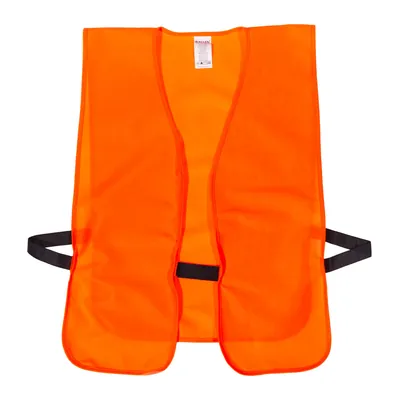
Allen Company Blaze Orange Hunting Safety Vest
A blaze orange vest in quiet polyester with a hook-and-loop closure and elastic side straps, cut to fit over a jacket: an easy way to be seen on the trail in hunting season.
View on Amazon (opens in a new tab)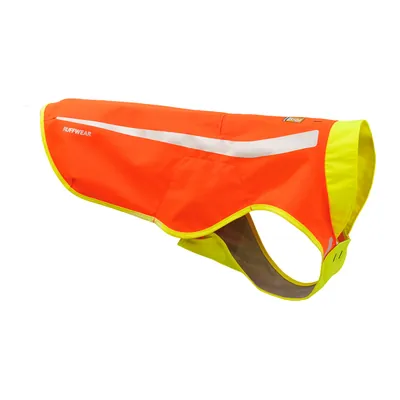
Ruffwear Lumenglow High-Vis Dog Vest, Blaze Orange
A blaze orange dog vest with reflective accents, a weather- and abrasion-resistant shell, side-release buckles and a leash portal that works over most harnesses: orange for your dog, too.
View on Amazon (opens in a new tab)
Worth watching
On Pennsylvania’s State Game Lands, a Pennsylvania Game Commission state game warden explains when hikers must wear fluorescent orange and what Sunday hunting changes for everyone sharing the land.
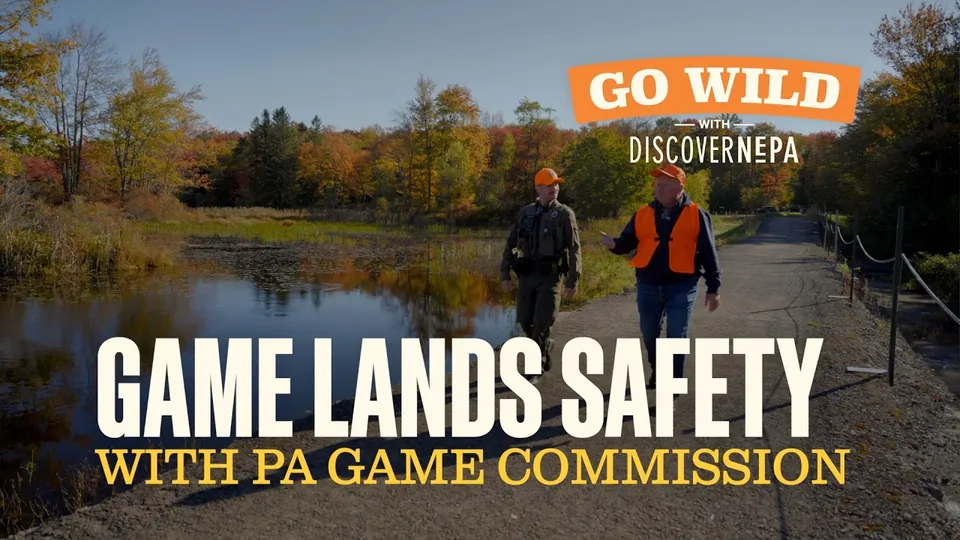
The video is hosted by YouTube (Google): nothing loads until you play it, and Google may then set cookies.
FAQ
Can you hike during hunting season?
Yes. Hunting is generally allowed on national forests and BLM land, where hikers and hunters share the same ground, and only in some national park units. Seasons vary by state, so check the dates with the state wildlife agency and the rules with the land manager. On the trail, wear blaze orange, make some noise, and stick to marked trails.
Do hikers have to wear blaze orange?
It depends where you hike. The National Park Service asks non-hunters at Sleeping Bear Dunes to wear blaze orange or other bright colors, and on Pennsylvania’s State Game Lands it’s the law for everyone from October 1 to January 31 and from April 20 to May 31. Hunters must wear it too in states such as Pennsylvania, and in Wisconsin, where fluorescent pink also counts.
Is hunting allowed in national parks?
Only where federal law specifically mandates or authorizes it. The National Park Service counts 76 units where hunting is authorized, out of more than 400, and many are national preserves, recreation areas, seashores, or lakeshores. Even there, parks such as Delaware Water Gap keep hunting out of safety zones, roads, and developed areas. Shenandoah and Great Smoky Mountains national parks aren’t on the Park Service’s list of places that may offer hunting.
Is there hunting on Sundays?
It depends on the state. In Maine, hunting wild animals or wild birds on a Sunday is a crime under state law. Pennsylvania has moved the other way: nearly all of its 2026-27 seasons include every Sunday, except for migratory game birds such as waterfowl. Check the regulations of the state where you’ll hike before you count on a Sunday without hunters.
What should you do if you hear gunshots nearby?
Make yourself heard: call out, talk, or whistle, so hunters know you’re there before they see you, and stay on the trail, where you’re visible. Don’t interfere with hunters: harassing a hunter in the lawful pursuit of game is against the law in all 14 Appalachian Trail states, the Appalachian Trail Conservancy notes. In an emergency, call 911.
Sources
- Appalachian Trail Conservancy, “Hunting Safety: Tips for Hikers & Hunters,” updated May 21, 2026, accessed October 27, 2026. appalachiantrail.org https://appalachiantrail.org/experience/hike-the-trail/essential-skills/safety/hunting-safety/ ↩
- Pennsylvania Game Commission, Hunting & Trapping Digest 2026-2027, “Deer,” accessed October 27, 2026. read.nxtbook.com https://read.nxtbook.com/pgc/huntingtrapping/20262027/deer.html ↩
- Pennsylvania Game Commission, “2025 Hunting-Related Shooting Incident Annual Report,” April 2026, accessed October 27, 2026. pa.gov https://www.pa.gov/content/dam/copapwp-pagov/en/pgc/documents/hunttrap/hunter-trappereducation/final%202025%20pa%20hrsi%20annual%20report.pdf ↩
- Bureau of Land Management, “Hunting and Fishing,” accessed October 27, 2026. blm.gov https://www.blm.gov/programs/recreation/recreation-activities/hunting-fishing ↩
- Code of Federal Regulations, 36 CFR 241.2, “Cooperation in wildlife management,” July 1, 2025 edition, GovInfo, accessed October 27, 2026. govinfo.gov https://www.govinfo.gov/content/pkg/CFR-2025-title36-vol2/pdf/CFR-2025-title36-vol2-sec241-2.pdf ↩
- Code of Federal Regulations, 36 CFR 261.10, “Occupancy and use,” July 1, 2025 edition, GovInfo, accessed October 27, 2026. govinfo.gov https://www.govinfo.gov/content/pkg/CFR-2025-title36-vol2/pdf/CFR-2025-title36-vol2-sec261-10.pdf ↩
- Code of Federal Regulations, 36 CFR 2.2, “Wildlife protection,” July 1, 2025 edition, GovInfo, accessed October 27, 2026. govinfo.gov https://www.govinfo.gov/content/pkg/CFR-2025-title36-vol1/pdf/CFR-2025-title36-vol1-sec2-2.pdf ↩
- National Park Service, “Hunting, Fishing, Trapping Activities Across the National Park Service,” updated December 29, 2022, accessed October 27, 2026. nps.gov https://www.nps.gov/articles/000/hunting-fishing-trapping.htm ↩
- Code of Federal Regulations, 50 CFR 32.1 and 32.2, hunting on national wildlife refuges, October 1, 2025 edition, GovInfo, accessed October 27, 2026. govinfo.gov https://www.govinfo.gov/content/pkg/CFR-2025-title50-vol9/pdf/CFR-2025-title50-vol9-sec32-1.pdf ↩
- Delaware Water Gap National Recreation Area, “Hunting,” National Park Service, updated September 29, 2025, accessed October 27, 2026. nps.gov https://www.nps.gov/dewa/planyourvisit/hunting.htm ↩
- Sleeping Bear Dunes National Lakeshore, “Hunting,” National Park Service, updated May 27, 2026, accessed October 27, 2026. nps.gov https://www.nps.gov/slbe/planyourvisit/hunting.htm ↩
- National Park Service, “Hunting: Visit,” list of places that may offer hunting, updated June 2, 2026, accessed October 27, 2026. nps.gov https://www.nps.gov/subjects/hunting/visit.htm ↩
- Maine Revised Statutes, Title 12, §11205, “Hunting on Sunday,” Maine Legislature, accessed October 27, 2026. legislature.maine.gov https://legislature.maine.gov/statutes/12/title12sec11205.html ↩
- Pennsylvania Game Commission, Hunting & Trapping Digest 2026-2027, “Sunday Hunting,” accessed October 27, 2026. read.nxtbook.com https://read.nxtbook.com/pgc/huntingtrapping/20262027/sunday_hunting.html ↩
- Pennsylvania Game Commission, Hunting & Trapping Digest 2026-2027, “Fluorescent Orange Requirements,” accessed October 27, 2026. read.nxtbook.com https://read.nxtbook.com/pgc/huntingtrapping/20262027/fluorescent_orange_requirements.html ↩
- Wisconsin Department of Natural Resources, “Highly Visible Clothing,” general hunting regulations, accessed October 27, 2026. dnr.wisconsin.gov https://dnr.wisconsin.gov/topic/Hunt/regulations/OnlineHuntingRegulations/HighlyVisibleClothing ↩
- National Park Service, “Outdoor Emergency Plan,” updated June 21, 2023, accessed October 27, 2026. nps.gov https://www.nps.gov/articles/gtgemergencyplan.htm ↩
- France’s National Forests Office (ONF), “Les calendriers de chasse 2026-2027 sont en ligne” (in French), September 21, 2026, accessed October 27, 2026. onf.fr https://www.onf.fr/chasse/+/2dd6::les-calendriers-de-chasse-2026-2027-sont-en-ligne.html ↩
- French Hiking Federation (FFRandonnée), “Randonnée en période de chasse : la prudence est de mise !” (in French), September 11, 2023, accessed October 27, 2026. ffrandonnee.fr https://www.ffrandonnee.fr/randonner/conseils/randonnee-en-periode-de-chasse-la-prudence-est-de-mise ↩
- Wallonia, “Circuler en forêt en Wallonie” (in French), Public Service of Wallonia, accessed October 27, 2026. wallonie.be https://www.wallonie.be/fr/demarches/circuler-en-foret-en-wallonie ↩

Fact-checking, regulations, and safety
Arnaud Couderc reviews our contributors’ articles and writes for Outfarer about regulations, safety, fishing, the ocean, and outdoor activities. He traces every rule back to its official text and every number to its source, so you head out with solid benchmarks.

 Guillaume Hoarau

